

What Is the Oldest City in America? A Look at the Top 11 https://flip.it/–jqGq
Category:

“Thomas Lincoln wrote his own autobiography — you can read it in his work” — Steve Haaff
Blog Post Courtesy of Kathy Tretter, President, Editor/Co-publisher · Dubois-Spencer Counties Publishing Co., Inc.
This article originally appeared in Spencer County Online.
This article could actually fill an entire book, although a book will not fit into the pages of this newspaper. So readers (and this writer) must settle for a more manageable rendering of what took place last week. It’s a slice of Spencer County history that must be preserved.
__________
A few more than 200 years ago — just as Indiana was gaining statehood in 1816 — a family of four packed their belongings and moved from Kentucky to a small settlement in the new 19th state known as Little Pigeon Creek.
The husband and father was a talented furniture maker with a magnificent set of tools to ply his trade. He was also artistic and particular in his craft.
Sadly, history has not remembered him fondly, which likely can be laid down to a marketing ploy designed to get his son elected president, making the claim the father was a shiftless, illiterate ne’er-do-well and the son was entirely a self made man who came from nothing.
The son, as readers will already have guessed, was Abraham Lincoln and the father was Thomas Lincoln.
Flash forward a couple hundred years.

Steve Haaff, of Patronville, became fascinated with Federal style furniture many years ago. The former educator decided to educate himself on the furniture Thomas Lincoln crafted by hand. He educated himself to the point of replicating Thomas Lincoln’s tools and recreating certain pieces of furniture. He made patterns from the designs and became so knowledgeable that Haaff — a Spencer County native — is considered the world’s foremost authority on Thomas Lincoln furniture. He has been contacted by people the world over, including those fine folks at Antiques Roadshow, to authenticate (or debunk) a claim of a Thomas Lincoln-made item.
A couple years ago he received a call from a family in Kansas who had a dresser that family legend claimed was made by Thomas Lincoln.
Without going into the details of Haaff’s investigation (lacking an entire book to write), he was able to confirm the four drawer dresser or bureau had been crafted by Mr. Lincoln. In fact, it was a piece Haaff had been looking for over many years. Noted southern Indiana author and Lincoln historian Bess Ehrmann had written about it after a visit to the home of Squire William Wood over 100 years ago, although she claimed it was crafted from mahogany, which was incorrect.

However, Haaff was not surprised at the misidentification. While the dresser is actually walnut and poplar (the latter for pieces that would not be seen) with an 1/8th inch thick cherry veneer gracing the arched front — time, linseed oil and smoke from the fireplace would have darkened the finish over time, rendering the finish with a mahogany-hued patina.

Thomas had built this dresser for Wm. Wood, whose family came to Spencer County before there was such a thing, and even before there was a state of Indiana in 1809.
Wood was a close neighbor of the Lincolns and later told William Herndon, Abraham Lincoln’s law partner in Springfield who interviewed many neighbors after Abraham was assassinated, that in fact Thomas Lincoln, “built my house, he built my furniture and the run up the stairs in my house.”

Thomas and Squire Woods were good friends and according to Steve, the latter even spent a night with Nancy Hanks Lincoln as she lay dying from the Milk Sickness.
One thing Steve Haaff wants the world to know, beyond the fact that Thomas Lincoln was a talented and meticulous craftsman, is that the people of this new state were not all backwoods hillbillies, but folks who appreciated and desired the finer things, including beautiful cabinets and other fine furniture.

One thing this writer wanted to know was how the bureau ended up in Kansas. The question was answered and will be revealed, just not quite yet.
Following many conversations, the current owner wanted the bureau displayed and while she thought the Lincoln Museum in Springfield should be the recipient, Steve convinced her the Indiana State Museum would provide a better showcase, since Thomas crafted the piece in Indiana for a Hoosier family.
But first, Steve had another task to complete. The current owner, 91 year-old Mildred “Millie” Moore’s father had replaced the federal style brass pulls with crystal knobs. Steve knew exactly what type of drawer pulls would have been used and the museum staff wanted them restored, but wanted the most knowledgeable person in this generation to handle the job.
Last Wednesday, January 24, Steve drove to Indianapolis and set to work. While he was making the transition he pointed out significant details and explained how Thomas would have crafted the bowed front, affixing the cherry to the walnut and carving the arch. He pointed to two stars etched into the legs, saying stars were a particular signature on Thomas Lincoln works, noted original nails and a plethora of other details the average person would not necessarily notice.
At some point the linseed oil had been removed with a tongue oil finish. There was some damage, which he attributed to mice, including a partially missing decorative apron along the bottom. The conservators at the museum listened raptly to every word, soaking up knowledge as Haaff imparted it.

Haaff said every cabinetmaker had his own idiosyncrasies, which helps him with identification. He believed Thomas learned from Jesse Heade, a noted cabinetmaker in Elizabethtown, Kentucky, who was know to use apprentices and who, in fact, had performed the wedding ceremony uniting Thomas Lincoln and Nancy Hanks.

While history has left the impression that Abraham Lincoln came from poverty, that truly wasn’t the case. His grandfather, also Abraham Lincoln, owned 5,000 acres and was well-to-do, but was massacred by Native Americans when Thomas was just a child. The rule of the day, known as primogeniture, meant his older brother, Mordecai, inherited everything so it’s likely why Thomas became an apprentice.
“His work was an extension of himself,” Haaff asserted, “a labor of love.”

He crafted in the Federal style and that never changed, although in the 1830s Duncan Phyfe came into vogue.
As to the original shiny polished brass drawer pulls, Thomas would have purchased those and they were most likely imported.

Other than the time it took to cut down the trees and season the wood, the actual building of the cabinet would take about 40 days and if Squire Wood paid in cash, Thomas likely earned $40, although he could have been paid in goods as the barter system thrived during that period. Elizabeth Crawford once traded a quilt for a Thomas Lincoln corner cabinet.
Haaff reported it was said about his creations that “Thomas Lincoln was as good a cabinet maker as any of them and better than most.”
Also that he had the best set of tools around, composed of hundreds of pieces, some he made himself so he was also for all intents and purposes a blacksmith as well as a furniture maker.

After several hours of work the dresser was ready for display. A ceremony was planned for the following day during which (hopefully) answers to all questions would be revealed.
___________
Day Two
In addition to corner cabinets, chests of drawers, tables and other furniture, Thomas Lincoln built his own house and others, as well as Little Pigeon Church.
This, Steve Haaff told the assembly on the second floor of the Indiana State Museum who had gathered for the unveiling.

Haaff explained his process for identification and documentation and said the Federal style of furniture was popular from around 1780 to 1820 (give or take, depending where one lived).
Listening in fascination was the bureau’s owner, Mildred Moore, of Kansas City, Kansas, along with her daughter, Julie McIntire, also from Kansas City, Millie’s niece, Shirley (Fouse) and her husband, Dan Bishop of Topeka Kansas, another niece, Karen Yudnich of Denver, Colorado, Debora Wood, widow of Tim Wood from Louisville, Kentucky, and Mike, Bud and Ken Schaaf from Spencer County.

Millie said the dresser had always been in her home. As a child she placed her rag dolls in the drawers. Her father changed the knobs because her mother had very tiny, arthritic hands and the crystal knobs made it easier to manipulate the pulls.
She, being the youngest of three sisters, didn’t get to pick first when her parents passed away. Oldest sister Esther (Shirley’s mom) got first choice — a necklace watch. Middle sister Dorothy (Karen’s mom) chose some oak furniture. Millie felt like she ended up with the dresser by default.

But how did it end get to Kansas?
For that matter how did Squire Wood and his family (he and his wife had five children) end up in Spencer County?
This is what his descendants shared.
While not a Catholic, Squire moved to Bardstown, Kentucky with the influx of Catholics, then relocated to Daviess County, Kentucky. As with others, including Thomas Lincoln, he had trouble getting a clear title to his land, which was why he moved on in 1809 to what would become Indiana in 1816 and Spencer County in 1818.
One son, Robert, eventually moved to Terre Haute.
Robert’s son, Newton, decided to seek even greener pastures and he homesteaded in Kansas.
Newton paid a visit to Spencer County and was given a list of four local girls. He was told he needed a wife and had to pick one. He picked Mary Schaaf (hence the Schaaf connection).
They were wed April 26, 1894 and would take the train to Larned, Kansas, where they would debark and walk to Truesdale and the farm Newton had homesteaded.
Robert, Newton’s father, gifted the newlyweds with the dresser. He had likely been a playmate of Abraham and Sarah Lincoln in his youth.
Newton and Mary had four children before she passed away from Typhoid Fever on September 9, 1901 — their oldest child age six and the youngest a baby.

Newton never remarried and his maiden Aunt Jenny would move from Terre Haute to Kansas every summer, taking along a bunch of hard boiled eggs to eat along the way.
The other maiden aunt was Dr. Anna Wood, a physician practicing holistic medicine in Terre Haute.
Debora’s husband, Tim came through another branch of the family.
Lunch following the ceremonial unveiling of the bureau, or dresser, was rife with tales of Wood, Schaaf and other families that shall be saved for another day (or maybe that book that likely will never be written). But space is getting a bit tight, so it’s definitely time to reach a conclusion.

And a conclusion for readers? If you haven’t been to the Indiana State Museum lately, or even if you have, it’s a good time to slot it on your bucket list. The treasures found within are innumerable! A corner cabinet also built by Thomas Lincoln stands to the right of the dresser and a more utilitarian, open shelf cabinet, also his creation to the left. Steve explained Thomas built every piece to order and the intricacy and detail was largely dependent on what the customer was willing to pay (or barter).
Of course there are many other jewels in the State Museum’s collection with revolving exhibits that are sure to please every taste.
The museum is located at White River State Park at 650 West Washington Street in Indianapolis, in a complex that includes the NCAA Hall of Champions, Eiteljorg Museum of American Indians and Western Art, White River Gardens, Indianapolis Zoo and more.
Photos by Kathy Tretter.
Group photo 1: Cousins, some who may not have met before, gathered for a snapshot at the Indiana State Museum. Pictured from left: Mike Schaaf, Shirley Fouse, Julie McIntire, Mildred Moore, Bud Schaaf, Ken Schaaf and Karen Yudnich, with Steve Haaff, who was responsible for authenticating the dresser as a Thomas Lincoln-crafted piece and for amking repairs to restore it to its former glory.
Group photo 2: Julie McIntire and her mother, Mildred Moore, discuss the family’s Lincoln connection with Haaff and Indiana State Museum Chief Curator and Research Officer Susannah K. Koerber.

It’s Not too Late: Chicago Restaurant Week
Chicago Restaurant Week, which ends February 3rd, features over 350 participating restaurants offering unbeatable prix fixe menus for a set price of just $25 for brunch/lunch and $42 or $59 for dinner.

Additionally, there are dozens of acclaimed Michelin- and James Beard Award-winning spots on the list this year, an affordable way to experience more of Chicago’s creative, fine-dining scene: https://www.choosechicago.com/blog/dining/fine-dining-chicago-restaurant-week/Search the Participating Restaurants Guide to reserve your place; the website enables you to search via cuisine or neighborhood, indicate dietary preferences (gluten-free, vegetarian/vegan), and support women-owned and minority-owned businesses.


- After, the companion cocktail lounge of Ever which is the stand-in for the Copenhagen restaurant where Chef Marcus perfects his dessert skills, is offering a 3-course dinner for $59 (*beverage tax and gratuity not included). Photo courtesy


- Avec, where Chef Syd gets a pre-service sneak peek and gets advice from famed Chicago restaurateur Donnie Madia is offering a 2-course brunch at $25 per guest, 3-course lunch at $25 per guest or 4-course dinner at $59 per guest (*beverage tax and gratuity not included).


- Publican Quality Meats, where Chef Syd gets a butcher lesson from PQM’s very own Rob Levitt, is serving up a dinner menu for $59 (*beverage tax and gratuity not included).
There are dozens of acclaimed Michelin- and James Beard Award-winning spots on the list this year, an affordable way to experience more of Chicago’s creative, fine-dining scene.
For more information, https://www.choosechicago.com/blog/dining/fine-dining-chicago-restaurant-week/Search the Participating Restaurants Guide to reserve your place; the website enables you to search via cuisine or neighborhood, indicate dietary preferences (gluten-free, vegetarian/vegan), and support women-owned and minority-owned businesses.
For more information, visit Choose Chicago.
Photo credits:

After photos: Michael Muser

Avec photos: Karla Villegas Pineda
Publican Quality Meats interior/exterior photos: One Off Hospitality

Honoring Black History in Mobile Year Round
Though Mobile is a great place to visit any time of the year, this coastal Alabama city has rung in the new year with an impressive dedication to cultural heritage, making it a must-visit for Black History Month. Conde Nast Traveler took note and included Mobile on its “Best Places to Go in 2024” list, in part for the city’s strides in cultural development and dedication to celebrating its African American history.

Last July, the inspirational story of the 110 survivors of the last slave ship to enter the United States, the Clotilda, and the town they created just outside of Mobile in the late 1800s was shared with the world through the opening of “Clotilda: The Exhibition” at Africatown Heritage House. This was a pivotal moment in the city’s commitment to embracing its African American heritage. As of this month, Africatown Heritage House is offering group admission to schools, churches and other groups, helping to increase the number of people who can visit in person and learn more about this fascinating story.

Though the opening of Africatown Heritage House was certainly a big part of Mobile’s story of cultural development, there’s plenty more to experience in the city during Black History Month and beyond. Here’s a sampling of both what is new and what’s to come later in the year, for those planning ahead:

- This past October, the new Historic Avenue Cultural Center debuted its first exhibit, entitled “Remembering the Avenue,” which tells the story of Mobile through the eyes of Black residents, both past and present. The exhibit will run through the end of this year. The center itself is of tremendous historical significance, as it was the city’s Black library before it became the National African American Archives & Museum and eventually the cultural center.
- Mobile is also developing a Civil Rights and Cultural Heritage District, which will be located along the Martin Luther King Jr. Avenue Corridor. This area was an economic hub for the Black community during the era of segregation. Churches, schools, and other sites throughout the district will become permanent landmarks and the city is in the process of building a memorial park that will be a gateway to the district.
- The Isom Clemon Civil Rights Memorial Park is set to open in early spring. The park is located on a site where leaders of the city’s Civil Rights Movement met, and a series of statues by local artists will commemorate their efforts and detail the movement in the city.
- To round out a journey and to get full insight into Mobile’s Black history and the countless contributions of Black Mobilians throughout the years, take a tour of stops along the Dora Franklin Finley African American Heritage Trail (DFFAAHT). There are trail markers all over the city for a self-guided tour, but a two-hour guided bus tour offers a very personal and comprehensive way to experience the sites.

No trip to Mobile is complete without sampling the city’s unique food scene, especially since 2024 has been officially declared the Year of Food by the State of Alabama. Ginger & Spice and Kanary Bar are just a few of the Black-owned restaurants to try during a visit.

From historical sites to special exhibits to exciting new developments on the horizon, this city offers a unique opportunity to learn about and celebrate the contributions of Black Americans. To experience a destination that truly embraces its African American history and start planning a visit to Mobile, head to https://www.mobile.org/.

12th Annual Thunder Bay International Film Festival: Celebrating Our Ocean & Great Lakes
For five days each January, the Thunder Bay National Marine Sanctuary brings the world of cinema to northeast Michigan with some of the most impressive ocean and Great Lakes films from around the world. Film screenings are complemented by social events, educational activities, and opportunities to meet filmmakers.
The Thunder Bay Film Festival is the only water-focused cinematic event in the state of Michigan—which is surrounded by four of the five Great Lakes and boasts nearly 3,200 miles of freshwater coastline (the longest in the country). The Great Lakes cover more than 94,000-square-miles and holds an estimated six quadrillion gallons of water—about one-fifth of the world’s freshwater surface water supply and nine-tenths of the U.S. supply. The protection of water, native aquatic species and a healthy environment are of particular interest to Michiganders and the documentaries lined up for this year’s festival are sure to educate and entertain.
WHERE: Michigan’s Sunrise Side Coast – Alpena, Rogers City & Harrisville
WHEN: Wednesday,January 24 through Sunday, January 28, 2024
DETAILS:
- 68 Films
- 3 Venues
- 3 cities in 3 counties in northeast Michigan

HIGHLIGHTS:
- Michigan premier of RELENTLESS (Running time: 92 minutes. Writer/Director/Producer: Thomas Lindsey Haskin). Narrated by Oscar-winning actor J.K. Simmons, this film tells the fascinating true story about remarkable people tackling an exotic species invasion that nearly destroyed the largest freshwater ecosystem on Earth: the Great Lakes. The silent predator devastated jobs and businesses, threatening the survival of cities, towns and indigenous communities across the region. The film traces how tenacious scientists identified the menace then struggled to control it. Their work continues to influence the Great Lakes region’s economic fortunes and sounds a warning about how invasive species threaten the future of vital natural resources and the prosperity of millions around the world today. This January 24 screening takes place in Rogers City which sits a short drive south of Lake Huron’s Hammond Bay where fishery scientists took up the challenge of controlling sea lamprey at a laboratory that still stands there. The Hammond Bay Biological Station remains the primary US federal laboratory conducting research into methods to control sea lamprey in the Great Lakes. People involved in that fight live in the region—including many who worked there in the 1960s.

- Crossing Ontario: The End. Join Emmy award-winning photojournalist and documentary producer Corey Adkins for the premier of the latest in his 6-part Paddling the Great Lakes series on Friday evening as part of the Great Lakes Gala Reception & Films, taking place at the Great Lakes Maritime Heritage Center in Alpena from 6-9pm. Working as a cameraman/producer/director for the non-profit Stand Up for the Great Lakes, Corey has documented the group’s endeavors in crossing the Great Lakes (as well as traversing Michigan’s 50-mile Chain of Lakes Water Trail) in order to raise awareness and funds for these critical natural resources. Corey’s previous films from this series have been shown at the TBIFF and this, the final installment, is the culmination of the group’s 9-year project. With a 25-year video production career, Corey is also the Content/Communications Coordinator for the Great Lakes Shipwreck Historical Society.

- Sanctuary Selections. The first professional film competition at the Thunder Bay Film Festival, solely focused on Great Lakes Content. The theme is “Representing the Great Lakes through Strong Storytelling” with a focus on discovery, authentic experience and human connection. The Top 5 films will be shown on Saturday, January 27 at 6pm at the Great Lakes Maritime Heritage Center in Alpena, when the winner will be announced. This competition is being held in partnership with The Sunset Project—a nonprofit organization focused on investing in creative communities and changing how northeast Michigan views mental health.

- Student Film Competition. Students in grades 6 through 12 are invited to submit a short film, three minutes or less, related to “Life in the Great Lakes.” There is no entry fee and selected films will be shown at the festival on Saturday, January 27. Submission deadline: January 5, 2024. See attached for details.

COST:
- All Access Thunder Pass – Valid for the entire festival ($125 per person)
- TBIFF on the Road – Rogers City (Wednesday, January 24, 6-9pm, Rogers Theater. $10 per person)
- TBIFF on the Road – Harrisville (Thursday, January 25 @ 6pm, Alcona County LIbrary. $10 per person)
- Great Lakes Gala Reception & Films (Friday, January 26 – Great Lakes Maritime Heritage Center in Alpena, 6-9pm. $30 per person includes hors d’oeuvres and dessert, with a cash bar)
- Sanctuary Selections with The Sunset Project (Saturday, January 27 – Great Lakes Maritime Heritage Center in Alpena, 6-9pm. $20 per person includes light snacks, with a cash bar)
- Programs (Varied times Friday, Saturday & Sunday. $10 per person, per program)
The Thunder Bay National Marine Sanctuary encompasses 4,300 square miles in northwestern Lake Huron and exists to preserve our Great Lakes maritime heritage, including a significant collection of historic shipwrecks. Through innovative, accessible educational programs and community outreach, the sanctuary strives to protect our great lakes for future generations. The sanctuary promotes appreciation and responsible use of Thunder Bay, the Great Lakes and the oceans. Visit the sanctuary at ThunderBay.noaa.gov and at facebook.com/ThunderBayShipwrecks

The Christmas Markets in the Black Forest, Lake Constance and Stuttgart
Courtesy of Victoria Larson; Principal, VKLarsonCommunications; Publisher, www.sideofculture.com

What captures your imagination? Medieval or modern, baroque or family fun? Southwest Germany’s Christmas markets cater to all. Find them on historic squares and in monasteries, in castles and nestled in the woods. Sip mulled wine, nibble tasty treats, buy one-of-a-kind crafts that are perfect for gifts. For many people, the Advent season is one of the most beautiful times of the year. No matter where you are in Southwest Germany, fresh air mixes with the aroma of mulled wine, roasted almonds and warm chestnuts. In addition to the large Christmas markets, there are also numerous smaller markets with a special atmosphere to discover. The Christmas markets around Lake Constance combine traditions and delicacies from Germany, Austria, Switzerland and the Principality of Liechtenstein.
The short distances between the different places make it possible to visit many different Christmas markets across national borders. The Black Forest has 150 Christmas markets alone and each town’s market has its own personality, events and handicrafts. Stuttgart, the state capital, has a beautiful and enormous Christmas market complete with choirs, Christmas fair for children, and beautifully decorated stalls.
Musical and Artistic Advent Delights in the Black Forest
Nicknamed the “Singing Christmas Tree,” the choir members will stand on several levels of an approximately 60 foot high “Christmas Tree” in front of the historic Abbey backdrop between the Elztal Museum and in the Organ City” of from December 8 to 17, 2023 www.singender-weihnachtsbaum.de.

In the town of Gengenbach, the town hall is transformed into the “world’s largest Advent calendar house.” This year, they will present from November 30 to December 23, the “paradisiacal” motifs of Olaf Hajek, one of the most renowned contemporary German illustrators at 6 pm every day. www.gengenbach.info

In Karlsruhe, an interplay of artistic light figures, fairytale-like light scenarios and dreamlike illuminations creates the “Christmas Garden.” This special creation is a just over one mile long circular route through the park landscape of the Zoologischer Stadtgarten from November 23, 2023 to January 7, 2024 from 5 to 10 pm.www.christmas-garden.de/karlsruhe
Gorges and Waterfalls of the Black Forest Highlands

Opening on November 24, the Christmas market in the Ravenna Gorge, at the foot of the Höllental Viaduct, is surrounded by mystical forests. Close by, the Triberg Waterfalls will also be transformed into a romantic winter setting from December 25 to 30, 2023 (2 p.m. to 9 p.m.): One million lights will shine on the “Triberg Christmas Magic.”

Five times each day, a spectacular fire show with music is put on show for visitors. The crowning glory is a breathtaking fireworks display, full of light and accompanied by music – from December 27 to 30, daily at 9 p.m. www.triberger-weihnachtszauber.de
Also, on December 10 and 17, 2023 (each at 2 p.m.), a guided tour starts at the Kurhaus Hinterzarten and leads over small root paths and wooden walkways into the deep gorge. www.original-landreisen.de
Lakeside Christmas Markets, Christmas Cruises and Botanical Garden Delight

Fairytale Christmas markets directly on the lakeshore or in historic old towns, Christmas experiences in festively decorated castles or on exclusive ships – all this and much more awaits visitors to the four-country region of Lake Constance (aka the Bodensee). White passenger ships sail back and forth connecting visitors to different Christmas markets around the Bodensee. “Cast off” is the motto for the numerous winter boat tours, which can be ideally combined with a visit to the Christmas market around Lake Constance. During the cruise passengers can enjoy the wintry landscape and enjoy a cup of coffee and a delicious cake.

From November 30 to December 23, the Lakeside Christmas Market Constance and the Christmas ship located in the harbour invite you to enjoy the shoreline scene and ambience from the water. The winterscape on the garden island of Mainau is unparalleled and supported by the local traditions and the

from Nov 21, 2023 to Jan 7, 2024. The New Castle in Tettnang offers traditional delicacies and live Christmas music in front of a historic castle. The Christmas market is open from 01 to 03 December and from 08 to 10 December. The Lindau Harbor Christmas market has a beautiful backdrop of the Alps shimmering in the distance. https://www.bodensee.eu/en/what-to-do/culture/christmas-markets
Southwest Germany’s Christmas Cookies to Make at Home
It is well-known that Baden-Württemberg is a great place for culinary delights. This is especially true during the Christmas season. In the winter months, the bakeries are very busy places: Kneading and shaping, rolling and cutting are the order of the day. And the sweet flavour of star anise and cinnamon wafts over everything.

The Spitzbuben, also known as Hildabrötchen, have a long tradition. They originally come from southern Germany and are named after the Grand Duchess Hilda von Nassau, the last Grand Duchess of Baden. Springerle are the hard aniseed-flavoured biscuits that can be eaten but are also used as decoration in cafés, restaurants and even on Christmas trees! The dough is made of eggs, flour and sugar; wooden moulds, carved in medieval patterns, scenes and figures. Moulds are sold in the Christmas markets and make a nice souvenir.

Hutzelbrot is a traditional Christmas pastry and used to be prepared especially in farmer families. Hutzeln are the halved, dried fruits of an old pear variety, also called Hutzel pear. The term “hutzelig” means something like “wrinkled” in Swabia and thus aptly describes the appearance of the dried pears. Dambedei: he is tan and has many names but he is made of yeast and every child recognizes it immediately by its characteristic appearance. With a pointed head, raisin eyes, almond mouth and the button placket made of nuts.

Last but Definitely not Least: Lebkuchen and Gluehwein/Mulled Wine
Lebkuchen has a nice story in SouthWest Germany. Of course, everyone eats Lebkuchen in Germany (recipes vary from region to region) especially at the holiday time. What is interesting however is that there is a Lebkuchen trail in the Black Forest and it is part of the culinary tradition of a little village called Todtmoos. In the past, in addition to the bakers, it was the local women who earned extra income with Lebkuchen. The Todtmoos women baked the delicious and durable gingerbread in their home ovens and sold it at the pilgrimage stands next to the steep climb to the church. The so-called gingerbread women then bought hundreds of gingerbreads from the local bakers and brought them to the poor areas of the Black Forest. They were welcome there, because they brought the Christmas scent as well as the popular Christmas biscuits into the house.
Mulled wine is very popular drink during the winter season in Southwest Germany. Try out our recipe to enjoy it yourself or with friends and family as it is a delicious holiday treat! There are many different versions, so you may want to add some ingredients of your own and call it your home brew.
Ingredients
- 500ml wine
- 4 cinnamon sticks
- 1 orange sliced
- ½ lemon sliced
- 5 juniper berries
- 2 star of anise
- 10 cloves
- 1 cup/200g sugar
Preparations
- Combine all ingredients in a pot and give them a quick stir.
- Heat until the wine just barely reaches a simmer over medium-high heat. (Don’t cook too hot — you don’t want to boil off the alcohol.)
- Reduce heat to low, cover, and let the wine simmer for at least 15 minutes.
- Use a fine mesh strainer, remove and discard the orange slices, cloves, cinnamon sticks, star anise and ginger.
- Serve warm in heatproof mugs, topped with your favorite garnishes. Enjoy!
For more information visit tourism-bw.com

Celebrate the Christmas Holidays at the Majestic Hotel & Spa in Barcelona
Barcelona is a blaze of lights up during the holidays making it the perfect time to explore the city’s stunning architecture including the famed works of Antoni Gaudi-– the Sagrada Familia, Park Güell (a UNESCO World Heritage Site), and Casa Batlló. Barcelona, with its Mediterranean climate, makes it the ideal destination during the holidays.

For those who love iconic historic architecture and the ambience of luxury and opulence, the award-winning Majestic Hotel & Spa is the perfect place to stay while enjoying all that the Barcelona, a stunning seaside city known for its gastronomy, culture, vibrant neighborhoods, museums, and so much more including myriad holiday celebrations.

Europe’s Most Vibrant Holiday Spot: Majestic Hotel & Spa Barcelona

The five-star Majestic Hotel, located in the heart of Passeig de Gràcia, considered to be the city’s most expensive and stunning boulevard, is a vivid part of Barcelona’s holiday celebration, a vivid tapestry of colors, flavors, and festivities, features an array of exclusive offerings. With its spa, outdoor plunge-pool on the rooftop and amazing views of the city, guests are at the heart of the holiday activities including the start of the festivities—the illumination of Passeig de Gràcia, which this year celebrates in 200th anniversary.
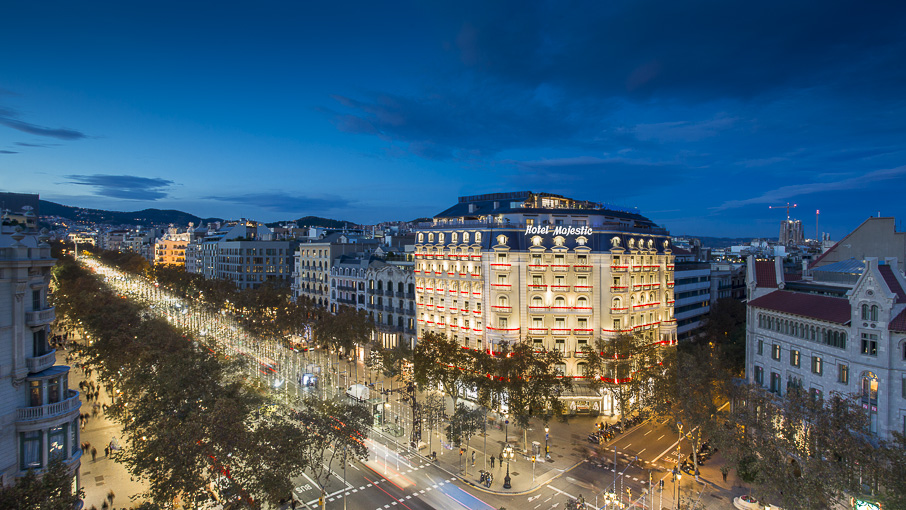
“At Majestic Hotel & Spa, we believe in creating magical moments that linger in the hearts of our guests. This holiday season, we invite you to immerse yourself in the splendor of our offerings, where luxury meets tradition, and every detail is designed to enchant,” says Pascal Billard, General Manager at Majestic Hotel & Spa. “It is our pleasure to be part of your celebrations, ensuring a season of joy, warmth, and unparalleled experiences.”
In line with the city’s captivating ambiance, the hotel will serve its traditional holiday program of dinners and brunches and exhibit the next edition of the Wine Dinners, an intimate bi-monthly wine dinner based on a selection of wines from a prominent winery. Majestic Wine Dinners defies the conventional dinner setting. Following the delightful evening with Castell d’Encus, the hotel has already scheduled the next Wine Dinner in collaboration with the Pere Ventura Winery, set to take place on November 16th.

In addition to this, Majestic Hotel & Spa invites guests to savor the magic of the holiday season with specially curated festive menus to elevate the dining experience. Under the culinary expertise of renowned chefs, the following delectable https://majestichotelgroup.sirv.com/majestic/navidad/menus-individuales-en.pdfholiday menus on a set schedule:

Christmas Eve Dinner:
When/Where: Christmas Eve dinner will be served at SOLC Restaurant from 8:00 PM until 10:30 PM.
Cost: The dinner is priced at €120 per person.

Christmas Brunch:
When/Where: After a morning of gifts, it’s time to dine at Majestic’s SOLC Restaurant and enjoy its traditional Christmas Gourmet Brunch served from 1:00 PM to 4:00 PM
Cost: €145 for adults and €60 for children.

St Stephen’s Day Brunch:
When/Where: On December 26, the celebrations continue with the traditional St. Stephen’s Day lunch, a unique lunch at SOLC Restaurant served from 1:00 PM to 3:30 PM
Cost: €105 per person.
New Year’s Eve Dinner: Celebrate the beginning of 2024 with a choice of outstanding culinary options.

Option 1:
When/Where: Salon Mediterraneo from 8:30 PM until 3:00 AM
Cost: €385 per person.
Option 2:
When/Where: SOLC Restaurant from 8:30 PM until 3:00 AM
Cost: €585 per person.

New Year’s Brunch:
When/Where: To start the new year on the right foot, indulge in culinary delights at SOLC Restaurant from 11:30 AM until 2:30 PM.
Cost: €75 for adults and €45 for children.
Pop-up Oyster Bar:
When/Where: Enjoy an evening of oysters, caviar, and drinks at Terraza La Dolce Vitae from 6:00 PM until 1:00 AM.
Cost: different options including oysters, caviar and drinks starting from 120€ up to 420€
About Majestic Hotel & Spa Barcelona

“In the world of great luxury hotels, the old is now the new,” is the perfect description of hotels with such stunning traditions and histories as the neo-classical French style Majestic Hotel & Spa Barcelona which recently underwent a five-year renovation led by interior designer Antonio Obrador. Since its opening in 1918, the five-star hotel owned by the Soldevila-Casals family has played an exemplary role in Barcelona’s architecture, society, and lifestyle. Its guests included such notable guests such as American writer Ernest Hemingway and Spanish poet Antonio Machado.
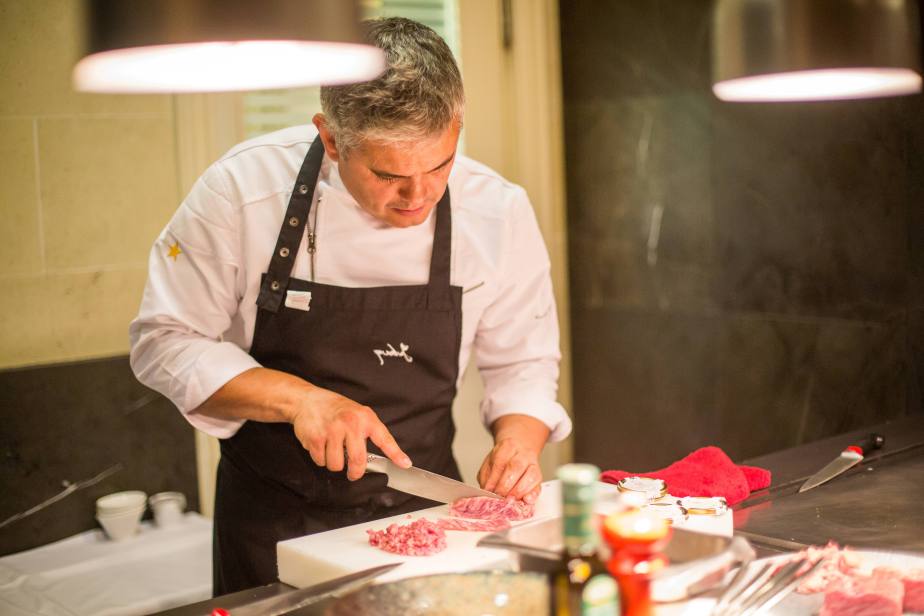
With a privileged location in the heart of Barcelona on the ultra-stylish Passeig de Gràcia, the 271-room property is home to an outstanding 1,000-piece art collection with works by artists such as Antoni Tàpies and Josep Guinovart. Under the direction of Michelin star Chef Nandu Jubany, a robust gastronomic offering is highlighted by the Majestic Breakfast Experience, named Europe’s Best Breakfast in 2018 by Prix Villégiature. Additionally, The Leading Hotels of the World, a prestigious organization representing independent luxury hotels from around the world, recognized the property with the Remarkably Uncommon award in 2018; the hotel has been a member of the organization since December 2014. Majestic Hotel & Spa Barcelona is also home to the city’s largest suite, a 5,000-square-foot penthouse with capacity for six, a dining room, two panoramic terraces and access to a personal butler and chauffeur. www.hotelmajestic.es.

Western Mexico: A Traveler’s Treasury
A travel guide for the intellectually curious, Tony Burton’s Western Mexico: A Traveler’s Treasury provides an insider’s entry to this extraordinary region of Mexico. The book, published by Sombrero Press and now in its fourth edition is less about logistics and instead focuses on the myriad of reasons–historical, ecological, cultural, and/or scenic–that make each place featured in this well-written and well-researched book both special and worth visiting.

Burton, an award-winning travel writer, educator, and ecotourism specialist, who was born in the United Kingdom and has an M.A. in geography from the University of Cambridge and a teaching qualification from the University of London, moved to Mexico in 1979 and subsequently was granted Mexican citizenship, looks for the road less traveled.
And in this book, he encourages us to explore the smaller, lesser known community with their many local customs, seasonal celebrations, sites, and events, places that, in his words, “offer a glimpse of the Mexico behind the mask; they are places where Mexico has retained her ancient culture and her ancient traditions.”

Providing a mix of interests, Burton opens the doors, so to speak, to such historical sites as Zacatecas, Lagos de Moreno and San Blas; artistic colonies like Ajijic; and lakeside communities including Chapala and Pátzcuaro.
Besides that there are ecological wonders, such as Manantlán, the monarch butterflies, the old mining towns of Angangueo and Bolaños, coastal communities like Barra de Navidad and Puerto Vallarta, Angahuan and other Indian villages, and a host of others. He delves into Pueblos Mágicos, designated as Magic Towns by the federal government in recognition of their cultural, historical, and/or ecological significance, their nearness to major cities, and the facilities they offer visitors.

This is a travel guide but of the most intimate kind. We drive with Burton along the lovely road to Tamazula, settled from pre-Columbian times, conquered by the Spanish in 1524, and a vital silver mining town and hacienda center until the mines were worked out by the end of the 18th century. As for its name, well, interestingly enough, it translates to “place of frogs.”
Where to stay when there? Burton recommends Hotel Real de la Loma with its spacious and comfortable rooms and pool and two person tubs in the room filled from a hot-water spring at the foot of a hill. The views from the hotel are of the Tamazula River and its valley made green with sugar-cane. A good time to go for many is during the two-week Our Lady of Sagrario festival.

We learn that Mazamitla is “one of the prettiest towns in all Jalisco. It is a graceful, charming town of cobblestone streets, adobe walls, wooden balconies, old doorways and red-tile roofs, one of Mexico’s Magic Towns. Among its many attractions are the fresh air and scenic beauty of the surrounding countryside, some fine restaurants specializing in Mexican food, and the chance to shop for fresh cream, cheese, and home-made preserves. As befits a mountain town, its inhabitants also make lovely woolen sweaters and ponchos, for sale in the local shops.”
Burton, who has lived in Mexico City, Guadalajara, and Jocotepec, has traveled widely, leading educational excursions and specialist ecological tourism groups to both well-known areas such as the Yucatán and Copper Canyon as well as little-known ones like Manantlán and Tingambato. At the former, at the Manantlán Biosphere Reserve visitors can experience the astonishing diversity of plant and animal life found in a cloud forest, one of the rarest types of vegetation anywhere in the world. In the latter, located near the major archaeological site of Tinganio, is one of the few sites in Western Mexico where there are genuine pyramids.
Larger than the previous editions there are dozens of new destinations and each chapter contains new material, updated travel directions, and redrawn maps.
Divided into parts, one and two are within three hours of driving time from either Guadalajara (Mexico’s second city) or nearby Lake Chapala, a popular retirement center for Americans and Canadians making them perfect for day trippers.

Parts 4 to 9 are longer journeys such as the trip to Jungapeo, where director John Huston filmed scenes from The Treasure of the Sierra Madre starring Humphrey Bogart. Here, in this small village, you can stay at Agua Blanca Canyon Resort which dates back to the 1940s. According to Burton, it is a charming spa-hotel with just 20 rooms arranged in the Purépecha Indian style around three sides of the greenest lawn in Mexico. Its pools and lawns overlook the deeply carved valley of the River Tuxpan.

“Many butterfly visitors, after the cool and dusty atmosphere in the fir forests want nothing more than a long soak in a warm tub and this is the ideal place,” he writes.
And, of course, there are the Monarch butterflies. Every winter, some one hundred million monarch butterflies fly into Mexico from the U.S. and Canada. On arrival they congregate in a dozen localities high in the temperate pine and fir forests of the state of Michoacán.

For me, a definite-not-to-be-missed is Zitácuaro, where my culinary hero Diana Kennedy lived. Famous for her cookbooks on Mexican cuisine, she made her home outside of Zitácuaro. And here again, is how deep Burton drills down into his destinations. Kennedy lived near the Rancho San Cayetano, a small, exclusive hotel on the road towards Huetamo and the Del Bosque reservoir.

“The San Cayetano’s charm lies not only in its comfortable rooms but also in its first rate cuisine,” he writes, asking if there could be a better recommendation for the food served there than the fact that Diana Kennedy regularly brought friends to dine in the hotel?

For aficionados of Mexican food, there are several outstanding restaurants to put on the list of where to go.

“Neither of my two favorites is well known to tourists, hence their inclusion here,” writes Burton. “Next to the gas station in Pátzcuaro, where the highway from Morelia and Quiroga enters the town, is the Camino Real restaurant where Sopa Tarasca, a local specialty which is a bean-based version of tortilla soup, has to be tasted to be believed.
Whatever you choose in this unpretentious restaurant, you will not be disappointed,” he writes. “The Camino Real has a sister restaurant, the Real del Cobre, in Santa Clara del Cobre.

My other favorite is an hour’s drive away, in the unpretentious town of Tacámbaro. Near the entrance to the town is the Hotel-Restaurant El Molino (The Mill), housed in a museum-piece nineteenth century flour mill, complete with grinding wheels. Simply and artistically decorated and furnished, this hotel-restaurant’s fixed-price comida features slightly finer cuisine than that of the Camino Real, with more subtle sauces and a more varied menu.”
Whether your interests are in art, architecture and/or archaeology; fiestas and folklore; unusual sights and natural wonders, or in Indian villages and indigenous handicrafts, Burton’s book is your guide to Western Mexico’s many hidden treasures.

Burton, author of many books about Mexico including If Walls Could Talk: Chapala’s historic buildings and their former occupants; Lake Chapala: A Postcard History; and Mexican Kaleidoscope: Myths, mysteries and mystique, is currently editor-in-chief of MexConnect, Mexico’s top English-language online magazine. He says the inspiration for writing this book came about with the “realization that it was impossible for me to personally introduce readers to many of the places and things I consider most rewarding to find and appreciate. Of the truly spectacular, I have yet to find anyone who ever forgets the magic of visiting the Monarch Butterflies in one of their overwintering sites. By sheer good fortune, I happened upon them the first time in 1980, several years before their locations became widely known or any organized tourist excursions to them had begun.”
Burton encourages opening up to new places and experiences.
“With an open mind ‘gems’ can be found everywhere in Western Mexico,” says Burton. “My greatest hope is that my book encourages readers to explore and find their own hidden gems.”
Pati Jinich’s Sopa Tarasca
- ½ of a medium onion
- 1 Cubanelle or Anaheim pepper stemmed, seeded chopped
- ⅓ cup chopped red bell pepper
- ⅓ cup roughly chopped cilantro
- 6 cloves garlic, peeled
- 3 oz. lime juice, freshly squeezed
- 2 oz. orange juice, freshly squeezed
- 1 tsp. ground cumin
- 1 tsp. ground coriander
- ½ tsp. turmeric
- ½ tsp. dried oregano
- kosher salt, to taste
- black pepper to taste
- ½ cup olive oil
- 1 ½ lbs. flank steak
- 2 tbsp. butter
- 2 tbsp. minced garlic
- 2 large green plantains
- canola oil for frying
- mayonnaise
- 8 slices of American cheese
- 8 slices of ripe red tomato
- Shredded head lettuce
- Add the first 13 ingredients to a food processor or blender. Blend until smooth. With the motor running slowly drizzle in the oil.
- Put steak in a glass baking dish or large Ziplock bag. Pour marinade over steak. Marinate refrigerated for at least 2 hours or overnight.
- When ready to grill, build a hot hardwood charcoal fire or preheat gas grill. Remove steak from marinade, removing excess. Grill over high heat for about 5 minutes per side for medium rare. Remove and let rest for 5-10 minutes.
- Meanwhile make tostones. Heat about an inch of oil in a large skillet to 350°F.
- Cut the ends off plantains. Cut the peel along a seam lengthwise then peel starting at the cut. Cut plantains in half crosswise and then again lengthwise so there are eight equal pieces.
- Fry plantains for about 4 minutes until cooked through, remove to paper towels.
- Place a plantain piece on a cutting board covered with waxed paper. Fold paper over the plantain and smash flat with another cutting board or heavy skillet. Flatten all eight pieces.
- Return plantains to hot oil and fry until crisp, about another 4 minutes. Remove to paper towels, season with salt.
- Make garlic butter by melting 2 tbsp. butter, then stirring in 2 tbsp. minced garlic. Garlic is meant to be raw.
- Thinly slice flank steak on a bias, against the grain.
- Spread 4 tostones generously with mayonnaise. Layer on sliced steak. Top each with 2 slices of cheese, two slices of tomato and shredded lettuce. Top each sandwich with remaining tostones and spoon a little garlic butter over the top.
- Serve immediately.
- From patijinich.com

Just in Time for Halloween: Going Batty for Bats
Going to Bat for … Bats!
Going batty, bat guano crazy, bats in the belfry–these are a few of the less than enduring terms applied to what may be one of nature’s most misunderstood creatures, often depicted by myths, books, and movies as being ruthless, bloodthirsty and generally not fun or cudddly at all. Well, we have to agree there’s nothing cuddly about bats. Weird looking creatures who like to sleep upside down in caves and trees, but as far as we know they’ve never driven anyone crazy or indulged in any vampire blood drinking throwdowns. Instead consider this: Bats are incredibly important to the ecosystem and by pollinating plants and eliminating pests, they save American farmers billions of dollars a year by preventing crop damage and helping eliminate the cost of pesticides.
So why not pay homage to these winged creatures during International Bat Week that runs from October 24th to, appropriately enough, October 31st better known as Halloween making it a perfect time for a bat road trip. Yes, you read that correctly.
Which brings us to Mammoth Cave National Park near Bowling Green, Kentucky

Yes, the name says it all. The cave is absolutely mammoth … the longest and largest cave system in the entire world and one of the oldest tour attractions in North America with some 426 miles have been explored and at least another 600 miles to go. In other words, as huge as it seems, less than half of the cave is what you see. Rangers are on hand for guided tours through what is one of the oldest tour attractions in North America and are experts at pointing out all the wildlife on the property. That, of course, includes bats. A total of 13 types of bats have been confirmed at this national park, with two other species reported but so far that hasn’t been confirmed.

But don’t look for all the bats in the cave. Sure some are including species that live in the cave while waiting to give birth or during their very long winter naps–a hibernation lasting from mid-October to mid-April. Other species choose to hang out (and we do mean hang) in trees, under bridges, and the eves of buildings around the park.
The federal government had declared that three of Mammoth’s bat species are either “threatened” or “endangered.” Both the Indiana bat and grey bat are considered endangered; the northern long-eared bat is threatened.
Scientists at the national park constantly monitor the health of the bat populations, and the parks hosts occasional public “Bat Nights” at which visitors are invited to watch as bats are captured from the cave, assessed and released.
Immerse yourself in all things bats by becoming a Bat Biologist during Mammoth Cave’s annual Bat Night.

Because Lost River has a body of water inside the cave, it’s prone to dampness and flooding … which doesn’t work for bats.
Occasionally a young male bat will enter the cave looking for love … but when he doesn’t find a girlfriend, he heads back out.
Marvel Cave in Branson, Missouri
Then head to Marvel Cave, the deepest cave in Missouri (383 feet below the ground at its deepest point) which today is located near the entrance to Silver Dollar City, one of the nation’s most celebrated theme parks. Interestingly, the park evolved from the cave, which was Branson’s first tourist attraction.
The Osage Indians discovered the cave around 1500 and was regularly explored starting in the late 1800s by miners searching for marble and lead. What they found instead was lots and lots of bat guano. You might be thinking that’s a load of crap but consider this. Bat guano at the time was used for both fertilizer and ammunition and for those willing to mine it, the payoff was $700 a ton or more than $20,000 in today’s dollars) per ton. Yes, back in the day, you could get rich off bat poop!
Missouri is nicknamed “The Cave State,” and that means it’s also home to lots of bats. Of the 46 species found in this country, a third – 16 – call Missouri home. Of the 16, four species live in Marvel Cave, including two types of brown bats, plus tricolor bats and endangered gray bats. But, unfortunately, because of disease, pollution, and pesticides, the bat population inside the cave is about a tenth of what it used to be. These days, there are only approximately 40,000 bats at Marvel Cave.
The best time to see them is during the last two tours of the day. During those evening tours, guests stand a good chance of seeing bats in the cave’s Mammoth Room and Cathedral Room.
Silver Dollar City loves its bats and pays homage to them at its annual Harvest Festival where pumpkins are carved to look like bats.

Bat Facts*: Gaining an Appreciation for Fascinating Flying Mammals
🦇Bats are the only mammals capable of true flight. (Take that, “flying” squirrels! You guys glide, not fly.)
🦇There are more than 1,400 bat species around the world, with 46 species found in the United States.
🦇Since bats are mammals, they give birth to live young. A baby bat is called a “pup,” and most mamas give birth to just one per pregnancy.
🦇Bats clean themselves much like cats do. They spend a lot of time grooming … so they always look good for the humans who get those rare glimpses of them!
🦇You’ve heard the term “blind as a bat.” Compared to other animals, bats do have very poor eyesight. But they more than make up for that by having incredible hearing and amazing brains.
🦇Most bats are nocturnal, so they have special adaptations that help them get around and find food in the dark. They can fly fast and track small prey using “echolocation.” This means they emit high-frequency sounds that bounce off objects. They listen for those echoes and then their brains interpret the sounds so they can figure out what the object is. This is what allows them to avoid crashing into things (and each other) while grabbing insects to munch on mid-air.

🦇If you have mosquito problems in your backyard (if you have a pool back there, for example) but are hesitant to use pesticides, consider taking the natural route and using bats to combat the pests. You can make a “bat house” to try to attract them. A bat can eat its body weight in insects in each night … and that can be up to 600 mosquitos!
🦇Climate change is making life incredibly difficult for bats. Heat waves and droughts cause overheating and starvation; wildfires destroy habitats; storms and heavy rainfall impact caves and flood bat roosts; and freezing temperatures block cave entrances or cause bats to freeze to death.
🦇A big risk for bats today is “white-nose syndrome,” a fungal disease that spread rapidly up and down the East Coast and has now moved across the country. The fungus, which appears as a white, fuzzy growth on the nose, doesn’t kill the bat. But the itching from the fungus causes bats to wake up during their hibernation – when there are no insects to eat – and results in the bat slowly starving to death. Though scientists have tried several ways to help bats build an immunity to the fungus, bat populations have plummeted in recent years.
*Facts provided by the U.S. Department of the Interior; National Park Service; and Marvel Cave guide Vivian Ireland, who referred to “Bats of Missouri” by Justin Boyles, John Timpone and Lynn Robins for Indiana State University Center for North American Bat Research and Conservation.

We don’t have a bat recipe to share but Silver Dollar City Succotash is a sure winner and perfect for fall. Here’s the recipe courtesy of Silver Dollar City’s Culinary & Craft School
- 1 pound lightly breaded okra
- 8 ounce frozen whole kernel corn (Fresh corn is certainly an option in this recipe)
- 8 ounce yellow summer squash
- 8 ounce diced/chunked chicken (pre-cooked)
- 4 ounce green peppers
- 4 ounce of onion
- 1 teaspoon garlic powder
- 1 teaspoon pepper
- 1 teaspoon salt
- Butter flavored Vegetable Oil, as needed
Preparation
- 1 Saute onions and peppers with butter flavored vegetable oil. Remove from the skillet. Saute chicken in the same skillet with oil. Remove after heating thoroughly. Saute corn and squash in the same skillet with oil. Remove.
- 2 Fry okra in skillet until golden brown. Add salt, pepper, and garlic powder. When okra is done begin adding all the ingredients back into the skillet until reheated to desired temperature.
Photos courtesy of Silver Dollar City, Mammoth National Park, and Marvel Cave.


