Just in time for the summer 2021 season, the Chicago Greeter program will now showcase the city’s diverse neighborhoods through four different initiatives
Chicago, IL – June 17, 2021 – Choose Chicago announces a relaunch of the popular and world renowned Chicago Greeter program. The program now includes four different initiatives bringing the knowledge and passion of this network of 200 volunteer guides to locals and visitors alike in new ways, while remaining free to the public: the original In-Person Greeter experiences, Welcome to Our Neighborhood walks, InstaGreeter Downtown meetups and Self-Guided Greeter tours presented by Bank of America.
From Chinatown to Pilsen and Greektown to Little Italy, Chicago’s neighborhoods tell the stories of the people who made the city their home throughout history. Since 2001, Chicago Greeter has shown how these neighborhoods have remained just as vibrant today, with bustling cafes, restaurants, museums, public art and more.
“Choose Chicago is proud to relaunch and expand the renowned Chicago Greeter program this summer and share authentic Chicago neighborhoods with locals and visitors alike,” said Jason Lesniewicz, Director of Cultural Tourism for Choose Chicago. “We now have four great ways to experience fascinating histories, diverse cultural traditions, iconic landmarks and off-the-beaten-path gems.”
Chicago Greeter Experiences
A recipient of TripAdvisor’s Certificate of Excellence for over ten years, the original In-Person Chicago Greeter experiences offer deep dives of 2-to-4 hours of the Chicago neighborhood of your choice. Guests are paired with a friendly, local volunteer based on their neighborhood and subject of interest for a personalized experience. Tours are available in over a dozen languages and are available to book now.
Welcome to Our Neighborhood Walks
Explore Chicago’s neighborhoods with these new, free walks led by diverse community groups and neighborhood organizations. Walks will dive deep into the highlights of each community’s unique stories, top attractions and under-the-radar finds, all through the eyes of people deeply embedded in the community. The first of these tours to launch will be through Chinatown in collaboration with the Chicago Chinese Cultural Institute on June 19 and July 17.
InstaGreeter Downtown Meetups
The InstaGreeter downtown meetups, returning July 2nd, were designed with those who are pressed for time or looking for a more flexible option in mind. These free, hour-long tours of Chicago’s downtown Loop neighborhood operate Friday, Saturday and Sundays departing at 11:30 am. No reservation is required and InstaGreeters depart from the Chicago Cultural Center’s Welcome Center located at 77 E. Randolph Street.
Self-Guided Greeter Tours
The new Self-Guided Greeter Tours, presented by Bank of America, provide visitors and locals alike curated, virtual tours designed by local experts to showcase each neighborhood’s unique history, culture and hidden gems.
Through the power of video, blog and social content, this series will shine a spotlight on six Chicago neighborhoods by leveraging the knowledge and expertise of the Chicago Greeter volunteers. Each part will feature a different neighborhood, including a unique Chicago Greeter itinerary and logistical instructions on how to best explore the neighborhood in person.
The digital content will launch this month, with a blog post highlighting a self-guided walking tour of Chicago’s South Loop. Additional content will follow on a monthly basis, with Kenwood, Bronzeville, Bridgeport, Pullman and West Ridge to follow.
“Chicago’s neighborhoods are teeming with history and culture, and that deserves to be celebrated,” said Paul Lambert, President of Bank of America Chicago. “We’re honored to partner with Choose Chicago to spotlight communities across the city’s South and West sides, to encourage people to visit these local landmarks, and to drive economic activity where it is needed most.”
This self-guided program is an extension of the successful 2020 International Greeter Day “do-it-yourself” tours, which was created during the COVID-19 pandemic. The virtual series highlighted Ukrainian Village, Uptown, Pilsen, Hyde Park, Chinatown and the Chicago Riverwalk.
Choose Chicago is the official sales and marketing organization responsible for promoting Chicago as a global visitor and meetings destination, leveraging the city’s unmatched assets to ensure the economic vitality of the city and its member business community. For more information, visit choosechicago.com. Follow @choosechicago on Twitter and on Instagram. Like us on Facebook.
We may be in Las Vegas, but Saginaw’s Delicatessen located in the posh and very hip 1.25- million-square-foot, $1 billion Circa Casino & Hotel in the trending upwards historic Las Vegas district called the Fremont Street Experience, certainly has a Michigan spirit to it all. Paul Saginaw, who dropped out of graduate school and co-founded Zingerman’s Deli in Ann Arbor almost 40 years ago, helping to grow the little Jewish delicatessen into a business that brings in over $45 million a year and has upwards to 600 employees.
Now at an age when many people are planning on retiring, Saginaw has rented a condo that’s just an eight-minute walk away. That way he can put in 12 to 18 hour days at his deli which is open 24 hours a day, seven days a week.
“My friends think I’m insane,” Saginaw tells me over a lunch the includes many of the sandwiches recognizable by those who have eaten at Zingerman’s Deli—such as their corned beef topped Swiss Emmental cheese, coleslaw & Russian dressing on Jewish rye bread, kreplach—the house made chicken broth with a brisket-filled dumpling, latkes, and knishes.
But despite the hours, Saginaw says that owning a place in Vegas is exactly where he wants to be.
Saginaw is a storyteller, often breaking into asides. Talking about growing up in the Detroit area, he says his sisters taught him to dance because he wasn’t handsome. That couples with being able to make women laugh was how he snagged his wife Lori Saginaw decades ago.
I’m torn, wanting to write everything down which is, of courses, why I’m here, but also nibble on the food that’s spread out on the table in front of us. Not exactly sophisticated of me, was it?
But here’s the gist of how our meeting went.
As I take a bite out of Ben Sherman’s Corned Beef & Pastrami, the house-made Russian dressing drips on my notebook. I’m torn between whether to try to clean it up with a napkin, eat more of the sandwich, or take notes as Saginaw tells me about how as kid, he ground-up chicken livers for his Grandmother Sherman as she prepared Friday Shabbat dinner. That quickly leads him talk about making gribenes from schmalz (chicken fat)—a necessary if complicated step to create what he describes as the most sublime chopped liver dish ever.
He recites the entire recipe for his grandmother’s or as its listed on the menu Bubbe’s chopped liver, but by now I’m too busy eating a matzoh ball. Talking about Grandma Sherman leads us next to Saginaw’s great uncle Charles “Chickie” Sherman, the number one Detroit bookie who was first arrested in 1925 and then added at least another 64 to the score before the big bust at Detroit’s Anchor Bar in 1971. That’s when two guys playing pool all of a sudden jumped over the bar and announced, “this is a raid.”
Chickie and 151 other people including about 15 policemen were arrested. Saginaw tells me he read the transcripts of the wiretaps the Feds made before the raid which ran thousands of pages. But Chickie’s business problems didn’t hurt the bookie’s popularity. When he died three years later, his funeral at the Ira Kaufman Funeral Chapel in Southfield, Michigan set the all-time record for attendance.
As an aside, those who want to take a stroll through Detroit’s mob days, the Anchor Bar is still in business.
Uncle Chickie is a big part of why Saginaw, who co-founded the very famous Zingerman’s Deli in Ann Arbor with Ari Weinzweig back in 1982, is in Vegas. He’s always wanted to be here since first coming when young and hearing Chickie ask for chips and the pit boss ordering five big ones be sent over.
Indeed, we may be in Vegas, but really—as I mentioned earlier–there’s a lot of Detroit here as well. Derek Stevens, who owns the Circa, used to eat at Zingerman’s when he was a student at University of Michigan. When he emailed and asked Saginaw to open up a place at his new casino, what could Saginaw do but say yes. There are other East Michigan restaurants at Circa and as well as Stevens’ The D Las Vegas also part of the Fremont Experience as well including Andiamo Steak House, a high end Italian-inspired restaurant and the family owned American Coney Island. Owners Chris Sotiropoulos and Grace Keros also started up their first new concept Victory Burger & Wings Co in over one hundred years at Circa. The restaurant overlooks Circa’s sportsbook – the world’s largest, in fact.
As if Saginaw isn’t busy enough, he and partner Steve Mangigian also developed Jack Pots for Circa, a contemporary coffee stand serving their only-at-Circa coffee blend.
Honoring the original Detroit Tiger Stadium in Corktown where Stevens spent a lot of his youth, Circa’s Overhang Bar is located on the top floor of the Sportsbook, which by the way is the largest in the world. It was created to look like one of his favorite overlooks at the sports venue.
There’s also, though this has nothing to do with Stevens’s hometown of Detroit except that it’s every Michigan sports fans’ dream, a three-story, high-definition 78 million megapixel television screen. Don’t even think about buying one, because it cost approximately $20 million.
All in all—Stevens has brought Michigan to the desert.
“This has been on my bucket list forever,” says Saginaw who says he had a fascination with downtown Las Vegas versus the stretch of casinos on Las Vegas Avenue further south called the Las Vegas Strip.
But it’s not only restaurants that migrated out here. Saginaw brought along a lot of Zingerman’s menu items including the corned beef made exclusively for them by Sy Ginsberg at United Meat & Deli in Detroit.
According to Zingerman’s blog, when they first opened, “Sy delivered our corned beef out of the back of his Volkswagen. Then he’d stick around the deli for a few hours during the lunch rush to help out on the sandwich line. Paul sometimes introduces Sy as ‘the man who made the first corned beef sandwich at Zingerman’s.’”
As for the bread, well, it seems that though we’re still in U.S., there’s enough of a difference between the water and the climate that Saginaw worked for several years with Carlos Pereira, a well-known Vegas baker to perfect the rye bread so it tastes like what you get at the Ann Arbor deli. Cheeses come from Zingerman’s Creamery and sweets from Zingerman’s Candy in Ann Arbor along with other items made by their eleven community-based businesses.
The décor at Saginaw’s Delicatessen also reflects Detroit. An entire wall—a very large one—has blown up photos for the family including Great Uncle Chickie, who standing with his wife, doesn’t look like a mobbed up bookie but rather just an ordinary guy. Lori Saginaw was also at the deli the day I was there. She works with her husband and comes out to Vegas regularly.
“They branded me,” says Saginaw about the big stature of him by the deli’s entrance. Indeed, Saginaw’s name has become so connected with Zingerman’s quality foods, that drawings of his trousers with suspenders, jaunty hat, and black glasses are used in ads. But while Saginaw and Zingerman’s always had a type of hippie-ish ambience going on, there’s a lot of glitz at the new delicatessen in keeping with Circa itself whose tag line is “The Conduit Between the Las Vegas of the Past and the Las Vegas of tomorrow.”
As for Saginaw—well, he describes it as “a dream come true.”
Some recipes to try from Zingerman’s.
Zingerman’s Curried Chicken Salad
4 cups roasted turkey, diced and packed
¾ cup roasted cashews, chopped
¼ cup cilantro leaves, chopped
½ medium red onion, diced small
½ bunch scallions, sliced
¾ cup plain whole milk yogurt
¾ cup mayonnaise
1 tsp garlic, minced
2 tbsp Épices de Cru Trinidad curry blend
2 tsp lemon juice
2 tsp sea salt
Place all ingredients in a large mixing bowl and stir until well combined.
Serve the turkey salad on a bed of greens or your favorite Zingerman’s bread. To do it up Zingerman’s Deli style, place a couple generous scoops of curried turkey salad topped with microgreens between two slices of toasted Zingerman’s Bakehouse pecan raisin bread.
Bea’s Molasses Cookies
2 1/3 cups Zingerman’s Bakehouse All Purpose Flour
1 1/2 tsp baking soda
3/4 tsp cinnamon
1/4 tsp cloves
1/2 tsp allspice
3/4 cups butter
1/2 cups dark brown sugar
1/2 cups white sugar
1 egg
1 1/2 tsp pure vanilla extract
1/2 cup molasses
Sift flour, baking soda, cinnamon, cloves, and allspice
Cream butter and sugars. Beat in egg and vanilla. Then molasses.
In thirds, add dry ingredients to wet, mixing between additions. Wrap in plastic, chill 30 minutes up to overnight.
When ready to bake, preheat an oven to 325 degrees. Line two baking sheets with parchment paper.
Roll 2″ balls of dough, roll in sugar. Place on baking sheets 2-3″ apart, flatten slightly with fingers.
Bake 10-12 minutes. Cool on racks.
Preheat oven to 350 degrees F.
Sprinkle the corned beef with a little water, wrap it tightly in aluminum foil and steam it in the oven.
Meanwhile, put the whole loaf of rye bread (unwrapped) into the oven. Bake the bread until the crust is very crunchy, about 15 minutes. Set the bread on the counter and let it cool for about 5 minutes.
When the rye bread is cool enough to handle place it on a cutting board. Hold the bread knife at a 45-degree angle and cut 12 slices.
Take the corned beef out of the oven and unwrap it. Spread each slice of bread with Russian dressing. Layer half of the slices with corned beef, sauerkraut and slices of Swiss cheese, then top the sandwiches with the remaining slices of bread (dressing-side down).
Heat 2 large heavy skillets over medium heat. Brush the bread with butter. Put the sandwiches in the pans and weight them with a lid or heat proof bowl topped with something heavy. Cook until the first sides are crisp and golden about 7 minutes then flip the sandwiches. Cook until the second sides are also well toasted, and the cheese is melted. Lift the sandwiches onto a cutting board. Cut each in half diagonally and serve.
Russian Dressing
Yield: 2 cups
3/4 cups mayonnaise
1/4 cup plus 2 to 3 tablespoons chili sauce
2 tablespoons sour cream
2 teaspoons chopped curly parsley leaves
1 tablespoon plus 1 teaspoon minced Spanish onion
1 tablespoon plus 1 teaspoon minced dill pickle
1/2 teaspoon fresh lemon juice
1/2 teaspoon grated horseradish
1/4 teaspoon Worcestershire sauce
Combine the mayonnaise, chili sauce, sour cream, parsley, onion, pickle, lemon juice, horseradish and Worcestershire sauce in a bowl and mix well.
The flavors and foods of Miami, with its imaginative and creative cooking, wide ranging cultural traditions, and unique culinary identity, are brought to the fore by its amazingly talented and award winning chefs and mixologists, Sara Liss, who has been writing about the city’s food scene for more than 15 years captures the culinary essence of the city’s fascinating food scene in Miami Cooks. Presenting 75 signature dishes and drinks from 35 of the hottest restaurants and chefs, either just rocketing to fame or James Beard winners, Liss shares their recipes–ranging from craft cocktails to satisfying brunch dishes to airy desserts. The flavors are global–Cuban food capital of America, but it also home to so many other cuisines―Peruvian, Venezuelan, Puerto Rican, Haitian, Jamaican, Cuban, Mexican, Asian, classic French with a Miami twist, and Floridian (of course). All evoke the passionate gastronomic spirit of The Magic City.
Avocado Pizza. Chef Helene Henderson of Malibu Farm Miami Beach. Henderson recommends Caputo (or “00”) flour for the pizza dough as it is an authentic Italian flour used by pizza makers to produce a very soft, flavorful thin crust.
But Liss takes it one step further. Stating that her mission was to make the entire creative process acceptable and achievable for the home chef, she makes it easy for us to take our cooking to the next level.
Miami Cooks, published by Figure 1m is currently available for purchase now.
With beautiful photographs and intriguing recipes, here are a few more to contemplate:
Cubano “Croque Monsieur” – This recipe was crafted by Executive Chef Frederic Delaire from Bar Collins. A Cuban play on a French classic, this towering sandwich teems with slow-roasted pork, an indulgent béchamel sauce, and many layers of ham and Swiss.
Hamachi Cilantro Rolls – “You’ll be sure to wow your mom with some homemade sushi rolls! It might seem intimidating at first, but once you get the hang of it, the technique is fairly easy,” writes Liss.
Shrimp Cakes – This recipe is an Executive Chef Klime Kovaceski specialty from Crust. Riffing on the classic crab cake, Chef Klime has created an easy go-to dish when you’re looking for a hearty brunch course.
Golden Geisha – This raspberry vodka cocktail recipe is from Owner David Grutman of Komodo. This refreshing cocktail is deceptively easy to prepare and heightened to a luxe level with edible gold leaf flakes.
Jim’s Yellow Fedora – From Executive Chef Daniel Roy from The Jim and Nessie, Jim’s Yellow Fedora cocktail is made with whiskey and chartreuse – a liquor distilled using 130 natural herbs, spices and flowers. In this recipe, it adds depth to whiskey for a play on the classic green hat cocktail.
Korean Braised Chicken with Glass Noodles
This popular Korean dish, also known as Andong jjimdak, originates in the city of Andong, Korea. All at once savory, sweet, and spicy, it sees spicy braised chicken cooked together with Korean glass noodles for a dish that explodes with flavor.
Serves 2 to 3
Marinade [ingredients]
5 cloves garlic, finely chopped
3 Tbsp brown sugar
1/2 tsp grated ginger
1/4 tsp black pepper
41/2Tbsp soy sauce
3 Tbsp concentrated pear juice (see Note)
2 Tbsp mirin
11/2tsp sesame oil
Marinade [method]
Combine all ingredients in a small bowl and mix well.
Note: Korean cooking often calls for pear juice for marinating and tenderizing meat. It can be found in most Asian markets.
Chicken [ingredients]
2 lbs, bone-in chicken thighs
Marinade (see here)
5 to 6 oz Korean glass noodles (sweet potato starch noodles)
Sesame oil, for searing
5 dried red chiles (divided)
2 potatoes, peeled and cut into 1-inch cubes
1 large Spanish onion, coarsely chopped
1 carrot, chopped
5 button mushrooms, thinly sliced
2 scallions, roughly chopped
Chicken [method]
In a large bowl, combine chicken and marinade, turning to coat, and refrigerate for 1 hour.
Soak glass noodles in water for 20 minutes, until softened.
Coat a large skillet with sesame oil and bring to high heat. Add 3 chiles and sauté for 5 to
7 minutes, until the chiles darken. Discard chiles.
Add chicken to the skillet, reserving marinade, and sear for 4 minutes on each side, until browned. Transfer chicken to a plate.
In a large saucepan over high heat, combine the reserved marinade and 4 cups of water.
Bring to a boil, then add chicken, reduce heat to medium, and simmer for 10 to 15 minutes, until chicken is almost fully cooked. Add the remaining 2 chiles and the potatoes, onion, and carrot and simmer for 5 to 8 minutes, until vegetables are softened.
Add noodles, mushrooms, and scallions and simmer for another 6 to 8 minutes, until noodles are cooked. Remove the 2 chiles and serve immediately.
I recently received an email from Janet Fletcher, who lives in Napa Valley, California where she develops and tests recipes for cookbooks and magazine features, evaluate cheeses for her classes and columns, does extensive gardening, and prepares dinner nightly with her winemaker husband, Doug Fletcher. I’ve talked to her frequently in the past and wrote about several of her cookbooks including Wine Country Table and Cheese and Beer. I also follow her blog Planet Cheese.
Maggie’s Chicken. Photo by Meg Smith from Gather by Janet Fletcher.
Fletcher, the author of 32 books on culinary arts, who has won three James Beard Awards and the International Association of Culinary Professionals Bert Greene Award, has a new cookbook out, called Gather: Casual Cooking from Wine Country Gardensand I asked her if she would share recipes.
Courtesy of Gather by Janet Fletcher. Photo by Meg Smith.
She agreed, including recipes easily made at home and the California wines she suggests using when serving them.
“Gather features 13 wineries with edible gardens along with recipes,” says Janet, noting most of the wineries are in Napa Valley.
It started off as a magazine assignment with a focus on just a handful of winery gardens but grew into a book which took over a year to create. Janet worked Jen Barry of Jennifer Barry Design and photographer Meg Smith who has photographed the weddings of Anne Hathaway, Jimmy Kimmel, Governor of California Gavin Newsom, LeAnn Rimes, and the late Robin Williams. Her work appears frequently in Martha Stewart Weddings, Town & Country, and InStyle magazine. Barry has over 30 years in the design and publishing worlds and has designed and art directed hundreds of illustrated books on a variety of subjects ranging from from food and photography to nature and winemaking.
Working together, the three captured the lushly beautiful gardens that Janet describes as reflecting the hospitality, sustainability and the wineries dedication of the farm-to-table lifestyle.
Courtesy of Alexander Valley Vineyards.
Though Janet is an avid gardener, she was delighted to learn more when visiting the wineries’ gardens.
“Prisoner Wine Company grows over a dozen different basil plants, ones I didn’t know existed,” she says.
That’s led her to plant with more diversity and also use more flowers mixed with her vegetables to draw beneficial insects.
The following are recipes she created along with anecdotes about their origins and Fletcher’s wine recommendations. If for some reason you can’t locate these wines substitute what is locally available. Such as when a Merlot is called for you can substitute a local Merlot or one from another area though keep in mind that Fletcher paired her food and wines very carefully based upon California wineries.
Courtesy of Alexander Valley Vineyards.
Maggie’s Ranch Chicken
Serves 4
Ranch chicken has nothing to do with ranch dressing, says Katie Wetzel Murphy of Alexander Valley Vineyards.
“It’s what we called this dish as kids,” she recalls. “It seems that my mother, Maggie, only made it when we came to ‘The Ranch,’ which is what we called the vineyards before we had a winery.”
Baked with honey, mustard, and tarragon, the quartered chicken emerges with a crisp brown skin, and the sweet aroma draws everyone to the kitchen.
“Kids like it and adults like it,” says Katie, “and most of the food we make has to be that way.”
1 whole chicken, 4 to 4 1/2 pounds, backbone removed, then quartered
Sea salt and freshly ground black pepper
1/3 cup honey
4 tablespoons salted butter
1 tablespoon Dijon mustard
4 fresh tarragon sprigs, each 6 inches long
Wine: Alexander Valley Vineyards Merlot
Preheat the oven to 350°F. Season the chicken quarters all over with salt and pepper. Put the quarters into a 9-by-13-inch baking dish.
In a small saucepan, combine the honey, butter, and mustard over low heat and stir until the butter melts. Pour the honey mixture evenly over the chicken. Place a tarragon sprig on each quarter.
Roast the chicken for 30 minutes, then remove the dish from the oven, spoon the dish juices over the chicken, and return the dish to the oven for 30 minutes more. The chicken will be fully cooked, with beautifully browned skin. Let rest for at least 15 minutes before serving to allow the juices to settle.
Antipasto Platter with Southern-Style Pickled Okra
The family pastime began as a way to preserve vegetables for winter and share homegrown gifts with neighbors.
Photo by Meg Smith from Gather by Janet Fletcher.
Today, Laura carries on the tradition, growing okra and other seasonable vegetables in the Regusci estate garden for pickling. Each Thanksgiving, pickled okra adds a southern spirit to the family’s antipasto board
3 pounds small okra
6 cups distilled white vinegar
4 cups water
1/2 cup kosher or sea salt
1/4 cup sugar
For Each Pint Jar:
1/4 teaspoon yellow mustard seeds
1/4 teaspoon dill seeds
6 black peppercorns
6 cumin seeds
2 cloves garlic, peeled
1 fresh oregano sprig
1 bay leaf
Pinch of ground coriander
Pinch of red chili flakes
When creating the antipasto platter use the pickled vegetables along with alongside figs, salami, other charcuterie meats, and marinated veggies like artichokes.
Suggested Wine: Regusci Winery Rosé
Have ready six sterilized pint canning jars and two-part lids. Trim the okra stems if needed to fit the whole pods upright in the jars. Otherwise, leave the stems intact.
In a saucepan, combine the vinegar, water, salt, and sugar and bring to a simmer over medium-high heat, stirring to dissolve the sugar. Keep hot.
Into each of the six jars, put the mustard seeds, dill seeds, peppercorns, cumin seeds, garlic, oregano, bay leaf, coriander, and chili flakes. Fill the jars with the okra, packing it in upright—alternating the stems up and down if needed—as tightly as possible. Fill the jars with the hot liquid, leaving 1/4-inch headspace, and top each jar with a flat lid and screw band. Process the jars in a boiling water bath for 15 minutes, then cool on racks without disturbing.
Refrigerate any jars that failed to seal and use within 2 weeks. Store sealed jars in a cool, dark place for up to 1 year. Wait for at least 1 week before opening a jar to allow the flavor to mellow.
The TruffleHunter is a United Kingdom based company that sources white and black truffles from both Europe and southern England and creates small-batch truffle products ranging from dairy and cheese to snacks. For the latter, think their vegan and gluten-free Black Truffle Popcorn, Black Truffle Crisps—thinly sliced English potatoes fried in small batches and dusted with Black Truffle Powder, and the more esoteric Black Truffle Seaweed Tempura.
Other products include truffle oils, popcorn, salts, mustard, honey and mayonnaise and have also introduced vegan friendly Black Truffle BBQ Sauce and Black Truffle Hot Sauce. Both ae good for drizzling over vegetables, burgers, meats, and fries, use as a dipping sauce or to flavor other foods with the taste of truffles.
TruffleHunter products are available through Amazon now as well and interestingly are stocked in a temperature controlled warehouse so there’s no huge overseas shipping charges.
For this decadent Toastie, preheat a skillet or heavy-duty griddle. In another small frying pan melt half your butter and add in your chopped mushrooms, rosemary and truffle sauce. Sauté for 5-10 minutes and then start building your Toastie layers.
Layer some kraut on the bottom, followed by a generous handful of rocket. Next your truffle mushrooms and top with a big slice of ripe brie.
Finally brush the remaining butter onto the outer sourdough and place into your hot skillet. Place another heavy pan or an iron grill press on top.
Cook for 4-5 mins and turn at least once during cooking.
Past Tucson on the road heading south towards Mexico, we took a detour to look for the home where my brother-in-law’s parents had lived up until 1989.
“Does this look familiar?” one of the passengers kept asking as we drove through Green Valley.
“Nothing in Arizona looks the same as it did even last week,” I said, checking Google which informed me that the population in Green Valley had doubled in the last 32 years.
We didn’t, as you might have guessed, find the home or even the street. But when we arrived in Tubac, located in a broad valley ridged by the Tumacacori Mountains with their reddish cast to the west and the larger more rugged Santa Rita range to the east, I discovered that I was wrong. Founded in 1752 as a presidio or fortified military settlement on the Spanish Colonial Frontier, Tubac provided protection for the Mission San José de Tumacácori, the remains of which can be seen in nearby Tubac Presidio State Historic Park—Arizona’s first state park. Also on site is the 1885 Old Schoolhouse, the oldest is the schoolhouse in Strawberry, Arizona.
Abandoned and resettled several times, Tubac’s days as an artist colony stretches back to the late 1940s and much of the adobe and dusty roads allure remains in this small village two dozen miles from the Mexico border. Tubac recently was the winner of the Best Small Art Town National Contest.
It was off-season on a day when temperatures climbed beyond one hundred. Even though the mantra in Arizona is “dry heat,” I can attest that 105 degrees with the hot sun beating down is—well—hot.
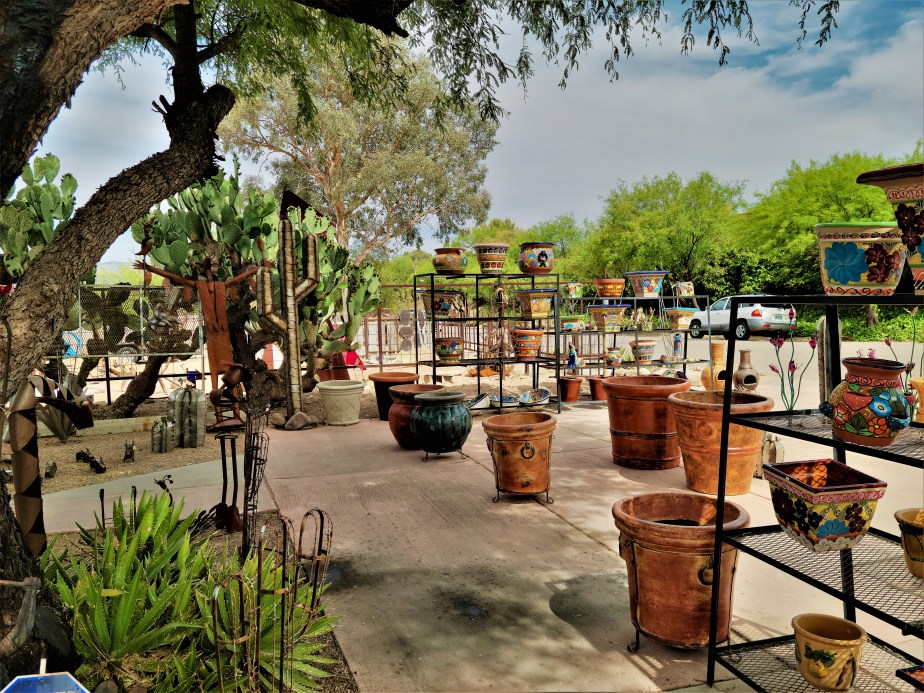
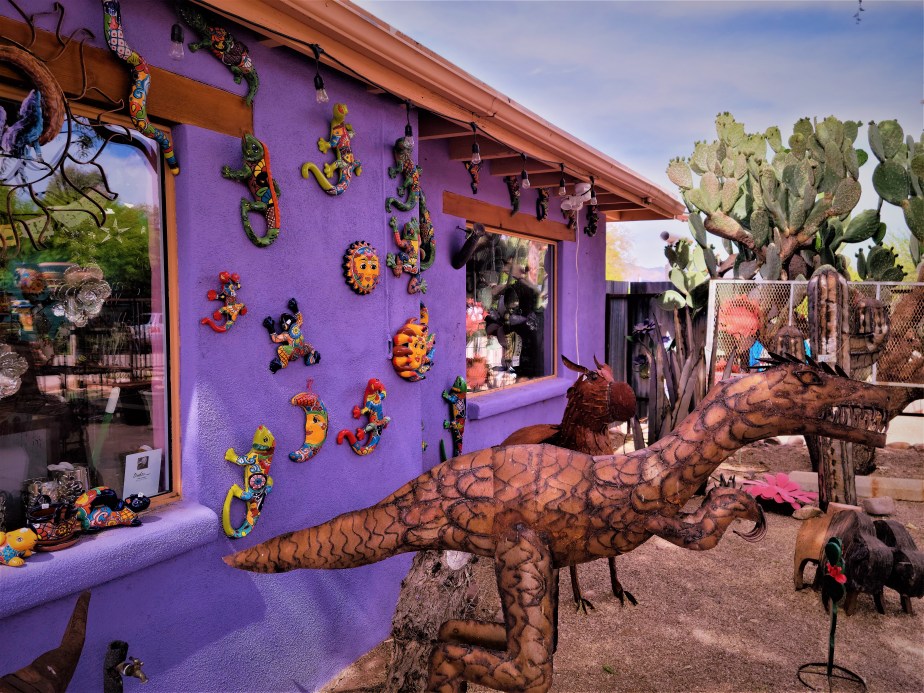
The 100 or so shops, art galleries, and museums, many of them made of dried earth, clay, and straw bricks called adobe, were painted in a variety of colors ranging from soft blues, greens, and pinks, to more bold pistachio and red. If it became too toasty perusing the displays of art ranging from tin javalinas and coyotes to intricately wrought metals, mosaics, tiles, pottery, and jewelry on the front patios and side yards of the art galleries and stores—which comprise, along with restaurants, the major businesses in Tubac—the interiors were cool.
A little history is called for and Tubac almost 250 years old, certainly has that. It’s current laid back charm as an artist colony belies a bloody wild west history including Apache attacks, Civil War troops, and desperados eager for quick cash litter its history. All to be expected on an outpost along the Spanish Colonial Frontier. Besides being the first European settlement in Arizona with the first newspaper and the first white women, Tubac was also where in 1789 the first school in the state first opened. Of course, it wasn’t a state back then but part of Mexico as it would remain—along with Tucson—until 1853.
Early times were tough for Tubaca (or as the friendly O’odham Indians would have pronounced it “s-cuk ba’a” “cu wa”) meaning place of the dark water or low place. Or at least that’s one story. Marshall Trimble, Arizona’s official historian and vice president of the Wild West History Association, writes its name came about based on a clash between bands of Indian. The resulting dead and the searing sun led the Pima to choose the name that translates to “Where something smelled rotten.”
Whatever. Since this is ultimately a food and travel story, we’re going to skip any more details like that except to say that it wasn’t quite as dreamy as it is now.
While Arizona booms—Phoenix is the fastest growing city in the U.S.—there’s a laid back charm to Tubac as if time stopped half-a-century ago.
The population in 2019 was just under 1400. Though the landscape is far from the verdant greens of the Midwest, the Santa Cruz River runs through here and feeds the stands of mesquite, willows, and the chartreuse-colored cottonwoods that make such a startling contrast against the desert palate of beiges, browns, and subdued yellows.
Creativity at all levels defines Tubac and the restaurants and overnight accommodations showcases great food and luxurious places to summon your inner—and slightly pampered—cowgirl. With no chains, the village’s restaurants are independent and often family-owned.
The 500-acre Tubac Golf Resort & Spa was once part of the Otero Ranch, settled in 1789 features several levels of dining options including The Stables Ranch Grille and La Cantina. Shelby’s Bistro serves Southwestern and Mexican cuisine. Both are almost always rated among the village’s top ten but the one that really intrigued me was Elvira’s because of its history having first opened in Nogales, Mexico in 1927 as a take-out joint. Now the place to go for sophisticated Mexican cuisine, owner/chef Ruben Monroy, grandson of the original founder, takes traditional dishes such as moles (they have a large variety), quesadillas, chiles rellenos including one named after Frida Kahlo the Mexican artist known for her use of bold colors, and other Mexican fare and kicks them up several notches. The drink list features tequila and mezcal, Mexican wines and beers as well as Margaritas made with a variety of fruits such mango, tamarind, and agave honey along with other cocktails such as mojitos and guanabanatinis—a martini made with guanabana, a fruit that grows in Mexico.
From the outside, Elvira’s is attractive with ochre-colored exterior walls, tile and wood accents, pots filled with flowers, and hanging lights made of large metal spheres with cut out stars.
Inside, it’s something else. Monroy earned degrees in graphic arts and interior design before going to culinary school and his training is evident. Blue walls are the backdrop for large-framed mirrors, colorful cascading lights suspended in various heights from the ceiling, a sleek wooden bar, vases and pots, red curtains, candle holders in an array of shapes and sizes, Mexican crafts and art, and so much more that everywhere you look there’s something fascinating to behold. In case you like what you see, there’s a home décor store adjacent to the restaurant’s entrance.
One of the streets in Tubac (and there aren’t many) is named Calle Frida Kahlo (calle is Spanish for street) but I couldn’t find any reference to her having visited the town during her short life. But I know that she was an enthusiastic cook and so I looked up her recipe for Poblano Chiles Stuffed with Picadillo that was adapted from “Frida’s Fiestas: Recipes and Reminiscences of Life with Frida Kahlo” (Clarkson Potter). The book, written by Guadalupe Rivera and Marie-Pierre Colle, says this dish was served at her wedding to Diego Rivera.
Mexican cuisine can be complicated and if you’re feeling somewhat lazy, you can turn this dish into a casserole using the recipe I included below the one served at Frida and Diego’s wedding. I should note that the marriage didn’t last but their on and off again affair did until she passed away.
Poblano Chiles stuffed with Picadillo
Serves 8
16 poblano chiles, roasted, seeded, and deveined
All-purpose flour
5 eggs separated
Corn oil or lard
3 lbs. ground pork
1 large white onion, halved
3 garlic cloves, chopped
6 tablespoons lard or oil
1 small onion, finely chopped
2 zucchini, finely chopped
1 lb. tomatoes, seeded, chopped
1 cup cabbage, shredded
3/4 cup blanched almonds, chopped
1/2 cup raisins
Tomato broth ( see recipe below)
Prepare chiles: Char chiles over an open flame or under the broiler, then place in a plastic bag, seal and let steam for about 10 to 15 minutes. Remove from bag and using the back of a spoon peel off skin.
Make a lengthwise slit in the chile, remove the seed cluster, seeds, and membrane with a knife but leave the stem intact and place on a cookie sheet. Place the poblanos in the freezer as they will easier to fill and batter when cold.
Prepare the Filling: Cook the pork with the onion halves, garlic and salt and pepper for about twenty minutes. Drain the liquid and remove onion. Heat the oil or lard in a sauté pan, adding the onion, carrots, and zucchini, cooking until onion is translucent. Add the tomato, cabbage, almonds, raisins and pork and season with salt and pepper to taste. Simmer mixture for about twenty minutes until it has thickened, and the tomato is cooked through.
Stuff Chiles: Stuff the chiles with filling, then dust with flour. Beat the 5 egg whites until stiff. Beat the yolks lightly with a pinch of salt and gently fold into the whites to make a batter. Dip the chiles into the batter and fry in very hot oil until golden. Drain on paper. Serve with tomato broth.
Tomato Broth for Stuffed Chiles
3 tablespoons olive oil
1 onion, thinly sliced
2 carrots, peeled and thinly sliced
10 Roma tomatoes, charred, seeded, and chopped
1/2 cup vinegar
3 tablespoons sugar
Salt and pepper
2 teaspoons dried oregano
1/2 cup queso cotija or ranchero cheese, crumbled
Char the tomatoes using the same method as above for the peppers. Heat the olive oil and sauté the onion and carrots until softened. Add the tomatoes, vinegar, sugar, and salt and pepper to taste. Simmer for 10 minutes. Stir in the oregano and continue to cook until the broth is rich and flavorful, and the tomatoes cooked through. Ladle broth onto a plate and place the chile on top. Garnish with queso cotija or ranchero cheese.
Chile Rellenos Casserole
2 large fresh poblano chile peppers or fresh Anaheim chile peppers
1 ½ cups shredded Mexican-style four-cheese blend or make the Picadillo recipe above
½ cup crumbled Cotija or Ranchero cheese
3 eggs, lightly beaten
¼ cup milk
⅓ cup all-purpose flour
½ teaspoon baking powder
¼ teaspoon cayenne pepper
⅛ teaspoon salt
1 large can of enchilada sauce or use the Tomato Broth recipe above
Serves 4
1 large can of enchilada sauce or use the Tomato Broth recipe above.
The basic difference here is that instead of stuffing the peppers, then coating them in batter, and frying, roast the peppers according to the first recipe, slice them lengthwise so the entire pepper can be laid flat.
Grease a casserole dish, add a layer of the sauce, lay the peppers on top and the cover with the desired filling—either the cheese or the picadillo sauce that Frida made.
Top with more sauce, another layer of roasted peppers, filling and sauce. Repeat until all the ingredients are used. a medium bowl combine eggs and milk. Add flour, baking powder, cayenne pepper, and salt.
Beat egg mixture until smooth. Or if using a food processor or blender, place in a food processor, cover and process or blend until smooth. Pour mixture over peppers and filling.
Bake for 15 minutes in a 400°F. or until golden brown.
Mushroom Quesadillas
Makes 6
12 flour tortillas
½ pound mushrooms
Butter
1 ½ to 2 cups shredded Mexican cheese mixture
1 Poblano pepper, roasted, seeded and finely chopped
Your favorite salsa
Thinly slice mushrooms and place in a skillet with one tablespoon melted butter. Cook until done. Drain any juices left.
Preheat oven to 300°F.
Heat a heavy skillet (cast iron works well) on high. Butter one side of each tortilla. Place as many as the skillet will hold but no more than six. Top each tortilla evenly with mushrooms, diced roasted pepper, cheese, and salsa. Top with the other tortilla, butter side up. Cook until cheese starts to melt, adjusting the heat to make sure the tortillas don’t burn. Flip over and cook until the tortilla is golden brown.
Transfer the quesadillas to a cookie sheet and place in oven. Cook the remaining quesadillas.
Serve with sour cream or Mexican crema and salsa. Can be served whole or cut in half or quarters.
Mango Margarita
From “Love & Lemons Cookbook” by Jeanine Donofrio.
3 cups cubed frozen mango, from about 4 small mangos
¼ cup lime juice, plus lime slices for garnish
3 ounces silver tequila
2 ounces Cointreau
3 handfuls ice cubes
Sea salt for the glass rims, optional
Place the mango, lime juice, tequila, and Cointreau in a blender and blend until smooth. Add the ice and blend to the desired consistency. If the mixture is too thick to blend, let it sit and melt for a few minutes.
If desired, use a lime wedge to moisten the rims of the glasses and then dip the rims in a small plate of salt.
Pour the mango mixture into the glasses and garnish with a lime slice.
The Broadmoor Manitou and Pikes Peak Cog Railway, America’s highest railway takes passengers to the 14,115-foot summit where the song “America The Beautiful” was written starting this May.
The round trip aboard one of only two cog railways in the U.S. begins and ends at the new Manitou Depot and features an expansive passenger platform and viewing deck for photographs and two retail stores with snacks and beverages. Perched at the top amidst stunning views is the new fully accessible, environmentally sustainable, $60 million-plus Pikes Peak Visitor Center. Here to help visitors learn about their surroundings are digitally interactive displays that bring the history, significance and geology of the mountain to life.
There’s more adventure as well including hiking, biking, and such trail experiences as hiking on the 13-mile Barr Trail up to Pikes Peak and then riding the train down or taking the Cog up and biking down the 19.5 mile from the summit on a guided excursion.
“The Cog is an important part of Colorado and the West’s heritage,” said Ted Johnston, assistant general manager of the Railway. “We’re excited to re-open the railway for the public to experience and enjoy this scenic American adventure that has such a rich history. We’ve been working on this project for three years, and we are very excited to take our first trains and passengers up the mountain.”
Originally built in 1891 and owned and operated by The Broadmoor since 1925, this historic railway is the highest railroad in America, the highest cog railway in the world, one of Colorado’s top attractions, and one of the nation’s most unique experiences. Since October 2017, it has been undergoing a $100 million renovation of its tracks, cogs, railcars, and depot to create a new and improved journey to the summit.
Aerial shot of Cloud Camp courtesy of Wikimedia Commons.
Travelers who would like to ride the Cog and make their visit even more memorable may stay at The Broadmoor and take advantage of the historic hotel’s one-night package offer, which includes classic accommodations (upgrades available), Cog Railway train tickets for each person on the package, a commemorative gift, plus suites available at 25% off published rates. The rates start at $640.00 per night, based on double occupancy.
In celebration of the 130th anniversary of the Railway this June 30, The Broadmoor and Pikes Peak Visitor Center will host a celebratory event and ribbon-cutting ceremony at the historic site.
It includes two championship golf courses, an award-winning spa and fitness center, nationally recognized tennis staff and program, 19 retail boutiques and 17 restaurants, cafes and lounges. Other activities include falconry, mountain biking, hiking, rock-climbing tours, fly-fishing, Wild West Experiences and more.
The BROADMOOR Wilderness Experience properties are three unique, all-inclusive boutique facilities that highlight an authentic Colorado experience while offering mountain rustic luxury along with The Broadmoor’s legendary service. In addition, The Broadmoor owns and manages three attractions that include the Pikes Peak Cog Railway, Seven Falls and the Soaring Adventure zip-line courses.
To Get There: Colorado Springs Airport, 15 minutes from the resort, offers over 4,900 seats a day for passengers via Southwest Airlines, American Airlines, Delta, Frontier and United. Denver International Airport, 70 minutes north of Colorado Springs, hosts more than 1,600 national and international flights daily with connections to worldwide destinations. Door-to-door shuttle or sedan service from both airports is available through Gray Line.
The Ranch at Emerald Valley courtesy of Wikimedia Commons.
Cost: To experience the scenic 9-mile journey to the 14,115 foot National Historic Landmark of Pikes Peak may now purchase tickets online for dates and times this spring and summer. The cost for standard admission is $58.00 for adults and $48.00 for children 12 and under for advance e-ticket purchases or $59.50 at the depot ticket window. Guests may select specific seats on the train by upgrading to the reserved seating option for $68.00 for adults and $58.00 for children.
The fall and winter schedules and seasonal holiday experiences will be announced soon. Visitors interested in updates can sign up to receive email alerts on the Cog’s website.
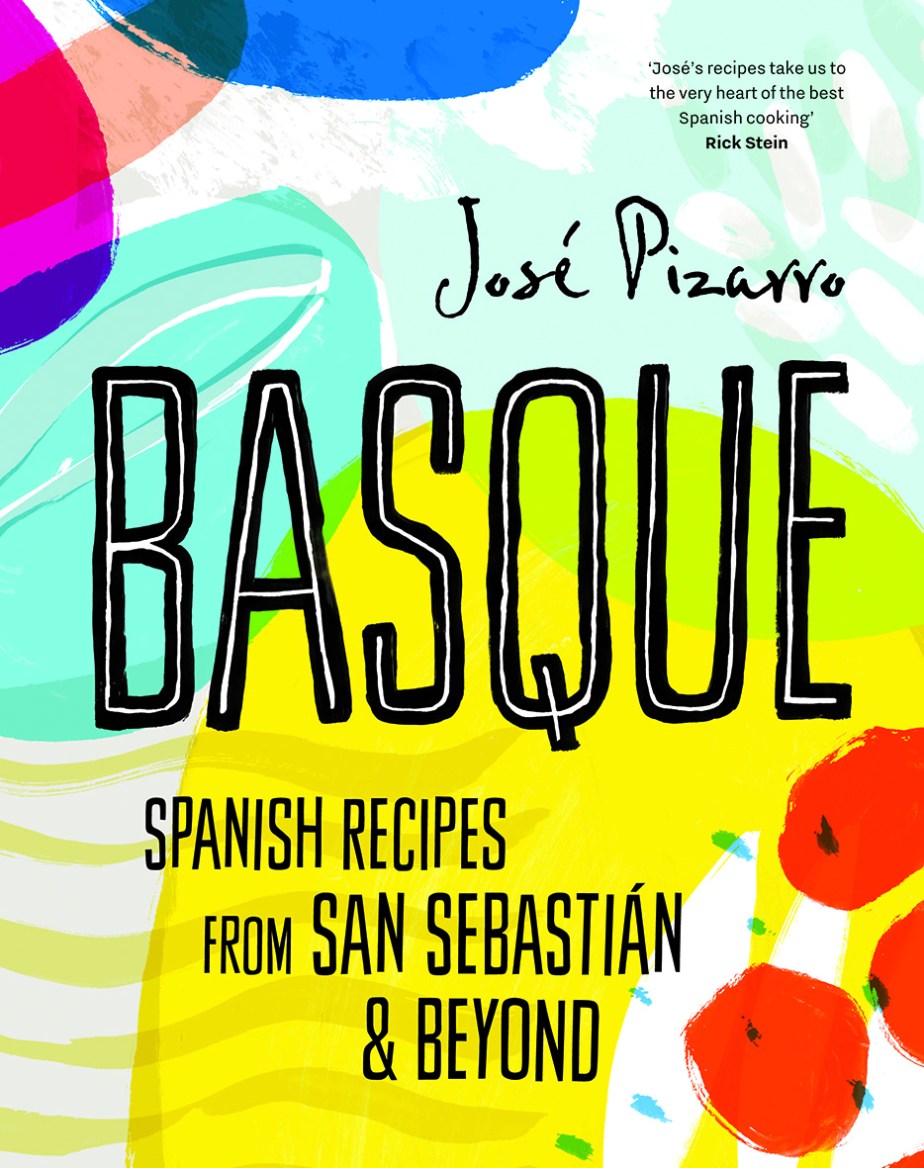
Credited with popularizing Spanish cuisine in Great Britain. His cookbook, Basque (Hardie Grant 2021; $22.95), is a great way to explore the beautiful Basque region of Spain.
“The Basque Country is feted across Spain, and indeed the world, for its culinary creativity,” says Pizarro. “It has more three Michelin-starred restaurants than anywhere else, and I can understand why – there are so many local products that you can be inspired by here.”
Chicken Stewed in Cider & Apples
“My inspiration for this dish, as with many of my recipes, came from seeing the ingredients together,” says Pizarro. “When I see them, I just have to create a plate of food. When we were in Astarbe in a beautiful cider house, I saw the chickens hopping around the apple trees, and that was it.”
The Astarbe Experience includes a restaurant and an assortment of wonderful foods and tastings of their ciders.
Serves 6
olive oil
1 free-range chicken (1.8–2 kg/4 lb–4½ lb)
sea salt and freshly ground black pepper
1 apple, peeled, cored and halved
2 onions, finely sliced
2 bay leaves
6 sage leaves
1 cinnamon stick
500 ml (17 fl oz) cider
400 ml (13 fl oz) fresh chicken stock
25 g (1 oz) unsalted butter
3 apples, peeled, cored and sliced into 8 pieces
1 teaspoon caster (superfine) sugar
75 g (2½ oz) sultanas
Preheat the oven to 160ºC (320ºF/Gas 3).
Heat a layer of oil in a large casserole dish. Season the chicken inside and out and brown all over in the casserole dish. Set aside and put the halved apple inside the cavity.
Add the onions to the casserole and fry for 10 minutes to soften. Return the chicken to the pan and add the herbs and cinnamon.
Pour in the cider and bubble for a few minutes, then add the stock. Bring to the boil, then cover and transfer to the oven to cook for 1 hour.
Meanwhile, heat a little oil and the butter and fry the rest of the apples with the sugar until golden and caramelised. Add the sultanas and toss in the buttery juices. Add to the casserole about halfway through the cooking time.
Remove the lid of the casserole and turn up the oven to 220ºC (430ºF/Gas 7). Cook for 10 minutes more to brown the top of the chicken, then serve.
Photo by Laura Edwards.
Sautéed clams with garlic, lemon & parsley
“Clams are popular all over the world as they are so versatile,” says Pizarro about this wonderful dish. “When you are planning to cook for more than a couple of people, this is something that you must consider; ingredients and dishes your friends will love but are also quick prepare, so that you don’t spend the whole time at the stove.
“You can boil some pasta with this for a really easy lunch, and add some chilli for an extra kick.”
1 kg (2 lb 3 oz) fresh palourde clams, cleaned few sprigs of thyme, leaves stripped
handful of finely chopped flat-leaf
parsley
Heat a little oil in a deep heavy-based stockpot. Fry the garlic and lemon slices for 30 seconds, then increase the heat to high, tip in all the clams and cover with a lid. Cook for 2–3 minutes, shaking the pan occasionally, until the clams have all opened (discard any that refuse to open).
Add the lemon juice and herbs and serve with lots of crusty bread to mop up the juices.
Photo by Laura Edwards.
Pan-fried hake with sautéed wild chanterelles & sage
“Hake is one of the most sought-after fish in the Basque Country,” says Pizarro when sharing this recipe. “I really don’t know why it’s not as popular here in the UK, particularly as it’s plentiful – I think most of the catch from the sea here goes to Spain!
“In my family, our favourite way of cooking hake is a la romana, or Roman
style, which means that it’s battered.
“In this recipe, I bring two big flavors together, the sage and the mushrooms, but they complement the fish very well.”
Serves 4
olive oil 2 French shallots, finely chopped 2 garlic cloves, crushed few small sage leaves 300 g (10 1⁄2 oz) chanterelles, cleaned
100 ml (31⁄2 fl oz) fresh fish stock sea salt and freshly ground black pepper 4 hake fillets (175 g/6 oz each)
Heat a little olive oil in a pan and gently fry the shallots for 5–10 minutes until really soft. Add the garlic and sage and cook for 30 seconds, then increase the heat and add the mushrooms. Fry for 4–5 minutes, then add the stock and bubble for a couple of minutes. Season and set aside.
Heat a heavy-based frying pan with a little bit of oil. Add the hake skin side down and cook for 4–5 minutes until almost cooked through. Flip over and cook for 30 seconds more.
Put the cooked hake, skin side up, into the pan with the mushrooms. Cook for a minute or two more, then serve.
Recipes excerpted with permission from Basque by José Pizarro published by Hardie Grant Books, March 2021.
To Celebrate His Birthday and Cinco de Mayo, Dwayne Johnson and his Teremana Tequila are Thanking Everyone For Supporting Their Local Restaurants by Picking Up the Check for their Guacamole
Starting May 1st, Dwayne ‘The Rock’ Johnson and his ultra-premium small batch tequila, Teremana, will launch “Guac on the Rock”, an initiative to encourage people around the country to go and support their local restaurants. From May 1st through May 5th, Johnson’s Teremana will reimburse restaurant goers for their guac, up to $1,000,000 of guac, when they purchase guacamole with any Teremana Tequila cocktail. The initiative, aimed at encouraging people to dine out however they feel most comfortable – dining inside or outside at the restaurant or for take-out, will help spur consumer confidence and generate millions of dollars of additional revenue and tips for restaurants and its servers hard-hit by the pandemic.
“No better way to celebrate my 397th birthday, than with all of us helping our favorite local restaurants get back on their feet, all while drinking some Teremana and enjoying our favorite guacamole. I want to help get people safely back into our restaurants, bars and hotels. This is an industry close to my heart and one who normally gives all of us so much support year-round. These people need our help and support to get back in business,” says Johnson. “Let’s go help them out, enjoy some amazing drinks and food and say thank you for all they do. And let everyone know that The Guac’s on The Rock!”
Consumers 21 and over who purchase a Teremana cocktail with an order of guacamole will be reimbursed up to $10—whether they dine in or take out (in some states legal rules vary due to state laws). To locate restaurants that carry Teremana ultra-premium, small-batch tequila, head to the Find Us page at Teremana.com.
Additional Information:
Consumers upload their itemized receipt by heading directly to guacontherock.com or by scanning the unique QR code in the restaurant
Reimbursement will be up to $10 per person for a single guacamole order and will be capped nationwide at $1 million dollars of guacamole purchased
Once approved, funds will be transferred directly to the customers Venmo account
Offer valid from Saturday, May 1st, 2021 – Wednesday, May 5th 2021
Participants must be aged 21 and over and a resident of the United States
Open to legal residents of Alabama, Alaska, Arizona, Arkansas, California, Colorado, Connecticut, Delaware, District Of Columbia, Florida, Georgia, Hawaii, Idaho, Illinois, Iowa, Maryland, Massachusetts, Michigan, Minnesota, Missouri, Montana, Nebraska, Nevada, New Hampshire, New Mexico, New York, North Dakota, Ohio, Oklahoma, Oregon, Pennsylvania, Rhode Island, South Carolina, South Dakota, Vermont, Washington, West Virginia, Wisconsin, And Wyoming, who are twenty-One (21) years of age or older at the time of participation.
Teremana is an ultra-premium, small-batch tequila crafted at the highest peaks of the Jalisco highland mountains. With two expressions, a blanco and a reposado, its name translates as ‘spirit of the earth,’ from the Latin word ‘terra,’ meaning earth, and the Polynesian word ‘mana,’ meaning spirit. Only made from fully mature, naturally sweet agave slow roasted in small traditional brick ovens and distilled in handmade copper pot stills, Teremana has quickly become the tequila of the people.
Penguins, Bourbon, Art, & Haute Southern Cuisine come together in Louisville.
Much more than a place to lay your head, 21c Museum Hotel with locations in Louisville, Cincinnati, Des Moines, Chicago, St. Louis, Lexington, Kansas City, Oklahoma City, Nashville, Durham, and Bentonville, Arkansas, is a total immersion into art or, maybe better put, it’s a night in the art museum.
Penguin Love. Photo of 21c Museum Hotel Louisville.
In Louisville, it started when I spied a 4-foot penguin at the end of the hall as I headed to my room but 30 minutes later when I opened my door, the rotund red bird was there in front of me. “Don’t worry,” said a man walking by. “They’re always on the move.”
Proof on Main. Photo courtesy of 21c Museum Hotel Louisville.
The migratory birds, sculptures first exhibited at the 2005 Venice Biennale and now part of the collection of 21c Museum Hotel in Louisville add a touch of whimsy. But with 9,000 square feet of gallery space and art in all corridors and rooms, three-fourths coming from the owners’ private collection valued at $10 million, 21c is a serious museum.
Proof on Main. Photo of 21c Museum Hotel Louisville.
Carved out of five former 19th-century bourbon and tobacco warehouses, 21c is both part of the revitalization of Louisville’s delightful downtown and a transformation of art from backdrop into upfront and thought-provoking.
The sleek, minimalist interior — uber-urbanism with linear white walls dividing the main lobby and downstairs gallery into cozy conversational and exhibit spaces — is softened with touches of the buildings’ past using exposed red brick walls and original timber and iron support beams as part of the decor. Named by Travel + Leisure as one of the 500 Best Hotels in the World, 21c is also the first North American museum of 21st-century contemporary art.
Photo courtesy of 21c Museum Hotel Louisville.
I find more whimsy on a plate at Proof on Main, the hotel’s restaurant, when the waiter plops down my bill and a fluff of pink cotton candy — no after-dinner mints here. For more about the cotton candy, see the sidebar below. But the food, a delicious melange of contemporary, American South, and locally grown, will please even the most serious foodinista. It’s all creative without being too over the top. Menu items include charred snap peas tossed with red chermoula on a bed of creamy jalapeno whipped feta,
Bison Burger. Photo and recipe courtesy of 21c Museum Hotel Louisville.
And, of course, the Proof on Main staple since first opening. 8 ounce patty, char grilled to your preferred temp (chef recommended medium rare), served with smoky bacon, extra sharp cheddar and sweet onion jam to compliment the game of the meat nicely. Local Bluegrass bakery makes our delicious brioche buns. The burger comes house hand cut fries. For the ending (but it’s okay if you want to skip everything else and get down to the Butterscotch Pot De Créme, so very luxuriously smooth and rich pot de creme with soft whipped cream and crunchy, salty pecan cookies.
Mangonada at Proof on Main. Photo and recipe courtesy of 21c Museum Hotel Louisville.
House-cured pancetta seasons the baby Brussels sprouts, grown on the restaurant’s 1,000-acre farm. Local is on the drink menu as well with more than 50 regional and seasonal Kentucky bourbons.
A meal like this demands a walk, so I step outside (more art here) on Main, a street of 19th-century cast-iron facades, the second largest collection in the U.S. Once known as Whiskey Row, it’s refined now as Museum Row on Main. To my left, a 120-foot bat leans on the Louisville Slugger Museum and Factory, across the street is the Louisville Science Center, and nearby are several more including the Muhammad Ali Center.
Heading east, I take a 15-minute stroll to NuLu, an emerging neighborhood of galleries, restaurants and shops. I’ve come for the Modjeskas, caramel-covered marshmallows created in 1888 in honor of a visiting Polish actress and still made from the original recipe at Muth’s Candies. On the way back to 21c, I detour through Waterfront Park, a vast expanse of greenway on the Ohio River, taking time to bite into a Modjeska and watch boats pass by.
21C MUSEUM HOTEL, 700 W. Main St., Louisville, Ky., 502-217-6300, 21chotel.com
Pink Cotton Candy for Dessert. Photo courtesy of 21c Museum Hotel Louisville.
As an aside, the idea for the cotton candy originated with co-founder Steve Wilson. Here’s the story, from the restaurant’s blog, Details Matter. “A memory that sticks with Steve from his younger years is the circus coming to town. Steve grew up in a small town in far Western Kentucky along the Mississippi River called Wickliffe He distinctly remembers the year the one striped tent was erected on the high school baseball field. Certainly not the large three ringed circus many others may remember, but the elephants, the handsome people in beautiful costumes…they were all there. When Steve sat through the show he got a glimpse into a fantasy world he didn’t know existed. A departure from reality. Oftentimes, after his trip to the circus, when he was sad or frustrated, he would daydream about running away to the circus. In fact, he’ll tell you he used to pull the sheets of his bed over his head, prop them up in the middle and pretend to be the ringmaster in his own crazy circus tent! In his eyes, the circus was where everything was beautiful, and no one would cry.
There’s that darn penguin again. Photo courtesy of 21c Museum Hotel Louisville.
“Fast forward many years later, Steve met Laura Lee Brown at a dinner party in Louisville. He was immediately smitten and wanted to impress her. SO naturally one of his first dates was a trip to the circus at the KY Expo Center. Whether she was impressed or not, it seems to have worked.
“Years later, as Steve and Laura Lee were working on the development of 21c Louisville, they took a trip to Mexico City. At the end of one particularly memorable dinner, the server ended the meal with pink cotton candy served on a green grass plate. It was sticky, messy, and immediately brought back memories from Steve’s childhood. It was a feel good memory he wanted to last.
“Steve often says 21c makes him actually FEEL like the ringmaster in his own circus, so as the restaurant plans were getting finalized, he wanted to incorporate cotton candy as an homage to that feeling. As we opened up each new restaurant, the cotton candy continued, each time with a color and flavor to match the color of the hotel’s resident penguins. Eight operating restaurants later, the hope is that each and every diner ends their meal a little sticky, a little messy, and feeling nostalgic about good childhood memories.”
And again! Photo courtesy of 21c Museum Hotel Louisville.
Recipes courtesy of Proof on Main
Buttermilk Biscuits
2 cups self-rising flour
½ tsp kosher salt
1 tbsp light brown sugar
1 cup buttermilk
¼ heavy cream
6 tbsp butter
2 tbsp Crisco
Pre-heat oven to 350F. Grate butter on the coarse side of the grater and put butter in the freezer along with the Crisco. Mix all dry ingredients together in a bowl. Mix cream and buttermilk in a separate bowl. Once butter is very cold combine with the dry ingredients with hands until a coarse meal is made. Add the cold dairy to the mixture and fold until just combined. Roll out dough on a floured clean surface and cut biscuits with a ring mold cutter. Layout on sheet trays 2 inches apart. Bake for 8 minutes and rotate set timer for 8 more minutes. Once out of the oven brush with melted butter.
SMOKED CATFISH DIP
Smoked Catfish Dip. Photo and recipe courtesy of 21c Museum Hotel Louisville.
This recipe makes a lot, but you can easily divide it—or put the extra in a mason jar and give to a friend as a holiday gift.
YIELD: 1 QUART
1 lb. Smoked catfish 1 teaspoon Dijon mustard 1 cup sour cream 3 Tablespoons small diced celery 3 Tablespoons small diced white onion Juice and Zest of One Lemon 1 Tablespoon chopped fresh parsley 2 Tablespoons mayonnaise Salt and black pepper to taste
TO SERVE
Lemon wedges Hot sauce Pretzel crackers Fresh dill for garnish
Flake the fish with your hands until it is fluffy. Combine the mustard, sour cream, celery, onion, parsley, lemon juice and zest and the mayonnaise together. Combine with the catfish and mix until it is well incorporated. Season to taste with salt and freshly ground black pepper. Serve cold with fresh dill and lemon wedges, your favorite hot sauce and pretzel crackers.
Mangonada
“This is a slightly complex variation of a margarita, adding smoky mezcal, bright cilantro and tangy mango-tamarind syrup. It was created as a play on the Mexican sweet treat, the Mangonada, with mango, a tamarind candy stick, and Tajin seasoning.” – Proof on Main Beverage Director, Jeff Swoboda.
3/4 oz Banhez 3/4 El Jimador Blanco 1/4 oz Cynar 70 1 oz mango-tamarind syrup 3/4 oz lime juice big pinch of cilantro
Shake together with ice, strain over fresh ice and garnish with a Tamarrico candy straw.
Proof on Main’s Mint Julep
1 cup mint leaves, plus a sprig or two for garnish
1 ounce sugar syrup
2 ounces bourbon
Crushed ice to fill glass
In a rocks glass, lightly press on mint with a muddler or back of a spoon. Add the sugar syrup. Pack the glass with crushed ice and pour the bourbon over the ice. Garnish with an extra mint sprig.