My friends at Mindy Bianca Public Relations tell me they love representing Bowling Green, Kentucky for many reasons, but at the top of their list is the fact it’s the hometown of Duncan Hines. Most of us know his name from boxed cake mixes sitting on the grocery shelves, but that’s just part of his story as Mindy would say. Here’s a big wedge of American pop culture for you … perhaps best served with a tall glass of milk.
Let’s start close to where Duncan Hines himself did … right near Bowling Green, Kentucky. Boyce’s General Store is a foodie heaven, serving as the kitchen and retail shop for two phenomenal dessert bakers, The Pie Queen and The Cake Shop. Though the dynamic duo who bake the cakes create all sorts of flavors – the display case simply makes your mouth water – we’re most intrigued by the bundt cakes. No matter which flavor you get, you can expect a cake that’s moist and rich and covered in a cream cheese glaze. If you don’t need to serve 10 to 12 of your closest friends, go for the mini sampler, which features one each of chocolate, apple spice, snickerdoodle and red velvet.
For years, Caroline’s Cakes has been sending its delicacies out through their successful mail-order service. Last year, though, the bakers finally opened a storefront along Beaumont Avenue in Spartanburg, meaning that visitors to this town along the northern border of South Carolina can finally walk into a shop for an immediate taste of one of the city’s most delicious exports. The 7-Layer Caramel Cake features – surprise! – seven layers of moist yellow cake crowned by melt-in-your-mouth caramel icing. It’s a Southern classic that has achieved ultimate success: making it to Oprah’s list of favorite things! (It’s on our list of favorite things, too, but we know that doesn’t carry nearly as much prestige as Oprah’s.)
When Hurricane Katrina blew through Louisiana in 2005, Keith and Nealy Frentz, who were both sous chefs at the world-famous Brennan’s restaurant in New Orleans, found themselves out of work. They evacuated to Keith’s hometown of Covington and opened their own restaurant just a year later. It’s hard to decide on the very best meal at Lola – we can confirm that everything on the menu is delicious – but one thing is certain: You must end that meal with a piece of hummingbird cake. Nealy uses her grandma’s recipe to craft this moist banana cake that’s filled with chunks of juicy pineapple and a dash of cinnamon. It’s all topped off with a decadent cream cheese icing, ensuring that both the fruit and dairy food groups are beautifully represented. Hooray for Nealy’s take on the food pyramid!
Lane Cake was invented by Emma Rylander Lane more than 100 years ago as an entry in Alabama’s state fair, with its recipe being officially published in a cookbook in 1898. It entered popular culture through multiple mentions in Harper Lee’s 1960 novel To Kill a Mockingbird, and it ultimately bumped hummingbird cake (sorry, Nealy!) out of the way to become Alabama’s official state dessert. The cake gets its incredible flavor from its rich icing, which is made with chopped pecans, golden raisins, coconut and Alabama whiskey and then spread between layers and layers of moist cake. Chef Jim Smith, proprietor of The Hummingbird Way Oyster Bar, one of Mobile’s favorite restaurants, is the former executive chef for the State of Alabama … so we can confirm he knows his way around the state’s favorite dessert.
The MBPR team is proud to represent an array of Southern destinations, and you’ll see a running theme among them when it comes to their baked goods: moist cake, some sort of fruit or nut, cream cheese icing. Our favorite selection in Lafourche Parish, Louisiana, aka “Louisiana’s Cajun Bayou,” is the Italian Cream Cake from the charming Cajun Pecan House. The place lives up to its name and tosses pecans on and in pretty much everything. Lots of folks come here looking for a pecan pie or a praline – both of which are delicious – but the bakers also put plenty of their namesake nut into a yellow cake batter that’s made extra-moist by the addition of coconut. Then they slather it in a rich cream cheese icing that’s topped with additional coconut and – you guessed it – more pecans! It feels more Southern than Italian to us, but we are NOT complaining!
Your sweet tooth will get quite a workout at the Deep South Cake Company, which is home to a dazzling array of cakes and cupcakes. But the winner by a landslide – the bakery sells at least 1,400 of them between Thanksgiving and Christmas alone – is the legendary caramel cake. Shannon Rumley and her team put a lot of time and energy into this cake, which features a burnt sugar icing that Shannon’s mother and grandmother taught her how to make when she was just a kid. Achieving the proper consistency for the icing requires constant stirring, so this cake truly is a labor of love. If you’re not into caramel – or if you’re loyal to Caroline’s Cakes (see above) and feel guilty eating a caramel cake from anywhere else – don’t fear: Shannon’s second-best seller is a strawberry cake that cuts the sweet with a little zip from the berries.
Speaking of strawberries, how about that classic romantic combo of berries and champagne? There’s a lot to love about a stay in the historic HOTEL DU PONT in downtown Wilmington, but we think that being just a few paces away from the offerings at Spark’d, the hotel’s bake shop, is one of the strongest motivators for booking a room here. The Pink Champagne Cake is the delightful merger of strawberry cake, strawberry jam and Champagne buttercream icing. With a little advance notice, the hotel’s pastry team is also happy to create a custom design to ensure that the cake you order is perfectly suited to its recipient.
A Louisiana bakery that proves that so-called seasonal cakes are amazing all year round is Mrs. Johnnie’s Gingerbread House. Locals know – and visitors are finally discovering – that gingerbread is appropriate for every season, not just Christmastime. This low-key shop, which is easily mistaken for a neighborhood home, is hidden in plain sight. But those in the know (many of whom learned about the Gingerbread House thanks to a viral TikTok video last year) can tell you that this popular establishment offers a special cake that throws one heck of a Christmas party in your mouth. Leona Guillory Johnnie, the original owner of the bakery, spent 40 years perfecting the recipe. Today her son, Kevin Ames, continues her legacy, also serving traditional tea cakes and an array of pies.
Look for the “Cake Man” on the beaches of Negril during a stay at Sunset at the Palms
It’s not gingerbread, but some people swear that ginger is the magic ingredient in a dessert that our client resort in Jamaica turned us on to. It’s called “gizzada,” but it also goes by the nickname “Pinch Me Round.” Though it’s technically more of a tart than a cake, the fact that a guy called the “Cake Man” sells gizzadas during his rounds on the beaches of Negril convinced us that the dessert warrants a spot on our list. Each islander has their own spin on this classic Jamaican dessert, which features a pinched pastry shell filled with plenty of sweet, grated coconut. Some bakers like to add a touch of ginger to give it a little kick. The dessert is said to have originated among Portuguese Jews who came to Jamaica to escape persecution, but over the years the Jamaicans have made the dessert truly their own. In fact, they say that the shape of the treat will remind you of the shining sun you’ll see on your trip to the island.
If you can’t get to Jamaica right now, you may be able to live vicariously with a visit to Market Wego, a proper Cajun market in southeastern Louisiana. Its owner, River Shay, says her grandmother, Tricia, simply loved visiting Jamaica. On each of her trips, Tricia liked to sample the island’s rum cakes. Over the years, she took what she loved about each variation to create her very own recipe. Her cake truly pays homage to Duncan Hines, because Tricia swore by using only a Duncan Hines cake mix as the base … and then adding an extra splash of rum at the end. Her recipe is still used to this day, and patrons order the cake at all hours – breakfast, lunch and dinner!
Dolly Parton’s theme park is known for its delicious meal offerings – around here, “park food” means way more than hot dogs and funnel cakes – but during Dollywood’s annual Flower & Food Festival (this year held April 21 through June 11), the culinary team really steps up its game to make foods that are as attractive as they are tasty. One of our favorites is the collection of “flower cupcakes” available at Spotlight Bakery near the park’s entrance. Each flower cupcake is a beautiful work of art that celebrates the natural beauty of the park, which is nestled in the Great Smoky Mountains of East Tennessee. And to bring it full circle, Parton recently collaborated with Duncan Hines’ namesake company, resulting in her very own line of cake, muffin and biscuit mixes.
Our community has been using their skills and creativity to pivot, fill food system gaps, and serve Hawaiʻi’s nutritional needs during this unprecedented time.
Through thoughtful interviews and photographic portraiture, we spotlight the necessity of a collective commitment needed to sustain our emerging system of resiliency, of a self-sufficient Hawaiʻi. From Feeding Hawai’i.
Well, this doesn’t bode well I think upon seeing the entrance to Castillo de La Mota blocked by women archers dressed in long skirts under magenta jumpers each stitched with the insignia of a yellow bird with spiky feathers. But what is most daunting about the scene is that their bows are raised, arrows notched, and the strings pulled back. If they let go, we’ll be hit with a barrage of arrows.
A man behind me grouses to his wife “another day, another castle” but then stops as he sees what is in front of us. It certainly may be another castle here in Spain but it’s not a typical day. I mean, when was the last time you were threatened by Medieval female warriors?
“Password,” shouts the tall woman who looks like she’s in charge.
“Isabelle,” I call back without thinking.
“Isabella,” she responds.
Oops.
But it’s good enough. The archers lower their bows and part, allowing us to cross the drawbridge into the fortified castle, one of many that belonged to Queen Isabella of Spain.
We are in Medina del Campo, a town known since the 15th century for its fabulous fairs and markets as well as being one of the places Queen Isabella of Spain called home. And though it’s the 21st century, once inside the castle keep it well could be seven centuries ago.
We are not only in Isabella’s castle, we’re also in her time. Men, women, and children are dressed in the everyday garb of 15th century Spain, soldiers wear bright red doublet cut with yellow inserts, red pantaloons that stop above the knee, white stockings and leather shoes ranging in colors like blue, red, and beige.
I don’t know much about 15th century weaponry beyond bow and arrows and swords–and even that is very limited. But here the soldiers not only carry broad swords and rapiers, but also pikes and spears. Silver helmets top their heads and somewhere metal collars, part of a suit of armor.
La Mota isn’t a fairy tale castle, it was a large strong fortress that the townspeople as well as the King and Queen could go for refuge. She and her husband Ferdinand II lived in a royal palace in the town’s major plaza though Isabella wrote her will and took Last Rites at age 53 at La Mota. Dating back to the 11th century, it grew through the centuries becoming the largest castle in Castile.
Called La Mota because it is on a small hill rising above the town, it has turrets (2), towers (4), thick walls and a courtyard. Unguided tours are available as are guided tours which can be booked here
In her day, Isabella, one of the few women rulers at the time, would have dined on rabbit, deer, bear, lamb, and bread. She would have enjoyed leeks but little else in the way of vegetables. Juan Alejandro Forrest de Sloper whose blog Book of Days combines his passions for world cuisine and as an anthropologist with a focus on rituals and celebrations. De Sloper was a professor of anthropology at Purchase College, S.U.N.Y for 32 years but he also spent time living throughout the world and learning to cook in all sorts of kitchens.
In his post on Isabella he shares a dish from Libre Del Coch, a Catalan cookbook—the first written cookbook–written by Robert de Nola who went by the pseudonym Mestre Robert who was the chef to King Ferdinand I of Naples. The Catalan version was published in 1520 in Barcelona and translated to Castilian Spanish five years later. Parts of the cookbook are based on a famous medieval cookbook titled Llibre de Sent Soví.
The cookbook includes classic dishes that were popular with the wealthy (and Isabella was surely that) during the 1400s. Casola de Carn or Meat Casserole is like many recipes or receipts as they were called then, there’s no list of ingredients or amounts. It’s all a little murky for 21st century cooks, and phrases like “all the fine flavorings” are a little—no make that a lot baffling. There are also ingredients such as aggrestal (spelled in the recipe as agressta) means wild plant which can sure cover a lot of ground.
Casola de Carn
(Meat Casserole)
Cut the meat into pieces the size of a nut and fry it in pork fat. When it is well fried put in some good broth and set it to cook in a casserole. Add all the fine flavorings and saffron and a little orange juice or agresta and cook well until the meat begins to fall apart and only a small amount of broth remains. Add three or four eggs beaten with orange juice or agresta. When your master is ready at table, turn the meat four or five times to let the sauce thicken. When it is thick, take it from the fire and serve it in bowls, sprinkled with a little cinnamon on each.
There are some people who do not add eggs, or spices except cinnamon and cloves. The meat is cooked as stated above.
They add vinegar, for the flavor. It appears that many people do it in the following manner: the meat is left whole stuffed with cinnamon and cloves, and with the other spices in the broth. The meat must be turned from time to time so that it doesn’t cook more in one part than in any other. You can leave out the cloves and cinnamon if you follow the other directions correctly.
As wonderful as Isabella’s meal might have been, our luncheon at El Motero in Medina del Campo probably was equally good. Because Medina del Campo is a stop on the wonderful Rueda Wine Route, we indulged in the local wines and dined on fish, baby lamb, and a variety of whimsical dishes such as canelón de mango relleno de frutos de mar y gelatina de gazpacho (Mango cannellon stuffed with sea fruit and gazpacho jelly), tartar de tomate, aguacate,salmón marinado ,wakame sobre pan de Cerdeña (Tomato Tartar, Avocado, Marinated Salmon, Wakame on Sardinian bread)and Mini san Jacobo de lomo asado y salsa de piña (Mini San Jacobo roasted loin and pineapple sauce).
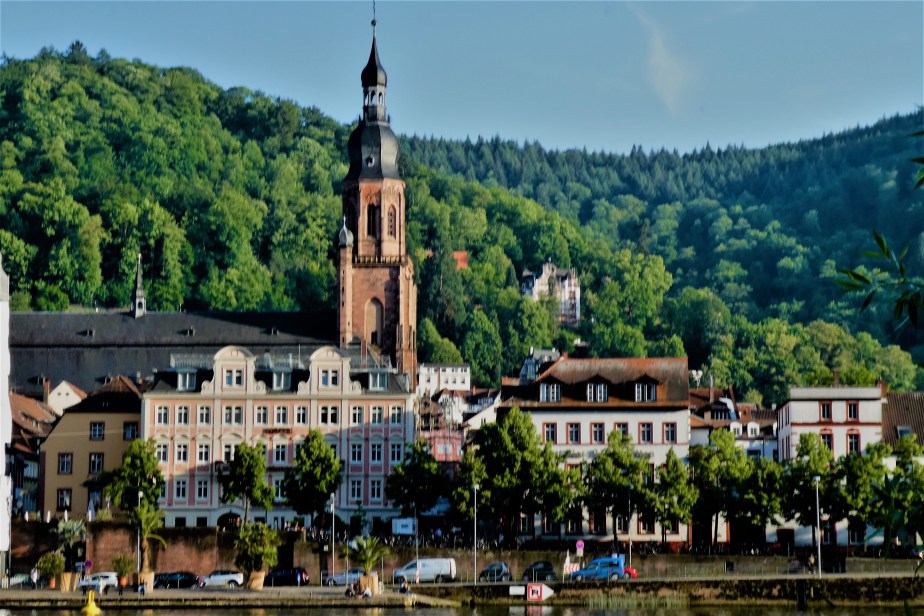
When Prince-Elector Friedrich V married Elizabeth Stuart, the daughter of King James I in 1613, it was–like the majority of royal marriages—based on political alliances and gains. Love had nothing to do with it.
Photo by Jane Simon Ammeson
But sometimes it worked out differently and so it was between Friedrich and Elizabeth who fell in love. Heidelberg Castle, where they lived, was already old, dating back to 1200s and the Prince-Elector wanting Elizabeth to love her new home added an English Palace and an elaborate Baroque garden.
But theirs was to be a tragic love story. There were battles, a throne lost, regained, and then lost forever. During all that, Elizabeth bore 13 children before Fredrich died and she sought life in exile.
Heidelberger Schloss
The castle, a romantic ruin of seemingly endless staircases and corridors taking you here, there, and sometimes nowhere, stands 330-feet above the Alstadt, Heidelberg’s wonderful old town. Towers and battlements protect stone facades, their decorative features still intact though the rooms behind them are gone. Views into the multitude of windows reveals not an interior but woods and the Neckar River below.
“Deserted, discrowned, beaten by the storms, but royal still, and beautiful,” is how Mark Twain described the Gothic-Renaissance castle. He was one of many poets and writers who spent time in what they considered the most romantic city in the world.
Photo Jane Simon Ammeson
The castle is also home to the Heidelberg Tun, a 58, 124 gallon wine barrel said to be the largest in the world. It was built in 1751 on orders from Prince Elector Karl Theodor to store the wine paid in taxes by the region’s wine growers. We should all be so lucky to have too much wine.
Brews and Pork Knuckles
Taking the funicular down to the old town, I meet friends at Vetter’s Alt Heidelberger Brauhaus on Steingasse, Europe’s longest carless street. It’s one of those baronial style Germanic places with high ceilings, large wood beams, long tables and a lot of dark highly polished wood.
Famed for their Vetter’s 33, which they say is the strongest beer in the world, its alcohol content is—you guessed it—33%. But it isn’t all beer her, they’re famed for their traditional German food and so I decide to go full German, ordering the pork knuckle, sauerkraut and dumpling with gravy. Skipping the 33, I opt for the Hubier—a mix of the lager and elderberry syrup.
History, Luxury and a Family Touch
Courtesy of Hotel Europaischer Hof Heidelberg.
My love affair with the city began several years before when I checked into the five-star Hotel Europäischer Hof Heidelberg. The hotel, one of the few five-star family run hotels in Europe, opened in 1865 and has been owned by von Kretschmann family since around the turn of the last century.
Courtesy of Hotel Europaischer Hof Heidelberg.
I’d heard that Sylvia von Kretschmann, who with her husband Ernst-Friedrich, ran the hotel for a half-century before their daughter Dr. Caroline von Kretschmann took over, regularly did the hotel’s large floral arrangements. So it was no surprise when I ran into this very elegant woman doing just that in Die Kurfürstenstube, the hotel’s opulent dining room that opened in 1866. Such a romantic place and romantic tradition—how could I not fall in love?
Courtesy of Hotel Europaischer Hof Heidelberg
Chocolate Kisses
My romance continued at Chocolaterie Knosel where owner Liselotte Knosel talked about studentenkussor or student kiss, a chocolate covered nougat created by her great grandfather Fridolin Knosel in 1863. His Café Knosel was frequented by male university students who admired women from a local finishing school who were, alas, chaperoned by their governesses. A gift of student kisses was a sly way to start a flirtation.
We don’t know how well it turned out for the students but these confections, still hand crafted, remain best sellers more than 150 years later. Café Knosel—the city’s oldest café—is my go to spot for coffee and a pastry at one of their outdoor tables overlooking the church on Marktplatz.
At dusk, on my last night, I boarded Patria, a 1930s ship for dining and a cruise along the Neckar River. Watching the city lights sparkle in the calm water, I knew that though my visit was ending, the romance was just beginning. I would be back.
Penguins, Bourbon, Art, & Haute Southern Cuisine come together in Louisville.
Much more than a place to lay your head, 21c Museum Hotel with locations in Louisville, Cincinnati, Des Moines, Chicago, St. Louis, Lexington, Kansas City, Oklahoma City, Nashville, Durham, and Bentonville, Arkansas, is a total immersion into art or, maybe better put, it’s a night in the art museum.
Penguin Love. Photo of 21c Museum Hotel Louisville.
In Louisville, it started when I spied a 4-foot penguin at the end of the hall as I headed to my room but 30 minutes later when I opened my door, the rotund red bird was there in front of me. “Don’t worry,” said a man walking by. “They’re always on the move.”
Proof on Main. Photo courtesy of 21c Museum Hotel Louisville.
The migratory birds, sculptures first exhibited at the 2005 Venice Biennale and now part of the collection of 21c Museum Hotel in Louisville add a touch of whimsy. But with 9,000 square feet of gallery space and art in all corridors and rooms, three-fourths coming from the owners’ private collection valued at $10 million, 21c is a serious museum.
Proof on Main. Photo of 21c Museum Hotel Louisville.
Carved out of five former 19th-century bourbon and tobacco warehouses, 21c is both part of the revitalization of Louisville’s delightful downtown and a transformation of art from backdrop into upfront and thought-provoking.
The sleek, minimalist interior — uber-urbanism with linear white walls dividing the main lobby and downstairs gallery into cozy conversational and exhibit spaces — is softened with touches of the buildings’ past using exposed red brick walls and original timber and iron support beams as part of the decor. Named by Travel + Leisure as one of the 500 Best Hotels in the World, 21c is also the first North American museum of 21st-century contemporary art.
Photo courtesy of 21c Museum Hotel Louisville.
I find more whimsy on a plate at Proof on Main, the hotel’s restaurant, when the waiter plops down my bill and a fluff of pink cotton candy — no after-dinner mints here. For more about the cotton candy, see the sidebar below. But the food, a delicious melange of contemporary, American South, and locally grown, will please even the most serious foodinista. It’s all creative without being too over the top. Menu items include charred snap peas tossed with red chermoula on a bed of creamy jalapeno whipped feta,
Bison Burger. Photo and recipe courtesy of 21c Museum Hotel Louisville.
And, of course, the Proof on Main staple since first opening. 8 ounce patty, char grilled to your preferred temp (chef recommended medium rare), served with smoky bacon, extra sharp cheddar and sweet onion jam to compliment the game of the meat nicely. Local Bluegrass bakery makes our delicious brioche buns. The burger comes house hand cut fries. For the ending (but it’s okay if you want to skip everything else and get down to the Butterscotch Pot De Créme, so very luxuriously smooth and rich pot de creme with soft whipped cream and crunchy, salty pecan cookies.
Mangonada at Proof on Main. Photo and recipe courtesy of 21c Museum Hotel Louisville.
House-cured pancetta seasons the baby Brussels sprouts, grown on the restaurant’s 1,000-acre farm. Local is on the drink menu as well with more than 50 regional and seasonal Kentucky bourbons.
A meal like this demands a walk, so I step outside (more art here) on Main, a street of 19th-century cast-iron facades, the second largest collection in the U.S. Once known as Whiskey Row, it’s refined now as Museum Row on Main. To my left, a 120-foot bat leans on the Louisville Slugger Museum and Factory, across the street is the Louisville Science Center, and nearby are several more including the Muhammad Ali Center.
Heading east, I take a 15-minute stroll to NuLu, an emerging neighborhood of galleries, restaurants and shops. I’ve come for the Modjeskas, caramel-covered marshmallows created in 1888 in honor of a visiting Polish actress and still made from the original recipe at Muth’s Candies. On the way back to 21c, I detour through Waterfront Park, a vast expanse of greenway on the Ohio River, taking time to bite into a Modjeska and watch boats pass by.
21C MUSEUM HOTEL, 700 W. Main St., Louisville, Ky., 502-217-6300, 21chotel.com
Pink Cotton Candy for Dessert. Photo courtesy of 21c Museum Hotel Louisville.
As an aside, the idea for the cotton candy originated with co-founder Steve Wilson. Here’s the story, from the restaurant’s blog, Details Matter. “A memory that sticks with Steve from his younger years is the circus coming to town. Steve grew up in a small town in far Western Kentucky along the Mississippi River called Wickliffe He distinctly remembers the year the one striped tent was erected on the high school baseball field. Certainly not the large three ringed circus many others may remember, but the elephants, the handsome people in beautiful costumes…they were all there. When Steve sat through the show he got a glimpse into a fantasy world he didn’t know existed. A departure from reality. Oftentimes, after his trip to the circus, when he was sad or frustrated, he would daydream about running away to the circus. In fact, he’ll tell you he used to pull the sheets of his bed over his head, prop them up in the middle and pretend to be the ringmaster in his own crazy circus tent! In his eyes, the circus was where everything was beautiful, and no one would cry.
There’s that darn penguin again. Photo courtesy of 21c Museum Hotel Louisville.
“Fast forward many years later, Steve met Laura Lee Brown at a dinner party in Louisville. He was immediately smitten and wanted to impress her. SO naturally one of his first dates was a trip to the circus at the KY Expo Center. Whether she was impressed or not, it seems to have worked.
“Years later, as Steve and Laura Lee were working on the development of 21c Louisville, they took a trip to Mexico City. At the end of one particularly memorable dinner, the server ended the meal with pink cotton candy served on a green grass plate. It was sticky, messy, and immediately brought back memories from Steve’s childhood. It was a feel good memory he wanted to last.
“Steve often says 21c makes him actually FEEL like the ringmaster in his own circus, so as the restaurant plans were getting finalized, he wanted to incorporate cotton candy as an homage to that feeling. As we opened up each new restaurant, the cotton candy continued, each time with a color and flavor to match the color of the hotel’s resident penguins. Eight operating restaurants later, the hope is that each and every diner ends their meal a little sticky, a little messy, and feeling nostalgic about good childhood memories.”
And again! Photo courtesy of 21c Museum Hotel Louisville.
Recipes courtesy of Proof on Main
Buttermilk Biscuits
2 cups self-rising flour
½ tsp kosher salt
1 tbsp light brown sugar
1 cup buttermilk
¼ heavy cream
6 tbsp butter
2 tbsp Crisco
Pre-heat oven to 350F. Grate butter on the coarse side of the grater and put butter in the freezer along with the Crisco. Mix all dry ingredients together in a bowl. Mix cream and buttermilk in a separate bowl. Once butter is very cold combine with the dry ingredients with hands until a coarse meal is made. Add the cold dairy to the mixture and fold until just combined. Roll out dough on a floured clean surface and cut biscuits with a ring mold cutter. Layout on sheet trays 2 inches apart. Bake for 8 minutes and rotate set timer for 8 more minutes. Once out of the oven brush with melted butter.
SMOKED CATFISH DIP
Smoked Catfish Dip. Photo and recipe courtesy of 21c Museum Hotel Louisville.
This recipe makes a lot, but you can easily divide it—or put the extra in a mason jar and give to a friend as a holiday gift.
YIELD: 1 QUART
1 lb. Smoked catfish 1 teaspoon Dijon mustard 1 cup sour cream 3 Tablespoons small diced celery 3 Tablespoons small diced white onion Juice and Zest of One Lemon 1 Tablespoon chopped fresh parsley 2 Tablespoons mayonnaise Salt and black pepper to taste
TO SERVE
Lemon wedges Hot sauce Pretzel crackers Fresh dill for garnish
Flake the fish with your hands until it is fluffy. Combine the mustard, sour cream, celery, onion, parsley, lemon juice and zest and the mayonnaise together. Combine with the catfish and mix until it is well incorporated. Season to taste with salt and freshly ground black pepper. Serve cold with fresh dill and lemon wedges, your favorite hot sauce and pretzel crackers.
Mangonada
“This is a slightly complex variation of a margarita, adding smoky mezcal, bright cilantro and tangy mango-tamarind syrup. It was created as a play on the Mexican sweet treat, the Mangonada, with mango, a tamarind candy stick, and Tajin seasoning.” – Proof on Main Beverage Director, Jeff Swoboda.
3/4 oz Banhez 3/4 El Jimador Blanco 1/4 oz Cynar 70 1 oz mango-tamarind syrup 3/4 oz lime juice big pinch of cilantro
Shake together with ice, strain over fresh ice and garnish with a Tamarrico candy straw.
Proof on Main’s Mint Julep
1 cup mint leaves, plus a sprig or two for garnish
1 ounce sugar syrup
2 ounces bourbon
Crushed ice to fill glass
In a rocks glass, lightly press on mint with a muddler or back of a spoon. Add the sugar syrup. Pack the glass with crushed ice and pour the bourbon over the ice. Garnish with an extra mint sprig.
Jason Santos is restauranteur who owns Buttermilk & Bourbon, a Louisiana-centric restaurant in Boston as well as Citrus & Salt, a coastal Mexican restaurant in Boston’s Back Bay as well as his new B & B Fish in Marblehead, featuring coastal New England summertime favorites with Jason’s signature twists.
Santos also is a recurring guest on the Today Show, the CBS Early Show, the CBS television show The Talk, and subsequent seasons of Hell’s Kitchen and appears regularly on the popular Paramount TV hit show, Bar Rescue – where he rehabilitates failing restaurants and bars as a restaurant consultant alongside Jon Taffer. Also look for him on season 19 of Fox’s hit show Hell’s Kitchen along with Chef Gordon Ramsay as his sous chef for the Blue Team.
1 cup meat scraps, diced (bacon, andouille, pork belly, ham, etc.)
½ cup diced celery
¾ cup diced shallots
1 tablespoon minced garlic
1 tablespoon tomato paste
1 cup white wine
2 bay leaves
1 tablespoon fresh thyme, chopped
8 ounces cream cheese
1 cup heavy cream
1 cup half & half
½ cup grated Parmesan cheese
½ cup shredded fontina
½ cup shredded yellow cheddar
½ cup shredded gouda
½ pound campanelle pasta, cooked (can substitute fusilli, penne, rigatoni, macaroni, or rotini
Salt and pepper, to taste
1 cup spicy cheese puffs (I like Flamin’ Hot Cheetos), slightly crushed
¼ cup minced chives
½ cup spicy cheese puffs, whole
Preheat the oven to 400ºF. In a heavy-bottomed pot, melt 2 tablespoons of the butter and sauté the meat scraps until lightly browned, about 3 to 5 minutes. Remove the meat, reserving the fat. Then add the celery, shallots and garlic and cook until soft, about 3 to 5 minutes. Add the tomato paste and cook for another 3 minutes to incorporate.
Deglaze with the wine and reduce by half, about 10 minutes. Add the bay leaves, thyme, cream cheese, heavy cream, and half & half. Bring to a simmer for 10 minutes. Add the Parmesan, fontina, cheddar and gouda and simmer for 10 more minutes. Remove the bay leaves and puree the entire mixture with a stick blender (or in batches using a regular blender/food processor). Add the meat scraps back to the pot.
Combine the sauce with pasta and season with salt and pepper.
Divide the mixture into 4 casserole dishes. Melt the remaining 2 tablespoons of butter and combine with the crushed Cheetos, and scatter on top of the pasta mixture. Bake for about 7 minutes or until bubbly. Garnish with chives and the whole Cheetos
Photograph by Penny De Los Santos-Diabetic cookbook, Author Amgela Medearis
“People are eating African American food every day, but they don’t know it,” Angela Shelf Medearis says to me when we chat on the phone. In part, she’s talking about James Hemings who, in the complicated way of slavery, trained in the culinary arts in Paris and became a noted chef de cuisine and yet lived most of his life enslaved. Hemings either created or introduced a variety of the foods we eat now such as macaroni and cheese, ice cream, French fries, meringues, crème brulée, and French-style whipped cream. Another dish he created that we don’t eat regularly if at all is his handwritten recipe for snow eggs–soft, poached meringue, set in puddles of crème anglaise.
Hemings was the son of Sally Hemings, an enslaved woman and John Wayles, the man who “owned” her. The two had six children together. Wayles also had a more traditional family and his daughter Martha married a plantation owner named Thomas Jefferson. Thus, James was the half-brother of Martha Jefferson who “inherited” James (that’s so creepy I even hate writing it) when Wayles died. James was eight when they all came to live at Monticello. His youngest sister, Sally was just an infant. To make matters even more complex, after Martha died and Sally reached some type of maturity—she was probably in her mid-teens, she became Jefferson’s mistress and had six children by him, four of whom lived to adulthood.
So, Sally Hemmings was Martha Jefferson’s half-sister, and her children were half-siblings to Martha and Thomas’s children. I mention all this not only to show how helpless enslaved people were as to what happened to their bodies but also to show how intertwined Black and White families were and how the foodways of both merged.
But while Hemings introduced the Frenchified cookery to America,
Medearis, the founder of Diva Productions, Inc., the organization that produces her multicultural children’s books, cookbooks, videos, and audiocassettes, points out that people weren’t eating black-eyed peas before Africans arrive in this country.
“Back then they even thought tomatoes were poisonous,” she says. “But when they shipped slaves, they also shipped the foods they ate with them because that was a cheap way to feed them,” she says. “The recipes for those foods traveled from one place to the other. If they stopped in the Caribbean or South America before coming here, then the recipes changed with the foods and spices available and the types of cooking techniques.”
“I only cooked enough that social services wouldn’t come and take away my children,” she says with a laugh. But her mother, after she retired, decided she wanted to market her raisin pie for some extra income.
While her mother and sister did the cooking, Medearis who often wears feather boas during her TV appearances and on her PBS cooking show and isn’t shy about being in the limelight, did the marketing.
But when her mother and sister decided to quit, Medearis knew she had to learn to cook if she wanted to keep her food business going.
Now she’s so full force that celebrity chef and restauranteur Bobby Flay arrived for a Jerk Chicken Throwdown while she was marinating jerk chicken for a family get. It was for his Food Network show Throwdown with Bobby Flay.
Who won I ask?
Medearis’s Jerk Chicken
“My chicken had been marinating for hours,” Medearis replies. “He just arrived from Manhattan and threw some spices on his chicken. It burned. I beat Bobby.”
Though she originally didn’t cook Medearis had written several loved historic research. Did I know that George Washington Carver drove a food wagon around to introduce people to healthy foods?
No. I knew that Carver, who famously said, “There is probably no subject more important than the study of food,” was born a slave and became a botanist, author, educator and agriculturalist. He also collaborated with auto magnate Henry Ford on growing peanuts and soybeans.
And don’t even get her started on Carver and black-eyed peas.
“Black-eyed peas, okra, peanuts and sesame seeds, and the oil they produce, are documented contributions from Africa via the slave trade to our American cuisine,” she writes in her syndicated column. “I prepared black-eyed peas any number of ways while doing research for my first cookbook.”
That would be The African-American Kitchen: Cooking from Our Heritage, a best seller that even now 30 years later is considered a standard on the foodways African Americans bought to this country. The problem though was getting it published. Her award winning children’s books were published by Dutton and when she brought the idea for her cookbook, she found an editor there who loved the book. But the editor at the next level turned it down, saying he’d published an African American cookbook almost 30 years earlier and no one bought it. He didn’t think the country was ready for another.
What’s a Kitchen Diva to do? Make a peach pie, of course, as it’s representative of both Black and Southern food history.
“You could hardly get a peach pie anywhere back then in Manhattan,” says Medearis. Wrapping up both the peach pie and the manuscript, separately we presume, she sent both off to the publishing company.
She got the contract.
“That book sold so many copies it was crazy,”
Overall, she’s written 107 books seven of which seven are cookbooks. Published in seven languages, she’s sold a total of 14 million books. But despite that, she’s not ready to stop.
“People ask me when I’m going to retire,” says Medearis who lives in Austin, Texas. “Why should I? I’m having a lot of fun with it. I’m doing what I want to do.”
Creole Chicken Stew
Makes 8 Servings
“This is a quick and healthy version of New Orleans-style gumbo,” writes Medearis about this recipe, which was published in her book, the . “Using frozen vegetables is a real time-saver when making this tasty stew; it’s also the perfect way to use kohlrabi when in season. Select small, tender okra pods for this recipe, and don’t slice them until right before you add them to the stew.”
1½ tablespoons olive oil
1 cup chopped yellow onions
1 cup coarsely chopped carrots
¼ cup chopped celery
4 cloves garlic, minced
1 bay leaf
2 teaspoons diced seeded jalapeño chile
¼ teaspoon salt
1 teaspoon freshly ground black pepper
½ teaspoon dried thyme
2 tablespoons whole-wheat flour
3 cups reduced-sodium chicken broth
1½ pounds boneless, skinless chicken breasts, cut into 1-inch-wide strips
1 cup peeled cubed Yukon Gold potatoes or kohlrabi, or a combination
1 cup diced zucchini
1 cup halved okra or frozen cut okra
4 cups cooked brown rice
2 green onions, chopped, including green parts
In a large pot, heat 1 tablespoon of the oil over medium-high heat. Add the yellow onions, carrots, celery, garlic, bay leaf, jalapeño, salt, pepper, and thyme and sauté until the onion is translucent, about 3 minutes.
Using a slotted spoon, transfer the vegetables to a plate, leaving as much oil in the pot as possible. Add the remaining ½ tablespoon of oil. Stir in the flour. Cook, stirring constantly, until the flour begins to turn golden brown, about 3 minutes.
Gradually whisk in the broth and cook for another 5 minutes, whisking until smooth. Bring the mixture to a boil, then reduce the heat to a simmer. Add the chicken, potatoes or kohlrabi, and zucchini. Return the sautéed vegetables to the pan. Partially cover and simmer, stirring occasionally, for 20 to 30 minutes.
Add the okra and cook for 15 to 20 minutes. Remove the bay leaf. Serve over ½ cup of rice per person and sprinkle with the green onions.
Kitchen Diva: Tap Your Inner Chef With DIY Recipes
Angea Medearis, the Kitchen Diva, wrote one of her syndicated columns on creating Do-It-Yourself recipes.
“Basically, a DIY dinner recipe is about finding a way to retain the flavors of the recipes you love while using the ingredients that you have on hand,” Medearis writes. “If you have always wanted to free yourself from the restraints of a recipe, now is the time to do it! Think of the current lack of ingredients as permission to tap into your inner chef.”
To ease into creating your own DIY dinner recipes, Medearis suggests starting by making a pot of chowder.
“No one really knows the origin of the term chowder,” she writes, “but whether it came from French, Caribbean, Portuguese or Brazilian cooks, the basic meaning is connected to the large pot that the meal is cooked in.”
Medearis is a history buff paritcularly when it comes to food.
“Chowders were introduced to North America by immigrants from France and England more than 250 years ago. Native Americans called the dish ‘chawder’.” she says noting the word interpreted as “chowder” by early settlers and fishermen in New England.
“The original versions of the dish consisted of a pot filled with a mixture of fresh fish, salt pork, leftover hardened biscuits (which were used as a thickener), onions, water and whatever spices were available, writes Medearis. “A chowder is a delicious way to use the ingredients you have on hand to create a meal that does not require extensive prep or simmering for hours. My recipe for Seafood and Sweet Corn Chowder uses the basic techniques.”
My recipe for Seafood and Sweet Corn Chowder uses the basic techniques for making a chowder, but is designed to accommodate the need to vary ingredients based upon what you have on hand or what you can purchase at the store.
Whether you decide to make a seafood or vegetarian chowder, feel free to create your own version of this DIY dinner.
SEAFOOD AND SWEET CORN CHOWDER
If you don’t have all the vegetables, seafood or spices on hand, omit or substitute the ingredient with what you do have. This chowder will still be delicious without it!
3 tablespoons butter or vegetable oil
1/2 cup (about l large stalk) chopped celery
1/2 medium onion, chopped
1/2 green bell pepper, seeded and chopped
2 garlic cloves, minced or 1/2 tablespoon granulated garlic powder
1 1/2 teaspoons salt
1 1/2 teaspoon ground black pepper
3/4 teaspoon dried dill or tarragon, or 1 tablespoon dill pickle juice
1/8 teaspoon cayenne pepper or red pepper flakes
2 cups chicken broth, seafood stock, clam juice, bouillon fish base or water
1 to 2 large Russet potatoes, or 3 red skin or Yukon Gold potatoes cut into 2-inch cubes, about 2 to 3 cups
2 large carrots, chopped
2 cups frozen corn, thawed, or 1 (15-ounce) can whole kernel or cream-style corn, or 6 ears sweet corn, husk and silk removed, or frozen corn on the cob, thawed with kernels cut from the cobb
2 cups heavy cream, half and half
Whole milk or 2 (14-ounce) cans evaporated milk
1 3/4 to 2 cups fully cooked, skinless salmon chunks, or 1 can (14 3/4 ounces) salmon, drained, flaked, bones and skin removed, or 1 to 2 cups fresh or frozen peeled and deveined shrimp, cooked peeled and deveined shrimp, or cooked crab meat (checked for pieces of shell) or a combination of the seafood equaling 1 3/4 to 2 cups.
1. Place the butter or oil into a large saucepan or Dutch oven placed over medium heat. Add in the celery, onion, green bell pepper, garlic or garlic powder, and 1/2 teaspoon of the salt and pepper, dill, tarragon or dill pickle juice, and the cayenne pepper or red pepper flakes. Saute, stirring occasionally until the vegetables are tender, about 4 to 5 minutes.
2. Stir in the broth, stock, juice or water, potatoes, carrots and the remaining teaspoon of he salt and pepper. Cover and bring the chowder to a boil.
3. Reduce heat to low; stir the mixture, cover and simmer for 40 minutes or until the vegetables are nearly tender. Stir in the corn, cream or milk, and the salmon, shrimp or cooked crab meat (or a combination of seafood). Simmer on low heat for 10 to 15 minutes or until heated through.
4. Garnish with lemon wedges, chopped parsley or green onions. Serve with toasted French bread or crackers. Serves 6
Here’s the Jerk Chicken recipe that won the Throwdown with Bobby Flay.
Combine the oil and vinegar in a medium glass bowl. Stir in the orange and lime juice, molasses, soy sauce, cilantro, green onions, garlic, chili, bay leaves, peppercorns, cinnamon stick, sage,thyme, allspice, pepper, and nutmeg.
Place the chicken pieces in a large baking pan and pour the spice mixture over them, coating each piece well. Cover with plastic wrap and place the chicken in the refrigerator to marinate 12 hours or overnight, turning once.
Allow the chicken pieces to come to room temperature before grilling. Heat the grill until the coals are somewhat white with ash; the flame should be low. Place the chicken on the grill and cover with the lid. Grill for 30 to 35 minutes, turning pieces to cook evenly. Baste pieces with remaining marinade.