A Magical Time to be had in Nayarit’s Pueblos Mágicos

Mexico’s Pacific state of Nayarit is one whose culture, traditions, and gastronomy have put it in the tourist spotlight. One of the best ways to discover the magic of Nayarit is to immerse yourself in its small towns and villages, especially the ones that are renowned for their authenticity, heritage, and culture.

In Mexico, towns that live up to these standards earn a government designation of Pueblo Magico, or Magical Town. Nayarit is blessed with nine Pueblos Magicos — Sayulita, Compostela, Jala, San Blas, Ahuacatlán, Amatlán de Cañas, Ixtlán del Río, Puerto Balleto and Mexcaltitan.  Each of these stunning, charming towns is totally unique, with something different to offer every style of traveler.

Sayulita is one of the original Pueblos Magicos of Mexico. Bohemian travelers, surfers, artists, and wellness seekers have been flocking to the sun-drenched shores of Sayulita for decades. Since the early days of Sayulita’s tourism scene, the small, once-sleepy backpacking town has blossomed into a boutique haven, complete with designer hotels, open-air restaurants, artist galleries, clothing shops, and much more. It has a thriving beach scene, too, complete with palapa-topped restaurants, toes-in-the-sand bars, and a pervasive laid-back culture.

Sayulita also happens to be one of the wellness capitals of Nayarit, with yoga retreats, day spas, spiritual centers, holistic and New Age shops. And surfers and surfers-in-training will feel right at home in Sayulita, as the beaches have ideal waves year-round. The best season for surfing in Sayulita is December to April and the village is the backdrop for various surf tournaments, like the Children’s and Youth Surf Tournament, the Pacific Music Festival Open Surf Tournament, and the Annual Long Table and Rowing Surf Tournament.

Then there is Jala. Tucked at the base of El Ceboruco Volcano, Jala is a perfect example of a Spanish-influenced town surrounded by nature. Here visitors can wander the cobblestone streets and admire mansions from the 18th and 19th centuries. Just four miles from Jala is the El Salto Waterfall, which springs to life during the rainy season from June to September from a height of nearly 100 feet.

The historic center of Jala is spectacular, particularly the streets of Mexico, Zaragoza, and Hidalgo, all of which have been given historical heritage designations by the government. The stunning Lateran Basilica of Our Lady of the Assumption wears a face of pink and green stone. Inside, Ionic and Corinthian columns wreath an impressive dome.

Jala is the jumping off point from which to explore El Ceboruco and dive deep into the adventurous side of Nayarit. The crater of the volcano has a valley veined with trails for cycling and hiking, as well as designated sites for camping.

Tradition and history flow from the streets of Compostela, a city founded in 1530 as the first capital of the Kingdom of New Galicia. This Spanish territory comprised what is now Nayarit, Jalisco, Colima, Aguascalientes, Sinaloa, Zacatecos, and San Luis Potosi. As such, Compostela was a vitally important hub for trade and commerce.

The architecture in Compostela is a must, from the Temple of Mercy of San Santiago Apostol, to the Regional Museum, which houses archaeological pieces from the region. The old Train Station, built on the trunk line of the Southern Pacific Railroad of Mexico, is also a fascinating piece of history.

One of the most important industries in Compostela is its coffee industry, as it is one of the most important for Mexico in terms of coffee bean production. Visitors can tour the coffee plantations and sample some of the finest high altitude coffee in the world.

Finally, Mexcaltitan, the newest of Nayarit’s Pueblos Magicos, is another beachfront destination with a fascinating history. This mythical destination is an island just off the coast of Riviera Nayarit. The tiny enclave is so small that it can be covered on foot in a day, though you’ll likely be covering the streets of Mexcaltitan by boat.

That’s right — by boat. Because of the low elevation of the island, the streets often flood during the rainy season, turning the island into “The Mexican Venice.” Tourists and residents get around the streets and alleyways with the assistance of boats.

Be sure to visit the Museum “El Origen,” an archaeological museum located in the central square in front of the church of San Pedro y San Pablo. Here, a variety of pieces from Mesoamerican cultures is on display.

Mexcaltitan is also known for its gastronomy, particularly its pre-Hispanic recipes made with shrimp. Visitors can try everything from the shrimp meatballs and shrimp-filled tamales, to the shrimp soaked in lemon sauce, shrimp pate, and shrimp aguachile. Of course, you’ll also find oysters, a variety of tacos, and grilled fish.

Nature is also a prime reason to visit Mexcaltitan, especially its Great Lagoon, which is teeming with birds that soar in and out of its mangrove forests. In fact, you’ll have to take a boat ride through the lagoon in order to reach downtown. It’s one of the more magical experiences to have in Nayarit, and one fewer tourists take the time to visit.

Long a hotspot for bird watchers and nature enthusiasts along the Riviera Nayarit, San Blas is a Pacific Coast jewel. The sleepy seaside community is along the northern coast of the state, featuring four miles of fine sand beaches. San Blas is rich in natural beauty, from its navigable canals and mangrove forests to the small islands offshore that welcome more than 300 migratory bird species every year.

San Blas dates back to the 17th century when it was developed as a shipyard and departure point for the Spanish Crown. It was here that the first maritime customs house on the Pacific was established. Today, visitors can tour the Contaduria stronghold, as well as the ruins of the Nuestra Señora del Rosario Temple.

San Blas is also the jumping-off point from which to explore another new Magical Town Puerto Balleto. Puerto Balleto is the gateway to Nayarit’s Islas Marias, a former prison colony turned center for tourism and wildlife viewing. In the early 20th century, Islas Marias were developed as the Islas Marias Federal Penal Colony. The prison remained in use until 2019 when it closed and the land rehabilitated into a place for recreation. The islands include Maria Madre, Maria Magdalena, Maria Cleofas, and San Juanito. Today the group of islands is considered a UNESCO Biosphere Reserve to protect the more than 1,500 species of flora and fauna.

To access Islas Marias, visitors take a ferry from San Blas to Puerto Balleto on Isla Maria Madres. Puerto Balleto is where visitors will find accommodations for Islas Marias, as well as the Plaza Juarez, which is the town center home to the Guadalupe Temple and the Muros de Agua Jose Revueltas Auditorium. The auditorium is plastered with murals created by the former prisoners. The island is a haven for outdoor adventure, as well, from hiking and biking to bird watching.

Heading south in Nayarit, Amatlán de Cañas is another Magical Town that is deeply rooted in history. Its name comes from Nahuatl, meaning “place where Amate y Papel trees abound.” Later, the word cañas was added due to the sugar cane industry in the region. Today, visitors to Amatlán de Cañas will find historic cobblestone streets, adobe homes with red-tile roofs, and a community steeped in history, culture, and tradition.

Amatlán de Cañas is known for its Temple of Jesus Nazareno in the Centro Historico, a church built in the 18th century. The Municipal Palace is another important building that visitors will find in the Centro Historico. Amatlán de Cañas is also known for the bubbling natural hot springs in the surrounding mountains. Foodies can sample the rich and flavorful local delicacies, like lamb birria, tamales, and various locally made sweets.

Located up in the mountains at more than 3,000 feet above sea level, Ahuacatlán also takes its name from the Nahuatl words that translate to “the place with avocados.” Today the community is still known for its agricultural industries, including avocado, sugarcane, and maize. It’s also known for its tequila production.

About an hour outside of Nayarit’s capital, Tepic, Ixtlán del Río is a gateway to pre-Hispanic Mexico, thanks to its proximity to Los Toriles, an important archaeological site in the region. In fact, Los Toriles is the only pre-Hispanic archaeological zone in the state of Nayarit. It features 93 mounds, as well as a series of gorgeous petroglyphs.

But visitors do not have to leave Ixtlán del Río to absorb its history. The famous La Casa de Cultura Museum has exhibition rooms dedicated to archaeology, paintings, and photography.  One of the standout features of Ixtlán del Río is the Cerrito de Cristo Rey, the Hill of Christ the King, a scenic viewpoint with a massive white statue of Christ overlooking the city.

To introduce these new Magical Towns, there is now a Magical Towns corridor in the southern part of Nayarit, creating a route that connects Jala, Ixtlan del Rio, Ahuacatlan, Compostela, and Amatlan de Cañas, showcasing the customs, culture, and cuisine of this fascinating region.

Sam’s Caribbean Kitchen: A Taste of the Islands

Born and raised in Linstead, St. Catherine Parish, Jamaica, Andrew Morris was the ‘washbelly’ of eight children (a Jamaican term for the youngest child) and heavily involved in church life, believing he was destined to become a priest. It didn’t turn out that way.

Immigrating to the U.S. in 1979, Morris endured the typical culture shock of a young man from a small island landing in New York City. But he settled into the rhythm of the big city, graduating from college and working his way up from proofreader and copy editor to associate editor at a publishing company. From there, he earned an MBA at Columbia University.

“It was a grueling but life-changing experience,” says Morris, who used this blend of creativity and business savvy to start, with his wife Jean, Sam’s Caribbean Marketplace in West Hempstead, New York, from the ground up, after noticing there were no real Caribbean-owned stores where he lived on Long Island. “I thought to myself, ‘Somebody’s got to supply these customers properly.’ Caribbean folks deserve a place where people actually know the products, use the products, and can explain the difference between, say, a scotch bonnet pepper and a habanero.”

Following is a Q&A with Morris, who, 30 years later, is still very hands-on, steering the store’s strategic vision, overseeing operations, and “making sure we never lose that heart and authenticity that’s been part of Sam’s since day one​.”

Q.) What has been your favorite memory working for the company so far?

When we made $500 in a single day for the first time, we popped a champagne bottle — and left a dent in the ceiling that’s still there. We needed $800 a day just to break even back then, so $500 felt like a mountain climbed. We celebrated every small win in those early days because we knew how hard it was just to keep the lights on. 

Q.) What are the company’s core products and features?

At Sam’s, we’re proud to offer over 1,000 authentic Caribbean products. We’re talking about everything from Haitian Djon Djon Mushrooms, Excelsior Water Crackers, and St. Mary’s Banana Chips as well as the herbs and spices you need for a proper Sunday dinner. We also offer prepared meals of such island favorites as Jamaican beef patties, braised oxtails, curried chicken, jerk chicken, ackee and saltfish, and curried goat.

These aren’t just items on a shelf — these are the flavors we grew up with. They’re pieces of home. And now, thanks to the upgrades we’ve made to our website, sams24-7.com, and our door-to-door grocery delivery service to Jamaica, customers across the U.S. and beyond can enjoy them, too​. 

Q.) What are some of the challenges you encountered and how did you overcome those challenges?

We’ve had to roll with the punches from the very beginning. Right before we were set to open, someone from the building department came and said, ‘You don’t have a permit.’ I said, ‘Of course we do.’ Turns out, the permit had been rescinded after a last-minute zoning change.. I still remember them telling us it would be $250 per day if we opened anyway.

We fought hard, worked with the mayor, and eventually got through it. But it delayed us by months and almost cost us the business before we even got started.

Today, the battles are different. Competing with big-box retailers and e-commerce giants has been no small task. But we’ve adapted — we modernized our operations, relaunched our website, and even rolled out Predictive AI Delivery (PAID), allowing same-day and scheduled deliveries for customers within 100 miles. As I always say: sometimes coffee, sometimes tea — you take what you get and you keep going. 

Q.) How has the company’s technology evolved since launching?

When we first launched a website 20 years ago, it was a miracle we got anything done​. I built it myself on a Windows platform. You couldn’t even keep a photo in place! But even back then, the day after we launched, we got two orders.

Now, fast-forward to today — we have a fully upgraded e-commerce platform, real-time order tracking, and same-day delivery systems.

“Technology isn’t just a nice-to-have anymore — it’s essential for how we stay connected to our customers, no matter where they are.”

Q.) Can you share any specific customer success stories?

One that touched me recently was a woman who called and said she and her husband were both homebound in wheelchairs​. She used our same-day delivery to order dinner, and she said it made her feel connected again to her Caribbean roots.

Moments like that remind me why we do what we do. It’s not just about food — it’s about bringing a little piece of home to someone who really needs it.

Q.) Can you discuss funding and/or revenue metrics?

Sam’s was originally funded through a Small Business Administration (SBA) loan, which helped us secure our first retail space. Our early online business once brought in around $400,000 annually at its peak​. Today, I can share that we are targeting a return to — and beyond — those earlier numbers through strategic online growth.

Q:) What total addressable market (TAM) size is the company pursuing?

Our core audience consists of the 4.4 million Caribbean-Americans who are living in the United States, and anyone who loves Caribbean food and culture​. But honestly, our reach is global. With improved shipping and technology, we now serve customers not just across the U.S., but in places as far as Canada, Europe, and the Caribbean itself.

Q.) What differentiates the company from its competition?

Simple: authenticity and expertise. We’re Caribbean-owned. We grew up with these products. When you shop at Sam’s, you’re not just buying groceries — you’re getting a piece of our story, our culture, our love.

Other big-box stores can sell you coconut water. We can tell you which coconut water tastes like the ones you drank as a kid.

Q.) What are some of the company’s future goals?

Our dream is for Sam’s to become the go-to Caribbean grocery destination, both online and on the ground​. 

When people think of Caribbean groceries, we want Sam’s to be the first name that comes to mind — whether they’re in New York, California, or wherever. We’re also working to grow our Predictive AI Delivery service and expand same-day options even further.

Q.) Any other topics you would like to discuss?

I just want to say a big thank you to our hardworking employees who make all of this possible.  Thanks also to our faithful customers. Some have been with us for decades. Sam’s isn’t just a store — it’s a meeting place, a memory, a home away from home. And we intend to keep it that way.

As we continue to grow and innovate, our heart remains the same: honoring our Caribbean roots and serving our community with love, integrity, and passion.

I joke that I never woke up thinking I’d run a Caribbean store — but here we are, over 30 years later.

Photos courtesy of Sam’s Caribbean Kitchen and Wikimedia Commons. The video is courtesy of Snack Food & Wholesale Bakery.

Experience Two of the City’s Top Lunch Spots

Ready for a new take on lunch? Enjoy the vibrant flavors of the Mediterranean in Chicago’s Gold Coast neighborhood at Somerset Viceroy Chicago or opt for the sophisticated artistry of modern Japanese cuisine in the West Loop at Nobu Chicago. Our suggestion? Try both.

Somerset at Viceroy Chicago (1118 N State St., Chicago, IL

The Somerset Burger. Photo credit Viceroy Chicago.

Located in the heart of the Gold Coast, Viceroy Chicago’s signature restaurant, Somerset, embodies the motto of “Bright Flavors & Gold Coast Glamour.” The menu blends old-world Mediterranean traditions with a fresh, modern edge, creating a perfect atmosphere for a business lunch or a social outing.

Beet Salad. Photo credit Viceroy Chicago.

Guests can experience the “dance of zesty harissa, smoky zaatar, and the earthy warmth of pistachio and dukkah” through a variety of shareable plates and composed dishes. Those looking for a more substantial lunch can opt for the acclaimed Somerset Burger, layered with chermoula aioli and caramelized onion, or the Crispy Pork Milanese topped with fresh arugula and parmesan. Other midday favorites include Crispy Brussels Sprouts with pumpkin seed pesto or a bubbling Lobster Mac crowned with chili crumb.  

Photo credit Viceroy Chicago.

With its elegant, light-filled dining room and spacious patio overlooking State Street, Somerset offers a stylish yet relaxed setting that works as both a place for a power lunch or an afternoon escape. Paired with curated wines and inventive cocktails, Somerset transforms every midday meal into a vibrant celebration of flavor, culture, and connection. Lunch is served Monday through Friday from 11 a.m to 3 p.m. 

Nobu Chicago (854 W Randolph St, Chicago, IL)

Nobu Chicago Bar Lounge. Photo credit Nobu Chicago.

For a truly elevated midday experience, Nobu Chicago offers a Prix Fixe Lunch Menu available weekdays from 11:30 AM to 2:30 PM. For a set price of $40, guests can embark on a three-course culinary journey, selecting from signature Nobu favorites like Yellowtail Jalapeño or Tuna Sashimi Salad for the cold course, followed by a hot dish such as Rock Shrimp Tempura Creamy Spicy or Wagyu Sliders. Complete the experience with a decadent dessert like the Whisky Cappuccino.

Rock Shrimp Tempura at Nobu Chicago. Photo credit Nobu Chicago.

Beyond the prix fixe, the full lunch menu presents a wide range of options for every palate. Guests can indulge in renowned dishes like the Black Cod with Miso or explore the extensive sushi and sashimi selection, including specialties like Crispy Rice with Spicy Tuna.

Nobu Chicago Sushi Bar. Photo credit Nobu Chicago.

For a comprehensive tasting, the Signature Bento offers a curated selection of some of Nobu’s most celebrated dishes. In addition to its acclaimed dining, Nobu Chicago’s appeal was highlighted by Travel + Leisure readers, who named it one of the “10 Favorite Hotels in Chicago of 2025” for its prime location for dining and shopping in the Fulton Market District.

Top photo: Yellow Sashimi with Jalapeno. Photo credit Nobu Chicago.

Daily Meal: Sandra Bullock Owns This Texas Bakery (And The Menu Is Mouthwatering)

https://www.thedailymeal.com/1949199/texas-bakery-owned-by-sandra-bullock-celebrity/

Food must run in the family as her sister, Gesine Bullock-Prado who lives in Vermont in a tavern built in 1793, has written several cookbooks including one of my favs, My Vermont Table: Recipes for All (Six) Seasons and a new one coming out this October titled My Harvest Kitchen featuring over 200 recipes.

Fun facts about the Bullock sisters…their mother Helga Meyer was an opera singer and their maternal grandfather a rocket scientist.

Southern Lights: Easier, Lighter, and Better-for-You Recipes From the South

“Throughout these pages, I’m going to (politely) refute the claim that Southern food is all bad for you and hopefully breathe new life into some tired, worn-out notions,” writes Lauren McDuffie in the first pages of her latest cookbook, Southern Lights: Easier, Lighter, and Better-for-You Recipes From the South (Gibbs Smith). McDuffie, an advocate of Southern cuisine, wants us all to know the entire truth of this regional way of cookery that many of us dismissively think of as fried and fat.

Once you make your way through the stereotypes, past the overwrought, done-to-death, attention-seeking heavy hitters, the archives of Southern cookery shine with a special sort of brilliance,” continues McDuffie, noting that she is a home cook who has done the majority of her culinary learning in the South ranging from the foothills of central Appalachia to the sandy, abundant low country coastline.

McDuffie, who lives in Portland, Oregon now, created the award winning food blog: My KItchen Little: Recipes, Ideas, and Inspiration for Busy Home Cooks but her love of Southern cuisine and her ability to bring it to the fore was also apparent in her first cookbook, Smoke, Roots, Mountain, Harvest: Recipes and Stories Inspired by My Appalachian Home. The same passion is conveyed” in this magnificent cookbook with its luscious photos–McDuffie is also a photographer and her luscious color photos are a perfect accompaniment to the recipes that show us how to enjoy the rich heritage of Southern cuisine without the guilt and calories.

Southern Lights takes us into the world that McDuffie says she loves most– the people, places, things, and flavors that evoke feelings of home.

To accomplish this, McDuffie, an advocate for fresh and healthy, took a hard look at her kitchen pantry and asked herself a series of questions such as why she was using a particular oil or cut of meat in her cooking and what substitutions would work just as well when using her favorite recipes. From there she re-created favorite dishes incorporating different ingredients but yielding the same delicious results.

Her recipe for Frico Chicken in a Buttermilk Bath is a great example. Its origins are that perennial Southern classic—fried chicken brined in buttermilk and then deep fried in lard. A definite winner when it comes to taste. Not so in other respects. So what does McDuffie? She produces a healthier and low caloric alternative that really works.

Calling it a remix and noting that frico translates to fried in Italian, she describes this dish as similar to a simple baked cheese crisp that tops a boneless, skinless, and flattened chicken thighs browned in a minimum of oil. A surprising easy-to-make but sophisticated dish, it offers the crunch and flavor of buttermilk heavily battered chicken with no grease or guilt.

Like pulled pork sandwiches. McDuffie gives us a very creative take by substituting spaghetti squash (yes, you read that correctly) for the pork in her recipe for “Pulled” BBQ Spaghetti Squash Sandwiches.

“This has got to be one of the most unusual sandwiches I’ve ever made, but man is it a hit in my house,” writes McDuffie in the introduction to this dish. “Tangled strands of roasted spaghetti squash mimic the fatty pork in a classic meaty version, making for a lighter, more nutritious way to get your fix.”

The squash mixture is then topped with Halloumi cheese (smoked Gouda or cheddar can be used instead) along with coleslaw and barbecue sauce.

Voila! A low cal, high flavor profile meal and just one of many in McDuffie’s latest cookbook.

Honey-Caramelized Tomato Upside-Down Cornbread

“People get very territorial about their cornbread in the South, a fact that I have always found completely charming,” says McDuffie. “Home cooks are devoted to their recipes and food traditions in a way that serves to sustain them, carrying them across generations. There is so much heart on the table, always. Cooks hold on tight to them, their family recipes, and it’s really the most beautiful thing. This recipe happens to be a favorite version of cornbread in my house. The jammy, juicy-sweet tomatoes suspended on top really do steal this show, and the olive oil makes it pretty special. Feel free to sub a different cooking oil, though, as olive oil ain’t cheap. I highly recommend serving this in thick slices, slathered with lots of Salty Butter–Whipped Honey.”

Makes 6 to 8 servings

  • Natural nonstick cooking spray
  • 12 ounces cherry or
  • grape tomatoes
  • 6 tablespoons honey, divided
  • 1 1⁄2 teaspoons salt, plus
  • more as needed
  • 1 cup yellow cornmeal
  • 1 cup cake flour
  • 1 1⁄2 teaspoons baking powder
  • 1 teaspoon baking soda
  • 2⁄3 cup olive oil or canola
  • or vegetable oil
  • 2 large eggs, beaten
  • 1 1⁄4 cups buttermilk

Preheat the oven to 350°F. Adjust the rack to the middle position. Spray an 8- or 9-inch round cake pan with cooking spray and line with parchment paper, allowing some overhang for easy removal (think of them as handles).

Put the tomatoes, 3 tablespoons of the honey, and a good pinch of salt in a nonstick skillet set over medium heat and cook, stirring occasionally, until the tomatoes just burst and are tender, about 5 minutes. Transfer to the cake pan, juices included, and spread in an even layer.

In a mixing bowl, whisk together the cornmeal, remaining 1 1⁄2 teaspoons salt, cake flour, baking powder, and baking soda.

In the bowl of a stand mixer or in a mixing bowl with ahandheld m ixer, combine the oil, the remaining 3 tablespoons of honey, and the eggs. Add half of the dry mixture and mix until combined. Add half of the buttermilk and mix until just combined. Repeat with the remaining halves of each and gently pour the batter into the prepared pan over the tomatoes (it shouldn’t be more than three-fourths full).

Bake until lightly golden and set, 35 to 45 minutes (use a knife or toothpick to test the doneness—it should come out clean). Cool in the pan for at least 15 minutes before inverting the cornbread onto a serving plate, tomatoes facing up now.

Salty Butter-Whipped Honey

Sounds sinful, right? I can assure you that this isn’t nearly as rich as it sounds. This drippy, sticky-sweet thing is my lighter take on a simple honey butter where, instead of infusing a lot of butter with a little honey, we’re going to infuse a lot of honey with a little butter. Just be sure to use a good-quality raw honey.

Makes about 1 cup

  • 8 ounces honey
  • 2 tablespoons salted butter, at room temperature
  • Salt to taste

In a blender, combine the honey, butter, and salt and blend until creamy and smooth. Transfer to a lidded storage jar or container. This buttery honey will keep in the refrigerator for up to 1 month.

Frico Chicken in a Garlicky Buttermilk Bath

“I’ve taken the things I love most about classic Southern fried chicken and remixed them into something that is just as satisfying, but much lighter—a true win-win,” writes McDuffie about this recipe. “A frico (which means “fried” in Italian) is simply a baked cheese crisp, and here we’ll use them to almost mimic the salty crunch of fried chicken skin. Rather than rich bone-in, skin-on cuts, we’ll use leaner boneless and skinless thighs—my favorite protein of them all. The garlicky buttermilk-fortified bath in which they cook mimics my go-to fried chicken brine, helping the chicken stay tender and juicy. It also happens to be an easy, one-pan, 30-minute meal. So there’s that.”

Makes 4 to 6 servings

  • 1 1⁄2 cups grated Parmesan cheese
  • 4 teaspoons olive oil, divided
  • 6 boneless, skinless chicken thighs
  • Salt
  • Freshly ground black pepper
  • 1 heaping cup diced sweet onion
  • 10 ounces fresh baby spinach
  • 3 garlic cloves, minced or grated
  • 1⁄2 cup dry white wine (optional)
  • 1 (14.5-ounce) can crushed or diced tomatoes
  • 1⁄2 cup buttermilk

Preheat the oven to 350°F. Adjust the oven rack to the middle position. Line a large baking sheet with parchment paper or a silicone baking mat.

Equally space the Parmesan into 6 (1⁄4-cup) mounds on the baking sheet. Use your measuring cup to gently press down on the mounds and work them into round, circular disks (they don’t have to be perfect). Bake until flattened and just beginning to brown lightly around the edges, 3 to 4 minutes. Remove and set aside. They will firm up as they cool.

Pour 2 teaspoons of the oil into a large pan over medium heat. Season the chicken with salt and pepper to taste. When the oil is hot, add the chicken and brown really well on the first side; this takes 5 to 6 minutes. Flip and cook for another 1 to 2 minutes (they will finish in the sauce). Transfer to a plate and set aside.

Pour the remaining 2 teaspoons of oil into the pan. When it’s hot, add the onion and spinach and sauté for 3 to 5 minutes, until the spinach is fully wilted and the onion is soft. During the last minute, add the garlic.

Stir in the wine (if using) and cook for about 1 minute to reduce it. Add the tomatoes and buttermilk and slide the chicken back into the pan. Simmer for about 10 minutes to reduce the sauce and to finish the chicken.

Lay the Parmesan fricos over the chicken just before serving. They will melt and sort of adhere to the chicken, mimicking salty chicken skin in the best way.

Recipes excerpted from Southern Lights: Easier, Lighter, and Better-for-You Recipes from the South by Lauren McDuffie. Photographs by Lauren McDuffie. Reprinted by permission of Gibbs Smith Books.

The Takeout: 13 Costco Frozen Seafood Items That Are Worth Buying, According To Customer Reviews

https://www.thetakeout.com/1921301/costco-frozen-seafood-items-best-worth-buying/

The Takeout: These Iconic Food Brands Are Owned By Chinese Companies

https://www.thetakeout.com/1919722/iconic-food-brands-owned-by-china/

Chowhound: Canned Foods That Were Popular 50 Years Ago But No One Eats Anymore

https://www.chowhound.com/1922120/canned-food-not-popular-anymore/

It’s Not Over Yet: There’s Still August at the Journeyman

Just because August is almost here, doesn’t mean the summer fun needs to slow down. Award-winning Journeyman Distillery is turning up the heat with some can’t-miss events this month, like Island Night at the Featherbone Factory in Three Oaks, MI, and Dirty Boots Night at The American Factory in Valparaiso, IN. Whether you’re drawn to fire dancers and tropical cocktails or steel guitars and line dancing lessons, there’s something worth putting on the calendar.

⛳️First Fridays Glow Putt Nights

DATE: Friday, August 1

WHERE: Welter’s Folly, 109 Generations Dr, Three Oaks, MI 49128

TIME: 8:30 p.m. – 11:00 p.m. ET

ADMISSION: $9 Adult Day Pass, Kids 12 & under golf free | More DetailsDETAILS: Welter’s Folly lights up after dark for Glow Putt Nights ONE LAST TIME this season. From dusk to close, the green becomes a glowing playground for late-night putting with a laid-back vibe. Whether you are aiming for precision or just enjoying the summer air with a stiff drink, it’s a glowing way to spend a summer evening.

Island Night at the Featherbone Factory

DATE: Friday, August 16

WHERE: The Featherbone Factory, 109 Generations Dr, Three Oaks, MI 49128

TIME: 6:00 p.m. – 10:00 p.m. ET

TICKETS: $80 General Admission | All Ages Welcome | Link to Purchase Tix

DETAILS: Island Night is bringing a taste of the island life to Three Oaks. As the sun sets, the Featherbone Factory will glow with tiki torches and tropical flair. Expect a Polynesian-inspired buffet featuring island dishes, including soy-ginger pork shoulder, soba noodle salad, and coconut rice, as well as handcrafted tiki cocktails. The evening will also feature vibrant performances, including live hula dancing and a fire show. It’s a dreamy event that captures the laid-back magic of summer nights in Harbor Country with a fun island twist. Tropical attire encouraged!

Dirty Boots Night at the American Factory

DATE: Friday, August 23

WHERE: The American Factory, 258 S Campbell St, Valparaiso, IN 46385

TIME: Doors at 6:30 p.m. CT | Event: 7:00 p.m. – 11:00 p.m.

TICKETS: $25 General Admission | 21+ Only | Link to Purchase Tix

DETAILS: Dust off your boots because Dirty Boots Night is back! This high-energy evening kicks off with line dancing lessons from Fred Astaire Dance Studios, followed by live music from Steel Country and plenty of room to two-step. Your ticket includes a welcome cocktail, and the cash bar will be open all night. For a full dinner experience, grab a table at Union Hall before the music starts.

🎶Summer Music Live

DATE: Every Wednesday and Friday

WHERE: The American Factory, 258 S Campbell St, Valparaiso, IN 46385

TIME: 6:00 p.m. – 8:00 p.m. CT

ADMISSION: Free Event

DETAILS: Back for its second year, Journeyman is continuing to host their free summer music series every Wednesday and Friday night on the courtyard stage at the American Factory in Valpo, IN. Bring the family for the last month of this series for the season, enjoy lawn games, and soak in the live music under the summer sky. Want to make a night of it? Reserve a table for dinner at Union Hall. Check out the lineup HERE

ANNOUNCING WINE SPECTATOR’S WINNERS OF 2025 RESTAURANT AWARDS

Annual Awards Program Recognizes the World’s Best Wine Lists—
Special ‘Restaurant Awards’ Issue Highlights Revitalization of Steak Houses, Aged Wines for Today’s Generation

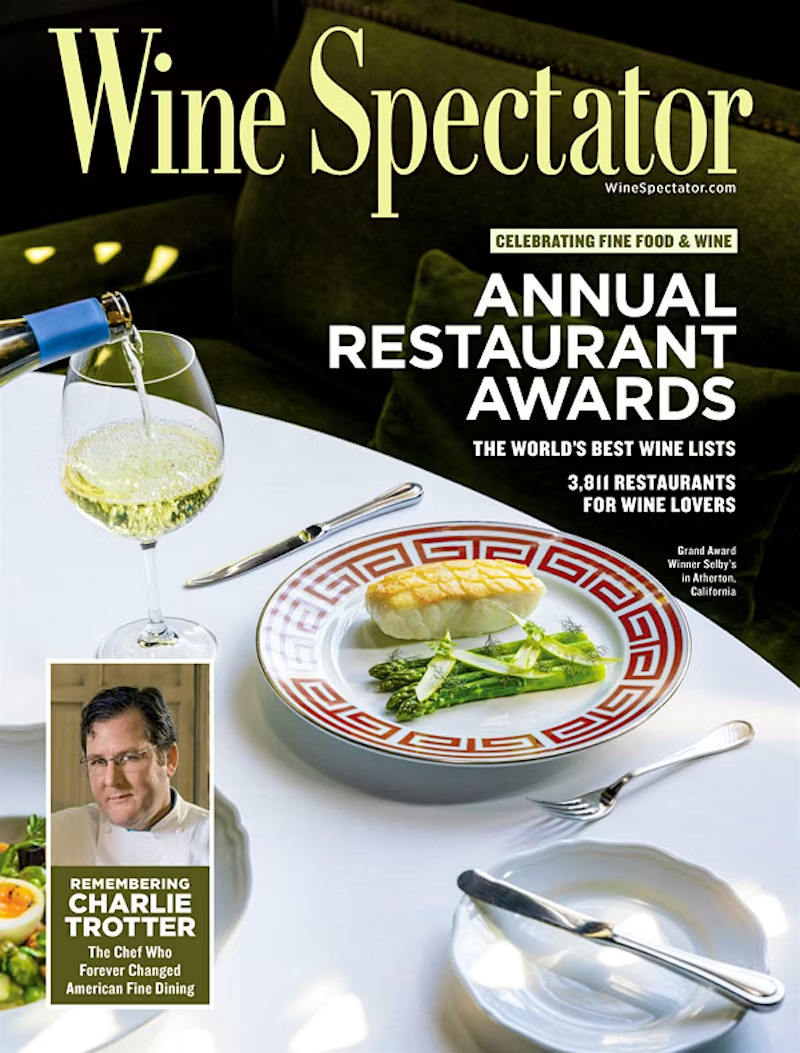
Wine Spectator, the world’s leading authority on wine, has unveiled the winners of the 2025 Restaurant Awards, which honor the world’s best restaurants for wine. This year’s awards program recognizes 3,811 dining destinations from all 50 states in the U.S. and more than 80 countries internationally. 

Photo courtesy of Soby’s.

“A wine list is a restaurant’s identity in print, and this year’s Wine Spectator Restaurant Award winners reflect both deep knowledge and a passion for discovery,” said Marvin R. Shanken, Editor and Publisher, Wine Spectator. “I proudly present the 3,811 restaurants worldwide that earned a Restaurant Award this year—we raise a glass to all our winners.”

Launched in 1981, the Restaurant Awards represent the world’s only program focused exclusively on restaurant wine service. They are assigned on three levels: the Award of Excellence, the Best of Award of Excellence and the Grand Award, with 2,010; 1,704; and 97 winners this year in each respective category.

Photo courtesy of Le Bon Georges

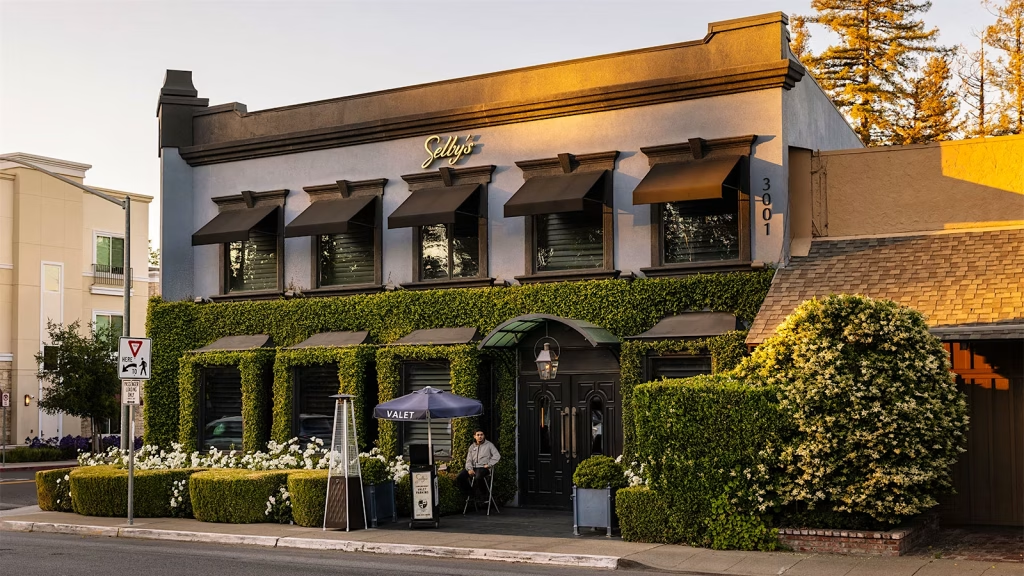
This year, Wine Spectator has granted three new Grand Awards: Selby’s in Atherton, CA, Soby’s in Greenville, SC and Le Bon Georges in Paris, France. The Restaurant Awards issue includes exclusive profiles on each winner and the talent behind each of the wine collections that earned them this honor.

Photo courtesy of El Che.

Also featured in Wine Spectator’s special Restaurant Awards issue: “What’s Old is New Again,” as restaurants place an emphasis on revisiting and uplifting tried and true classics.

Salle à Manger. Photo courtesy of the Grand Hotel.

The Restaurant Awards issue, which features a tribute to late Grand Award-winning American chef and restaurateur Charlie Trotter, becomes available to readers July 15th.

Follow Wine Spectator on Instagram (@wine_spectator) and use the hashtag #WSRestaurantAwards for posts about this year’s awards. 

Photo courtesy of Cascade Prime Steak and Seafood.

WineSpectator.com/Restaurants also features coverage of winners, interviews with leading wine directors, wine picks and pairing tips from sommeliers at award-winning programs. In the Restaurant Search, all winners can be searched by name, location, award level, cuisine, wine specialties and pricing. Winners are also profiled in the free Restaurant Awards app, available for iPhone and iPad users.

Photo courtesy of Cafe Monarch.

About Wine Spectator 

Wine Spectator is the world’s leading authority on wine. Anchored by Wine Spectator magazine, a print publication that reaches around 3 million readers worldwide, the brand also encompasses the Web’s most comprehensive wine site (WineSpectator.com), mobile platforms and a series of signature events. Wine Spectator examines the world of wine from the vineyard to the table, exploring wine’s role in contemporary culture and delivering expert reviews. Parent company M. Shanken Communications, Inc., also publishes Cigar AficionadoWhisky Advocate, Market WatchShanken News Daily and Shanken’s Impact Newsletter

For winners in the Phoenix area.

For winners in the Chicagoland area.

For winners in Michigan.

For winners in Indiana.