The Allure and Beauty of Southwest Germany’s Christmas Markets

Fresh air mixed with the aroma of mulled wine, roasted almonds and warm chestnuts are part of the appeal of Southwest Germany’s many Christmas Markets whether they’re big or small. Each has a special ambience and distinction, designed to capture your imagination. Medieval or modern, baroque or family fun? Southwest Germany’s Christmas markets cater to all.

Trinkhalle_CM (c) Baden-Baden Kur & Tourismus GmbH, A. Stephany

Consider the following:

The Christmas markets around Lake Constance present a variety of traditions and delicacies. The short distances between towns make it possible to visit many different Christmas markets, each memorable and eminently Instagrammable. The plethora of market offerings are varied. In the Black Forest there are 180 Christmas markets with each town’s market having its own personality, events and handicrafts. Castles and their surroundings offer yet another type of experience, such as in Stuttgart, the state capital, with its beautiful and enormous Christmas market located on a castle square–it’s a magical time featuring choirs, a children’s Christmas fair, and elaborate, beautifully decorated stalls ablaze in lights and ornaments. 

So whether you visit the markets on historic squares and in monasteries, or in castles and nestled in the woods, you will enjoy sipping mulled wine, nibbling tasty treats, and buying one-of-a-kind crafts perfect for gifts. For special tips and ideas, please visit our website and enjoy the Christmas markets in Southwest Germany.

Freudenstadt Christmas Market almost appears unreal as if the streets are paved with gold. © Jürgen Schmidt

Christmas Markets in the Black Forest Offer Are Diverse Regional, Local, Traditional, Progressive, Delicious, Artistic, & Musical

During Advent, the towns and villages of the Black Forest transform into a sparkling winter wonderland. Over 180 Christmas markets offer unique settings, handcrafted goods, and culinary delights. The Christmas market in Freudenstadt (December 4–14, 2025), home to Germany’s largest market square, is particularly atmospheric, featuring handcrafted products and a curling rink. In the historic half-timbered town of Haslach, the new “Culinary Winter Market” (December 19, 2025 – January 6, 2026) invites visitors daily to enjoy regional specialties and music, accompanied by a nativity scene exhibition.

Art lovers will find plenty to enjoy in Karlsruhe: At the “Christmas Fair for Applied Arts and Crafts” (December 11–14, 2025), 40 exhibitors present high-quality, one-of-a-kind pieces from across Europe. In Rottweil, the oldest city in Baden-Württemberg, the Christmas market (December 4–14, 2025) enchants visitors with its medieval setting, children’s workshop, and choral singing.

Against impressive architecture, the Christmas market takes place on Cathedral Square in St. Blasien (on three weekends in December 2025) – framed by the largest dome north of the Alps. Lörrach invites visitors to its Old Market Square from December 4–14, 2025, with arts and crafts, music, and delicious aromas. In Bad Säckingen, the market on Münsterplatz (December 4–7, 2025) offers regional products and a musical program amidst a historic backdrop.

A truly special experience awaits at the “Christmas Triad” in Pforzheim (November 21, 2025 – January 6, 2026): Christmas market, winter wonderland, and medieval market merge into a dazzling, glittering experience complete with an ice rink, Ferris wheel, and street performers.

Christmas Markets in the Black Forest

The half-timbered houses in the Black Forest town of Nagold are lit up especially this year for visitors. A giant ferris wheel also will be another first in the beautiful town. © Lightworkartpro, Manuel Kamuf.
Schloss Ludwigsburg just outside of Stuttgart that is still completely finished in the style in which it was built. A beautiful Baroque palace in the town of Ludwigsburg. c. SSG and Thomas Buehler

Castle Courtyards Aglow: Christmas with the SSG

The Staatliche Schlösser und Gärten Baden-Württemberg (SSG), or State Palaces and Gardens of Baden-Württemberg, sets the stage for a truly magical winter and Christmas season across its many historic sites. As the gardens and grounds enter their quieter phase, the frost-kissed landscapes, bare trees and soft winter light lend the sites a serene, festive ambience.

For example, Schloss Solitude in Stuttgart welcomes visitors for winter tours on weekends and holidays, offering both the architecture and surrounding views in a calm winter splendour. In the run-up to Christmas, many of the monuments managed by the SSG host atmospheric markets and seasonal events. The historic courtyards, cloisters and castle grounds are transformed into illuminated, festive spaces offering artisanal crafts, music and traditional treats. One highlight is the festive “Winterzauber” (winter magic) program at Residenzschloss Mergentheim, where from early November an open-air rink and themed events enliven the Schloss hof. 

The Kurfürstlicher Christmas Market at Schloss Schwetzingen about 20 minutes from Heidelberg runs from November 27 to December 21, 2025, offering a festive atmosphere with handcrafted goods, delicious treats, and family-friendly activities.

Visitors can explore beautifully illuminated tents, enjoy mulled wine, and discover unique gifts. Highlights include a nostalgic carousel, a Christmas market featuring local and international specialties, and cultural events such as Advent concerts and theater performances. The historic castle and gardens also offer special tours and winter experiences. The combination of seasonal architecture, historic gardens and festive programming makes the SSG-managed sites wonderful destinations for winter visits — whether for a quiet stroll, family outing or evening market experience.

State Palaces and Gardens of Baden-Württemberg

Ships docked in Constance Harbour are often decorated at the Christmas season.© Achim Mende

Lake Constance – Four Countries, One Magical Christmas Lake

 During Advent, Lake Constance (Bodensee) transforms into one of Europe’s most enchanting winter destinations, where Germany, Austria, Switzerland, and Liechtenstein share their traditions along one shimmering lake. This cross-border charm makes the region unique: visitors can experience four different cultures of festive joy within just a few days. In Konstanz, the largest town on the lake, the Christmas Market stretches from the medieval old town all the way to the harbour.

A true highlight is the “Weihnachtsschiff” (Christmas Ship), anchored by the waterfront and glittering with thousands of lights. Nearby, Überlingen enchants visitors with its atmospheric Christmas market, set among historic squares and festively decorated lanes. The lakeside promenade glows with lights, creating a romantic atmosphere perfect for a winter stroll. Meersburg, with its half-timbered houses and medieval castle, offers a truly magical Advent market on the castle square.

Between Christmas and New Year, the town also hosts special seasonal events and concerts, keeping the festive mood alive right into the New Year. Another highlight is the Christmas Garden on Mainau Island, where dazzling light installations transform the famous flower island into a sparkling winter wonderland for the whole family. Across the region, guests can enjoy unique Christmas markets, festive cruises on the lake, and culinary treats – from German Lebkuchen and Austrian pastries to Swiss chocolate specialities. Families, couples, and Christmas enthusiasts alike will discover the joy of exploring diverse traditions so close together. Lake Constance is more than a holiday – it is a magical journey across four countries united by one festive lake.

Lake Constance

For more information, contact

17 Spas in the Black Forest

Southwest Germany, also known as the state of Baden-Wuerttemberg, is home to thermal springs and spas, places of healing and relaxation, some of which are famous and others you may not recognize. No less than 17 of the total of 34 spas in the “Bäderland” Baden-Württemberg are located in the Black Forest.

Baden-Baden_Friedrichsbad. Copyright RavenChen

In addition to hotels with wellness offerings, there are thermal baths and thermal springs, certified climatic health resorts, 3-day wellness hikes through the region, forest bathing, and natural relaxation in fragrant fir forests. On the German shore of Lake Constance, two spa towns include Radolfzell which is synonymous with nature, and wellbeing and the town of Überlingen which has a long history as a health spa town, where guests have been ‘taking the cure’ for more than 100 years. Charming towns, such as medieval Meersburg and puzzle-rich Ravensburg, add to the spa experiences on Lake Constance with busy old towns with cobble-stone streets lined with shops, unusual museums, wineries and restaurants, castles and terraces.

Lakeside Towns with Healing Qualities

Photographer: Achim Mende
Internationale Bodensee Tourismus GmbH

Überlingen has a long history as a health spa town, where guests have been ‘taking the cure’ for more than 100 years. The modern thermal baths are one of three of the Lake Constance region with saunas, pools of varying temperatures and lake access. What makes Überlingen extra special are the garden parks for long walks and dramatic scenes along ivy towers, plunging cliffs and memories of ancient struggles along the defense wall. The waterfront promenade is a sunset destination where the wine flows. Over some 2.5 miles, the Überlingen garden culture path connects the most attractive parks and gardens. Überlingen

The town of Untersee is home to a stretch of largely unspoiled nature with sanctuaries of reedy marsh land, forest, natural lakes, and wildflower meadows. At the heart of this unique landscape lies the official health resort of Radolfzell. It has a charming old town on the lake with great outlet shopping, the longest shoreline, and outstanding transport connections. Radolfzell is synonymous with nature, wellbeing, and a healthy holiday experience. Here you will find the spa hotel of Bora HotSpa Resort among many other tranquil and healing facilities. Bora Hotspot Resort

Lake Constance

Black Forest Herbal Spa Just Like 200 Years Ago

Bergdorf Bader Alm

The mountain village Bader Alm in Oppenau-Ibach near Freudenstadt, is a bit out of this world. A few more or less small rustic wooden huts are grouped around a historic farm. There is no WiFi, the rooms are furnished as they were about 200 years ago – with wooden beds, thick feathers and objects that at best, only the grandparents still know how to use. Outside there is a village square, a pond and a greenhouse. And in the middle of it, the bathing station with several wooden tubs. Here, as 200 years ago, you can bathe in a hot tub alone, in pairs or with up to five people in the open air. The bath tubs are filled with hot water and a secret recipe of herbs, flowers and essential oils. Guests are dressed in medieval linen bathing costumes. 

Herbal Spa in the Black Forest

Baden-Baden Offers an Unparalleled Escape

Spa
Caracalla Spa in Baden-Baden, c. Jan Buergermeister/Caracalla Baeder-Betriebe GmbH

The best-known spa destination in SouthWest Germany is Baden-Baden, a UNESCO World Heritage site since 2021 and one of the eleven “Great Spa Towns of Europe.” It offers an unparalleled escape by combining the spa experience with museums, concerts, art exhibits, cultural events and shopping interspersed with visits to the spas and an unhurried pace of life. Until the 20th century, aristocrats and high society traveled to the “summer capital of Europe.”

Baden-Baden_Caracalla-Spa.

The world heritage can be experienced in the spa town, for example, on one of the five “World Heritage Walks,” during a carriage ride along Lichtentaler Allee or during a wellness break in the Friedrichsbad. At the time, the Friedrichsbad was considered the most important thermal spa in Europe. Today, the Caracalla Spa with its Roman mosaics is ultra-modern with a freshly renovated indoor pool and new steam bath. 

Baden-Baden

Black Forest Spa Quartet: Four is More

Spa in
Palais Vital in Bad Wildbad in the northern Black Forest c. Patrick Kunkel

Palais-thermal-bath-Bad-Wildbad_1_cTMBW_Dupper

In the densely wooded northern Black Forest, four towns form a “Black Forest spa quartet.” The spas of Bad Wildbad, Bad Teinach-Zavelstein, Bad Liebenzell and the health resort of Bad Herrenalb are so conveniently located that their thermal baths can be easily reached from one location: The “Palais Thermal” in Bad Wildbad brings a piece of the Arabian-Moorish Orient to the Black Forest.

Palais-thermal-bath-Bad-Wildbad_2_cTMBW_Dupper

The “Vital Therme” in Bad Wildbad offers regionally specific wellness facilities. The “Paracelsus Therme” in Bad Liebenzell has a generous sweating area with the “Sauna Pinea” and, thanks to the panorama sauna, wonderful infusions in the style of the region. In keeping with this, the “Siebentäler Therme” in Bad Herrenalb has a rustic herbal steam bath with its “Black Forest Sauna,” which is reminiscent of a rural “Badehäusl”: the floor is covered with fir branches, and fir cones in the “Tschurtschenkorb” on the ceiling exude a piney Black Forest scent. 

Black Forest Escapes

Charming Towns Add to Spa Experience on Lake Constance

Meersburg, Germany
The town of Meersburg on the shores of Lake Constance, c. A.Mende

Charming towns, such as medieval Meersburg or puzzle-rich Ravensburg, also add to the experience of visitors to the spa towns on Lake Constance. Meersburg is a picturesque small town directly at the lake shore. With a historic center, small cafes and amazing views of the lake a visit is truly unique. There are many historic buildings to discover such as the Old Castle, which towers over the lake, and the New Castle, which impresses with its amazing staircase, statues, ornate ceiling paintings and a beautiful terrace overlooking Lake Constance with views of the Alps.  

 If you play puzzles, you surely recognize the name Ravensburg. This “City of Towers and Gates” is a 30-minute drive from Bodensee and the modern home of Ravensburger publishing company. Trading has always been its tradition. Germany’s first paper was manufactured here in 1336, and centuries ago, clever merchants sold textiles and linen throughout Europe and invested great wealth into beautifying their town. This same medieval district is the region’s favorite shopping destination. You can climb the watch tower for views of rolling farmlands, the lake and the Alps.

The Bodensee Card PLUS makes a visit to the museums or guided city tours very easy and gives guests access to over 160 attractions in the four country region of Lake Constance. After a visit to the German small towns, you can book a boat trip across the lake to visit one of the lakeside towns in Switzerland such as Stein am Rhein or Romanshorn or Austria such as Bregenz or Hard. 

Lake Constance

The Christmas Markets in the Black Forest, Lake Constance and Stuttgart

Courtesy of Victoria Larson; Principal, VKLarsonCommunications; Publisher, www.sideofculture.com

What captures your imagination? Medieval or modern, baroque or family fun? Southwest Germany’s Christmas markets cater to all. Find them on historic squares and in monasteries, in castles and nestled in the woods. Sip mulled wine, nibble tasty treats, buy one-of-a-kind crafts that are perfect for gifts. For many people, the Advent season is one of the most beautiful times of the year. No matter where you are in Southwest Germany, fresh air mixes with the aroma of mulled wine, roasted almonds and warm chestnuts. In addition to the large Christmas markets, there are also numerous smaller markets with a special atmosphere to discover. The Christmas markets around Lake Constance combine traditions and delicacies from Germany, Austria, Switzerland and the Principality of Liechtenstein.

The short distances between the different places make it possible to visit many different Christmas markets across national borders. The Black Forest has 150 Christmas markets alone and each town’s market has its own personality, events and handicrafts. Stuttgart, the state capital, has a beautiful and enormous Christmas market complete with choirs, Christmas fair for children, and beautifully decorated stalls. 

Musical and Artistic Advent Delights in the Black Forest 

Nicknamed the “Singing Christmas Tree,” the choir members will stand on several levels of an approximately 60 foot high “Christmas Tree” in front of the historic Abbey backdrop between the Elztal Museum and in the Organ City” of from December 8 to 17, 2023 www.singender-weihnachtsbaum.de

In the town of Gengenbach, the town hall is transformed into the “world’s largest Advent calendar house.” This year, they will present from November 30 to December 23, the “paradisiacal” motifs of Olaf Hajek, one of the most renowned contemporary German illustrators at 6 pm every day. www.gengenbach.info 

In Karlsruhe, an interplay of artistic light figures, fairytale-like light scenarios and dreamlike illuminations creates the “Christmas Garden.” This special creation is a just over one mile long circular route through the park landscape of the Zoologischer Stadtgarten from November 23, 2023 to January 7, 2024 from 5 to 10 pm.www.christmas-garden.de/karlsruhe

Gorges and Waterfalls of the Black Forest Highlands

Opening on November 24, the Christmas market in the Ravenna Gorge, at the foot of the Höllental Viaduct, is surrounded by mystical forests. Close by, the Triberg Waterfalls will also be transformed into a romantic winter setting from December 25 to 30, 2023 (2 p.m. to 9 p.m.): One million lights will shine on the “Triberg Christmas Magic.”

Five times each day, a spectacular fire show with music is put on show for visitors. The crowning glory is a breathtaking fireworks display, full of light and accompanied by music – from December 27 to 30, daily at 9 p.m. www.triberger-weihnachtszauber.de 

Also, on December 10 and 17, 2023 (each at 2 p.m.), a guided tour starts at the Kurhaus Hinterzarten and leads over small root paths and wooden walkways into the deep gorge. www.original-landreisen.de  

Lakeside Christmas Markets, Christmas Cruises and Botanical Garden Delight


Fairytale Christmas markets directly on the lakeshore or in historic old towns, Christmas experiences in festively decorated castles or on exclusive ships – all this and much more awaits visitors to the four-country region of Lake Constance (aka the Bodensee). White passenger ships sail back and forth connecting visitors to different Christmas markets around the Bodensee. “Cast off” is the motto for the numerous winter boat tours, which can be ideally combined with a visit to the Christmas market around Lake Constance. During the cruise passengers can enjoy the wintry landscape and enjoy a cup of coffee and a delicious cake.

From November 30 to December 23, the Lakeside Christmas Market Constance and the Christmas ship located in the harbour invite you to enjoy the shoreline scene and ambience from the water. The winterscape on the garden island of Mainau is unparalleled and supported by the local traditions and the

from Nov 21, 2023 to Jan 7, 2024. The New Castle in Tettnang offers traditional delicacies and live Christmas music in front of a historic castle. The Christmas market is open from 01 to 03 December and from 08 to 10 December. The Lindau Harbor Christmas market has a beautiful backdrop of the Alps shimmering in the distance. https://www.bodensee.eu/en/what-to-do/culture/christmas-markets

Southwest Germany’s Christmas Cookies to Make at Home

 It is well-known that Baden-Württemberg is a great place for culinary delights. This is especially true during the Christmas season. In the winter months, the bakeries are very busy places: Kneading and shaping, rolling and cutting are the order of the day. And the sweet flavour of star anise and cinnamon wafts over everything.

The Spitzbuben, also known as Hildabrötchen, have a long tradition. They originally come from southern Germany and are named after the Grand Duchess Hilda von Nassau, the last Grand Duchess of Baden. Springerle are the hard aniseed-flavoured biscuits that can be eaten but are also used as decoration in cafés, restaurants and even on Christmas trees! The dough is made of eggs, flour and sugar; wooden moulds, carved in medieval patterns, scenes and figures. Moulds are sold in the Christmas markets and make a nice souvenir.

Hutzelbrot is a traditional Christmas pastry and used to be prepared especially in farmer families. Hutzeln are the halved, dried fruits of an old pear variety, also called Hutzel pear. The term “hutzelig” means something like “wrinkled” in Swabia and thus aptly describes the appearance of the dried pears. Dambedei: he is tan and has many names but he is made of yeast and every child recognizes it immediately by its characteristic appearance. With a pointed head, raisin eyes, almond mouth and the button placket made of nuts. 

Christmas cookie recipes

Last but Definitely not Least: Lebkuchen and Gluehwein/Mulled Wine

Lebkuchen has a nice story in SouthWest Germany. Of course, everyone eats Lebkuchen in Germany (recipes vary from region to region) especially at the holiday time. What is interesting however is that there is a Lebkuchen trail in the Black Forest and it is part of the culinary tradition of a little village called Todtmoos. In the past, in addition to the bakers, it was the local women who earned extra income with Lebkuchen. The Todtmoos women baked the delicious and durable gingerbread in their home ovens and sold it at the pilgrimage stands next to the steep climb to the church. The so-called gingerbread women then bought hundreds of gingerbreads from the local bakers and brought them to the poor areas of the Black Forest. They were welcome there, because they brought the Christmas scent as well as the popular Christmas biscuits into the house. 

Mulled wine is very popular drink during the winter season in Southwest Germany. Try out our recipe to enjoy it yourself or with friends and family as it is a delicious holiday treat! There are many different versions, so you may want to add some ingredients of your own and call it your home brew.

Ingredients

  • 500ml wine
  • 4 cinnamon sticks
  • 1 orange sliced
  • ½ lemon sliced
  • 5 juniper berries
  • 2 star of anise
  • 10 cloves
  • 1 cup/200g sugar

Preparations

  • Combine all ingredients in a pot and give them a quick stir.
  • Heat until the wine just barely reaches a simmer over medium-high heat. (Don’t cook too hot — you don’t want to boil off the alcohol.)
  • Reduce heat to low, cover, and let the wine simmer for at least 15 minutes.
  • Use a fine mesh strainer, remove and discard the orange slices, cloves, cinnamon sticks, star anise and ginger.
  • Serve warm in heatproof mugs, topped with your favorite garnishes. Enjoy!

Mulled wine and more

For more information visit tourism-bw.com

Great Value and Premium Winter Sports in the Black Forest Highlands

Skiing, snowshoeing, tobogganing, relaxing spas in the Black Forest Highlands holiday region create serious fun for great value with the brand new digital Red Inclusive Card.

In the winter months, situated at an altitude of approximately 2,700 to almost 5,000 feet, the Black Forest Highlands holiday region offers visitors many winter attractions. The skiing area in the vicinity of the Feldberg mountain promises winter sports enthusiasts guaranteed snow. On the region’s sunny peaks, it is possible to enjoy unique views of the Alps and the Rhine valley as the region is so close to France and Switzerland.

With 74 ski lifts, skiers and snowboarders can take to more than 50 miles of slopes. The “highest peak” in Baden-Wuerttemberg, the Feldberg, offers superbly prepared runs at every difficulty level from the challenging FIS World Cup piste and the more straightforward family slope on the Seebuck.

For cross-country skiers, the Black Forest Highlands are home to 150 cross-country trails totaling 560 miles. At an altitude of over 3,000 feet, the Thurnerspur trail at St. Märgen offers optimal conditions for ambitious sports enthusiasts and beginners alike: Suitable for both the classic and skating technique, two cross-country trails, almost 10 miles long, wend their way over snowy expanses and woodland, while the 1.5 mile night trail offers floodlit skiing several times a week.

The Thurnerspur trail is also part of the Schonach-Belchen long-distance skiing trail which is just over 60 miles long, and approximately half of it makes its way through the Black Forest Highlands, passing Waldau at Titisee-Neustadt and on to Notschrei. The Nordic Center Notschrei, with cross-country trails of 2 miles to 12 miles in length, are suitable for both the classic and freestyle techniques. Cross-country skiing courses are on offer and equipment is available to hire at the Ski Nordisch sports base, which features biathlon facilities and evening floodlit opening.

The 466 miles of winter hiking trails on the sunny uplands of the Black Forest Highlands provide unique views of the Alps and the Rhine valley. Several premium winter hiking trails are specially signposted and are checked and maintained on a daily basis. They have been designed so that they offer especially attractive views and are easy to walk along. The entire network of trails, which has been created in collaboration with the Southern Black Forest Nature Park, provides for both a safe and eco-friendly winter hiking experience.

Along the 13 signposted snowshoe trails, those who love the great outdoors can enjoy the free and authentic landscape. The trails are signposted especially and reserved for snowshoe walkers. A variety of different difficulty levels and offers promise varied experiences – whether it is a short tour of the peaks, around Hinterzarten, or a guided walk on the Feldberg as the sun sets.

The Black Forest Highlands are also famous for their excellent toboggan runs. The longest downhill tobaggan runs are the Hasenhorn (2 miles), the Todtnauer Hüttenweg (2 miles), and the toboggan run from Saig to Titisee (just under one mile). Several of the runs are floodlit and open in the evening.

After an action-packed day in the snow, the spas and swimming pools in the Black Forest Highlands, not to mention several hotels with day spa facilities, are a great place to relax and stock up on energy. Seven hotels in the holiday region have the Wellness Stars Germany seal of approval, which guarantees the independently verified quality in the area of wellness.

With the brand new digital Red Inclusive Card, guests can take advantage of more than 70 basic leisure offerings in the region every day, free of charge, including for example, free entrance to in-and outdoor swimming pools, museums, and free rental of cross-country equipment. In addition, the Red Inclusive Card offers many attractions a discount of at least 20%. The Red Inclusive Card is available as a free added benefit at approximately 500 hotels for guests staying for at least two nights. For further information, please visit www.hochschwarzwald.de/Card.

Indulge in the Best of the Black Forest Spa Experiences

SouthWest Germany is a place where you can escape to beautiful scenery, historic palaces, gardens, restorative spas, top restaurants, and elegant overnights. It is a perfect destination to relax before the holidays, or simply to get some well-earned rest and relaxation. The Black Forest Highlands offer miles and miles of well-signposted trails for hiking and biking with charming inns and restaurants and extraordinary scenic views along the way. Gardens and palaces in SouthWest Germany offer soothing landscapes and beauty that take you away to another world. Spas offer restorative experiences from the actual treatments to the beautiful and calm towns and environments where they are located. The hotel options are varied from exquisite five star superior overnights to charming pensions, all of them reasonably priced in their respective categories.

Climactic Health Resorts, Forest Bathing, Herb Paths

“The most you’ll get from walking is blisters,” a herding boy would have said. That his rough path to work would one day become a pleasure trail? Unimaginable. Today in the Black Forest, there is hiking on well signposted, certified “Premium Hiking Region” (German Hiking Institute) trails; invigorating mountain climate with 7 state-recognised climatic health resorts; excellent local cuisine and local specialities, relaxing and regeneration in excellent wellness hotels. With forest bathing, herb, and pleasure trails, you walk through the forest mindfully – smelling, hearing and feeling. Your stress levels plummet. The 3 medicinal herb trails also lead you to contemplate and reflect, while the 17 high-altitude climate trails are invigorating. There are also the 14 certified “pleasure” trails: These particularly beautiful circular tours are 2 to 7 miles long, offer authentic places to stop off and many an insight into regional culture and history from the Black Forest Highland sheep path to the steep and arduous cliff walk. Black Forest Highlands

The Black Forest Highlands Serves Up Delicious Local Fare, Offers Brewing Workshops

The Black Forest Highlands offers many opportunities to taste the local and delicious fare while you are out and about on your walks exploring the countryside. There are 25 nature park hosts who cook seasonally and consciously use regional ingredients from the Black Forest Nature Park for their creations. Along your way, you come across rest areas, restaurants, country inns, and mountain huts that serve the regional food. There are also herb hikes and tasting with the herb woman near St. Märgen as well as cooking courses in Alpersbach.

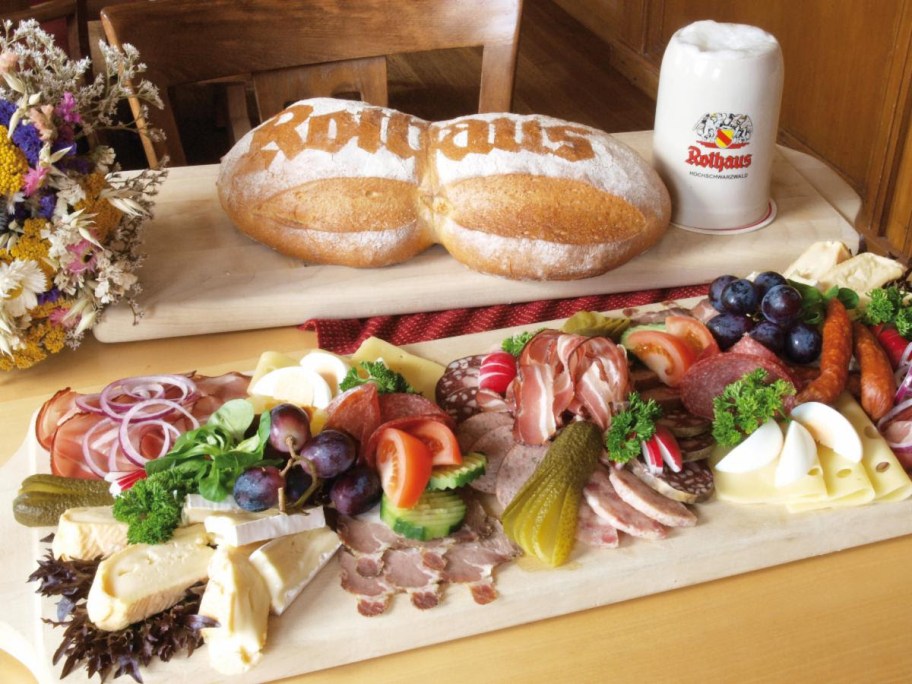
Of course the original Black Forest cake is served in every good café and restaurant. You can even watch the production, and participate in a tasting in the Café & Schnapshäusle zum gscheiten Beck in Bärental-Feldberg. Another great tour and tasting includes the Rothaus brewery which includes an entire experience and even has its own inn in Grafenhausen. Close by in Bärental-Feldberg Rogg’s organic craft beer is tapped at the brewery inn and offers workshops where you can brew your own beer with a master brewer.Black Forest Highlands

Healing Waters in Baden-Baden

Every day, over 210,000 gallons of thermal water bubble up from the ground in Baden-Baden, and it is still up to 150 degrees hot. On its way from a depth of 6,500 feet to the earth’s surface, it takes minerals with it: Sodium, chloride, fluorine, lithium, silicic acid and boron. It is these substances to which we owe the healing effect. Whether heart and circulation problems, metabolic disorders or respiratory diseases: The healing power of Baden-Baden’s springs promotes well-being and recovery. In addition, the thermal water, due to its warmth and ingredients, provides blood circulation to your muscles, joints and skin. 

In the Roman times, Baden-Baden was simply called Acquae, the waters. Then in the Middle Ages, the town received the name Baden. In the 16th century, to differentiate it from towns of the same name (Baden in Switzerland and Baden near Vienna), the double name Baden-Baden (Baden was also the name of the principality at the time) was given and it became official in 1931. Today, you can visit the Roman style, textile-free Friedrichsbad or the contemporary Caracalla spa to indulge in the treatments, the waters, and to gain a sense of well-being, rest, restoration. Each spa is open to the public. What makes Baden-Baden so unusual too is the beautiful resort town is a cultural destination with world class performances, museums, and beautiful parks and gardens. Baden-Baden

Hotel Dollenberg in the Black Forest Offers Outstanding Year-Round Spa Experience

The Hotel Dollenberg in the Black Forest is one of the most luxurious 5-Star Superior hotel experiences you can have any time of the year and it offers top-notch, panoramic views of the Black Forest from its mountain peak. Recently it has opened its award-winning Dollina Wellness & Spa to day visitors, in addition to hotel guests. It offers one of the largest spa areas covering about 15,000 square feet, including six pools, including mineral water and brine pools, indoor and outdoor swimming pools, a whirlpool, and a mountain lake. For over five decades, Hotel Dollenberg, located in picturesque has Bad Peterstal-Griesbach has long been famous for its mineral and healing water which as it bubbles up through layers of Black Forest rock becomes even more enriched with valuable minerals.

There are four different types of saunas, including the old wood sauna, the Swiss stone pine wood sauna, the organic sauna, and the salt dry sauna, and each offers different results for different aches.

The steam baths that improve circulation, metabolism, and immunity include an herbal steam bath, a brine steam bath, and a Hamam with Serail with body peeling, curd soap, and steam thoroughly eliminate waste products and toxins.

And mental stress is simply washed away under subdued light, with lots of soap lather and water. 

There are treatments and massages from around the world from Lomi Lomi Nui to Upanahasveda, and even special wellness programs for children. It is sophisticated and luxurious in the middle of the Black Forest. Dollenberg Hotel Spa

Wald & Schlosshotel Friedrichsruhe in Hohenlohe Offers Award Winning Skincare

In the Hohenlohe region not far from Heidelberg, the award-winning spa and wellness world of the 5-Star Superior Wald & Schlosshotel Friedrichsruhe comprises 15,000 square feet of wellness, water, warmth, massages, and inhouse wine. A starring role is played by the special, inhouse-made wellness care line, SanVino which is a skin-care line made from Hohenlohe grapes. 

 SanVino’s valuable ingredients are from the Hohenlohe vineyards.

Think cold-pressed grape seed oil, red wine and grape seed extracts. 

Highly effective antioxidants and essential oils serve to protect and improve your skin. 

“SanVino–Vino cura naturalis–-health through wine!”

In addition to the SanVino, there a dermo-cosmetic treatment method by Reviderm,

Comfort Zone’s natural ingredients include selected medicinal plants by Pharmos Natur.

The BEWEI boosts metabolism and vitality for the body and face. 

The spa features excellent cosmetics, physical-energetic treatments, biomechanical optimization, and healthy nutrition 

Traveling Through Time: Cruising the Danube Narrows to Weltenburg Abbey

Weltenburg Abbey was more than four centuries old before the monks first began brewing ale—or at least ale worth noting–in 1050. Now vying for the title of the oldest monastic brewery in the world (Weihenstephan Abbey also claims the honor), they set their claim on maintaining the original brewing process. Like the beer, much is as it was remains at the Abbey, the somewhat plain exterior of the cathedral opens onto an elaborately ornate and gilded interior. Services are still held regularly, and monks still live and work on the premises. And just as abbeys were places for gatherings for a millennium and more, Weltenburg also remains a destination. Located 25 miles west of the charming Bavarian city of Regensburg, a UNESCO World Heritage City and just three miles from Kelheim, it is accessible by car. But I totally like immersing myself in history and my goal today is to replicate—as much as I can—the 1050 experience.

default

Long Wall and St. Nepomuk

On the ferry from Kelheim, I watch as the boat’s wake cuts through waters reflecting the dark greens of dense woods and whites of limestone rocks of the Fränkische Alb mountains, some rising 300-feet high. Winds, water and time have carved caves and nooks in the limestone and in one of these crannies on an expansive stretch of stone called the Long Wall someone has tucked a statue of St. Nepomuk, the patron saint of water and bridges who was drowned when he refused to reveal the confessions made to him by the Queen of Bavaria. Her husband must have really wanted to know what she was up to.

The Danube Narrows

Today it will take 40 minutes to travel the Danube Narrows, an ancient waterway to and from Weltenburg Abbey or if you want to be really German about it, Weltenburger Klosterbrauerei, a sprawling complex of Baroque stone buildings surrounded by the lush rural beauty of Southern Bavaria.

There are times when the river is a lively place with small boats passing by and bicyclists and hikers making their way along the riverbank. Then suddenly, navigating a bend, it’s all calm waters and quiet.  I imagine this is how it was when pilgrims and tradesmen (and hopefully tradeswomen as well) came to the abbey to retreat from the world, rest or conduct business. It was a time when travel was mainly by water as roads barely existed and their trip would have taken much longer without our gas powered engines. But the sight they saw when making the final curve is much the same as today—Weltenburg’s blue tower roof and the washed pink walls.

Weltenburger Klosterbrauerei

The abbey sits on a bend of the river and in front is a small sandy beach and shallow waters where people play. It’s hot today—a heat wave is moving across Europe—and I envy them as the water looks cool and refreshing. But history calls and instead I move up the walk leading from the dock to the entrance already awed by the size and beauty of the place.

There are always hard choices and today I need to decide whether to tour first (there are self-guided and guided tours available) or take a seat in the sun at the biergarten, It appears that most people have chosen the latter and rather than wait for a table or sit inside the restaurant, I enter the church.

St. Georg Church

We’re talking seriously rococo inside, an overdrive of theatrical flourishes mixed with more Gothic elements. Paintings date back to the 1300s, a statue of the church’s namesake St. George or St. Georg as its spelled here, sculpted in smooth, sleek marble, rides his horse most likely on his way to slay the dragon. The main room, its ceiling 65-feet high, has alcoves off to the sides, each one just as ornate. It’s hard to take in everything at once, the artistry, pageantry and craftsmanship are so amazing.  Standing near a group tour, I hear phrases like “eight ionic columns, Weltenburg marble and gold fresco” and hurriedly write the words down as it helps sort out this wonderment of riches.

Bavarian Fare

Back outside, I spot an empty table and grab it. Addicted to German fare (yes, really), I order pigs’ knuckle known as schweinshaxe, schnitzel and even though I’m in Bavarian and not the Black Forest (hey, it’s nearby) the famous cake from that region. Of course, I need a glass of their Kloster Barock Dunkel—an almost black in color ale which is still made on site in a rock cave and then sent by pipeline to the monastery taps. Also available—to drink or take home, there is a gift store of course–are other brews and such medicinal spirits as their Weltenburg monastery bitters and liqueurs. And if you want to go full abbey, there’s their klosterkas and monastery sausage both based on ancient Weltenburg recipes.

Maybe I shouldn’t have eaten that last schnitzel and definitely not the cake. To assuage my conscience, I climb the mountain path as it winds past the Stations of the Cross. It’s steep but the gaps in the woods offer commanding views of the valley, abbey and gorge below. I briefly contemplate spending the night at the St. Georg Guest House to be able to walk the abbey grounds late at night when all the visitors are gone but I don’t have a reservation. Next time for sure.

The Oldest Wheat Beer Brewery in Bavaria

          Returning to Kelheim isn’t exactly like entering the 21st century. In the old town I wander the narrow streets snapping photos of perfectly maintained Medieval-era buildings just a short walk from the docks and on the way to where I parked my car, I let my friends talk me into stopping at Weisses Bauhaus Kelheim.

It’s a beautiful place, all wood, vaulted ceilings and archways leading from room to room. Outside we sit in, yes another beer garden, this one next to a small stream, and order a round of their wheat beer. Really, I had to since they’ve been brewing beer here since 1607, making the Weisses Brauhaus the oldest wheat beer brewery in Bavaria.


I’m not typically a beer lover but both the Kloster Barock Dunkel at the abbey and the TAP7 here, made from the original 1872 recipe, are robust and flavorful without bitterness or an overly hoppy taste. I’m driving so instead of more beer, I listen to the live music, enjoy the myriad of colorful blooms cascading from window boxes, baskets and containers and contemplate how I’ve spent the day moving through history and only now have reached the 17th century.

Romancing the Ruins: Heidelberg on the Neckar River

When Prince-Elector Friedrich V married Elizabeth Stuart, the daughter of King James I in 1613, it was–like the majority of royal marriages—based on political alliances and gains. Love had nothing to do with it.

Photo by Jane Simon Ammeson

But sometimes it worked out differently and so it was between Friedrich and Elizabeth who fell in love.  Heidelberg Castle, where they lived, was already old, dating back to 1200s and the Prince-Elector wanting Elizabeth to love her new home added an English Palace and an elaborate Baroque garden.

But theirs was to be a tragic love story. There were battles, a throne lost, regained, and then lost forever. During all that, Elizabeth bore 13 children before Fredrich died and she sought life in exile.

Heidelberger Schloss

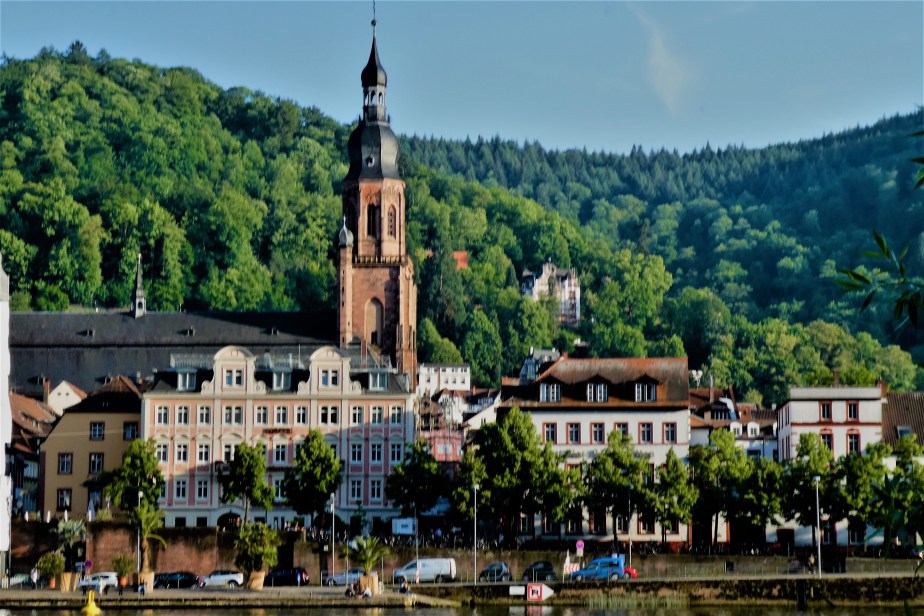
The castle, a romantic ruin of seemingly endless staircases and corridors taking you here, there, and sometimes nowhere, stands 330-feet above the Alstadt, Heidelberg’s wonderful old town. Towers and battlements protect stone facades, their decorative features still intact though the rooms behind them are gone. Views into the multitude of windows reveals not an interior but woods and the Neckar River below.

“Deserted, discrowned, beaten by the storms, but royal still, and beautiful,” is how Mark Twain described the Gothic-Renaissance castle. He was one of many poets and writers who spent time in what they considered the most romantic city in the world.

Photo Jane Simon Ammeson

The castle is also home to the Heidelberg Tun, a 58, 124 gallon wine barrel said to be the largest in the world.  It was built in 1751 on orders from Prince Elector Karl Theodor to store the wine paid in taxes by the region’s wine growers. We should all be so lucky to have too much wine.

Brews and Pork Knuckles

Taking the funicular down to the old town, I meet friends at Vetter’s Alt Heidelberger Brauhaus on Steingasse, Europe’s longest carless street. It’s one of those baronial style Germanic places with high ceilings, large wood beams, long tables and a lot of dark highly polished wood.

Famed for their Vetter’s 33, which they say is the strongest beer in the world, its alcohol content is—you guessed it—33%. But it isn’t all beer her, they’re famed for their  traditional German food and so I decide to go full German, ordering the pork knuckle, sauerkraut and dumpling with gravy. Skipping the 33, I opt for the Hubier—a mix of the lager and elderberry syrup.

History, Luxury and a Family Touch

Courtesy of Hotel Europaischer Hof Heidelberg.

My love affair with the city began several years before when I checked into the five-star Hotel Europäischer Hof Heidelberg. The hotel, one of the few five-star family run hotels in Europe, opened in 1865 and has been owned by von Kretschmann family since around the turn of the last century.

Courtesy of Hotel Europaischer Hof Heidelberg.

I’d heard that Sylvia von Kretschmann, who with her husband Ernst-Friedrich, ran the hotel for a half-century before their daughter Dr. Caroline von Kretschmann took over, regularly did the hotel’s large floral arrangements. So it was no surprise when I ran into this very elegant woman doing just that in Die Kurfürstenstube, the hotel’s opulent dining room that opened in 1866.  Such a romantic place and romantic tradition—how could I not fall in love?  

Courtesy of Hotel Europaischer Hof Heidelberg

Chocolate Kisses

My romance continued at Chocolaterie Knosel where owner Liselotte Knosel talked about studentenkussor or student kiss, a chocolate covered nougat created by her great grandfather Fridolin Knosel in 1863. His Café Knosel was frequented by male university students who admired women from a local finishing school who were, alas, chaperoned by their governesses. A gift of student kisses was a sly way to start a flirtation.

We don’t know how well it turned out for the students but these confections, still hand crafted, remain best sellers more than 150 years later. Café Knosel—the city’s oldest café—is my go to spot for coffee and a pastry at one of their outdoor tables overlooking the church on Marktplatz.

At dusk, on my last night, I boarded Patria, a 1930s ship for dining and a cruise along the Neckar River. Watching the city lights sparkle in the calm water, I knew that though my visit was ending, the romance was just beginning. I would be back.

For more information, visit www.heidelberg-marketing.de

German Sweets for the Holidays and Beyond

          Though right now I can’t even travel to Chicago to do some holiday shopping because of the pandemic, I did manage a trip to Southwest German to visit several of their beautiful Christkindlesmarkt (Christmas Markets) and take a holiday cookie making class.

          Well, kind of. The trip was a virtual cooking class and I’ve been doing a lot of those lately. It is, of course, nowhere close to being there but still when you get to the point where going to the grocery store becomes a big adventure, it’s really a great way to explore—and plan for the time when we might be able to journey again.

          And even though the holiday is long past, making the cookies and thinking of the beauty of the Christkindlesmarkts is a fine thing to do in gloomy February when all the excitement leading up to Christmas is long past and winter seems forever.

          Southwest Germany is comprised for the most part of the state of Baden-Wuerttemberg and is bordered on the west by France, Switzerland to the south, Bavaria to the east and Hesse to the north. It encompasses the Black Forest, large cities like Heidelberg, Baden-Baden and Stuttgart and a plethora of towns and villages that are so neatly kept and so very beautiful like Schwetzingen where there’s the Schwetzingen Palace & Gardens and Wiblingen, the home to an 11th century abbey. One thing you quickly realize about Germany is that almost every village no matter how small has a castle. And abbeys and monasteries dating back a millennium are common. New to them is anything built less than 400 years ago.

          Before COVID-19, late November and December is the time for the fantastic Christmas markets that have been part of the German holiday season since the 1300s. But of course, this is the age of COVID-19, so not only is my cooking class virtual but so are my visits to the Christmas markets. One plus, I save a lot of money by not being able to actually shop.

          Wendy Jo Peterson who, between military moves and following her husband’s career around the world, racked up a lot of miles working with children and adults across the spectrum from populations with special needs to elite athletes. Culinary nutrition and reaching optimal wellness through the foods we eat is one of her main drivers and she’s clocked in a lot of hours teaching, at hospital, working a computer and presenting the latest in nutritional science. When she lived in Stuttgart, Peterson immersed herself in cooking traditions and techniques and is bringing all that to our virtual classroom.

          We can either cook along with Peterson or just watch and I’ve decided I want to cook along with.

          To save time, Peterson has prepared her dough ahead of the class and so did those of us who are going to be cooking with her. Our first cookie is a yeast dough shaped into the form of the little tan man, known  In North Baden and the Electoral Palatinate, as Dambedei, in South Baden as Grätti or Baselmann and in other regions as Weck or Klausenmann. I hope I’m not going to be quizzed on the names of the cookies because I just won’t be able to do it.

But no matter the name, Dambedei’s instantly recognizable to children—and adults—because of his characteristic appearances. All little tan men have a pointed head, raisin eyes, almond mouth and a button jacket made of nuts.

Dambedei’s origins go back to when people were excluded for whatever reason from worshipping in the church on Bishop Nikolaus von Myra’s remembrance day. Instead the blessed bread is served to them in the shape of a man.

“The other cookies we’ll be making are Spitzbuben, also known as Hildabrötchen which are named after the Grand Duchess Hilda von Nassau, the last Grand Duchess of Baden,” says Peterson. “Supposedly, the popular Grand Duchess enjoyed eating Hilda rolls and often baked them herself. She was buried at the side of her husband, Grand Duke Friedrich II in the grand ducal grave chapel in Karlsruhe. Her ornate coffin can be viewed there.”

We’re also will make Hutzelbrot. If we were in Germany, we’d use dried Hutzel pears but alas I’ll be using  the dried pears sold in the grocery store. The term hutzelig in Swabia translates into wrinkled and that also describes the fruit. As for Swabia, it’s a historic region in southwest Germany. Someone a long time ago told me a Swabian joke. It isn’t very funny but it’s the only one I’ve ever heard. I tell it to the class, but they don’t think it’s funny at all.

Baden-Baden

We also have recipes for Springerle and Lebkuchen so if I do all the cooking, I’ll have a great assortment of German cookies.

Spitzbuben or Hildabrötchen

1 cup sugar

2/3 cup of cold butter, cut into small pieces

1 teaspoon vanilla extract

1 egg

1 1/3 cups of flour

½ cup of raspberry jam for the center

1 tablespoon powdered sugar

Cream together sugar and butter. Add vanilla extract and egg until combined. Add flour to form a dough. Shape the dough into a ball and wrap or cover well and put in the fridge for about an hour. Preheat the oven to 325° F.

Roll out the dough very thinly and cut into circles. Then cut out the shape you like in every other cookie. Place on a baking tray lined with parchment paper and bake for about 15 minutes or until golden. Cool. Heat the jam, spread over the cookies without  cutouts, then place the cutout half on top of the cookie with the jam. Dust with powdered sugar.

Springerle

4 eggs

2 ¼ cups powdered sugar

2 ¼ cup white wheat flour

1 tablespoon of whole anise seed or, if you want, substitute with gingerbread, cardamom, or ginger

Lightly toast the anise beforehand in a pan and then mix it into the batter. This treatment dissolves the essential oils and unfolds its full taste.

All ingredients are placed in a warm room for several hours before starting.

Beat the eggs until frothy, then add the sifted powdered sugar and the tablespoon of anise seed.

Stir this mixture in the food processor for at least 10 minutes.

Then stir in the sifted flour, one tablespoon at a time.

The dough is now a bit soft and needs to rest to have time to shape.

Put the dough in a bowl with a tightly fitting lid and covered with cling wrap, leave to rest in the refrigerator for at least 12-24 hours.

When you are ready to make the cookies, you cut off a small portion of the dough and immediately cover the rest of the dough again, otherwise it will dry out.

Roll out the dough on the floured baking board 8-10 mm thick. Press the Springerle mold into the lightly powdered dough and cut out the springerle with a dough scraper, pastry wheel or a cookie cutter.

Place the springerle on a baking sheet covered with aluminum foil and leave to dry for 24 hours in a warm place.

Preheat the oven to 285 degrees Fahrenheit and bake the Springerle for approx. 15-18 minutes.

After baking, let the springerle cool, remove from the aluminum foil and store in a cardboard box in a damp place.

Hutzelbrot

2/3 cup each of dried pears plums and figs

¼ cup dried apricots

½ cup raisins

1 1/3 cup chopped hazelnuts or chopped almonds

1 tablespoons anise seeds

1 teaspoon ground cinnamon

¼ teaspoon ground cloves

2 tbsp freshly squeezed lemon juice

1 1/2 cups rye flour

1 cup + 2 tablespoons all-purpose flour

5 teaspoons baking powder

6 eggs

1 cup granulated sugar

2 to 4 teaspoons of vanilla

Soak the dried plums, pears, and figs in water overnight or 8 to12 hours. Drain the fruit and roughly chop it. Finely dice the dried apricots. Put all the fruit with raisins, hazelnuts and almonds in a bowl, season with aniseed, cinnamon and cloves, drizzle with lemon juice and mix well.

Mix the flours with baking powder. Beat the eggs with the sugar until frothy. Add the vanilla extract and the fruit and nut mixture. Finally, gradually knead in the flour mixture and knead the mixture well.

Shape the dough into two loaves of bread. Place on a greased baking sheet. Bake at 350 degrees Fahrenheit for 70-80 minutes. After baking, let cool on a wire rack.

Dambedei

1 1/3 cups all-purpose flour

Ground lemon peel

1 cup milk

2 tablespoons honey

1 packet (2 ¼ teaspoons) active dry yeast

1 teaspoon vanilla extract

2 tbsp canola oil

1 egg yolk

Raisins

Mix wheat flour with lemon zest in a bowl. Warm the milk slightly, add honey and fresh yeast and stir. Add vanilla to the milk and add, along with the canola oil to the flour and mix to form a soft dough, about 5 minutes. Let the dough rise to double its volume in a warm place, knead again by hand and roll out to1/3 of an inch thick.

Cut out 4 Dambedeis each eight inches long, place on two baking sheets lined with baking paper and brush with the egg yolk. Press the golden raisins into the dough as eyes and jacket buttons. Bake in the preheated oven for approximately 12 minutes at 395° Fahrenheit.

Lebkuchen

If I get the chance I want to follow the Lebkuchen trail that runs through the Black Forest. Until then, I’ll have to settle for making them at home.  

¾ cup honey

2 cups cane sugar

1 cup orange candied peel

¾ cup lemon candied peel

2/3 cup raisins

1 cup + 2 tablespoons chopped hazelnuts

5 cups whole meal rye flour

2 ½ cups whole meal spelt flour (can substitute whole wheat flour

2 teaspoons of baking soda

4 to 5 teaspoons gingerbread spice

1 teaspoon cinnamon

1 teaspoon cloves (ground)

2 tablespoons cocoa powder

4 large eggs

6 tablespoons + 1 teaspoon butter

Juice and zest of an organic lemon

For painting: 2 egg yolks,  3 tbsp milk

For decorating and cutting: whole peeled almonds and cookie cutters

The day before, heat the honey and cane sugar in a saucepan while stirring. Finely chop the orange peel, lemon peel, raisins, and hazelnuts.

Mix rye and whole meal spelt flour, baking soda, gingerbread spice, cinnamon, ground cloves, cocoa powder and the finely chopped orange peel, lemon peel, raisins, and finely chopped hazelnuts in a bowl. Knead the heated honey with cane sugar, softened butter, lemon zest, juice, and eggs with the flour mixture until it is a very firm, brown dough.

Shape the dough into an elongated roll and let rest in a cold room overnight, in an airtight container.

Preheat the oven to 320° F and line a baking sheet with baking paper.

Knead the dough well, roll it out on a floured work surface to approximately ¼-inch thick, cut out the gingerbread and place on the prepared baking sheet.

Mix the egg yolk and milk, brush the gingerbread cookies with the egg yolk and milk mixture, decorate with an almond and bake in the oven for about 15 minutes.

 Place the baked gingerbread cookies on a wire rack to cool, then store in a tin or container. The longer they are stored, for approximately one to two weeks, the better they are.

SouthWest Germany’s Christmas Markets

The Christmas markets in SouthWest Germany are particularly charming as they are often nestled in small towns with cobblestone streets and half-timbered buildings, palace courtyards while former cloisters also provide romantic backdrops. Each Christmas market is different than the next with gifts and goods varying from town to town and neighborhood to neighborhood. On Lake Constance, the many Christmas markets lure visitors lakeside and to tour the islands between the snowy mountain peaks of Switzerland and Germany’s baroque castles.

The lake that carries the sugary scents of waffles and cinnamon is the same on which ferries sail back and forth connecting visitors to different Christmas markets around the Bodensee. Schupfnudeln (finger-shaped potato dumplings), Dinnele (thin-crust flatbreads with different savory toppings) and Winzerglühwein (hot mulled wine) make the perfect outing also delicious. From Baden-Baden to the Black Forest Highlands, Christmas markets offer unending satisfaction – browse, buy and marvel!

Lakeside and Island Christmas Markets Offer Special Experiences Around the BodenSee

In the town of Constance, the Christmas ship with its 360° panoramic bar, a two-story Christmas tavern, the breathtaking lake and alpine panorama characterize the Constance Christmas Market. Take a stroll along the Advent village of 170 stalls set up between the medieval city center to the harbor.

Almost 100,000 twinkling lights reflect off the lake and the fragrant scents of hot mulled wine and gingerbread bring the holidays to life for the whole family. You can also enjoy the wintry landscape of the island of Mainau on a leisurely stroll through the sleeping gardens. After exploring the island, two warm places invite you to linger: the Butterfly House and the Palm House. In addition to the winter exhibition, come and explore the new boutique winter market in the Baroque castle courtyard. Many of the regional hotels around the lake offer Christmas specials. 

 >>  Christmas on Lake Constance

Chocol’ART in Tuebingen in December Lures Chocolatiers and Chocolate Lovers around the World

Tübingen famous for its university, the River Neckar and its old town is particularly fun during the Advent season. Tübingen’s particular flair can be experienced in the small, owner-managed shops that offer exceptional goods and personal advice. From the 3rd to the 8th of December 2019, the city of Tübingen once again turns into a city filled with chocolate.

Karlsruhe Christmas Market. Photo © KME / ONUK.

Throughout the city’s main squares, vendors offer some of the most extraordinary chocolate experiences. Chocol’ART is one of Germany biggest chocolate festivals and offers a unique chocolate odyssey in a magnificent historic town.  All different shapes, sizes, and flavors are on offer with handmade chocolate bars, chocolate figurines, chocolate cream, chocolate tools, chocolate drinks, chocolate beers, pralines, truffles, nougat, and even dragees. From sweet and bitter to mild and spicy, exotic and bio-chocolate to fair trade, vegan to sugar free chocolate are on the stands. The cheerful window shopping and the white chocolate tents in the city square and the magical lighting across the historical city square turn this experience into a fairy tale adventure.  

>>  Chocol’ART

Stuttgart’s Special City Illuminations Create a One of a Kind Holiday Experience

With some 290 stalls and a tradition of more than 300 years, Stuttgart’s Christmas market is one of the loveliest in Germany and one of the oldest and largest of its kind in Europe. It was first documented in 1692, though its roots go back much further. From November 27 to December 23, the stalls of the Christmas Market will stretch from the New Palace and the Königsbau across Schiller Square, the Old Palace and the Collegiate Church to the Marketplace.

Stuttgart Christmas Market. Photo© Stuttgart-Marketing GmbH

Special to Stuttgart is the incredible light display highlighting Stuttgart’s top destinations. For example, a Porsche, a Mercedes or the TV tower bring the city center together with an atmospheric illumination that runs from the Schlossplatz, the heart of the city, down the 1.2 km long pedestrian shopping street. Only 20 minutes outside of Stuttgart is the exciting medieval Christmas market of Esslingen where felters, dyers, jugglers and musicians take visitors back in time. The elegant baroque Christmas market at Ludwigsburg is also close to Stuttgart and offers beautiful handicrafts and delicious foods next to the palace. 

>>  Stuttgart Christmas Market

Baden-Baden’s Elegant Christmas Market Delights Visitors with a Fairy Tale Allee through Jan 6

Baden-Baden. Photo© Baden-Baden Kur & Tourismus GmbH

Surrounded by the mountains of the Black Forest, visitors to Baden-Baden’s traditional Christmas market will experience the feeling of strolling through a scene from a winter fairy tale. The enchanting atmosphere begins at the start of the world-famous Lichtentaler Allee: flickering candles and lights in front of the Kurhaus and festively decorated stands next to the exclusive boutiques in the Kurhaus Colonnade while in the air the aroma of mulled wine and gingerbread follow you around as you amble past the wooden yuletide cabins. 

Stuttgart Lighting Installation. Photo © Sevencity GmbH/ Stuttgart-Marketing GmbH.

Arts and crafts, Christmas jewelry at the over 100 stalls are on offer and a nativity scene also greets visitors. Younger visitors can look forward to tasty Christmas treats, a children’s bakery, a merry-go-round and a varied program of Christmas entertainment performed on the open-air stage. The Christmas market is open November 28 to January 6 so you can actually experience this festive display into the new year. 

Baden-Baden Christmas Market

Christmas Markets of the Black Forest Highlands are Charming and Unique

Christmas markets in the Black Forest Highlands offer a special experience and the little towns are so close together that it is easy to visit two and maybe three in one late afternoon and early evening. These romantic towns, including St. Blasien, Breitnau, St. Maergen, Todtmoos and many more, are sprinkled throughout the Black Forest Highlands and around the city of Freiburg so you can stay in Freiburg which has its own special Christmas market and a variety of hotels or you can overnight in one of these charming towns. Just above the Lake Titisee in Hinterzarten for example is a very special four star boutique hotel, the Alemannenhof which provides wonderful views of the lake, beautiful rooms, and delicious meals.

The Christmas markets in the Black Forest towns are charming and the cheery atmosphere is highlighted with the scent of hot mulled wine, baked goods and beautiful huts decorated for the season. Handicrafts and gifts and local products are for sale and each town has its unique offerings. In the Ravenna Gorge, there is a very popular Christmas market that is nestled underneath the 120 foot high train overpass. Guests can also stay overnight at the Hofgut Sternen which offers glass blowing and Black Forest cake demonstrations and great gifts. The Christmas markets offer a real escape and capture visitors with their atmosphere, delicious food and holiday spirit. 

>>  Black Forest Christmas Markets

For interactive maps and more information on cultural events and destinations in SouthWest Germany and to start planning your trip, please go to  SouthWest Germany 

A Castle in the Hills of a Historic Family Vineyard

Following the Muhlbach Stream as it  gently flows through downtown Oberkirch, a marvelous collection of timber-framed, multi-stories houses, cobblestone streets, brightly painted shutters and window boxes overflowing with cascading blooms, we bounce along in Martin Renner’s topless  Range Rover into the vast orchards and vineyards, climbing the ever narrowing road up the verdant hills of the Black Forest.

The journey is Renner’s Weinburg Safari, which in better weather includes both the Range Rover ride and a hike. But today it’s raining and though Renner, who is giving the tour, has handed us layers of warm clothing, I’m guessing that the reason why none of us are complaining about getting pelted by rain are the samples of wine we had earlier at Julius Renner Weinhaus & Weinkellerei, his family’s third generation business founded by his grandfather, Julius, in 1937.

The wines we tasted are made from the classic varieties such as Klingelberger, Muller-Thurgen, Ruländer and Blauer Spätburgunder that thrive in the special climate and topography that makes this part of the Black Forest perfect for growing a cornucopia of luscious fruit. As usual, I’m impressed not only by the quality of German wines but also their low cost. Indeed, their Pinot Rose Brut at the time was 9.99 euros and the dry Oberkircher Blanc de Noir, made from Blue Pinot Noir grapes, went fo for 5.99.

P1010175

To add to the picturesque scene, lovely even in rain, the Renner vineyards are nestled beneath the ruins of Schauenburg Castle, a long abandoned citadel built in the 10th century, part of the dowry that Uta, Duchess of Eberstein, the richest heiress in Germany at the time, brought to her marriage to Duke Welf VI in 1131.  

But if we’re looking for real history, Martin Renner tells me after we’ve returned to the weinhaus, housed in what was once a butcher shop built in 1708 (you can tell by the sketch of a butcher’s clever along with the date on the building’s corner edge),  you won’t find it here. After all, he says, as if the event just happened a few months ago, French troops sacked Oberkirch, burning the Medieval village to the ground in the late 1600s during one of those interminable European wars—this one lasted 30 years which is much better than the 100 year war waged by the French and British from 1337 to 1453. As an aside, if you’re wondering about the disparity between the dates and the name of that war, they took a few years off to rest before fighting again.

There’s disdain in his voice about the newness of it all and I try to explain how in America, old is anything built before 1950 and that we probably have fewer than fifty or so buildings in the entire country dating back to 1700. But then this is Germany where you can walk into the Kessler Champagne cellar in Esslingen and when you ask the guide how old the place is, there’s a nonchalant shrug accompanied with the year 1200 as if it’s no big deal. So maybe 1708 is a little too nouveau after all. Martin Renner and writer Jane Simon Ammeson

Next door to the wine store, the Renner Wine Tavern is all cozy Germanic charm. The menu is intriguing and very reasonably priced and more so when I make the conversion from Euros to dollars for such items as lamb chops with rosemary potatoes and homemade garlic sauce,  Walachian trout with creamy horseradish, Strasbourg sausage salad with Gruyere cheese and spaetzli–those wonderful German dumplings often baked with ham and cheese. There’s also bread served with either butter or Bohnert’s apple lard. Lard is frequently on menus here in southwest Germany and it is amazingly delicious. A quick fact check: Pure lard, rendered from pork, is much healthier—yes, really—than the oleos and processed shortenings we consume here.

Noticing that the restaurant doesn’t open until 6 p.m., I ask why so late?

“We’re farmers and wine makers,” Martin, a graduate engineer in viticulture and oenology, tells me. “We don’t eat until then.”

Karotten or karotten in bier gedunstet (carrots in beer) and spaetzli are both on the menu at Renner Wine Tavern. Here are Americanized versions of those dishes.

Karotten (Carrots in Beer)

4 large carrots

1 tablespoon butter

1 cup dark beer, any brand

1⁄4 teaspoon salt

1 teaspoon sugar

Peel and slice carrots into long, thin slices.

Melt butter in medium-size frypan; add beer and carrots. Cook slowly until tender, stirring frequently. Stir in salt and sugar.

Cook for another 2 minutes and serve hot.

Spaetzli

1 cup all-purpose flour

1 teaspoon salt

1/2 teaspoon ground pepper

2 large eggs

1/4 cup milk

3 tablespoons unsalted butter

2 tablespoons minced fresh chives

In a large bowl, combine the flour, salt and pepper. In a separate bowl, whisk the eggs and milk together. Making a well in the center of the dry ingredients, pour in the egg-milk mixture. Gradually mix well until the dough should be smooth and thick. Let it rest for 10 to 15 minutes.

Bring 3 quarts of salted water to a boil in a large pot, then reduce to a simmer. To form the spaetzli, hold a large holed colander or slotted spoon over the simmering water and push the dough through the holes with a spatula or spoon. Do this in batches so you don’t overcrowd the pot. Cook for 3 to 4 minutes or until the spaetzli floats to the surface, stirring gently to prevent sticking. Dump the spaetzli into a colander and rinse quickly in cool water.

Melt the butter in a large skillet over medium heat and add the spaetzli and toss to coat. Cook for 1 to 2 minutes and then sprinkle with the chopped chives.  Season with salt and pepper before serving.

For more information:

Juluis Renner Winery & Winehouse

facebook.com/WeingutJuliusRenner

facebook.com/wirsindsueden

renchtal-tourismus.de/en/Oberkirch_66.html

tourism-bw.com

twitter.com/visitbawu

instagram.com/visitbawu/#