Rick Steves Europe Awaits Explores Favorite Destinations to Visit Post-COVID

Rick’s new two-hour special premieres June 7, 2021 on public TV stations nationwide

 A new two-hour public television special features travel expert, author, and host Rick Steves as he shares his favorite European destinations to visit as soon as travel is once again possible. From offbeat and romantic to picturesque and restorative, these locations offer inspiration to travel lovers who have spent the past year dreaming of their next vacation when the global pandemic ends. Co-produced and presented by American Public Television (APT), the leading syndicator of content to public television stations nationwide, Rick Steves Europe Awaits premieres June 7, 2021 (check local listings).

Peleș Castle in the Carpathian Mountains of Romania. Photo: Rick Steves’ Europe

“When the time is right, Americans will rekindle their travel dreams, and Europe will greet us with a warm and enthusiastic welcome,” says Rick. “Europe Awaits is my dream itinerary: places away from the hubbub, places made for embracing life, and places that are good for the soul. It’s good to dream ̶ and once we emerge from this pandemic, it will be even better to travel.”

Journey (virtually that is) with Rick Steves as he recounts his recommended travel itineraries, a sure delight for both European travel aficionados and novices alike. As usual, Rick’s ability to immerse himself in fascinating destinations pays off for viewers as his presentations create a real understanding of what makes a place so fascinating including its history, culture, food, sights, and people.

In this show, Rick showcases:

– The rich history and cuisine of Sicily;
– Mykonos, the romantic Greek island in the Aegean Sea;
– Rustic and historic Porto, in Portugal’s northern region;

Porto: Portugal’s Salty ‘Second City. Photo by Rick Steves.


– Majestic English country views in the Cotswolds;
– An authentic taste of la dolce vita in Tuscany;
– and Romania, overflowing with vibrant traditional folk life.

“We are proud to be Rick Steves’ public media partner for more than three decades, presenting his insightful and enriching programs as he explores our world,” notes Cynthia Fenneman, President and CEO of APT. “Rick Steves Europe Awaits is a timely and relevant special that sparks our travel imagination from the safety and comfort of home.”
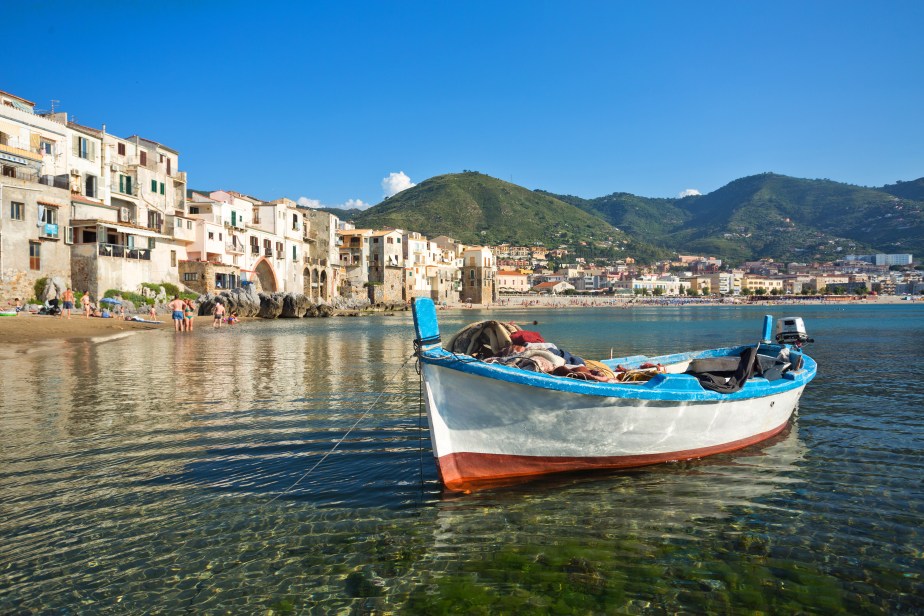
The seaside at Cefalù, on the north coast of Sicily. (Photo: Dominic Arizona Bonuccelli)


About Rick

A popular public television and radio host, a best-selling guidebook author, and an outspoken activist Rick encourages Americans to broaden their perspectives through travel. He is the founder and owner of Rick Steves’ Europe (RSE), a travel business with a tour program that brings more than 30,000 people to Europe annually.

RSE is designed to inspire, inform, and equip Americans in creating European trips that are

Rick lives and works in his hometown of Edmonds, Washington, where his office window overlooks his old junior high school.

About Rick Steves’ Europe, Inc.

TV-still-1001-rick-trinity-college.tif

Rick Steves’ Europe (RSE) inspires, informs, and equips Americans to have European trips that are fun, affordable, and culturally broadening. Guided by Rick’s value-driven vision, his company brings tens of thousands of people to Europe annually on organized tours, producing a wide range of travel content including a best-selling guidebook series, popular public television and radio shows, a syndicated travel column, and a large library of free travel information at ricksteves.com.

RSE’s mission is built around the idea of social responsibility, and it empowers several philanthropic and advocacy groups, including a portfolio of climate-smart nonprofits that it funds through a self-imposed carbon tax.

Rick Steves in his early years of exploration.


Rick Steves Europe Awaits is a production of Rick Steves’ Europe, Inc., American Public Television, and Detroit Public Television. Visit ricksteves.com for additional information.

Select pledge thank-you gifts for Rick Steves Europe Awaits include exclusive access to a live virtual event and Q&A session hosted by Rick from his home in Seattle, WA; DVDs of Rick’s speaking engagements; anthology sets of the Rick Steves’ Europe series; “For the Love of Europe,” a 400-page collection of Rick’s favorite people, places and experiences; and the “Europe’s Top 100 Masterpieces: Art for the Traveler” coffee table book.

Mykonos by Rick Steves.

About American Public Television
American Public Television (APT) is the leading syndicator of high-quality, top-rated programming to the nation’s public television stations. Founded in 1961, APT distributes 250 new program titles per year and more than one-third of the top 100 highest-rated public television titles in the U.S. APT’s diverse catalog includes prominent documentaries, performance, dramas, how-to programs, classic movies, children’s series and news and current affairs programs. Doc Martin, Midsomer Murders, America’s Test Kitchen From Cook’s IllustratedAfroPoPRick Steves’ EuropePacific Heartbeat, Christopher Kimball’s Milk Street Television, Legacy List with Matt PaxtonFront and CenterLidia’s KitchenKevin Belton’s New Orleans KitchenSimply MingThe Best of the Joy of Painting with Bob Ross, James Patterson’s Kid Stew and NHK Newsline are a sampling of APT’s programs, considered some of the most popular on public television. APT also licenses programs internationally through its APT Worldwide service and distributes Create®TV — featuring the best of public television’s lifestyle programming — and WORLD™, public television’s premier news, science and documentary channel. To find out more about APT’s programs and services, visit APTonline.org.

About Detroit Public Television
Serving Southeast Michigan, Detroit Public TV (DPTV) is Michigan’s largest and most watched television station, with the most diverse public television audience in the country. DPTV is the state’s only community-licensed station, meaning it operates independent of any educational, government or other institution. Its funding comes solely from the community. Each week, more than two million people watch DPTV’s four broadcast channels, and nearly 200,000 people listen to its radio station, WRCJ 90.9 FM for classical days and jazzy nights. In addition, DPTV is building the next generation of public media with a rapidly growing digital presence, which now reaches more than half a million unique visitors through its website, YouTube channels and social media platforms each month. Visit DPTV.org.

Where’s Rick?

Join Rick as he travels across the world and web with an exciting itinerary of virtual events.

MAY 24: Iran: Won’t You Be My Neighbor?
5:30 p.m. and 7:00 p.m. Pacific  |  Register for Free

MAY 26: Bellingham City Club: Rick Steves on the Future of Travel
12:00 p.m. Pacific  |  Register for Free

MAY 31: Monday Night Travel: Europe’s Eccentric Art
5:30 p.m. and 7:00 p.m. Pacific  |  Register for Free

JUNE 7: Monday Night Travel: Europe Awaits!
5:30 p.m. and 7:00 p.m. Pacific  |  Register for Free

JUNE 15: World Affairs Council of Tennessee: A Conversation with Rick Steves
7:00 p.m. Central  |  Buy Tickets

JUNE 17: WJCT: An Evening with Rick Steves
7:00 p.m. Eastern  |  Register for Free

Angela Medearis: The Ultimate Kitchen Diva

Photograph by Penny De Los Santos-Diabetic cookbook, Author Amgela Medearis

“People are eating African American food every day, but they don’t know it,” Angela Shelf Medearis says to me when we chat on the phone. In part, she’s talking about James Hemings who, in the complicated way of slavery, trained in the culinary arts in Paris and became a noted chef de cuisine and yet lived most of his life enslaved. Hemings either created or introduced a variety of the foods we eat now such as macaroni and cheese, ice cream, French fries, meringues, crème brulée, and French-style whipped cream.  Another dish he created that we don’t eat regularly if at all is his handwritten recipe for snow eggs–soft, poached meringue, set in puddles of crème anglaise.

          Hemings was the son of Sally Hemings, an enslaved woman and  John Wayles, the man who “owned” her. The two had six children together.  Wayles also had a more traditional family and his daughter Martha married a plantation owner named Thomas Jefferson. Thus, James was the half-brother of  Martha Jefferson who “inherited” James  (that’s so creepy I even hate writing it) when Wayles died. James was eight when they all came to live at Monticello. His youngest sister, Sally was just an infant. To make matters even more complex, after Martha died and Sally reached some type of maturity—she was probably in her mid-teens, she became Jefferson’s mistress and had six children by him, four of whom lived to adulthood.

          So, Sally Hemmings was Martha Jefferson’s half-sister, and her children were half-siblings to Martha and Thomas’s children. I mention all this not only to show how helpless enslaved people were as to what happened to their bodies but also to show how intertwined Black and White families were and how the foodways of both merged.

          But while Hemings introduced the Frenchified cookery to America,  

Medearis, the founder of Diva Productions, Inc., the organization that produces her multicultural children’s books, cookbooks, videos, and audiocassettes, points out that people weren’t eating black-eyed peas before Africans arrive in this country.

          “Back then they even thought tomatoes were poisonous,” she says. “But when they shipped slaves, they also shipped  the foods they ate with them  because that was a cheap way to feed them,” she says. “The recipes for those foods traveled from one place to the other. If they stopped in the Caribbean or South America before coming here, then the recipes changed with the foods and spices available and the types of cooking techniques.”

          Medearis, a television chef known as the Kitchen Diva, has written 107 books. Many are children’s books, but she also is a cookbook author focusing on both the historic roots of African American cookery and healthy eating like The Kitchen Diva’s Diabetic Cookbook: 150 Healthy, Delicious Recipes for Diabetics and Those Who Dine with Them.

But she didn’t start out to be a cook.

          “I only cooked enough that social services wouldn’t come and take away my children,” she says with a laugh. But her mother, after she retired, decided she wanted to market her raisin pie for some extra income.

While her mother and sister did the cooking, Medearis who often wears feather boas during her TV appearances and on her PBS cooking show and isn’t shy about being in the limelight, did the marketing.

But when her mother and sister decided to quit, Medearis knew she had to learn to cook if she wanted to keep her food business going.

Now she’s so full force that celebrity chef and restauranteur Bobby Flay arrived for a Jerk Chicken Throwdown while she was marinating jerk chicken for a family get. It was for his Food Network show Throwdown with Bobby Flay. 

          Who won I ask?

Medearis’s Jerk Chicken

          “My chicken had been marinating for hours,” Medearis replies. “He just arrived from Manhattan and threw some spices on his chicken. It burned. I beat Bobby.”

Watch it here.

Though she originally didn’t cook Medearis had written several loved historic research. Did I know that George Washington Carver drove a food wagon around to introduce people to healthy foods?

No. I knew that Carver, who famously said, “There is probably no subject more important than the study of food,” was born a slave and became a botanist, author, educator and agriculturalist. He also collaborated with auto magnate Henry Ford on growing peanuts and soybeans.

And don’t even get her started on Carver and black-eyed peas.

“Black-eyed peas, okra, peanuts and sesame seeds, and the oil they produce, are documented contributions from Africa via the slave trade to our American cuisine,” she writes in her syndicated column. “I prepared black-eyed peas any number of ways while doing research for my first cookbook.”

That would be The African-American Kitchen: Cooking from Our Heritage, a best seller that even now 30 years later is considered a standard on the foodways African Americans bought to this country.  The problem though was getting it published. Her award winning children’s books were published by Dutton and when she brought the idea for her cookbook, she found an editor there who loved the book. But the editor at the next level turned it down, saying he’d published an African American cookbook almost 30 years earlier and no one bought it. He didn’t think the country was ready for another.

What’s a Kitchen Diva to do? Make a peach pie, of course, as it’s representative of both Black and Southern food history.

“You could hardly get a peach pie anywhere back then in Manhattan,” says Medearis. Wrapping up both the peach pie and the manuscript, separately we presume, she sent both off to the publishing company.

She got the contract.

“That book sold so many copies it was crazy,”

Overall, she’s written 107 books seven of which seven are cookbooks. Published in seven languages, she’s sold a total of 14 million books. But despite that, she’s not ready to stop.

“People ask me when I’m going to retire,” says Medearis who lives in Austin, Texas. “Why should I? I’m having a lot of fun with it. I’m doing what I want to do.”

Creole Chicken Stew

Makes 8 Servings

“This is a quick and healthy version of New Orleans-style gumbo,” writes Medearis about this recipe, which was published in her book, the . “Using frozen vegetables is a real time-saver when making this tasty stew; it’s also the perfect way to use kohlrabi when in season. Select small, tender okra pods for this recipe, and don’t slice them until right before you add them to the stew.”

1½ tablespoons olive oil

1 cup chopped yellow onions

1 cup coarsely chopped carrots

¼ cup chopped celery

4 cloves garlic, minced

1 bay leaf

2 teaspoons diced seeded jalapeño chile

¼ teaspoon salt

1 teaspoon freshly ground black pepper

½ teaspoon dried thyme

2 tablespoons whole-wheat flour

3 cups reduced-sodium chicken broth

1½ pounds boneless, skinless chicken breasts, cut into 1-inch-wide strips

1 cup peeled cubed Yukon Gold potatoes or kohlrabi, or a combination

1 cup diced zucchini

1 cup halved okra or frozen cut okra

4 cups cooked brown rice

2 green onions, chopped, including green parts

In a large pot, heat 1 tablespoon of the oil over medium-high heat. Add the yellow onions, carrots, celery, garlic, bay leaf, jalapeño, salt, pepper, and thyme and sauté until the onion is translucent, about 3 minutes.

Using a slotted spoon, transfer the vegetables to a plate, leaving as much oil in the pot as possible. Add the remaining ½ tablespoon of oil. Stir in the flour. Cook, stirring constantly, until the flour begins to turn golden brown, about 3 minutes.

Gradually whisk in the broth and cook for another 5 minutes, whisking until smooth. Bring the mixture to a boil, then reduce the heat to a simmer. Add the chicken, potatoes or kohlrabi, and zucchini. Return the sautéed vegetables to the pan. Partially cover and simmer, stirring occasionally, for 20 to 30 minutes.

Add the okra and cook for 15 to 20 minutes. Remove the bay leaf. Serve over ½ cup of rice per person and sprinkle with the green onions.

Kitchen Diva: Tap Your Inner Chef With DIY Recipes

Angea Medearis, the Kitchen Diva, wrote one of her syndicated columns on creating Do-It-Yourself recipes.

“Basically, a DIY dinner recipe is about finding a way to retain the flavors of the recipes you love while using the ingredients that you have on hand,” Medearis writes. “If you have always wanted to free yourself from the restraints of a recipe, now is the time to do it! Think of the current lack of ingredients as permission to tap into your inner chef.”

To ease into creating your own DIY dinner recipes, Medearis suggests starting by making a pot of chowder.

“No one really knows the origin of the term chowder,” she writes, “but whether it came from French, Caribbean, Portuguese or Brazilian cooks, the basic meaning is connected to the large pot that the meal is cooked in.”

Medearis is a history buff paritcularly when it comes to food.

“Chowders were introduced to North America by immigrants from France and England more than 250 years ago. Native Americans called the dish ‘chawder’.” she says noting the word interpreted as “chowder” by early settlers and fishermen in New England.

“The original versions of the dish consisted of a pot filled with a mixture of fresh fish, salt pork, leftover hardened biscuits (which were used as a thickener), onions, water and whatever spices were available, writes Medearis. “A chowder is a delicious way to use the ingredients you have on hand to create a meal that does not require extensive prep or simmering for hours. My recipe for Seafood and Sweet Corn Chowder uses the basic techniques.”

My recipe for Seafood and Sweet Corn Chowder uses the basic techniques for making a chowder, but is designed to accommodate the need to vary ingredients based upon what you have on hand or what you can purchase at the store.

Whether you decide to make a seafood or vegetarian chowder, feel free to create your own version of this DIY dinner.

SEAFOOD AND SWEET CORN CHOWDER

If you don’t have all the vegetables, seafood or spices on hand, omit or substitute the ingredient with what you do have. This chowder will still be delicious without it!

3 tablespoons butter or vegetable oil

1/2 cup (about l large stalk) chopped celery

1/2 medium onion, chopped

1/2 green bell pepper, seeded and chopped

2 garlic cloves, minced or 1/2 tablespoon granulated garlic powder

1 1/2 teaspoons salt

1 1/2 teaspoon ground black pepper

3/4 teaspoon dried dill or tarragon, or 1 tablespoon dill pickle juice

1/8 teaspoon cayenne pepper or red pepper flakes

2 cups chicken broth, seafood stock, clam juice, bouillon fish base or water

1 to 2 large Russet potatoes, or 3 red skin or Yukon Gold potatoes cut into 2-inch cubes, about 2 to 3 cups

2 large carrots, chopped

2 cups frozen corn, thawed, or 1 (15-ounce) can whole kernel or cream-style corn, or 6 ears sweet corn, husk and silk removed, or frozen corn on the cob, thawed with kernels cut from the cobb

2 cups heavy cream, half and half

Whole milk or 2 (14-ounce) cans evaporated milk

1 3/4 to 2 cups fully cooked, skinless salmon chunks, or 1 can (14 3/4 ounces) salmon, drained, flaked, bones and skin removed, or 1 to 2 cups fresh or frozen peeled and deveined shrimp, cooked peeled and deveined shrimp, or cooked crab meat (checked for pieces of shell) or a combination of the seafood equaling 1 3/4 to 2 cups.

1. Place the butter or oil into a large saucepan or Dutch oven placed over medium heat. Add in the celery, onion, green bell pepper, garlic or garlic powder, and 1/2 teaspoon of the salt and pepper, dill, tarragon or dill pickle juice, and the cayenne pepper or red pepper flakes. Saute, stirring occasionally until the vegetables are tender, about 4 to 5 minutes.

2. Stir in the broth, stock, juice or water, potatoes, carrots and the remaining teaspoon of he salt and pepper. Cover and bring the chowder to a boil.

3. Reduce heat to low; stir the mixture, cover and simmer for 40 minutes or until the vegetables are nearly tender. Stir in the corn, cream or milk, and the salmon, shrimp or cooked crab meat (or a combination of seafood). Simmer on low heat for 10 to 15 minutes or until heated through.

4. Garnish with lemon wedges, chopped parsley or green onions. Serve with toasted French bread or crackers. Serves 6

Here’s the Jerk Chicken recipe that won the Throwdown with Bobby Flay.

Jamaican Jerk Chicken

Yield: 6 to 8 servings

1/3 cup olive oil

1/3 cup distilled white vinegar

1/2 cup orange juice

1/2 cup lime juice

1/2 cup molasses

1/4 cup soy sauce

1 bunch cilantro, leaves chopped

4 green onions, chopped

2 cloves garlic, chopped

1 Scotch bonnet chili, serrano, or Thai bird

chiles, seeded and minced

3 bay leaves

3 peppercorns

1-inch piece cinnamon, crushed

2 tablespoons ground sage

1 tablespoon ground thyme

1 tablespoon ground allspice

1 teaspoon freshly ground black pepper

1/2 teaspoon ground nutmeg

5 pounds chicken pieces

Combine the oil and vinegar in a medium glass bowl. Stir in the orange and lime juice, molasses, soy sauce, cilantro, green onions, garlic, chili, bay leaves, peppercorns, cinnamon stick, sage,thyme, allspice, pepper, and nutmeg.

Place the chicken pieces in a large baking pan and pour the spice mixture over them, coating each piece well. Cover with plastic wrap and place the chicken in the refrigerator to marinate 12 hours or overnight, turning once.

Allow the chicken pieces to come to room temperature before grilling. Heat the grill until the coals are somewhat white with ash; the flame should be low. Place the chicken on the grill and cover with the lid. Grill for 30 to 35 minutes, turning pieces to cook evenly. Baste pieces with remaining marinade.

For more information including recipes, https://www.medearis.com/

Dealing with Winter Gloom? Instant Mood-Lift Dishes from Lithuanian Kitchens

Potato Dumplings © Andrius Aleksandravičius

“The global pandemic caught the world off guard, at the same time forcing people to seek out things that represent familiarity and security,” says Lukas Pereckas, Blue Oceans P.R . “That is why some are even proclaiming that 2020 is the Renaissance of comfort food because of its ability to soothe the nerves and provide psychological comfort.”

Cooking at home is a great outlet to release pent up energy, indulge our creativity, and bring new flavors and tastes ot our meals, but after awhile experiencing with the culinary options from other countries can help tamper our hanking for travel while helping us explore the world outside our door.

The interior of Šiauliai Cathedral looking east in Šiauliai, Lithuania. Photo courtesy of DAVID ILIFF. Wikimedia Commons.

“There has never been a better time to see what other nations bring to the table as comfort food,” he says, noting that one of the least known cuisines of Eastern Europe, Lithuanian foods are just now gaining popularity as more and more travelers experience the flavors of this old world cookery. “What better way to see where your travels will take you in the future then by enjoying the tastes of Lithuanian at home.”

Seven Lithuanian Feel-Good Dishes Worth Trying

“For tourists, asking where the Lithuanian food comes from, I always say that the majority of the ingredients come from the province, yet Lithuanian culinary heritage is multicultural, as all nations that once resided in Lithuania contributed something of their own to the Lithuanian gastronomic peculiarities,” says Ieva Pikžirnytė, Lithuanian food guide, coffee and taste training expert.

Nerijus Paluckas_Zagarelia

            Lithuanian foods are also heavily influenced by other ethnic cuisines such as Jewish, Polish, Ukrainian, Tartar, Russian, and Karaite which over the centuries have been adapted with tradition Lithuanian ingredients , cooking techniques, and flavors.

 “Tourists are usually most fascinated by our hash browns and stuffed cabbage. A lot depends on the season as well. For example, in cold weather they prefer mushroom soup and potato dumplings (cepelinai),” says Pikžirnytė  who shares shares a list of Lithuanian comfort dishes most liked by by locals and visitors alike.

Potato Pie @ Beatos Virtuve

Filling Potato Pie (Kugelis)

Potatoes have ruled the Lithuanian cuisine for 150 years and most families have a favorite potato dish recipe passed down through generations.

Potato pie or pudding (kugelis), with its crispy exterior and soft consistency inside,  is an easy-to-make  favorite.

Hearty Hash Browns (Bulviniai blynai)

Restaurant Lokys. Photo courtesy of Ruchika Anand

Like the majority of Lithuanian dishes, hash browns or potato pancakes (bulviniai blynai) contain lots of carbs, fat, and salt – all essential  ingredients for satisfying our emotions and food cravings. Go ahead and indulge.It’s been a tough year. The recipe can be found here.

Famous Potato Dumplings (Cepelinai)

When it comes to potato dishes, probably the most well-known are potato dumplings (cepelinai) that are filled with a variety of ingredients, some typical such as meat or cheese and some more unique apples, herring or sauerkraut.

Fast Fried Bread@Beatos Virtuve

Fast Fried Bread with Cheese (Kepta duona su sūriu)

One of the most popular snacks in Lithuanian, fried bread quickly becomes a favorite of visitors as well. The treat goes well with a pint of beer and takes little effort to make. All you need is a loaf of rye, 1 or 2 cloves of garlic, cooking oil, a pinch of salt and cheese

Cut the bread in strips, fry in oil until crispy, then rub the garlic onto the hot bread, sprinkle with salt and top with grated cheese. Voila! The perfect hot, filling, cheesy and garlicky –what could be better?

Savoury Pastry Pies (Kibinai)

Crescent-shaped pies of butter pastry stuffed with meat, mushrooms, or vegetables are one of the dishes brought to Lithuania by another nation – Karaites. Around 400 Karaite families were invited  to Lithuania by Vytautas, the Grand Duke of Lithuania, from the shores of Black Sea at the end of the 14th century, and those who have made Lithuania their home, added their national dishes to the Lithuanian cuisine, hence – the savory pastry pies. The dish is best devoured in the historical capital of Lithuania – Trakai – where the variety of both savory pastry pies and restaurants serving them is astounding. This recipe is a great way to pass time while planning a trip to try a Lithuanian spin on savory pastry pies the following year.

Trakai Castle. Photo courtesy of Victor Malyushev 

Delicious Cocoa Cookie Bar (Tinginys)

A national treat, this uncooked cocoa cookie bar, called “lazy cake” by the locals since the recipe requires little effort. calls for minimal to none cooking skills. Just crush a pack of tea biscuits, melt 100 g of butter on medium heat, add a can of sweetened condensed milk and cocoa powder. Mix the ingredients, wrap the mixture in a cling film, shape it as a sausage, chill it in the fridge for several hours and voilà!

Deep-Fried Pastry Strips (Žagarėliai)

These twig-shaped and deep-fried pastry strips made with curd or sour milk provide the same type of feeling of satisfaction that we get biting into a freshly made donut. Quick and easy to make, they’re surely will lighten anyone’s mood. Even better, the recipe is easy to make.  

Familiar and comforting flavors with some unusual twists represent a side of Lithuania that is sure to be explored by foodies in years to come. Meanwhile, all eager to experience Lithuanian gastronomic peculiarities can take a look at the Map of Authentic Lithuanian Flavors and make a list for their future explorations of Lithuania.

Pažaislis Monastery, Kaunas, Lithuania.

About Lithuania Travel

Lithuania Travel is a national tourism development agency responsible for Lithuania’s tourism marketing and promotion, acting under the Ministry of Economy and Innovation. Its strategic goal—to raise awareness of Lithuania as an attractive tourism destination and to encourage inbound and domestic travel. The agency closely collaborates with tourism businesses and organizations, presents Lithuanian tourism products, services and experiences on social and digital media, press trips, in international travel exhibitions and B2B events.

More information available at Lithuania travel and Facebook page Lithuania Real is Beautiful.

Media contact

Greta Skridailaitė

greta.s@blueoceanspr.com

From Zürich to Lugano in Under Two Hours: From Winter to Time in the Mediterranean Sun on Lake Lugano

Copyright Lugano Region © Enrico Boggia

The charming Ticino region is a well-kept secret for travelers in the know wanting to escape winter’s cold. But that’s likely to soon change with with the opening of the Ceneri Base Tunnel this December. Train times between Zürich and Lugano are now less than two hours making a trip to this magical Italian-speaking region of Switzerland within an easy reach of the North.. 

Lugano, the largest town in Ticino, is located in the very heart of breathtaking mountain and lake landscapes, and offers year-round a fascinating mix of culture, cuisine and Mediterranean joie de vivre.Curretnly, a selection of hotels are offering special deals with a 20 percent discount on the daily rate, theme packages with overnight stays, and fixed price offers including dinner.Bookable through ticino.ch/ceneri
Flamel at Hotel Luganodante. Photo courtesy of Hotel Luganodante.

Hotel LUGANODANTE dazzles with its new design

The 4-star Hotel LUGANODANTE, located right at the center of Lugano has a colorful urban stylewith public areas that create an ambience of an open living room looking out onto city living. The 85 rooms and suites, as well as the lounge and conference room, have been decorated to reflect the pleasant and soothing color hues of the lake and surrounding landscape. In the newly opened Flamel restaurant, the Maci brothers wow diners with an innovative gastro concept that blends Italian and French cuisine and offers – in keeping with the French alchemist Nicolas Flamel’s name – a unique flavor experience. www.luganodante.com

Hotel Luganodante. Photo courtesy of Hotel Luganodante.
Monte Brè –An excursion above the roofs of Lugano now also available in winter
The Monte Brè and Monte San Salvatore are two majestic local mountains that are now accessible during the holiday season aboard a historic funicular. Over a half-mile high, Monte Brè is considered Switzerland’s sunniest mountain. Both mountains offer stunning panoramic views of Lake Lugano and the surrounding snowy peaks.
www.montebre.ch
Funicular Mount Bre. Photo courtesy of Funicalar Mount Bre.

Dario Ranza, Kuechenchef, Ristorante Ciani, Lugano. copyright by http://www.steineggerpix.com / photo by remy steinegger
Il Forziere del Vino – Tastings in a sublime Wine Cellar
The luxury hotel Splendide Royal Lugano is home to the stunning Forziere del Vino (“wine safe”), which houses a real treasure – some 500 of the world’s very best wines. The guardian of the safe is Simone Ragusa, a Swiss Master Sommelier in 2015. The stunning Wine Cellar is ideal for enjoying first-class culinary experiences and wine tastings with Ragusa who shares his deep knowledge of the best vini of Ticino and other top-class international wines, also provides insider information about the wines and their producers. Oenophiles up for the challenge are invited to participate in an evening of blind tasting: four different wines are paired with food and answer questions about what they’re drinking.. At the end of the evening, one of the guests is crowned “Sommelier of the Evening”.
http://www.splendide.ch
Hotel Splendide Royal, Lugano.
Both photos courtesy of Hotel Splendide Royal, Lugano.

Exhibition at the MASI Palazzo Reali – Ticino in the Tide of Change

The Museo d’arte della Svizzera italiana (MASI) will continue to show the monographic exhibition “Ticino in the Tide of Change” in the Palazzo Reali January 10, 2021. Showcasing the work of local photographer Vincenzo Vicarni (1911-2007), the exhibition features more than 100 black-and-white and color photos he took of Ticino from 1936 and 1987. It’s a wonderful way to see how Ticino changed and its inhabitants adapted from the agricultural post-war years to the more urban Ticino of the 1980s. www.masilugano.ch

Da Vinci Experience – Dive into the world of Leonardo da Vinci

From 03.12.20 – 21.02.2021, the Centro Esposizioni Conza in Lugano is featuring a new interactive multimedia exhibition called the “Da Vinci Experience”. Bringing da Vinci’s story, art and inventions to life in multimedia format that includes projections and virtual realities, takes visitors on a sensory journey as they learn about his greatest inventions. In the Inventions Room, visitors interact with many of da Vinci’s original works reproduced in full scale. The Immersive Room is an extensive cinematic experience projecting a series of images and videos of da Vinci’s best artistic works and scientific inventions. The third room – the Oculus Room – houses eight 3D virtual reality stations with VR glasses where visitors navigate, by a virtual paddle boat or flying the roofs, of Renaissance Florence.  davinciexperience.ch

Copyright DaVinci Experience
Carta MAM – five museums in the Mendrisiotto come together in one ticket
At the southern tip of Lake Lugano lies the Mendrisiotto, a region which is not only rich in rolling hills and flourishing vineyards producing the best wine, but also a wide range of different cultural experience including the Carta MAM of the Musei d’Arte del Mendrisiotto (MAM) network. This consists of five different museums: the M.A.X. Museo in Chiasso, the Museo d’arte Mendrisio, the Museo Vincenzo Vela in Ligornetto, the Pinacoteca Cantonale Giovanni Züst in Rancate and the Teatro dell’architettura in Mendrisio. Visitors purchasing a ticket at any of the five museums also will be given the Carta MAM which provides a discount for the other museums and their gift shops. ! www.museidartemendrisiotto.ch

Nuova Segnaletica in Piaazza del Ponte a Mendrisio (FOTO FIORENZO MAFFI)
Lugano ex Convento Santa Maria degli Angioli
Copyright Ticino Turismo – Foto Loreta Daulte

Grand Cafè al Porto – Lugano’s living room since 1803

The narrow alleyway Via Pessina in the old town of Lugano is home to the Grand Cafè al Porto, a café dating back as 1803. A gathering place for the literati, artists and politicians, it is still to this day referred to as the salotto (English: living room) of Lugano.
The jewel in the crown of the Grand Café al Porto is the Cenacolo Fiorentino on the first floor, formerly a monastery dining hall with stunning 16the century wooden ceiling and wall frescoes thought to have be created by Florentine painter Carlo Bonafedi. In more modern times, In March 1945 Cenacolo Florentino was the setting for Operation Sunrise, a secret meeting between German officers and representatives of the Allied powers that resulted in the surrender of German troops in North Italy and shortening the Second World War by several days. The Hall is now available for private engagements.  www.grand-cafe-lugano.ch
Grand Cafe al Porto di Lugano. Copyright by Grand Cafe al Porto / Photo by Remy Steinegger HDR-Image

Photo courtesy of Gabbani.
Gabbani – tradition and innovation
The Gabbani delicatessen in the very heart of the old town of Lugano offers the best in fresh fruit and vegetables, regional cheese specialties, selected charcuterie products, the finest bread and sweet pastries as well as the great wines. The Gabbani name is synonymous with freshness, quality and tradition since 1937 when butcher Domenico Gabbani set up his delicatessen Via Pessina. His son, Lino succeeded him and since 2010, his sons Domenico and Francesco Gabbani have carried on the family tradition. In 2020, they established a boutique hotel, restaurant , wine bar, coffee bar and delicatessen stand on the Piazza Cioccaro.

The hotel has 14 stylishly designed rooms, each with the name of the different type of food upon which the room’s color palette is created. The latest innovation from the Gabbani family is the Ikobani Roof Bar & Restaurant on the fourth floor of the hotel. It serves traditional Japanese cuisine, ranging from classic temaki to fresh sashimi and special dishes such as Kaisen salad, fried fish in Nanban, the house ramen soup and many other traditional Japanese dishes. www.gabbani.com
Ristorante La Serra – a greenhouse with a twist

Located beyond the town’s borders, Ristorante La Serra or, in English, The Greenhouse is housed in an actual greenhouse now transformed into a cozy modern restaurant owned by Mara Bertelli, a yoga teacher. Their the motto “local food, global taste” translates into a menu packed with culinary creations from across the world but based heavily on regional, seasonal ingredients. In addition to the restaurant, there is also a lab which holds cooking classes, yoga lessons and other creative workshops. www.laserra.ch
Copyright Alina Smit – Ristorante La Serra
Restaurant Ciani – the address for gourmets in Lugano’s green oasisThe destination for any gourmet in Lugano is the Restaurant Ciani, where Head Chef Dario Ranza dishes are based on local ingredients and recipes including pasta, risotto and fish. The 15 Gault & Millau points awarded to the restaurant show is indicative of its quality and creativity. Situated at the edge of the Parco Ciani – the town’s green oasis – guests can enjoy stunning views of nature and the historic Villa Ciani while enjoying the restaurant’s modern and elegant design including its lounge, wine bar and large terrace.   www.cianilugano.ch

For more information:
Ticino Turismo
Via C. Ghiringhelli 7
CH – 6501 Bellinzona
T +41 (0)91 825 70 56
www.ticino.ch


In the Heart of France’s Loire Valley: A Weekend in Cher Valley

Located in the heart of France’s Loire Valley region is the Cher Valley, which encompasses the area from Chenonceau to Valençay. Even now, would-be travelers can scout out their next trips to the iconic châteaux of the area, which wouldn’t be complete without sampling the region’s signature wine and goat cheese.

Chateau de Chenonceau
Photo courtesy Chateau de Chenonceau

Chenonceau

One of the most famous châteaux in all of France – as well as the world – Château de Chenonceau is unique not only due to it being an architectural marvel, but also thanks to its legacy as the “Château des Dames.” The château has always been owned by women, notably Diane de Poitiers and Catherine de Medici, whose lasting touches and influences can be seen today. The exceptional gardens, named after both Diane de Poitiers and Catherine de Medici, are today managed by American gardener Nicholas Tomlan, who takes inspiration from the ladies of the castle’s past. As of last year, the château unveiled a recreation of Catherine de Medici’s apothecary, where Nostradamus once prepared remedies for the queen. Visitors can also tour the château’s own on-site floral workshop, where leading craftsman Jean-François Boucher creates daily flower arrangements to decorate the château. An incredibly unique way to see the château is by taking a boat ride directly under the château’s iconic arches, along the Cher River, either by canoe or boat. Or, see the château by air via a hot air balloon ride or plane

Aerial view of Château de Nitray (© Château de Nitray)

Wine tasting stops in the area include the Château de Nitray, just 20 minutes from the château, located in a 106-acre landscaped park. Registered as a national heritage site since 1947, this Renaissance architectural masterpiece houses 25 acres of vineyards dating back three centuries, labelled AOC Touraine.

For now, would-be travelers can experience the château via a virtual visit here: http://www.chateau-nitray.fr/en/the-castle/virtual-visit. Another stop is Château de Fontenay in Bléré, an intimate château-hotel and vineyard, offering five rooms in the château, and three cottages located in the 42-acre park. 

A champignonnière in the Cave Champignonnière des Roches (© C. Lazi – CRT Centre-Val de Loire)

Finally, at Caves Monmousseau, visitors can try sparkling wines that have been perfected for over 130 years, while experiencing a very unique art show. In the underground cellars, images are illuminated on the tunnel walls, telling the story of the châteaux of the Loire through a spectacular sound and light show. 

Foodie destinations include the gastronomic restaurant at Auberge du Bon Laboureur in the village of Chenonceaux and Bistrot’quai, an open-air café located in a garden right by the water, open from May to September. Accommodations include the charming La Folie Saint-Julien B&B, featuring five guest rooms, a garden, and an indoor pool located in a barn; and the Château de Chissay, built in the 16th century as a royal residence under Charles VII and transformed into a hotel in 1986 with 27 guest rooms and five suites. 

Valençay

Located just 20 minutes south of the Cher River is Valençay, known largely by name for its goat cheese and wine. The Valençay vineyards, which overlook the scenic Cher, have a long history, with the first written records dating back to 965. White Valençay is fresh and balanced, with a nose of citrus and flower; red Valençay is structured, fine and fresh on the palate; and rosé Valençay is flexible and structured. Top wine tasting spots include Domaine Roy and Domaine Jourdain. A perfect pairing with Valençay wine, Valençay PDO goat cheese is made from whole, raw goat’s milk, characterized by a truncated pyramid shape and a bluish gray rind. A top spot for cheese tasting is Fromagerie Jacquin. Find more details on Valençay AOC here: https://www.vins-fromages-valencay.fr/

The goat cheese made in Selles-sur-Cher is often regarded as the best in France
(© C. Lazi – CRT Centre-Val de Loire)

Aside from the wine and cheese pairings, travelers in the area should look to Domaine de Poulaines spanning 62 acres of woodlands including beautiful themed gardens and an arboretum (with more than 1,200 plants). Beautiful trees and boxwood surround a Renaissance mansion and a set of buildings from the 18th and 19th centuries. The domaine also offer overnight stays in private guest houses in the heart of the gardens.

The Renaissance-style mansion of Domaine de Poulaines
(© Arnaud Deplagne et Christophe Péan)

Another must-visit is the Château de Valençay, one of the 22 major sites of the Loire Valley, featuring both Renaissance and classic architecture, overlooking the Nahon Valley. The estate’s 13-acre grounds feature traditional and modern gardens, a deer park, and a two-mile path along the “Forêt des Princes.” The château hosts the Talleyrand Festival every two years (with the next festival taking place in 2021), showcasing ancient musical instruments.

Château de Valençay is one of the 22 major sites of the Loire Valley (© V. Treney – CRT Centre-Val de Loire)

Located less than ten minutes from the Château de Valençay, at the foot of the majestic ruins of a Renaissance castle in a charming flower-filled village, is Restaurant Auberge St Fiacre. The restaurant is located in an authentic 17th-century house, transformed into a restaurant in the early 1970s, the restaurant today offers a selection of top local cuisine. 

For more information visit Geoffrey Weill Associates or follow them on Facebook.


Schuler’s Continues a 100 Year Thanksgiving Tradition

There’s no question the holidays will be a little different this year, but Schuler’s Restaurant & Pub in downtown Marshall plans to offer a taste of tradition starting with Thanksgiving.

“Our team is working diligently to provide some level of normalcy for our guests while operating within the safety provisions issued by the state,” says Sue Damron, President and CEO. “We are looking forward to serving up all the comforts of this delicious holiday meal with a variety of options to fit each family’s individual needs.”

Even with state mandated limited capacity, Schuler’s has the space to accommodate families for a traditional turkey dinner with all the trimmings from 11am until 6pm on Thursday, November 26. As space is likely to be sold out quicker than normal, guests are encouraged to make their reservations now by calling (269) 781-0600.

Or, if you prefer to enjoy dinner in the comfort of your own home, you are encouraged to call ahead now and request a “Turkey Dinner” to go with two different options available this year – either a 10-12 pound whole roast turkey or 6 pounds of carved white and dark meat. Both options come with sage dressing, whipped potatoes and gravy, baked yams, green bean casserole, cranberry relish, Waldorf salad, Schuler’s famous cheese and crackers, a fresh baked loaf of bread and a whole pumpkin pie.

Each package, which serves 6-9 people, cost is $195.95 plus sales tax. Orders for the take-out orders must be made and prepaid by Monday, November 23 by calling (269) 781-600 – unless sold out sooner.

“The key this year will be advanced reservations and orders, as we expect all options to be scooped up quickly,” Damron says. “We appreciate everyone’s support and patience as we work under the state mandated restrictions through one of the busiest major holidays here at Schuler’s.

Founded in 1909, the iconic Schuler’s Restaurant & Pub epitomizes hospitality excellence as a family owned and operated business. Located in downtown historic Marshall, Schuler’s is recognized as world-class Michigan destination focused on offering guests’ quality food and excellent service, in a warm and welcoming atmosphere.

The History of Schuler’s.

For over 110 years, Schuler’s Restaurant & Pub kept it in the family – and beat the odds. How rare is this achievement? According to Family Business, rarely do more than 30 percent of all family-owned businesses survive into the second generation, let alone making it to the fourth-generation mark as Schuler’s has done.

Schuler's men at entrance

The secret to their success? Schuler’s attributes its longevity to the foresight of its founder and the succeeding family members who used their entrepreneurial skills to build a tradition of hospitality and fine dining to last more than a century.

This historical buffet provides a peek at the character of the people and the events that have brought the restaurant to this noteworthy time.

The restaurant’s founder, Albert Schuler, was a native of Rome, New York. The adopted son of a traveling butcher, Albert migrated to Marshall in the early 1900s. The owner of a local lunch counter and cigar shop befriended him, and after learning the trade Albert opened a similar business on Main Street in 1909.

In 1920, he purchased a hotel with a small dining room on Main Street and named it The Albert. It was during this period that Albert became deputy sheriff. It wasn’t unusual for Albert to be summoned at the restaurant to attend to matters of the law. He would take off his apron and was out the door. Minutes or hours later, his apron was back on and it was business as usual.

A photo of Marshall, Michigan around the time Schuler’s first opened. Photo from Marshall, an Images of America book by Susan Collins and Jane Ammeson.

In 1924, he was ready to expand his business. He sold the hotel on Main Street and purchased the Royal Hotel and Restaurant in Marshall and changed the name to Schuler’s. He built a seven-lane bowling alley and soon the combination hotel/restaurant/bowling business became a popular gathering spot for locals and visitors.

Win Schuler, Albert’s son, joined the family business in 1934. In 1936, Win, a former high school history teacher and coach, became full owner of the restaurant while his father continued to run the hotel and serve as sheriff of Calhoun County.

Schuler's History Image 1

Win is credited with expanding the family business into a highly successful string of restaurants across Michigan. His magnetic personality and salesmanship were his trademarks. He believed that personal service set his business apart.

Win’s personal service included remembering every customer’s name. He worked hard at this art and is legendary in his ability to remember names. After an introduction, he worked names into any subsequent conversation three times. He even wrote the names down and before he went to sleep at night he would go over the new names of the day.

The murals on the walls throughout Schuler’s and the sayings etched into the beams in the main dining room are the result of Win’s insatiable interest in history. Both have become part of the charm that continues to draw customers from hundreds of miles around to dine here.

In addition to acquiring other restaurants, in the late 1930s Win and his brother, Albert, bought a golf course in Marshall. They named it Alwyn Downs. Back then, they charged 50 cents to play a round of golf. They eventually sold the course.

During World War II, injured military men and women who were sent to Percy Jones Hospital in Battle Creek heard about Schuler’s. It became standard practice for the patients to come to the restaurant at some point during their recovery. Some of the more famous patients included Gene Autry and Bob Dole.

Schuler's generations

Big Ten coaches and teams have been attracted to Schuler’s too. For decades, during the fall football season, Marshall has been referred to as the “Crossroads of the Big Ten.” Duffy Daughtery, Biggie Munn, Bump and Pete Elliott, Ara Parshegian, Bo Schembechler, Don Carhau, George Perles and Mark Dantonio are just a few of the Big Ten coaches who have frequented the restaurant.

In 1959, Win’s son, Hans Schuler became the third generation to join the family business. He grew up in the business and always knew this was what he wanted to do. Under his guidance at one time the family of restaurants grew to nine. And in the Marshall restaurant he was responsible for major expansions and significant renovations. He also proved to have an unusual ability to develop the people working on his team. He has been instrumental in making the transition of the well-established and successful business to his longtime confidant, Sue Damron, the latest steward of the Schuler family legacy.

Photo of downtown Marshall around the time Schuler’s first opened. A photo of Marshall, Michigan around the time Schuler’s first opened. Photo from Marshall, an Images of America book by Susan Collins and Jane Ammeson.

In 2012 a lifetime of leadership and exceptional performance by Hans Schuler was recognized as he received the inaugural “National Restaurateur of the Year” award from Independent Restaurateur. “This award represents the highest level of excellence in all aspects of the business and recognizes an exemplary commitment to owning and operating a successful independent restaurant,” says Jim Young, publisher of Independent Restaurateur.

Like his father, Hans enjoys greeting customers at the restaurant. He continues to be a civic leader in the Calhoun community, and on any given night you may well see him and his wife Nancy dining in the Pub or the Centennial Room.

Representing the fourth generation, Larry Schuler remains active in the restaurant industry, currently serving as an executive in a Florida restaurant group, 23 Restaurants, LLC. He provides a valuable family perspective by serving on Schuler’s Restaurant Advisory Board.

Very few families in the nation have been in the restaurant business as long as the Schuler family, marking 110 years in 2019. And even with a challenging economy and changing marketplace, the iconic restaurant continues to thrive while evolving with the times by delivering great food and hospitality the “Schuler Way.”

In the fall of 2019, Sue Damron – who has spent more than 20 years working her way up the management team – became the owner of the company, now serving as President and CEO of the legendary restaurant. Starting as Hans Schuler’s Executive Assistant in 1998, Sue worked her way up the management chain, culminating in being named President and Managing Partner and acquiring a minority ownership share in 2014.

Much like the Schulers, the Damrons are a family affair. Sue’s husband, Shannon, has been a constant support, and her children, Josh and Elizabeth, have both had jobs at the restaurant. Elizabeth currently serves on the Schuler’s management team and has chosen the industry for her career.

“We have the benefit of generations of experience behind us that will continue to guide us toward the future as one of Michigan’s longest-established restaurants,” says Sue. “The Schuler’s brand remains dedicated to providing an unparalleled experience. We are excited about this new chapter in our classic history and plan to be welcoming guests to Schuler’s for a long time to come.”

So, from one family to another, the “Schuler Way” remains the focus.

“I felt it was time to complete handing over the reins of our successful business to someone who has consistently shown herself to be a capable and innovative leader in our industry and in our community,” says Hans. “In 2014, we announced Sue’s new role as President and Managing Partner with the observation that we were ‘introducing the future’ of the restaurant. I’m pleased to say that we are now able to complete that transition, handing over a successful, established business to a proven partner and someone who will be an excellent steward of our family’s legacy.”

For almost 70 years, Schuler’s Heritage Cheese Spread has been a big hit. Served to customers when they first sit down, it’s also sold in stores. Or if you want to make your own, here’s an introduction to the recipe and the recipe itself.

“My family’s restaurant has been in business for over 100 years and for many of those years when you would sit down at a table and you’d be welcomed with a crock of horseradish cheddar cheese spread and some crackers and homemade bread. This is one of the versions and it is the one that I make at home for my friends to welcome them to my table. It is tasty and super welcoming. – “MyCommunalTable —

Schuler’s Heritage Cheese Spread

4 ounces sharp cheddar cheese
8 ounces garbanzo beans
8 ounces cream cheese
5 ounces sour cream
1/4 cup butter
1 ounce prepared horseradish
1 tablespoon white vinegar
2 teaspoons salt
1 tablespoon sugar
1 tablespoon paprika
1/4 cup mayonnaise
1/2 cup buttermilk
Dash brown ale

With cutting blade in a food processor, finely chop cheese and the garbanzo beans. I find using the pulse button on my processor makes the beans & cheese less gummy.

Add cream cheese, sour cream, and butter. Process until smooth.

Transfer to a bowl and add the rest of the ingredients. Stir. You can add more buttermilk or ale a drop at a time if you need make the cheese more spreadable.

Keep in fridge until ready to serve. I like warmed crackers served with this tangy cheese.

Jane Simon is the co-author, with Susan Collins, of Marshall, an Arcadia Images of America book.

White Stallion Ranch: A Taste of the Old West

The patio at White Stallion Ranch

I had thought that dude ranches, the kind of places out west where you’d go to spend time galloping across the plains or desert with a background of mountain ranches, were out of the past. Popular around the time of Theodore Roosevelt who loved to ride and hunt, dude ranches first became big shortly after the Battle of Little Big Horn (though why a massacre of U.S. troops would be beguiling I don’t know) back in the 1880s, they attracted people not only from America but also Europe.

Dining Room at White Stallion Ranch

But unlike,western movies which had their heyday between the 1930s and 1960s and now are hardly ever made anymore, dude ranches have survived. Now called guest ranches, their numbers have fallen because the land they occupy is sold to developers for higher prices than owners can make offering lodging and horseback riding.

Indian Oven at White Stallion Ranch

And so, when my husband saw a deal for a long weekend at the White Stallion Ranch outside of Tucson, I wasn’t sure what to expect. I like to horseback ride,and I loved the idea that on Saturday nights they served a ranch-style dinner that had been cooked all day inside an adobe oven fueled by wood. Would we have to kick tumbleweeds aside to get into an old rickety cabin that smelled like horses? Would we sing along around a roaring campfire as the stars shone across the desert sky.

Penning a calf

Yes,to the later and no to the first. The cottages are adobe baked to a rust color and though the décoris decidedly western, it’s not tacky (excuse the pun) at all. Indeed, White Stallion Ranch (the name was originally Black Stallion but then the owners realized that the initials BS wouldn’t quite work)has received numerous awards including The 12 Best All-Inclusive Resorts in the United States for 2019 by SmartTraveler and Voted #1 Best Family Resort by USA Today 10 BEST Readers’ Choice Awards in 2018.

They’re running specials now because of Covid though as Russell True told me, social distancing is easy on a ranch. Russell is the son of the Allen and Cynthia True who bought the ranch in 1965, packing up their kids (Russell was five, his brother Michael was a baby) and moving from their very successful middle class life in Denver, Colorado. The whole place was rough and tumble to hear Russell describe it and much more isolated as the interstate some five miles away hadn’t been built yet and Tucson’s population was about 260,000—now it’s close to a million and rapidly growing.

White Stallion Trail Mix (recipe below)

When founded as a cattle ranch in the late 1800s, before Arizona became a state in 1912, about 5100 people lived in Tucson. Phoenix, about 100 miles north, had the same population back then but now they’re almost five times larger than Tucson.

The 3000 acres, located in the Sonoran Desert, backs up to the Tucson Mountains and is surrounded by the Saguaro National Forest and populated by ancient saguaros, those friendly looking cactus whose branches or limbs go up in the air like happy arms waiting to greet you. Movies are filmed here starting in in 1939 when William Holden and Jean Arthur starred in “Arizona.” In 1978, the James Garner film, “The New Maverick,” was filmed on the ranch and two years later Robert Conrad arrived for the making of “Wild, Wild West Once More.” Even better for George Clooney aficionados, the actor along with Sam Rockwell starred in “Confessions of a Dangerous Mind” in 2002.

White Stallion at Night

It’s all much comfier than 55 years ago when the Trues arrived. The main building wasn’t the gleaming glass, stone, and wood mid-century modern style it is today. When the Trues bought the 200-acre ranch there were 17 rooms and the same number of horses. Now operated by second and third generation Trues, the ranch encompasses 3000 acres. The horse population around 175 and there are 43 rooms and as well as 5-bedroom hacienda. Many of the True family members live on property including Russell’s son Steven and his wife.

But despite all these changes, the old west feeling is reflected not only in the cookery, trail rides, weekly rodeos, the cattle who range freely (have no fear, their prime practice is lolling under a shady mesquite watching people ride by) and the landscape but also in the chance to sign up for cattle drives, archery, rock climbing, hiking, heading to the shooting range and real-life lessons on how to pen cattle.

Over the years, there were many offers but Al True always turned them down.

“Do you know how much money you’re saying no to?” one developer asked him, emphasizing the amount added up to a gasp-inspiring millions of dollars.

Potato Chip Cookies

But land was more important than cash to the Trues and Al replied that riches were a poor substitute for their life on the ranch. But the lure of money is one of the reasons that of the 30 ranches once in business here north of Tucson when the Trues moved to the neighborhood have dwindled to three.
The food served is international but there’s definitely an overriding western/southwestern theme with taquitos, tacos, ribs, and steaks grilled outside. But the big paean to the past history is their signature Indian Oven Dinner on Saturdays. That’s a hard one to replicate at home, but just think of slowed braised pot roast with potatoes and carrots. Serve with flour or corn tortillas to add a little more western flair. They also offer food oriented guided trail rides including picnic luncheons, the Wine & Cheese ride, and a Beer & Cheetos ride.

The following recipes are courtesy of White Stallion Ranch and are among the favorite served there.

Prickly Pear Margaritas
Note: this makes a very large batch, if you’re not that thirsty or having a small get together, you may want to reduce the quantities.

1.75-liter bottle of Margarita Mix (your choice)
3/4 of a liter of Pepe Lopez Tequila
3 cans of 7-Up
1/4 bottle of Triple Sec
18 ounces of Prickly Pear Syrup

Peanut Butter Bars

¾ cup shortening
¾ cup peanut butter
1 cup brown sugar
1 c white sugar
1 large egg
1 teaspoon vanilla
1 ¼ cups flour
1 ¼ cup oatmeal
¾ teaspoon baking soda
¼ teaspoon salt

Preheat oven 350° degrees or 300° convection oven.
Cream the shortening, peanut butter, sugar, egg, and vanilla well. Mix together the flour, oatmeal, soda, and salt.
Beat the flour mixture into the creamed mixture. Spread the dough by hand over sprayed and floured 9”x13” baking pan. Bake 25 minutes until still chewy. Immediately sprinkle on the chocolate chips and spread over the bars when melted.

Peanut Butter Bars

Topping
1 cup powdered sugar
½ cup peanut butter
1 cup chocolate chips
2-4 tablespoons milk, as needed
Beat topping ingredients well, using enough milk to get a creamy consistency, then swirl over the chocolate. Cut and serve.

White Stallion Ranch Trail Mix
6 cups dry roasted peanuts
1 family sized box or 2 regular boxes of Wheat Thins
8 c small twisted pretzels
8 cups thin pretzel sticks
8 cups corn nuts

2 cups vegetable oil
2 cups melted butter
4 tablespoons chili powder
¼ cup Worcestershire sauce
10 drops Tabasco sauce
2 tablespoons garlic powder
1 tablespoon Lawry’s seasoning salt (or make your own using the copycat recipe below)
1 tablespoon salt
1 teaspoon ground cumin

Mix peanuts, corn nuts and pretzels in large roasting pan. Mix oil and melted butter, chili powder, Worcestershire, Tabasco sauce, garlic salt, seasoned salt, and cumin; pour over pretzels, mixing well.
If using a convection oven, cook at 300° F. for 15 minutes. If using a conventional oven, cook at 300° F. for about 45 minutes. Stir frequently to distribute the seasoning.

Remove from oven and let cool before serving, still serving frequently.

Lawry’s Seasoning Salt
2 tablespoons salt
2 teaspoons white sugar
¾ teaspoon paprika
¼ teaspoon ground turmeric
¼ teaspoon onion powder
¼ teaspoon garlic powder
¼ teaspoon cornstarch
Whisk salt, sugar, paprika, turmeric, onion powder, garlic powder, and cornstarch together in a bowl.

Lariat Twirling Demo

Potato Chip Cookies
Preheat oven to 375 degrees

1 cup Crisco
1 cup white sugar
1 cup brown sugar
2 eggs
1 teaspoon vanilla
1 6-ounce package white chocolate chips
2 1/2 cups flour
1 teaspoon baking soda
2 cups coarsely crushed potato chips

Cream Crisco and sugars. Add eggs, vanilla and beat well.
Add crushed potato chips and white chocolate chips. Sift flour and soda. Stir into creamed mixture. Drop on greased cookie sheet. Cook 10-12 minutes.

Beautiful Vieux Montreal: Now Open for Summer Fun

Great news for those who love this lovely city–the dining rooms and terraces of Montréal’s wonderful restaurants are now open. It’s time to sample the culinary delights of the recently re-opened Experience Old Montréal restaurants (note that each restaurant makes a determination as to how many patrons can be served both inside and outside in order to respect the two-metre physical distancing rules, unless the patrons come from the same private residence or there is a physical barrier between them). Many Montréal restaurants continue to offer takeout and delivery service. Bars have been allowed to reopen since June 25, although they must respect the same sanitary protocols as restaurants and patrons must be seated – no dancing or standing at the bar. All bars must now close at midnight.

For those new to this beautiful historic section of the city, this is the perfect change to explore some of the most beloved restaurants and bars in Old Montreal. Not matter what meal– breakfast, lunch, dinner or brunch or what cuisine–French brasserie or bistro, Italian and pizza, Japanese izakaya and sushi, along with some of the best steaks in Montreal–it’s all there. Montreal bars are also perfect for a night out for drinks with friends or your office happy hour!

Enjoy the steaks and patio dining at Vieux-Port Steakhouse; the Paris-inspired menu from the Golden Age of French brasseries at Brasserie 701,

Dine overlooking the Saint-Lawrence River at Taverne Gaspar located on de la Commune Street, right next to the Auberge du Vieux-Port.

Gaming establishments like the Casino de Montréal and its restaurants such as Ajia, L’Atelier de Joël Robuchon and Pavillon 76 and will hopefully be opening soon. L’Instant, the deli, is scheduled for opening on August 3.

For jazz there’s the atmospheric Modavie, the city’s hottest jazz bar and bistro. Enjoy live music while dining and stay for a drink or two to continue enjoying the sounds of some the best jazz musicians around.

History and elegance combine at L’Auberge Saint-Gabriel with its arched stone entrance and glossy red facade. Built in  built in 1688 by a French soldier, it was the first auberge (the French term for inn) in North America to receive a liquor licence, on March 4, 1754. Specializing in French and Quebecois and just steps away from the NotreDame Basilica, it’s location and style–stone walls and rich materials creates that wonderful sense of being in Old Paris when dining here.

To get in the mood to visit the restaurants of Old Montreal, may we suggest cooking a classic cassoulet as a start. So turn on your favorite jazz riffs, open a bottle of French wine, prepare the meal and, oh yes, most importantly, book a flight to Montreal.

The following is adapted from a recipe by Thomas Keller, Chef/Owner of the famed The French Laundry.

Photo courtesy of Williams Sonoma.

Thomas Keller’s Slow-Cooker Cassoulet

  • 4 lb. boneless pork shoulder, cut into 8 pieces and trimmed of excess fat
  • Kosher salt and freshly ground pepper, to taste
  • 2 Tbs. canola oil
  • 1 cup panko
  • 4 oz. thick-cut bacon, cut crosswise into 1/2-inch strips
  • 4 cups coarsely chopped yellow onions (about 3 medium onions)
  • 2 cups dry white wine, such as Sauvignon Blanc
  • 1/4 cup tomato paste
  • 1 can (35 oz.) peeled Italian plum tomatoes, drained and
      coarsely chopped
  • 2 cups chicken broth
  • 12 cups cooked Great Northern beans or other small white
      beans, drained
  • 6 fully cooked or smoked chorizo or garlic sausage links,
      about 1 1/2 lb. total, each halved on the diagonal
  • 1 garlic head, halved crosswise
  • 1/4 cup chopped fresh flat-leaf parsley, plus more for garnish
  • 1 lb. baguette, cut into 1/2-inch-thick slices
  • Extra-virgin olive oil for brushing
  • Coarse sea salt, such as sel gris, for garnish

Season the pork generously with kosher salt and pepper; set aside.

In the stovetop-safe insert of a slow cooker over medium-high heat, combine the canola oil and panko. Cook, stirring constantly, until the panko is toasted and golden, 4 to 6 minutes. Transfer the panko to a baking sheet and season with kosher salt and pepper.

Add the bacon to the insert and cook until crisp on both sides, about 5 minutes. Drain on paper towels. Reserve the bacon fat in the insert.

Add half of the pork to the insert and brown on all sides, 7 to 8 minutes total. Transfer to a platter. Repeat with the remaining pork.

Add the onions and 1 tsp. kosher salt to the insert and cook, stirring occasionally, until golden brown and softened, about 7 minutes. Add the wine and simmer until reduced by half, about 8 minutes. Stir in the tomato paste, tomatoes and broth. Remove the insert from the heat and add the beans, pork, chorizo and garlic.

Place the insert on the slow-cooker base, cover and cook on low until the pork pulls apart easily with a fork, 9 to 10 hours. Skim off the fat, and remove and discard the garlic. Fold in the panko and the 1/4 cup parsley. Adjust the seasonings with kosher salt and pepper.

Position a rack in the lower third of an oven and preheat the broiler.

Brush the baguette slices with olive oil. Arrange the slices, oiled side up, on top of the cassoulet, overlapping them. Broil until golden brown, 4 to 6 minutes.

Let the cassoulet stand at room temperature for about 30 minutes before serving. Sprinkle each serving with the reserved bacon, sea salt and parsley. Serves 8 to 10.

DOOR COUNTY WELCOMES SUMMER AND SAFETY WITH RE-OPENING LODGING PACKAGES

Wisconsin Cherry Pie. Photo by Jon Jarosh.

Summer in Door County means cool breezes, mild temperatures, quaint harbor towns, farm-to-table
restaurants, cheeseries, wineries, mead makers and distillers and sun-soaked waterfront vistas as well as
300 miles of shoreline paralleling Lake Michigan and Green Bay.

This delightful coastal Wisconsin getaway is now open for travel and committed to providing visitors with a safe vacation experience. To achieve this, Door County communities and lodgers have developed health and safety procedures and are committed to following operating guidelines from state and local authorities. Many have signed on to the Commitment to Cleanliness and Safety Initiative, a joint endeavor from Door County Medical Center and Door County Public Health to ensure the safety of both visitors and residents.

Hillside Waterfront Hotel. Photo by Trail Genius.

Visitors to Door County can choose family owned, vintage hotels and inns, historic B&Bs, luxury
waterfront suites and cottages for their stay. Starting in June through July many accommodations in
Door County are offering Re-Open and Re-Discover promotion packages for those who want to explore
the peninsula’s 11 lighthouses, five state parks, cherry orchards, maritime history, wildlife preserves and
myriad of outdoor recreation activities knowing that safety precautions are of utmost importance to
the community.
Take advantage of packages that include accommodations for one to three nights; a meal for two
(offerings may include a gift certificate to a local restaurant, complimentary on-property breakfast, a
picnic basket filled with Door County specialties); an activity or attraction offering (state park pass,
maps, tours, tastings); and a $25 Door County gift certificate available to use at a variety of shops,
restaurants and attractions.

Kayaking by Cana Lighthouse. Photo by Jon Jarosh.

Explore the Lake Michigan side, a little more quiet, in Baileys Harbor with Maxwelton Braes Lodge’s
Stay, Play & Dine Package featuring a two night stay, two rounds of golf, $50 gift certificate to Thyme
Cuisine, two complimentary old fashioned cocktails, and breakfast or express lunch for two at Thyme
Cuisine. Ephraim’s ideal spot for a romantic getaway is Eagle Harbor Inn, offering “Suite Escape: Contact
Free Stay.” Enjoy a one-bedroom Whirlpool Suite welcomed with chilled prosecco and chocolate truffles
and grab a picnic lunch from Door County Creamery using a Door County gift certificate.
To view complete package details and a list of participating accommodations, visit
doorcounty.com/content/vacation-packages and link directly to accommodations for booking

Sunset Over Eagle Harbor. Photo by Jon Jarosh.

Silver & Tequila in the Sierra Madres: The Tale of San Sebastian de Oeste

High in the Sierra Madres, we follow the twisting road from Puerto Vallarta and the seaside on our way to San Sebastian del Oeste, once a  booming mining town in the Sierra Madres northeast of the city and one of the wonderful Pueblos Magicos or magic towns on Mexico. Our journey took us through green jungles and blue plantations. The latter are agave farms, owned for generations by jimadores or farmers who specialize in growing, harvesting and distilling the pinon or heart of the agave into gold and silver tequila and reposado, a type of tequila aged in oak.

Crossing the long spanned bridge over Rio Ameca, the road curves around a ridge and into the tiny village of La Estancia near Hacienda San Sebastián, a family owned raicilla and tequila distillery (for raicilla think tequila only much stronger and likely of inducing hallucinations in anyone who drinks too much).

San Sebastian, now on the way to nowhere, was for years a major stop between the Bay of Banderas on the Pacific Ocean to Guadalajara when its mines produced riches of silver.

When San Sebastian was at its glory, the residents of Puerto Vallarta, then a tiny port and fishing hamlet called Las Penas, were harvesting salt–a necessary ingredients for smelting the ores taken from the mines– loading it onto mules and trekking 4500-feet up to San Sebastian.  The bridge we cross into San Sebastian takes us from the paved highway main street made of dirt and pitted with rocks. It probably hasn’t change that much since the mules came through carrying salt centuries ago.

Founded in 1605, San Sebastian’s boom lasted until the early 1900s. Because it was so remote, modernization never came again to sweep away the historic buildings dating back centuries.

The families of many who live here now can trace their lineage back to the early Spanish colonial Viceroyalty of New Spain period and the town was wealthy, with some 25 mines producing lead, silver and gold.

Walking along the cobblestone streets, past walls covered with red, purple and orange bougainvillea, we take a turn past the town’s zocolo centered around an ornate gazebo. Nearby is the Colonial Spanish Baroque Iglesia de San Sebastian, notable for such architectural flourishes as Corinthian columns, ornate bell tower, and vaulted ceilings painted with frescos. Dedicated to San Sebastian, the church was built in the 1600s and then, after an earthquake, rebuilt in 1868. As we continue on, we pass the Hotel Los Arcos de Sol with its white washed exterior. It too is old, built more than 200 years with a restaurant that gets good reviews. Along the way there ae small stores, housed in historic buildings, offering a variety of goods but we don’t stop to shop.

Casa Museo de Dona Conchita Encarnacion

Instead we’re on a mission to visit Casa Museo de Doña Conchita Encarnación the small museum run by Lupita Bermudez Encarnacion, the great times four granddaughter of a Spaniard who came here to run Santa Gertrudis, one of the mines here, in the 1770s. There is a hiking path to the old mine.

The museum,  once the home and office of  Santa Gertrudis and built in 1774, is packed with an array of family momentos, furniture, silver studded trunks, books, photos, clothing such as lace and satin christening gowns more than 150 years old and odd artifacts including 3D pornography with its own special reader dating back to 1904 and a 19th century photo of the family holding a cadaver. It seems that, according to Lupita, it was a family tradition that when a family member died, before they were buried (and remember it’s very hot here), a photographer was summoned to take a photo of the deceased. It could take days, but that’s how it was done.

Over all the story of San Sebastian del Oeste is one of glory and loss. At one time the town had a population of 20,000; now there are about 1000. San Sebastian was founded by three families who immigrated from Spain and to keep their blood lines pure, they only intermarried with each other. So through the centuries uncles married nieces and aunts married nephews.  Thus Lupita says that her mother, Dona Conchita, married a man who was  her cousin and nephew and so Lupita’s father was also her nephew, cousin and uncle.

.

As our guide Victor Avila continues to translate Lupita’s many tales, we learn her great great uncle Jose Rogello Alvarez (and who knows how else they were related) and other men, carrying rifles and riding on horseback, guarded 40 mules loaded with silver and gold as they made the five day trip through the mountains to Guadalajara to deposit their money. Then it was five days back on the narrow mountain passage. Of the many runs they made–at least five a year– bandits only managed to rob them twice. Even then the weight of the metal made it impossible for the bandits to carry only much away.

Pancho Villa Ruins It All

In 1910, as the Mexican Revolution raged, Lupita’s family’s wealth disappeared. She blames Pancho Villa and his men who kept raiding the town demanding ransom and money until it was all gone.

Those that probably never got rich were the laborers in the mine who were paid by money printed in the office here by Lupita’s family which made spending it anywhere else except San Sebastian almost impossible. Talk about owing your soul to the company store. As an aside, I’ve visited other mines in Mexico and was told that on the average, because of the dangers of mining (no OSHA here), the life span of a miner was ten years.

Plantacion de Cafe

Organic Coffee Farm

Owners Rafael Sanchez, his wife Rosa and Lola, Rafael’s sister are the fifth generation family members to grow coffee hereLa Quinta Café de Altura, an organic coffee farm.

The family’s home and business is located in a building dating back more than 140 years. Out back they tend 11 acres of coffee trees, some as old as the house. The family handpicks 30 tons of beans each year. They’re then dried, roasted, and gound. Sometimes sold just like that, the family also makes blends such as a mixture of ground beans with cinnamon and sugar for the making traditional Mexican coffee–now hard to find, Hot coffee samples are provided and Rosa’s sells her homemade candies such as guava rolls and sweets made from goat’s milk. In an interesting aside, we learn that the Sanchez’s parents married early (the Don was 15), a union lasting 68 years and producing 21 children. Their grandfather did even better, having 28 children, though that took both a wife and several mistresses. 

Comedor Lupita

Walking along the cobblestone road, past a massive 300 year plus ash tree and cascading white frizzes of el manto de la virgin, we enter Comedor Lupita. Here terra cotta platters loaded with chicken mole, fresh handmade tortillas (in America they’d be called artisan tortillas), refried beans and something I’ve never tasted before – machaca, a dish of dried beef mixed with spices and eggs, are placed in front of us. As we eat, we watch the family busy behind the tiled counter, making even more food.  One woman’s sole job seems to be quickly patting masa into paper thin tortillas. Victor Avila, who lives in Puerto Vallarta, is entranced with that.

“It’s so hard to find handmade tortillas anymore,” he says.

Through the windows we see splashes of bright purple from the masses of bougainvillea that drape the stone exterior walls and here the sounds of caballeros, their horses’ hooves striking the centuries old street. We sip our sweet agua de Jamaica water, eat tortillas fresh from the griddle and help ourselves from heaping platters, we all feel time slipping backwards into the past.  

Machaca Marinade:

1/4 cup Worcestershire sauce
Juice of 4 limes
4 cloves garlic, chopped
1 tablespoon cumin
1 tablespoon chili powder
1/2 tablespoon salt
1/2 tablespoon black pepper
1/2 cup olive oil

Machaca:

2 lbs. skirt steak, cut into strips
1 large sweet onion, diced
1 green bell pepper, chopped
4 cloves garlic, chopped
1 jalapeno pepper, chopped
1 14 ounce can diced tomatoes with green chilies
1/2 cup beef broth
1 tablespoon oregano
1 tablespoon cumin
1 tablespoon hot pepper sauce (Tabasco or a Mexican brand, such a Valencia)
Salt and pepper
2 tablespoons oil 

Whisk all the marinade ingredients together, and then add the skirt steak. Marinate at least 6 hours or overnight tablespoon Remove meat from marinade, drain, and pat dry. Bring to room temperature. Discard marinade.
In a large heavy pot, heat oil. Sear the meat well on both sides, in batches so as not to crowd them. Remove the meat as it is browned and set aside.

Drain fat. Add in the onion, peppers, and garlic, cook until tender, then add tomatoes, broth, pepper sauce and spices. Bring to a boil, stirring and scraping the bottom of the pot. Return beef and simmer, covered, for two hours, stirring from time to time until tender. Cool and shred.

Lay meat on a single layer on a baking sheet. Bake at 250º for 20 minutes or until meat is dry. 

Machaca con Huevos

2 chopped scallions (white part only)
1 hot green chili
2 tomatoes
1 cup dried machaca
2 eggs
Chopped cilantro

Sauté scallions and peppers in oil until tender, add tomatoes and beef until heated. Remove from pan, add eggs and cumin. Scramble, then stir machata mixture. Garnish with cilantro and serve with hot tortillas.