118 Regional Favorites from The Lake Michigan Cottage Cookbook

              Summer cottages conjure up images of restful days by the lake or in the woods, a time of family gatherings, reading a book, watching the sunset and spending time in the kitchen (at least for those of us who like to cook) preparing dishes using local and seasonal ingredients to serve at dinner time.

              For Amelia Levin, who grew up in Chicago and spent several weeks each year with her  family at a cottage in Door County, Wisconsin, those days are to be treasured. Even now she still visits and then later visited her brother who has a place near New Buffalo, takes the essence of those summer memories, distilling the experiences in The Lake Michigan Cottage Cookbook: Door County Cherry Pie, Sheboygan Bratwursts, Traverse City Trout and 115 More Regional Favorites (Storey Publishing).

              Taking us on a culinary road trip along the Lake Michigan coastline, Levin shows us her favorite places to eat or shop for food, collecting recipes along the way. She shares recipes for Wood Smoked Barbecue Ribs and Sweet Potato and Pineapple Salad  provided by Bill Reynolds, owner of New Buffalo Bill’s in New Buffalo and a Korean Pork Bao Sandwich from Ryan Thornburg, the former culinary director for Round Barn Winery, Distillery and Brewery.

              She was also inspired by local ingredients such as the spicy fennel sausage made by Pat Mullins, who with his wife Ellie, owns Patellie’s Pizza in Three Oaks and formerly owned Local, an artisan butcher shop in New Buffalo, Levin created her recipe Spicy Fennel Sausage and Peppers with Garlicky Heirloom Tomato Sauce which is a homage to a favorite popular at old school Italian restaurants in Chicago. A fan of Froehlich’s Deli, also in Three Oaks, she devised a deviled egg recipe reminiscent of the ones sold there. These she tops with caviar made by Rachel Collins, owner of Flagship Specialty Foods & Fish Market in Lakeside Michigan.

              “I have a soft spot for New Buffalo and Harbor Country because I have family there,” says Levin who graduated from the University of Michigan. “I also fell in love with Fennville which is a really strong artisan food and farming area and I have recipes in the book from Kismet Cheese and Bakery, Salt of the Earth restaurant and Virtue Cider.”

              She was also inspired to invent her recipe for Rustic Apple Gallette with Goat Cheese, Caramelized Onions and Thyme using cheese produced by Evergreen  Lane Artisan Cheese in Fennville.

              Starting her book—and her trip where she wandered counter-clockwise around Lake Michigan—in Door County, we learn about fish boils, those classic throw everything—chunks of red potatoes, freshly caught white fish or lake trout and sliced onions–in a pot set on coals above an open fire and Friday night perch fries.

              “I have a recipe for a fish boil you can easily do at home,” says Levin, a Chicago-based food writer and chef who also works as a food consultant and recipe developer. Serve with Bavarian Dark Rye Bread, reflective of the German heritage in Door County, and Creamy Coleslaw.

              There is, of course, Door County-style cherry pie though Levin points out that Northern Michigan, including Traverse City, grows the same kind of Montmorency cherries that are perfect for using in all things cherry such as the Door County Cherry French Toast served at the White Gull Inn in Fish Creek, Wilson Restaurant & Ice Cream Parlor’s Vanilla Sundaes with Seaquist Orchard’s Cherry Topping, Cherry Poached Pears with the Mascarpone Cream in Ephraim, Wisconsin, crossing into Michigan, Levin’s take on the many recipes for cherry chicken salad found in the Traverse City area–Grilled Chicken Salad with Greens and Cherry Vinaigrette.

Spicy Fennel Sausage and Peppers with Garlicky Heirloom Tomato Sauce

For the sauce:

  • 1 pound heirloom tomatoes
  • Four garlic cloves, unpeeled  

For the sausage:

  • 2 tablespoons olive oil
  • One pound Italian-style or fennel sausage, links or cut into four links style
  • One medium or sweet onion, halved and sliced
  • Two medium red bell peppers, halved, seeded and cut into 1 inch strips
  • 1 tablespoon good-quality balsamic vinegar or red wine vinegar
  • 1/3 cup of thinly sliced fresh basil

For the sauce, preheat the oven to broil. Line a baking sheet with aluminum foil. Bro the tomatoes and garlic on the baking sheet until partially blocking, turning occasionally. Remove the garlic cloves. Peel the skins from the tomatoes and transfer the tomatoes and juices to a blender by lifting the foil. When cool enough to handle, squeeze the garlic out of the blackened peels into the blender. Puree until smooth.

For the sausage, heat 1 tablespoon of the oil in a large skillet over medium heat. Add the sausage and brown on all sides, about five minutes. Remove the sausage from the skillet. Add the remaining 1 tablespoon oil and the onions, and cook until soft and translucent, about two minutes.

Add the peppers and cook until the onions begin to brown and the peppers begin to soften, about five minutes. Add the vinegar and cook until reduced by half, about one minutes, stirring frequently to deglaze the pan.

Return the sausages to the pan and pour the tomato pepper sauce over them. Simmer over medium heat until vegetables are tender and the sauce is thickened, 10 to 15 minutes. Serve top with Parmesan and basil.

Door County Cherry Pie

Serves 6–8

For the Pastry:

  • 1¼ cups unbleached all-purpose flour
  • ½ teaspoon salt
  • ½ cup (1 stick) unsalted butter, cut into pieces, cold
  • 3–5 tablespoons ice water

For the Filling:

  • ½ cup sugar
  • ¼ cup unbleached all-purpose flour
  • 4 cups well-drained bottled tart Montmorency cherries in unsweetened cherry juice
  • 1 tablespoon unsalted butter, cut into small pieces

For the Topping:

  • 1 tablespoon whole milk
  • 1 tablespoon sugar

  For the pastry, combine the flour and salt in a medium bowl. Add the butter and use a pastry blender or two knives to cut in the butter until it is the size of coarse crumbs.

Drizzle 3 tablespoons of the ice water over the top and stir with a fork. Gently knead the mixture with your hands until the dough holds together. If it is dry, add more ice water, 1 tablespoon at a time, and knead until the dough holds together. Shape into two oval disks, wrap each in plastic wrap, and refrigerate for at least 40 minutes.

  Roll one of the chilled dough disks on a lightly floured surface to ⅛-inch thickness and about 11 inches in diameter. Gently roll the pastry around the rolling pin and transfer it to a 9-inch pie pan or dish. Without stretching the dough, fit it into the bottom and up the sides of the pan.

  Preheat the oven to 325º F.

  For the filling, combine the sugar and flour in a large bowl. Add the cherries and mix well. Spoon the mixture into the pie shell and top with the butter.

  Roll out the remaining dough disk to ⅛ inch thick and about 11 inches in diameter. Drape the dough over the cherry filling. Fold the edges under the bottom crust and flute attractively or use a fork to press down the crust. Cut several slits in the center of the pie to allow steam to escape during baking.

  For the topping, brush the milk over the top and sprinkle the sugar evenly over the pie.

  Place the pie on a rimmed baking sheet and bake for 1 hour 30 minutes or until golden brown. Let stand on a wire rack for at least 1 hour before serving.

Cherry Streusel Muffins

For the muffin batter:

  • 1½ cups unbleached all-purpose flour
  • ⅓ cup granulated sugar
  • ¼ cup firmly packed dark or light brown sugar
  • 2 teaspoons baking powder
  • 1 teaspoon ground cinnamon
  • ½ teaspoon salt
  • 1 egg, slightly beaten
  • ½ cup (1 stick) unsalted butter, melted
  • ½ cup whole or 2% milk
  • 1 cup pitted tart fresh cherries or well-drained bottled cherries, coarsely chopped
  • 1 teaspoon grated lemon zest

For the streusel topping:

  • ½ cup coarsely chopped pecans or walnuts
  • ½ cup firmly packed dark or light brown sugar
  • ¼ cup unbleached all-purpose flour
  • 1 teaspoon ground cinnamon
  • 1 teaspoon grated lemon zest
  • 2 tablespoons unsalted butter, melted

For the muffin batter, preheat the oven to 350 F. Line 12 standard muffin cups with paper liners or butter the cups. Combine the flour, granulated and brown sugars, baking powder, cinnamon, and salt in a large bowl. Make a well in the center and add the egg, butter, and milk. Mix just until the dry ingredients are moistened. Stir in the cherries and lemon zest. Spoon a level ¼ cup of the batter into each muffin cup.

For the streusel, combine the pecans, brown sugar, flour, cinnamon, and lemon zest in a medium bowl, mixing well. Add the butter and mix until crumbly. Spoon about 1 tablespoon of the streusel over each muffin.

Bake for 22 to 25 minutes, until a wooden pick inserted in the center comes out clean and the topping is golden brown. Transfer the pan with the muffins to a wire rack and let cool for 10 minutes. Remove the muffins from the pan and serve warm or at room temperature. Any extra muffins may be ¬frozen for up to 3 months.

Prep time: 40 minutes

Baking time: 25 minutes

Makes 12 muffin

Recipes and photos from The Lake Michigan Cottage Cookbook by © Amelia Levin. Photography by © Johnny Autry. Used with permission of Storey Publishing

Dorie Greenspan: Marveling at the petites merveilles on a Paris street corner

Bonjour! Bonjour!

I love getting Dorie Greenspan’s wonderful newsletters which read like an email from a special friend (I wish) and this one from November is a marvel. Enjoy!

From Dorie:

“I always say that I’m best self when I’m home in Paris, but if that’s true, then my best self can be pretty grumpy. The other morning, I woke up, looked out the window and grumbled and railed against what I had no control over: The weather. It was raining. Again. It was also 7-something in the morning, so it was dark — the autumn sun comes up late and even though I’ve lived here a long time, it still surprises me. (Soon it won’t get light until almost 9 am.)

“Yet early morning is one of my favorite times to get out — despite the rumble of delivery trucks and the swish of street cleaners’ brooms, it feels quiet, like the city’s stretching and getting in shape for the day. The other morning, out for a croissant run, I turned down the boulevard Saint Germain and into the rue l’Ancienne Comédie, which was mostly dark and quite dreary in the rain. But there, at the end of the short street, as though lowered to earth by some extra-planetary architect, was a spot of brilliance, a twinkle in the morning’s twilight: the bright-as-a-beacon Aux Merveilleux de Fred, a pastry shop that’s new to Saint Germain des Pres.

Sugar Plum Central

“When we moved to Saint Germain des Pres 25 years ago, I dubbed it Sugar Plum Central because everywhere I’d turn, I’d come to a patisserie. Today, I’d have to call it Sugar Plum Universe or Explosion or Abundance. Or maybe just Paradise. I’ve written about some of the shops before and I’ll be writing a lot more about Paris while I’m here for the next month, but here are the names — off the top of my head (and not even in alphabetical order) – of some of the shops that came here after I settled in: Pierre Hermé, Hugo & Victor, Angelina, Ladurée, Arnaud Lahrer, Alain Ducasse (chocolate), Pierre Marcolini (chocolate), Patrick Roger (chocolate), Fou de Patisserie and the shop at the end of the street.

What’s a Merveilleux, Other Than Marvelous?

“A merveilleux is layers of meringue spread with whipped cream, covered with more whipped cream and then rolled around in things delicious and decorative, like chocolate shavings, coconut flakes, cookie bits, coffee crystals or even more meringue. It’s one of those sweets that raises the possibility of alchemy, because nothing else explains why something so basic tastes so good.

The pastry has its roots in Belgium and northern France, but it’s mostly thanks to Frédéric Vaucamps and his beautiful shops that Parisians love them. Also, that they know how they’re made — every shop has a marble counter in the window where the meringues are stacked and covered with swirls of whipped cream and then coated.

From Merveilleux to Little Marvels

“Watching the merveilleux being made in the window is like seeing a recipe come to life. And for someone like me, it’s an irresistible invitation to go home and play around. I made the small cakes with all kinds of fillings, among them peanut butter (not a French favorite) and jam and cookie spread. I covered them in chopped cookies and toasted nuts and even sprinkles. And I renamed them when I put them in BAKING WITH DORIE — I called them Little Marvels and liked that, although the name doesn’t sound nearly as sophisticated as les merveilleux, it does inspire wonder. Also, it’s easier to pronounce!

Marvel away and I’ll see you back here soon.

Little Marvels

GOOD TO KNOW BEFORE YOU START

The egg whites: While eggs separate most easily when they’re cold, the whites whip to their most voluptuous volume when they’re at room temperature, so plan ahead: Separate the eggs at least 1 hour before you’ll need them. Also, make sure your mixing bowl and beaters are clean, dry and free of grease – any kind of fat will keep the whites from rising.

Shaping the meringue: It’s best to use the meringue as soon as it’s made, so have your pans ready to go. You can spoon out the meringue for the disks and flatten them with a knife or you can pipe them. Piping’s faster and neater. No matter how you shape the disks, you’ll find it easier to get them even if you make a template.

Size: I’m a miniaturist at heart, so I make individual marvels, but you can use the recipe to make more traditionally sized cakes just as they do at Aux Merveilleux de Fred — think birthday cakes!

Makes 10 cakes

For the meringue

  • 1 cup (200 grams) sugar, plus 1 tablespoon
  • 2 1⁄2 tablespoons confectioners’ sugar
  • 4 large egg whites, at room temperature (see above)
  • 3⁄4 teaspoon distilled white vinegar
  • 1 1⁄2 teaspoons pure vanilla extract (optional)

For the cream

  • 2 cups (480 ml) very cold heavy cream
  • 1⁄4 cup (30 grams) confectioners’ sugar
  • 1 teaspoon ground cinnamon (optional)
  • 1 teaspoon pure vanilla extract (optional)

For the spread – choose one

  • Cookie spread, such as Lotus Biscoff
  • Peanut butter
  • Melted chocolate
  • Thick jam

For the outer coating (figure about 2 cups [3 or 4 handfuls] of whichever one you choose)

  • Chocolate shavings (any kind of chocolate)
  • Chopped cookies
  • Coconut, shredded or flaked, sweetened or unsweetened, toasted or not
  • Chopped toasted nuts
  • Chopped meringue
  • Sprinkles

To make the meringues: Position the racks to divide the oven into thirds and preheat it to 250 degrees F. Using a pencil, draw ten 3-inch circles on each of two sheets of parchment paper; leaving about 2 inches between the circles. Turn the sheets over and use them to line two baking sheets.

Strain the 1 tablespoon granulated sugar and the confectioners’ sugar through a fine-mesh sieve; set aside.

Working in the (clean, dry, grease-free) bowl of a stand mixer fitted with the whisk attachment, or in a large bowl using a hand mixer, beat the whites and vinegar on medium-high speed until they form soft peaks, about 3 minutes. With the mixer running, add the remaining 1 cup (200 grams) granulated sugar 1 tablespoon at a time, waiting a few seconds after each addition. It will take about 5 minutes, maybe even longer, to get all the sugar into the whites, but it’s this slow process that makes pristine meringue.

Once all the sugar is in, beat for 2 minutes or so, until you have stiff, glossy, beautifully white peaks. If you want to add the vanilla, beat it in now.

Switch to a flexible spatula and fold in the reserved sugar mix.

You can spoon the meringues out or shape them with a small icing spatula, but it’s faster and easier to pipe them. Use a pastry bag without a tip, or cut a 1⁄2-to-3⁄4-inch-wide opening in the tip of a disposable piping bag or a bottom corner of a large ziplock bag.

Fill the bag with the meringue and dab a little of it on the four corners of each baking sheet to secure the parchment. Using the circles as your guide, aim to pipe disks that are between 1⁄4 and 1⁄2 inch high, but don’t get nutty about it—the diameter is more important than the height.

Bake the meringues for about 50 minutes. You don’t want the meringues to take on (much) color; they’re properly baked when they peel off the paper easily. Turn off the oven and open the oven door a crack to let out whatever steam may have developed, then close the door and leave the meringues in the turned-off oven for another hour. (You can make the meringues at least a week ahead; just keep them covered and dry.)

To make the whipped cream: Working in the bowl of a stand mixer fitted with the whisk attachment, or in a large bowl with a hand mixer, beat the cream just until it begins to thicken a bit. Gradually add the sugar and then the cinnamon, if you’re using it, and beat until the cream is thick enough to use as a frosting. If you’re using vanilla, whip it in now. (The cream can be covered and refrigerated for up to an hour or so.)

To assemble the cakes: If you want to add a spread, coat the top side of half of the meringues with whatever you’ve chosen. Top with whipped cream—you can use a spoon or a cookie scoop to portion out the cream—see what you like, but 2 tablespoons of cream should do it for each cake— then cap each cake with another disk of meringue, flat side up. Using a small icing spatula, frost the tops and sides of the cakes with the remaining whipped cream. The layer doesn’t have to be very thick, just generous enough to capture the crunchies you’ll cover it with. Pop the cakes into the freezer for 10 minutes or the refrigerator for about 1 hour before coating them. (The cakes can stay in the refrigerator for about 5 hours; cover them lightly and keep them away from anything with a strong odor.)

To coat the cakes: Put whatever you’ve chosen as your coating in a shallow bowl or a small tray. One by one, roll the cakes in the coating, getting some of the crunchies around the sides and on the tops. If it’s easier for you, use a spoon—I roll them and use a spoon to help me get a good coating. Refill the bowl as needed. Refrigerate the cakes for an hour, or until you need them. (The cakes can also be frozen for up to 2 months; see Storing.)

Storing: The cakes should be eaten cold, straight from the refrigerator, and preferably on the day that they’re made. However, you can freeze them: Freeze on a tray until solid, then wrap each one well and store in the freezer for up to 2 months. You can put them in the refrigerator for an hour to defrost, but I think they’re wonderfully delicious—like mini ice cream cakes—still frozen.

👨‍👩‍👧‍👦 Join BAKE AND TELL, Dorie’s very own clubhouse so everyone can bake — and share— together. It has great recipes, riffable ideas & so much to learn from each other.

👋 Say hello to Dorie and share what you’re making on Facebook and Instagram.

📚 You can find more recipes in Dorie’s latest book BAKING WITH DORIE.

Delicious Poke Cakes: 80 Super Simple Desserts with an Extra Flavor Punch in Each Bite

In their book, Delicious Poke Cakes: 80 Super Simple Desserts with an Extra Flavor Punch in Each Bite, authors Roxanne Wyss and Kathy Moore show us how easy it is to make poke cakes. And what is a poke cake? It’s basically a cake where you poke holes in the baked cake and add some extra ingredients.

How easy is that? Super easy.

About the Authors

Roxanne Wyss with Kathy Moore, The Electrified Cooks, are cookbook authors, food consultants, food writers, cooking teachers, and food bloggers, who share their test-kitchen expertise through creative recipes and tips that make cooking easier and more fun. This is their sixteenth cookbook, previous titles include Rice Cooker Revival and The Easy Air Fryer Cookbook for The American Diabetes AssociationThey teach cooking classes, consult with food and appliance companies, write feature articles and appear on television, including appearances on QVC. Their professional careers in food, spanning over thirty years, now include a popular blog, PluggedintoCooking.com.

Tequila Sunrise Poke Cake

Sunrise paints a graduated array of colors as the deep orange and red fade into yellow. That beautiful view is what gave this historic drink its name. While the drink is as old as the Prohibition era, it became popular in the 1970s when a bar in Sausalito, near San Francisco, reinvented it and traveling musicians from famous rock bands tasted it and helped seal its place in pop culture. The current drink is made of orange juice, grenadine, and tequila—and this cake captures those wonder[1]ful flavors and the striking colors.

  • Non-stick cooking spray
  • 1 (15.25- to 18-ounce) box yellow cake mix
  • Eggs, oil, and water as directed on the cake mix
  • 1 cup water
  • 1 (3-ounce) box orange gelatin
  • ¼ cup tequila
  • 3 tablespoons grenadine syrup
  • 1 (8-ounce) tub frozen whipped topping, thawed

Preheat the oven to 350ºF. Spray a 9 x 13-inch baking dish

with nonstick cooking spray.

Prepare and bake the cake according to the package directions for a 9 x 13-inch cake. Place cake on a wire rack to cool for 10 minutes.

Poke holes evenly over the baked cake using the tines of a fork.

Place the water in a 4-cup microwave-safe glass bowl. Microwave on High (100%) power for 2 to 3 minutes, or until the water comes to a boil. Stir the gelatin into the water until it is dissolved. Stir in the tequila. Pour the gelatin mixture evenly over the cake.

Slowly and evenly drizzle the cake with the grenadine, making a striped design across the cake. Cover and refrigerate the cake for 1 hour. Frost the cake with the whipped topping. Cover and refrigerate the cake for at least 1 hour or up overnight before serving.

Variations

If you prefer to omit the tequila, prepare the gelatin as directed. Stir in ¼ cup cold water and proceed as the recipe directs. If desired, instead of using all water to prepare the cake mix, substitute ¼ cup tequila and ½ cup orange juice for part of the water. Add water, as needed, to equal the required amount of liquid specified on the cake mix box. Proceed as the recipe directs.

Tips

Grenadine is a sweet, red syrup that is often used to flavor cocktails. While it is not a liquor, you will often find it in the grocery store shelved with mixers and supplies for cocktails.

Chocolate and Vanilla Poke ’n’ Tote Cakes

Neat and portable, these luscious chocolate cakes are ready to take to the park, soccer field, or office, or any time you want a dessert to go. They are a winner, and the chocolate cake, topped with a creamy vanilla pudding and then a chocolate glaze, just may remind you of a cream-filled snack cake!

  • Nonstick cooking spray
  • ½ cup boiling water
  • 1⁄3 cup unsweetened cocoa powder
  • 1 cup all-purpose flour
  • 1 cup sugar
  • 1 teaspoon baking powder
  • ¾ teaspoon baking soda
  • 1⁄8 teaspoon salt
  • 1 large egg
  • 2½ cups whole milk
  • 1⁄3 cup canola or vegetable oil
  • 1 teaspoon pure vanilla extract
  • 1 (3.4-ounce) box vanilla instant pudding mix

CHOCOLATE GLAZE

  • 4 tablespoons (½ stick) unsalted butter, cut into pieces
  • 1⁄3 cup unsweetened cocoa powder
  • 1 cup confectioners’ sugar
  • 2½ tablespoons whole milk
  • ½ teaspoon pure vanilla extract

Preheat the oven to 350ºF.

Spray 12 (8-ounce) canning jars with nonstick cooking spray. Set the lids and rings aside.

In a small bowl, whisk together the boiling water and cocoa powder until smooth; set aside. In a large bowl, whisk together the flour, sugar, baking pow[1]der, baking soda, and salt. Using a handheld mixer on low speed, beat in the egg, ½ cup of the milk, the oil, vanilla, and cocoa mixture.

Scrape down the sides of the bowl well and beat for 2 minutes on medium speed. Spoon about ¼ cup of the batter into each prepared jar. Do not cover.

Arrange the jars in a shallow baking pan, leaving about 1 inch between the jars.

Bake for 24 to 28 minutes, or until a wooden pick inserted into the center of the cakes comes out clean. (Do not overbake.)

Place the baking pan with the jars in it on a wire rack and let the cakes cool completely. Poke holes evenly over the baked cakes in the jars using a drinking straw.

In a medium bowl, whisk together the pudding mix and the remaining 2 cups of milk until the pudding is blended. Spoon about 2 tablespoons of the pudding over each cake.

Seal each jar with its lid and ring and refrigerate the cakes for 1 hour.

MAKE THE CHOCOLATE GLAZE: In a small saucepan, melt the butter over low heat. Stir in the cocoa powder. Remove from the heat.

Stir in the confectioners’ sugar until smooth. Add the milk and vanilla and stir until smooth. The glaze should be thin enough to drizzle off the tip of a spoon.

Spoon about 1 tablespoon of the Chocolate Glaze over the pudding in each jar. Gently, using the back of a spoon, spread the glaze to cover the pudding completely.

Seal each jar again and refrigerate for at least 1 hour or up to overnight before serving.

Variations

Poke Cupcakes: Line muffin pans with paper liners. Prepare the batter as directed and spoon it into the pre[1]pared pan, filling each cup about halfway full. Bake 15 to 18 minutes, or until a wooden pick inserted into the center of the cakes comes out clean.

Proceed as the recipe di[1]rects, poking the cakes with a drinking straw, topping with pudding, and spreading the pudding to the edge of the cupcakes. Top with the glaze, gently covering the pudding. Individual Poke Cakes: Instead of canning jars, prepare the individual poke cakes in 8-ounce ovenproof ramekins. Spray the ramekins with nonstick cooking spray, then spoon in the batter, filling ramekins about halfway. Bake for 15 to 18 minutes, or until a wooden pick inserted into the center of the cakes comes out clean. Proceed as the recipe di[1]rects, poking the cakes with a drinking straw, topping with pudding, and spreading the pudding to the edge of the cakes. Top with the glaze, gently covering the pudding.

Crunchy Toffee Poke Cake

Do you need to bring a dessert to the office party, potluck, or bunko night? No wor[1]ries! Bake Crunchy Toffee Poke Cake the day ahead, and you’ve got it covered. This will make the gathering memorable to many, and there won’t be one piece left to carry home. That’s a good thing, right?

  • Nonstick cooking spray
  • 1 (15.25- to 18-ounce) German chocolate cake mix
  • 1 (3.9-ounce) box chocolate pudding mix
  • 1 cup sour cream
  • 2⁄3 cup water
  • ½ cup vegetable or canola oil
  • 4 large eggs
  • 1 teaspoon pure vanilla extract
  • 1 (12.25-ounce) jar caramel ice cream topping
  • 1 (8-ounce) tub frozen whipped topping, thawed
  • 4 (1.4-ounce) milk chocolate English toffee candy bars

      Preheat the oven to 350ºF. Spray a 9 x 13-inch baking dish  with nonstick cooking spray.

In a large bowl using a handheld mixer on low speed, beat together the cake mix, pudding mix, sour cream, water, oil, eggs, and vanilla. Scrape down the sides of the bowl well and beat for 2 minutes on medium speed.

Pour the batter into the prepared baking dish. Bake for 30 to 35 minutes, or until a wooden pick inserted into the center of the cake comes out clean.

Place the cake on a wire rack to cool for 10 minutes. Poke holes evenly over the baked cake using the handle of a wooden spoon. Let the cake cool completely.

Drizzle three-quarters of the caramel topping into the holes on the cake.

Frost the cake with the whipped topping.

Place the candy bars in a zip-top bag and coarsely crush with a rolling pin or mallet. Sprinkle the candy bars evenly over the cake.

Refrigerate until ready to serve. Just before serving, drizzle the top of the cake with the remaining caramel topping.

Variations

You can substitute caramels and milk for the caramel ice-cream topping.

Combine 1 (14-ounce) package caramels, unwrapped, and ¼ cup whole milk in a microwave-safe glass bowl. Microwave on High (100%) power in 30-second intervals, stirring well after each, until the caramels are melted and the mixture is smooth, making sure not to overcook the caramels.

Pour three-quarters of the caramel mixture into the poked holes in the cake.

Warm the remaining caramel mixture in the microwave on high power for 10 to 15 seconds or until warm.

Drizzle over the cake just before serving.

TIP

If you want to reduce the amount of chocolate, use a white or yellow cake mix in place of the German chocolate cake mix.

Cheesecake Love by Joyce Brubaker

“If it doesn’t have cheesecake in it, it should” is the baking motto that Jocelyn Brubaker lives by. Over the years, she has baked thousands of cheesecakes and challenged herself to work cheesecake into any and every dessert for the millions of readers who try and trust the recipes on her blog.

Now, in her debut cookbook, Jocelyn will show you all the wild and wonderful ways you can go beyond traditional cheesecake. You’ll find creative and mouthwatering cheesecake desserts like:

* Peanut Butter Cup Cheesecake Brownies
* Cookies-and-Cream Cheesecake-Stuffed Strawberries
* Snickerdoodle Cheesecake Cookie Bars
* Marshmallow S’mores Cheesecake
* Apple Crumb Cheesecake Pie

With over 75 delicious recipes, dozens of easy-to-use baking tips, gorgeous color photos, and Jocelyn’s warmth and bubbly personality on every page, this cookbook will become the go-to source for all things cheesecake, perfect for new and experienced bakers alike. With Jocelyn by your side in the kitchen, every dessert can become a blank canvas for a little cheesecake love.

About the Author

JOCELYN BRUBAKER is the baker, photographer, and writer behind the popular blog Inside BruCrew Life, which she started in 2008. Jocelyn’s recipes regularly appear on BuzzfeedThe Huffington Post, and Cosmopolitan.com, among other sites.

Orange Cream Cheese Cheesecake

THINGS TO KEEP IN MIND WHEN MAKING THIS ORANGE CREAM CHEESECAKE RECIPE:

  • Make sure you set your cream cheese out ahead of time. It’s so much easier to beat it when it is softened.
  • Toast the macadamia nuts in a skillet for a few minutes, then let them cool before pulsing them in a food processor. Just do not over pulse the nuts, or you will end up with macadamia butter.
  • Place a large baking sheet on the very bottom rack in your oven. Fill it halfway with water and let it heat up. This creates a steam effect as the cheesecake bakes. No water baths ever happen in my kitchen!
  • Do not over mix the cheesecake batter because it will add air bubbles into the batter which could cause cracks as it bakes.
  • When the cheesecake comes out of the oven the second time, let it cool for 5 minutes, then run a knife around the edge. This loosens the cheesecake from the pan, so it doesn’t crack as it cools.

For the Crust:

  • 1 ½ cups chopped macadamia nuts
  • 2 cups graham cracker crumbs
  • ½ cup melted butter

For the Cheesecake

  • 1 – 10 ounce can mandarin oranges
  • 3 – 8 ounce packages cream cheese
  • 1 cup sugar
  • ½ cup sour cream
  • ¼ cup frozen orange juice concentrate, thawed
  • 1 teaspoon vanilla
  • ¼ cup flour
  • 3 eggs, beaten slightly
  • Zest of 1 large navel orange

For the Topping

  • 1 ½ cups sour cream
  • 2 Tablespoons sugar
  • 2 Tablespoons fresh squeezed navel orange juice (from orange that was zested)
  • 1 – 8 ounce container Cool Whip, thawed
  • maraschino cherries with stems, patted dry
  • 1 navel orange cut into small segments
  1. Preheat the oven to 350 degrees. Place a piece of parchment paper on the bottom of a 9 inch springform pan.
  2. Place the macadamia nuts in a skillet and toast over medium heat for a few minutes. Remove and dump the nuts onto a tray to cool completely. Once cool place the nuts in a food processor and pulse until they are finely chopped. Do not over pulse and create butter.
  3. Mix together the chopped nuts, crumbs, and butter. Press firmly in the bottom of the prepared pan. Bake for 8 minutes. Remove and let cool.
  4. Place a large baking sheet on the bottom rack of the oven and fill it halfway with water. Let the oven reheat to 350 degrees.
  5. Drain the can of mandarin oranges very well. Place the orange segments onto paper towels to drain even more. Cut each segment in half and press with a paper towel. Set aside.
  6. Beat the cream cheese and sugar until creamy. Add the sour cream, orange juice concentrate, vanilla, and flour and beat again.
  7. Add the eggs and beat again until mixed in. Do not over beat the mixture. Gently stir in the orange zest and mandarin orange pieces.
  8. Pour the batter onto the prepared crust. Place the pan on the oven rack directly above the pan of water. Bake for 55 minutes.
  9. While the cheesecake is baking, whisk together the sour cream, sugar, and orange juice. Place in refrigerator.
  10. When the cheesecake is finished baking, remove from the oven and spread the sour cream mixture evenly on the top of the cheesecake. Bake another 5 minutes, then remove and place on a wire rack.
  11. Let the cheesecake cool 5 minutes, then run a knife around the edges of the cheesecake to loosen the sides from the pan. Let the cheesecake cool for 2 hours on the wire rack, then place it in the refrigerator to chill completely.
  12. Loosen and remove the springform pan sides. Gently lift up the cheesecake and remove the parchment paper. Place the cheesecake on a serving plate.
  13. Use a piping bag and icing tip 1M to swirl Cool Whip around the top of the cheesecake. Top each swirl with a maraschino cherry or orange piece.

Chocolate Cookies and Cream Cheesecake

Crust

  • 8 Oreo cookies with filling
  • 2 tablespoons unsalted butter melted

Cheesecake

  • 2 8-ounce packages cream cheese room temperature
  • 1/2 cup sugar
  • 1/4 cup sour cream
  • 1 teaspoon pure vanilla extract
  • ▢4 ounces bittersweet baking chocolate melted
  • 2 large eggs

Mousse

  • 1 8-ounce package cream cheese room temperature
  • 1/4 cup sugar
  • 1 teaspoon pure vanilla extract
  • 1 8-ounce container Cool Whip thawed

20 mini Oreo Cookies with Filling

Instructions

Place a large rimmed baking sheet onto the bottom rack of the oven. Fill halfway with waterPreheat the oven to 350° F. and line a cupcake pan with paper liners. Line 8 wells of a second cupcake pan with paper liners as well.

Crust

Place the Oreo cookies into a food processor and pulse until they become fine crumbs.

In a medium bowl, mix together the butter and the cookie crumbs. Evenly distribute the crumb mixture into the cupcake liners. Press the crumbs down firmly.

Cheesecake

In a mixer, beat the cream cheese until creamy. Scrape down the sides and add the sugar. Beat again until smooth.

Add the sour cream and vanilla and beat again until well incorporated.

Pour in the melted chocolate and mix thoroughly.

Add the eggs, one at a time, and beat well after each addition. Fully incorporate the eggs and be sure to not overbeat the batter.

Evenly distribute the batter over the cookie crusts. Place the cupcake pans on the oven right directly above the tray full of water. Bake for 20 to 22 minutes.

Remove the pan from the oven and place it on a wire rack. Cool the cheesecakes in the pan for 10 minutes.

Gently remove the cheesecakes from the pan and place them on the wire rack. Cool for 1 hour and refrigerate for 2-3 hours or until completely chilled.

Mousse

Beat the cream cheese until creamy. Scrape down the sides and add the sugar and vanilla. Beat until smooth.

In a food processor, pulse the 7 regular size Oreos until they are crumbs.

With a rubber spatula, gently fold the Cool Whip into the cream cheese mixture. Then gently stir in the cookie crumbs.

Using a piping bag and a 1M icing tip, swirl the mousse onto the top of the cheesecakes. Top each one with a mini Oreo cookie.

Literary Hub: The 10 Best Cookbooks of 2022 for Everyone on Your Holiday List

Literary Hub: The 10 Best Cookbooks of 2022 for Everyone on Your Holiday List. https://lithub.com/the-10-best-cookbooks-of-2022-for-everyone-on-your-holiday-list/

Exploring the Food of the Italian South with Katie Parla


U Pan Cuott. Photo credit Ed Anderson.

It’s personal for Katie Parla, award winning cookbook author, travel guide and food blogger who now has turned her passion for all things Italian to the off-the-beaten paths of Southern Italy, with its small villages, endless coastline, vast pastures and rolling hills.
“Three of my grandmother’s four grandparents are from Spinoso, deep in a remote center of Basilicata,” says Parla, the author of the just released Food of the Italian South: Recipes for Classic, Disappearing Lost Dishes (Clarkson Potter 2019; $30).

Katie Parla in Southern Italy. Photo credit Ed Anderson.


Parla is a journalist but she’s also a culinary sleuth, eager to learn all about foodways as well as to chronicle and save dishes that are quickly disappearing from modern Italian tables. She’s lived in Rome since graduating with a degree from Yale in art history and her first cookbook was the IACP award winning Tasting Rome. She’s also so immersed herself in Italian cuisine that after moving to Rome, she earned a master’s degree in Italian Gastronomic Culture from the Università degli Studi di Roma “Tor Vergata”, a sommelier certificate from the Federazione Italiana Sommelier Albergatori Ristoratori, and an archeological speleology certification from the city of Rome.


In tiny Spinoso, Parla and her mother checked into one of the few available rooms for rent and went to office of vital statistics to find out more about family history.
“We made the mistake of getting there before lunch,” she says. “You could tell they really want to go home and eat. They told us there were only four or five last names in the village and since ours wasn’t one of them, then we couldn’t be there.”


But Parla found that sharing wine with the officers soon produced friendlier results (“wine and food always does that in Italy,” she says) and after leafing through dusty, oversized ledgers written in fading, neat cursive they were able to locate the tiny house where her grandfather had lived as well as other extensive family history.
“Thank goodness for Napoleon, who was really into record keeping, no matter his other faults” says Parla.

Katie Parla. Photo credit Ed Anderson.


Many of her ancestors were sheepherders, tending sheep, staying with a flock for a week in exchange for a loaf of bread. This poverty was one reason so many Southern Italians left for America. But it also is the basis for their pasta and bread heavy cuisine says Parla.
To capture the flavors of this pastoral area, Parla visited restaurants and kitchens, asking questions and writing down recipes which had evolved over the centuries from oral traditions.
Describing Rome, Venice and Florence as “insanely packed,” Parla believes that those looking for a less traveled road will love Southern Italy, an ultra-authentic region to the extent that in Cilento, for example, there are more cars than people on the road.


“There’s all this amazing food,” she says. “But also, there’s all this unspoiled beauty such as the interior of Basilicata. And the emptiness, because so many people are gone, creates this sense of haunted mystery. It’s so special, I want people to understand the food and to visit if they can.”


For more information, visit katieparla.com

Recipes

’U Pan’ Cuott’
Baked Bread and Provolone Casserole

Serves 4 to 6
1 pound day-old durum wheat bread (I like Matera-style; see page 198), torn into bite-size pieces
3 cups cherry tomatoes, halved
7 ounces provolone cheese, cut into 1-inch cubes
1 teaspoon peperoni cruschi powder or sweet paprika
2 garlic cloves, smashed
1 teaspoon dried oregano
½ teaspoon peperoncino or red pepper flakes
¼ cup plus 2 tablespoons extra-virgin olive oil
Sea salt


Overview:


In Bernalda, a town in Basilicata best known as the ancestral village of Francis Ford Coppola, there are many ancient bread traditions. The town isn’t far from the durum wheat fields of the Murgia plateau and the famous bread towns Matera and Altamura. One of the town’s classic dishes is ’u pan’ cuott’ (Bernaldese dialect for pane cotto, “cooked bread”). Families would bake stale slices of Bernalda’s enormous 3-kilogram loaves with whatever food scraps they could find, resulting in a savory, delicious bread casserole bound by gooey bits of melted provolone. Use the crustiest durum bread you can find or bake.


Method:

Preheat the oven to 475°F with a rack in the center position.


Place the bread in a colander, rinse with warm water, and set aside to soften. The bread should be moistened but not sopping wet.


In a large bowl, combine the tomatoes, provolone, peperoni cruschi, garlic, oregano, peperoncino, and ¼ cup of the olive oil. Season with salt.


When the bread crusts have softened, squeeze out any excess liquid and add the bread to the bowl with the tomato mixture. Stir to combine.


Grease a baking dish with 1 tablespoon of the olive oil, pour in the tomato mixture, and drizzle the remaining 1 tablespoon olive oil on top. Bake until the top is heavily browned, and the provolone has melted, about 20 minutes. Serve warm.


Spezzatino all’Uva
Pork Cooked with Grapes

Serves 6 to 8
2 tablespoons extra-virgin olive oil
2 pounds boneless pork shoulder, salted and cut into 2-inch cubes
1 garlic clove, smashed
1 cup dry red wine (I like Aglianico del Vulture)
2 bay leaves
4 cups pork stock or water
1 bunch of red grapes (I like Tintilia grapes), halved and seeded

Overview:
The foothills east of the Apennines in Molise grow Tintilia, an indigenous red grape known for its low yield and pleasant notes of red fruit and spices. Each year, the majority of the harvested grapes are pressed to make wine, with the remainder reserved for jams and even savory dishes like this pork and grape stew, which is only made at harvest time. The slight sweetness of the grapes mingles beautifully with the savory pork and herbaceous notes of the bay leaves. Salt the pork 24 hours in advance.


Method:
Heat the olive oil in a large skillet over medium heat. When the oil begins to shimmer, add the pork, working in batches as needed, and cook, turning, until it is browned on all sides, 7 to 8 minutes. Remove the pork and set aside on a plate.


Reduce the heat to low. Add the garlic and cook until just golden, about 5 minutes. Add the wine, increase the heat to medium, and scrape up any browned bits from the bottom of the pan. When the alcohol aroma dissipates and the liquid has nearly evaporated, about 2 minutes, add the bay leaves. Return the pork to the pan. Add enough stock so the meat is mostly submerged and season with salt.

Cook, stirring occasionally, for 1½ hours more, until the pork is fork-tender. Add the grapes at the 1 ¼ hour mark and continue cooking until they are tender. If the sauce becomes too dry, add a bit more stock (you may not need all the stock). Serve immediately. 

Photo credit: Ed Anderson

An Excellent Harvest for Californian Vintners

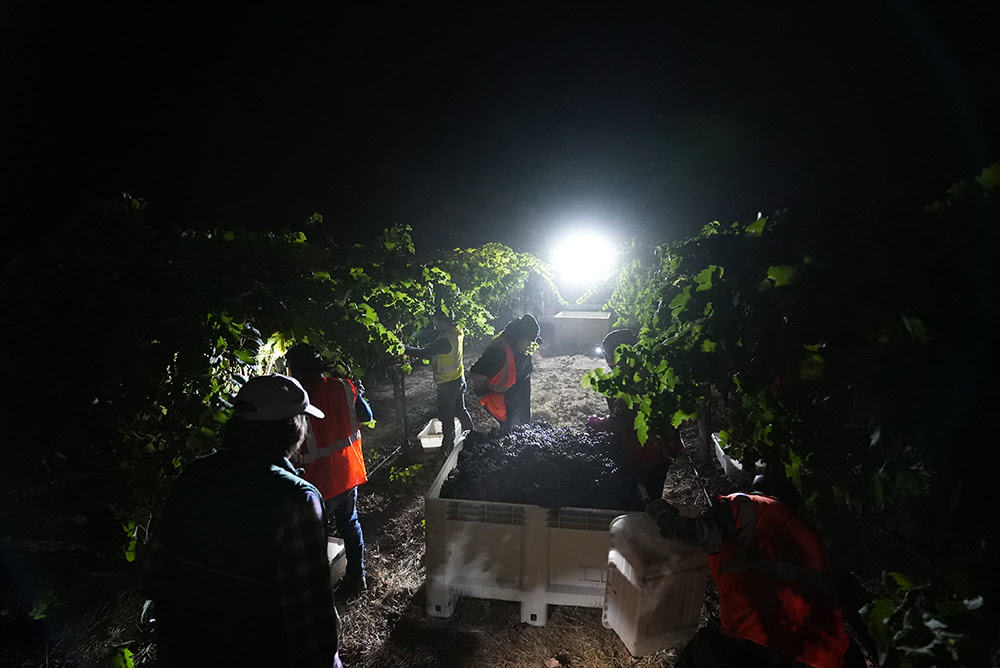
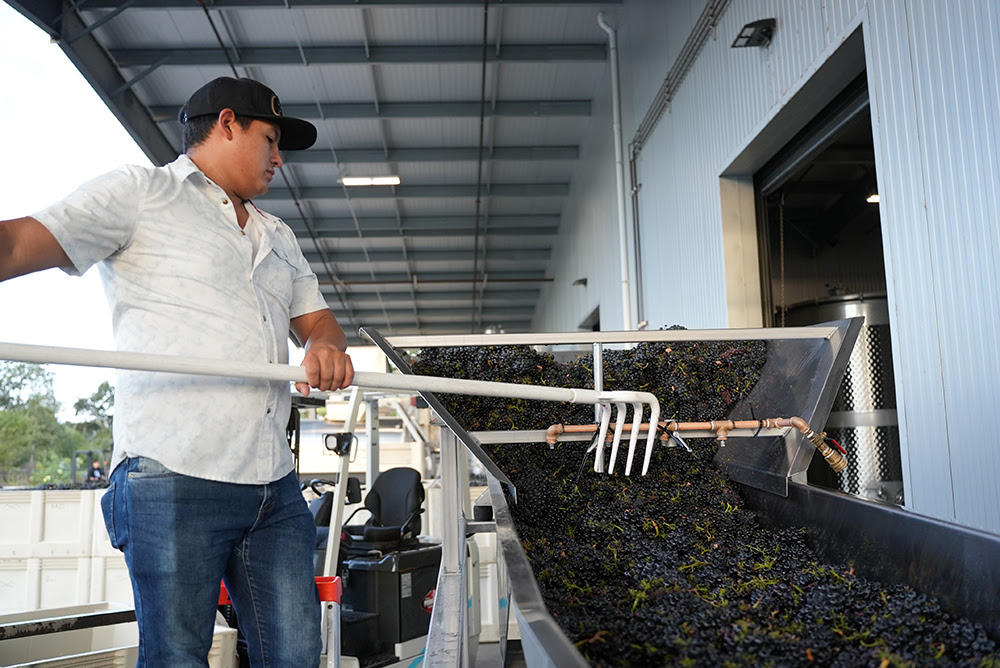
According to the Wine Institute, vintners across California are expecting a high-quality vintage for 2022 following a season filled with curveballs. For many California wine regions, this was a tale of two harvests, as a Labor Day heat wave divided the season into earlier and later picks. As harvest wraps up across the state, vintners predict that 2022 will produce memorable wines of great concentration and complexity.

In the North Coast, the growing season began with ideal weather conditions through early summer, until an extended heat event beginning in late August accelerated the harvest and reduced yields for some varieties. In winegrowing regions such as Lodi and the Sierra Foothills, mild weather conditions prevailed into early spring, followed by frost that dramatically reduced crop sizes.

Harvest timing was mixed this year, with some appellations, including Napa Valley, starting up to a month earlier than average and others, such as Paso Robles, experiencing an extended harvest. In the North Coast, growers harvested some red varieties as early as mid-August. The Labor Day heat wave caused multiple varieties to reach maturity simultaneously in some regions, which kept vineyard and cellar crews busy through a compressed harvest. Despite the year’s twists and turns, consumers can expect to enjoy excellent wines from the 2022 vintage.

California produces about 80% of the nation’s wine, making it the world’s fourth-largest wine producing region. More than 80% of California wine is made in a Certified Sustainable California Winery and over half of the state’s roughly 615,000 vineyard acres are certified to one of California’s sustainability programs (Certified California Sustainable Winegrowing, Fish Friendly Farming, LODI RULES, Napa Green and SIP Certified).

Photo credit: Justin Liddell, Destination Films

Winemaker and Winery Owner Comments on California’s Growing Season and Harvest 

“The early part of the growing season was near ideal, with abundant early season rains and excellent spring and summer weather,” said Renée Ary, vice president of winemaking at Duckhorn Vineyards in St. Helena, Napa Valley.

The Labor Day heat event brought record-high temperatures to the region, followed by mid-September rains, which challenged winemakers to practice meticulous grape selection.

“I think our 2022 wines will have a bit more concentration than the previous vintage, especially from the warmer, up-valley AVAs,” said Ary. “Our Cabernet Franc and Petit Verdot are some of the best ever and the Chardonnays are bright, balanced and focused. Given the range of ripeness, blending will be important for the 2022 vintage as we balance our early and later picks.”

At Silver Oak and Twomey Cellars in the Napa Valley, harvest proceeded at a fast and furious pace. Following a mild summer, the heat wave kicked harvest into high gear, contributing to overall yield reductions of 15% to 20%. Harvest continued at a leisurely rate after temperatures cooled.

“I think it’s going be a pretty intense vintage — concentrated and powerful,” said Nate Weis, vice president of winegrowing. “Quality-wise, all of the varieties did great.” He was particularly impressed by Pinot Noir from the Russian River, Anderson Valley and Santa Lucia Highlands, as well as Merlot and Cabernet Franc. “The quality,” he said, “is off the charts.”

Robin Baggett, vintner and managing partner at Alpha Omega in St. Helena and Tolosa in San Luis Obispo, Central Coast, noted a wide range of harvest starting dates. “At Alpha Omega, harvest was a full four weeks earlier than last year’s in some vineyards,” he said.

Severe heat around Labor Day required vineyard teams to pick rapidly and strategically, he noted. “The fruit from our early picks is dark, complex in aroma and firm in texture, while fruit that remained on the vines during the heat event is riper with softer tannins and great flavor concentration,” said Baggett. “The overall quality in our Cabernet Sauvignon is very high with strong structure and terroir-driven characteristics. Petit Verdot and Malbec also performed extremely well.”

After a dry winter, Tolosa’s harvest saw two distinct phases: before the heat wave and after. Single-vineyard fruit came in at a steady pace until Labor Day, followed by a compressed harvest during the triple-digit heat. Lower yields — down around 30% — affected ripening speed, pushing everything to mature at once.

“Everything brought in before the heat wave is promising,” noted Baggett, “but you need to cherry pick among the lots brought in post-heat wave to isolate the best ones.”


Photo credit: Justin Liddell, Destination Films

Benziger Family Winery in Glen Ellen, Sonoma County, wrapped up harvest just before mid-October, which marks the winery’s earliest finish since 2004. “This is one for the record books,” said Lisa Amaroli, Benziger’s director of winemaking. “A heat wave followed by rain had a whiplash effect, pushing up sugars and then reversing them after the rain.”

The growing season was consistent and mild, resulting in healthy canopies. Signs pointed to an early harvest until Labor Day, when temperatures reached 110 degrees Fahrenheit at the winery’s Sonoma Coast property. This pushed some blocks into high sugars and quickened the harvest pace. September rain brought a sigh of relief, refreshing the vines and allowing remaining grapes to hang a bit longer.

“All white varieties we have seen from across Sonoma County came in in great shape and are very flavorful with just the right acid balance,” Amaroli said. “It was a good year for some Pinot Noir and Cabernet Sauvignon vineyards — albeit with lower yields — while Malbec and Cabernet Franc came in abundant, balanced and fruity.”

Jackson Family Winein Santa Rosa, Sonoma County, which has vineyards in several North Coast and Central Coast regions, began harvesting a couple weeks earlier than normal in many areas. Winemaster Randy Ullom summed up the vintage as “very memorable and wild.”

“In certain instances, the heat wave accelerated things and in others it actually slowed them down,” he said, noting that vines shut down during extreme heat in order to protect themselves, thus delaying the ripening process. “It depended on the appellation, the vineyard aspect and the watering capacity.”

Despite heavy rain in September, botrytis was not an issue due to the health of the vines before the rainfall occurred.

Ullom said he is happy with the overall quality of 2022 fruit. “Pinot Noir from the Anderson Valley and Russian River look especially good,” he said, along with Monterey County Chardonnay and Pinot Noir. Sauvignon Blanc produced a larger yield than expected and continued ripening into October in Lake County due to the heavier crop. “That’s another first,” he said. “We’ll remember this for the rest of our lives.”

Vintners in the Lodi and Clarksburg regions encountered challenges this year, including a significant April frost event that dramatically reduced yields.

“We thought it all but wiped out some of our north Delta and Clarksburg Sauvignon Blanc, Chardonnay and Pinot Grigio, but it turned out that we did all right,” said Aaron Lange, vice president of vineyard operations at LangeTwins Family Winery and Vineyards in Acampo. The winery brought in about 25% of the normal yield for those varieties.

Variable spring weather with unseasonably warm temperatures followed by cool, windy conditions contributed to shot berries and shatter in Zinfandel and other sensitive varieties, yet yield sizes came in around average.

The Labor Day heat wave impacted both scheduling and capacity, while the frost delayed ripening in the whites. “At most major wineries,” Lange said, “there was a major capacity crunch from a cooperage and fermentation tank perspective.”

Healthy vineyards did fairly well during the heat event, he added, and followed a normal development trajectory. White varieties looked good, Lange said, since vineyard crews picked most fruit prior to the heat wave. Larger canopies helped protect the reds from heat and sunburn.

Likewise, Monterey County faced some tough conditions in 2022 due to early-season temperature fluctuations and heat spells during veraison and in early September. Though the heat wave reduced yields, particularly for Chardonnay and Merlot, the September event was well-predicted, allowing winegrowers to take preemptive irrigation measures. Harvest got off to a quick and early start, about 10 days earlier than average, with multiple varieties ripening simultaneously.

“On the bright side,” said Heidi Scheid, executive vice president at Scheid Vineyards in Soledad, “we’ve found that the smaller cluster and reduced berry sizes have resulted in a significant level of complexity and intensity. We are seeing very good quality — and in some cases truly exceptional quality — for the 2022 vintage.”

In Paso Robles in the Central Coast, harvest kicked off early, requiring vintners to utilize their collective knowledge to manage quality, tank space and periodic restarts.

“Despite the challenges,” said Stasi Seay, director of vineyards at Hope Family Wines in Paso Robles, “we remain optimistic and anticipate that vintage 2022 will produce fine wines on par with some of Paso Robles’ most memorable.”

The growing season began smoothly, with minimal frost incidents and temperate weather during bloom and set, Seay said. June crop estimates were slightly below average due to the ongoing drought, and summer was typical with no extreme heat until Labor Day weekend. Extended high temperatures caused vines to shut down, slowing the last of veraison. Unseasonal rains followed, along with warm autumn weather that helped with hang time and fruit maturity.

This was an unusually long harvest in the region, starting in early August and continuing through October’s end. “We are optimistic that this vintage will stand out,” said Seay, “given our hard work both in the field and in the winery.”

Miller Family Wine Company in Santa Maria, Santa Barbara County, began harvesting on Aug. 8, a week earlier than expected. The season began with excellent growing conditions that continued into summer, followed by abnormally hot weather that accelerated ripening. Though yields were below normal, fruit quality remained high.

“The vineyard has responded well despite another dry winter,” said vineyard manager Greg O’Quest. “The minimal amount of rain was not enough to supply the vines with much-needed water, so supplemental irrigation began sooner than expected.”

Following a uniform bud break during the first week of March and a mild frost season, late spring brought unusually windy and cool conditions for fruit set. Summer boasted ideal weather with only a few days breaking the 100-degree mark. Typical high temperatures occurred in July and pest pressure was minimal. “The 2022 vintage was blessed with normal summer temperatures that allowed a full canopy to develop before the heat hit in August,” O’Quest said.

Late-season reds fared best in terms of yields, he added, and Cabernet Sauvignon has been a stand-out variety thanks to its hardiness and ability to deal with high temperatures. Smaller clusters this year resulted in deep, dark color and higher quality.

View the full 2022 California Harvest Report, including regional reports from Amador County, Calaveras County, El Dorado County, Lake County, Livermore Valley, Lodi, Mendocino County, Monterey County, Napa Valley, Paso Robles, San Diego County, Santa Barbara County, Santa Clara Valley, Santa Cruz Mountains and Sonoma County. 

 DOWNLOAD THE FULL 2022 CALIFORNIA HARVEST REPORT

About Wine Institute 

Established in 1934, Wine Institute is the public policy advocacy group of 1,000 California wineries and affiliated businesses that initiates and advocates state, federal and international public policy to enhance the environment for the responsible production, consumption and enjoyment of wine. The organization works to enhance the economic and environmental health of the state through its leadership in sustainable winegrowing and by showcasing California’s wine regions as ideal destinations for food and wine travelers to the state. To learn more about California wines, visit DiscoverCaliforniaWines.

Recipe for Homemade Hot Chocolate with Red Wine

K.C. Cornwell

Recipe photo from Holiday Wine Cocktail ebook

This homemade hot chocolate with red wine is a cocktail that doubles as dessert!

  • 2 cups dark or semi-sweet chocolate chips
  • ½ cup brown sugar packed
  • ¼ cup cocoa powder
  • ½ tsp cinnamon
  • ⅛ teaspoon salt
  • 5 cups whole milk or almond or coconut
  • 1 750- ml bottle fruit-forward California red wine such as Merlot or Zinfandel
  • Marshmallows or whipped cream for serving

Slow Cooker Method:

Whisk the chocolate chips, brown sugar, cocoa, cinnamon, salt and milk together in a slow cooker set on high. Cover and allow to come to temperature (10-15 minutes), then whisk again and add wine. Cook on high for one hour, stopping to whisk every 20 minutes.

Ladle hot chocolate into mugs and top with whipped cream or marshmallows and enjoy.

Stovetop Method:

Whisk the chocolate chips, brown sugar, cocoa, cinnamon and salt together in a large saucepan or stockpot. Add milk and bring to a low simmer over medium-low heat, whisking often. Once hot chocolate is blended and smooth (about 8-10 minutes), reduce to low heat and add wine. Cook for 5 minutes more. Ladle hot chocolate into mugs and top with whipped cream or marshmallows and enjoy.

Sheet-Pan Chicken with Chickpeas, Carrots and Lemon

Spice rub: 

  • 1 teaspoon sea salt 
  • 1 teaspoon sweet paprika 
  • 1 teaspoon ground cumin
  • 4 bone-in chicken thighs, about 2 pounds (900 g) 
  • 1 can (15 oz/425 g) chickpeas, drained and rinsed 
  • ½ pound (225 g) carrots, thinly sliced on the diagonal 
  • ½ red onion, thinly sliced from stem to root 
  • 1 small lemon, halved lengthwise (quartered lengthwise if large), then sliced 
  • 4 cloves garlic, thinly sliced 
  • ½ teaspoon ground cumin 
  • 1 teaspoon sea salt 
  • Extra virgin olive oil 
  • 1/3 cup (10 g) coarsely chopped cilantro, plus a few whole leaves for garnish

Serves 4

In a small bowl, combine the spice rub ingredients. Sprinkle all over the chicken and set aside. 

Preheat the oven to 425°F (220°C). Line a 9 x 12-inch (23 x 30 cm) rimmed baking sheet with parchment paper. 

In a bowl, combine the chickpeas, carrots, red onion, lemon, garlic, cumin, salt and 1 tablespoon olive oil. Toss to mix, then arrange in the baking sheet in an even layer. Arrange the chicken thighs on top, not touching, and drizzle 1 teaspoon olive oil on top of each one. 

Bake on a center rack for 40 minutes. With tongs, set the chicken aside on a plate. Add the chopped cilantro to the vegetables and stir to mix and moisten everything with the chicken juices. Remake the bed of vegetables and replace the chicken on top. Bake for 5 minutes longer. Remove from the oven and let rest 5 minutes to allow the chicken juices to settle. Tilt the sheet pan and spoon some of the juices over the chicken. 

Transfer to a serving platter or to individual dinner plates and garnish with cilantro leaves.  

Photos courtesy of the Wine Institute.

St. Louis Jewish Book Festival

This November, the St. Louis County Library and the St. Louis Jewish Book Festival are hosting  SLCL Authors @ the J – a joint event series for readers throughout the St. Louis metro area. Additional information about St. Louis County Library’s author series is available online. Unless otherwise noted, all events are free and open to the public. All events are held at the J’s Staenberg Family Complex (2 Millstone Campus Drive).

The St. Louis Jewish Book Festival is an annual celebration of authors, books, and ideas during early November, with additional author events year-round. The range of author topics is vast: business, cooking, economics, family, fiction, history, music, religion, sports, and more.

Now in its 44th year, the Festival is nationally recognized for both its excellence and its size – it is one of the largest in the country with more than 10,000 audience members annually. People from all backgrounds and religions come to Festival events to hear premier speakers, share their thoughts, and ask questions.

Bookend Event: Saturday, November 5

7:30pm: Phil Rosenthal, Somebody Feed Phil the Book

Keynote Author: Sunday, November 6

7pm: Ambassador Marie Yovanovitch, Lessons from the Edge

Monday, November 7

1pm: Historical Fiction Panel: Lisa Barr & Rachel Barenbaum

7pm: Charles Bosworth & Joel Schwartz, Bone Deep: Untangling the Betsy Faria Murder Case

Tuesday, November 8

10:30am: Julian E. Zelizer, Abraham Joshua Heschel

1pm: Jen Maxfield, More After the Break

7pm: Cookbook Panel: Cathy Barrow & Molly Yeh

Wednesday, November 9

10:30am: Romance Fiction Panel: Amanda Elliot & Lynda Cohen Loigman

7pm: Kristallnacht Program: Scott Lenga, The Watchmakers

Thursday, November 10

10:30am: Wellness Panel: Rina Raphael & Jason Levin

1pm: Gregory Zuckerman, A Shot to Save the World

7pm: Women’s Night with Julia Haart, Brazen (Boutique Bazaar opens at 5pm)

Friday, November 11

10:30am: Andy Dunn, Burn Rate

1pm: Barry Nalebuff, Split the Pie

Saturday, November 12

7pm: Paul Ford, Lord Knows, at Least I was There, Working with Stephen Sondheim

Sunday, November 13

1pm: Rabbi Benjamin Spratt, Awakenings

7pm: Sports Night: Dan Grunfeld & Barry Weinberg

Bookend Event: Wednesday, November 16

7pm: Missouri’s Own Authors


SLCL Authors @ The J

St. Louis County Library and the St. Louis Jewish Book Festival are pleased to announce SLCL Authors @ the J – a joint event series for readers throughout the St. Louis metro area. Additional information about St. Louis County Library’s author series is available online. Unless otherwise noted, all events are free and open to the public. All events are held at the J’s Staenberg Family Complex (2 Millstone Campus Drive).

The St. Louis Jewish Book Festival thanks the Novel Neighbor for providing books by our presenting authors. The festival receives a percentage of sales for every book sold. Please support the St. Louis Jewish Book Festival and the Novel Neighbor by purchasing your books at the festival.

How to Purchase Books at the St. Louis Jewish Book Festival

  1. In-person during the St. Louis Jewish Book Festival. Call 314-442-3299 for more info.
  2. In-person or online at the Novel Neighbor.

Learning Korean: Recipes for Home Cooking

Returning to the flavors of his very earliest years, chef Peter Serpico was born in Seoul, Korea and adopted when he was two. Raised in Maryland, he graduated from the Baltimore International Culinary School and cooked professionally at such well-known restaurants as Momofuku Noodle Bar in New York City’s East Village. Serpico worked with David Chang, who founded the Momofuku chain, in opening two new restaurants. His job as director of culinary operations for Momofuku, Serpico garnered three stars from the New York Times, two Michelin stars and a James Beard Award. He currently owns KPOD, a contemporary Korean-American concept in Philadelphia’s University City.

Serpico was already an award winning chef when a taste of marinated short ribs and black bean noodles reeled him back through the years, giving him a taste of his original home. Now that reckoning, exploration, and elevation of the foods of his past has resulted in his debut cookbook, Learning Korean: Recipes for Home Cooking (Norton), Serpico has long been recognized as a virtuoso with ingredients but his lesser known talent becomes apparent in this book. He makes Korean home cooking easy. For anyone who has tried to master this intricate and delicious cuisine, it’s a relief to be able to easily cook Korean cuisine in a home kitchen using everyday home equipment.

Serpico starts with kimchi, that Korean staple often served in some guise or other, at every meal (and yes, that includes breakfast) with a recipe for Countertop Kimchi and then quickly segues into a master recipe that can be used to make a plethora of the fermented vegetable dishes.

“I also wanted to develop an easy ‘master’ method that could be applied to any vegetable, regardless of its texture, density, surface area, or water content,” writes Serpico before giving us the way to make Apple Kimchi, Carrot Kimchi, and Potato Kimchi, among others.

He continues with the simplification. Sure, there are some complicated recipes for those who already have or want to advance their skills with such dishes as Crispy Fried Rice–a recipe that’s a full page long. Add to that the ancillary recipes needed to complete the dish–Korean Chili Sauce, Marinated Spinach, Marinated Bean Sprouts, and Rolled Omelette which are all on different pages. But for those not up to or interested in the challenge, just flip to the recipes for such dishes as Easy Pork Shoulder Stew, Soy-Braised Beef, Battered Zucchini, Potato Salad, Chocolate Rice Pudding, and Jujube Tea as well as many others.

From the New York Times.

And while anyone experimenting with the cuisine of another country understands that they’ll need to purchase some unique ingredients, these are not budget breakers or, in many instances, so esoteric that after one use they’ll sit unused in your cabinet for an eternity. For example Serpico’s recipe for potato salad calls for Kewpie Mayonnaise instead of the mayo we typically have in our refrigerator. The latter uses whole eggs and white vinegar while Kewpie is made from just egg yolks and rice or apple cider vinegar. But the cost difference is definitely reasonable and a home chef might just find the extra richness translates to other recipes as well whether they’re Korean or not.

About the Author

Born in Seoul, South Korea, Peter Serpico was adopted when he was two years old, and was raised in Laurel, Maryland. Serpico graduated from the Baltimore International College Culinary School and his first cook job was at the Belmont Conference Center, where he worked under chef Rob Dunn. In 2006, Peter began as sous chef at the original Momofuku Noodle Bar in the East Village. For the next six years, Serpico worked with David Chang to open Momofuku Ssäm Bar and Momofuku Ko. As director of culinary operations, Serpico earned three stars from the New York Times, a James Beard Award, and two Michelin Stars, among other accolades. Serpico’s highly praised eponymous restaurant on South Street in Philadelphia opened in 2013.

Due to the COVID-19 pandemic, Serpico was reimagined as Pete’s Place. In 2022, Serpico and restaurant-partner Stephen Starr launched a revamp of Pod, a long-standing Philadelphia pan-Asian restaurant, as KPod, with a menu inspired by Serpico’s native South Korea. Serpico lives with his family in Philadelphia.

Hobak Jeon (Pan-Fried Zucchini)

For the Dipping Sauce

  • 2 tablespoons soy sauce
  • 2 tablespoons rice wine vinegar
  • ½ teaspoon maple syrup
  • ¼ teaspoon gochugaru (Korean red-chile flakes)
  • ¼ teaspoon sesame seeds
  • 1 scallion, trimmed and thinly sliced (white and light green parts)

For the Zucchini

  • 1 large Korean zucchini or 2 American zucchini (about ¾ pound), sliced into ½-​inch-thick rounds
  • 1 teaspoon all-​purpose flour
  • 1 large egg
  • 1 tablespoon fish sauce
  • 1 tablespoon vegetable oil

Make the dipping sauce: Whisk all ingredients in a bowl. This sauce will keep in the refrigerator in a covered container for 1 week.

Prepare the zucchini: In a medium bowl, toss the zucchini and flour, ensuring each piece is lightly coated.

In a separate bowl, whisk the egg and fish sauce, making sure to break down the egg white.

In a medium skillet or sauté pan, heat the vegetable oil over medium heat. Working in batches to avoid overcrowding, dip and coat the floured zucchini rounds in the egg batter, then add to the skillet and cook until lightly browned, about 3 minutes per side. Use a spatula to transfer finished zucchini rounds to a wire rack lined with paper towels.

Serve as banchan or as an appetizer with the sauce. The zucchini can be enjoyed hot or at room temperature; cooked zucchini pieces can be held inside an oven set to warm.

Ground Beef Bulgogi

  • 1 pound lean ground beef
  • 1 medium yellow onion (8 ounces), halved and thinly sliced
  • 2 cloves garlic, minced or finely grated
  • 2 scallions, trimmed and cut into 1-inch pieces (white and light green parts)
  • 1 tablespoon sesame oil
  • 1 tablespoon low-sodium soy sauce
  • 1 tablespoon maple syrup
  • 1/2 teaspoon fine salt
  • 1 teaspoon vegetable oil
  • Cooked white rice, for serving (see NOTE)
  • Kimchi, for serving (optional)
  • Fresh lettuce or cabbage leaves, for serving (optional)

In a large bowl, stir together the beef or plant-based meat, onion, garlic, scallions, sesame oil, soy sauce, maple syrup and salt until combined.

In a large saute skillet over medium-high heat, heat the oil until shimmering. Add the beef mixture and cook, stirring occasionally to break up any large chunks, until cooked through, about 10 minutes.

Serve the bulgogi in bowls with rice, kimchi, and lettuce or cabbage leaves for wrapping, if using.

This article ran previously ran in the New York Journal of Books.

Plant Based Mexican: Fast, Fresh Recipes from a Mexican-American Kitchen

Unless you’re deeply committed to a life of vegetables, words like plant-based can be a turnoff when it comes to menus and cookbooks. Sure, many of us, myself included, want to expand our vegetable repertoire but still need to indulge their inner carnivore—particularly when we think of a bleak future with nothing but quinoa and steamed broccoli. But Kate Ramos, who created the blog ¡Hola! Jalapeño! with the goal of merging authentic ingredients and flavors with modern preparations, has our back. Taking that philosophy, Ramos has written her Plant Powered Mexican: Fast, Fresh Recipes from a Mexican-American Kitchen , published by Harvard Common Press, it’s a lushly photographer book with recipes that are so wonderful it’s easy to forget there’s nary an animal protein anywhere in her book.

Instead, Ramos offers us such dishes as Chileatole (a thick soup) with Masa Dumplings and Lime Crema, Potato and Collard Greens, Crispy Tacos with Ancho Chile Crema, and my personal favorite–One-Pan Cheesy Rice Chile Relleno Casserole.

In her first chapter, Ramos tells us what’s in her pantry, providing us with an entrée into the world of chiles, peppers, oils, spices, herbs, and Mexican cheeses as well as the equipment she relies upon. The latter are simple enough. Just a comal (but she notes you can use a cast iron skillet instead) and a molcajete and tejolote, a volcanic stone mortar and pestle for grinding spices and making chunky salsas. As for the ingredients she commonly uses, I’d be willing to bet that many of us have such items as black pepper, smoked paprika, garlic powder, kosher salt, and coriander in our spice drawer already. That just leaves a variety of dried chile powders—ancho, guajillo, arbol, and habanero as well as a few other ingredients that can be bought as needed. Unlike many entrees into a new cuisine, Ramos keeps it simple and inexpensive.

Six of the remaining chapters are divided into cooking methods—slow cookers, stovetop, grills, and oven. Instant Pot aficionados will be very happy to hear that there’s an entire chapter devoted to recipes using the beyond popular small kitchen appliance. Ramos cooks out of a small kitchen and says she’s never been enamored of kitchen equipment until, that is, she fell in love with her Instant Pot. Besides, its ability to cook beans—a common ingredient in Mexican cookery–quickly, Ramos offers a selection of recipes she’s developed for quick dinners for busy home cooks like Black Bean Enchilada Casserole, Smoky Tomato Tortilla Soup, and her Loaded Sweet Potatoes with Lime Crema, Sofrito Beans, Roasted Kale, and Chives.

The recipes I made all worked without me having to make tweaks to salvage them. That’s a plus because I have encountered recipes that haven’t been tested or at least not well evaluated before being included in a cookbook. If I have one complaint about Plant Powered Mexican it’s that the font is small so instead of just glancing at the recipe while cooking, I often had to pick up the book to be able to read the directions. It’s a small complaint and shouldn’t stop anyone who is interested in plant-based cooking from purchasing this well-written cookbook.

Vegan Picadillo Tostadas with Rice and Peas

For the tostadas

12 6-inch corn tortillas

For the picadillo

  • 2 tablespoons avocado or sunflower oil
  • 1 medium white onion chopped
  • 2 medium carrots chopped
  • 3 cloves garlic chopped
  • 3 small Yukon gold potatoes peeled and diced
  • 1 pound plant-based beef
  • 1 recipe Magic Spice Mix see below
  • 1 ¼ cups Gluten-free beer or vegetable broth
  • ½ cup frozen peas no need to thaw
  • ¼ cup chopped fresh Italian parsley

For serving

  • 3 cups steamed rice
  • Lime wedges
  • 1 large avocado diced
  • 1-2 medium jalapeños thinly sliced
  • Green salsa

To make the tostadas: Heat the oven to 350°F. Once the oven is ready, lay the tortillas directly on the oven racks with plenty of room around them for air to circulate. (I put six on the top rack and six on the bottom in my oven.)

Bake for about 15 minutes, turning the tortillas halfway through, until they are very crisp and crack if you break them. Look for a light brown color, no darker than the shade of a roasted peanut. Remove the tortillas to a serving platter.

To make the picadillo: Heat the oil in a large frying pan over medium-high heat. Add the onion, carrots, garlic, and potatoes. Cook until the garlic and onions start to brown, about 5 minutes.

Add the plant-based beef and spice mix, breaking up the meat with the back of a wooden spoon. Continue cooking until the beef is browned, about 3 minutes. Add the beer or broth, reduce the heat to medium-low, and cover. Simmer the picadillo for about 10 minutes or until the veggies are tender. Stir in the peas and parsley, and cook for about 1 minute.

To Serve: Spread ¼ cup of rice on a tostada, and top with ¼ cup picadillo. Pass the garnishes at the table.

Magic Spice Mix:

Mix 1 tablespoon guajillo chile powder, 1 teaspoon kosher salt, ½ teaspoon ground black pepper, ½ teaspoon smoked paprika, ½ teaspoon garlic powder, ½ teaspoon ground coriander, ½ teaspoon dried epazote or oregano (preferably Mexican) together in a small bowl until evenly combined. Use immediately or keep in a container for up to 1 month.

Chilled Avocado Soup

FOR THE SOUP:

  • 1 large ripe avocado, peeled and pitted
  • 2 cups cold water
  • 2 small Persian cucumbers
  • 2 scallions, trimmed and chopped
  • 1/4 cup fresh lime juice (from 2 limes)
  • 1/4 cup chopped fresh cilantro
  • 1/4 cup extra virgin olive oil
  • 1 teaspoon kosher salt

FOR THE FAIRY DUST

  • 1/4 cup roasted, salted sunflower seeds
  • 1/4 cup white sesame seeds
  • 1/4 cup popped amaranth
  • 1/4 cup edible flower petals, such as nasturtium, pansies, marigolds, or cornflowers
  • 1 teaspoon toasted cumin seeds

To make the soup:

Blend soup ingredients. Add avocado, water, cucumbers, scallions, chile, lime juice, cilantro, oil, and salt to a blender. Blend until smooth.

Chill. Cover and chill in the refrigerator until completely cold, at least 2 hours.

To make the fairy dust:

Combine. Add the sunflower seeds, sesame seeds, amaranth, flowers, and cumin seeds to a small bowl. Mix gently.

Serve. Ladle the cold soup into bowls and sprinkle fairy dust over the top.

This review originally appeared in The New York Journal of Books.