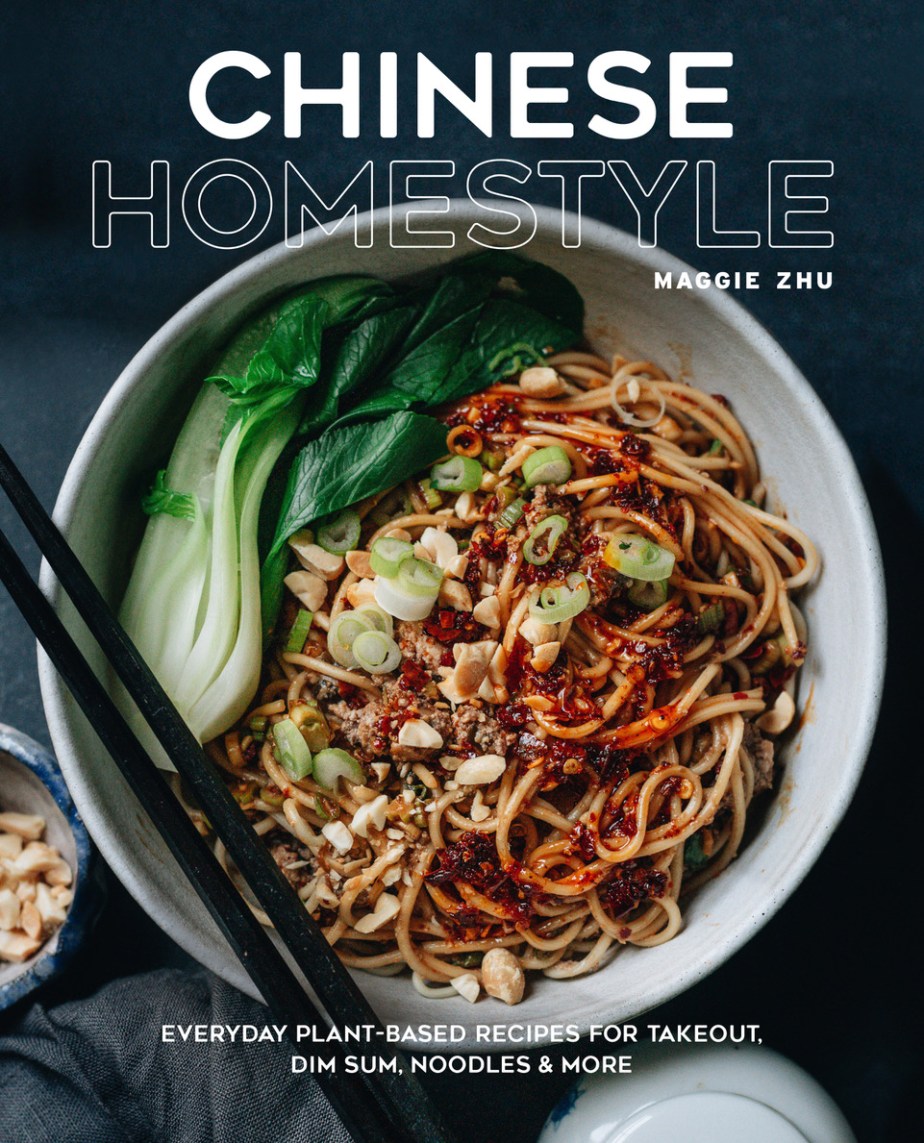
Enjoy the bold flavors of Chinese food with 90 accessible plant-based recipes for the Western cook and kitchen. No wok required!
With her popular blog, Omnivore’s Cookbook, Maggie Zhu is the go-to person for traditional Chinese recipes designed for the Western home cook, and over the past few years, she has been incorporating more plant-based cooking into her diet. In Chinese Homestyle, Maggie shares a wide range of foolproof vegan recipes that pack all the flavor and none of the meat.
Building on a foundation of plant-based and vegetable-forward dishes found in Chinese cuisine, these umami-rich recipes are inspired by the comforting, everyday dishes Maggie grew up eating in northern China and discovered in her travels throughout the country, along with takeout favorites she became familiar with after moving to the United States.

Made with fresh ingredients and minimal oil and sugar, the salads, soups, stir-fries, braises, dumplings, and more are not only delicious, but also demonstrate the impact of aromatics, the benefits of using homemade sauces and condiments, how to cook tofu for maximum flavor and texture, and versatile cooking techniques, and include:
- Homemade Sauces and Condiments
- Appetizers and Salads
- Orange Cauliflower
- Char Siu Bao
- Cumin Potato Baked Buns
- Egg-less Egg Drop Soup
- Shanghai Scallion Oil Noodles
- Tofu, Tempeh, and Seitan
- Hearty Seasonal Mains
- Easy Seasonal Sides
- Creamy Red Bean Ice Pops
In Chinese Homestyle, Maggie shares 90 foolproof plant-based recipes that pack all the flavor and none of the meat. Building on a foundation of plant-based and vegetable-forward dishes found in Chinese cuisine, these umami-rich recipes are inspired by the comforting, everyday dishes Maggie grew up eating in northern China and discovered in her travels throughout the country, along with takeout favorites she became familiar with after moving to the United States.
Made with fresh ingredients and minimal oil and sugar, the salads, soups, stir-fries, braises, dumplings, and more are not only delicious, but also demonstrate the impact of aromatics, the benefits of using homemade sauces and condiments, how to cook tofu for maximum flavor and texture, and versatile cooking techniques.
For both those just learning to cook Chinese food or looking at upping their skills, Zhu’s cookbook–like her website–offers step-by-step instructions, stunning photos, and information for stocking your Chinese pantry.
About the Author
Maggie Zhu started her website, Omnivore’s Cookbook, in 2013. Born and raised in Beijing, she moved to Austin, Texas, in 2015. Now she’s a full-time New York–based blogger, writer, recipe developer, and photographer. Having grown up with a mother who always did the cooking, Maggie’s culinary adventure started in 2007, when she moved to Japan and needed to cook to survive. Learning and sharing Chinese food has become a way for her to connect with her roots and the rest of the world.
Her mission is to help more people get to know real Chinese food and expose less-known regional cuisines, such as Northern and Xinjiang food, to a broader audience. More importantly, she wants to show you how easy it is to cook with wholesome ingredients to create delicious dishes that are like the ones served in Chinese restaurants.
Sesame Noodles

“My mom whips up sesame noodles on a hot summer night when she doesn’t feel like standing in front of a hot stove,” says Zhu about this family recipe. “With its nutty, savory sauce that has hints of sweetness and spiciness, this dish is always a crowd-pleaser. You can serve it without any toppings as a side dish; you can top it with fresh produce and serve it as an appetizer at a summer grill party; or you can load it with more toppings to serve as a main, just like my mom does.”
YIELD 2 to 4 servings PREP 10 minutes COOK 10 minutes
- 4 tablespoons Chinese sesame paste (or unsalted natural peanut butter or tahini)
- 2 to 4 tablespoons warm water
- 2 tablespoons light soy sauce (or soy sauce)
- 2 tablespoons Chinkiang vinegar
1 tablespoon maple syrup (or sugar) - 2 teaspoons Chili Oil, or to taste
- 1 teaspoon toasted sesame oil
- 1 teaspoon minced ginger
- 2 cloves garlic, grated
- 1/8 teaspoon freshly ground Sichuan peppercorns
- 1 pound (454 g) Handmade Noodles or fresh wheat noodles or 9 ounces (255 g) dried wheat noodles
- Cucumber, julienned, for topping (optional)
- Carrot, julienned, for topping (optional)
- Radish, julienned, for topping (optional)
- Toasted white sesame seeds, for garnishing
Place the sesame paste in a medium bowl and slowly add the warm water, a little at a time, stirring with a silicone spatula until the water is fully incorporated and a smooth paste forms.
Add each liquid ingredient—the soy sauce, vinegar, maple syrup, chili oil, and sesame oil—one at a time, stirring to fully incorporate each ingredient before adding the next one.
Add the ginger, garlic, and Sichuan pepper and stir to mix well. (You can make the sauce ahead of time and store it in an airtight container in the refrigerator for 2 to 3 days.)
Boil the noodles according to the package instructions if not using handmade noodles. Strain in a colander and rinse under cold water to stop cooking. Strain well and transfer to individual serving bowls.
Serve the noodles with the sauce on the side and toppings of your preference. Let everyone assemble their own bowls, adding their preferred toppings and stirring in a few spoonfuls of the sauce. Garnish with sesame seeds.
The sauce in this dish is so flavorful and versatile that you can use many types of wheat noodles for a great result. For a traditional taste, use lo mein noodles, but Japanese udon and somen noodles also work well with this dish.
The yield for this recipe depends on many factors, such as a number of toppings, the type of noodles, and personal taste. This recipe is a good starting point and can generally make two large servings with some fresh produce toppings. Double the amount of the sauce if you plan on using more toppings.
Handmade Noodles
This recipe is an easy way to enjoy freshly made noodles at home. You can make a few batches and freeze them for later. Their chewy texture and nice aroma make them superior to dried noodles, and you can use them to make any recipe in this chapter. But my favorite way
to use them is as wide noodles in Biang Biang Mian
YIELD 2 pounds (907 g) PREP 30 minutes plus 1 hour resting time COOK 10 minutes
- 3 1/2 cups (500 g) bread flour, plus more for dusting
- 1 cup (240 ml) room temperature water
- Vegetable oil (optional)
To knead the dough by hand: Place the flour in a large bowl. Slowly add the room temperature water and mix with a silicone spatula until the flour is fully absorbed. Knead by hand until a dough forms and the bowl is clean of flour. Dust a work surface with flour and transfer the dough onto it. Knead until the surface of the dough becomes smooth, about 10 minutes. The dough should feel very tough and should be able to be easily lifted from the bowl without sticking to the bottom.
To knead the dough with a mixer: Place the flour in the bowl of a stand mixer fitted with the dough hook. Turn the mixer on low speed and slowly add the water. Let the mixer run at low speed until the dough becomes consistent and smooth, about 10 minutes total. Transfer the dough to a clean work surface. Knead a few times to shape the dough into a ball.
Dust a large bowl with flour. Transfer the dough to the bowl. Cover the bowl tightly with plastic wrap. Let the dough rest for 30 minutes to 2 hours at room temperature, or up to overnight in the refrigerator.
Dust the work surface with flour and transfer the dough onto it. Knead it a few more times, then divide it into 2 equal-size pieces. Knead each piece into a ball. Work on one dough ball, keeping the other ball covered in the bowl to prevent drying out.
Dust the work surface again. Press the dough ball into a disc. Roll it with a rolling pin into a large, thin rectangle. If you’re going to make wide noodles, try to roll the dough as thin as possible; if you’re going to make thin noodles, the dough sheet can be a bit thicker (about 1/16 inch, or 1.5 mm). If the dough is hard to roll out, cover it with plastic wrap and let rest for another 30 minutes.
Dust the dough sheet with plenty of flour. Roll it up from the long side like rolling a cinnamon bun, then fold it over twice to form a multilayered long sheet.
Slice along the short side with a sharp knife to make noodles. Cut the noodle width according to your preference, from 1/16 inch (1.5 mm) to 1⁄2 inch (1 cm).
Unfold the noodles and shake off any extra flour. Align the noodles on the work surface or hang them on a rack to dry for 30 minutes.
To cook the noodles, bring a large pot of water to a boil over medium-high heat. Prepare 4 cups (960 ml) of cold water. Add a serving size of noodles, about 1⁄4 pound (113 g), to the boiling water and immediately stir with chopsticks (or tongs) so that they don’t stick to the bottom of the pot. Cook until the noodles are cooked through, about 3 minutes. If the water starts boiling, add some of the prepared cold water to stop the boiling. Use a pair of tongs to transfer the noodles to a strainer. Run them under cold water to stop cooking. Repeat until all the noodles are cooked.
Serve the noodles in a bowl of broth or top them with sauce.
The cooked noodles will stick together when they get cold. If you’re not going to serve them immediately, pour a few drops of vegetable oil on them and gently toss by hand. If the noodles are already sticking together, rinse them with warm water and gently toss by hand.
To store uncooked noodles, dust the bottom of an airtight container with flour, generously sprinkle flour on the noodles, fold the noodles into the container, and cover. Store in the freezer for up to 1 month. To cook frozen noodles, cook them like you would fresh noodles. You don’t need to thaw them before cooking.
NOTE You can also use this dough to make super-wide noodles. Cut the noodles 1 inch (2.5 cm) wide, then use your hands to gently stretch out each noodle in all directions so that they will be slightly thinner and have a better texture once cooked.
Vegan Dumplings
The dumpling filling has a well-balanced texture with veggies, tofu, and rice vermicelli and is seasoned with plenty of aromatics, soy sauce, and just a dash of curry powder to enhance its richness.
- Yield: 50 dumplings
- Prep: 40 minutes
- Cook: 20 minutes
- 1/4 cup (9 g) dried shiitake mushrooms (7 to 8 small mushrooms)
- 2 cups (480 ml) hot water, or as much as needed to cover mushrooms
- 2 tablespoons dried wood ear mushrooms (or 1/2 cup, or 75 g minced bamboo shoots)
- 1/2 package (1 1/2 ounces, or 45 g) dried rice vermicelli
- 5 tablespoons peanut oil, divided
- 4 cloves garlic, minced
- 1 tablespoon minced ginger
- 1 cup (110 g) finely chopped carrots (about 4 medium carrots)
- 2 cups (140 g) shredded cabbage
- 3 tablespoons soy sauce, divided
- 1 tablespoon Shaoxing wine
- 1 teaspoon curry powder
- ½ block (8 ounces, or 227 g) firm tofu, crumbled by hand
- 1 teaspoon maple syrup (or sugar)
- 1/2 cup (30 g) finely chopped scallions
- 50 frozen dumpling wrappers, thawed
- Dumpling dipping sauce or Chinkiang vinegar, for serving
In separate medium bowls, cover the shiitake mushrooms and wood ear mushrooms with at least 1 cup (240 ml) hot water each. Let the mushrooms soak until completely soft, 30 minutes or so.
Strain and gently rinse the mushrooms with water. Remove and discard the tough stems of the shiitake mushrooms and mince the caps; this should yield about 1/4 cup loosely packed minced shiitakes. Remove and discard the tough ends of the wood ear mushrooms, if any, and mince the mushrooms if they are big, or thinly slice them if small; this should yield about ½ cup loosely packed minced wood ear mushrooms. Cook the dried rice vermicelli according to the package instructions. Strain and measure 1 cup (176 g) cooked vermicelli. Coarsely chop the noodles into 1/2-inch (1 cm) pieces.
In a large nonstick skillet, heat 2 tablespoons of the peanut oil over medium heat until hot. Add the garlic and ginger, stirring a few times to release the fragrance. Add the shiitake mushrooms, wood ear mushrooms, and carrots and cook and stir for 2 minutes. Add the cabbage, 1 tablespoon of the soy sauce, Shaoxing wine, and curry powder. Cook and stir for another 2 minutes, until the cabbage turns tender and all the liquid has evaporated. Transfer the contents to a large plate to cool.
Heat another 2 tablespoons of the peanut oil in the same pan. Add the tofu and cook for 1 minute, breaking it up into smaller chunks with a spatula. Add the vermicelli, the remaining 2 tablespoons soy sauce, and the maple syrup. Cook and stir until all the liquid has evaporated, 2 minutes or so. Transfer to a large mixing bowl and let cool for a few minutes.
Once the tofu and cabbage mixtures have cooled to room temperature, add the cabbage mixture to the bowl with the tofu, add the scallions, and stir to mix well.
Prepare your workstation by placing the dumpling wrappers on a plate, the bowl of dumpling filling (with a spoon), a small bowl of water, and a large plate or tray to hold the folded dumplings.
Place a dumpling wrapper on the palm of one hand and, using the other hand, spoon about 1 tablespoon of dumpling filling on the center of the wrapper. Dip your finger into the bowl of water and use it to wet the edges of the wrapper, then fold the edges of the wrapper over the filling and seal them together. Press the edges again to seal well. You can use any method you are comfortable with to fold the dumplings.
To cook the dumplings, heat the remaining 1 tablespoon peanut oil in a large nonstick skillet over medium heat until hot. Add the dumplings in batches in a single layer. Cook until the bottoms turn golden. Add 2 tablespoons water, cover, and cook until the dumplings are cooked through, 2 to 3 minutes. Immediately transfer the dumplings to a large plate. Repeat with the remaining dumplings.
Serve the dumplings immediately with dumpling dipping sauce or a simple drizzle of Chinkiang vinegar.


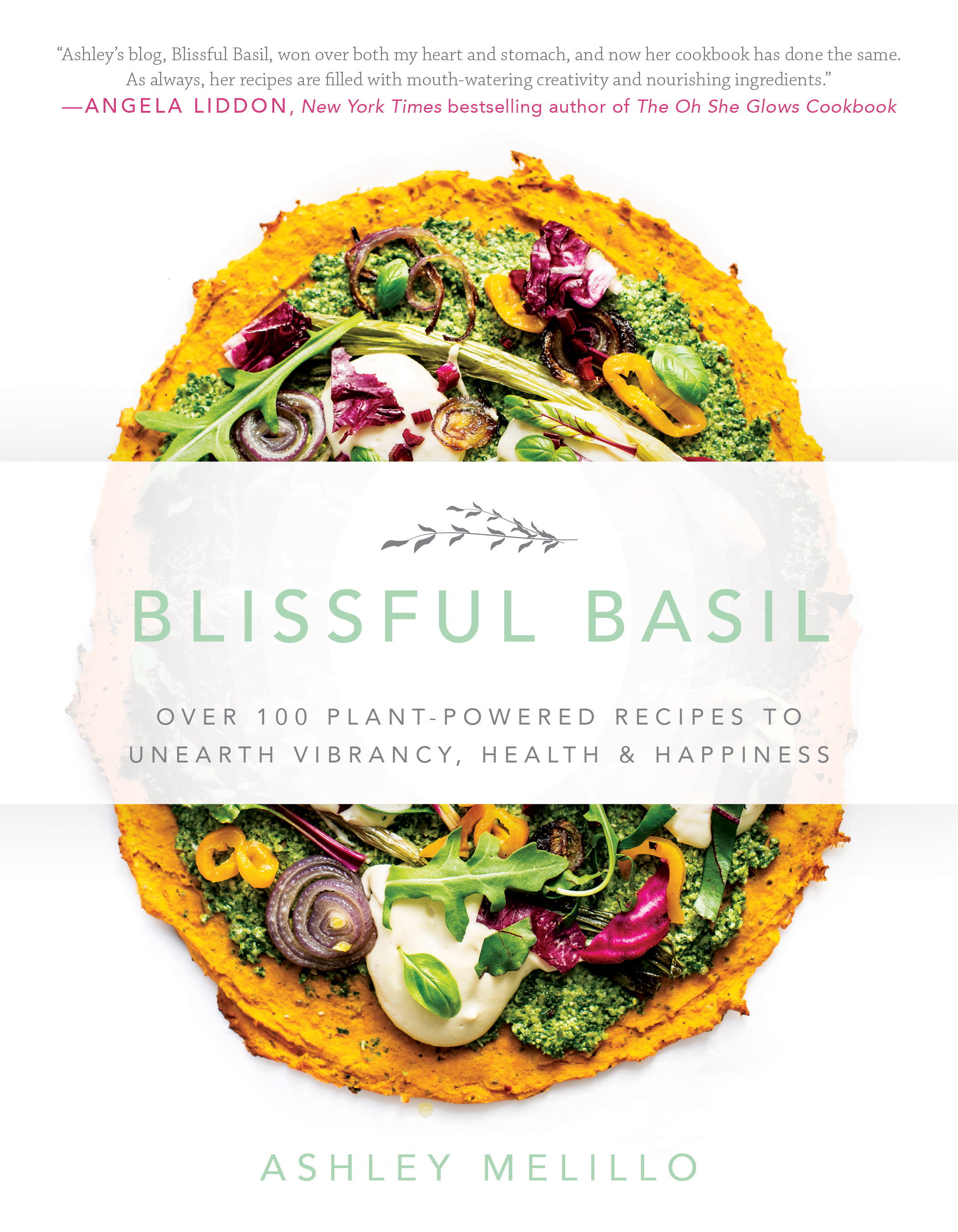
Such a cooking style doesn’t have to be severe. Have a sugar craving? Instead indulge in a vegan dessert such as her Snickerdoodle Cookie Bars, Enlivening Lemon Bars, Peanut Butter Cookies and Cosmically Fudgy Cacao Tahini Brownies. Don’t go out for pizza. Try one of Melillo’s pizzas like her White Pizza with Garlic Herb Oil, Mozzarella and Puffy Potato Crust.