It’s a mystery for many reasons, starting with the drink’s murky history, one stretching far into the past. Mezcal’s origins are unknown, but it can be dated back to at least 1500 BCE. That’s the age of a unique small clay still, known as a Capacha vessel, which, when it was discovered contained remnants of agave. Adding to this mystique is the misconception that many, including enthusiastic mezcal and tequila consumers, hold that mezcal is the smoky cousin of tequila.
But, as Lampert points out, ”those wanting to use a family analogy should instead think of mezcal as being tequila’s great-grandmother, holding the place of family matriarch. Tequila, it turns out, is just one subvariety of mezcal—albeit an extremely popular one—while mezcal is the origin of all agave spirits.”
Lampert, who has an impressive resume with university majors in linguistics and philosophy and specializes in Mayan glyphs (the native writing system of the Maya civilization), distills her knowledge and familiarity with Mexican culture to dispel the all-too-common myth that Mesoamerican culture was less refined and civilized than its European counterparts. And she applies that to agave drinks as well. They can be just as complex and sophisticated as any wine grown in the vineyards of France. Her book is not only assists readers in understanding the history of agave drinks but also serves as a companion guide to those who are both passionate and curious about this ancient, distilled beverage as she is.
“The meat of this book is producer profiles with tasting notes and general comments,” she writes. “Aside from serving as an at-a-glance overview of specific products, they offer insight into house production styles, flavor profiles for different agave varieties, and regionally specific characteristics. In addition to general comments and information. The tequila entries each get an individual score from 1 to 5. These ratings are designed to serve as a guide and informed consumers about the good, better, and best bottles in terms of quality and value and, equally important, which bottles you might want to skip.”
Lampert also includes a plethora of cocktail recipes and pairing notes, many gathered from established and emerging mixologists. In that way, she says, those using her guidebook can find new ways for enjoyment.
It’s a way of understanding the millenniums behind the tastes of such cocktails (recipes in her book) as a Pomegranate Margarita—a mix of Siete Leguas reposado tequila and Cenizo Colonial mezcal, pomegranate juice, simple sugar syrup, and torched cinnamon sticks or the Frozen Mezcal Hot Chocolate—milk, simple syrup, vanilla extract, and Cenizo Colonial mezcal topped with whipped cream.
In all, this is a history lesson, a bartender’s manual, and a fresh look at a spirit that has been around for millennia. Lampert drills down deep and yet this is an easily readable book that can be enjoyed at many diverse levels, from a recipe book to an in-depth understanding of mezcal’s past and present.
About the Author
Tess Rose Lampert has been a leader in the world of agave spirits for over a decade. An accomplished educator and writer surrounded by and filled with a lifelong passion for Mexican culture, Tess founded PalateTrip, LLC, a consulting company for top-tier agave spirit brands and restaurants across the U.S. She serves as an ambassador to establish and educate consumers, trade, and media on all aspects of agave. Lampert also offers private events and leads educational tours across Mexico.
OAXACA EXPRESS
BARTENDER SPOTLIGHT: Alex Valencia
“Alex is celebrated as one of the top Mexican mixologists of our time, and this drink is a cult favorite at La Contenta and La Contenta Oeste, the restaurants he co-owns in New York City,” writes Lampert in the introduction to this recipe, noting he created the cocktail back in 2009 before mezcal went mainstream, initially calling it the Mexican Connection.
“Back then, the mezcal in New York City was only exported from Oaxaca, so I changed the name to Oaxaca Express, like a little taste from Oaxaca, Mexico,” he says.
Tajin, for rimming the glass
1 slice jalapeño, no seeds
2 ounces espadín mezcal from Oaxaca
3/4 ounce Cucumber Puree
3/4 ounce fresh lime juice
3/4 ounce Agave Syrup
Rim a rocks glass with tajin and set aside. Add the jalapeño to a shaker and muddle, then add the mezcal, cucumber puree, lime juice, and agave syrup, plus ice. Shake for five to seven seconds. Double strain and serve.
ONE WAY TO OAXACA
BARTENDER SPOTLIGHT: Julio Xoxocotla
“Mexico-born Julio is a partner and head bartender at the Wild Son and Bar Lula in New York City. The phrase that inspired this fruity, lightly smoked, spicy, and herbal cocktail is “El dinero, el amor, y las guayabas no se pueden ocultar”—in English,” says Lampert, translating the sentence, “Money, love, and guavas cannot be hidden.”
11/2 ounces Pelotón de la Muerte mezcal
1 ounce guava puree
3/4 ounce Rosemary-Jalapeño Syrup
3/4 ounce lime juice
Add all ingredients to a shaker. Add ice and shake well. Once cold, strain over fresh ice in a rocks glass.
Independent Restaurants Show Remarkable Resilience and Strategic Problem Solving as Industry Navigates Continued Rising Costs, Shifting Consumer Behavior, and Rapid Technological Change
The James Beard Foundation® (JBF), in collaboration with Deloitte, announced today the findings of its 2026 Independent Restaurant Industry Report, a comprehensive analysis of the independent restaurant industry, synthesizing insights from independent owners and chefs, to reveal the industry’s top challenges and opportunities. Drawing from interviews with leading chefs and a nationwide survey of hundreds of owners and operators across the nation, the report provides a wide-ranging view of the current state of the industry, emerging trends, and critical factors that restaurants can leverage to thrive in 2026.
“Independent restaurants areessential to our society,culture,and communities.Theyemploy millions of people, generate billionsineconomic activity,and serve asvital gathering placesformeaningful human connection,” saidClare Reichenbach, CEO, James Beard Foundation. “The landscape has never been more complex, butchefs andoperators are rising to meet it with incredible fortitude and creativity. The James Beard Foundation is deeply committed to supporting their successthrough this report, the JBF Institute, and our entire suite of impact programs and advocacy work.”
The findings paint a picture of an industry moving into 2026 with cautious optimism. Not because pressures have eased, but because independent operators have demonstrated remarkable endurance and adaptability in the face of cost pressures, shifting consumer behavior and expectations, workforce complexity, and rapid technological change. Despite these hurdles, most restaurateurs are implementing innovative strategies to meet current market demands, deepen guest connection, and ensure long-term sustainability.
The study identified four major trends that are helping reshape the industry landscape:
Protecting Margins Amidst Volatility: Fluctuations in ingredient prices, combined with persistent cost pressures, is making margin management increasingly inflexible and reactive.
Supporting the Workforce Beyond Wages: Labor pressures have largely shifted from mitigating shortages to navigating retention, cost management, and regulatory complexity.
Navigating An Expanding Technology Ecosystem: A rapidly growing and increasingly costly technology ecosystem is resulting in more disciplined adoption and intentional investment.
Managing the Consumer Expectation Gap: Converging and increasing consumer experience expectations seems to be widening the disconnect between guest assumptions and operational realities.
The research synthesizes insights from a survey of over 380 independent restaurant owners, chefs, and operators conducted September to November 2025, as well as interviews with 40 chefs. Participants represented a broad cross-section of the industry across 47 states and all four census regions, ranging from fine dining establishments to fast-casual venues, breweries, and caterers.
To read the full report click here. Highlights of key findings are below.
2026 STATE OF THE INDEPENDENT RESTAURANT INDUSTRY
Across survey and roundtable discussions, owners, chefs, and operators described a year marked by continued pressure—on costs, demand, and predictability—but also by profound adaptation. Familiar challenges took on new dimensions in 2025, feeling meaningfully different for many respondents. Inflationary pressures, supply chain disruptions, and rapid shifts in technology converged to reportedly make planning and decision-making more complex. Consumer affordability concerns are reshaping the landscape, while food cost volatility made forecasting, menu planning, and pricing decisions increasingly difficult. Meanwhile, AI and an expanding restaurant technology sector added new complexity and competitive pressure.
Yet despite operating in this recalibrated reality, the 2026 findings reveal an independent restaurant industry marked by steadfast, cautious optimism and hard-earned determination. Fueled by creativity, persistence, and a deep commitment to their communities, they are shaping a future rooted in adaptability, one tactical decision at a time.
HIGHLIGHTS OF FINDINGS
2026 State of Business
Rising general costs, rising labor costs, and finding staff to hirewere the top business concerns among those surveyed and interviewed in 2025.
Wage increases cooled in 2025, with 67% of respondents increasing wages less than 10%. In addition, 18% did not increase wages at all—more than twice the number from last year—reflecting a move towards tighter cost control.
Despite significant pressures, nearly three quarters of respondents (73%) have a positive outlook for 2026, speaking to the determination and experience of independent restaurants to navigate the challenges ahead.
In 2025, 62% of respondents reported excellent or good business performance—increasing YoY from both 2024 and 2023.
Customer volume improved slightly from 2024, with two-thirds of respondents reporting the same or more customers in 2025.
THEME 1: Protecting Margins Amidst Volatility
Rising costs remained the top issue for surveyed chefs in 2025. Sudden price fluctuations in key ingredients forced operators into near-constant adjustment, managing margins reactively while working to preserve quality, guest experience, and cultural identity.
As such, price increases are no longer the reliable margin lever they once were, as many operators noted that they have reached a ceiling in what customers are willing or able to pay.
Restaurants raising menu prices by more than 10% were most likely to report lower profits and expect fewer customers than those that raised prices modestly.
The rise of non-alcoholic beverages was cited as the top consumer trend affecting restaurant operations, putting additional pressure on high-margin categories.
THEME 2: Supporting the Workforce Beyond Wages
Labor concerns remained a top three issue among surveyed chefs. Nearly half of operators (49%) reported some level of staffing insufficiency, with finding qualified staff to hire as the leading factor influencing workforce operations.
The share of surveyed operators raising wages by more than 10% fell sharply, from 71% in 2024 to just 15% in 2025—as providing bigger paychecks became financially unfeasible.
Among operators facing staffing difficulties, high turnover and retention challenges emerged as the most significant factors reported.
As margins tighten, operators increasingly view building internal culture as essential—through such things as cross-training and growth opportunities.
THEME 3: Navigating an Expanded Technology Ecosystem
The technology landscape has expanded dramatically, with more tools, platforms, and decisions confronting operators already managing tight margins and limited capacity. Many report struggling to identify where to invest as providers add features, raise fees, and make switching costly—all while platforms increasingly control customer relationships.
Restaurants with moderate, intentional adoption reported stronger business performance. Both low- and high-tech extremes were associated with weaker outcomes among respondents, reinforcing that more technology does not inherently drive better results.
Reports of better business performance by respondents correlated more with operations-focused technologies like inventory management software than marketing-oriented tools like CRM systems.
In addition, 40% of operators who reported implementing online ordering and delivery integration reported lower profits.
Over 80% of those surveyed say they plan to increase their AI investments in the next year. Inventory and supply chain management, staffing and scheduling, and reservations and customer service were the top three potential AI implementations among respondents.
However, 38% reported that AI tools currently feel irrelevant to their business, reflecting uncertainty about how to leverage these tools effectively.
THEME 4: Managing the Consumer Expectation Gap
Independent restaurants report navigating a widening gap between rising guest expectations and what operators can realistically deliver—as social media and online platforms reshape how guests discover, engage with, and evaluate restaurants.
After increasing food costs, social media marketing and in-person engagement were the top trends surveyed chefs predicted to affect restaurant operations in 2026.
Some owners reported viral exposure negatively affecting performance when they were unable to scale quickly enough to meet demand and deliver consistent quality.
Despite more transactional expectations, restaurants focused on community-driven dining reported stronger outcomes, with 45% indicating increased customer volume compared to 36% for those not citing community influence.
“As independent restaurants face ongoing cost fluctuations, tighter labor dynamics, and rapidly shifting guest expectations, the operators across the industry are responding with disciplined, practical problem solving,” said Evert Gruyaert, US Restaurants & Food Service leader and principal, Deloitte Consulting LLP. “The report suggests that many restaurants are protecting margins through their decisions—supporting teams beyond wages, making intentional technology and AI investments where they improve operations, and deepening guest connection through community-driven dining. Deloitte is proud to collaborate with the James Beard Foundation to help share these insights with independent restaurants as they navigate 2026.”
The annual industry report is part of the James Beard Foundation Institute (JBF Institute), a central hub for training, programs, and resources to support the success of independent chefs and operators. From business resiliency, leadership, and management skills to advocacy training towards policy change, the JBF Institute is the definitive educational resource for the independent restaurant industry and leaders in the broader food system.
ABOUT THE JAMES BEARD FOUNDATON
The James Beard Foundation® (JBF) is a 501(c)3 nonprofit dedicated to leading chefs and the broader culinary industry toward a new standard of excellence. Our guiding principle, Good Food for Good®, informs our vision of a vibrant, equitable, and sustainable independent restaurant industry that stands as a cornerstone of American culture, community, and economy, and drives toward a better food system. For 40 years, JBF has been instrumental in recognizing, amplifying, educating, and training the individuals who shape American food culture. Today, our mission comes to life through the prestigious James Beard Awards, industry and community-focused programming, advocacy and policy initiatives, and culinary events and partnerships nationwide—including at Platform by JBF® and the James Beard House in New York City. Learn more at jamesbeard.org, sign up for our emails, and follow @beardfoundation on social media.
As used in this document, “Deloitte” means Deloitte Consulting LLP, a subsidiary of Deloitte LLP. Please see www.deloitte.com/us/about for a detailed description of our legal structure. Certain services may not be available to attest clients under the rules and regulations of public accounting.
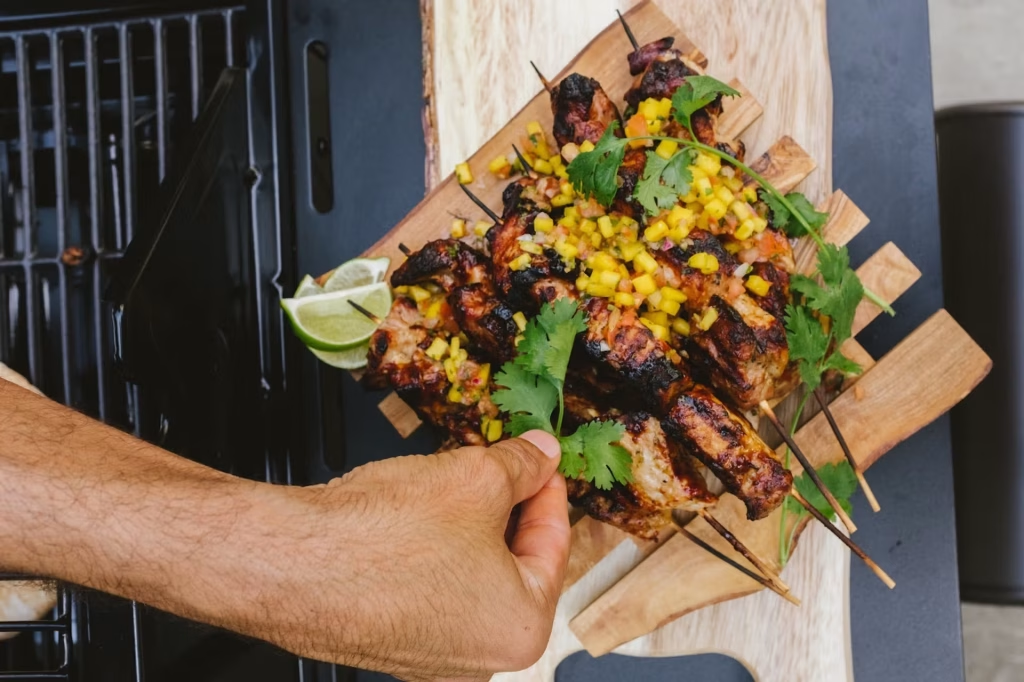
And for fun, here’s a recipe courtesy of the James Beard Foundation.
Ingredients
For the Chicken Pinchos
2 pounds boneless, skinless chicken thighs, cut into 1.5-inch pieces
1 ½ tsp kosher salt
1 tsp black pepper
1 tsp ground cumin
1 tsp onion powder
½ tsp ground turmeric (curcuma)
1 tsp smoked paprika
Juice of 2 limes
3 Tbsp canola oil
Ingredients
For the Mango Salsa
2 ripe mangos, diced
¼ cup finely diced red onion
¼ cup chopped fresh cilantro
Juice of 1 lime
1 garlic clove, finely grated
1 tsp finely chopped jalapeño
Pinch of sea salt
1 tsp olive oil
Method
Pinchos
In a large bowl, mix the chicken with salt, pepper, cumin, onion powder, turmeric, smoked paprika, lime juice, and oil.
Cover and marinate in the fridge for at least 2 hours (overnight is best).
Thread marinated chicken onto skewers.
Grill over medium-high heat, turning occasionally, until cooked through and slightly charred, about 10–12 minutes.
Let rest for 5 minutes before serving.
Mango Salsa
In a bowl, gently toss all ingredients together.
Let sit for 10–15 minutes to allow flavors to meld.
Serve chilled or at room temperature over the grilled pinchos.
From beloved James Beard Award–winning and New York Times bestselling author Dorie Greenspan—a vibrantly illustrated collection of recipes for simple yet most memorable cakes in Dorie’s Anytime Cakes (HarperCollins Harvest, $35).
Over the years, Dorie has created thousands of excellent recipes, yet she finds that of all of them, the ones she always comes back to are the simplest cakes. Some may have a dusting of powdered sugar or a drizzle of icing, but most of them are straight-from-the-oven cakes that taste great as-is.
And they’re cakes that you probably already have all the ingredients for in your pantry. The kinds of cakes you can whip up and set out so that anyone with a hankering can come by and cut a sliver or a hunk. Any time. Or at least until they’re all gone, which trust me, will happen quickly.
With her typical evocative writing and expert advice along with gorgeous illustrations by Nancy Pappas, Dorie’s Anytime Cakes celebrates the simple—but still exciting and special—with more than 100 recipes for easy-to-make, easy-to-love cakes.
There are recipes for all kinds of cakes, including loaves and rounds, muffins, crumbles, and Bundts—even savory cakes—plus frostings, fillings, and other flourishes:
· BFF Brownie Cake
· Morning, Noon, and Night Thanksgiving Cake
· Cafuné Corn Cake
· Simplest, Plainest, Most Old-Fashion—Also Best Tasting—Marble Cake
· Buttermilk Plum Cake
· Faux-caccia Squares
· Miso-Cheddar Scone Cake
· Feta, Sumac, and Za’atar Loaf
· The Devil’s Chocolate Cake
You’ll also find “Playing Around” suggestions throughout—Dorie’s inspirations for making each recipe to your own taste and right for all occasions. Flavor your sugar with citrus or tea for a special touch, spice your cake up with hot honey, or transform your plain cake into an impressive, layered party cake. Just like Dorie, you’ll return to baking these favorite cakes again and again.
Inducted into the James Beard Foundation’s Who’s Who of Food and Beverage in America, Dorie Greenspan is the New York Times bestselling and IACP award and James Beard Award winning author of fifteen cookbooks, including Baking with Dorie, Dorie’s Cookies, Around My French Table, Baking Chez Moi, and Baking: From My Home to Yours, and a Substack with a hugely devoted following, xoxoDorie Newsletter.
She lives and bakes in New York City, Westbrook, Connecticut, and Paris.
Matcha Latte Loaf / Makes 8 servings
Please, please, please use culinary-grade matcha powder for this cake. First-quality matcha (often labeled “ceremonial”) is very expensive and meant to be savored on its own in a tea. Its most prized characteristics would be lost in this cake.
A word on coconut milk: Look for full-fat coconut milk – it’s flavor is deep and its texture is satiny.
Ingredients:
1 ¾ cups (238 grams) all-purpose flour
1 ¼ teaspoons baking powder
½ teaspoon fine sea salt
7 tablespoons (3 ½ ounces; 99 grams) unsalted butter, at room temperature
1 cup (200 grams) sugar
3 large eggs, at room temperature
3 tablespoons neutral oil
2 teaspoons pure vanilla extract
½ cup (120 ml) full-fat coconut milk (shaken and mixed well before measuring)
4 teaspoons matcha green tea powder (see left), whisked if lumpy
DIRECTIONS:
Center a rack in the oven and preheat it to 325 degrees F.
Coat the interior of an 8 ½ -inch loaf pan with baker’s spray or butter it, dust it with flour and tap out the excess.
Whisk the flour, baking powder and salt together in a medium bowl.
Working g in the bowl of a stand mixer fitted with the paddle attachment, or in a large bowl with a hand mixer, beat the butter and sugar together on medium-high speed for 3 minutes, or until creamy, scraping the bowl and beater(s) frequently—this is a batter that needs diligent scraping.
Drop the speed down to medium and add the eggs one by one, beating for a minute or so after each goes in.
With the mixer running, pour in the oil, followed by the vanilla, and mix until blended—the batter will be thin and satiny and have a pretty sheen.
Add one-third of the dry ingredients and mix on low speed until they are almost incorporated, then mix in half of the coconut milk.
Stop the mixer, scrape, add half of the remaining flour mixture and beat until it’s almost blended in.
With the mixer still on low, pour in the rest of the coconut milk and, when it’s almost incorporated, add the last of the dry ingredients.
Give the batter a few turns with a flexible spatula and then scrape half of the batter into a bowl.
Sprinkle the matcha powder over one of the portions of batter and stir it in with the spatula, mixing until the batter is uniformly green and you’re no longer mesmerized by the beautiful swirling patterns you’re making.
You’re going to dollop the two batters into the pan and you can do this with a large spoon or a cookie scoop (my favorite tool) or two pastry bags (no need to insert any tips).
I like to drop some white scoops into the pan, fill the in-between spaces with green batter and then continue filling the pan by topping the white scoops with green and the green with white. But that’s just my game—you can make up your own.
When all the batter is in, run a table knife, a bamboo skewer or a long toothpick through the batter to marble it. Make just one or two passes—more than that, and you won’t have distinct marbling.
Bake for about 60 minutes check the cake at 55 minutes, but it will probably need more time), or until it’s risen and can be gently nudged from the sides of the pan; a tester poked into the center of the loaf will come out clean. And, yes, the top will crack.
Transfer the pan to a rack and let rest for 10 minutes, then run a table knife around the sides of the pan and unmold the cake. Turn the cake right side up and leave it on the rack to cool to room temperature.
Cocoa-Swirled Pumpkin Bundt / Makes 12 servings
Make sure that you choose pure pumpkin puree, not pumpkin pie filling, which is sweetened and spiced. While there are different versions of pumpkin puree available—many supermarkets have their own brands—if you can, I suggest you buy Libby’s. It is the
most consistent, it has a beautiful color and, most important, it’s not watery—it always bakes well.
Ingredients:
For the Swirl:
3 tablespoons sugar
1 tablespoon unsweetened cocoa powder
Pinch of fine sea salt
Pinch of group cinnamon
¼ cup (50 grams) finely chopped dark chocolate or mini dark chocolate chips
For the Cake:
3 cups (408 grams) all-purpose flour
2 teaspoons baking soda
1 ½ teaspoons ground cinnamon
1 ½ teaspoons ground ginger
3/4 teaspoon fine sea salt
1/2 teaspoon ground cardamom
1/4 teaspoon freshly grated nutmeg
1 cup (240 ml) neutral oil
1 ½ cups (300 grams) sugar
1/2 cup (100 grams) brown sugar
3 large eggs, at room temperature
1 tablespoon pure vanilla extract
1 can (15 ounces; 425 grams) pure pumpkin puree
DIRECTIONS:
To make the swirl:
Mix the sugar, cocoa powder, salt, cinnamon and chocolate together in a small bowl and keep at hand.
To make the cake:
Center a rack in the oven and preheat it to 350 degrees F.
Coat the interior of a 12-cup Bundt pan with baker’s spray or butter it, dust with flour and tap out excess.
Working in the bowl of a stand mixer fitted with the paddle attachment, or in a large bowl with a hand mixer, beat the oil and both sugars together on medium speed for a couple of minutes to blend well—the mixture should look slushy, like wet sand.
Still beating on medium, and scraping the bowl and beater(s) early and often, add the eggs one at a time, beating for about a minute after each one goes in. The mix will continue to look iffy until that last egg is in and then, as if by magic, it will become satiny.
Reduce the mixer speed and blend in the vanilla and pumpkin puree.
Turn the mixer off, add one-third of the dry ingredients and pulse the mixer on and off to get the blending going and to help prevent the counter from getting showered with flour.
Working on low speed, mix until the dry ingredients are almost incorporated. Turn off the mixer, scrape and add half of the remaining dry ingredients. Pulse, mix on low, stop and scrape again, then add the last of the dry ingredients, mixing on low until fully blended. Give everything a few last turns with a flexible spatula.
Scrape one-third to one-half of the batter into the pan and smooth it with the spatula.
Spoon the cocoa swirl over the batter—you can try to make an even layer and prevent the swirl from touching the sides of the pan, but it’s almost impossible, so relax.
Add the rest of the batter—it will only half fill the pan, but it will rise considerably in the oven.
Bake for 55 to 60 minutes, or until the cake is beautifully puffed, is cracked around the top and pulls away from the sides of the pan when gently tugged. A tester poked into the center of the cake should come out clean—make sure you don’t hit the gooey swirl.
Transfer the pan to a rack and let the cake rest for 10 minutes, then turn it out onto the rack and allow it to cool to room temperature.
Once the cake is cool, you can dust it with confectioners’ sugar, or you can glaze or ice it.
In 1924, Peter Levant’s opened what was one of Whiting’s famous “perch palaces,” a place that served freshly caught perch right from Lake Michigan. They also advertised such menu items as steak, chicken, and, of course, this being The Region, frog legs—mostly likely from nearby Lake George.
Indeed, frog legs were so in demand that Vogel’s, another Whiting restaurant, which was just down the street and totally classy—raised their own frogs for legs in Lake George, just steps behind their restaurants. But that’s a different story.
Located at 1247 Calumet Avenue, Levent’s became the home of George Diamond’s and then later Juster’s Charcoal Broiled Steaks.
Photo courtesy of Steve Shook.
Though my mom liked to cook, my parents were totally into eating out as well and though its been years and years, I remember going with them to George Diamond’s. It was the kind of place where everything was overlarge—the steaks, the salads, the charcoal flames, and even the menus.
That Diamond (yes, there was a George Diamond) even opened a place in Whiting shows the town’s status as a food destination. Indeed, around that time, there were a lot of great restaurants–and I’m sure I’m leaving a lot of places out–Vogel’s, Phil Smidt’s, Margaret’s Geneva House, Al Knapp’s Restaurant and Lounge, and the Roby Café. But Diamond was international.
Besides his flagship restaurant at 630 S. Wabash Avenue in Chicago that was said to have cost over $1 million to renovate in a style I call 1950s swank, all red velvet and red upholstery, he had places in Las Vegas, Palm Springs, on a golf course in Antioch, Illinois on a golf, and Acapulco, Mexico.
What I remember most was the house salad dressing which they bottled and sold on the premises. It was so unique that even now it has a cult-like online following with people searching for the recipe. It wasn’t Russian and it certainly wasn’t French or at least not the orangish French dressing we buy in bottles now. Diamond’s dressing was an almost translucent reddish pink. And if the recipe I found online is close to the original, it’s main ingredient was tomato soup.
There’s nothing left of Diamond’s empire today. Diamond died in 1982 at age 80 and the building housing the Wabash Avenue restaurant went up in flames in 2006. But people still remember that dressing.
George Diamond’s salad dressing
1 (10-ounce) can condensed tomato soup
2/3 cup oil
1/2 cup each: white vinegar, sugar
1 small onion, peeled and grated
1 clove garlic, peeled and halved
1 tablespoon dry mustard
1/4 teaspoon each: salt, ground black pepper
Place undiluted soup, oil, vinegar, sugar, mustard, salt, pepper, onion and garlic in a blender or food processor fitted with a metal blade. Cover and blend or process on high speed until pureed, about 2 minutes. Serve chilled. Store covered leftovers in refrigerator.
“Fritos are a San Antonio delicacy, invented by Gustavo Olguin, who sold the recipe to the owner of a local confectionery shop for one hundred dollars during the Great Depression,” writes Josef Centeno and Betty Hallock in Ama: A Modern Tex-Mex Kitchen. “That guy then created the chip empire known as Frito-Lay. Frito pie, also a San Antonio delicacy, is the stuff of rodeos—usually a bag of the cornmeal chips split open along one side and stuffed with chili and cheese. The version served at Bar Amá is layered with carne guisada, baked in a small cast-iron casserole so the cheddar topping gets warm and bubbly, and garnished with crema, onions, and cilantro. Rather than a portable snack, it’s more like a sit-down meal to share.”
Bar Ama Cookbook by Josef Centeno & Betty Hallock for Chronicle Books
Centeno is the owner of Bar Amá, a Tex-Mex restaurant in Los Angeles as well as others including the Michelin-starred Orsa & Winston, both part of The Josef Centeno Group. His menu offerings at Bar Ama are inspired by his childhood food memories and the cooking of his great grandmother, Amá.
Carne Guisada Frito Pie
Serves 4
4 cups [240 g] Fritos corn chips
1 cup [260 g] carne guisada (page 63)
1 1/3 cups [135 g] grated cheddar cheese
1/4 cup [60 g] crema Mexicana or sour cream
2 Tbsp finely diced red onion
2 Tbsp finely chopped fresh cilantro leaves
Heat the oven to 350°F [180°C].
In each of 2 small baking dishes or ovenproof casseroles, layer 1 cup [60 g] of the corn chips, 1/4 cup [65 g] carne guisada, and 1/3 cup [35 g] cheddar cheese. Add another layer of chips, carne guisada, and cheese. Bake in the oven until the cheese is melted, 8 to 10 minutes. Remove from the oven and top each dish with 2 Tbsp crema, 1 Tbsp onions, and 1 Tbsp cilantro. Serve immediately.
Carne Guisada
Centeno describes carne guisada as his “bowl of red.” Except that he never eats it in a bowl but instead, always in a flour tortilla.
“Like chili con carne, this stewed beef is made with chunks of beef and dried chiles and spices, and it also contains tomatoes,” he explains. “But unlike chili con carne, it isn’t served with a bunch of other ingredients and garnishes. Tucked into a flour tortilla, it needs nothing else—just straight up carne guisada.”
Serves 6 to 8
2 ancho chiles
4 Tbsp [60 ml] olive or avocado oil
2 1/2 to 3 lb [1.2 to 1.4 kg] boneless short rib, trimmed and cut into 1 1/2 in [4 cm] cubes
1 large onion, finely diced
1/2 tsp fine sea salt
5 garlic cloves, chopped
1 serrano chile, stemmed, seeded, and finely chopped
Using tongs, toast the ancho chiles over the open flame of a gas burner until slightly softened and fragrant, 1 to 2 minutes. Stem and seed the chiles and tear them into pieces. Set aside.
Heat 2 Tbsp of the oil in a Dutch oven or another large heavy-bottom pot over medium-high heat. When the oil shimmers, add the beef and brown it on all sides, 10 to 12 minutes.
Add the remaining 2 Tbsp of oil to the pot. When the oil is hot, add the onion and salt and cook over medium heat, scraping up the browned bits of meat at the bottom of the pot, until the onions are soft, about 5 minutes.
Add the garlic, serrano, oregano, cumin seeds, chile powder, bay leaf, and several grinds of black pepper and cook until fragrant, 30 seconds.
Add the toasted chiles to the pot along with the flour and stir until incorporated. Add the beef broth and tomatoes and bring the mixture to a boil.
Reduce the heat to low and simmer, partly covered, stirring occasionally, until the meat is tender and the sauce is thickened, 2 1/2 to 3 hours. Taste and adjust the salt. Store, covered, in the refrigerator for up to 3 days.
Bar Ama Cookbook by Josef Centeno & Betty Hallock for Chronicle Books
Vanilla Bean Semifreddo with Dulce de Leche
“This is an easy version of vanilla ice cream,” says Centano, “which we make at Bar Amá with cream and crème fraîche—no ice-cream maker necessary! We use it for raspados of shaved ice and hibiscus syrup, for fried ice cream, or to serve drizzled with dulce de leche or chocolate sauce.”
Serves 6 to 8
Vanilla bean semifreddo
6 egg yolks
1 1/2 tsp dark brown sugar
1/2 cup [100 g] granulated sugar
1 1/2 cups [360 ml] heavy cream
1/2 cup [120 g] crème fraîche
Seeds of 1 vanilla bean
Dulce de leche
One 14 oz [420 ml] can sweetened condensed milk
make the semifreddo: Put the egg yolks, brown sugar, and granulated sugar in the bowl of a stand mixer fitted with the whisk attachment. Mix on medium-high to high speed until the mixture is pale yellow and fluffy, about 8 minutes. Set aside.
Combine the heavy cream, crème fraîche, and vanilla seeds scraped from the bean in a clean bowl, and with a clean whisk attachment, or a hand mixer with regular beaters, whip until soft peaks form.
Carefully fold the whipped cream mixture into the egg mixture. Pour into a container, cover, and freeze for 6 hours or overnight. Any leftover ice cream will keep in the freezer for up to 1 week.
make the dulce de leche: Peel the label off the can of condensed milk and put the can in a large pot. Add enough water to the pot so it comes within 2 fingers of the top. Bring to a boil over medium-high heat. Lower the heat to medium-low and cook for 6 hours, checking the water level, and adding more as needed to keep the pot filled. Remove the can with tongs and set aside to cool overnight at room temperature.
Serve the semifreddo with a drizzle of the dulce de leche. Store any remaining dulce de leche in a covered container in the refrigerator for up to 1 month.
Reprinted from Ama by Josef Centeno and Betty Hallock with permission by Chronicle Books, 2019
“Arancini are breaded and fried rice balls, a typical Sicilian street food,” says Tara Punzone, owner of Pura Vita, the first entirely plant-based Italian restaurant in the U.S.
Punzone, who has been vegan since she was 13, grew up in an Italian family where the traditional foods from generational recipes were part of everyday meals. She wanted to keep those tastes and flavors which meant creating vegan alternatives for such dishes as lasagna and ziti that would please her family.
Photo credit Heidi Calvert.
It meant creating plant-based cheeses and creams to substitute for such food items as mozzarella and ricotta, to obtain their texture and richness. It took a lot of trial and error, but success was watching family members enjoy what she cooked.
Now Punzone shares her recipes in her recently released cookbook “Vegana Italiana: Traditional Italian the Plant-Based Way; A Vegan Cookbook” with Gene Stone
Arancini
This recipe serves 6 To 8 and makes approximately 4 dozen Arancini.
“Normally, arancini are served as a snack or an appetizer, and in Sicily you can find people selling them out of carts everywhere,” she continues in her description of the dish. “You can make the risotto part of this recipe and eat it as risotto, but if you want more, why not try these amazing little treats? Stick the arancini in the fridge and reheat them in the oven at 350°F until the center is hot, about 15 minutes.”
1/4 cup, plus 2 teaspoons extra-virgin olive oil
2 tablespoons vegan salted butter
2 cups finely diced yellow onion
1 cup finely diced shallots
1 cup finely diced celery
2 tablespoons minced garlic
1 tablespoon smoked paprika
2 teaspoons sea salt, plus
1 teaspoon to taste
2 cups carnaroli or Arborio rice
1 cup dry white wine
4 cups vegetable stock
1/3 cup lemon juice
1/2 cup Cashew Mozzarella (see below)
4 cups Cashew Cream (see below)
21/2 tablespoons egg replacer
4 cups panko breadcrumbs
Avocado, grapeseed, or rice bran oil for frying
Italian dipping sauce (your favorite brand)
Make the risotto: In a sauté pan, heat the olive oil and vegan butter over medium heat. Sauté the onion, shallots, celery, garlic, smoked paprika, and salt for 5 to 7 minutes, until the onion is translucent.
Add the rice and sauté for 2 to 3 minutes.
Add the wine and cook for 3 to 4 minutes, stirring constantly.
Slowly add the stock, 1 cup at a time, stirring constantly. Bring the rice to a low boil.
When the rice is fully cooked, remove it from the heat. Stir in the lemon juice and remaining 2 teaspoons of olive oil and mix well. Add salt to taste.
You can stop here if you just want to make risotto, a northern Italian specialty or make the arancini.
After the risotto has cooled, use a 2-ounce ice cream or dough scoop and divide the rice into little balls. If you don’t have a scoop, roll 1/4 cup of rice into balls with your hands.
Take 1/2 teaspoon of cashew mozzarella and insert it into the center of each rice ball. Using your hands, close up the rice balls neatly.
To make the batter, place the cashew cream in a bowl and add the egg replacer. Whip until thick.
Place the panko in a separate bowl. Dip each rice ball into the batter, letting the excess batter drip off.
Roll each ball in the panko, making sure to coat it all the way around. Set aside.
Add about an inch of the frying oil to a large frying pan.
Heat the oil to 360° to 375°F. Use a deep-fry thermometer to make sure the oil is hot enough.
Fry a few rice balls at a time. Do not crowd the pan. Make sure the balls do not touch, so they don’t stick together. Fry for approximately 3 minutes, or until golden brown and crispy.
Remove the balls from the oil and place them on paper towels to drain.
Tara Punzone’s recipe for Eggplant Parm can be found in her debut cookbook Vegana Italiana.
Cashew Mozzarella
Makes Approximately 7 Cups
“You should adjust the amount of tapioca you use depending on which dish you plan to use the mozzarella in,” says Punzone offering a tip in the introduction to this recipe. “For example, if you plan to use the mozzarella melted or soft, use about 1/4 cup tapioca. If you plan to make a caprese salad, you will want the cheese to be firmer.”
2 cups raw, unsalted cashews
1 quart filtered water
1/4 cup nutritional yeast
2 tablespoons, plus 2 teaspoons apple cider vinegar
2 tablespoons sea salt
2 teaspoons garlic powder
2 tablespoons refined coconut oil
1/2 cup tapioca starch
Soak the cashews in water for a minimum of 4 hours. Drain and rinse well before using.
Add the cashews, water, yeast, vinegar, salt, garlic powder, and coconut oil to the jar of a blender or food processor. Blend until smooth.
Pour the mixture into a saucepan.
Stir in the tapioca. Cook over low heat, stirring until completely combined. Reduce the heat so the cheese is at a low boil and cook for 8 to 10 minutes. The cheese should have a very thick consistency (you should have a hard time stirring it).
Remove from the heat and let cool.
Store in an airtight container in the refrigerator for up to 5 days.
Cashew Cream
“Cashew cream is the simplest way to make any vegan dish creamy; it will be a regular in your fridge,” says Punzone. “You can even use it in coffee instead of the store-bought chemical-filled alternatives.”
Makes 8 cups
4 cups raw, unsalted cashews
4 cups filtered water
1/4 teaspoon sea salt
Soak the cashews in water for a minimum of 4 hours. Drain and rinse them well.
Blend the cashews, water, and salt in a blender on high speed until completely smooth. Strain through a chinois or a nut milk bag if you have one, otherwise use as is.
Store in the refrigerator for up to 5 days.
Frittata
This recipe, which serves 4 to 6, is gluten-free.
“A frittata is such a funny thing,” says Punzone. “It’s basically an Italian version of an omelet, a dish that my family used to make to use up leftovers. Leftover pasta? Throw it in a frittata. Leftover vegetables? Throw them in a frittata. In fact, whatever’s left over, you just chop it up (or don’t chop it up) and throw it in. Super simple to make and delicious to eat! Nothing goes to waste.”
Frittata Base
2 cups chickpea flour
2 cups filtered water
1/4 cup extra- virgin olive oil,
plus 1 tablespoon for the pan
2 teaspoons minced garlic
2 teaspoons chopped fresh rosemary leaves
2 teaspoons sea salt
1/2 teaspoon black pepper
Frittata Mix
1/2 cup baby spinach, cut into thin ribbons
2 tablespoons Cashew Mozzarella (see recipe above)
1 tablespoon chopped cremini mushrooms
1/2 cup halved cherry tomatoes
Extra- virgin olive oil for drizzling
Maldon salt for garnish
Freshly ground black pepper for garnish
Basil leaves, torn, for garnish
Preheat the oven to 350°F.
In a medium bowl, combine the chickpea flour, water, 1/4 cup of the olive oil, the garlic, rosemary, salt, and pepper. Whisk together until smooth. Let sit for 30 minutes.
Add the remaining 1 tablespoon of olive oil to a 1.5 to 2 quart cast-iron skillet. Using a brush or paper towel, coat the bottom and sides of the skillet with oil. Place the empty pan in the oven for 10 minutes to get the pan nice and hot. Remove the pan from the oven.
Pour the frittata base into the pan. Add the baby spinach, cashew mozzarella, and mushrooms. It is okay if these ingredients sink through the frittata base.
Top with the cherry tomatoes and a drizzle of olive oil. Bake for 20 minutes, until the edges are golden-brown.
It’s not too late to celebrate the Spooky Season by visiting one of the Black Lagoon Halloween pop-ups. The highly acclaimed Halloween pop-up features hauntingly new & delicious cocktails such as Griselda’s Revenge–a tropical, herbaceous cooler fit for a swamp queen–and theNocturna Colada, which is the piña colada of your darkest dreams.
Find the Black Lagoon venue nearest you by visiting Black Lagoon Pop-Up. And for those who live in Phoenix, the Pop-up runs until November 3rd at Sunny’s, located at 2701 E. Indian School Road. You don’t have to wear a costume but why not?
The venues all have immersive atmospheres along with brand-new cocktail menu, created by bar industry luminaries Erin Hayes and Kelsey Ramage.
This year’s lineup With Black Lagoon’s unique blend of spooky ambience and expertly crafted drinks, it’s an event that’s not to be missed.
Food must run in the family as her sister, Gesine Bullock-Prado who lives in Vermont in a tavern built in 1793, has written several cookbooks including one of my favs, My Vermont Table: Recipes for All (Six) Seasons and a new one coming out this October titled My Harvest Kitchen featuring over 200 recipes.
Fun facts about the Bullock sisters…their mother Helga Meyer was an opera singer and their maternal grandfather a rocket scientist.
“Throughout these pages, I’m going to (politely) refute the claim that Southern food is all bad for you and hopefully breathe new life into some tired, worn-out notions,” writes Lauren McDuffie in the first pages of her latest cookbook, Southern Lights: Easier, Lighter, and Better-for-You Recipes From the South(Gibbs Smith). McDuffie, an advocate of Southern cuisine, wants us all to know the entire truth of this regional way of cookery that many of us dismissively think of as fried and fat.
“Once you make your way through the stereotypes, past the overwrought, done-to-death, attention-seeking heavy hitters, the archives of Southern cookery shine with a special sort of brilliance,” continues McDuffie, noting that she is a home cook who has done the majority of her culinary learning in the South ranging from the foothills of central Appalachia to the sandy, abundant low country coastline.
McDuffie, who lives in Portland, Oregon now, created the award winning food blog: My KItchen Little: Recipes, Ideas, and Inspiration for Busy Home Cooksbut her love of Southern cuisine and her ability to bring it to the fore was also apparent in her first cookbook,Smoke, Roots, Mountain, Harvest: Recipes and Stories Inspired by My Appalachian Home. The same passion is conveyed” in this magnificent cookbook with its luscious photos–McDuffie is also a photographer and her luscious color photos are a perfect accompaniment to the recipes that show us how to enjoy the rich heritage of Southern cuisine without the guilt and calories.
Southern Lights takes us into the world that McDuffie says she loves most– the people, places, things, and flavors that evoke feelings of home.
To accomplish this, McDuffie, an advocate for fresh and healthy, took a hard look at her kitchen pantry and asked herself a series of questions such as why she was using a particular oil or cut of meat in her cooking and what substitutions would work just as well when using her favorite recipes. From there she re-created favorite dishes incorporating different ingredients but yielding the same delicious results.
Her recipe for Frico Chicken in a Buttermilk Bath is a great example. Its origins are that perennial Southern classic—fried chicken brined in buttermilk and then deep fried in lard. A definite winner when it comes to taste. Not so in other respects. So what does McDuffie? She produces a healthier and low caloric alternative that really works.
Calling it a remix and noting that frico translates to fried in Italian, she describes this dish as similar to a simple baked cheese crisp that tops a boneless, skinless, and flattened chicken thighs browned in a minimum of oil. A surprising easy-to-make but sophisticated dish, it offers the crunch and flavor of buttermilk heavily battered chicken with no grease or guilt.
Like pulled pork sandwiches. McDuffie gives us a very creative take by substituting spaghetti squash (yes, you read that correctly) for the pork in her recipe for “Pulled” BBQ Spaghetti Squash Sandwiches.
“This has got to be one of the most unusual sandwiches I’ve ever made, but man is it a hit in my house,” writes McDuffie in the introduction to this dish. “Tangled strands of roasted spaghetti squash mimic the fatty pork in a classic meaty version, making for a lighter, more nutritious way to get your fix.”
The squash mixture is then topped with Halloumi cheese (smoked Gouda or cheddar can be used instead) along with coleslaw and barbecue sauce.
Voila! A low cal, high flavor profile meal and just one of many in McDuffie’s latest cookbook.
Honey-Caramelized Tomato Upside-Down Cornbread
“People get very territorial about their cornbread in the South, a fact that I have always found completely charming,” says McDuffie. “Home cooks are devoted to their recipes and food traditions in a way that serves to sustain them, carrying them across generations. There is so much heart on the table, always. Cooks hold on tight to them, their family recipes, and it’s really the most beautiful thing. This recipe happens to be a favorite version of cornbread in my house. The jammy, juicy-sweet tomatoes suspended on top really do steal this show, and the olive oil makes it pretty special. Feel free to sub a different cooking oil, though, as olive oil ain’t cheap. I highly recommend serving this in thick slices, slathered with lots of Salty Butter–Whipped Honey.”
Makes 6 to 8 servings
Natural nonstick cooking spray
12 ounces cherry or
grape tomatoes
6 tablespoons honey, divided
1 1⁄2 teaspoons salt, plus
more as needed
1 cup yellow cornmeal
1 cup cake flour
1 1⁄2 teaspoons baking powder
1 teaspoon baking soda
2⁄3 cup olive oil or canola
or vegetable oil
2 large eggs, beaten
1 1⁄4 cups buttermilk
Preheat the oven to 350°F. Adjust the rack to the middle position. Spray an 8- or 9-inch round cake pan with cooking spray and line with parchment paper, allowing some overhang for easy removal (think of them as handles).
Put the tomatoes, 3 tablespoons of the honey, and a good pinch of salt in a nonstick skillet set over medium heat and cook, stirring occasionally, until the tomatoes just burst and are tender, about 5 minutes. Transfer to the cake pan, juices included, and spread in an even layer.
In a mixing bowl, whisk together the cornmeal, remaining 1 1⁄2 teaspoons salt, cake flour, baking powder, and baking soda.
In the bowl of a stand mixer or in a mixing bowl with ahandheld m ixer, combine the oil, the remaining 3 tablespoons of honey, and the eggs. Add half of the dry mixture and mix until combined. Add half of the buttermilk and mix until just combined. Repeat with the remaining halves of each and gently pour the batter into the prepared pan over the tomatoes (it shouldn’t be more than three-fourths full).
Bake until lightly golden and set, 35 to 45 minutes (use a knife or toothpick to test the doneness—it should come out clean). Cool in the pan for at least 15 minutes before inverting the cornbread onto a serving plate, tomatoes facing up now.
Salty Butter-Whipped Honey
Sounds sinful, right? I can assure you that this isn’t nearly as rich as it sounds. This drippy, sticky-sweet thing is my lighter take on a simple honey butter where, instead of infusing a lot of butter with a little honey, we’re going to infuse a lot of honey with a little butter. Just be sure to use a good-quality raw honey.
Makes about 1 cup
8 ounces honey
2 tablespoons salted butter, at room temperature
Salt to taste
In a blender, combine the honey, butter, and salt and blend until creamy and smooth. Transfer to a lidded storage jar or container. This buttery honey will keep in the refrigerator for up to 1 month.
Frico Chicken in a Garlicky Buttermilk Bath
“I’ve taken the things I love most about classic Southern fried chicken and remixed them into something that is just as satisfying, but much lighter—a true win-win,” writes McDuffie about this recipe. “A frico (which means “fried” in Italian) is simply a baked cheese crisp, and here we’ll use them to almost mimic the salty crunch of fried chicken skin. Rather than rich bone-in, skin-on cuts, we’ll use leaner boneless and skinless thighs—my favorite protein of them all. The garlicky buttermilk-fortified bath in which they cook mimics my go-to fried chicken brine, helping the chicken stay tender and juicy. It also happens to be an easy, one-pan, 30-minute meal. So there’s that.”
Makes 4 to 6 servings
1 1⁄2 cups grated Parmesan cheese
4 teaspoons olive oil, divided
6 boneless, skinless chicken thighs
Salt
Freshly ground black pepper
1 heaping cup diced sweet onion
10 ounces fresh baby spinach
3 garlic cloves, minced or grated
1⁄2 cup dry white wine (optional)
1 (14.5-ounce) can crushed or diced tomatoes
1⁄2 cup buttermilk
Preheat the oven to 350°F. Adjust the oven rack to the middle position. Line a large baking sheet with parchment paper or a silicone baking mat.
Equally space the Parmesan into 6 (1⁄4-cup) mounds on the baking sheet. Use your measuring cup to gently press down on the mounds and work them into round, circular disks (they don’t have to be perfect). Bake until flattened and just beginning to brown lightly around the edges, 3 to 4 minutes. Remove and set aside. They will firm up as they cool.
Pour 2 teaspoons of the oil into a large pan over medium heat. Season the chicken with salt and pepper to taste. When the oil is hot, add the chicken and brown really well on the first side; this takes 5 to 6 minutes. Flip and cook for another 1 to 2 minutes (they will finish in the sauce). Transfer to a plate and set aside.
Pour the remaining 2 teaspoons of oil into the pan. When it’s hot, add the onion and spinach and sauté for 3 to 5 minutes, until the spinach is fully wilted and the onion is soft. During the last minute, add the garlic.
Stir in the wine (if using) and cook for about 1 minute to reduce it. Add the tomatoes and buttermilk and slide the chicken back into the pan. Simmer for about 10 minutes to reduce the sauce and to finish the chicken.
Lay the Parmesan fricos over the chicken just before serving. They will melt and sort of adhere to the chicken, mimicking salty chicken skin in the best way.
Recipes excerpted from Southern Lights: Easier, Lighter, and Better-for-You Recipes from the South by Lauren McDuffie. Photographs by Lauren McDuffie. Reprinted by permission of Gibbs Smith Books.
The James Beard Foundation® is proud to announce the winners of the 2025 James Beard Media Awards, presented by Capital One, honoring the nation’s top food authors, broadcast producers, hosts, journalists, podcasters, and social media content creators. The full list of winners, which includes Book, Broadcast Media, and Journalism, can be found below and on the James Beard Foundation website.
James Beard Award winner®, Emmy-nominated producer, TV host, and New York Times best-selling author Padma Lakshmi hosted the 2025 Media Awards ceremony on Saturday, June 14, 2025 at Columbia College Chicago. Presenters also included luminary food media personalities such as Nyesha Arrington, Molly Baz, Rose Levy Beranbaum, Dr. Jessica B. Harris, Francis Lam, Adam Richman, Alexander Smalls, Andrew Zimmern, and others.
“Congratulations to the 2025 Media Award winners, whose compelling narratives shape our food culture and set the standard of excellence in culinary storytelling and reporting,” said Clare Reichenbach, CEO, James Beard Foundation. “We’re honored to celebrate phenomenal work that will surely impact how people cook, think about food, and engage with our shared culinary landscape for years to come.”
2025 marks a notable milestone: the 35th anniversary of the James Beard Awards. This year’s ceremonies commemorate the transformative role the Awards have played in recognizing excellence and shaping the evolution of American food culture, while reaffirming the Foundation’s commitment to leading and supporting the industry for years to come.
“The Media Awards celebrate all those who expand our understanding of food through exceptional storytelling thateducates, entertains, and inspires,” said Dawn Padmore, VP of Awards, James Beard Foundation. “A heartfelt thanks to our subcommittee members and judges for their dedication and the thoughtful consideration they put into these awards. Their time and expertise are deeply appreciated.”
The James Beard Foundation began honoring excellence in food media more than 30 years ago, with the first Book Awards presented in 1990. This year’s Book Awards recognize cookbooks and other nonfiction food- or beverage-related books that were published in the U.S. in 2024. Books from foreign publishers must bear a 2024 U.S. copyright date and/or must have been distributed in the U.S. during 2024.
“Congratulations to this year’s winners, who have taken us on journeys through kitchens and communities worldwide,” said Genevieve Villamora, chair of the James Beard Foundation’s Book Awards program. “From technical mastery to cultural storytelling and preservation—these books represent the very best in culinary publishing, proving that great food writing comes in many forms.”
The 2025 James Beard Book Award winners are:
Baking and Desserts: Books with recipes focused on the art and craft of baking, pastries, and desserts, both sweet and savory items, including ingredients, techniques, equipment, and traditions
Beverage without Recipes: Books without recipes that focus on beverages, such as cocktails, beer, wine, spirits, coffee, tea, or juices; or books that cover these subject areas where recipes are not the focus of cooking, not just a single topic, technique, or region.
Bread: Books with recipes focused on the art and craft of making bread, including ingredients, techniques, equipment, and traditions.
Richard Hart Bread: Intuitive Sourdough Baking by Richard Hart, Henrietta Lovell, and Laurie Woolever (Clarkson Potter)
Food Issues and Advocacy: Books that focus on investigative journalism, food policy, food advocacy, deep dives, and critical analysis of the changing social landscape around food.
General: Books with recipes that address a broad scope of cooking, not just a single topic, technique, or region, and are accessible to a general audience.
International: Books with recipes focused on presenting cuisines of the world in their cultural context: their history, distinctive characteristics, and techniques.
The Balkan Kitchen: Recipes and Stories from the Heart of the Balkans, Irina Janakievska (Quadrille)
Literary Writing: Narrative nonfiction books, including memoirs, culinary travel, culinary tourism, biography, reflections on food in a cultural context, and personal essays.
Professional and Restaurant: Books written by a culinary professional or restaurant chef with recipes that may include advanced cooking techniques, the use of specialty ingredients and professional equipment, including culinary arts textbooks.
More information about the Book Awards eligibility and criteria can be viewed here.
BROADCAST MEDIA AWARDS
The Broadcast Media Awards were established in 1993 to recognize nonfiction works in English that exemplify excellence and keep with the mission and values of the James Beard Foundation. This year’s winners spotlight food and beverage topics appearing widely for the first time in the U.S. in 2024 across digital and terrestrial media—including radio, television broadcasts, podcasts, documentaries, online sites, and social media.
“We’re honored to recognize those whose thoughtful production and authentic storytelling bring our dynamic food culture to life,” said Cynthia Graubart, chair of the James Beard Foundation’s Broadcast Media Awards program. “Congratulations to the 2025 winners for offering a unique lens into the people, trends, and traditions that shape how we experience food and dining.”
The 2025 James Beard Broadcast Media Award winners are:
Audio Programming: This award recognizes excellence in a food- or beverage-related radio or podcast program.
Loading Dock Talks with Chef Preeti Mistry
“Cream Pie with Telly Justice” Airs on: Apple Podcasts, Spotify, and other podcast platforms
Audio Reporting: This award recognizes excellence in reporting and narratives about food and/or food issues in radio or podcasts. This work is issue or deadline-driven, investigative, topical, or timely in nature.
Post Reports
“Bacon: The Best-Kept Secret in Washington” Airs on: Post Reports
Commercial Media: This award recognizes excellence in food- or beverage-related media including video production, audio programming, or other media that is clearly developed and marketed with prominent visual branding, is sponsored or commercially funded, and/or contains paid advertising. It may be broadcast, streamed, accessed online, or through an app.
La Mera Mera Tamalera, Airs on: YouTube
Documentary Visual Media: This award recognizes excellence in a food- or beverage-related documentary that is at least 15 minutes long.
MARCELLA, Airs on: PBS American Masters
Docuseries Visual Media: This award recognizes excellence in a food- or beverage-related docuseries.
World Eats Bread, Airs on: National Geographic Channel
Instructional Visual Media: This award recognizes excellence in a food- or beverage-related video production with instruction and/or education as its primary intent, whether broadcast, streamed, accessed online, or through an app.
G.O.A.T., Airs on: MasterClass
Lifestyle Visual Media: New in 2025, this category honors excellence in food-centric talk shows and lifestyle programs that explore food or beverage alongside broader societal and cultural themes. Entries can range from interview-based shows featuring chefs and food personalities to those that delve into food history, science, and culture. This year, submissions to the Competition Visual Media category were included for consideration within the Lifestyle Visual Media category.
Relish, Airs on: PBS, Passport, TPT, TPT-2 and YouTube
Social Media Account: This award recognizes excellence in a food- or beverage-related social media account or platform.
Little Fat Boy, Airs on: Instagram, TikTok, Substack and YouTube
Travel Visual Media: New in 2025, this category celebrates excellence in food- or beverage-focused travel shows. Entries should showcase the unique culinary culture and traditions of a specific region or country, highlighting the connection between people, food, regions, and communities.
Drink: A Look Inside the Glass, Airs on: Apple TV, Prime Video, Tubi, and Roku
More information about Broadcast Media Awards eligibility and criteria can be viewed here.
JOURNALISM AWARDS
The Journalism Awards were established by the James Beard Foundation in 1992. This year’s Journalism Awards recognize works in English and cover food- or drink-related content which were published—or self-published—in 2024 in any medium.
“The reporting by the 2025 Journalism Award winners shows so poignantly how food plays an integral role in every aspect of our lives,” said Rochelle Oliver, chair of the James Beard Foundation’s Journalism Awards program. “Thank you to these journalists for their dedication to deepening the conversation around culture, history, community, and sense of identity from a culinary lens.”
The 2025 James Beard Journalism Award winners are:
Beverage: This award recognizes distinctive style, thorough knowledge, plainspoken prose, and innovative approach in a single article on alcoholic or non-alcoholic beverages.
“Want to Make Spirits in Thailand? Good Luck.” by Craig Sauers, Punch
Columns and Newsletters: This award recognizes the work of an individual or team/group that demonstrates thought-provoking opinion and a compelling style on food- or drink-related topics.
“The farm bill hall of shame”; “The essential workers missing from the farm bill”; “Tribal nations want more control over their food supply” by Teresa Cotsirilos, Bridget Huber, and Claire Kelloway, Food & Environment Reporting Network and Mother Jones
Craig Claiborne Distinguished Criticism Award: This award recognizes discerning criticism or commentary that contributes to the larger discourse on food, drink, and related topics. An entry consists of three pieces that can include restaurant reviews, cultural critiques, or analyses that demonstrate thought-provoking opinion and compelling style.
“New tasting menu dinners at Honeysuckle Provisions are provocative and delicious”; “The enduring, confusing, and always delicious Octopus Cart is still puffing along after 34 years”; “Loch Bar, a new high-end seafood spot on Broad, swings big and misses” by Craig LaBan, Philadelphia Inquirer
Dining and Travel: This award recognizes exemplary and comprehensive service journalism that relies on both critical voice and thorough research to bring a variety of dining options into perspective, whether in a single city, a region, or a country.
“Gastro Obscura’s Feast” by Anne Ewbank, Diana Hubbell, and Sam O’Brien, Gastro Obscura
Feature Reporting: This award recognizes excellence for engaging writing and in-depth reporting in food and/or drink features.
“We Need to Talk About Trader Joe’s” by Adam Reiner
TASTE
Food Coverage in a General Interest Publication: This award recognizes excellence in food and/or drink writing, reporting, and presentation in a general interest site or print publication. Judges evaluate each entry for overall breadth and depth of coverage.
The Bitter Southerner
Foodways: This award recognizes the importance of culture and history in food journalism. Entries in this category explore the connection between what we eat and who we are, with an emphasis on reporting.
“As Detroit sees a future in urban agriculture, some pushback harkens to a dark past” by Lyndsay C. Green, Detroit Free Press
Health and Wellness: This award recognizes excellence in food- and/or drink-related health and wellness coverage. Entries explore a variety of topics that may include (but are not limited to) addiction, aging, chronic disease, diet, mental health, mind-body connection, nutrition, and reproductive health.
“Florida Banned Farmworker Heat Protections. A Groundbreaking Partnership Offers a Solution.” Grey Moran. Civil Eats
Home Cooking: This award recognizes excellence in service journalism with a practical focus for the home cook. The award honors imaginative and substantive entries that use fresh, innovative approaches—both written and visual—to illuminate cooking methods, ingredients, and recipes.
“The Art and Science of Kimchi” by Andrea Geary, Cook’s Illustrated
Investigative Reporting: This award recognizes excellence in investigative reporting on environmental, political, business, or policy issues regarding food and/or drink.
“The North Koreans behind global seafood”; “The Whistleblower” by Ian Urbina and the Staff of The Outlaw Ocean Project, The Outlaw Ocean Project and The New Yorker
Jonathan Gold Local Voice Award: This award recognizes the work of an individual who engages readers through enterprising food and dining coverage in a specific region, which also displays versatility in form, including reviews, profiles, cooking, quick hits, and hard news reporting.
“Etta’s Five Bankruptcies Have Left a Collective Mess”; “White Sox Fans Came for the Losses, Stayed for the Milkshakes”; “Namasteak, USA” by Ashok Selvam, Eater Chicago
MFK Fisher Distinguished Writing Award: This award recognizes a single article of exceptional literary merit on the subject of food and/or drink published in any medium.
“The City that Rice Built” by Jeff Gordinier and George McCalman, Food & Wine
Narrative Photography: New in 2025, this award recognizes exemplary storytelling through the use of photography within food culture. An entry is composed of images from one published piece that captures a visual narrative with skill, perspective, and style.
“The Only Constant is Chuck’s” by Rory Doyle (Self-published)