Goodbye City Life: Kyle Ferrantella Learns That Farming is the Life for Him

tomatillos
A handful of tomatillos with the thin paper husks just coming off.

Once a two-room lumberman’s cottage back in the 1860s, today what was first converted into a farm house and now is a weekend home for the Ferrantella family features lush gardens with cascades of brightly colored blooming plants such as lilies and hydrangeas. But beyond that, in the backyard and then further away along a tree-lined path leading into the back acres are vegetable gardens overflowing with tomatoes, peppers, basil, sunflowers (or at least those not eaten by very hungry ground hogs) and tomatillos.

The gardens are the project of Kyle Ferrantella, who with his parents and two older brothers, has spent weekends and summers at this house on Pier Road in Coloma, Michigan just north of St. Joseph and a stone’s throw from Lake Michigan. His earliest memories of the family’s Michigan weekends are gardening and completing outdoor chores with his father, TJ who is also an avid gardener.tomatoes, tomatillos, peppers and basil

“Kyle, our youngest son, and these gardens were born in the same year—1997 and his interest in plants started with frequent trips to the now closed Limberlost Nursery,” says TJ, noting that his three sons were raised between Pier Road and the family home in Chicago’s Old Town neighborhood.

“I remember mortaring the path here when I was about five—I think my dad was trying to give us something else beyond the city experience, ” says Kyle.

The emphasis on country living established a career path.

“The Circle Garden behind the garage was Kyle’s first garden, which he set up in the summer between his sophomore and junior years in high school,” says his dad.  “His objective was to establish a fully organic garden and, perhaps, sustain himself with produce from the garden.  Since our soils is sandy, he augmented the soil with truckloads of manure from Blessing’s Farm on Hagar Shore Road. Kyle started The Back Garden by clearing the entire area of trees and scrub.  This is a production vegetable garden that uses the same methods and techniques that Michigan State University uses at its research farms.  Kyle’s perspective on plants, gardening, and agriculture was heavily influenced by Monte Don’s book The Complete Gardener.”

Giardiniera
Kyle’s giardiniera

After graduating from Lincoln Park High School in Chicago, Ferrantella moved to the Pier Road house which stands on a 5-acre lot on a round-the-year basis. He recently completed his Associate’s Degree in Fruit and Vegetable Crop Management at Southwest Michigan University which included classes through Michigan State University in plant biology, plant pathology, horticulture and entomology or the study of insects. This fall he’ll start his junior year at Andrews University where he plans to earn a degree in agriculture technology.

Ferrantella also works at the 350-acre Southwest Michigan Research and Extension Center (SWMREC) on Hillandale Road in Benton Harbor. According to their website, they’re located in the most horticulturally diverse region of the state and the work done there includes breeding several types of fruit and conducting variety evaluations of numerous fruits and vegetables as well as evaluating production practices, including the use of high tunnels for fruits and vegetables.kyle in the field

“It’s one of  Michigan State University’s research farms,” says Ferrantella whose projects at SWMREC include working on the hybridization of different varieties of peppers.

The farming aspect is completed by the addition of poultry.

“Once Kyle moved here fulltime, adding chickens seemed to be the natural thing to do,” says his dad. “They live in what was initially constructed as a tree house for our sons. The tree house required absolutely no modification to be used as a chicken house so it worked out well.”

Besides taking classes and growing a masses of veggies, Ferrantella sells his produce from the farm he calls Pier Road Produce at the Niles Artisan Market and also from his home. Over the years, though he’s still intent on making a living from the soil, his goal has morphed in some ways.

tomatillos on the vine
Tomatillos growing in Ferrantella’s garden in Southwest Michigan.

“When I first started out I would have told you I wanted a large farm with hundreds of acres,” says Ferrantella. “But you basically have to inherit a farm or have a lot of money to have a big farm. Now it seems like the way to make a living farming is to find a niche and mine right now is growing tomatillos.”

Also known as Mexican husk tomatoes, tomatillos are small green fruit encased within a paper-like covering that despite the name aren’t tomatoes at all. Instead of sweet and juicy, they are tart and firm. Frequently used in Mexican dishes, tomatillos have quite a history and can be traced back 52 million years to the Patagonian region of Argentina.

Ferrantella uses tomatillos to make salsa and also, along with other vegetables from his garden, giardiniera or Italian pickled tomatoes which can be used on sandwiches, particularly Italian beef, as a spread on crackers or as a topping for grilled meats and fish. His mother, Karen, takes whatever vegetables he’s grown to make such dishes as the family favorite, stuffed peppers.

P1070021
The back of the house with a chicken coop below the old playhouse.

In some ways, the Ferrantella property has come full circle to when the Pratt family owned a multi-acre farm here back in the late 1800s and early 1900s before they turned their land into a large resort that closed in the 1950s.

“It’s great place for farming,” says Ferrantella. “My brother got me a job landscaping in Chicago one summer that paid well and I thought, oh I can make money playing in the dirt.”

Kyle Ferrantella’s Giardiniera (Italian Pickled Vegetables)

1 carrot

1 celery rib

5 to 6 tomatillos, husk removed and cut into small chunks

12 pearl onions or one large sweet onion, diced small

12 pitted green olives

1 red bell pepper

1 yellow bell pepper

1 small jalapeno pepper

1/4 cup salt for the brine

1 clove  garlic

1 tablespoon dried oregano or 3 tablespoons fresh oregano

1/4 teaspoon freshly ground black pepper

1 cup white vinegar

1 cup extra virgin olive oil

Remove the seeds and ribs from the red, yellow and jalapeno peppers. Cut into 2 inch strips and then 1/2 inch slices.

Cut the celery and carrot in quarters and cut in 1/2 inch slices.

Cut the pearl onion in half or the sweet onion into a small dice

Cut the cauliflower in quarters and cut out the core and large stem. Break the florets into pieces about the same size of the other vegetables.

Place the green, red and serrano peppers, celery, carrots, onion, tomatillos and cauliflower in a bowl. Stir the salt into enough water to cover the vegetables and pour the water into the bowl to cover the vegetables completely. Add more water if necessary.

Cover the bowl with plastic wrap or aluminum foil and refrigerate overnight.

The next day drain salty water and rinse vegetables well.

Cut the olives in half.

Mix the garlic, oregano, black pepper and olives in a bowl. Pour in vinegar and olive oil and mix well. Pour the mixture over the vegetables and mix well.

Spoon the giardiniera into a large jar, fill to the top with the oil mixture and seal the jar tightly.

Refrigerate for 2 days before eating.

Giardiniera will keep in the refrigerator of at least 2 weeks.

Karen’s Stuffed Peppers

2 pounds lean ground beef

1 pound ground turkey

Brown rice prepared and set aside to cool ( I double the recipe using 2 cups rice and 4 cups water)

6-8 medium to large green peppers (use as many as need to use up the meat mixture once prepared)

1 1/2  – 2  cups chopped tomatoes

1 large onion,–chopped and sautéed until onion appears clear in color

3 large cloves garlic minced and sautéed ( add to onions just before they are done–so you don’t burn the garlic)

1 1/2 – 2  cups grated parmesan cheese

1 tablespoon dried oregano

1 tablespoon dried basil

1 teaspoon dried red pepper

1  1/2 teaspoons ground pepper

I – 2  jars of pasta sauce

Cut off the tops of the green peppers and clean out the seeds.  Place peppers in boiling water for about 3-4 minutes.  (This is particularly helpful to do before cooking the stuffed peppers especially if the peppers are very hard)  You just want to blanche them so the skins are a little less tough before you bake the peppers.  Don’t over boil them!

Once they are blanched, place pepper upright in a glass baking dish so they fit  next to one another.  add about a 1/2 cup water to the bottom of dish.

Combine the ground beef and turkey,  Add the cooked and cooled brown rice, chopped tomatoes,  sautéed  onion and garlic, parmesan cheese, oregano, basil, red pepper, and pepper and about 1/2 the jar of pasta sauce. Mix together thoroughly.

Stuff each pepper with the rice/meat mixture until it is level with the top of the pepper. Top each pepper with about a 1/4 cup of pasta sauce. Tightly cover with tin foil and bake about 1 hour.  After one hour, take off foil and bake another 1/2 hour. You may want to add a little more pasta sauce to the tops of each pepper during this last half hour of cooking!  (Internal cooking temp of pepper should be at least 160 degrees)

Let peppers sit for about 10 minutes once done, then take some of the juices from the bottom and drizzle over peppers before serving.

Note– I add plain Greek yogurt on the side to my peppers when eating them.

Fried Green Tomatillos with Peach Habanero Sauce

From Turnip Greens & Tortillas: A Mexican Chef Spices Up the Southern Kitchen by Eddie Hernandez (Houghton Mifflin Harcourt 2018; $30).

8 tomatillos, husks removed, rinsed and patted dry

1 cup whole milk

½ cup sour cream

1 large egg

1 cup self-rising cornmeal mix

1 cup cornmeal

1 teaspoon salt

Vegetable oil for frying

Peach-Habanero Sauce (recipe below)

Cut tomatillos into ¼-inch-thick slices.

Whisk together both types of cornmeal and salt in a second shallow bowl. Place a cooling rack in a sheet pan. Line a second sheet pan with paper towels.

Heat ½-inch of vegetable oil in a Dutch oven or a large heavy pot or skillet over medium-high heat until it is 350 degrees.

One at a time, dredge the tomatillo slices in the cornmeal mixture, dip in the egg wash, dip again in the cornmeal mixture and set on the rack. Gently place a few slices at a time into the hot oil; do not crowd. Fry on both sides until golden brown, 2 to 3 minutes per side. Remove to a paper towel-lined sheet pan. Repeat with the remaining slices, allowing the oil to return to 350 degrees between each batch.

Serve hot with Peach-Habanero Sauce for dipping.

Peach-Habanero Sauce

1 ripe peach, peeled and sliced small, about ½ cup

½ habanero, stemmed and minced (remove some or all of the seeds and membranes for less heat)

1 cup mayonnaise

½ cup sour cream

½ teaspoon salt

Combine all the ingredients in a small bowl and mix until blended. Taste and adjust the seasonings as desired. Refrigerate until ready to use.


Searching for Schweinshaxe: From Heidelberg to Michigan


P1010817 (1)         My search for started back in 2012 when Frank Buesing of Stevensville, after returning from a trip to Bavaria, wrote asking if I knew where he could find pork knuckles (schweinshaxe in German) in Southwest Michigan. On his trip, his guide had recommended he try some and, liking the dish  so much, he’d ordered it again at another restaurant in another city. Buesing sent me several photos of schweinshaxe showing what looked like a weapon size piece of meat on a bone. Buesing had already visited several grocery stores and a butcher shop in our area looking for pork knuckles but to no avail. One butcher even consulted a chart of pork cuts and couldn’t find it. I also made some phone calls and got the same response, no pork knuckles around here as I wrote in my July 25, 2012 column in the Herald Palladium titled “Searching for the Elusive Pork Knuckle.”.

Fast forward to a month or so ago when my friend Victoria Larson took me to Vetter’s Alt Heidelberger Brauhaus. Alt Heidelberg is the term for this southwestern German city’s historic district. Vetter’s is on Steingasse, Europe’s longest carless street, which leads down to the Karl-Theodor-Brücke (bridge) spanning the Neckar River. To give you an idea of the how old this city is, the bridge is considered relatively new, having been built in 1788. The building housing Vetter’s dates back even further and is one of those baronial style Germanic places with high ceilings, large wood beams, long tables and a lot of dark highly polished wood. Famed for their Vetter’s 33, at one time the strongest beer in the world with an alcohol content of—you guessed it—33%– it is also known for its traditional German food including a variety of pork knuckles dishes. Though it was hot outside and I wasn’t that hungry, I felt compelled to order the pork knuckle which came with sauerkraut and dumpling and gravy. After all, it was my job to research pork knuckles, wasn’t it? Afraid I wouldn’t like it (after all—pork knuckles?) Victoria wisely said give it a try and if you don’t like it, don’t eat it.P1010826

Unfortunately, as far as calories are concerned, I liked it and what I didn’t share with everyone else sitting with us, I ate. And like Buesing, in the next city I visited, I ordered it again. I wanted to tell Buesing, only I couldn’t remember how to spell his name and being far from home didn’t have access to my files. Luckily, Valerie Kowerduck of Stevensville saw my Facebook photo of the schweinshaxe at Vetter’s s and posted a link to my column. Six years after we first talked about pork knuckles, Buesing still hadn’t found any around here. So I called around again getting a more positive response. Bob’s Meat in South Haven told me they carried them while Roger’s Foodland and Zick’s Specialty Meats said they could be ordered if people called ahead. Voila! Pork knuckles.

FRANK & PORK KNUCKLE!

Buying schweinshaxe in Southwestern Michigan, which has a large percentage of Germans and German-Americans, wasn’t always so difficult.

Robin Christopher, a Journeyman Meat Cutter at United Food and Commercial Workers International Union, who worked as a butcher for decades at such area stores as Family Foods and Eagles, says back then he sold many pig knuckles—later called pork knuckles (“to soften the image to customers”).

“We sold pig knuckles to a variety of people,” he says, noting they’re often used in Mexican dishes such as tacos, Asian dishes served with rice and, of course German foods. “They came in two ways—fresh, meaning raw or uncooked and smoked which are generally called smoked pork ham hocks and are used for seasoning and meat in beans or greens and are great for flavor. The fresh ones are a little more versatile. They can be baked in the oven or they can be par boiled and then finished by braising, pan frying, grilling, deep frying or grilling. They can be eaten whole or they can be cut up or de-boned and the meat used in other recipes.”

FRANK AFTER EATING PORK KNUCKLE DINNER!


At Vetter’s they came with a variety of sides—sauerkraut, mashed potatoes, spätzle (tiny little dumplings cooked by dropping batter into boiling water), big dumplings, noodles, gravy, mustard and bread, depending on what your ordered.

I like to research and when Christopher told me that pig knuckles were big sellers in Southwestern Michigan years ago, I decided to look them up on newspapers.com, an online archive of old newspapers. Sure enough, going back to the late 1800s up to 1960, there were a lot of groceries, butchers and even restaurants advertising them. In the December 17, 1920 issue of the News Palladium, you could buy pig knuckles as well as something called nut-oleo at during Banyon’s Saturday Cash Specials. Kelm’s Market at 222 State Street sold two pounds of pig knuckles and two pounds of sauerkraut all for 19 centers according the January 12, 1934 Herald Press. Kelm’s also sold something called leaf lard (lard must have been big back then because there’s all sorts of types for sale). For15 cents, according to an ad in the February 2, 1937 edition of the News Palladium, you could get pork knuckles and sauerkraut and listen to the music of the 6-piece Old Heidelberg Band at the Higman Park Villa, a beach place in Benton Harbor.P1010842

Deutschamerikaner or people of German heritage (including me as my maternal grandfather was from Germany) constitute the largest ancestry group according to the US Census Bureau in its American Community Survey with an estimated number of 44 million German Americans living this country as of 2016 which is one third of the total ethnic German population in the world.

I talked to Sheila Schultz and Betty Timmreck, both members of  Napier Parkview Baptist Church on Napier Avenue in Fairplain. More than a century ago it was the First German Baptist Church.

Timmreck and her husband, Dave, are both of German descent and their last name

“My mom was going to the church when it was all German preaching,” she says. “Preaching in German ended a little after 1947 when William Hoover became the pastor.”

But that wasn’t quite the end of the German language at Napier Parkview. Schultz says that up until a few years ago there was a German Sunday School class as well.

Timmreck shared recipes from “The Ladies Missionary Society Cookbook” which was published by her church. The missionary society is now called the more modern sounding W2W (Women to Women).

“I learned to make German food from growing up German,” says Schultz who is German-American and married Armin Schultz, who immigrated as a child from Germany.

“That makes me ever more ‘Germany’,” she says with a laugh.

Schultz likes to take the old recipes, many of them she originally learned to make from her aunts, Maria Schultz and Getrud (there’s no e at the end of her name) Schultz, such as the family’s pork and sauerkraut and tweak them, creating her own signature dishes. She typically makes roulade, a type of meat roll for the holidays and three-to-five days before Christmas  begins marinating the ingredients for rotkohl—a seasoned red cabbage dish with apples, red wine and brown sugar. Also on the list of German dishes she occasionally makes our tortes and kuchens or cakes.

“A lot of these dishes my aunts would make when we came over,” she recalls.

Hanns Heil (now there is a serious German name) of Coloma says the beauty of a good recipe is you can add other things to it. And for her and his wife, Sara, an adaptation of brats and sauerkraut, a German dish if there ever was one, can be made in a crockpot with such additions as using jalapeno brats instead of regular ones or even substituting Polish sausage. They add a light beer to the meat and kraut mixture such as a lemon shandy.

“We also use a package of French onion soup like the kind you use to make dip,” he says. “It takes the punch out of the sauerkraut.”

Sheila Schultz’s Rotkohl

(Red Cabbage)

½ pound bacon, I prefer thick sliced

I large onion, peeled and thinly sliced

About 3 pounds red cabbage thinly sliced, not shredded

2 or 3 tart apples, peeled and thinly sliced

¼ cup packed brown sugar

1 or 1 ½ cups chicken broth or stock

¼ cup red wine

¼ cup white vinegar

1 to 1 ½ teaspoon kosher salt

pepper to taste


In a large pot/Dutch oven sauté bacon, add onion, cabbage, and apples.  Simmer until cabbage starts to collapse, stir gently and add broth, wine, vinegar, brown sugar, salt, and pepper.

*To do ahead I like to let the cabbage mix cool and refrigerate overnight, then complete the final cooking step.

Cook over medium/low heat for about 1 hour, till cabbage is tender. Serve warm.

Hanns and Sara Heil’s Crockpot Sauerkraut and Sausage

1 bag sauerkraut

3 to 4 sausage links such as bratwurst, Polish or jalapeno brats

1 package French onion soup

1 bottle of light beer

Place all ingredients into a crockpot and cook on low for 4 to 6 hours.

The following recipes are from “The Ladies Missionary Society Cookbook.”

Potato Pancakes

6 large potatoes, shredded

1medium onion, grated

4 eggs

¼ cup flour

Salt and pepper

Blend all ingredients together and fry in a hot frying pan with vegetable oil until nice and brown and crispy.

Spätzle

4 cups flour

1 teaspoon salt

Four eggs

1 cup milk

Mix all together. Bring 2 quarts of water and one half teaspoon salt to a boil. Suck a large colander with large holes over pot. With a spoon, Press Tell a few tablespoons at a time to cut the colander directly into the boiling water. Stir gently to keep dumplings from sticking. Boil briskly for five days minutes or until tender.

Kraut and Ribs

2 pounds or two glass jars kraut

2 cups fresh shredded cabbage

One medium onion, cut

One or two fresh garlic cloves

1 tart apple

1 bay leaf

2 to 3 pounds country ribs, browned

One package bratwurst cut and browned

½ cup brown sugar

8 to 9 peppercorns

Rinse canned kraut and drain; add fresh cabbage, what in heavy pan or slow cooker. Fried onions, apples and garlic. Brown ribs and add to kraut. Add bay leaves, peppercorns and brown sugar to taste. Let’s cook for 2 ½ hours. Drain if there’s too much liquid. Put in large casserole; add brown bratwurst and bake for about one hour at 350° in covered casserole.

Schweinshaxe or Pork Knuckle

2 to 3 pounds  schweinshaxe or pork knuckle

Salt

Pepper

garlic clove

1 bottle Beer, preferably a dark beer

1 garlic clove, finely minced

Preheat oven to 350° F.

Because crispy skin is one of the hallmarks of a good pork knuckle, place the schweinshaxe, unwrapped, in the refrigerator overnight so that the skin dries out.

The next day, place in a roasting pan with just a little of the beer. Sprinkle skin with salt and pepper and rub the minced garlic into the skin. If you’d rather not use beer, rub with a light oil. This keeps it from sticking to the pan and also produces good pan drippings if making gravy.

Roast in an oven for about 4 hours, adding a little more about an hour into the roasting to keep te bottom of the knuckle moist. After the skin has started to crisp, baste with beer about every 45 minutes or so. When the pork reaches an internal temperature of approximately 200 degrees, turn the oven up to 450 degrees, pour beer over the knuckle and cook for about 10 -15 minutes. Serve with potato pancakes, spätzle and/or rotkohl.


Hot Chicken Takeover: Good Food & Second Chances

Hot Chicken Takeover hadn’t opened yet and already the line on the second floor in North Market, Columbus Ohio’s super food emporium was about a half hour long.

“It’s always like this,” said my friend Kari Van Treuren who was showing me around the city. As an aside, I’d never thought much about Columbus and was surprised when I arrived to find out it was a bustling, booming place with lots of fun neighborhoods, major artisan distilleries and breweries, shopping and museums. There was even talk of a high speed railway coming in four or so years, connecting Chicago to Columbus in a trip that would take about an hour. Most surprisingly, to me, was to learn it’s the 15th largest city in the country. Who would have thought?

20180309_110541

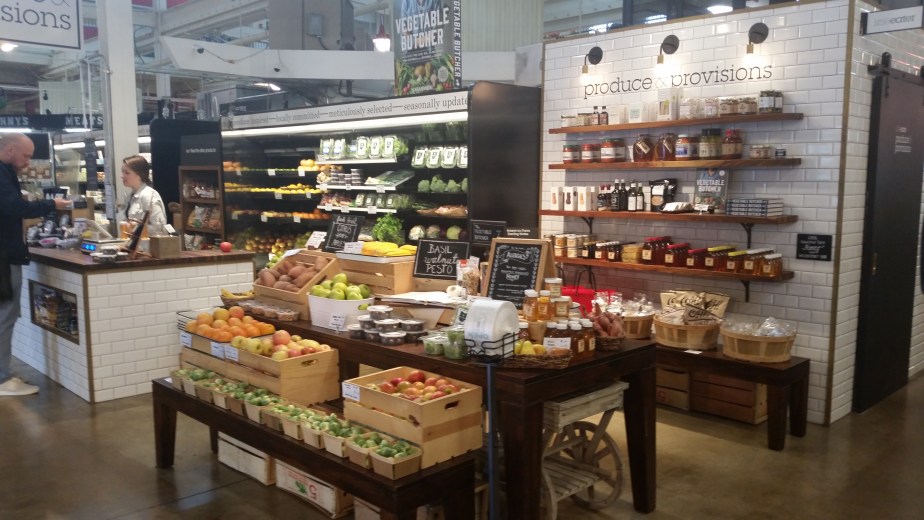
The city’s great food scene was on display at North Market with its cornucopia of offerings including Little Eater Produce and Provisions founded by Cara Mangini (her last name translates, loosely I’m told, into little eater) who is the author of The Vegetable Butcher: How to Select, Prep, Slice, Dice, and Masterfully Cook Vegetables from Artichokes to Zucchini (Workman 2016; $29.95), winner, of the IACP Cookbook Awards for Single Subject and People’s Choice. It’s the kind of place where I saw two people working on slicing a wheel of cheese that looked like it was six-feet in diameter, could buy the most luscious French pastries and also stuffed cabbage and pierogi.

20180309_105228 (1)

Hot Chicken Takeover (HCT), besides specializing in the type of spicy fried chicken made by marinating chicken overnight in a mixture of buttermilk and hot sauce, is an innovative program started by founder Joe DeLoss, who after a trip to Nashville, Tennessee and numerous dinners of hot chicken there, came up with the idea of starting a pop-up restaurant that not only featured his version of hot chicken but also hired people often considered unemployable or poor employment risks. These included those trying to get jobs after being released for jail or prison, who had spotty employment history or for some reason just couldn’t find or keep a job.  But DeLoss wasn’t looking to give a hand-out, his employees are expected to show up for work on time, set goals and do their job. The pop-up was so successful—it was open ten hours a week during which they sold between 1000 to 1200 meals—that DeLoss opened his restaurant in North Market in the city’s downtown. They now have two other locations in Columbus, employ over 200 people, 70% of whom have been in the corrections system or homeless and have between a 70 to 80% employee retention rate. For anyone knowledgeable about the restaurant business, that’s a huge number in a business with a large turnover rate.

“It’s about accountability and support,” DeLoss told us when he stopped by our table as we were eating chicken sandwiches, banana pudding and his family’s recipe for coleslaw.

I really didn’t want to put my sandwich down to talk but his business model is fascinating and offers a micro-solution for those who are struggling to jumpstart their life. Our waiter had already told us that he had dealt with alcoholism and homelessness but now had been working at HCT for about a year-and-a-half and really liked the sense of community and support he received from both DeLoss and the rest of the staff.

The buzz is so big about HCT that TV food maven Rachel Ray showed up, tasted the chicken (her interpretation of the hot chicken recipe is below) and spent time talking to DeLoss on camera.

Looking around the restaurant, you don’t see the sadness of street life. The employees are well-groomed and friendly, the patrons include a mixture of casually dressed college students and those who look like they work in offices. Even though the lines are long to order, there’s a lot of laughter and conviviality. DeLoss says that most of his customers don’t even know about the philanthropic aspect of his business but come for the food.

HCT is a great example of doing good and providing great grub. It not only makes my stomach happy but also my heart.

Hot Chicken

6 to 8 boneless, skinless chicken thighs, pounded
6 to 8 pieces boneless, skinless chicken breasts, cut in half on a bias
Salt and pepper
2 cups buttermilk
2 tablespoons Frank’s Red Hot or Crystal Hot Sauce

For the slaw:
1/2 cup pickle brine (homemade or store-bought sliced pickles, B&B or dill)
1 tablespoon superfine/quick-dissolve sugar or Acacia honey
3 tablespoons vegetable oil
1 pound (about 6 cups) shredded white cabbage
1 teaspoon celery seed
1/4 cup dill, coarsely chopped
Salt and pepper

For dredging chicken:
3 cups all-purpose flour
Salt and pepper
1 tablespoon granulated garlic
1 tablespoon granulated onion
1 tablespoon paprika

Vegetable oil, for frying
4 eggs

For the sauce: 
1 stick of butter
4 tablespoons cayenne pepper
2 tablespoons dark brown sugar
1 tablespoon paprika
2 teaspoons granulated garlic
2 teaspoons granulated onion

Sliced good quality white bread

Season chicken with salt and pepper, cover with buttermilk and hot sauce, and refrigerate overnight.

Whisk up slaw dressing, toss with cabbage, celery seed and dill.  Season with salt and pepper and refrigerate until ready to serve.

Heat a few inches of frying oil in Dutch oven or tabletop fryer to 350°F.

Whisk up flour dredge in a shallow dish then whisk eggs together in a separate dish and season with salt and pepper. Coat chicken first in flour and shake off excess. Dip into egg and coat in flour one more time. Add to hot oil and fry 8-10 minutes until cooked through.

For the sauce, melt butter in a saucepot and whisk in dried spices. Paint hot chicken with sauce and serve on bread with slaw and pickles.

For more information:

Hot Chicken Takeover

Follow them on:

Instagram

Facebook

Twitter 

For what to do: Columbus, Ohio 

Where to stay: AC Marriott


Silver & Tequila in the Sierra Madres: The Tale of San Sebastian de Oeste

High in the Sierra Madres, we follow the twisting road from Puerto Vallarta and the seaside on our way to San Sebastian de Oeste. Crossing the long spanned bridge over Rio Ameca, the road curves around a ridge and into the tiny village of La Estancia and Hacienda San Sebastián, a family owned raicilla and tequila distillery (for raicilla think tequila only much stronger and likely of inducing hallucinations in anyone who drinks too much).San Sebastian street

Founded in the 1930s and still family owned, their vast agave fields – called green plantations — can be seen on the surrounding hillsides. Besides making organic and flavored tequilas such as Licore de Café with its hints of coffee, chocolate and vanilla as well as almond tequila made from nuts grown in Durango and roasted here, the family also makes agave sugar and syrup, all without electricity. The peñas or agave hearts roast over an open fire as they were centuries ago and what power there is comes from solar panels.San Sebastian Comedor Lupita exterior

Sampling and then stocking up on organic tequila we continue on, taking a turn on a dirt road where cows, unconfined by fencing, have to be shooed out of the way, to San Sebastian. Here we stop at La Quinta Café de Altura, an organic coffee farm owned by Rafael Sanchez, his wife Rosa and Lola, Rafael’s sister. Five generations of the family have grown coffee here.

The family, in a building dating back more than 120 years, tend 11 acres of coffee trees, some as old as the house, handpick 30 tons of beans each year, dry, roast and grind them, making blends such as a mixture of ground beans with cinnamon and sugar for the traditional, and now often hard to find, Mexican coffee. Tastings are available and so are Rosa’s homemade candies such as guava rolls and sweets made from sweet goat’s milk. In an interesting aside, we learn that the Sanchez’s parents married early (the Don was 15), a 68-year union that produced 21 children. Their grandfather did even better, having 28 children, though that took both a wife and several mistresses.jalisco_destinos-principales_san-sebastian-del-oeste_int

Settled in 1605, San Sebastian was nominated as a World Heritage site by UNESCO. Lovely in its vintage charm, the surrounding pine covered mountains were bonanzas of silver and gold. Aristocratic families from Spain made the perilous travel across the sea and then land to oversee the mining of these treasures. Once here, deigning not to marry locals, they married each other. It made for interesting relationships, uncles were also cousins, sisters also grandchildren or whatever.

We hear the tales when we stop at the museum, housed in the 200-year-old Hotel Jalisco. It’s a very crowded museum–more like a fascinating  attic full of family heirloom items and the curator is a direct descendent of the founding families.In the museum, we see trunks inlaid with silver, 19th century lace gowns and jewelry boxes, china and silver that came from Spain.SS raicilla

It’s a story of glory and loss–at one time San Sebastian des Oeste had a population of 40,000; now there are about 600 and the occasional tourists. Silver was transported by horses and mules through treacherous mountain passes, robbers waited in wait. Pancho Villa and his men showed up regularly stripping away the wealth.

There were interesting family traditions. When a family member died, before they were buried (and remember it’s very hot here), a photographer had to be sent for from Puerto Vallarta to take a photo of the deceased. It could take days, but that’s how it was done.San Sebastian Cafe La Quinta Mary

Walking along the cobblestone road, past a massive 300 year plus ash tree and cascading white frizzes of el manto de la virgin, we enter Comedor Lupita. Here terra cotta platters loaded with chicken mole, fresh handmade tortillas (in America they’d be called artisan tortillas), refried beans and something I’ve never tasted before – machaca, a dish of dried beef mixed with spices and eggs, are heaped in front of us. As we eat, we watch the family busy behind the tiled counter, making even more food.

Through the windows we see splashes of bright purple from the masses of bougainvillea that drape the stone exterior walls and here the sounds of caballeros, their horses’ hooves striking the centuries old street. We sip our sweet agua de Jamaica water and feel time passing in reverse.

For more information click here

Machaca Marinade:

1/4 cup Worcestershire sauce
Juice of 4 limes
4 cloves garlic, chopped
1 tablespoon cumin
1 tablespoon chili powder
1/2 tablespoon salt
1/2 tablespoon black pepper
1/2 cup olive oil

Machaca:

2 lbs. skirt steak, cut into strips
1 large sweet onion, diced
1 green bell pepper, chopped
4 cloves garlic, chopped
1 jalapeno pepper, chopped
1 14 ounce can diced tomatoes with green chilies
1/2 cup beef broth
1 tablespoon oregano
1 tablespoon cumin
1 tablespoon hot pepper sauce (Tabasco or a Mexican brand, such a Valencia)
Salt and pepper
2 tablespoons oil

Whisk all the marinade ingredients together, and then add the skirt steak. Marinate at least 6 hours or overnight tablespoon Remove meat from marinade, drain, and pat dry. Bring to room temperature. Discard marinade.
In a large heavy pot, heat oil. Sear the meat well on both sides, in batches so as not to crowd them. Remove the meat as it is browned and set aside.

Drain fat. Add in the onion, peppers, and garlic, cook until tender, then add tomatoes, broth, pepper sauce and spices. Bring to a boil, stirring and scraping the bottom of the pot. Return beef and simmer, covered, for two hours, stirring from time to time until tender. Cool and shred.

Lay meat on a single layer on a baking sheet. Bake at 250º for 20 minutes or until meat is dry.

Machaca con Huevos

2 chopped scallions (white part only)
1 hot green chili
2 tomatoes
1 cup dried machaca
2 eggs
Chopped cilantro

Sauté scallions and peppers in oil until tender, add tomatoes and beef until heated. Remove from pan, add eggs and cumin. Scramble, then stir machata mixture. Garnish with cilantro and serve with hot tortillas.

Search: San Sebastian de Oeste, Hacienda San Sebastián, agave fields
Keywords: San Sebastian de Oeste, Hacienda San Sebastian, agave fields, organic and flavored tequilas

Description: In San Sebastian de Oeste, near Puerto Vallarta is Hacienda San Sebastian where you can taste the organic and flavored tequilas such as Licore de Café with its hints of coffee, chocolate and vanilla as well as almond tequila.


Ann Arbor vibe: Where social consciousness meets creativity

There’s a definite vibe in Ann Arbor — one where social consciousness and creativity converge. And so I mapped out interesting places in the eclectic Westside to immerse myself in all this trendy city has to offer.zingerman camp bacon t-shirt

A first stop is the Selma Cafe, located in the home of Jeff McCabe and his wife, Lisa Gottlieb. The cafe is open Friday for breakfast in their historic home. Local chefs, such as cookbook author Max Sussman, formerly a chef at Zingerman’s and the now-closed Eve who is now chef and co-owner of Samesa Restaurant in Williamsburg, volunteered to create wonderful meals using local ingredients, sometimes serving up to 180 meals during the event.

On a mission

Proceeds from these breakfasts support the area’s Community Sustainable Agriculture operations, including building hoop houses — inexpensive structures that continue the growing season once the weather turns cold.

A moveable feast

DSC_0082

At my next stop, I eat freshly baked Welsh scones topped with Devonshire cream and housemade plum and vanilla rooibos tea jam at the elegant TeaHaus, on Fourth Street north of the downtown. The TeaHaus features a wall of drawers filled with more than 200 varieties of tea leaves from around the world.

Also on the same street is the People’s Food Co-op, a community-owned natural foods grocery store, where customers can stock up on at least three types of kale and four varieties of sprouts, among other items, and enjoy a Fair Trade coffee and meal at its Cafe Verde.

Across the street is Fourth Ave Birkenstock selling the low-carbon transportation alternative with just two moving parts and featuring one of the few in the nation to have a Birkenstock shoe repair team.

Around the corner on Ann Street is Vicki’s Wash & Wear Haircuts & Heavenly MetalDSC_0316 (1), a gallery and gift shop featuring a range of global art works, including furniture, jewelry, clothing, purses, shoes and gift items. Tucked away in a front corner of the store is the lone salon chair where you can get your hair cut by owner Vicki Honeyman, a film school graduate who morphed into hair styling and retail more than a decade ago.

Later, I drink lattes with Ari Weinzweig, a Russian history major who eschewed grad school and instead co-founded Zingerman’s Deli, which grew into the food empire of seven businesses. The food emporium features expensive imported olive oils, freshly baked breads, retro pimento cheese and chopped chicken liver. Each year, 10 percent of sales go toward community projects and another 5 percent goes into a community chest for employees.DSC_0047

Though so far I’ve been able to walk to all these places, all within a radius of a few blocks, for my next stop I hit the road to chat with Alex Young, the James Beard Award-winning chef at Zingerman’s Road House, part of Zingerman’s mega-business, which is located off the Jackson Avenue, Exit 172 of I-94. Young not only creates fantastic meals, he also has a farm where he raises heirloom and organic produce and animals for his restaurant. Young’s next goal is to grow ancient grains such as farro, an Egyptian precursor to wheat.DSC_0188

A jump onto the interstate and a few miles later on the southeast side of town I’m at Motawi Tileworks, where owner/designer Nawal Motawi creates tiles using local clays and glazes mixed on site and offers tile-making workshops.

At dinner that night, chef/owner Brandon Johns of the farm-to-table restaurant Grange Bar & Kitchen in downtown Ann Arbor is serving one of his best-selling menu items — fried pig’s head served with gribiche, a French mustard mayonnaise sauce. I don’t ask for the recipe, but Johns, who stops by my table, gives me a brief description anyway, including such steps as boiling and then removing the meat from a pig’s head. I sigh with relief to learn that eyeballs are not part of the recipe. Trust me, you don’t want to know any more about the process, but the dish is delicious.DSC_0059

Creating a custom tour is easy. Go to the Ann Arbor Area Convention and Visitor Bureau’s website, visitannarbor.org, and make a list of what sounds intriguing. It’s a wonderful way to while away a day with an adventure both enriching and enlightening.

Chorizo with Blue Cheese and Dates

Courtesy of Chef Brandon Johns, Grange Kitchen & Bar

1 pound Spanish style dried chorizo sausage

½ pound blue cheese, Cabrales is recommended

8 Medjool dates, pitted and halved

Toothpicks or skewers

Preheat oven to 375 degrees

Slice chorizo into 16 pieces and lay flat on cutting board. Fill center of date with cheese and place cut side of date on top of each chorizo. Skewer each chorizo with toothpick.

Place skewers on baking sheet and place in oven for 3 to 5 minutes, until sausage is warm and cheese is a little melted. Serve immediately.

Zingerman’s Roadhouse Mac & Cheese

Courtesy of Chef Alex Young

Coarse sea salt

1 pound macaroni

2 tablespoons butter

1/4 cup diced onion

1 bay leaf

2 tablespoons all-purpose flour

1 1/2 cups whole milk

1/4 cup heavy cream

1 teaspoon Dijon mustard

1 pound grated raw milk cheddar cheese

2 tablespoons olive oil

Bring a large pot of water to a boil. Add 1 to 2 tablespoons salt and the pasta and stir well. Cook until the pasta is done. Drain and set it aside.

Melt butter for the sauce in a large heavy-bottomed pot over medium-high heat being careful not to scorch the butter. Add the onion and bay leaf and sauté until the onion is soft, about 5 minutes.

Remove the bay leaf. Add the flour, and cook for a minute or so, stirring constantly.

Slowly add the milk, a little at a time, stirring constantly to avoid lumping. When the flour and milk have been completely combined, stir in the cream. Keep the mixture at a gentle simmer (not at a high boil) until it thickens, 2 to 3 minutes.

Reduce the heat to medium. Stir in the mustard, cheddar cheese and salt to taste. Simmer for 5 minutes and set aside.

In a heavy bottom skillet over med-high heat, get the pan very hot. Add olive oil and when it begins to smoke add the cheese sauce and the drained cooked noodles. Toss thoroughly and continue to cook, stirring occasionally until you have approximately 15 % of the mixture golden brown. Taste and adjust the seasonings if necessary. Remove from heat.


Crazy Sista Cooking: Cuisine & Conversation with Lucy Anne Buffet

Lucy-8690-smWhen my daughter was in high school, I drove her and a friend down to Gulf Shores, Alabama for spring break. While we were there, a friend insisted we go to Lucy Buffet’s Lulu’s Gulf Shores, a bayside beach restaurant. I was pretty sure, no make that positive, that this would be some kind of not-so-good-but-my-brother-Jimmy-is-a-major-celebrity type of place. The good thing, I thought when we sat down in the very crowded main dining room was that we could see dolphins frolicking out in the water from our screened in, over-sized window. That would make the bad food worth it.

37121568_10156143633092713_5753391619667656704_n

Okay, so I totally misjudged what Lulu’s was all about. The food was delicious, whatever was fried was done just right—not greasy or heavy—and there were plenty of other options on the menu that were delicious like the crab melt, Crazy Sista’s Juicy Pot Roast Sandwich (yes, indeed, pot roast), gumbo, Lulu’s Jerk Chicken Quesadillas and, of course, this being the south, fried okra and fried hushpuppies (both of which were wonderful). I was given a copy of her cookbook, Crazy Sista Cooking: Cuisine & Conversation with Lucy Anne Buffet (Grand Central Life & Style) that included a foreword by brother Jimmy. Crazy Sista is Lucy Anne’s nickname. Now Buffet also has restaurants in Destin, Florida and Myrtle Beach, South Carolina and several other cookbooks including LuLu’s Kitchen: A Taste of the Gulf Coast Good Life and Gumbo Love: Recipes for Gulf Coast Cooking, Entertaining, and Savoring the Good Life. Many of the zippy recipes are the same with new ones added. For the fried oyster recipe Dave requested, I included Mama’s Favorite Oyster Loaf. Instead of oysters, you can use fried shrimp or even fried veggies instead.

39953590_10156241899637713_2358163720992980992_n

The recipe calls for making a lot of the ingredients such as her Sweet and Sassy Icebox Pickles and Lulu’s Crazy Frying Cornmeal. I’ve included those recipes, thinking you can plop the pickles in the refrigerator and eat them at other times and save the left over cornmeal mix as well. But if you’re in a hurry, feeling lazy or just want to make it simple, you can just find comparable ingredients at the grocery store.   And since it’s good to have an accompaniment, I’ve included Lulu’s recipe for Sweet Tomato Pie.

The following recipes are from LuLu’s Kitchen: A Taste of the Gulf Coast Good Life by Lucy Anne Buffet (Grand Central Life & Style, $20).

Listen to Lucy talk about Gumbo Love.

Mama’s Favorite Oyster Loaf

Makes 4 sandwiches

1 quart oysters

4 (8-inch) New Orleans-style French bread or 1 baguette, cut into four pieces

2 to 3 tablespoons butter, softened

Mayonnaise to taste

Lettuce leaves

2 medium tomatoes, sliced

Sweet and Sassy Icebox Pickle slices (recipe below)

Hot Pepper Sauce

Preheat oven to 200 degrees.

Fried oysters (see recipe below)

Preheat oven to 200 degrees.

Fry oysters in batches and place cooked oysters in oven to keep warm.

Slice bread horizontally, about three-fourths of the way through, leaving one edge intact.

Spear a little butter on inside surface of French bread and toast. I like to place mine face-down on a warm skillet or grill.

Spread mayonnaise on toasted read.

Layer lettuce, tomato slices and pickles on bottom side of the bread. Top with fried oysters, using about eight oysters per sandwich.

Add a few dashes of hot sauce to taste.

Cut into halves or quarters depending upon the bread you’re using and serve.

Sweet and Sassy Icebox Pickles

1 (1-gal.) jar whole kosher dill pickles, drained, cut into 1/4-inch-thick slices

4 cups granulated sugar

4 cups packed light brown sugar

1 cup apple cider vinegar

2/3 cup peeled, halved, and sliced fresh ginger

1/4 cup prepared horseradish

1 tablespoon crushed red pepper

1 tablespoon mustard seeds

1/2 teaspoon ground turmeric

4 medium-size yellow onions, thinly sliced

20 garlic cloves, sliced in half lengthwise

8 cinnamon sticks

Place all the ingredients in a big ol’ stainless steel bowl or large plastic food-safe container with an airtight lid. Using your hands, toss well. Cover and chill overnight. The pickles will reduce in volume, so the next day you can place in a very large jar or several small airtight containers for easier storage.

Refrigerate at least 1 week before using, turning topsy-turvy every day. Pickles are ready when sugar has dissolved and all dill flavor has vanished. Store in refrigerator up to 3 weeks.

Perfect Fried Oysters

Make Lulu’s Crazy Crying Cornmeal (recipe below) or use regular cornmeal.

6 cups peanut oil or enough to fill a skillet, about 2 inches deep

1 quart oysters, drained

Heat oil in cast iron skillet to 355 degrees or heat until a little flour flicked into the oil sizzles

Taking a few oysters at a time, dredge through cornmeal mixture coating thoroughly.

Gently drop into hot oil. Fry until golden brown turning once or until they float to the top. Drain on paper towels and serve immediately.

Lulu’s Crazy Frying Cornmeal

2 cups all-purpose white cornmeal

2 tablespoons Creole seasoning

1 tablespoon black pepper

½ teaspoon salt

Combine all ingredients and mix well.

Sweet Tomato Pie

Serves 6-8

2 tablespoons all-purpose flour

Pastry for 1 pie crust

2 tablespoons unsalted butter

1 tablespoon extra-virgin olive oil

1 large onion, thinly sliced

1 tablespoon sugar

4 cloves garlic, thinly sliced

4 ounces cream cheese, softened

1/2 cup mayonnaise

2 tablespoons heavy cream

1 tablespoon sour cream

1 tablespoon honey mustard

1 cup shredded Parmesan

4 green onions, including the green part, cut into 2-inch pieces

4 large red tomatoes, in 1/4-inch slices

1/2 teaspoon each kosher salt and coarsely ground black pepper

1/2 cup fresh basil, cut in ribbons

2 cups shredded Gruyere or Swiss cheese

Heat oven to 450 degrees. Sprinkle flour over work surface and roll pastry dough to fit a 7-by-11-inch baking dish, making sure dough comes up the sides of the dish. Poke bottom of crust with a fork in several places. Bake for 9 to 10 minutes or until lightly browned. Let cool. Reduce oven temperature to 400 degrees.

In a cast iron or heavy skillet, heat butter and olive oil over medium heat. Add onions and sugar; sauté until onions are very brown and caramelized. Add garlic and stir constantly for 1 to 2 minutes or until garlic is cooked through and tender. Remove onions and garlic from skillet and let cool.

Using a food processor, process cream cheese, mayonnaise, cream, sour cream, mustard, Parmesan and green onions until well mixed.

In the cooled pie crust, layer half the onions, cream cheese mixture, sliced tomatoes, salt, pepper, basil and Gruyere. Repeat. Bake for 35 minutes or until pie is bubbling and top is browned. Cool for 15 to 20 minutes before slicing.

Screen-Shot-2018-06-19-at-3.40.28-PMWHITE SANGRIA

Serves 4 to 6

1 (750-milliliter) bottle Pinot Gris or any other crisp light white wine

1/2 cup peach-flavored vodka

2/3 cup sugar

1/4 fresh pineapple, chopped into cubes

1/2 lemon, cut into wedges

2 fresh strawberries, chopped

1/2 mango, chopped into cubes

1 (8-ounce) can ginger ale

Ice cubes

In a very large pitcher, combine the wine, vodka, sugar, and fruit. Stir well. Let the ingredients steep in the fridge for 2 to 24 hours (the longer, the better).

Add the ginger ale and ice cubes about 30 minutes before serving.

Place a strainer over the mouth of the pitcher and pour to order. Garnish with any leftover fruit, such as more of the pineapple, lemon, strawberries, and mango.


The Vintage Baker: More Than 50 Recipes from Butterscotch Pecan Curls to Sour Cream Jumbles

VintageBaker-HiRes-IMGS23I’ve been doing some major remodeling on my condominium including getting rid of the orange—and yes, it really was an orange sherbet color–Formica countertop (I kept waiting for this 1960 trend to come back in style but when it became apparent that wasn’t going to happen, out it went), tearing down walls and pulling up carpeting that had seen way too many spills by my daughter and her friends including the time she did some sign painting inside. Believe me, that did not work out well.

During all this renovation, I had to pack up just about everything in the condo including all my kitchenware and though the project was just going to take a couple of months–well, you know how that goes—I am just beginning to unpack boxes.

One of my latest discoveries is my KitchenAid stand mixer, which I really, really missed. Opening the box that contained the mixer, buried under a bunch of other stuff, coincided with my friend Joyce Lin sending me a copy of The Vintage Baker: More Than 50 Recipes from Butterscotch Pecan Curls to Sour Cream Jumbles by Jessie Sheehan (Chronicle Books 2018; $24.95). Sheehan, who worked as a junior baker at Baked, a bakery in Brooklyn, New York, was also an avid collector of vintage recipe booklets (there’s one included in her cookbook) and The Vintage Baker is based upon those recipes, albeit with Sheehan’s adaptations to modernize them.

She did so by adding such intriguing twists as making her popovers using pecorino Romano cheese and black pepper as well as black pepper and rum in a butterscotch pie and mixing thyme in the ladyfinger recipes she used in creating her own take on the classic Charlette Russe, layers of cookies or ladyfingers, cake and a cream filling.

Watch Jessie Sheehan on TikTok

“My go-to chocolate-chip cookie recipe is full of Kellogg’s Rice Krispies and I was over the moon to discover how frequently cookies with cereal surfaced in my booklet collection,” Sheehan writes in her introduction to her recipe for Cornflake Macaroons with Chocolate Drizzle, noting that a recipe from “55 Recipes for Hershey’s Syrup” (1945) formed the base for her macaroon. “Adding salt to the batter proved essential–so many of these original recipes don’t call for salt. I drizzled the cookies with chocolate after baking, rather than combining it with the batter, allowing these cornflakes to truly shine.”VintageBaker-HiRes-IMGS7Rediscovering my KitchenAid stand-mixer made me so happy that I made several of the recipes from Sheehan’s book. Here are a couple that hopefully you’ll enjoy baking as well including one for an old fashioned ice box cake.

Recipes

Cornflake Macaroons with Chocolate Drizzle

3 egg whites

½ cup granulated sugar

1½ teaspoon pure vanilla extract

½ teaspoon table salt

2½ cups cornflakes

1½ cups sweetened shredded coconut

Flaky sea salt for sprinkling

2 ounces semisweet chocolate, melted

In a large bowl, whisk the egg whites until frothy. Add the sugar, vanilla, and salt and continue whisking until thoroughly combined and thickened. Fold the cornflakes and coconut into the egg whites using a rubber spatula. Once combined, and using your hands, crush the cornflakes in the bowl, mixing all of the ingredients together, until the mixture stays together when you squeeze it in your hand. Refrigerate for at least 2 hours or up to 3 days, covering the bowl with plastic wrap. The mixture will be much easier to scoop once it has been refrigerated.

Preheat the oven to 325°F. Line a rimmed baking sheet with parchment paper.

Scoop 1 to 1½ tablespoons of dough with a small cookie scoop or measuring spoon, making sure to really pack the batter into the scoop/spoon. Place on the prepared pan and bake for 23 to 25 minutes, until nicely browned. Sprinkle with the sea salt and let cool. Place the melted chocolate in a zippered plastic bag, cut a very tiny hole in one corner of the bag, and drizzle the chocolate over the cookies. Let the chocolate harden before serving.

The macaroons will keep in an airtight container on the counter for up to 3 days, but they get less crunchy with each day.

Coconut-Chocolate Icebox Cake with Toasted Almonds

3 (13 1/2-fluid-ounce cans full-fat coconut milk

1/2 to 1 teaspoon almond extract

3/4 cup confectioners’ sugar

1 1/2 cups heavy cream

1 1/2 cups sweetened shredded coconut, toasted

9 ounces crisp chocolate wafer cookies

1/2 cup sliced almonds, toasted

Place the cans of coconut milk in the coldest spot in your refrigerator upside-down and leave them there for 24 hours. This will allow the coconut cream in the milk to solidify and separate from the liquid.

Line a 9-by-5-by-3-inch loaf pan with plastic wrap that hangs slightly over the sides of the pan.

Flip the cans of coconut milk right-side up, open the cans, and, using a rubber spatula, carefully scrape the solid coconut cream into the bowl of a stand mixer fitted with the whisk attachment. Save the liquid for another purpose. Add the almond extract and confectioners’ sugar, and whisk on medium speed until smooth and thick. Add the heavy cream and whisk on medium-high speed until the cream holds stiff peaks, about 2 minutes. Add the toasted coconut and fold it into the cream with a rubber spatula.

Using a small offset spatula or the back of a spoon, spread a thin layer of the whipped cream on the bottom of the lined pan. Cover as much of the cream as possible with a layer of wafers, filling any gaps with broken wafers, to create a solid layer of wafers.

Continue layering whipped cream and wafers until you run out or reach the top of the pan, ending with a layer of wafers. Gently cover the surface with plastic wrap and refrigerate for at least 6 to 8 hours, or preferably overnight. If you have whipped cream left over, store this in the refrigerator along with the cake.

Remove the cake from the refrigerator prior to serving and peel off the plastic wrap. Place a serving plate over the pan and invert the cake onto the plate. Carefully remove the pan and plastic wrap lining and, if using, thinly spread the remaining whipped cream over the sides and top of the cake. Re-whip the cream if it looks too soft to spread. Sprinkle the cake with the toasted almonds, lightly pressing them into the cake.

Using a serrated knife, cut the cake into slices and serve. The cake will keep, lightly wrapped with plastic wrap, in the refrigerator for up to 3 days.

Note

When buying coconut milk, gently turn the can up and down in the store to make sure the contents sound full and solid. If it sounds watery and seems like the can is filled only with liquid, grab a different one.

Ifyougo:

What: Author Talk Jessie Sheehan: The Vintage Baker

When: Sep 17 at 6:30 p.m.

Where: Read It & Eat, 2142 N. Halsted St., Chicago, IL

FYI: 773-661-6158; readitandeatstore.com

For more information:

The Vintage Baker

Jesse Sheehan

A Castle in the Hills of a Historic Family Vineyard

Following the Muhlbach Stream as it  gently flows through downtown Oberkirch, a marvelous collection of timber-framed, multi-stories houses, cobblestone streets, brightly painted shutters and window boxes overflowing with cascading blooms, we bounce along in Martin Renner’s topless  Range Rover into the vast orchards and vineyards, climbing the ever narrowing road up the verdant hills of the Black Forest.

The journey is Renner’s Weinburg Safari, which in better weather includes both the Range Rover ride and a hike. But today it’s raining and though Renner, who is giving the tour, has handed us layers of warm clothing, I’m guessing that the reason why none of us are complaining about getting pelted by rain are the samples of wine we had earlier at Julius Renner Weinhaus & Weinkellerei, his family’s third generation business founded by his grandfather, Julius, in 1937.

The wines we tasted are made from the classic varieties such as Klingelberger, Muller-Thurgen, Ruländer and Blauer Spätburgunder that thrive in the special climate and topography that makes this part of the Black Forest perfect for growing a cornucopia of luscious fruit. As usual, I’m impressed not only by the quality of German wines but also their low cost. Indeed, their Pinot Rose Brut at the time was 9.99 euros and the dry Oberkircher Blanc de Noir, made from Blue Pinot Noir grapes, went fo for 5.99.

P1010175

To add to the picturesque scene, lovely even in rain, the Renner vineyards are nestled beneath the ruins of Schauenburg Castle, a long abandoned citadel built in the 10th century, part of the dowry that Uta, Duchess of Eberstein, the richest heiress in Germany at the time, brought to her marriage to Duke Welf VI in 1131.  

But if we’re looking for real history, Martin Renner tells me after we’ve returned to the weinhaus, housed in what was once a butcher shop built in 1708 (you can tell by the sketch of a butcher’s clever along with the date on the building’s corner edge),  you won’t find it here. After all, he says, as if the event just happened a few months ago, French troops sacked Oberkirch, burning the Medieval village to the ground in the late 1600s during one of those interminable European wars—this one lasted 30 years which is much better than the 100 year war waged by the French and British from 1337 to 1453. As an aside, if you’re wondering about the disparity between the dates and the name of that war, they took a few years off to rest before fighting again.

There’s disdain in his voice about the newness of it all and I try to explain how in America, old is anything built before 1950 and that we probably have fewer than fifty or so buildings in the entire country dating back to 1700. But then this is Germany where you can walk into the Kessler Champagne cellar in Esslingen and when you ask the guide how old the place is, there’s a nonchalant shrug accompanied with the year 1200 as if it’s no big deal. So maybe 1708 is a little too nouveau after all. Martin Renner and writer Jane Simon Ammeson

Next door to the wine store, the Renner Wine Tavern is all cozy Germanic charm. The menu is intriguing and very reasonably priced and more so when I make the conversion from Euros to dollars for such items as lamb chops with rosemary potatoes and homemade garlic sauce,  Walachian trout with creamy horseradish, Strasbourg sausage salad with Gruyere cheese and spaetzli–those wonderful German dumplings often baked with ham and cheese. There’s also bread served with either butter or Bohnert’s apple lard. Lard is frequently on menus here in southwest Germany and it is amazingly delicious. A quick fact check: Pure lard, rendered from pork, is much healthier—yes, really—than the oleos and processed shortenings we consume here.

Noticing that the restaurant doesn’t open until 6 p.m., I ask why so late?

“We’re farmers and wine makers,” Martin, a graduate engineer in viticulture and oenology, tells me. “We don’t eat until then.”

Karotten or karotten in bier gedunstet (carrots in beer) and spaetzli are both on the menu at Renner Wine Tavern. Here are Americanized versions of those dishes.

Karotten (Carrots in Beer)

4 large carrots

1 tablespoon butter

1 cup dark beer, any brand

1⁄4 teaspoon salt

1 teaspoon sugar

Peel and slice carrots into long, thin slices.

Melt butter in medium-size frypan; add beer and carrots. Cook slowly until tender, stirring frequently. Stir in salt and sugar.

Cook for another 2 minutes and serve hot.

Spaetzli

1 cup all-purpose flour

1 teaspoon salt

1/2 teaspoon ground pepper

2 large eggs

1/4 cup milk

3 tablespoons unsalted butter

2 tablespoons minced fresh chives

In a large bowl, combine the flour, salt and pepper. In a separate bowl, whisk the eggs and milk together. Making a well in the center of the dry ingredients, pour in the egg-milk mixture. Gradually mix well until the dough should be smooth and thick. Let it rest for 10 to 15 minutes.

Bring 3 quarts of salted water to a boil in a large pot, then reduce to a simmer. To form the spaetzli, hold a large holed colander or slotted spoon over the simmering water and push the dough through the holes with a spatula or spoon. Do this in batches so you don’t overcrowd the pot. Cook for 3 to 4 minutes or until the spaetzli floats to the surface, stirring gently to prevent sticking. Dump the spaetzli into a colander and rinse quickly in cool water.

Melt the butter in a large skillet over medium heat and add the spaetzli and toss to coat. Cook for 1 to 2 minutes and then sprinkle with the chopped chives.  Season with salt and pepper before serving.

For more information:

Juluis Renner Winery & Winehouse

facebook.com/WeingutJuliusRenner

facebook.com/wirsindsueden

renchtal-tourismus.de/en/Oberkirch_66.html

tourism-bw.com

twitter.com/visitbawu

instagram.com/visitbawu/#

Old Fashioned Fairs and Food

            I love going to food festivals and state and county fairs and seeing what great home cooks both young and adult are doing. One such favorite that I never miss is the Berrien County Youth Fair in Southwest Michigan which always hosts an annual Baked Fruit Pie Contest, an event highlighting the lush and lovely fruit of the region.  The competition JulyAugust 2018 246features JulyAugust 2018 246threecategories—the Adult Division, the Youth Division and Most Eye Appealing which went to   Brianna Anthony for her Peach Blueberry Pie. The winners in the Adult Division were  1st Place:  Sandy Vorrath – Pineapple-Mango Crumb Pie, 2nd Place:  Chris Dohm – Baked Fresh Cherry Pie, 3rd Place:  Michelle Foxworthy – Blueberry Apple Pie, 4th Place:  Ruth Vorrath – Fresh Red Raspberry Crumb Pie and 5th Place:  Joyel Timmreck – Blueberry-Cherry Streusel Pie.

            In the Youth Division  1st Place:  Elise Barber – Strawberry Crumb Pie, 2nd Place:  Brianna Anthony – Peach Blueberry Pie, 3rd Place:  Clara Berry – Blueberry Pie, 4th Place:  Brianna Anthony – Cherry Almond Pie and 5th Place: Adrianne Barber – Cherry Pie.IMG_20180818_221234

            Sponsors were Kilwin’s, Lemon Creek Winery and the Eau Claire Fruit Exchange for donating the prizes for the baked fruit pie contest.IMG_20180818_221234

Sandy Vorrath’s Pineapple-Mango Crumb Pie

Filling Ingredients:

2 cored pineapples, chopped

1 cup chopped mango

1 cup granulated sugar

6 tablespoon cornstarch

1 cup pineapple juice

½ teaspoon lemon juice

3 drops coconut extract

½ cup flaked coconut

Crust Ingredients:

1¼  cups all-purpose flour

½ cup butter flavored shortening

½ teaspoon salt

¼ teaspoon baking powder

1 tablespoon. powdered sugar

1 egg yolk

¼ cup iced pineapple juice

Topping Ingredients:

½ cup butter cut into pieces

1/3 cup granulated sugar

1/3 cup brown sugar

1 cup all-purpose flour

1 teaspoon cinnamon

½ cup chopped macadamia nuts

¼ cup flaked coconut

Crust:

Mix together all of the crust dry ingredients.  Cut in the shortening to make little crumbs.  Mix together the egg and pineapple juice.  Add to crust ingredients a  little at a time until the dough holds together.  Roll dough out onto a floured counter top to about 1/8 inch thick and fit into a pie plate.  Trim and flute the crust edges, put pie crust in the freezer until ready to use.IMG_20180818_214707

Filling:

Mix together the sugar and corn starch in a large cooking pot.  Add the pineapple juice and lemon juice.  Over medium heat bring the mixture to a boil.  Add the pineapple and mango chunks and bring mixture back to a boil.  Remove from the heat and add the coconut extract and coconut.  Mix well.  Let the mixture cool.

Topping:

Mix together the flour, sugars and cinnamon.  Cut in the butter until crumbs form.  Add the macadamia nuts and coconut.  After filling has cooled, pour it in the frozen crust and top pie with crumb topping.  Bake pie at 350⁰ for 40 minutes, or until pie is brown and filling bubbles.

Brianna Anthony’s Peach Blueberry Pie

Crust Ingredients:

¾ cup cake flour

¾ cup all-purpose flour

1 teaspoon sugar

1/8 teaspoon baking powder

4 tablespoons salted butter

5 tablespoons shortening

1 egg yolk

2 teaspoon white vinegar

3 ice cubes

½ cup cold water

Filling Ingredients:

¼ cup quick-cooking tapioca pearls

4 medium-sized peaches, pitted and thinly sliced

1½  cups fresh blueberries

1 teaspoon ground cinnamon

¾ cup brown sugar

2 tablespoons lemon juice

2 teaspoons vanilla extract

Lemon zest

1 egg white

1 egg yolk

1 tablespoon white sugar

½ teaspoon ground cinnamon

Preheat oven to 375⁰

To prepare crust:

Measure butter and shortening on a plate, put in freezer for 20 minutes.

While butter and shortening are in the freezer, measure both flours, sugar, and baking powder in a bowl.  Mix until combined.  Put ½ cold butter and ½ cold shortening in bowl with dry ingredients and mix until combined.  Take remainder of the cold butter and shortening and cut into bowl very briefly, leaving visible pea-sized chunks.  Do not over mix!

In measuring cup, mix egg yolk and vinegar and add ice cubes and water.  Let chill 3- 4 minutes.

Sprinkle approximately 4-5 tablespoons of the egg/water mixture a little at a time and mix gently with fork.  Do not over wet the dough or over mix.  Place dough in plastic bag and chill in refrigerator for a few minutes.  Remove and roll out for pie.

Filling:

Brush the egg white mixture on the inside of the crust.  Finely grind the tapioca in a food processor for about 1 minute.  Combine the blueberries, peaches, brown sugar, lemon juice, vanilla, cinnamon, lemon zest, and tapioca in a large bowl.  Add the mixed ingredients to the bottom crust.  Place a lattice crust on top of the pie.  Brush the top with egg yolk.  Stir together 1 Tbsp. of white sugar and ½ teaspoon of ground cinnamon and sprinkle over the pie.  Bake in a 375⁰preheated oven for 55 minutes, or until the top is golden brown.  Cool on a wire rack.

Elise Barber’s Strawberry Crumb Pie

1/3 cup + 1 tablespoon shortening

1 cup all-purpose flour

¼ teaspoon salt

2 – 8 tablespoon ice cold water

2 pounds (about 4-4½ cups) strawberries, sliced

2 teaspoons freshly squeezed lemon juice

¼ teaspoon freshly grated orange zest

½ teaspoon vanilla extract

¾ cup granulated sugar

¼ cup finely ground instant tapioca or tapioca flour

2 tablespoons cornstarch

For Crumb Topping:

½ cup rolled oats

½ cup all-purpose flour

½ cup packed light brown sugar

½ teaspoon cinnamon

¼ teaspoon fine salt

5½ – 6 tablespoons unsalted butter, melted and cooled

Crust:

Cut shortening into flour and salt, using pastry blender, until particles are size of coarse crumbs.  Sprinkle with cold water, 1 tablespoon. at a time, until all flour is moistened and pastry almost cleans side of bowl.  Gather pastry into a ball.  Shape into flattened round on lightly floured surface.  Refrigerate 30 minutes.

Brown Sugar Crumb Topping:

Put oats in food processor and pulse until oats are texture of coarse cornmeal.  Pour in a bowl and add flour, sugar, cinnamon, and salt.  Stir to combine.  Add melted butter and blend with fork until butter is incorporated and mixture gathers into small clumps (you may not need to add all of the butter).  Place bowl in the refrigerator and chill crumbs before topping pie.

Filling:

Preheat oven to 375⁰.

In a large bowl, stir strawberries with lemon juice, orange zest and vanilla extract.  Stir well.  Whisk sugar, ground tapioca, and cornstarch together in small bowl.  Combine sugar mixture with strawberries.

Roll out pastry according to size of pie plate.  Pour filling into pastry.  Top pie with , spreading in even layer and covering all fruit.

Place on baking sheet and put in oven.  Bake 25 minutes, then reduce temperature to 350⁰ and baked 25 to 30 minutes longer, or until juice bubbles up through crumb.  Top with foil if overbrowning.

Place baking sheet on wire rack and let pie cool overnight, uncovered at room temperature.