The author winter rafting on the Indian River courtesy of Big Bear Adventures.
Like to be outside but don’t want to peddle a fat bike up a snow-covered hill? Treetops offers horse-driven sleigh rides, and for serious foodies, there’s their Wilderness Sleigh Ride Dinners.
The sleigh rides at Thunder Bay Resort in Hillman, Michigan, includes elk-viewing at its Northern Elk preserve. The sleigh ride and five-course gourmet dinner option was named by both USA Today and Fox News Online as a “Top 10” event.
Thunder Bay Horse and Sleigh Ride
You’ll have to get up early, but it’s worth setting the alarm for the Sunrise Groomer Rides offered by several resorts including Treetops, Boyne Mountain and Boyne Highlands.
“The slopes don’t just magically appear each morning with fresh corduroy,” says Kevin McKinley, of Treetops Resort in Grayling, Michigan, noting there’s a lot of work that goes into well-groomed ski trails, and watching the experienced groomers go about their job is a great behind-the-scenes activity.
Really, all you have to do is bundle up and climb into a raft at Big Bear Adventures in Indian River, Michigan, for a trip down the fast-moving Sturgis River (a must for winter rafting as the rapidly flowing water keeps it from freezing and, thus, navigable).
“Chris Prysok, our guide, is very experienced; he’s a rafting guide in West Virginia and in the Apostle Islands,” says Patti Anderson, co-owner of Big Bear with her husband, Scott.
Boyne Highlands
“It’s a beautiful trip, and there’s lots of wildlife to see — deer, eagles, turkeys, muskrats and lots of birds.”
The winter rafting trip lasts 90 minutes. If you decide to add the 90-minute snow shoe or cross country package (with a break for hot chocolate) it’s no longer an armchair adventure but still lots of fun.
Call it pizza love. In 2017, according to PMQ Pizza Magazine, Americans consumed 45.1 billion dollars’ worth of pies. But what’s the best place for pizza? Steve Dolinsky, a James Beard award winning food writer known as the “Hungry Hound,” podcaster and food tour operator, decided to prove there’s no better place for pizza than Chicago, its suburbs and five collar counties.
He shares his results in Pizza City, USA: 101 Reasons Why Chicago Is America’s Greatest Pizza Town(Northwestern University Press 2018; $24.95), a user-friendly guide to all things dough, sauce and toppings divided into chapters on pizza categories:: Tavern-Style (Chicago-Style Thin), Thin, Artisan, Neapolitan, By-the-Slice (New York-Style), Deep-Dish and Pan, Stuffed, Sicilian, Roman and Detroit-Style and last, but not least, Overrated. Dolinsky than includes photos and information about each of the 101 places in the book as well as the five best in each category. Maps included show where the top pizza places are located in case you want to hit the road.
It was a
tough assignment and Dolinsky often ate pizza at three different places in a
day. In all he visited 185 locations (not all made the cut), consumed massive
doses of anti-acids, and, to keep his weight gain at a minimum, practiced
portion control and doing yoga sculpting daily.
Dolinsky’s inquisitiveness about Chicago food isn’t limited to pizza. He’d already written “The 31 Essential Italian Beef Joints in Chicago(land): for his Website stevedolinsky.com and also visited every place in the city that served Vietnamese pho so he was used to massive samplings of the city’s favorite foods, but he had other reasons as well.
“People
say Chicago has the best pizza, but I didn’t really think that anyone had done
any research on this scale, that there hadn’t been a deep dive into pizzas,” he
says, noting that he considered it an unparalleled lifetime quest in the city’s
illustration pizza history. “I didn’t realize how massive of an undertaking it
would be.”
Like any
scientific study, there were rules. Dolinsky created what he called the Optimal
Bite Ratio (QBR) with points given for crust, sauce and the quality of the
sausage and pepperoni as well as the application and mouthfeel of the cheeses.
Here’s
just a smattering of what Dolinsky learned. While most of the U.S. prefers
pepperoni as a topping, Chicago likes bulk sausage, which probably harkens back
to the days of the stockyards. Media outside of Chicago often confuses deep
crust pizza and stuffed pizza (the latter which Dolinsky mostly disdains). Deep
crust pizza, while one of Chicago’s wonderful inventions, is rarer than one
might think though outsiders think it’s the real Chicago thing. Notice how when
you travel, a Chicago-style pizza place means deep dish. but Dolinsky says it’s
the Tavern-Style or Chicago-Style Thin, square-cut pie that Chicagoans love—the
kind with middle pieces in the center with no crust handles that my brother and
I used to fight over when we were kids.
For those
who want the full-Dolinsky treatment, he also runs pizza walking tours starting
in May. The tours meet at Lou Malnati’s (1235 W. Randolph St.), a 7-minute
drive from The Loop and showcases four different styles of pizza. Highlights
include a traditional Chicago deep-dish, an only-in-Chicago Roman al taglio, a
classic Neapolitan and a Sicilian slice. Included in the tour price is a custom
souvenir lanyard and badge good for discounts and deals. For more information,
visit pizzacityusa.com
If you
can’t wait for a tour or to learn more, on Thursday, January 31 from 7:30-9:30
pm EST, Steve Dolinsky will be teaming up with the chefs from Pizzeria Bebu for
a pizza–making demonstrated, followed by a tasting. Steve then will give a
lively presentation on how he went about making the choices for the book.
Where: Read It & Eat, 2142 North Halsted St., Chicago, IL. For ticket prices and more information, (773) 661-6158; readitandeatstore.com
In the meantime, here’s a deep dish pizza recipe from Lou
Malnati’s Pizzeria, rated among the top by Dolinsky and a favorite in Chicago
for over 40 years.
The Malnati Classic
20 ounces pizza dough
Olive oil, for the pan
12 to 16 ounces mozzarella cheese, sliced
12 to 14 ounces 90-percent lean Italian sausage, casings removed
10 to 12 ounces seasoned Roma tomato sauce, maintaining chunks
2 to 3 ounces grated Parmesan
2 to 3 ounces grated Romano cheese
Special equipment: a round steel baking pan
Preheat the oven to 450 degrees F.
Allow about 20 ounces of your favorite yeast dough to rise. You may do
this if you have a proofer, or simply leave it at room temp for about 2 hours.
Oil a round steel baking pan with a few ounces of olive oil. Press the
dough on the bottom and to the sides of the pan, being careful not to tear it.
Holes in the dough will create a soggy crust. Pull the dough up the sides of
pan to 1 to 1 1/2 inches high.
Place the mozzarella evenly across the dough. Top with the sausage,
making sure to get the sausage all the way to the sides.
Cover with the seasoned tomato sauce, spreading evenly and maintaining
the chunks of tomatoes. Sprinkle with the Parmesan and then the Romano.
Bake until the crust and the grated cheese turn golden brown, and the
crust is firm yet flaky, 30 to 40 minutes.
In the years I’ve been writing about food for the Herald Palladium, the largest newspaper in Southwest Michigan, I’ve received many requests from readers for recipes but undoubtedly the most popular request has been for the fried chicken and Cole slaw recipes from Mead’s Chicken Nook, a very popular eatery in Benton Harbor and St. Joseph from 1945 until the late 1980’s which was started by Pearl and Buster Mead.
I was always told that the family
never shared the recipes from the restaurant so I was surprised when I heard
from Gina Lewis Schmaltz of Baroda suggesting I contact her brother Guy Lewis.
A quick message to him on Facebook and within a week we met at Watermark
Distillery in downtown Stevensville (Guy lives nearby) and I suddenly had a
copy of the recipes and more family history in my hands. It was like striking
gold.
“It wasn’t that we wanted to keep
these secret,” Lewis told me. “It’s just that I was afraid people wouldn’t believe
me because the chicken recipe is so simple. I thought people would think we
were keeping out a secret ingredient.”
It is indeed a very simple recipe.
An egg and milk batter, a little salt and flour. The steps are important, Guy
told me. The chicken is salted right before it’s dipped.
I told him that I was often
surprised at how simple some recipes are. There’s a famous perch, chicken and
frog leg place in Northwest Indiana where I grew up. It’s called Teibel’s Family
Restaurant and has been in business in Schererville for 90 years. When I was
given the recipe for their chicken, perch and frog legs, I was astounded it was
so simple. Basically flour and some seasonings the same recipe the original
Mrs. Tiebel had brought with her from Austria, her native country. But like piano playing and other skills, the
magic is in the cooking. We can all be given the same recipe or the same sheet
of music, but how it comes out is often extremely different.
Obviously the Mead family knew how
to fry chicken. During Prohibition Buster Mead learned how to do so at the
Allendale Resort in Branson, Missouri where he and his future wife, Pearl
McClure, were from.
“My grandparents moved from Branson to Benton Harbor at the start of World War II
because Buster assumed he would be drafted into military service and while he
was gone Pearl could live with her parents, Daisy and Jim McClure,” Lewis says.
“They lived in Stevensville and Jim worked at Emlong’s Nursery. They had also
recently moved from Missouri. Buster took a job at Upton Machine company–now
Whirlpool)–operating a machine which made parts for the war effort. In
September 1945 they opened the first Chicken Nook at 297 East Main St. in
Benton Harbor. In 1956 they moved to the newly built Chicken Nook at 1111 Main
St. in St. Joseph. My first job was bussing tables there on weekends when I was
about 15.”
At its peak, a lot of chickens got
fried at Mead’s. A 20 to 30-foot wall was line with fryers, all custom made as
were the griddles with sides of about an inch to two inches high.
“He’d pour oil in them to panfry
some of the chicken,” he says. “The legs and wings went into the deep fryers.”
Their poultry was delivered almost
daily from Troyer’s in Goshen, Indiana—talk about fresh. As an aside, Troyer’s
County Market, which opened in 1912, is still in business.
“It came in big crates that were
slid down the stairs to the basement. From afternoon to evening, the staff
would be downstairs cutting up the chickens which came in whole,” says Guy.
“They then went into a big tub of ice.”
Guy and Gina’s dad in the spotless kitchen at Mead’s Chicken Nook.
Gina Lewis Schultz remembers working
at Mead’s when they were located on Red Arrow Highway in Stevensville in what
is now Lee’s Hunan.
“I was in my teens,” she says. “I
remember my dad taught me how to make Pearl’s Dressing two gallons at a time.”
Her grandfather created most of the
recipes on the menu including the dressing which he named after his wife.
Schultz says she’s seen other recipes for it but the dressing served at the
restaurant contained apple cider and what she calls “heavy mayonnaise” such as
Hellman’s.
“But no Miracle Whip,” she says
emphatically.
Schultz still makes the fried
chicken about once a month or so for her husband using the originally recipe.
When I mentioned that I had made it earlier in the evening and my kitchen
looked like a disaster with egg dip, flour and oil scattered around, she said,
“well, it is kind of messy,” though I felt, from the kindly tone of her voice,
that it wasn’t a messy process when she did it.
I asked Schultz what she remembers
most about her time working there and she recalls how busy it was.
“And there was constantly and
constantly chicken being served or going out the door,” she says.
In the early 60’s the Meads opened a
second location at 325 W. Main St. Benton Harbor but it was only open for a few
years.
“That location has been the home of
many other restaurants since then,” says Lewis. “In the late 70’s the Meads
retired and sold the restaurant. Buster worked part time in the deli for Harry
Zick at his Vineland Foodland on Vineland Road in St. Joseph Township.
Eventually my grandfather decided he
wasn’t done in the restaurant business and opened his new Chicken Nook on Red Arrow Highway. They were in business there for just a couple
of years then age finally caught up with them and they had to shut down the
fryers for the last time. I worked there a few hours per week to help out and
so learned some of Grandpa Meads recipes but also, even better, I got a lot of
adult time with my grandfather.”
Sidebar:
Recreating Mead’s Fried Chicken
I have the hardest time following
recipes, I always want to take short cuts, add my own tweaks or substitute
ingredients. But I vowed to myself that I would follow the fried chicken recipe
given to me by Lewis and Schmaltz. So I
bought whole milk instead of substituting the almond milk which I had in my
refrigerator (though I thought about doing so a couple of times) and though
four to six eggs seemed like way too many, I added six to a pint of milk just
like the recipe called for.
Now I really like fried food that’s
done well but I’m not sure I’m the person who can do that—it’s a skill I don’t
possess. Despite that, I filled a very
large skillet (and large is important as the you don’t want oil sputtering all
over the stove and countertop) with vegetable oil and set the burner to high. I
also turned on the vent over the stove—also necessary because the heat from the
bubbling oil can set off the smoke detector. I also left my front door open
just in case.
The Mead recipe said you could
double dip the chicken into the egg-milk mix and flour if you wanted extra
crispy and so I did. But then I made a mistake. I dipped all the pieces while
waiting for the oil to heat up. I would have done better to dip (or double dip)
just before I put the meat in the hot oil. Because I didn’t, some of the batter
started dropping off and by then I was out of the mix so I had to try to patch
it back on resulting in some serious clumps of breading. But hey, I like crispy
coating even if it didn’t make the chicken look somewhat misshapen.
The chicken pieces sizzled when I
placed them in the oil. I followed Guy’s instructions to do the legs and wings
separately because they cook more quickly which meant that the batter on those
pieces had even more time to drop off. Patch, patch again.
Because I don’t fry often, the only
thermometer I could find was one for meat which doesn’t go high enough to tell
me when the oil is at 350°F. (I think my daughter borrowed my candy
thermometer but that’s a different story). But I remembered a trick from my one
food class in high school and that was if you stick a wooden spoon in oil and
bubbles form around it and then start to float to the surface, that it’s about
the right temperature for frying—somewhere between 325°F to 350°F.
Salad with the distinctive light pink colored Pearl’s Dressing.
The chicken made a satisfying
sizzling sound when I plopped it in the oil. But here’s another issue I
encountered. How to tell when the chicken was done–I like sushi, pink pork
chops and bloody steaks but really like my chicken thoroughly cooked. I didn’t
know whether I could stick my meat thermometer into the frying meat or if
breaking the crust would somehow ruin the taste or make it too greasy. That’s
when I turned to Google which informed me that it was indeed okay and that I
could either cut the meat to see if it was done or use the thermometer to
determine if the interior had reached a temperature of165°F. You can also, the directions
said, finish off the chicken in a 350°F preheated oven.
The Meads in front of their restaurant.
When it was all over, I had a large
platter of fried chicken, a large amount of Pearl’s Dressing for my salad (and
many more) and a very messy kitchen.
Overall—it might not be the chicken we would have eaten at one of the
Chicken Nook’s restaurants but it was pretty good.
Sidebar:
Memories
“The Meads have since passed on but
the legacy of the Chicken Nook lives on,” says Guy Lewis.
That is so true. So many people have
Chicken Nook memories.
John Madill, a long time
photographer for the Herald Palladium and now retired, emailed me to say he
remembered getting a photo assignment in the early or mid 80’s for a new
restaurant.
“Turned out to be Mr. Mead coming
out of retirement to start making his chicken again,” he says. “I remember him
well in a white apron, stopping his prep work in the kitchen to come out and
talk to me.”
Kathy Thornton, owner of Thornton’s Café in downtown St.
Joseph, remembers when she married her husband, Bob, that her in-laws. Norman
and Annabelle Thornton hosted their rehearsal dinner at the Chicken Nook in
1973.
“As I recall it was a wonderful—a
lovely experience,” says Thornton who went attended St. Joseph High School with
Guy Lewis.
As for Lewis, he remembers a
sandwich at the Chicken Nook that he really liked. Called the Dutchburger, he
says it was basically shaved ham grilled on the griddle, flipped over with
cheese being added and them flip it over again.
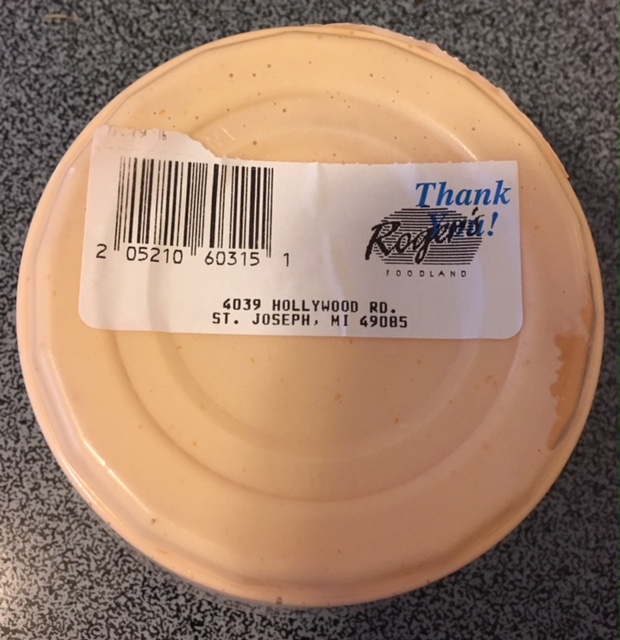
You can still buy Pearl’s Dressing at Roger’s Foodland on Hollywood Road in St. Joseph, MI.
“It was served on a Kreamo bun,”
says Lewis, “we also used Kreamo.”
Lewis seldom makes the fried
chicken, he’s turned his interest to artisan beers—teaching himself and also
learning from the brew master at The Livery.
“I make about gallons at a time
include German-style Hefeweizen I call Hagar Hefeweizen and Pitcairn Vanilla
Porter because I use an authentic Tahitian vanilla bean.
When doing research on his family’s
history, Lewis found an old advertisement for Pearl’s Dressing. It seems that
an enterprise called Pasquale’s was bottling the dress and selling it. There
was also a Pasquale’s Pizza in Benton Harbor, but neither Lewis or I have been
able to find out any more information about the bottled dressing. But we’ll
keep looking.
The
following recipes are courtesy of Gina Lewis Schmaltz and Guy Lewis,
grandchildren of Pearl and Buster Mead.
Chicken Nook
Pan-Fried Chicken
2 ½ to 3
pound chicken
4-6 eggs
1 pint of
whole milk (approximately)
All-purpose
flour for dredging
Not your typical friend chicken place. Carl Steele played music for diner guests at Mead’s.
Salt to
taste
Cut up the
chicken into make 8 pieces. Make an egg dip of approximately 4 to 6 eggs whisked
together with about a pint of milk. The egg mixture should be thick enough so
it sticks well to the chicken pieces.
Dip the
chicken into the egg dip then dredge in all-purpose flour. Salt the chicken
well as the pieces are going into the flour.
If you want
extra crispy crust, return to the egg dip mixture and then back into the flour.
Pan fry at
about 350 to 365 degrees in enough vegetable oil to more than halfway cover the
pieces. Breast and thighs should be fried separately for the legs and wings
since the larger pieces take longer.
Turn the
pieces when golden brown and finish frying the other side.
Cole Slaw
1 head
cabbage
Shredded
carrots (optional)
Apple cider
vinegar, one splash
Sugar, to
taste
Mayonnaise,
to taste
Shred cabbage
with a box shredder. Do not use pre-shredded cabbage, it is already too dry.
Add salt as
you shred, it helps to release the moisture from the cabbage.
Mix sugar
and heavy mayonnaise such as Hellman’s (not Miracle Whip) to taste. Mix well
and set aside for a short time to let it all blend together.
The Meads used to hand out the recipes for their famous Pearl’s Dressing at their restaurants.
Pearl’s
Dressing
Note: This
is a slightly different recipe than the one I published in my column several
weeks ago.
1 quart
mayonnaise
3 ounces
sugar
½ pint salad
oil
2 ounces
apple cider vinegar
1 10-3/4
ounce can of Campbell’s condensed tomato soup
Put all in
mixer and blend at slow speed. Don not whip as this will cause your oil for
separate from mixture.
Georgia-born, French-trained Chef Virginia Willis has cooked with Julia Child and cooked for President Bill Clinton but when she found herself in “unhealthy situation.” She was overweight and her cholesterol and glucose numbers were way too high. So she decided to take a new approach to Southern cooking, combining her education at L’Academie de Cuisine and her childhood spent learning to cook from her Southern grandmother, recreating the classic dishes she learned to make. Keeping the flavor but eliminating the fat is what her cookbookLighten Up, Y’all (Ten Speed Press) is all about. And for those of us who love the flavors of the south her recipes are a joy to recreate at home.
Coarse kosher salt
and freshly ground black pepper
8 ounces (2 cups)
whole wheat elbow macaroni
12 ounces ( 4 cups)
broccoli florets and stems
Preheat oven to
450°F. Bring a large pot of salted water to a boil over high heat. Coat an
8-inch-square (2-quart) baking dish with cooking spray. Combine the two
cheeses. Mix 1⁄4 cup of the cheese mixture, the bread crumbs, and paprika in a
small bowl. Set aside.
To make the cheese
sauce, heat 11⁄2 cups of the milk in a large heavy saucepan over medium-high
heat until simmering. Whisk remaining 1⁄4 cup milk and the flour in a small
bowl until smooth; add to the hot milk and cook, whisking constantly, until the
sauce simmers and thickens, 2 to 3 minutes. Remove from heat and stir in the
remaining 11⁄2 cups of the cheese mixture and the cottage cheese until melted.
Stir in the dry mustard, and nutmeg, and add salt and pepper to taste.
Cook pasta according
to package instructions. In the last 3 minutes of cooking, add the broccoli
florets. Drain well and add to the cheese sauce; mix well. Spread the
pasta-broccoli mixture in the prepared baking dish; sprinkle with the bread
crumb mixture. Bake until bubbly and golden brown, about 20 minutes. Remove to
a rack to cool slightly. Serve warm.
Oven-Fried Chicken On-a-Stick with Vidalia Honey Mustard Dipping Sauce
Coarse kosher salt
and freshly ground black pepper
In a
large bowl, combine the salt, 1 teaspoon of the paprika, 1/2 teaspoon of the
onion powder, and 1/2 teaspoon of the garlic powder. Add the buttermilk and
whisk until the salt is completely dissolved and the spices are dispersed in
the liquid.
Cut the chicken lengthwise into about
1-inch-wide strips. Add to the marinade and let stand at room temperature for
30 minutes. (Do not marinate any longer or the chicken will be too salty. If
you can’t cook it right at the 30-minute mark, remove the chicken from the
marinade and refrigerate until ready to continue.)
In a large shallow dish (a 9 by 13-inch
baking dish works well), combine the bread crumbs, the remaining 1 teaspoon
paprika, the remaining 1/2 teaspoon of onion powder, and the remaining 1/2
teaspoon of the garlic powder. Add the 2 tablespoons oil and toss well to coat.
Whisk together the egg whites and mustard in a second large shallow dish.
Season both mixtures with pepper.
Preheat the oven to 350 degrees F. Line
a rimmed baking sheet with aluminum foil, then set an ovenproof rack on it.
Coat the rack with nonstick cooking spray.
Remove the chicken from the marinade,
shaking off any excess, and thread onto sixteen 12-inch bamboo skewers,
dividing the meat evenly, about 1 strip per skewer. Dip the chicken into the
egg mixture, coating both sides. Place in the bread crumb mixture one skewer at
a time, sprinkle with crumbs to cover, and press so the coating adheres to both
sides. Gently shake off any excess crumbs and place the skewers on the prepared
rack.
Bake the chicken, turning halfway
through, until golden brown and the juices run clear, about 25 minutes. Serve
warm with the dipping sauce.
Vidalia-Honey Mustard Dipping Sauce:
Put the vinegar, onion, garlic, honey,
and mustard in the bowl of a food processor fitted with the metal blade. Pulse
until smooth. With the motor running, add the oil in a slow steady stream until
thick and emulsified. Taste and adjust for seasoning with salt and pepper.
Store in an airtight container for up to 3 days.
An hour before Geoffrey Zakarian’s Interactive Cooking Demonstration at the 77th Senior PGA Championship began, the large room at the KitchenAid Fairway Club at Harbor Shores was already standing room only.
But when Zakarian, star and/or producer of six television shows including the Food Network’s The Kitchen, Cooks Vs. Cons, Chopped and Iron Chef American didn’t disappoint.
Dapperly attired in a suit and tie with a burgundy handkerchief tucked into his breast pocket, Zakarian began by engaging the crowd, asking for questions almost immediately before announcing that he was going to start by making a drink.
Almost immediately someone in the audience shouted “it’s 5 o’clock somewhere” and both Zakarian and the audience laughed.
The comment was in reference to the name of a Jimmy Buffet song. But Zakarian said that he’d been sued for using that phrase.
“That’s why we say kitchen cocktail,” he said. “The reality is we got sued. So are there any other questions before I make a cocktail for myself?”
The drink in question was a Gold Rush, a simple concoction of honey, bourbon and freshly squeezed lemon juice.
“It’s got to be fresh lemon juice,” said Zakarian. “Don’t buy those plastic things shaped like a lemon. You know why, they’re full of ascorbic acid to make it last forever.”
Processed foods and buying in abundance only to have it go rancid or stale is on the list of things Zakarian, who also adds restaurateur to his list of accomplishments owning several in New York including The Palm Court, The National Bar & Dining Rooms and The Lamb’s Club. His newest, Georgie and The Garden Bar at Montage Beverly Hills, are scheduled to open in August.
“We buy too much and we waste it,” said Zakarian who in his role as Chairman of the City Harvest Food Council, a food rescue organization dedicated to fighting hunger in New York City, oversaw the collection and distribution 50 million pounds of food. “No snack foods, no processed foods, all good healthy food. I hate waste. In my kitchens, if I see a radish in the garbage, you’re out.”
Bantering with the audience while he prepared lobster salad and a shaved asparagus salad, Zakarian was asked why he wore a suit while cooking.
“Because my dad always told me to dress for the job you want,” he responded.
“Then you should be dressed in golf attire,” someone else said referring to an early reference Zakarian had made about loving the game of golf. “That’s the job you want.”
“Why?” Zakarian shot back. “Have you see what some of those people out there are wearing?”
At the end of his demonstration, Zakarian lined up to have his photo taken with fans and to sign his newest cookbook, My Perfect Pantry: 150 Easy Recipes from 50 Essential Ingredients (Potter 2014; $30) to raise money for the Susan B. Komen Foundation.
Gougeres:
1 cup whole milk
1 teaspoon sea salt
1 teaspoon sugar
4 ounces unsalted butter
5 ounces all-purpose flour
5 large eggs
5 ounces grated gruyere
cheese
Freshly ground black pepper
Gruyere Mornay:
2 ounces unsalted butter
2 tablespoons minced shallot
1 teaspoon minced garlic
Kosher salt and freshly
ground black pepper
1/4 cup all-purpose flour
35 ounces whole milk
4 ounces gruyere cheese
4 ounces Parmigiano-Reggiano
1 teaspoon Dijon mustard
Beer Mustard Sauce:
8 ounces mayonnaise, such as
Hellmann’s
8 ounces Dijon mustard
2 tablespoons beer extract
powder
2 tablespoons honey
1 tablespoon mustard powder
1 tablespoon malt vinegar
Kosher salt and freshly
ground black pepper
For the gougeres: Preheat the oven to 400 degrees F.
Line two baking sheets with silicone baking mats or parchment paper.
In a medium saucepot combine
the milk, sea salt, sugar and butter, and bring to a boil. Add the flour and
cook until thoroughly incorporated, about 2 minutes. Transfer the mixture to
the bowl of stand mixer fitted with the paddle attachment and mix until the
dough is the temperature of warm tap water, about 30 seconds. Add the eggs, one
at a time, until smooth. Fold in half of the gruyere and some pepper.
Transfer the batter to a
pastry bag fitted with a 3/8-inch round pastry tip. Pipe 1-inch-wide rounds on
the prepared baking sheets 2-inches apart, about 60 total. Sprinkle the top
with the remaining gruyere and some black pepper.
Wet a fingertip and press
down lightly to remove the point on each gougere. Bake for 8 minutes and
rotate. Bake until the gougeres are golden brown, another 4 minutes. Cool to
room temperature.
For the Mornay: In a medium
saucepot set over low heat, melt the butter and sweat the shallots and garlic
for 5 minutes. Season with salt and pepper. Add the flour and cook until it
smells toasted, 2 minutes. Add the milk and bring to a boil, stirring
continuously so no lumps form. Reduce the heat to a simmer and cook until the
sauce reaches the desired consistency. Slowly add the gruyere and Parmigiano-Reggiano,
and stir until smooth. Add the mustard and season with salt and pepper.
Transfer the Mornay to a bowl and cool in the fridge or set over ice. When
cool, transfer to a piping bag fitted with a small tip.
For the sauce: In a large
bowl, combine the mayonnaise, mustard, beer extract powder, honey, mustard
powder and vinegar, and whisk thoroughly to remove the lumps. Season with salt
and pepper.
Preheat the oven to 350
degrees F.
Fill the gougeres with the Mornay sauce and reheat in the oven to melt the cheese, 5 minutes. Serve the hot gougeres with the beer mustard.
Spring
Asparagus Salad
With Frisee,
Parmigiano Reggiano and a Caper Anchovy Vinaigrette
Yield: 6
Ingredients
For the Salad
1ea Bunch Asparagus
2ea Heads of Frisee (Trimmed)
6oz Parmigiano Reggiano
1/2cup Toasted Hazelnuts
For the Pickled Red Onions
1ea large Red Onion
1 cup White Wine Vinegar
1/3rd cup Sugar
1/3rd cup Water
3 cloves Garlic
For
the Vinaigrette
1 ea Shallot (finely minced)
1Tablespoon Capers
3ea Marinated White Anchovies
1Tblsp Dijon Mustard
3 Tbsp. White Wine Vinegar
¼ Cup Blend Oil
¼ Cup Olive Oil
Method
For the Pickled Red Onions
Slice the red onion in to thin rings, put in
to a bowl and set aside.
In
a small sauce pot, heat vinegar, water, sugar, garlic to a boil and pour over
red onion rings.
Cover
tightly and leave to cool to room temperature. Then refrigerate and save for
garnishing the salad.
For the Vinaigrette
Place
your minced shallots in to a medium sized bowl with the Dijon mustard, white
wine, and anchovies. Let this sit for
5-10 minutes to marinate.
Once
Marinated, whisk vigorously fully incorporating the Dijon in to the vinegar,
and the shallots.
While
whisking vigorously, slowly drizzle in the two oils.
Fold
in the capers and season with salt and pepper. Set aside for later when dressing
the salad.
For the Salad
Trim
the ends of the Asparagus that are stringy and woody.
Slice
the asparagus lengthwise on a mandolin, thinly, in to ice water, and let sit
for 5 minutes to stiffen.
Remove
Asparagus from ice water after 5 minutes, let stand for 1 minute on paper towel
to dry, then place in to a medium sized bowl with the trimmed frisee.
Toss
the asparagus and frisee, with the toasted hazelnuts, Pickled Red onion rings, season
with salt and pepper, then dress with 3 tablespoons of vinaigrette.
Set
on to a plate, and using a micro plane, grate the Parmigiano Reggiano over the
top of the salad and then serve immediately.
First of all, I’ve found that books with titles like French Women Don’t Get Fat, well, unfortunately they’re true. There should also be books titled French Men Don’t Get Fat though I haven’t seen any on the book shelves yet.
I’m in Quebec on a family vacation and this place is full of skinny French Canadians out dining in restaurants where every menu item seems to be served in a creamy white veloute sauce, with mounds of butter or a rich wine and beef gravy/ Accompaniments include dense, textured and very yummy breads along with desserts made with chocolate and whipped cream or the what seems to be the national dessert here – sugar pie.
I’ll have to look for my copy of “French Women Don’t Get Fat” which was written by Mireille Guiliano and was a huge best seller to understand again how women on a high caloric diet can be so slim. I thought it was about small portions, but the portions here in Quebec City and Montreal are not small. Often our family of four orders two entrees and it’s enough for all of us.
And to make it even more galling (is that why the French are referred to as Gauls?) is that another seemingly national dish in the province of Quebec is poutine (pronounced pooh teen), crisp hot French fries covered with gravy and topped with fresh cheese curds. The emphasis is on fresh as cheese curds here carry labels carrying the date that they were made. Even without the date, you can tell their freshness because the freshest cheese curds squeak when you bite down on them. I know that sounds a little strange and not very tasty–squeaky foods? But it’s true and they’re really tasty but even semi-fresh cheese curds are good.
Aux Anciens Canadiens in Quebec City
Poutine has become so popular that it’s on the menu at some of the
McDonalds and KFCs in Quebec, there is a
chain of eateries called Montreal Poutine and is also on the menu at high end
restaurants. We stopped at Montreal Poutine in the Vieux Montreal, the
wonderful historic district of the city near the Saint Laurence River to check
out their poutine selections.
At Aux Anciens Canadiens in
Quebec City which is housed in a building in Vieux Quebec, the city’s historic
area, that was built in 1675 making it the oldest building in the city, we saw
a bottle of wine listed at $12,000 (and no we didn’t order it) and
poutine. Besides that, poutine has
morphed and restaurants like Montreal Poutine now offer the dish topped with
marinara sauce (an Italian take on a Canadian dish) and barbecue sauce – maybe
a Texas take.
But one of the most interesting poutines I saw when in Quebec was
Michigan poutine. Now for some reason,
many restaurants in Quebec advertise Michigan hot dogs, much in the same way we
talk about Chicago hot dogs. And
Michigan poutine is French fries, gravy and sliced up hot dogs. I did not try that.
It is said that more Canadians have eaten poutine than have seen a
moose (and there are signs all along the highways warning of crossing moose) or
been in a canoe – two things I associate with Canada way before fries with
cheese and gravy. At almost 1000
calories a serving, why aren’t the French Canadians fat? I don’t have an answer to that but I can tell
you that poutine and French fries in general here in Quebec are very, very
good. They’re crisp, very hot, not that
greasy and are often served, when not topped with gravy and cheese curds, with mayonnaise
instead of ketchup. And, while standing
in the train station, my daughter spied a French fry making vending machine the
size of a soda pop machine that promised freshly cooked French fries in two
minutes. I wish we had tried it.
Montreal Poutine
1 quart stock: chicken or veal
2 ounces flour
2 ounces butter or oil French fries
Fresh cheese curds
Bring the stock to a boil in a saucepan.
For the veloute sauce, bring the stock to a boil in a sauce pan
then combine the fat and flour, cook over high heat, stirring until you have a
pale roux (2-3 minutes).
Whip the roux into the stock. Simmer for 30 to 40 minutes, skimming the surface
every 5-10 minutes until it is reduced by half. Strain the sauce. Salt and
pepper to taste.
Place with cheese curds over hot, crisp French fries. Top with sauce.
In a saucepan, over medium heat, combine the butter and flour.
Stir until incorporated. Cook for 12 to 15 minutes for a dark roux. Stir in the
stock. Season with salt and pepper. Bring the liquid to a boil. Reduce the heat
to medium low and continue cooking for 15 to 20 minutes. Remove from the heat
and keep warm.
Peel the potatoes and cut fries, 4 inches by 1/2-inch. Bring a pot
of salted water to a boil. Add the potatoes and blanch for 4 minutes. Remove,
drain and cool completely. Fry the potatoes until golden brown.
Remove and drain on paper towels. Season with salt and pepper. To
serve, mound the fries into the individual (16-ounce) disposable cups. Spoon
the gravy over the fries and crumble the cheese. Serve immediately.
Because much of the cuisine in Quebec is French based, often food was either wrapped or topped with puff pastry. We sampled chicken and beef in puff pastry and seafood chowders loaded with local fresh lobster, scallops and salmon topped with puff pastry. One of the waitresses at a little bistro gave me this simple recipe.
Chicken in Puff Pastry
4 skinless, boneless chicken breast halves about four ounces each
Salt and pepper to taste
8 ounce package cream cheese with chives
4 puff pastry sheets
1 egg, beaten
Directions
Preheat oven to 400 degrees F. Lightly grease a baking sheet.
Heat vegetable oil in a large skillet over medium heat. Sprinkle
chicken breasts with salt and pepper, and place in hot oil; cook for 5 minutes,
turning to brown evenly. Remove skillet from heat.
Roll out pastry sheets and cut so they are big enough to fit
around a chicken breast. Spread two ounces of cream cheese on one chicken
breast, place in the center of a pastry sheet; fold the pastry around the
chicken, and pinch the pastry edges together very tightly to seal. Repeat with
remaining ingredients. Beat egg with a little water and brush on top. Place the
pastry-wrapped chicken breasts on a greased baking sheet.
Bake for 12 to 15 minutes, until golden brown.
If wanted, make the Veloute sauce (recipe above in poutine recipe)
and serve with chicken.
Sidebar: Poutine Variations
Poutine Itallienne: Uses marinara sauce instead of the Velouté.
Poutine Bourguignon: Add ground beef and fried onions to the
Velouté sauce.
Poutine BBQ: Heated BBQ sauce is poured on.
Poutine Mole: Cover with black mole sauce.
Disco Fries: Chicken-gravy and shredded cheddar on top a plate of
fries.
In her book, “French Women Don’t Get Fat,” author Mireille
Guiliano combines common sense ideas in showing how you can enjoy great food
and not become obese. You can now find
recipes and information on her Website www.frenchwomendontgetfat.com. Here’s a recipe from her site.
Chicken with Mustard Sauce
3
boneless, skinless chicken breast halves (6 ounces each), trimmed of all
surrounding fat
1/4
teaspoon salt
1/4
teaspoon freshly ground black pepper
1/2
tablespoon corn, canola or virgin olive oil
1/2
medium onion (4 ounces), peeled and chopped (1 cup)
1
tablespoon all-purpose flour
3/4 cups
water
1/2
tablespoon Dijon mustard
3/4
teaspoon dry mustard
1/2
tablespoon chopped fresh parsley leaves
Sprinkle the chicken with the salt and pepper. Heat the oil in a
large, heavy skillet set over medium-high heat. When the oil is hot, sauté the
chicken for 1 1/2 minutes on each side, until nicely browned. Mix in the onions
and continue cooking the mixture for 1 minute.
Sprinkle the flour on the chicken pieces, then turn them over in
the skillet so they are coated with flour on both sides. Cook for 1 minute to
lightly brown the flour. Add the water and stir well to loosen any solidified
juices in the bottom of the skillet.
Bring the mixture to a boil, reduce the heat to low, cover and
boil gently for 2 minutes.
Transfer the meat to a serving platter and keep it warm in a 180°
oven while you finish the mustard sauce.
Bring the mixture in the skillet to a boil and add the Dijon
mustard and dry mustard, mixing them in well with a whisk. Return the chicken
pieces to the skillet and heat gently (just under a boil, so the sauce doesn’t
separate) for 5 to 6 minutes, or until the chicken is heated through.
Arrange the chicken and sauce on a platter. Sprinkle the parsley on top.
Mireille also has what she calls a Miracle Leek Soup to get you started on the road to French slimness. Watch the video here.
I love making edible gifts to give for the holidays and besides my old standbys, this year I’ll be using recipes Natalie Wise’s Gifts in Jars: Homemade Cookie Mixes, Soup Mixes, Candles, Lotions, Teas, and More! The book, written by Natalie Wise, gives a list of the supplies needed and step-by-step instructions for quickly making a range of gifts ranging from practical to elegant to fun. The book is divided into five gift categories: “Kitchen” featuring such present ideas as Monster Brownie Mix and Barbecue Rub, “Bath and Body” (Sweet Sleep Kit and ManicureKit), “For the Home” (Scented Oil Diffuser with Reeds),” Party and Kids” (Big Bubbles with Wands) and “For and From the Garden” (Fairy Garden Kit and Garden Marker Rocks). Using Mason jars, ribbon and tags (Wise suggests what to write on the tag so people know what to do with you gift), these ideas always seem to be welcome at holiday time.
Hot Fudge Topping
Makes approximately 4 cups
¾ cup heavy cream
½ cup light corn syrup
½ cup packed brown sugar
½ cup cocoa powder
½ teaspoon salt
8 ounces dark chocolate, chopped
2 tablespoons unsalted butter
1 tablespoon vanilla extract
In a saucepan over medium heat, combine the heavy cream, corn syrup, brown sugar, cocoa powder, salt, chocolate and butter. Bring to a boil then reduce the heat to a simmer and stir constantly for 5 minutes.
Remove from heat and stir in vanilla extract. Pour into jars and let cool.
Will keep refrigerated for several weeks.
Tag Instructions: Store in refrigerator. Before eating, warm desired amount in microwave or double boiler.
Soup mixes
Coffee Syrups:
Chocolate, coconut and raspberry syrups are great gifts for coffee lovers.
Each recipe makes approximately 2 cups.
Chocolate Syrup
1 ½ cups water
1 cup cocoa powder
1 cup sugar
¼ teaspoon salt
Whisk all ingredients together in a small saucepan over medium heat. Whisk constantly until mixture comes to a boil. Boil for 2-3 minutes until smooth and remove from heat.
Funnel into jars. Will keep for several weeks in the refrigerator.
Coconut Syrup
1 ½ cups water
1 tablespoon sugar
¾ cup sweetened flaked coconut
Combine all ingredients together in a small saucepan and stir to combine.
Heat over medium-high heat, stirring frequently until mixture comes to a boil.
Reduce heat to a simmer and simmer for 5 minutes. Strain through a fine mesh strainer.
Funnel into jars. Will keep for several weeks in the refrigerator.
Raspberry Syrup
1 ½ cups sugar
1 ½ cups water
¾ up fresh raspberries
Combine all ingredients together in a small saucepan over medium heat until sugar is dissolved and the mixture comes to a gentle boil. Mash the raspberries using a metal potato masher or the back of a spoon. Turn heat to medium-low and let simmer for 10-15 minutes, stirring frequently so it doesn’t burn.
Strain through a fine mesh strainer to remove seeds and pulp. Funnel into jars and let cool. Will keep for several weeks in the refrigerator.
Tag Instructions: Stir 2-4 tablespoons into your coffee beverage of choice. Keep syrup in refrigerator.
Lentil-Curry Soup Mix
1 cup green lentils
2 tablespoons curry powder
1 teaspoon onion powder
1 teaspoon
garlic powder
1 teaspoon celery salt
2 tablespoons dried basil
1 cup red lentils
3 slices freeze-dried apples
Layer the ingredients in order given, places the freeze-dried apple slices on top just under the lid.
Tag Instructions: Empty mix into soup pot and add 6 cups of water. Simmer for 30 minutes or until lentils are tender.
I always think cookbooks make great holiday presents and so I asked Carrie Bachman and Joyce Lin, two of my good friends who work with cookbooks all the time, to share some of their favorites with me. I loved the ones they suggested, the only problem was deciding—because of space issues in this column—which ones to highlight.
I chose Dorie Greenspan’s Everyday Dorie because I have every other cookbook she’s written and I think she’s great and I thought her recipe for Oven-Charred-Stuffed Peppers which can be easily multiplied to serve whatever size crowd you’re expecting and can be served at any temperature so if they cool down after removing from the oven, it’s no big deal.
I enjoyed making and serving the Curry Leaf Popcorn Chicken featured in Nik Sharma’s Season. This is the first cookbook forSharma who writes the blog “A Brown Table” and his recipes are exotic but also really easy and delicious. I also like that Sharma offers suggestions I can use in making this dish and others such as shaking the chicken (or even shrimp) in small batches in resealable plastic bags to get a uniform coating of flour.
Named Amazon’s 2018 Cookbook of the Year, Now & Again: Go-To Recipes, Inspired Menus + Endless Ideas for Reinventing Leftovers by Julia Turshen is wonderful for people like me who have watched leftovers age less than gracefully in my refrigerator before, after serving their time, they get tossed. I won’t have to do that no I have a copy of Turshen’s book. Or at least that’s the plan.
1 garlic clove (ormore, if you’d like), germ removed and very thinly sliced
About 8 sprigs fresh
thyme, rosemary, mint and/or parsley
6 fresh basil leaves,
torn or chopped
Fine sea salt and freshly ground pepper
5 tablespoons unseasoned bread crumbs
8 oil-packed anchovies, minced
1 small lemon
Pinch of piment
d’Espelette or cayenne pepper
3 large red and/or yellow boxy bell peppers
1 pint cherry tomatoes (25 to 30), halved
For serving (optional)
Extra-virgin olive oil
Ricotta
Snipped fresh chives
or finely chopped other fresh herbs
Center a rack in the oven and preheat it to 425 degrees F. Put a deep-dish 9½-inch pie pan (or similar-size baking dish) on a baking sheet lined with parchment or a silicone baking mat. Spread a tablespoon or two of the oil over the bottom and sides of the pan, then scatter over the garlic slices, half of the herb sprigs and half of the basil and season with salt and pepper.
Stir the bread crumbs and anchovies together in a small bowl. Grate the zest of the lemon over and squeeze in the juice from half of the lemon (about 1 tablespoon; precision isn’t important here). Cut 6 thin slices from the other half of the lemon, then cut the slices in half; set aside. (If any lemon remains, squeeze the juice from it over the bread crumbs.) Stir in 1 tablespoon oil and season the crumbs with the piment d’Espelette or cayenne. Taste to see if you want some salt (anchovies are salty, so the seasoning might be just fine).
If you’d like (or need room in the pan), trim the peppers’ stems. Slice the peppers in half the long way and remove the ribs and seeds. Spoon an equal amount of the bread-crumb mixture into each pepper, scatter the remaining basil over and topeach one with 2 lemon slices. Divide the tomatoes among the peppers, placing them as close together as you can, and season with salt and pepper. (I put the tomatoes in the peppers cut side down because I think they look prettier that way, but there is no set rule here.)
Transfer the peppersto the pie pan, crowding them together and cajoling them so that they all fit. One or two might pop up, or their bottoms might not fully touch the base of the pan, but in the end they will be fine. Drizzle over enough of the remaining oil to lightly moisten the tomatoes and then strew over the remaining herb sprigs. (The peppers can be prepared a few hours ahead to this point and refrigerated,covered; let them stand at room temperature while the oven preheats.)
Bake the peppers for about 1 hour (check at the 45-minute mark), until they’re as soft as you’d like them to be — poke the side of one with the tip of a paring knife to judge. The juices and oil should be bubbling and the peppers charred here and there.Remove and discard the herbs from the top of the peppers.
You can serve the peppers straight from the oven, warm or at room temperature. If you’d like, drizzle them with a bit more oil, top them with a little ricotta (adding a dollop of ricotta is particularly nice if you’re serving the dish warm as a starter) and sprinkle with chives or other herbs.
Curry Leaf Popcorn Chicken
From Season by Nik Sharma with
permission by Chronicle Books 2018.
Makes 4 servings
Seeds from 4 green cardamom pods
2 teaspoons coriander seeds
2 teaspoons cumin seeds
12 black peppercorns
2 cups buttermilk
2 to 3 serrano chiles, seeded, if
desired
6 scallions (white and green parts)
30 curry leaves, preferably fresh
4 garlic cloves, peeled
1½ teaspoons cayenne pepper
1-inch piece fresh ginger, peeled and
chopped
¼ cup fresh lime juice
1 tablespoon plus 1 teaspoon fine sea
salt
2 pounds boneless, skinless chicken breast
2 cups all-purpose flour
1 teaspoon baking powder
½ teaspoon baking soda
3 cups neutral-tasting oil
4 green Thai chiles, seeded, if desired
Favorite hot sauce for serving
Heat a small, dry skillet over medium-high heat. Add the cardamom, coriander, cumin seeds, and the peppercorns, and toast for 30 to 45 seconds, swirling the mixture occasionally until the seeds release their aroma and start to brown. Divide the toasted spice mixture in half. Transfer one half of this mixture to a spice grinder and pulse to a fine powder. (You can prepare the spices up to 1 week in advance and store in an airtight container in a cool, dark place.)
In a blender, combine the remaining toasted spice mixture with the buttermilk, serrano chiles, scallions, 15 of the curry leaves, the garlic, 1 tsp of the cayenne, the ginger, lime juice, and 1Tbsp of the salt. Pulse until completely smooth and transfer to a large resealable plastic bag. Pat the chicken breasts dry with paper towels. Trim excess fat from the chicken, and cut the flesh into 1 in cubes. Add to the marinade. Seal the bag and shake to coat evenly. Refrigerate for 4 hours.
Meanwhile, prepare the dredging
mixture. In a large resealable plastic bag, combine the remaining half of the
ground spice mixture with the flour, baking powder, baking soda, remaining ½
tsp cayenne, and remaining 1 tsp salt, shaking vigorously to blend. Finely chop
10 of the remaining curry leaves and add them to the dredging mixture. Seal the
bag and shake again to mix well.
Once the chicken has marinated, use
tongs to lift out half the chicken pieces, shaking off the excess batter, and
transfer to the bag with the dredging mixture. Seal the bag and shake to coat
evenly. Transfer the chicken pieces to a wire rack. Repeat with the remaining
chicken.
In a medium Dutch oven, heat the oil
over medium-high heat to 350°F. Fry the chicken in batches, turning
occasionally, until golden brown and cooked through, 4 to 5 minutes. Using a
slotted spoon or a spider, transfer the chicken to paper towels to drain.
After the chicken is cooked, prepare
the garnish: Cut the Thai chiles in half lengthwise. In the hot oil left in the
pot, deep-fry the chiles and remaining 5 curry leaves until crispy, 30 to 40
seconds. Drain on paper towels.
Put the chicken on a serving plate,
garnish with the chiles and fried curry leaves, and serve hot with the
maple-vinegar sauce or hot sauce.
Stuffed Mushrooms with Walnuts, Garlic
+ Parsley
From Now & Again by Julia Turshen with permission by Chronicle Books 2018.
Serves 4 as a nosh with drinks.
¼ cup walnut halves
A large handful of fresh Italian
parsley leaves (a little bit of stem is fine!)
1 large garlic clove, minced
3 tablespoons coarsely grated Parmesan
or pecorino cheese
½ teaspoon kosher salt
2 tablespoons olive oil
12 small cremini or button mushrooms,
stemmed
Preheat your oven to 400°F. Line a
small sheet pan or baking dish with parchment paper and set it aside.
Put the walnuts, parsley, garlic,
cheese, and salt into a food processor, in that order. Pulse until everything
is finely chopped. Add the olive oil and pulse to combine.
Use a small spoon to distribute the walnut mixture evenly among the mushrooms, placing it in the cavities the now-gone stems left behind. Line up the mushrooms, stuffed-sides up, on the prepared sheet pan.
Roast the mushrooms until softened and
the tops are lightly browned, about 15 minutes. Let the mushrooms cool for a
few minutes, then serve warm.
Banana Peel Cake with Brown Sugar
Frosting
Cooking From Scraps, (c) 2018 by Lindsay-Jean Hard. Reproduced by permission of Workman. All rights reserved.
For the cake:
Peels from 2 very ripe bananas, stem and very bottom discarded
1/2 cup unsalted butter, softened, plus more for buttering the pans
1 1/2 cups granulated sugar
2 large eggs, separated
1/2 cup buttermilk
1 2/3 cups
cake flour plus more flour (any type) for flouring the pans
1 teaspoon
baking soda
1/4 teaspoon
baking powder
1/2 teaspoon
fine sea salt
For the
brown sugar frosting:
1/2 cup butter
1/4 cup
milk, 2% or higher
1 cup packed
brown sugar
1 3/4 to 2 cups powdered sugar, sifted
Preheat the oven to 350°F.
To make the cake: Cut the banana peels into 1-inch pieces and place them in a small saucepan with 1 cup of water. Bring to a boil over medium-high heat, then reduce the heat and simmer for 10 minutes. Remove thepan from the heat and allow the mixture to cool slightly, then strain the banana peels, reserving the cup of the cooking water.
Meanwhile, butter and flour the sides of two 8-inch round cake
pans and line the bottoms with parchment paper. Butter and flour the pans again
to coat the paper.
Transfer the peels and the 1/4 cup of cooking water to a tall,
narrow container and puree until completely smooth with an immersion blender (a
mini food processor would do the trick, too!).
Cream together the butter and sugar using an electric mixer (or a wooden spoon for an arm workout) until pale and fluffy, about 3 to 5 minutes.Add the egg yolks one at a time, mixing until incorporated, and scraping down the sides of the bowl after each addition. Mix in the banana peel mixture, then stir in the buttermilk until well combined. 6. In a separate medium-size bowl, whisk together the flour, baking soda, baking powder, and salt. Add the dry ingredients to the bowl with the butter mixture and stir gently, just until combined.
Put the egg whites in another bowl (make sure it’s clean and dry!)and whisk until soft peaks form—either by hand or with the whisk attachment onan electric mixer. If using an electric mixer, start slowly and gradually increase speed to medium-high. You’ll know you’re done when you pull out the whisk or beater and a soft peak is formed, but immediately collapses. Gently fold the egg whites into the batter and divide the batter evenly between the two prepared pans.
Bake for about 25 minutes, rotating the pans halfway through, until the top is golden and a toothpick inserted into the center of the cake pulls out with dry crumbs rather than wet batter. Let the cakes cool completely in the pans.
When the cakes are completely cool and you’re ready to assemble it, make the frosting. Melt the butter in a medium pan over low heat. Stir inthe brown sugar and cook, stirring constantly, for 2 minutes. Stir in the milk,raise the heat to medium-high, and cook, stirring constantly until the mixture boils. Remove from the heat, and let cool until lukewarm. Gradually whisk in 1 3/4 cups powdered sugar, beating until smooth. Add the additional 1/4 cup powdered sugar if the frosting is too loose. Use the frosting immediately, asit will begin to thicken and stiffen as it sits.
When the cakes are completely cool, remove from the pans and peel off the parchment. Put one layer of the cake on a serving platter and spread about one third of the frosting evenly over the top. Set the other layer on top, and spread the remaining frosting over the top and sides of the cake.
We took a wrong turn off of Hollywood Boulevard and suddenly found ourselves winding and twisting along the narrow streets of Beachwood Canyon. The homes, built in the early part of the last century were intriguing, but more so was that, for most of the drive, we could see the old Hollywood sign — 45-foot-high letters erected in 1923 as an advertisement for Beachwood Canyon and now a famous Los Angeles landmark. Keeping our sights on the sign and wanting to get closer, we drove further into Beachwood Canyon, sometimes losing sight of the letters and then, rounding a curve, finding them again.
Photo courtesy of Sunset Ranch Hollywood
One last turn took us to a dead end and the beginnings of the Hollywood Hills. And here we made another find, Sunset Ranch Hollywood the last dude ranch in the greater L.A. area.
Photo courtesy of Sunset Ranch Hollywood
The Ranch has been in operation since the 1920s, which is when the original red barn was built. It’s still used as the main facility at the ranch, which has the look of better days gone by. But we could tell from the signs that they offered trail rides and my kids and I, avid trail riders when we visit new places, were eager to try it. Deciding it must be karma, we pulled into the parking lot and walked up the steep incline to the stables. Soon we were saddled up and riding along a dusty trail (how Hollywood Western is that?) through the hills of Griffith Park, one of the largest urban parks in America. It’s quiet up here—all sage,dirt and tumbleweeds but I catch glimpses of the ocean in the distance and below me is the sprawling environs ofLos Angeles.
Photo courtesy of Sunset Ranch Hollywood
Along the way, there were numerous signs telling us that horseback riding is a very dangerous activity but that didn’t deter us. After all, we’d been driving in L.A. for days, even during rush hour, so how bad could going a max speed of five miles on a horse be?
Photo courtesy of Sunset Ranch Hollywood
Sunset Ranch looks like a set
from an old Western. Wood fences penned in masses of horses (some 65 live at
the ranch), sagebrush and tumble weeds dotted the landscape, which was
desert-like with spiked cacti and agave.
Photo courtesy of Sunset Ranch Hollywood
The trail we followed led us along a dusty path up into the hills and away from the urban landscape. Sunset Ranch advertises 52 miles of trail and views of downtown L.A., Hollywood, Santa Monica, Glendale and, on clear days (our guide was a little vague as to how many clear days there are in L.A.), Catalina Island.
Photo courtesy of Sunset Ranch Hollywood
Footnote: Though I thought I’d discovered a hidden Hollywood find,it seems like Kathie Lee and Hoda have been there as well, along with actor Dean Cain. Oh well.
Photo courtesy of Sunset Ranch Hollywood
The Sunset Ranch also offers a trail ride and barbecue package as well. Indulge your inner John Wayne and sign up.
America’s favorite president sure got around. From his time as a child in Kentucky, as a lawyer in Illinois, and all the way to the Oval Office, Abraham Lincoln toured across the countryside and cities and stayed at some amazing locations.
Lincoln dined at the Log Inn in 1844 when he returned to Indiana to campaign for Henry Clay. The inn, once a stagecoach stop has been in continuous operation since opening in 1825. You can dine in the room where Lincoln ate.
In Lincoln Road Trip:The Back-Roads Guide to America’s Favorite President, Jane Simon Ammeson will help you step back into history by visiting the sites where Abe lived and visited. This fun and entertaining travel guide includes the stories behind the quintessential Lincoln sites, but also takes you off the beaten path to fascinating and lesser-known historical places. Visit the Log Inn in Warrenton, Indiana (now the oldest restaurant in the state), which opened in 1825 and where Lincoln stayed in 1844, when he was campaigning for Henry Clay. You can also visit key places in Lincoln’s life, like the home of merchant Colonel Jones,who allowed a young Abe to read all his books, or Ward’s Academy, where Mary Todd Lincoln attended school.
Along with both famous and overlooked Lincoln attractions, Jane Simon Ammeson profiles near by attractions to round out your trip, like Holiday World & Splashin’ Safari,a third-generation family-owned amusement park that can be partnered with a trip to the Lincoln Boyhood National Memorial and Lincoln State Park. Featuring new and exciting Lincoln tales from Springfield, IL; Bardstown, KY;Booneville, IN; Alton, IL; and many more, Lincoln Road Trip is a fun adventure through America’s heartland that will bring Lincoln’s incredible story to life.