The Peached Tortilla: It’s totally peachy

Get Peached–meaning to be flavored smitten–is particularly apt if you’re in an experimental mood when it comes to food. Personally I think you always learn a lot about cooking when you venture outside your comfort range. By doing so either once in a while or really even more often, no telling what you’ll discover.

That’s one reason why I enjoyed chatting with Eric Silverstein who first started cooking from his Austin, Texas food truck, The Peached Tortilla and now runs a restaurant with the same name. He recently wrote “The Peached Tortilla: Modern Asian Comfort Food from Tokyo to Texas” (Sterling Epicure 2019; $16.99 Amazon price).

A former attorney who decided to pursue a different career path by merging his passions of food and business. Eric was born in Tokyo, Japan. There he was heavily influenced by Japanese, Chinese and Malaysian cuisine and then, moving to Atlanta, Georgia at the age of ten, he learned about traditional Southern cuisine. These divergent flavors and cuisines serve as the backdrop for The Peached Tortilla’s menu.

 The recipes are Asian versions of American south and Italian food—fried chicken and arancini—those fried rice balls stuffed with mozzarella. If you think of it like that, you can see the possibilities of melding the the three. When I asked Eric for recommendations for readers just getting use to Asian/American/Italian fusion cuisine, he suggested the Umami Chicken because it is a best seller at his restaurant. He also suggested his deep-fried risotto balls stuffed with pureed kimchi and mozzarella cheese because he never met a person who didn’t love them.

Deep-fried risotto balls stuffed with pureed kimchi and mozzarella cheese

“They are so easy to just pop in your mouth, and the fusion element makes the kimchi approachable,” he says.

Kimchi is a Korean dish using salted and fermented vegetables (typically cabbage) that also has chili powder, ginger and other spices. It’s very similar to sauerkraut but spicier and without the vinegary tartness.

 He’s adapted his recipes for home cooks. For example, with the Unami Fried Chicken, he calls for par-baking before frying as it’s difficult to control the temperature of a deep fryer at home. By doing that there’s still the crispness of fried chicken without the complications of temperature control.

Eric is featured on the Chefsfeed App for Austin, TX and was recently named one of the top 30 Up and Coming Chefs in America by Plate Magazine.

               The following recipes and accompanying photos are reprinted with permission from The Peached Tortilla © 2019 Eric Silverstein. Published by Sterling Epicure. Photography by Carli Rene / Inked Fingers.

Unami Fried Chicken

For the Marinated Chicken

1 cup fish sauce

¼ cup rice wine vinegar

½ cup sugar

1 cup water

2 tablespoons lime juice

2 tablespoons Chili Garlic Sauce

6 cloves garlic

1 (3 ½-4 pound) chicken, broken down into 2 legs, 2 thighs, 2 whole wings, and 4 pieces of breast (breast is split)

To Make the Marinated Chicken

Puree all the ingredients, except for the chicken in a blender. Marinate the broken-down chicken in the fish sauce marinade overnight in a large airtight container or resealable bag.

For the Batter

1 ½ cups rice flour

Whisk the rice flour and 1 ½ cups of cold water in the mixing bowl and set the batter aside. The consistency of the mixture should be thick enough to heavily coat the back of a spoon.

As the batter sits, the rice flour will slowly separate from the water. So make sure to whisk the batter right before you dip the chicken into it.

  • quarts vegetable oil

Place the pieces of chicken on a baking sheet. Set the oven to 350⁰F and bake the chicken for 30 minutes. Using a meat thermometer, check the temperature of the chicken while it is in the oven to make sure it reaches 165⁰F. It’s best to take the temperature of the thickest part of the breast, since this is the thickest cut of meat you are cooking off. When the chicken is at temperature, remove it from the oven and set it in the refrigerator to cool. You can remove the chicken from the refrigerator when it is cold to the touch.

Once the chicken has cooled in the refrigerator, heat 2 quarts of oil to 350⁰F in a medium-sized pot.

When the oil is at 350⁰, coat the parbaked chicken in the rice flour batter and then place the chicken in the hot oil. The rice flour batter should be thick enough, so it does not run off the chicken.  If the rice flour batter has been sitting for a few minutes, make sure to give it a stir right before you dip the chicken in the batter.

Let the chicken cook in the oil for 2-3 minutes. It should turn a robust brown. Do not let the chicken get too brown or dark.

Remove the chicken from the oil and place it on a cooling rack with a rimmed baking sheet underneath it for 2 minutes before serving.

Kimchi Balls

Serves 5-8 / Makes about 30 balls

5 cups chicken broth

1 ¾ tablespoons butter

¼ small yellow onion, diced

Pinch of kosher salt

Pinch of freshly ground black pepper

1 cup Arborio rice

¼ cup + 2 tablespoons Kimchi, pureed

¼ cup + 2 tablespoons Parmesan cheese, grated

1 ½ cups shredded mozzarella cheese

2 tablespoons Sriracha

In a medium-sized pot, warm the chicken broth over medium heat. Keep it warm over extremely low heat.

Add the butter to a wide, round pot and stir it over medium-low heat, until it starts to melt.

After the butter has melted, add the diced onion to the pot and sauté it in the butter until it becomes translucent. Season the sautéed onion with salt and pepper.

Add the Arborio rice to the pot and sauté it until it has browned.

Ladle or spoon the warm chicken broth into the rice mixture over the medium-low heat. Start by adding ½ cup of the chicken broth at a time, stirring the rice until it absorbs the broth. This is a similar process to making risotto.

Once the broth is absorbed, add more broth to the rice. Continue to cook the rice and add the broth until you have used all the broth. The entire process should take about 45 minutes. At the end of the process, the Arborio rice should be cooked al dente.

Place half of the kimchi, Parmesan, mozzarella, and sriracha in the bottom of a large baking sheet. Add the cooked Arborio rice to the baking sheet, then cover the rice with the remaining kimchi, mozzarella, and sriracha. Stir the mixture together with a heatproof spatula. The cheese should melt from the heat of the rice.

Refrigerate the mixture, uncovered, for 3-4 hours or preferably overnight.

Kimchi

1 cup, all-purpose flour

2 eggs, beaten

1 ½ cups panko breadcrumbs

2 quarts vegetable oil

½ cup Wasabi Mayo (recipe included below)

½ cup Sriracha Mayo (recipe included below)

Place the flour, eggs, and panko into separate mixing bowls or shallow vessels. Line them up to create an assembly line.

Moving from left to right, dredge the rice balls in the flour, then the egg mixture, and then roll them into the panko. By the end of the process, the balls should have a nice panko coating.

Heat the 2 quarts of oil in a Dutch oven or deep cast iron skillet. Once the oil reaches 350⁰F, drop the kimchi balls into the hot oil. The balls should turn golden brown after about 1 ½ – 2 minutes. If the balls start to get a little bit dark, remove them from the oil. If the internal temperature is hovering around 100⁰F, place them back in the oil for another 25-30 seconds or until they reach an internal temperature of 140⁰F.

When the rice balls are done, transfer them to a plate covered with a paper towel.

To plate the dish, top the Kimchi Balls with a little Wasabi Mayo and Sriracha Mayo.

WASABI MAYO

Makes 1 ½ cups

1 cup mayonnaise

2 tablespoons Dijon mustard

2 tablespoons prepared wasabi paste

¾ tablespoon lime juice

½ teaspoon sesame oil

Place all the ingredients in a mixing bowl and whisk them together. Store the mayo in an airtight container in the refrigerator for up to a month.

Sriracha Mayo

Makes 1 ¼ cups

1 cup mayonnaise

¼ cup Sriracha Sauce

½ teaspoon Rice Wine Vinegar

Heavy pinch of salt

Place all the ingredients in a bowl and whisk them together until they are well incorporated. Pour the mayo into an airtight container and store it in the refrigerator for up to a month.

Angela Medearis: The Ultimate Kitchen Diva

Photograph by Penny De Los Santos-Diabetic cookbook, Author Amgela Medearis

“People are eating African American food every day, but they don’t know it,” Angela Shelf Medearis says to me when we chat on the phone. In part, she’s talking about James Hemings who, in the complicated way of slavery, trained in the culinary arts in Paris and became a noted chef de cuisine and yet lived most of his life enslaved. Hemings either created or introduced a variety of the foods we eat now such as macaroni and cheese, ice cream, French fries, meringues, crème brulée, and French-style whipped cream.  Another dish he created that we don’t eat regularly if at all is his handwritten recipe for snow eggs–soft, poached meringue, set in puddles of crème anglaise.

          Hemings was the son of Sally Hemings, an enslaved woman and  John Wayles, the man who “owned” her. The two had six children together.  Wayles also had a more traditional family and his daughter Martha married a plantation owner named Thomas Jefferson. Thus, James was the half-brother of  Martha Jefferson who “inherited” James  (that’s so creepy I even hate writing it) when Wayles died. James was eight when they all came to live at Monticello. His youngest sister, Sally was just an infant. To make matters even more complex, after Martha died and Sally reached some type of maturity—she was probably in her mid-teens, she became Jefferson’s mistress and had six children by him, four of whom lived to adulthood.

          So, Sally Hemmings was Martha Jefferson’s half-sister, and her children were half-siblings to Martha and Thomas’s children. I mention all this not only to show how helpless enslaved people were as to what happened to their bodies but also to show how intertwined Black and White families were and how the foodways of both merged.

          But while Hemings introduced the Frenchified cookery to America,  

Medearis, the founder of Diva Productions, Inc., the organization that produces her multicultural children’s books, cookbooks, videos, and audiocassettes, points out that people weren’t eating black-eyed peas before Africans arrive in this country.

          “Back then they even thought tomatoes were poisonous,” she says. “But when they shipped slaves, they also shipped  the foods they ate with them  because that was a cheap way to feed them,” she says. “The recipes for those foods traveled from one place to the other. If they stopped in the Caribbean or South America before coming here, then the recipes changed with the foods and spices available and the types of cooking techniques.”

          Medearis, a television chef known as the Kitchen Diva, has written 107 books. Many are children’s books, but she also is a cookbook author focusing on both the historic roots of African American cookery and healthy eating like The Kitchen Diva’s Diabetic Cookbook: 150 Healthy, Delicious Recipes for Diabetics and Those Who Dine with Them.

But she didn’t start out to be a cook.

          “I only cooked enough that social services wouldn’t come and take away my children,” she says with a laugh. But her mother, after she retired, decided she wanted to market her raisin pie for some extra income.

While her mother and sister did the cooking, Medearis who often wears feather boas during her TV appearances and on her PBS cooking show and isn’t shy about being in the limelight, did the marketing.

But when her mother and sister decided to quit, Medearis knew she had to learn to cook if she wanted to keep her food business going.

Now she’s so full force that celebrity chef and restauranteur Bobby Flay arrived for a Jerk Chicken Throwdown while she was marinating jerk chicken for a family get. It was for his Food Network show Throwdown with Bobby Flay. 

          Who won I ask?

Medearis’s Jerk Chicken

          “My chicken had been marinating for hours,” Medearis replies. “He just arrived from Manhattan and threw some spices on his chicken. It burned. I beat Bobby.”

Watch it here.

Though she originally didn’t cook Medearis had written several loved historic research. Did I know that George Washington Carver drove a food wagon around to introduce people to healthy foods?

No. I knew that Carver, who famously said, “There is probably no subject more important than the study of food,” was born a slave and became a botanist, author, educator and agriculturalist. He also collaborated with auto magnate Henry Ford on growing peanuts and soybeans.

And don’t even get her started on Carver and black-eyed peas.

“Black-eyed peas, okra, peanuts and sesame seeds, and the oil they produce, are documented contributions from Africa via the slave trade to our American cuisine,” she writes in her syndicated column. “I prepared black-eyed peas any number of ways while doing research for my first cookbook.”

That would be The African-American Kitchen: Cooking from Our Heritage, a best seller that even now 30 years later is considered a standard on the foodways African Americans bought to this country.  The problem though was getting it published. Her award winning children’s books were published by Dutton and when she brought the idea for her cookbook, she found an editor there who loved the book. But the editor at the next level turned it down, saying he’d published an African American cookbook almost 30 years earlier and no one bought it. He didn’t think the country was ready for another.

What’s a Kitchen Diva to do? Make a peach pie, of course, as it’s representative of both Black and Southern food history.

“You could hardly get a peach pie anywhere back then in Manhattan,” says Medearis. Wrapping up both the peach pie and the manuscript, separately we presume, she sent both off to the publishing company.

She got the contract.

“That book sold so many copies it was crazy,”

Overall, she’s written 107 books seven of which seven are cookbooks. Published in seven languages, she’s sold a total of 14 million books. But despite that, she’s not ready to stop.

“People ask me when I’m going to retire,” says Medearis who lives in Austin, Texas. “Why should I? I’m having a lot of fun with it. I’m doing what I want to do.”

Creole Chicken Stew

Makes 8 Servings

“This is a quick and healthy version of New Orleans-style gumbo,” writes Medearis about this recipe, which was published in her book, the . “Using frozen vegetables is a real time-saver when making this tasty stew; it’s also the perfect way to use kohlrabi when in season. Select small, tender okra pods for this recipe, and don’t slice them until right before you add them to the stew.”

1½ tablespoons olive oil

1 cup chopped yellow onions

1 cup coarsely chopped carrots

¼ cup chopped celery

4 cloves garlic, minced

1 bay leaf

2 teaspoons diced seeded jalapeño chile

¼ teaspoon salt

1 teaspoon freshly ground black pepper

½ teaspoon dried thyme

2 tablespoons whole-wheat flour

3 cups reduced-sodium chicken broth

1½ pounds boneless, skinless chicken breasts, cut into 1-inch-wide strips

1 cup peeled cubed Yukon Gold potatoes or kohlrabi, or a combination

1 cup diced zucchini

1 cup halved okra or frozen cut okra

4 cups cooked brown rice

2 green onions, chopped, including green parts

In a large pot, heat 1 tablespoon of the oil over medium-high heat. Add the yellow onions, carrots, celery, garlic, bay leaf, jalapeño, salt, pepper, and thyme and sauté until the onion is translucent, about 3 minutes.

Using a slotted spoon, transfer the vegetables to a plate, leaving as much oil in the pot as possible. Add the remaining ½ tablespoon of oil. Stir in the flour. Cook, stirring constantly, until the flour begins to turn golden brown, about 3 minutes.

Gradually whisk in the broth and cook for another 5 minutes, whisking until smooth. Bring the mixture to a boil, then reduce the heat to a simmer. Add the chicken, potatoes or kohlrabi, and zucchini. Return the sautéed vegetables to the pan. Partially cover and simmer, stirring occasionally, for 20 to 30 minutes.

Add the okra and cook for 15 to 20 minutes. Remove the bay leaf. Serve over ½ cup of rice per person and sprinkle with the green onions.

Kitchen Diva: Tap Your Inner Chef With DIY Recipes

Angea Medearis, the Kitchen Diva, wrote one of her syndicated columns on creating Do-It-Yourself recipes.

“Basically, a DIY dinner recipe is about finding a way to retain the flavors of the recipes you love while using the ingredients that you have on hand,” Medearis writes. “If you have always wanted to free yourself from the restraints of a recipe, now is the time to do it! Think of the current lack of ingredients as permission to tap into your inner chef.”

To ease into creating your own DIY dinner recipes, Medearis suggests starting by making a pot of chowder.

“No one really knows the origin of the term chowder,” she writes, “but whether it came from French, Caribbean, Portuguese or Brazilian cooks, the basic meaning is connected to the large pot that the meal is cooked in.”

Medearis is a history buff paritcularly when it comes to food.

“Chowders were introduced to North America by immigrants from France and England more than 250 years ago. Native Americans called the dish ‘chawder’.” she says noting the word interpreted as “chowder” by early settlers and fishermen in New England.

“The original versions of the dish consisted of a pot filled with a mixture of fresh fish, salt pork, leftover hardened biscuits (which were used as a thickener), onions, water and whatever spices were available, writes Medearis. “A chowder is a delicious way to use the ingredients you have on hand to create a meal that does not require extensive prep or simmering for hours. My recipe for Seafood and Sweet Corn Chowder uses the basic techniques.”

My recipe for Seafood and Sweet Corn Chowder uses the basic techniques for making a chowder, but is designed to accommodate the need to vary ingredients based upon what you have on hand or what you can purchase at the store.

Whether you decide to make a seafood or vegetarian chowder, feel free to create your own version of this DIY dinner.

SEAFOOD AND SWEET CORN CHOWDER

If you don’t have all the vegetables, seafood or spices on hand, omit or substitute the ingredient with what you do have. This chowder will still be delicious without it!

3 tablespoons butter or vegetable oil

1/2 cup (about l large stalk) chopped celery

1/2 medium onion, chopped

1/2 green bell pepper, seeded and chopped

2 garlic cloves, minced or 1/2 tablespoon granulated garlic powder

1 1/2 teaspoons salt

1 1/2 teaspoon ground black pepper

3/4 teaspoon dried dill or tarragon, or 1 tablespoon dill pickle juice

1/8 teaspoon cayenne pepper or red pepper flakes

2 cups chicken broth, seafood stock, clam juice, bouillon fish base or water

1 to 2 large Russet potatoes, or 3 red skin or Yukon Gold potatoes cut into 2-inch cubes, about 2 to 3 cups

2 large carrots, chopped

2 cups frozen corn, thawed, or 1 (15-ounce) can whole kernel or cream-style corn, or 6 ears sweet corn, husk and silk removed, or frozen corn on the cob, thawed with kernels cut from the cobb

2 cups heavy cream, half and half

Whole milk or 2 (14-ounce) cans evaporated milk

1 3/4 to 2 cups fully cooked, skinless salmon chunks, or 1 can (14 3/4 ounces) salmon, drained, flaked, bones and skin removed, or 1 to 2 cups fresh or frozen peeled and deveined shrimp, cooked peeled and deveined shrimp, or cooked crab meat (checked for pieces of shell) or a combination of the seafood equaling 1 3/4 to 2 cups.

1. Place the butter or oil into a large saucepan or Dutch oven placed over medium heat. Add in the celery, onion, green bell pepper, garlic or garlic powder, and 1/2 teaspoon of the salt and pepper, dill, tarragon or dill pickle juice, and the cayenne pepper or red pepper flakes. Saute, stirring occasionally until the vegetables are tender, about 4 to 5 minutes.

2. Stir in the broth, stock, juice or water, potatoes, carrots and the remaining teaspoon of he salt and pepper. Cover and bring the chowder to a boil.

3. Reduce heat to low; stir the mixture, cover and simmer for 40 minutes or until the vegetables are nearly tender. Stir in the corn, cream or milk, and the salmon, shrimp or cooked crab meat (or a combination of seafood). Simmer on low heat for 10 to 15 minutes or until heated through.

4. Garnish with lemon wedges, chopped parsley or green onions. Serve with toasted French bread or crackers. Serves 6

Here’s the Jerk Chicken recipe that won the Throwdown with Bobby Flay.

Jamaican Jerk Chicken

Yield: 6 to 8 servings

1/3 cup olive oil

1/3 cup distilled white vinegar

1/2 cup orange juice

1/2 cup lime juice

1/2 cup molasses

1/4 cup soy sauce

1 bunch cilantro, leaves chopped

4 green onions, chopped

2 cloves garlic, chopped

1 Scotch bonnet chili, serrano, or Thai bird

chiles, seeded and minced

3 bay leaves

3 peppercorns

1-inch piece cinnamon, crushed

2 tablespoons ground sage

1 tablespoon ground thyme

1 tablespoon ground allspice

1 teaspoon freshly ground black pepper

1/2 teaspoon ground nutmeg

5 pounds chicken pieces

Combine the oil and vinegar in a medium glass bowl. Stir in the orange and lime juice, molasses, soy sauce, cilantro, green onions, garlic, chili, bay leaves, peppercorns, cinnamon stick, sage,thyme, allspice, pepper, and nutmeg.

Place the chicken pieces in a large baking pan and pour the spice mixture over them, coating each piece well. Cover with plastic wrap and place the chicken in the refrigerator to marinate 12 hours or overnight, turning once.

Allow the chicken pieces to come to room temperature before grilling. Heat the grill until the coals are somewhat white with ash; the flame should be low. Place the chicken on the grill and cover with the lid. Grill for 30 to 35 minutes, turning pieces to cook evenly. Baste pieces with remaining marinade.

For more information including recipes, https://www.medearis.com/

The South’s Best Butts: Pitmaster Secrets for Southern Barbecue Perfection

Several years ago I talked to Matt Moore about his cookbook, The South’s Best Butts:
Pitmaster Secrets for Southern Barbecue Perfection
. Moore, who lives in Nashville, Tennessee, hit the
road, chronicling how barbecue differs in the 12 southern states he calls the Barbecue Belt.

Now luckily, in a time when going out to dinner means firing up the grill, Matt’s been busy
driving and flying (he owns a small airplane) again. Covering 10,000 miles in three months, he’s gathered
special recipes and tips from the eateries of Southern grillmasters and restaurants owned by such well-known chefs as Michael Solomonov, owner of Zahav in Philadelphia and Ashley Christensen’s Death &
Taxes in Raleigh
, North Carolina. He’s put all this together in his latest book, Serial Griller: Grillmaster
Secrets for Flame-Cooked Perfection.

Matt Moore, on his way to check out more barbecue places throughout the South.

“It’s an All-American guide to grilling,” Moore tells me. “I think we’re really fortunate to live in a
country where people come from someplace else and we can pull from all those different countries. I
wanted to make sure the recipes were diverse.”

Indeed the multi-ethnicity of grilling comes out with recipes like Athenian Chicken and Sweet
Potatoes Rescoldo, which he describes as melding Louisiana and South America flavors. Al rescoldo is a
popular South American technique where foods like potatoes are cooked in the dying brasas, or embers
of a fire.

Moore also wanted to make sure Serial Griller was instructive and easy to use, no matter what
type of grill or foods you use.

“We spend a lot of time talking about the different meats, vegetables, even fruit as well as
fuels,” he says. “We give instructions for using both gas and charcoal instructions for each of the
recipes.”

Moore had to use persuasion to get some to reveal their secret recipes.

“There’s a little more secrecy in barbecue, there ae recipes they don’t want to give out,” says
Moore.

He also includes his own includes his own, like one for Grilled Watermelon.

“The concentrated sweetness and hint of smoke that juicy melon gets from a brief rest on a hot
grill adds surprising pizzazz to a refreshing dessert that is big on flavor and short on hassle,” he writes in
the recipe’s introduction. “Sweeten things up, in a healthy way, by adding a rich, creamy dollop of
vanilla Greek yogurt. The best desserts are all about sensory balance—here, hot meets cold, and creamy
and juicy counter crunchy and chewy.”

The following recipes excerpted from Serial Griller © 2020 by Matt Moore. Photography © by Andrea
Behrends and Helen Dujardin. Reprinted by permission of Houghton Mifflin Harcourt. All rights reserved.

Sweet Potatoes Al Rescoldo
SERVES 4
HANDS-ON:25 minutes
TOTAL:1 hour 35 minutes

4 sweet potatoes
4 tablespoons unsalted butter
1 cup packed light brown sugar
1 cup roughly chopped pecans
1 teaspoon Mexican cinnamon (canela)
½ teaspoon guajillo chile powder
Finely chopped fresh parsley

Prepare a fire of live red oak coals or two chimneys full of charcoal. If you do not have two chimneys,
work in batches to produce enough coals. After the coals have gone from glowing red-hot to gray, pour
the coals onto a grilling surface and use tongs to carefully submerge the sweet potatoes completely
beneath the coals.

Allow the potatoes to sit in the coals until completely cooked, about 1 hour. Remove the potatoes from
the coals and let cool to the touch. Brush clean and cut in half.

Meanwhile, melt the butter in a saucepan over medium-high heat on the stovetop or over direct heat
on the grill. Add the sugar, pecans, cinnamon, and chile powder and mix until thoroughly combined.
Generously spoon the butter on top of the cut potatoes. Place the potatoes, cut-side up, back on the
grill over direct heat (500°F), cover, and cook for 5 minutes to allow the potatoes to firm. (You can also
place the potatoes under a broiler for 2 to 3 minutes to set.)

Athenian Chicken
HANDS-ON: 50 minutes
TOTAL: 26 hours, including 24 hours marinating

Chicken:
1 (3- to 4-pound) whole chicken
1 tablespoon dried oregano
1½ teaspoons paprika
½ teaspoon ground cumin
2 teaspoons kosher salt
1 teaspoon freshly ground black pepper

Honey-Lemon Sauce:

⅓ cup lemon juice
¼ cup yellow mustard
¼ cup honey
¼ cup extra-virgin olive oil
1½ teaspoons dried oregano
1 teaspoon fresh cracked pepper
1 teaspoon kosher salt
Minced fresh parsley

For the chicken: Remove and discard the giblets from the chicken. Wash the chicken thoroughly and pat dry. In a small bowl, mix the oregano, paprika, cumin, salt, and pepper together. Using your hands, rub
the spice mixture all over the bird, including inside the cavity. Place the chicken in a shallow dish, cover, and marinate in the refrigerator for 24 hours or overnight.
Open the bottom vent of a charcoal grill completely. Light a charcoal chimney starter filled with charcoal. When the coals are covered with gray ash, pour them onto the bottom grate of the grill, and then push to one side of the grill. Adjust the vents as needed to maintain an internal temperature of 300° to 350°F. Coat the top grate with oil, place on the grill. (If using a gas grill, preheat to medium-high [300° to 350°F] on one side.)
Place the chicken, preferably on a rotisserie or rack, over indirect heat and cook, grill covered, for about 1 hour, until the internal temperature reaches 165°F. The chicken can be served whole, or you can remove the backbone and serve in halves or quarter it by removing the thighs from the breasts.
For the sauce: Mix together all the sauce ingredients in a small bowl. Generously drizzle the sauce over the cooked chicken and garnish with parsley.

NOTE:
The sauce can be made in advance and kept for up to 2 weeks in the fridge, covered. Bring to room temperature and shake vigorously prior to serving.

Grilled Watermelon

SERVES 8
HANDS-ON: 10 minutes
TOTAL: 10 minutes

8 (1-inch-thick) seedless watermelon wedges with rinds
½ cup vanilla whole-milk Greek yogurt
¼ cup roasted salted pistachios, roughly chopped
2 teaspoons crystallized ginger, finely chopped
½ teaspoon grated orange zest (from 1 orange)
Freshly ground black pepper

Open the bottom and top vents of a charcoal grill completely. Light a charcoal chimney starter filled halfway with charcoal. When the coals are covered with gray ash, pour them onto the bottom grate of the grill. Adjust the vents as needed to maintain an internal temperature of 450° to 500°F. Coat the top grate with oil, place on the grill. (If using a gas grill, preheat to high [450° to 500°F].)

Place the watermelon wedges on the oiled grates; grill, uncovered, until grill marks appear, 1 to 2 minutes per side.

Place a grilled watermelon wedge on each of eight serving plates. Top the wedges evenly with the yogurt, pistachios, ginger, and orange zest. Garnish with pepper.

Herbsaint: A New, New Orleans Classic

I was in New Orleans this fall and stayed at the B&W Courtyards, a charming bed and breakfast on Chartres Street that is a collection of 1854 cottages joined together by cobblestone walkways and courtyards with pretty fountains and within walking distance of the French Quarter. The walking distance was lucky as New Orleans is so full of wonderful restaurants that a lot of walking is required to burn off some of the calories.gallery12

One of the restaurants I wanted to try was Herbsaint which is frequently named one of the best restaurants in the city (no easy feat) and whose executive chef/CEO Donald Link is a James Beard award winning chef.  Located at 701 Saint Charles Avenue it was a long walk from our B&B but New Orleans has a great trolley car system which took us from the French Quarter to Lafayette Square where Herbsaint is located. Link’s first cookbook, Real Cajun: Rustic Home Cooking from Donald Link’s Louisiana (Clarkson Potter) won the James Beard top award for Best American Cookbook. He has a new one out as well, Down South Bourbon, Pork, Gulf Shrimp & Second Helpings of Everything.

gallery8            The restaurant’s name, Herbsaint, comes from a favored New Orleans anise-flavored liqueur which dates back to the early 1930s and like other NOLA drinks such as Sazerac is enjoying a new popularity because of the popularity of vintage cocktails.

I thought it would be fun to share some of Herbsaint’s recipes that we tried. Needless to say, after dinner, we needed the long walk back to our B&B.gallery6

Herbsaint’s Shrimp Bisque

1 tablespoon butter

1 cup onion, chopped

1 cup celery, chopped

1/2 cup carrot, chopped

1/2 cup Scallions

1 teaspoon paprika

1 teaspoon cayenne

1 teaspoon salt

2 cups tomatoes, chopped

5 whole shrimp cut up with shells on

1 pint shrimp stock

1 pint Water

1/4 cup rice

1 sprig Tarragon

Dash of Brandy and Herbsaint

2 teaspoons salt

1/2 cup heavy cream

1 tablespoon butter

In a heavy bottom sauce pot, sauté the onion, carrot, celery, and scallion with the spices until soft. Add tomatoes and shrimp and cook until tomatoes break down, about 15-20 minutes.

Add shrimp stock and water and simmer an additional 10 minutes then add the rice and cook another 15 minutes. Add the tarragon about 5 minutes before removing soup to strain. Put soup in small batches in a blender and blend until smooth, then strain.  Return to heat and finish with a dash of brandy and Herbsaint, salt, cream, and butter.

Chef’s note: A little hot sauce never hurts.

Herbsaint’s Coconut Cream Tart with Macadamia Nut Crust

Crust

1 cup dry-roasted macadamia nuts

1 1/4 cup all-purpose flour

1/2 teaspoon salt

1/2 cup unsalted butter, room temperature

1/3 cup sugar

1 large egg yolk

Filling

2 1/2 cups heavy whipping cream, divided

1 vanilla bean, split lengthwise

3/4 cup sugar, divided

2 tablespoons cornstarch

3 large egg yolks

1 cup medium shredded unsweetened coconut

Purchased caramel sauce

Optional Fresh Fruits

Raspberries

Blackberries

Pineapple

Mango

For Crust: Preheat oven to 350 degrees F. Spread macadamia nuts on rimmed baking sheet. Bake until light golden brown, about 6 minutes. Cool.

Place cooled nuts, flour, and salt in processor. Using on/off turns, process until nuts are finely ground. Using electric mixer, beat butter and sugar in medium bowl to blend. Beat in yolk. Add nut mixture; beat until blended.

Press into 9-inch-diameter tart pan with removable bottom. Trim excess dough overhang. Pierce all over with fork. Cover and chill overnight.

Preheat oven to 375 degrees F. Bake crust until golden brown, pressing on bottom of crust with back of spoon if bubbles form, about 26 minutes. Cool completely.

For Filling: Heat 1 1/2 cups cream in heavy medium saucepan. Scrape seeds from vanilla bean into pan; add bean. Bring just to boil, remove from heat, cover, and let stand 15 minutes.

Return vanilla cream just to boil. Whisk 1/2 cup sugar and cornstarch in medium bowl to blend. Whisk sugar mixture into vanilla cream. Whisk yolks in large bowl to blend; gradually whisk hot vanilla cream into yolk mixture.

Return mixture to saucepan. Cook over medium-high heat until mixture boils and becomes thick, stirring constantly, about 3 minutes. Transfer pastry cream to medium bowl. Press plastic wrap directly onto surface of pastry cream. Refrigerate until cold and firm, at least 4 hours or overnight.

Preheat oven to 350 degrees F. Spread coconut on rimmed baking sheet. Bake until lightly toasted, about 10 minutes. Cool completely.

Whisk remaining 1 cup cream and 1/4 cup sugar in large bowl until peaks form. Whisk in pastry cream. Continue whisking by hand until thoroughly combined. Gradually stir in coconut. Spoon mixture into cooled tart crust. Cover and refrigerate tart at least 1 hour and up to 8 hours.

Cut tart into wedges and serve with caramel sauce and fresh fruit.

herbsaint.com


Carla Hall’s “Soul Food: Everyday and Celebration”

This spring, just a day or so before she was in Benton Harbor doing her cooking demonstration at the KitchenAid Senior PGA Championship at Harbor Shores, both Carla Hall—and the world—learned her long-running show, ABC’s Daytime Emmy-winning lifestyle series The Chew was being canceled.

“I need a job,” she told the crowded roomful of people. “Does anyone know of a job for me?”

And  because she is so lovable, the entire audience sighed and I’m sure more than a few thought, what can I do to help Carla find another job.

Those concerned about what Carla was going to do next, quit worrying because this kitchen dynamo seems to be everywhere. Now the food contributor for GMA’s Day, the third hour of Good Morning America,  she just made an appearance at the prestigious Chicago Ideas joining others for a panel discussion titled “More than a Meal: Food as a Cultural Nexus “and her newest cookbook, Carla Hall’s Soul Food: Everyday and Celebration with Genevieve Ko (Harper Wave 2018; $29.99) just hit the shelves this Monday, October 23.

Poured Caramel Cake
Photo credit Gabriele Stabile

“It’s so funny when The Chew ended everyone said what are you doing and now I say what am I not doing?” Hall tells me on the phone after apologizing profusely for being late to call due to a scheduling mix-up.

Describing the years she co-anchored, with Clinton Kelly and Michael Symon, The Chew as like wearing gold handcuffs, Hall says it was an amazing experience but the 39 weeks a year she spent filming didn’t leave time for much else.

“Freedom—it’s lovely,” says Hall who is .glad to have the time to explore her food journey in her book. It’s a melting pot of her heritage—ancestors from Nigeria and Portugal and Southern by birth–and career choices– eschewing her training as an accountant to become a fashion model in Paris and then getting into the food scene, graduating from L’Academie de Cuisine in Gaithersburg, Maryland, opening a catering business in New York City and appearing on Bravo’s “Top Chef” and “Top Chef: All Stars.” With her distinctive looks and intelligent dead-pan humor, she connects quickly with audiences whether in person or on screen, showcasing her ability to throw together a quick meal, her philosophy of cooking with love and accenting it all with her famous catch phrase, “Hootie Hoo,” success came quickly.

Yet at some point during her time in Europe and in New York, she found herself not only yearning for the soul food cooking of her grandmother, a hospital nutritionist, but also for a way to explain that type of cookery to others. She also, in her cookbook, strives  to differentiate both what she terms celebration and everyday types of southern cuisine.

“On the everyday side I have a recipe for sea island shrimp and grits which is usually really heavy with cream butter, maybe a ham and Tasso gravy and maybe cheese,” she says. “I stripped all of that out after talking to someone in the Carolina coast, making it very simple and on  the lighter side—the shrimp with some vegetables and some tomatoes.  On the celebration side I wanted to do the smothered chicken—everything goes in a pot, gravy is made with the sauce, the chicken falls off the bone—it’s like a dish my grandmother would make, it’s delicious.”

Of course in every chef’s kitchen there’s a failure here and there.

“I was doing ginger cake with lemon cream and the lemon cream just wasn’t good,” she says. She also worked exceptionally hard on her hot water cornbread recipe.

“I started off trying to change it because I remember doing it in Clinton Kelly competition and just two people picked me out of 10, the winner was a cheesy casserole,” she says with some disdain. “So I was thinking maybe I have to change it. I was cooking, cooking and then it was the day of the shooting for the book and I went back to the tried and true. That was an aha moment.”

Always creative—after all one of the first recipes she demonstrated on GMA’s Day was a wine can chicken—Hall says might be looking outside and see a tree turning brown and  think oh, how about a crust.

Spoonbread Dressing
Photo credit Gabriele Stabile

“Someone turned me on to these fruit and nut snacks from Trader Joes and I’m like that looks like a filling for a pastry, so took a pastry and put this round into it and cooked it,” she says. “One of the reasons I love to cook is I love process and cooking is a process.  I love puzzles which is why I liked accounting but of course if you get too creative in accounting you go to jail.”

Her book is the first step in educating others about soul food.

“I am so excited about the book. When I saw the first copy and I opened it up and cried. I smelled it,” says Hall. “When I talk to people abut soul food and people say oh soul food is having it’s having its moment and I think for me it’s always had this moment. It’s about a person’s culture. Writing it was a very personal journey, about my ancestry, about me trying to change people’s perspective but it was a journey I didn’t expect.”

The following recipes are from Carla Hall’s Soul Food: Everyday and Celebration

Carla’s Spoon Bread

¼ cup unsalted butter, softened

1 onion, finely chopped (1 cup)

1 celery stalk, finely diced (1/2 cup)

1 ½ teaspoons kosher salt

½ teaspoon poultry seasoning

2 cups whole milk

1 cup water

1 tablespoon sugar

1 cup fine stone-ground yellow cornmeal

11 ounce can whole kernel corn, drained

1 teaspoon baking powder

3 eggs

Preheat the oven to 350 degrees F. Use 1 tablespoon of the butter to generously grease a 3-quart rectangular baking dish.

In a large saucepan melt the remaining 3 tablespoons butter over medium heat. Add the onion, celery, and salt. Cook, stirring occasionally, for 4 minutes or until just tender. Add the poultry seasoning; cook and stir for 1 minute.

Add the milk, water, and sugar; bring to boiling. Continuously whisk the mixture while you pour in the cornmeal in a slow, steady stream. Cook, whisking constantly, for 5 minutes or until the cornmeal has absorbed all the liquid and is thick and smooth. Remove from heat and stir in the corn and baking powder. Cool for 20 to 30 minutes or until lukewarm, stirring often to avoid clumping.

In a large bowl whisk the eggs for 5 to 7 minutes or until pale yellow and very foamy with no liquid remaining. Add beaten eggs, one-third at a time, to the cornmeal mixture, folding gently until incorporated. Spread evenly in the prepared dish.

Bake 25 to 30 minutes or until golden brown and set and top springs back when gently touched. Cool slightly before serving (spoon bread may fall during cooling).

Caribbean Smothered Chicken With Coconut, Lime and Chiles

4 large bone-in, skin-on chicken thighs (about 1 1/2 pounds total)

Kosher salt

Freshly ground black pepper

1 teaspoon vegetable oil

6 large sprigs thyme, plus fresh thyme leaves for serving

2 large onions, thinly sliced

2 cloves garlic, coarsely chopped

1 habanero chile, partially slit open

1 cup low-fat coconut milk

1/4 cup water

Finely grated zest and juice of 1 large lime, plus wedges for serving

1/2 teaspoon curry powder

Season the chicken generously all over with salt and pepper.

Heat the oil in a large, shallow Dutch oven or deep sauté pan over medium-high heat. Add the chicken to the pan, skin sides down. Sear for about 5 minutes, turning them over once, until browned on both sides and some of their fat has rendered. (They will not be cooked through.)

Push the thighs to one side of the pan, turning them skin sides up; add the thyme and onions to the other side of the pan and reduce the heat to medium-low. Cook for about 4 minutes, stirring occasionally, or until they pick up some color.

Add the garlic, chile pepper and 1/2 teaspoon each of salt and pepper. Cook, stirring, for 1 minute, then pour in the coconut milk and water. The browned skin on the thighs should remain above the level of liquid. Increase the heat to medium; once the liquid begins to boil, move the onion mixture around the chicken pieces, as needed. Cover and cook for about 20 minutes, or. until the chicken is cooked through. Discard the thyme sprigs.

Uncover and stir in the lime juice. Cook for about 5 minutes, then stir in the curry powder and lime zest. Scatter some thyme leaves on top.

Serve right away (with or without the chile pepper), with lime wedges.

Poured Caramel Cake

16-20 servings; makes one 9-by-13-inch cake

6 tablespoons (3/4 stick) room-temperature unsalted butter, cut into tablespoons, plus more for the pan

2 cups flour, plus more for the pan

3/4 cup buttermilk

1 teaspoon vanilla extract

1 1/4 cups sugar

2 teaspoons baking powder

1/2 teaspoon salt

2 tablespoons vegetable oil

3 large eggs, at room temperature

For the caramel:

8 tablespoons (1 stick) unsalted butter

1 3/4 cups sugar

1/2 teaspoon salt

12 ounces evaporated milk

For the cake: Preheat the oven to 350 degrees. Use some butter and then flour to coat a 9-by-13-inch baking pan or dish.

Combine the buttermilk and vanilla extract in a liquid measuring cup.

Combine the 2 cups of flour, the sugar, baking powder and salt in the bowl of a stand mixer or handheld electric mixer. Beat on low speed until well blended. Add the oil (low speed); once that is evenly distributed, add the butter a tablespoon at a time, beating until fully incorporated. The mixture will have the consistency of coarse sand.

Add the eggs one at a time, beating well after each addition. Stop to scrape down the bowl. On medium speed, gradually add the buttermilk mixture, beating to form a smooth batter.

Pour into the pan; bake (middle rack) for about 25 minutes, or until a tester inserted into the center of the cake comes out clean. Transfer the pan to a wire rack; let the cake cool completely.

Meanwhile, make the caramel: Place the butter in a deep saucepan over medium heat. Once the butter is half melted, add the sugar and salt. Cook, stirring with a wooden spoon, until the mixture is dark golden brown. It will look grainy and the fat will separate from the sugar, then come back together.

Remove from the heat.

Jane Ammeson can be contacted via email at janeammeson@gmail.com or by writing to Focus Department, The Herald-Palladium, P.O. Box 128, St. Joseph, MI 49085.


Hot Chicken Takeover: Good Food & Second Chances

Hot Chicken Takeover hadn’t opened yet and already the line on the second floor in North Market, Columbus Ohio’s super food emporium was about a half hour long.

“It’s always like this,” said my friend Kari Van Treuren who was showing me around the city. As an aside, I’d never thought much about Columbus and was surprised when I arrived to find out it was a bustling, booming place with lots of fun neighborhoods, major artisan distilleries and breweries, shopping and museums. There was even talk of a high speed railway coming in four or so years, connecting Chicago to Columbus in a trip that would take about an hour. Most surprisingly, to me, was to learn it’s the 15th largest city in the country. Who would have thought?

20180309_110541

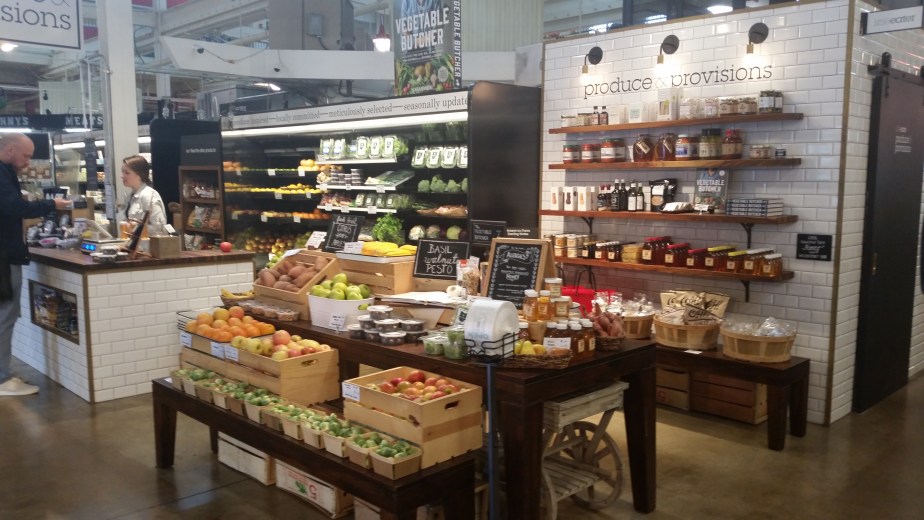
The city’s great food scene was on display at North Market with its cornucopia of offerings including Little Eater Produce and Provisions founded by Cara Mangini (her last name translates, loosely I’m told, into little eater) who is the author of The Vegetable Butcher: How to Select, Prep, Slice, Dice, and Masterfully Cook Vegetables from Artichokes to Zucchini (Workman 2016; $29.95), winner, of the IACP Cookbook Awards for Single Subject and People’s Choice. It’s the kind of place where I saw two people working on slicing a wheel of cheese that looked like it was six-feet in diameter, could buy the most luscious French pastries and also stuffed cabbage and pierogi.

20180309_105228 (1)

Hot Chicken Takeover (HCT), besides specializing in the type of spicy fried chicken made by marinating chicken overnight in a mixture of buttermilk and hot sauce, is an innovative program started by founder Joe DeLoss, who after a trip to Nashville, Tennessee and numerous dinners of hot chicken there, came up with the idea of starting a pop-up restaurant that not only featured his version of hot chicken but also hired people often considered unemployable or poor employment risks. These included those trying to get jobs after being released for jail or prison, who had spotty employment history or for some reason just couldn’t find or keep a job.  But DeLoss wasn’t looking to give a hand-out, his employees are expected to show up for work on time, set goals and do their job. The pop-up was so successful—it was open ten hours a week during which they sold between 1000 to 1200 meals—that DeLoss opened his restaurant in North Market in the city’s downtown. They now have two other locations in Columbus, employ over 200 people, 70% of whom have been in the corrections system or homeless and have between a 70 to 80% employee retention rate. For anyone knowledgeable about the restaurant business, that’s a huge number in a business with a large turnover rate.

“It’s about accountability and support,” DeLoss told us when he stopped by our table as we were eating chicken sandwiches, banana pudding and his family’s recipe for coleslaw.

I really didn’t want to put my sandwich down to talk but his business model is fascinating and offers a micro-solution for those who are struggling to jumpstart their life. Our waiter had already told us that he had dealt with alcoholism and homelessness but now had been working at HCT for about a year-and-a-half and really liked the sense of community and support he received from both DeLoss and the rest of the staff.

The buzz is so big about HCT that TV food maven Rachel Ray showed up, tasted the chicken (her interpretation of the hot chicken recipe is below) and spent time talking to DeLoss on camera.

Looking around the restaurant, you don’t see the sadness of street life. The employees are well-groomed and friendly, the patrons include a mixture of casually dressed college students and those who look like they work in offices. Even though the lines are long to order, there’s a lot of laughter and conviviality. DeLoss says that most of his customers don’t even know about the philanthropic aspect of his business but come for the food.

HCT is a great example of doing good and providing great grub. It not only makes my stomach happy but also my heart.

Hot Chicken

6 to 8 boneless, skinless chicken thighs, pounded
6 to 8 pieces boneless, skinless chicken breasts, cut in half on a bias
Salt and pepper
2 cups buttermilk
2 tablespoons Frank’s Red Hot or Crystal Hot Sauce

For the slaw:
1/2 cup pickle brine (homemade or store-bought sliced pickles, B&B or dill)
1 tablespoon superfine/quick-dissolve sugar or Acacia honey
3 tablespoons vegetable oil
1 pound (about 6 cups) shredded white cabbage
1 teaspoon celery seed
1/4 cup dill, coarsely chopped
Salt and pepper

For dredging chicken:
3 cups all-purpose flour
Salt and pepper
1 tablespoon granulated garlic
1 tablespoon granulated onion
1 tablespoon paprika

Vegetable oil, for frying
4 eggs

For the sauce: 
1 stick of butter
4 tablespoons cayenne pepper
2 tablespoons dark brown sugar
1 tablespoon paprika
2 teaspoons granulated garlic
2 teaspoons granulated onion

Sliced good quality white bread

Season chicken with salt and pepper, cover with buttermilk and hot sauce, and refrigerate overnight.

Whisk up slaw dressing, toss with cabbage, celery seed and dill.  Season with salt and pepper and refrigerate until ready to serve.

Heat a few inches of frying oil in Dutch oven or tabletop fryer to 350°F.

Whisk up flour dredge in a shallow dish then whisk eggs together in a separate dish and season with salt and pepper. Coat chicken first in flour and shake off excess. Dip into egg and coat in flour one more time. Add to hot oil and fry 8-10 minutes until cooked through.

For the sauce, melt butter in a saucepot and whisk in dried spices. Paint hot chicken with sauce and serve on bread with slaw and pickles.

For more information:

Hot Chicken Takeover

Follow them on:

Instagram

Facebook

Twitter 

For what to do: Columbus, Ohio 

Where to stay: AC Marriott


Crazy Sista Cooking: Cuisine & Conversation with Lucy Anne Buffet

Lucy-8690-smWhen my daughter was in high school, I drove her and a friend down to Gulf Shores, Alabama for spring break. While we were there, a friend insisted we go to Lucy Buffet’s Lulu’s Gulf Shores, a bayside beach restaurant. I was pretty sure, no make that positive, that this would be some kind of not-so-good-but-my-brother-Jimmy-is-a-major-celebrity type of place. The good thing, I thought when we sat down in the very crowded main dining room was that we could see dolphins frolicking out in the water from our screened in, over-sized window. That would make the bad food worth it.

37121568_10156143633092713_5753391619667656704_n

Okay, so I totally misjudged what Lulu’s was all about. The food was delicious, whatever was fried was done just right—not greasy or heavy—and there were plenty of other options on the menu that were delicious like the crab melt, Crazy Sista’s Juicy Pot Roast Sandwich (yes, indeed, pot roast), gumbo, Lulu’s Jerk Chicken Quesadillas and, of course, this being the south, fried okra and fried hushpuppies (both of which were wonderful). I was given a copy of her cookbook, Crazy Sista Cooking: Cuisine & Conversation with Lucy Anne Buffet (Grand Central Life & Style) that included a foreword by brother Jimmy. Crazy Sista is Lucy Anne’s nickname. Now Buffet also has restaurants in Destin, Florida and Myrtle Beach, South Carolina and several other cookbooks including LuLu’s Kitchen: A Taste of the Gulf Coast Good Life and Gumbo Love: Recipes for Gulf Coast Cooking, Entertaining, and Savoring the Good Life. Many of the zippy recipes are the same with new ones added. For the fried oyster recipe Dave requested, I included Mama’s Favorite Oyster Loaf. Instead of oysters, you can use fried shrimp or even fried veggies instead.

39953590_10156241899637713_2358163720992980992_n

The recipe calls for making a lot of the ingredients such as her Sweet and Sassy Icebox Pickles and Lulu’s Crazy Frying Cornmeal. I’ve included those recipes, thinking you can plop the pickles in the refrigerator and eat them at other times and save the left over cornmeal mix as well. But if you’re in a hurry, feeling lazy or just want to make it simple, you can just find comparable ingredients at the grocery store.   And since it’s good to have an accompaniment, I’ve included Lulu’s recipe for Sweet Tomato Pie.

The following recipes are from LuLu’s Kitchen: A Taste of the Gulf Coast Good Life by Lucy Anne Buffet (Grand Central Life & Style, $20).

Listen to Lucy talk about Gumbo Love.

Mama’s Favorite Oyster Loaf

Makes 4 sandwiches

1 quart oysters

4 (8-inch) New Orleans-style French bread or 1 baguette, cut into four pieces

2 to 3 tablespoons butter, softened

Mayonnaise to taste

Lettuce leaves

2 medium tomatoes, sliced

Sweet and Sassy Icebox Pickle slices (recipe below)

Hot Pepper Sauce

Preheat oven to 200 degrees.

Fried oysters (see recipe below)

Preheat oven to 200 degrees.

Fry oysters in batches and place cooked oysters in oven to keep warm.

Slice bread horizontally, about three-fourths of the way through, leaving one edge intact.

Spear a little butter on inside surface of French bread and toast. I like to place mine face-down on a warm skillet or grill.

Spread mayonnaise on toasted read.

Layer lettuce, tomato slices and pickles on bottom side of the bread. Top with fried oysters, using about eight oysters per sandwich.

Add a few dashes of hot sauce to taste.

Cut into halves or quarters depending upon the bread you’re using and serve.

Sweet and Sassy Icebox Pickles

1 (1-gal.) jar whole kosher dill pickles, drained, cut into 1/4-inch-thick slices

4 cups granulated sugar

4 cups packed light brown sugar

1 cup apple cider vinegar

2/3 cup peeled, halved, and sliced fresh ginger

1/4 cup prepared horseradish

1 tablespoon crushed red pepper

1 tablespoon mustard seeds

1/2 teaspoon ground turmeric

4 medium-size yellow onions, thinly sliced

20 garlic cloves, sliced in half lengthwise

8 cinnamon sticks

Place all the ingredients in a big ol’ stainless steel bowl or large plastic food-safe container with an airtight lid. Using your hands, toss well. Cover and chill overnight. The pickles will reduce in volume, so the next day you can place in a very large jar or several small airtight containers for easier storage.

Refrigerate at least 1 week before using, turning topsy-turvy every day. Pickles are ready when sugar has dissolved and all dill flavor has vanished. Store in refrigerator up to 3 weeks.

Perfect Fried Oysters

Make Lulu’s Crazy Crying Cornmeal (recipe below) or use regular cornmeal.

6 cups peanut oil or enough to fill a skillet, about 2 inches deep

1 quart oysters, drained

Heat oil in cast iron skillet to 355 degrees or heat until a little flour flicked into the oil sizzles

Taking a few oysters at a time, dredge through cornmeal mixture coating thoroughly.

Gently drop into hot oil. Fry until golden brown turning once or until they float to the top. Drain on paper towels and serve immediately.

Lulu’s Crazy Frying Cornmeal

2 cups all-purpose white cornmeal

2 tablespoons Creole seasoning

1 tablespoon black pepper

½ teaspoon salt

Combine all ingredients and mix well.

Sweet Tomato Pie

Serves 6-8

2 tablespoons all-purpose flour

Pastry for 1 pie crust

2 tablespoons unsalted butter

1 tablespoon extra-virgin olive oil

1 large onion, thinly sliced

1 tablespoon sugar

4 cloves garlic, thinly sliced

4 ounces cream cheese, softened

1/2 cup mayonnaise

2 tablespoons heavy cream

1 tablespoon sour cream

1 tablespoon honey mustard

1 cup shredded Parmesan

4 green onions, including the green part, cut into 2-inch pieces

4 large red tomatoes, in 1/4-inch slices

1/2 teaspoon each kosher salt and coarsely ground black pepper

1/2 cup fresh basil, cut in ribbons

2 cups shredded Gruyere or Swiss cheese

Heat oven to 450 degrees. Sprinkle flour over work surface and roll pastry dough to fit a 7-by-11-inch baking dish, making sure dough comes up the sides of the dish. Poke bottom of crust with a fork in several places. Bake for 9 to 10 minutes or until lightly browned. Let cool. Reduce oven temperature to 400 degrees.

In a cast iron or heavy skillet, heat butter and olive oil over medium heat. Add onions and sugar; sauté until onions are very brown and caramelized. Add garlic and stir constantly for 1 to 2 minutes or until garlic is cooked through and tender. Remove onions and garlic from skillet and let cool.

Using a food processor, process cream cheese, mayonnaise, cream, sour cream, mustard, Parmesan and green onions until well mixed.

In the cooled pie crust, layer half the onions, cream cheese mixture, sliced tomatoes, salt, pepper, basil and Gruyere. Repeat. Bake for 35 minutes or until pie is bubbling and top is browned. Cool for 15 to 20 minutes before slicing.

Screen-Shot-2018-06-19-at-3.40.28-PMWHITE SANGRIA

Serves 4 to 6

1 (750-milliliter) bottle Pinot Gris or any other crisp light white wine

1/2 cup peach-flavored vodka

2/3 cup sugar

1/4 fresh pineapple, chopped into cubes

1/2 lemon, cut into wedges

2 fresh strawberries, chopped

1/2 mango, chopped into cubes

1 (8-ounce) can ginger ale

Ice cubes

In a very large pitcher, combine the wine, vodka, sugar, and fruit. Stir well. Let the ingredients steep in the fridge for 2 to 24 hours (the longer, the better).

Add the ginger ale and ice cubes about 30 minutes before serving.

Place a strainer over the mouth of the pitcher and pour to order. Garnish with any leftover fruit, such as more of the pineapple, lemon, strawberries, and mango.


Magnolia Springs, Alabama

On a languid afternoon after too much time in the sun in Gulf Shores, Alabama, I decided to follow the coastline along the Eastern Shore through Fairhope to  Magnolia Springs, a small town along the headwaters of the Magnolia River. With jasmine and bougainvillea in bloom, it seems like a true Southern Gothic (in the good sense of the word) type of place with historic mansions, postal delivery by boat (one of the few places in America to do so) and a great place to eat—the award winning ­Jesse’s Restaurant, in what was once the Moore Brothers General Store, which first opened in 1922. The building is on the National List of Historic Places. They’re a award winner of Wine Spectator. As for the hamlet where it’s located, Southern Living named Magnolia Springs one of The Most Charming Small Towns in Alabama.

Their specialties include unique cuts of dry and wet-aged steaks, bone-in cuts and fresh fish brought in daily. I ordered the shrimp and grits and more oysters than I should have and then headed down Oak Street, where live oak trees create a living canopy above the roadway, past the 19th­ century Episcopal Church and to the Magnolia Springs Bed and Breakfast, which dates to 1897, for a peak inside.

Oak-St.-from-yard

Co-­owner Dave Worthington quickly volunteered to take me on a tour of the place, which has been a hotel since it opened. Leafing through a guest book dating back to the early 1900s, I can see this place was a hit, even though for visitors from Grand Rapids and Lawton, Michigan as well as Chicago and other far away northern climes it took two days and three modes of transportation to get down there back then ­first by train, then by boat, and finally by horse and buggy. And there wasn’t even air conditioning when they arrived.

But the food was good, the landscape serene and the fishing, I’m told, was great. I don’t know about the fishing now, but the town is beautiful and the inn serves a wonderful breakfast.

To give you a taste, here are some recipes Dave shared.

David’s Apple Dumplings

·      1 red Delicious apple

·      1 can crescent rolls

 Cinnamon Sauce:

·      Warm the following three ingredients until
dissolved:

·      1 1/2 cup orange juice

·      3/4 cup sugar

·      1/2 stick butter

Peel, core and cut apple into quarters or thirds. (You also can use a pear, peach, blackberries or a ball of cranberries ­ anything that makes a good cobbler will be great for the filling).

Wrap 1/4 of Apple with one piece of crescent roll and seal all edges.

Place seam side down in Pyrex pan (9×13-inches).

Pour sauce over them then sprinkle with cinnamon.

Cook at 350 degrees for 20-25 min. till done.

Baste dumplings with sauce in the pan before moving to plate.

I drizzle a small amount of sweetened vanilla yogurt on top as icing.

Makes 8 dumplings cut in half to make 16 servings.

Dave also drizzles a small amount of sweetened vanilla yogurt on top as icing.

David’s Eggs

8 eggs

1 can green chilies

16­ ounce cottage cheese­ large curd

8 ounces sharp cheddar cheese

2 tablespoons flour

Shred cheese and coat with flour. Beat eggs with green chilies. Add cottage cheese, then cheddar cheese, and mix.

Pour into 9­inch pie pan and bake at 350 degrees for 55­-60 minutes.

For more on the inn, visit magnoliasprings.com

Turnips & Tortillas: A Mexican Chef Spices Up the Southern Kitchen

Southern food meets Mexican food in Eddie Hernandez’s new book Turnips & Tortillas: A Mexican Chef Spices Up the Southern Kitchen.  Hernandez, the James Beard nominated chef/co-owner of Taqueria del Sol, has written a fantastic cookbook that explores the commonalities of these two cuisines.

Never hesitating to improve upon tradition, Hernandez tweaks classic dishes to make food taste better in such ways as by adding sugar to creamy grits to balance the jalapeños or substituting tomatillos for fried green tomatoes to achieve a more delicate texture. Turnip Greens & Tortillas offers a collection of both recipes and “Eddie’s Ways”–sidebars showing how to make each dish even more special.My Breakfast Muffins (c) Angie Mosier (1)

As an example, Hernandez says Mexicans view bread pudding as a special treat typically eaten only during Lent.

“It is not like any bread pudding you have had in the U.S., but the flavors should taste very familiar—a little like the inside of a cinnamon roll, with the gooeyness of pecan pie,” he writes in his description of Capirotada, a Mexican bread pudding recipe in his cookbook. “The exact ingredients vary with whatever’s in the cook’s kitchen cabinet that needs to be used up, but they usually include toasted and buttered bread, dried fruits, nuts, and mild cheese. My mother often added animal crackers, and I still find their crunchy texture works well in this mixture. Whereas my mother steamed her bread pudding on top of the stove, I bake mine. Instead of being held together by an eggy custard, the pudding is drenched in a warm syrup spiced with cinnamon and cloves that is made by melting piloncillos—unrefined sugar molded in cones and sold in Mexican markets or online—with water. Turbinador brown sugar works just as well. There is deep religious meaning behind the main ingredients: The bread symbolizes Christ’s body, the syrup is his blood, the cinnamon and cloves are the wood and the nails of the cross, and the melted cheese signifies the holy burial shroud. As serious as its message is, the dish is very festive and often served with ice cream and colored sprinkles. This bread pudding is even good for breakfast as coffee cake.”

Also good for Easter are Hernandez’s breakfast egg muffins topped with a tomato-habanero sauce.

Mexican Bread Pudding (Capirotada)

Makes 6 to 8 servings

1 pound cane sugar, turbinado sugar, or brown sugar

3 cups water

2 cinnamon sticks, preferably Mexican (canela)

6 cloves

8 ounces French bread or 4 bolillo rolls, cut into ¼-inch-thick pieces

4 tablespoons (½ stick) butter, melted

1 cup golden raisins

1 cup coarsely chopped pecans

1½ cups crushed animal crackers

1 cup crumbled queso fresco or grated Monterey Jack cheese

¾ cup shredded sweetened coconut Ice cream (optional)

Colored sprinkles (optional)

To make the syrup:

Combine the sugar, water, cinnamon sticks, and cloves in a medium saucepan set over medium-high heat.

Bring to a boil, reduce the heat to maintain a simmer, and simmer for 5 to 10 minutes, until slightly thickened.

Remove from the heat; cover and let steep while you prepare the remainder of the dish.

This step can be done a day ahead.

Heat the broiler to high, with one rack set in the middle of the oven and one 4 or 5 inches from the broiler source. Brush the bread with 2 to 3 tablespoons of the butter. Place the pieces in a single layer on a sheet pan and set under the broiler until lightly toasted, about 1 minute (watch carefully). Remove from the oven and set aside until ready to use.

Set the oven temperature to 325 degrees. Brush a deep 8-inch square pan or 2-quart casserole dish with the remaining 1 to 2 tablespoons butter.

Place one-third of the bread in a single layer in the baking dish. Top with one-third of the raisins, pecans, animal crackers, cheese, and coconut. Remove the spices from the syrup and ladle one-third of the syrup over the mixture. Let the syrup soak into the bread for about 15 minutes, then repeat the layering with the remaining ingredients two more times, finishing with the syrup. Let the syrup soak into the bread for 15 minutes.

Cover the pan tightly with foil and bake for 45 minutes, then uncover and bake for 10 minutes longer, or until the top of the pudding is golden brown. Serve warm or at room temperature, with ice cream and garnished with sprinkles, if desired. The pudding will keep for several days, tightly covered, at room temperature.

My Breakfast Muffins

Makes 12 muffins

12 large eggs

4½ teaspoons baking powder

½ teaspoon salt

4 ounces andouille or other smoked sausage, cut into 24 slices; or left over roasted vegetables

¾ cup grated Monterey Jack or Colby cheese (goat cheese or other kinds of cheese can be substituted)

2 cups Tomato-Habanero Sauce (see below) or use your favorite salsa

Heat the oven to 425 degrees. Spray a 12-cup muffin tin with nonstick vegetable spray and set aside.

Whisk the eggs, baking powder, and salt in a large bowl until smooth. Place 2 slices of smoked sausage and 1 tablespoon of the cheese into the bottom of each muffin cup. Divide the egg mixture evenly among the muffin cups. Bake for 10 to 12 minutes, until puffed and lightly browned.

Meanwhile, heat the sauce. Ladle some of the sauce onto plates and top with the egg muffins.

Tomato-Habanero Sauce

Makes about 4 cups

5 to 6 medium tomatoes (about 1½ pounds)

1 habanero or other types of chiles

2 tablespoons vegetable oil

¼ cup finely diced onion

1 garlic clove, crushed

1 teaspoon salt

1 cup chicken stock, preferably homemade

Place the tomatoes and habanero in a large saucepan, cover with water, and bring to a boil over high heat. Boil just until the tomato skins start to crack. Drain in a colander. Remove the stem from the habanero.

Transfer the tomatoes and habanero to a blender and puree until smooth.

Heat the oil in a medium saucepan over medium heat until it shimmers. Add the onion, garlic, and salt and cook until the onion is translucent and soft, 3 to 5 minutes. Add the tomato puree and the stock, increase the heat to high, and boil for 3 minutes more. Taste and adjust the seasonings as desired. The sauce keeps for up to 3 days, covered and refrigerated.

The above recipes are from Turnip Greens and Tortillas: A Mexican Chef Spices Up the Southern Kitchen by Eddie Hernandez. Reproduced by permission of Rux Martin/Houghton Mifflin Harcourt.

Ifyougo:

Eddie Hernandez will be talking and signing copies of his book on June 3 at 1:30 p.m. at Read It & Eat, 2142 N. Halsted St., Chicago, IL. For more information:  (773) 661-6158; readitandeatstore.com