SAVOR THE SAN JUANS: A TASTE OF THE PACIFIC

An archipelago of islands off the coast of Washington State, there are 172 named islands and reefs in San Juan County but the main three–all with ferry service–are San Juan Island (with the county seat Friday Harbor), Orcas Island, and Lopez Island. Not only are they the most populous but each offers a myriad of lodging, dining, and activities for visitors.

The 13 defining tastes of the San Juan Islands are salmon, heritage fruit, foraged botanicals, shellfish (think oysters and clams), crab, lamb, Mangalitsa Pork, seaweed and salt, lavender and hops, cider and apple brandy, grains, goat cheese and white wines.

Here’s a sampling of what visitors can find:

Spiced apple with chocolate and pumpkin cream-filled doughnuts. Cardamom buns. Buckwheat tahini chocolate cookies. Savory brioche tarts with leek, chevre, and kabocha squash. All of the ingredients for these mouth-watering pastries? Entirely sourced locally by creator and owner of new Seabird Bakeshop, Brea Currey, from Orcas Island farm stands like West Beach and Maple Rock, eggs from neighborhood chickens, and flour from Fairhaven Mills in Burlington. Since September, Seabird Bakeshop has been thriving on Orcas Island where chefs are thinking creatively about how to bridge food and entrepreneurism during the time of coronavirus. Thus far, Currey’s success is, among other things, a testament to the power of baking as a 2020 survival strategy on Washington’s farm-to-table captivated island. Find Seabird on Facebook and Instagram: @seabirdbakeshop

 Myers Creamery on Orcas Island, Quail Croft on San Juan Island, and Sunnyfield Farm on Lopez Island all are expect at making fresh chevre, herbed cheeses, washed-rind and aged cheeses, all of which can be found at each island’s farmers’ markets, and at the Orcas Island Food Co-op and the San Juan Island Food Co-op. Following the seasons, goat cheeses start out fresh and creamy in springtime when the goats graze on spring grass. As the grass matures, so does the flavor of the cheese, until at the end of fall, the cheeses are more intense, earthy and, dare we say, “goaty.”

Cold pressed cider. Small batch granola. A box full of farm-fresh greens. Locavores, look no further: the newly aggregated Washington Food and Farm Finder features 1,700 farms, farmers markets, and food vendors with offerings “grown, caught, raised, or made” across the state. Find San Juan Islands favorites like Ursa Minor, Madrone Cellars, and Buck Bay Shellfish Farm. The guide has filters for pickup or delivery services, markets, food trucks, or specialty food and beverage locales. Icons designate sustainable fishing or animal welfare certifications, as well as veteran-, woman-, and BIPOC-owned businesses. For more information: https://eatlocalfirst.org/wa-food-farm-finder/

Island makers Girl Meets Dirt and Madrone Cellars & Ciders are winners in the annual Good Food Awards for 2021. Madrone’s Barrel-Aged Currant took top prize in the Cider category. Girl Meets Dirt has winners in both the Preserves and Elixirs category. Their Rhubarb Lavender Spoon Preserves are a great choice for charcuterie. The Rhubarb shrub and Shiro Plum Tree bitters give some extra oomph to your signature cocktails. Shop Girl Meets Dirt winners here: www.girlmeetsdirt.com/shop and Madrone Cellars here: https://madronecellars.com/

Local favorite San Juan Sea Salt is rolling out a new line of flavored salts: the Deli Series, starting with Everything but the Bagel. All the yum of everything bagels, none of the carbs! Try this on avocado toast, mixed with your breading for fried chicken, and snacking on it straight from the jar! Everything but the Bagel joins the Dill Pickle Salt as an homage to class deli flavors. The Dill Pickle Salt is a tangy, dilly, zesty, garlicky salt with just the right magic to give your mouth the déjá vu feeling of crunching into a darn fine pickle. Find these and others here: www.sanjuanislandseasalt.com/online-store/NEW-c48889151

Buck Bay Shellfish Farm

Buck Bay Shellfish Farm on Orcas Island is a hidden gem where you can stop in for a couple of pounds of fresh clams or oysters, or you can while away a whole afternoon shucking oysters and drinking wine (BYOB) while looking out over the serenity of Buck Bay just yards away.

New owners Eric and Andrea Anderson rebuilt the docks and oyster shack at Westcott Bay Shellfish Farm on the north end of San Juan Island. They’ve also linked the property to trails connecting to English Camp, making their shellfish farm a destination for hikers and bicyclists as well.

Island wineries produce light, refreshing whites that pair well with seafood and other San Juan specialties. Owners Yvonne Swanberg of San Juan Vineyards, and Brent Charnley of Lopez Island Vineyards grow and makes Siegerrebe and Madeleine Angevine from their estate vineyards.

OLYMPUS DIGITAL CAMERA

Westcott Bay Cider, one of the oldest cideries in the state of Washington, ferments three types of ciders from the “bitters” and “sharps” from their orchard, from traditional dry to medium-sweet styles. The cider is then distilled into a clear eau-de-vie and aged in wine barrels.

Orcas Island Cider and Mead Festival has drawn two dozen cider and mead producers from throughout the region.

Local farmer Brady Ryan started San Juan Island Sea Salt, made by collecting salt water from the Salish Sea and drying it in special bins to retain the fluffy white crystals that are then flavored with such botanicals as smoked madrona bark, dried kelp, lemon peel and various dried herbs.

In any list of definitive island flavors, lavender deserves its own category, partly because it is a cultivated botanical rather than a forged one. But it’d also an important part of island culture.

Pelindaba Lavender Farm has been growing lavender and creating lavender products for almost 20 years. At the farm, you can stroll the lavender fields, learn about how lavender oil is extracted and distilled into almost 250 products made onsite, including many food products such as lavender teas, salad dressings, ice cream and herbal rubs.

Island grown hops are used in the beers made by Orcas Island’s Island Hoppin’ Brewery, adding floral and bitter notes and a local touch to these tasty beers. You can visit the brewery and tasting room just outside of Eastsound.

Chef Geddes Martin, owner of the Inn at Ship Bay, raises his own Mangalitsa hogs in partnership with his friend and farmer, John Steward of Maple Rock Farm and Hogstone’s Wood Oven. Mangalitsa is a breed that’s known as the “hairy pig that is the Kobe beef of pork,” with more flavor and marbled fat than standard industrial-raised pork, and makes for amazing pork belly or pork loin.

Barefoot Contessa Foolproof: Recipes You Can Trust

You buy the ingredients, maybe spending a little more than you should – but the recipe looks great and you’re having friends over you want to impress. Back home in your kitchen you start cooking following the recipe step-by-step. It should be perfect but it’s not. There’s too much liquid in the cake batter, not enough flavor in the soup and despite the amount of time cited for cooking the duck, it’s done and getting dry in half the time.  In other words, the meal is a mess. That’s one reason why Ina Garten, the Barefoot Contessa of Food Network fame and accomplished cookbook author, has always been one of my favorites. And so I was glad when my friend cookbook publicist Carrie Bachman who represented Barefoot Contessa Foolproof: Recipes You Can Trust (Clarkson Potter $35), sent me a copy and set up a phone interview so I could chat with Garten about the book. That was back in 2013 and Garten now has added even more cookbooks to her list including the recently released Modern Comfort Food, but I still rely upon Foolproof to ensure that my time and groceries don’t go to waste.

“People look at a recipe and think if you just follow it, it’ll come out perfectly every time,” says Garten, who interestingly, majored in economics in college. “But every time you make something, the ingredients are a little different or you have another way you want to try it. So it’s a lot like driving a car; you have to make small adjustments along the way.”

That’s why Garten often tests each of her recipes 25 times and also has an assistant try them as well. She wants those who watch her shows or buy her cookbooks to always a meal they’re proud to serve and, even better, enjoy eating. Indeed, Garten wants her recipes to be foolproof.  

Foolproof was her eighth cookbook and anyone who owns one or more of her Contessa books such as Barefoot in Paris: Easy French Food You Can Make at Home and Cook Like a Pro, is used to the style – sleek pages, vivid photographs (150 in this book), and flavorful and creative recipes written in a clear easy-to-follow prose. As on her TV shows, Garten doesn’t just present recipes perfect for recreating successfully at home, she also shares how to plan a menu, coordinating food times so everything is done at once as well as notes on where a recipe can go wrong and how to make a dish in advance. 

 “I want recipes that I know will come out perfectly every time,” says Garten. “Cooking is hard, it takes a lot of ingredients, you go shopping, you cook, you clean up. a lot of ingredients, you go shopping, you cook, you clean up. You can get free recipes anywhere, so why should anyone want to buy a cookbook? What makes it worthwhile and worth the price? It’s the level of confidence in the writer. One of the things I’ve always strived for is recipes that work every time. You feel confident that this recipe is good, but also that you trust it.”

Balsamic Roasted Brussels Sprouts

Serves 6

  • 1½ pounds Brussels sprouts, trimmed and cut in half through the core
  • 4 ounces pancetta, sliced ¼ inch thick
  • ¼ cup good olive oil
  • Kosher salt and freshly ground black pepper
  • 1 tablespoon syrupy balsamic vinegar (see note)

Preheat the oven to 400 degrees.

Place the Brussels sprouts on a sheet pan, including some of the loose leaves, which get crispy when they’re roasted. Cut the pancetta into ½-inch dice and add to the pan. Add the olive oil, 1 ½ teaspoons salt, and ½ teaspoon pepper and toss with your hands. Spread out the mixture in a single layer.

Roast the Brussels sprouts for 20 to 30 minutes, until they’re tender and nicely browned and the pancetta is cooked. Toss once during roasting. Remove from the oven, drizzle immediately with the balsamic vinegar, and toss again. Taste for seasonings and serve hot.

Note:

You can buy aged balsamic vinegar that’s syrupy—and very expensive—or you can boil good balsamic vinegar until reduced to half its volume and it will become syrupy as well.

Ultimate Pumpkin Pie with Rum Whipped Cream

Serves 8 to 10

“Pumpkin pie can be boring and dense so I set out to make a better pumpkin pie,” writes Garten in her introduction to this recipe and we are totally behind that having eaten way too many boring and tasteless pumpkin pies. “Pumpkin has a distinct squash flavor that you want to enhance without overpowering it. I’ve filled the prebaked crust with a lightly spiced pumpkin mixture that tastes more like a mousse than a dense custard. Dark rum and grated orange zest are my secret ingredients.”

  • 1 unbaked Perfect Pie Crust (recipe follows)
  • Dried beans, for blind baking

FILLING

  • 1 (15-ounce) can pumpkin purée (not pie filling)
  • ½ cup light brown sugar, lightly packed
  • ¼ cup granulated sugar
  • ½ teaspoon ground cinnamon
  • ¼ teaspoon ground ginger
  • ¼ teaspoon ground nutmeg
  • ½ teaspoon kosher salt
  • 2 teaspoons grated orange zest
  • 3 extra-large eggs, lightly beaten
  • 1 cup heavy cream
  • ½ cup whole milk
  • 2 tablespoons dark rum, such as Mount Gay
  • Rum Whipped Cream (recipe follows)

Preheat the oven to 425 degrees.

Line an 11-inch pie pan with the unbaked pie crust and place it on a sheet pan. Line the crust with parchment paper. Fill the paper threequarters full with the beans and bake the crust for 15 minutes, until the edges start to brown. Remove the beans and paper (save the beans for another time), prick the crust all over with the tines of a fork, and bake for another 5 minutes.

Reduce the oven temperature to 350 degrees.

Meanwhile, in a large bowl, whisk together the pumpkin, brown sugar, granulated sugar, cinnamon, ginger, nutmeg, salt, orange zest, eggs, cream, milk, and rum. Pour the filling into the baked pie shell.

Bake for 55 to 65 minutes, until the filling is just set in the middle and a knife inserted in the center comes out clean. Set aside to cool completely. Serve with the rum whipped cream.

Rum Whipped Cream

Serves 8 to 10

A dollop of mascarpone or crème fraîche in whipped cream stabilizes it so you can make it in advance and store it in the fridge without it separating.

  • 1 cup cold heavy cream
  • 3 tablespoons sugar
  • 1 tablespoon mascarpone or crème fraîche
  • 1 tablespoon good dark rum, such as Mount Gay
  • 1 teaspoon pure vanilla extract

Place the cream in the bowl of an electric mixer fitted with the whisk attachment and beat on medium speed for 1 minute. Add the sugar, mascarpone, rum, and vanilla and beat on medium-high until it forms soft peaks. Serve with the pumpkin pie.

NOTE: If you overwhip the cream and it looks curdled, just add a little more cream and whip it until it forms soft peaks.

Perfect Pie Crust

Makes two ( 9- to 11-inch ) crusts

There are a few tricks to making perfect pie crust. First, the butter, shortening, and water need to be ice cold. When you roll out the dough, you want to see bits of butter throughout. Second, allow the dough to relax in the fridge for at least thirty minutes before rolling it out. And third, don’t stretch the dough at all when you ease it into the pan. Perfect pie crust every time!

  • 12 tablespoons (1½ sticks) very cold unsalted butter
  • 3 cups all-purpose flour
  • 1 tablespoon sugar
  • 1 teaspoon kosher salt
  • ¹⁄³ cup very cold vegetable shortening, such as Crisco
  • ½ cup ice water

Cut the butter in –inch dice and return it to the refrigerator while you prepare the flour mixture. Place the flour, sugar, and salt in the bowl of a food processor fitted with a steel blade and pulse a few times to mix. Add the butter and shortening. Pulse 8 to 12 times, until the butter is the size of peas. With the machine running, pour the ice water down the feed tube and pulse the machine until the dough begins to form a ball. Dump out onto a floured board and roll into a ball. Wrap in plastic wrap and refrigerate for 30 minutes.

Cut the dough in half. Roll each piece on a well-floured board into a circle at least 1 inch larger than the pie pan, rolling from the center to the edge, turning and flouring the dough so it doesn’t stick to the board. (You should see bits of butter in the dough.) Fold the dough in half, ease it into the pie pan without stretching at all, and unfold to fit the pan. With a small sharp paring knife, cut the dough 1 inch larger around than the pan. Fold the edge under and crimp the edge with either your fingers or the tines of a fork.

NOTE: I store the shortening in the refrigerator so it’s always cold. You can store the prepared pie crust in the fridge for up to a day.

Sticky Toffee Date Cake with Bourbon Glaze

Makes one 9 -inch cake

For the cake

  • ¾ pound dates, pitted and chopped
  • 1 teaspoon baking soda
  • ¼ pound (1 stick) unsalted butter, at room temperature
  • ¹⁄³ cup granulated sugar
  • 2 extra-large eggs, at room temperature
  • 1 teaspoon pure vanilla extract
  • 1¼ cups all-purpose flour
  • 1 teaspoon kosher salt
  • 1½ tablespoons baking powder

For the sauce

  • 12 tablespoons (1½ sticks) unsalted butter
  • 1 cup light brown sugar, lightly packed
  • ½ cup heavy cream
  • ¼ teaspoon kosher salt
  • 2 tablespoons good bourbon, such as Maker’s Mark
  • 2 teaspoons pure vanilla extract
  • Sweetened whipped cream, for serving (see note)

Preheat the oven to 350 degrees. Butter and flour a 9 x 2-inch round cake pan.

Place the dates in a deep saucepan with 1: cups of water. Bring to boil, stirring a little to break up the dates. Allow to simmer for 1 minute. Off the heat, stir in the baking soda (it will bubble up!). Set aside.

Meanwhile, in an electric mixer fitted with the paddle attachment, cream the butter and granulated sugar on medium speed for 3 minutes, until light and fluffy. With the mixer on low, add the eggs, one at a time, and then the vanilla, scraping down the bowl. (The mixture may look curdled.) Combine the flour and salt and, with the mixer still on low, slowly add it to the batter. With the mixer on low, add the hot date mixture in two batches to the batter, scraping down the bowl. The batter will be runny but don’t worry! Stir in the baking powder, which will also bubble up. Pour into the prepared pan. Bake for 30 to 35 minutes, until a toothpick inserted in the center comes out clean.

Meanwhile, combine the butter, brown sugar, heavy cream, and salt in a medium saucepan and bring to boil. Reduce the heat and simmer for 1 minute. Off the heat, stir in the bourbon and vanilla and pour into a 2-cup heat-proof glass measuring cup. Set aside. As soon as the cake is done, poke holes all over it with a toothpick. Pour three-quarters of the sauce evenly over the cake while still warm and allow it to soak in for 30 minutes. Turn the cake out bottom side up onto a flat serving plate and pour the remaining sauce on top. Cool completely.

Serve at room temperature with sweetened whipped cream.

Weelicious: Fourth of July Meals and Beyond

Red, white, and blue food is always part of the upcoming Fourth of July holiday and so this year, I turned to Catherine McCord, founder of Weelicious, a website and cookbooks dedicated to healthy eating, getting kids into the kitchen and to the table. She also is co-founder of One Potato, the first organic home meal delivery kit service designed getting family meals together in 30 minutes or less and that are kid-friendly so that children can help. All the ingredients for One Potato are pre-prepped, making it easy indeed.

As if that wasn’t enough, McCord, has authored several cookbooks including Weelicious: One Family. One Meal with 140 original recipes and Weelicious Lunches: Think Outside the Lunchbox created to go beyond peanut butter and jelly sandwich and featuring more than 160 recipes.

A former model, actress,  and culinary school graduate McCord, the mother of three, who has been on the cover of such magazines as Glamour and Elle magazines, also appears as a judge on Food Network’s Guy’s Grocery Games.

Named by people magazine as “one of the 50 most influential “Mommy Bloggers.” She updates her blog with a new recipe a day. Visit her at www.weelicious.com

The following recipes are courtesy of McCord.

Fourth of July Parfaits (makes 8 parfaits)

Prep Time: 5 mins Cook Time: 0 mins

Angel food cake (store bought or homemade, recipe below)

  • 1 cup strawberries, stemmed & quartered
  • 1 cup raspberries
  • 1 cup blueberries
  • Coconut whipped cream (recipe below)

Homemade Angel Food Cake:

  • 1 cup cake flour, sifted
  • 2/3 cup powdered sugar
  • 12 large egg whites
  • 1 1/2 teaspoons cream of tartar
  • 1 teaspoon kosher salt
  • 2/3 cup granulated sugar
  • 1 teaspoon vanilla extract
  • 2 tablespoons lemon juice

Cut the angel food cake into 2-inch cubes.

Alternately layer the angel food cake, coconut whipped cream, and berries in clear glasses or mason jars so you can see all the colors and textures.

Homemade Angel Food Cake:

Preheat oven to 325F degrees. Whisk the flour and powdered sugar in a large bowl.

In a standing mixer fitted with the whisk attachment beat the egg whites, cream of tartar, and salt on medium-low speed for about 30 seconds. Increase the speed to medium-high until the egg whites are very foamy and barely form soft peaks, about 45 seconds longer. Gradually add the granulated sugar and continue to beat on medium-high speed until whites are firm and glossy and hold stiff peaks (if you over beat, the meringue will look dry and curdled). Beat in the vanilla and lemon juice.

Sift one-third of the dry ingredients over the meringue. Continue to beat on low speed until just incorporated. Continue the sifting and mixing process 2 more times. Remove the bowl from the standing mixer and fold batter several times with a large spatula to make sure all ingredients are fully incorporated.

Pour half of the batter into ungreased tube pan. Using a spatula push the batter all around the pan as it will help with a more even cake after baking. Scrape remaining batter into pan and spread the top evenly.

Bake the cake about 40 minutes or until top is puffy and golden. Immediately invert the pan onto a baking rack. Allow the cake to cool at least 1 hour.  Turn the cake right side up and using a thin metal spatula, cut around sides and loosen cake. Release the tube from the cake pan. Using thin metal spatula, loosen cake from bottom. Invert cake onto a plate or cake stand and remove bottom. Allow to cool thoroughly before cutting into cubes.

Coconut Whipped Cream

Makes 1 ½ cups

  • 1 can full fat coconut milk
  • 1 teaspoon powdered sugar

Place the jar of coconut milk in the refrigerator to chill overnight.

Being careful to not shake the can, open the coconut milk.

Spoon out the thick coconut cream into a large bowl, which is about 2/3 of the can. Once you get to the liquid, stop and discard or save for smoothies.

Beat the coconut cream with a handheld electric or stand mixer for 1 minute.

Add the powdered sugar and continue to beat until light and fluffy, about 30 more seconds.

Fruit Wands

  • 1 watermelon
  • 2 pints blueberries
  • 20 skewers

Slice the watermelon into 1/2 inch round slices, and then cut out star shapes using a three-inch star-shaped cookie cutter.

Gently slide the blueberries on wooden skewers* and finally place a watermelon star on the top.

Place the skewers in a tall glass or in decorated floral foam as an eatable centerpiece.

Red, White & Blue Pops

Makes 8 Popsicles, depending on the size of your molds

Prep Time: 5 mins Cook Time: 0 mins

  • 12-ounce bag frozen blueberries, defrosted
  • 6 tablespoons agave, divided (you can also use honey)
  • 1 cup plain yogurt
  • 1/2 cup milk (you can use cow’s milk, almond, rice or soy)
  • 12-ounce bag frozen raspberries, defrosted

Place defrosted blueberries and 2 tablespoons agave or honey in a blender and puree until smooth.

Pour the blueberry puree 1/3 way up each popsicle mold and freeze for 30-45 minutes.

Combine the yogurt, milk, and 2 tablespoons of agave or honey in a bowl and whisk until smooth.

Pour yogurt mixture 2/3 way up the popsicle molds on top of the blueberry mixture, gently tap to even out the yogurt layer, and freeze for another 30-45 minutes.

Place defrosted raspberries and 2 tablespoons agave or honey in a blender and blend until smooth.

Finish the popsicles by pouring the raspberry puree over the yogurt, place sticks in and freeze 6 hours to overnight, until frozen through. 

*Because all popsicle molds are different sizes, you may have left overs. You can refrigerate the remaining berry purees and use as toppings for yogurt, granola, pancakes, etc.

This article also appeared in the Food section of the Herald Palladium.

Paul Saginaw Takes Las Vegas at the Circa Casino and Hotel

We may be in Las Vegas, but Saginaw’s Delicatessen located in the posh and very hip 1.25- million-square-foot, $1 billion Circa Casino & Hotel in the trending upwards historic Las Vegas district called the Fremont Street Experience, certainly has a Michigan spirit to it all. Paul Saginaw, who dropped out of graduate school and co-founded Zingerman’s Deli in Ann Arbor almost 40 years ago, helping to grow the little Jewish delicatessen into a business that brings in over $45 million a year and has upwards to 600 employees.

Now at an age when many people are planning on retiring, Saginaw has rented a condo that’s just an eight-minute walk away. That way he can put in 12 to 18 hour days at his deli which is open 24 hours a day, seven days a week.

“My friends think I’m insane,” Saginaw tells me over a lunch the includes many of the sandwiches recognizable by those who have eaten at Zingerman’s Deli—such as their corned beef topped Swiss Emmental cheese, coleslaw & Russian dressing on Jewish rye bread, kreplach—the house made chicken broth with a brisket-filled dumpling, latkes, and knishes.

But despite the hours, Saginaw says that owning a place in Vegas is exactly where he wants to be.

Saginaw is a storyteller, often breaking into asides. Talking about growing up in the Detroit area, he says his sisters taught him to dance because he wasn’t handsome. That couples with being able to make women laugh was how he snagged his wife Lori Saginaw decades ago.

I’m torn, wanting to write everything down which is, of courses, why I’m here, but also nibble on the food that’s spread out on the table in front of us. Not exactly sophisticated of me, was it?

But here’s the gist of how our meeting went.

As I take a bite out of Ben Sherman’s Corned Beef & Pastrami, the  house-made Russian dressing drips on my notebook. I’m torn between whether to try to clean it up with a napkin, eat more of the sandwich, or take notes as Saginaw tells me about how as kid, he ground-up chicken livers for his Grandmother Sherman as she prepared Friday Shabbat dinner. That quickly leads him talk about making gribenes from schmalz (chicken fat)—a necessary if complicated step to create what he describes as the most sublime chopped liver dish ever. 

He recites the entire recipe for his grandmother’s or as its listed on the menu Bubbe’s chopped liver, but by now I’m too busy eating a matzoh ball. Talking about Grandma Sherman leads us next to Saginaw’s great uncle Charles “Chickie” Sherman, the number one Detroit bookie who was first arrested in 1925 and then added at least another 64 to the score before the big bust at Detroit’s Anchor Bar in 1971. That’s when two guys playing pool all of a sudden jumped over the bar and announced, “this is a raid.”  

Chickie and 151 other people including about 15 policemen were arrested. Saginaw tells me he read the transcripts of the wiretaps the Feds made before the raid which ran thousands of pages. But Chickie’s business problems didn’t hurt the bookie’s popularity. When he died three years later, his funeral at the Ira Kaufman Funeral Chapel in Southfield, Michigan set the all-time record for attendance.

As an aside, those who want to take a stroll through Detroit’s mob days, the Anchor Bar is still in business.

Uncle Chickie is a big part of why Saginaw, who co-founded the very famous Zingerman’s Deli in Ann Arbor with Ari Weinzweig back in 1982, is in Vegas.  He’s always wanted to be here since first coming when young and hearing  Chickie ask for chips and the pit boss ordering five big ones be sent over.

Indeed, we may be in Vegas, but really—as I mentioned earlier–there’s a lot of Detroit here as well. Derek Stevens, who owns the Circa, used to eat at Zingerman’s when he was a student at University of Michigan. When he emailed and asked Saginaw to open up a place at his new casino, what could Saginaw do but say yes.  There are other East Michigan restaurants at Circa and as well as Stevens’ The D Las Vegas also part of the Fremont Experience as well including Andiamo Steak House, a high end Italian-inspired restaurant and the family owned American Coney Island. Owners Chris Sotiropoulos and Grace Keros also started up their first new concept Victory Burger & Wings Co in over one hundred years at Circa. The restaurant overlooks Circa’s sportsbook – the world’s largest, in fact.

 As if Saginaw isn’t busy enough, he and partner Steve Mangigian also developed Jack Pots for Circa, a contemporary coffee stand serving their only-at-Circa coffee blend.

Honoring the original Detroit Tiger Stadium in Corktown where Stevens spent a lot of his youth, Circa’s Overhang Bar is located on the top floor of the Sportsbook, which by the way is the largest in the world. It was created to look like one of his favorite overlooks at the sports venue.

 There’s also, though this has nothing to do with Stevens’s hometown of Detroit except that it’s every Michigan sports fans’ dream, a three-story, high-definition 78 million megapixel television screen. Don’t even think about buying one, because it cost approximately $20 million.

All in all—Stevens has brought Michigan to the desert.

“This has been on my bucket list forever,” says Saginaw who says he had a fascination with downtown Las Vegas versus the stretch of casinos on Las Vegas Avenue further south called the Las Vegas Strip.

But it’s not only restaurants that migrated out here. Saginaw brought along a lot of Zingerman’s menu items including the corned beef made exclusively for them by Sy Ginsberg at United Meat & Deli in Detroit.

According to Zingerman’s blog, when they first opened, “Sy delivered our corned beef out of the back of his Volkswagen. Then he’d stick around the deli for a few hours during the lunch rush to help out on the sandwich line. Paul sometimes introduces Sy as ‘the man who made the first corned beef sandwich at Zingerman’s.’”

As for the bread, well, it seems that though we’re still in U.S., there’s enough of a difference between the water and the climate that Saginaw worked for several years with Carlos Pereira, a well-known Vegas baker to perfect the rye bread so it tastes like what you get at the Ann Arbor deli.  Cheeses come from  Zingerman’s Creamery and sweets from Zingerman’s Candy in Ann Arbor along with other items made by their eleven community-based businesses.

The décor at Saginaw’s Delicatessen also reflects Detroit. An entire wall—a very large one—has blown up photos for the family including Great Uncle Chickie, who standing with his wife, doesn’t look like a mobbed up bookie but rather just an ordinary guy. Lori Saginaw was also at the deli the day I was there. She works with her husband and comes out to Vegas regularly. 

“They branded me,” says Saginaw about the big stature of him by the deli’s entrance. Indeed, Saginaw’s name has become so connected with Zingerman’s quality foods, that drawings of his trousers with suspenders, jaunty hat, and black glasses are used in ads. But while Saginaw and Zingerman’s always had a type of hippie-ish ambience going on, there’s a lot of glitz at the new delicatessen in keeping with Circa itself whose tag line is “The Conduit Between the Las Vegas of the Past and the Las Vegas of tomorrow.” 

As for Saginaw—well, he describes it as “a dream come true.”

Some recipes to try from Zingerman’s.

Zingerman’s Curried Chicken Salad

  • 4 cups roasted turkey, diced and packed
  • ¾ cup roasted cashews, chopped
  • ¼ cup cilantro leaves, chopped
  • ½ medium red onion, diced small
  • ½ bunch scallions, sliced
  • ¾ cup plain whole milk yogurt
  • ¾ cup mayonnaise
  • 1 tsp garlic, minced
  • 2 tbsp Épices de Cru Trinidad curry blend
  • 2 tsp lemon juice
  • 2 tsp sea salt

Place all ingredients in a large mixing bowl and stir until well combined.

Serve the turkey salad on a bed of greens or your favorite Zingerman’s bread. To do it up Zingerman’s Deli style, place a couple generous scoops of curried turkey salad topped with microgreens between two slices of toasted Zingerman’s Bakehouse pecan raisin bread.

Bea’s Molasses Cookies

  • 2 1/3 cups Zingerman’s Bakehouse All Purpose Flour
  • 1 1/2 tsp baking soda
  • 3/4 tsp cinnamon
  • 1/4 tsp cloves
  • 1/2 tsp allspice
  • 3/4 cups butter
  • 1/2 cups dark brown sugar
  • 1/2 cups white sugar
  • 1 egg
  • 1 1/2 tsp pure vanilla extract
  • 1/2 cup molasses

Sift flour, baking soda, cinnamon, cloves, and allspice

Cream butter and sugars. Beat in egg and vanilla. Then molasses.

In thirds, add dry ingredients to wet, mixing between additions. Wrap in plastic, chill 30 minutes up to overnight.

When ready to bake, preheat an oven to 325 degrees. Line two baking sheets with parchment paper.

Roll 2″ balls of dough, roll in sugar. Place on baking sheets 2-3″ apart, flatten slightly with fingers.

Bake 10-12 minutes. Cool on racks.

Preheat oven to 350 degrees F.

Sprinkle the corned beef with a little water, wrap it tightly in aluminum foil and steam it in the oven.

Meanwhile, put the whole loaf of rye bread (unwrapped) into the oven. Bake the bread until the crust is very crunchy, about 15 minutes. Set the bread on the counter and let it cool for about 5 minutes.

When the rye bread is cool enough to handle place it on a cutting board. Hold the bread knife at a 45-degree angle and cut 12 slices.

Take the corned beef out of the oven and unwrap it. Spread each slice of bread with Russian dressing. Layer half of the slices with corned beef, sauerkraut and slices of Swiss cheese, then top the sandwiches with the remaining slices of bread (dressing-side down).

Heat 2 large heavy skillets over medium heat. Brush the bread with butter. Put the sandwiches in the pans and weight them with a lid or heat proof bowl topped with something heavy. Cook until the first sides are crisp and golden about 7 minutes then flip the sandwiches. Cook until the second sides are also well toasted, and the cheese is melted. Lift the sandwiches onto a cutting board. Cut each in half diagonally and serve.

Russian Dressing

Yield: 2 cups

  • 3/4 cups mayonnaise
  • 1/4 cup plus 2 to 3 tablespoons chili sauce
  • 2 tablespoons sour cream
  • 2 teaspoons chopped curly parsley leaves
  • 1 tablespoon plus 1 teaspoon minced Spanish onion
  • 1 tablespoon plus 1 teaspoon minced dill pickle
  • 1/2 teaspoon fresh lemon juice
  • 1/2 teaspoon grated horseradish
  • 1/4 teaspoon Worcestershire sauce

Combine the mayonnaise, chili sauce, sour cream, parsley, onion, pickle, lemon juice, horseradish and Worcestershire sauce in a bowl and mix well.

Romancing the Ruins: Heidelberg on the Neckar River

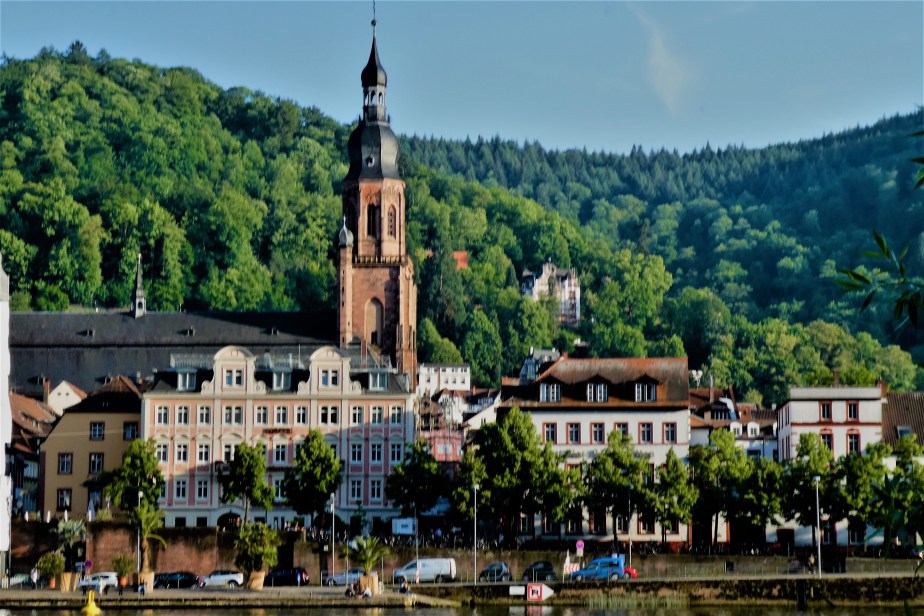
When Prince-Elector Friedrich V married Elizabeth Stuart, the daughter of King James I in 1613, it was–like the majority of royal marriages—based on political alliances and gains. Love had nothing to do with it.

Photo by Jane Simon Ammeson

But sometimes it worked out differently and so it was between Friedrich and Elizabeth who fell in love.  Heidelberg Castle, where they lived, was already old, dating back to 1200s and the Prince-Elector wanting Elizabeth to love her new home added an English Palace and an elaborate Baroque garden.

But theirs was to be a tragic love story. There were battles, a throne lost, regained, and then lost forever. During all that, Elizabeth bore 13 children before Fredrich died and she sought life in exile.

Heidelberger Schloss

The castle, a romantic ruin of seemingly endless staircases and corridors taking you here, there, and sometimes nowhere, stands 330-feet above the Alstadt, Heidelberg’s wonderful old town. Towers and battlements protect stone facades, their decorative features still intact though the rooms behind them are gone. Views into the multitude of windows reveals not an interior but woods and the Neckar River below.

“Deserted, discrowned, beaten by the storms, but royal still, and beautiful,” is how Mark Twain described the Gothic-Renaissance castle. He was one of many poets and writers who spent time in what they considered the most romantic city in the world.

Photo Jane Simon Ammeson

The castle is also home to the Heidelberg Tun, a 58, 124 gallon wine barrel said to be the largest in the world.  It was built in 1751 on orders from Prince Elector Karl Theodor to store the wine paid in taxes by the region’s wine growers. We should all be so lucky to have too much wine.

Brews and Pork Knuckles

Taking the funicular down to the old town, I meet friends at Vetter’s Alt Heidelberger Brauhaus on Steingasse, Europe’s longest carless street. It’s one of those baronial style Germanic places with high ceilings, large wood beams, long tables and a lot of dark highly polished wood.

Famed for their Vetter’s 33, which they say is the strongest beer in the world, its alcohol content is—you guessed it—33%. But it isn’t all beer her, they’re famed for their  traditional German food and so I decide to go full German, ordering the pork knuckle, sauerkraut and dumpling with gravy. Skipping the 33, I opt for the Hubier—a mix of the lager and elderberry syrup.

History, Luxury and a Family Touch

Courtesy of Hotel Europaischer Hof Heidelberg.

My love affair with the city began several years before when I checked into the five-star Hotel Europäischer Hof Heidelberg. The hotel, one of the few five-star family run hotels in Europe, opened in 1865 and has been owned by von Kretschmann family since around the turn of the last century.

Courtesy of Hotel Europaischer Hof Heidelberg.

I’d heard that Sylvia von Kretschmann, who with her husband Ernst-Friedrich, ran the hotel for a half-century before their daughter Dr. Caroline von Kretschmann took over, regularly did the hotel’s large floral arrangements. So it was no surprise when I ran into this very elegant woman doing just that in Die Kurfürstenstube, the hotel’s opulent dining room that opened in 1866.  Such a romantic place and romantic tradition—how could I not fall in love?  

Courtesy of Hotel Europaischer Hof Heidelberg

Chocolate Kisses

My romance continued at Chocolaterie Knosel where owner Liselotte Knosel talked about studentenkussor or student kiss, a chocolate covered nougat created by her great grandfather Fridolin Knosel in 1863. His Café Knosel was frequented by male university students who admired women from a local finishing school who were, alas, chaperoned by their governesses. A gift of student kisses was a sly way to start a flirtation.

We don’t know how well it turned out for the students but these confections, still hand crafted, remain best sellers more than 150 years later. Café Knosel—the city’s oldest café—is my go to spot for coffee and a pastry at one of their outdoor tables overlooking the church on Marktplatz.

At dusk, on my last night, I boarded Patria, a 1930s ship for dining and a cruise along the Neckar River. Watching the city lights sparkle in the calm water, I knew that though my visit was ending, the romance was just beginning. I would be back.

For more information, visit www.heidelberg-marketing.de

The Ideal Bartender, a 1917 classic by Tom Bullock is now an immersive experience in Louisville

Evan Williams, Kentucky’s first distillery, is hosting “The Ideal Bartender Experience” as part of Louisville’s celebration of African American history. The distillery was founded by Evan Williams in 1783, but the experience takes visitors no further back then to the final days of Prohibition and into a secret speakeasy at the Evan Williams Bourbon Experience, a multi-million dollar artisanal distillery, immersive tourism destination and retail location on Louisville’s Whiskey Row.

The Ideal Bartender Experience, separate from the other tours available at Evan Williams, introduces guests to Tom Bullock, the first Black American to write and publish a cocktail book. Written in 1917, “The Ideal Bartender” was almost lost to history despite Bullock’s fame at the time.

Greg Boehm, owner of the New York-based company, Cocktail Kingdom, has close to 4000 books about cocktails in what is said to be the largest collection in the world. Consider the collection research as Cocktail Kingdom manufactures professional barware, reprints vintage bar literature, and a full spectrum of professional and custom barware, artisan bitters and syrups.

According to Go to Louisville, several years ago Boehm was contacted by a woman wanting to sell a first edition of The Ideal Bartender. It was the one book Boehm was missing and so he jumped at the chance to own an original copy.

“In the cocktail bar industry, unfortunately, the African American community is not very well represented at all. It is just not a diverse group, so anything that lends diversity to bartending is a good thing,” Boehm explained. “In addition, The Ideal Bartender is a little snapshot of what people were drinking pre-Prohibition, and unlike a lot of cocktail books, none of these recipes were cribbed from anyone else. This is a completely unique cocktail book.”

Bullock, a stately looking man, was known to make some powerful — and according to article in The New York Times — addictive cocktails. He was also reputed to be a great conversationalist and to have a wide range of knowledge on current events–which was expected of a bartender working in rarified places.

Photo courtesy of bourbonveach.com

Though Bullock was known to the wealthy elite who sipped his cocktails he was relatively unknown until former President Theodore Roosevelt filed a libel suit in 1913 against a newspaper claiming he was not only a liar but also frequently drunk. In his testimony, Roosevelt said that one of the few drinks he’d ever had — and that didn’t happen until he had left the White House — was a mint julep mixed for him by Bullock at the St. Louis Country Club. And, Roosevelt told the court, he took only a sip or two.

The St. Louis Post-Dispatch called this out as a lie, printing an editorial opining, “Who was ever known to drink just a part of one of Tom’s juleps? Tom, than whom there is no greater mixologist of any race, was taught the art of the julep by no less than Marse Lilburn G. McNair, the father of the julep. Are the Colonel’s powers of restraint altogether transcendent?”

Marse, for those who don’t know their Missouri or mint julep history, was the grandson of Alexander McNair, the first governor of the state.

Whether he drank more than half of the mint julep or not, Roosevelt won his suit, and Bullock became famous for his bartending skills. Patrons who loved his cocktails included George Herbert Walker — you know the last name, as he was the grandfather and great-grandfather of our 41st and 43rd U.S. presidents, and August Busch Sr., CEO of Anheuser-Busch, who each helped get the book published.

 “I have known the author for many years, and it is a privilege to be permitted to testify to his qualifications…” In all that time I doubt that he has erred in event one of his concoctions,” wrote Bush in the intro to Bullock’s book.

Bullock was quite creative when it came to drinks, creating a version of an Old Fashioned easily transported in a flask for those attending the matches at the St. Louis Polo Club.

The 45-minute tour at The Ideal Bartender Experience includes a taste of three premium whiskeys as well as a mint julep made from one of Bullock’s recipes, is one of several fascinating immersive experiences taking place in Louisville.

 Tom Bullock’s Old Fashioned for the Polo Field

         Fill one eight ounce flask with 100 proof bourbon near to the top. Shove four raw sugar cubes or pour four raw sugar packets into the mouth of your flask, dash eight times with Angostura. Shake the flask vigorously. Pour the contents over the largest ice cubes you can find.

Continue reading “The Ideal Bartender, a 1917 classic by Tom Bullock is now an immersive experience in Louisville”

Miami Cooks: Recipes From the City’s Favorite Restaurants by Sara Liss

          The flavors and foods of Miami, with its imaginative and creative cooking, wide ranging cultural traditions, and unique culinary identity, are brought to the fore by its amazingly talented and award winning chefs and mixologists, Sara Liss, who has been writing about the city’s food scene for more than 15 years captures the culinary essence of the city’s fascinating food scene in Miami Cooks. Presenting 75 signature dishes and drinks from 35 of the hottest restaurants and chefs, either just rocketing to fame or James Beard winners, Liss shares their recipes–ranging from craft cocktails to satisfying brunch dishes to airy desserts. The flavors are global–Cuban food capital of America, but it also home to so many other cuisines―Peruvian, Venezuelan, Puerto Rican, Haitian, Jamaican, Cuban, Mexican, Asian, classic French with a Miami twist, and Floridian (of course). All evoke the passionate gastronomic spirit of The Magic City.

Avocado Pizza. Chef Helene Henderson of Malibu Farm Miami Beach. Henderson recommends Caputo (or “00”) flour for the pizza dough as it is an authentic Italian flour used by pizza makers to produce a very soft, flavorful thin crust.

          But Liss takes it one step further. Stating that her mission was to make the entire creative process acceptable and achievable for the home chef, she makes it easy for us to take our cooking to the next level.

       Miami Cooks, published by Figure 1m is currently available for purchase now.

        With beautiful photographs and intriguing recipes, here are a few more to contemplate:

Cubano “Croque Monsieur” – This recipe was crafted by Executive Chef Frederic Delaire from Bar Collins. A Cuban play on a French classic, this towering sandwich teems with slow-roasted pork, an indulgent béchamel sauce, and many layers of ham and Swiss.

Hamachi Cilantro Rolls – “You’ll be sure to wow your mom with some homemade sushi rolls! It might seem intimidating at first, but once you get the hang of it, the technique is fairly easy,” writes Liss.

Executive Chef Sunny Oh from Juvia/Sushi Garage.

Shrimp Cakes – This recipe is an Executive Chef Klime Kovaceski specialty from Crust. Riffing on the classic crab cake, Chef Klime has created an easy go-to dish when you’re looking for a hearty brunch course.

Golden Geisha – This raspberry vodka cocktail recipe is from Owner David Grutman of Komodo. This refreshing cocktail is deceptively easy to prepare and heightened to a luxe level with edible gold leaf flakes.

 Jim’s Yellow Fedora – From Executive Chef Daniel Roy from The Jim and Nessie, Jim’s Yellow Fedora cocktail is made with whiskey and chartreuse – a liquor distilled using 130 natural herbs, spices and flowers. In this recipe, it adds depth to whiskey for a play on the classic green hat cocktail.

Korean Braised Chicken with Glass Noodles

This popular Korean dish, also known as Andong jjimdak, originates in the city of Andong, Korea. All at once savory, sweet, and spicy, it sees spicy braised chicken cooked together with Korean glass noodles for a dish that explodes with flavor.

Serves 2 to 3

Marinade [ingredients]

  • 5 cloves garlic, finely chopped
  • 3 Tbsp brown sugar
  • 1/2 tsp grated ginger
  • 1/4 tsp black pepper
  • 41/2Tbsp soy sauce
  • 3 Tbsp concentrated pear juice (see Note)
  • 2 Tbsp mirin
  • 11/2tsp sesame oil

Marinade [method]

Combine all ingredients in a small bowl and mix well.

Note: Korean cooking often calls for pear juice for marinating and tenderizing meat. It can be found in most Asian markets.

Chicken [ingredients]

  • 2 lbs, bone-in chicken thighs
  • Marinade (see here)
  • 5 to 6 oz Korean glass noodles (sweet potato starch noodles)
  • Sesame oil, for searing
  • 5 dried red chiles (divided)
  • 2 potatoes, peeled and cut into 1-inch cubes
  • 1 large Spanish onion, coarsely chopped
  • 1 carrot, chopped
  • 5 button mushrooms, thinly sliced
  • 2 scallions, roughly chopped

Chicken [method]

  • In a large bowl, combine chicken and marinade, turning to coat, and refrigerate for 1 hour.
  • Soak glass noodles in water for 20 minutes, until softened.
  • Coat a large skillet with sesame oil and bring to high heat. Add 3 chiles and sauté for 5 to
  • 7 minutes, until the chiles darken. Discard chiles.
  • Add chicken to the skillet, reserving marinade, and sear for 4 minutes on each side, until browned. Transfer chicken to a plate.
  • In a large saucepan over high heat, combine the reserved marinade and 4 cups of water.
  • Bring to a boil, then add chicken, reduce heat to medium, and simmer for 10 to 15 minutes, until chicken is almost fully cooked. Add the remaining 2 chiles and the potatoes, onion, and carrot and simmer for 5 to 8 minutes, until vegetables are softened.
  • Add noodles, mushrooms, and scallions and simmer for another 6 to 8 minutes, until noodles are cooked. Remove the 2 chiles and serve immediately.

Gather: Casual Cooking from Wine Country Gardens by Janet Fletcher

I recently received an email from Janet Fletcher, who lives in Napa Valley, California  where she develops and tests recipes for cookbooks and magazine features, evaluate cheeses for her classes and columns, does extensive gardening, and prepares dinner nightly with her winemaker husband, Doug Fletcher. I’ve talked to her frequently in the past and wrote about several of her cookbooks including Wine Country Table and Cheese and Beer. I also follow her blog Planet Cheese.

Maggie’s Chicken. Photo by Meg Smith from Gather by Janet Fletcher.

Fletcher,  the author of 32 books on culinary arts, who has won three James Beard Awards and the International Association of Culinary Professionals Bert Greene Award, has a new cookbook out, called Gather: Casual Cooking from Wine Country Gardens and I asked her if she would share recipes.

Courtesy of Gather by Janet Fletcher. Photo by Meg Smith.

She agreed, including recipes easily made at home and the California wines she suggests using when serving them.

“Gather features 13 wineries with edible gardens along with recipes,” says Janet, noting most of the wineries are in Napa Valley.

It started off as a magazine assignment with a focus on just a handful of winery gardens but grew into a book which took over a year to create. Janet worked Jen Barry of Jennifer Barry Design and photographer Meg Smith who has photographed the weddings of Anne Hathaway, Jimmy Kimmel, Governor of California Gavin Newsom, LeAnn Rimes, and the late Robin Williams. Her work appears frequently in Martha Stewart Weddings, Town & Country, and InStyle magazine. Barry has over 30 years in the design and publishing worlds and has designed and art directed hundreds of illustrated books on a variety of subjects ranging from from food and photography to nature and winemaking. 

Working together, the three captured the lushly beautiful gardens that Janet describes as reflecting the hospitality, sustainability and the wineries dedication of the farm-to-table lifestyle.

Courtesy of Alexander Valley Vineyards.

Though Janet is an avid gardener, she was delighted to learn more when visiting the wineries’ gardens.

Prisoner Wine Company grows over a dozen different basil plants, ones I didn’t know existed,” she says.

That’s led her to plant with more diversity and also use more flowers mixed with her vegetables to draw beneficial insects.

The following are recipes she created along with anecdotes about their origins and Fletcher’s wine recommendations. If for some reason you can’t locate these wines substitute what is locally available. Such as when a Merlot is called for you can substitute a local Merlot or one from another area though keep in mind that Fletcher paired her food and wines very carefully based upon California wineries.

Courtesy of Alexander Valley Vineyards.

Maggie’s Ranch Chicken

Serves 4

Ranch chicken has nothing to do with ranch dressing, says Katie Wetzel Murphy of Alexander Valley Vineyards.

“It’s what we called this dish as kids,” she recalls. “It seems that my mother, Maggie, only made it when we came to ‘The Ranch,’ which is what we called the vineyards before we had a winery.”

Baked with honey, mustard, and tarragon, the quartered chicken emerges with a crisp brown skin, and the sweet aroma draws everyone to the kitchen.

“Kids like it and adults like it,” says Katie, “and most of the food we make has to be that way.”

  • 1 whole chicken, 4 to 4 1/2 pounds, backbone removed, then quartered
  • Sea salt and freshly ground black pepper
  • 1/3 cup honey
  • 4 tablespoons salted butter
  • 1 tablespoon Dijon mustard
  • 4 fresh tarragon sprigs, each 6 inches long
  • Wine: Alexander Valley Vineyards Merlot

Preheat the oven to 350°F. Season the chicken quarters all over with salt and pepper. Put the quarters into a 9-by-13-inch baking dish.

In a small saucepan, combine the honey, butter, and mustard over low heat and stir until the butter melts. Pour the honey mixture evenly over the chicken. Place a tarragon sprig on each quarter.

Roast the chicken for 30 minutes, then remove the dish from the oven, spoon the dish juices over the chicken, and return the dish to the oven for 30 minutes more. The chicken will be fully cooked, with beautifully browned skin. Let rest for at least 15 minutes before serving to allow the juices to settle.

Antipasto Platter with Southern-Style Pickled Okra

Makes 6 pints

“Napa Valley’s Regusci Winery proprietor, Laura Regusci, developed a passion for pickling in her grandmother’s Kentucky kitchen,” she writes.

Courtesy of Regusci Winery.

The family pastime began as a way to preserve vegetables for winter and share homegrown gifts with neighbors.

Photo by Meg Smith from Gather by Janet Fletcher.

Today, Laura carries on the tradition, growing okra and other seasonable vegetables in the Regusci estate garden for pickling. Each Thanksgiving, pickled okra adds a southern spirit to the family’s antipasto board

  • 3 pounds small okra
  • 6 cups distilled white vinegar
  • 4 cups water
  • 1/2 cup kosher or sea salt
  • 1/4 cup sugar

For Each Pint Jar:

  • 1/4 teaspoon yellow mustard seeds
  • 1/4 teaspoon dill seeds
  • 6 black peppercorns
  • 6 cumin seeds
  • 2 cloves garlic, peeled
  • 1 fresh oregano sprig
  • 1 bay leaf
  • Pinch of ground coriander
  • Pinch of red chili flakes

When creating the antipasto platter use the pickled vegetables along with alongside figs, salami, other charcuterie meats, and marinated  veggies like artichokes.

Suggested Wine: Regusci Winery Rosé

Have ready six sterilized pint canning jars and two-part lids. Trim the okra stems if needed to fit the whole pods upright in the jars. Otherwise, leave the stems intact.

In a saucepan, combine the vinegar, water, salt, and sugar and bring to a simmer over medium-high heat, stirring to dissolve the sugar. Keep hot.

Into each of the six jars, put the mustard seeds, dill seeds, peppercorns, cumin seeds, garlic, oregano, bay leaf, coriander, and chili flakes. Fill the jars with the okra, packing it in upright—alternating the stems up and down if needed—as tightly as possible. Fill the jars with the hot liquid, leaving 1/4-inch headspace, and top each jar with a flat lid and screw band. Process the jars in a boiling water bath for 15 minutes, then cool on racks without disturbing.

Refrigerate any jars that failed to seal and use within 2 weeks. Store sealed jars in a cool, dark place for up to 1 year. Wait for at least 1 week before opening a jar to allow the flavor to mellow.

What would Frida Kahlo and Diego Rivera Eat: Food and Art in Tubac, Arizona

          Past Tucson on the road heading south towards Mexico, we took a detour to look for the home where my brother-in-law’s parents had lived up until 1989.

          “Does this look familiar?” one of the passengers kept asking as we drove through Green Valley.

           “Nothing in Arizona looks the same as it did even last week,” I said, checking Google which informed me that the population in Green Valley had doubled in the last 32 years.

          We didn’t, as you might have guessed, find the home or even the street. But when we arrived in Tubac, located in a broad valley ridged by the Tumacacori Mountains with their reddish cast to the west and the larger more rugged Santa Rita range to the east, I discovered that I was wrong. Founded in 1752 as a presidio or fortified military settlement on the Spanish Colonial Frontier, Tubac provided protection for the Mission San José de Tumacácori, the remains of which can be seen in nearby Tubac Presidio State Historic Park—Arizona’s first state park. Also on site is the 1885 Old Schoolhouse, the oldest is the schoolhouse in Strawberry, Arizona.

Abandoned and resettled several times, Tubac’s days as an artist colony stretches back to the late 1940s and much of the adobe and dusty roads allure remains in this small village two dozen miles from the Mexico border. Tubac recently was the winner of the Best Small Art Town National Contest.

          It was off-season on a day when temperatures climbed beyond one hundred. Even though the mantra in Arizona is “dry heat,” I can attest that 105 degrees with the hot sun beating down is—well—hot.

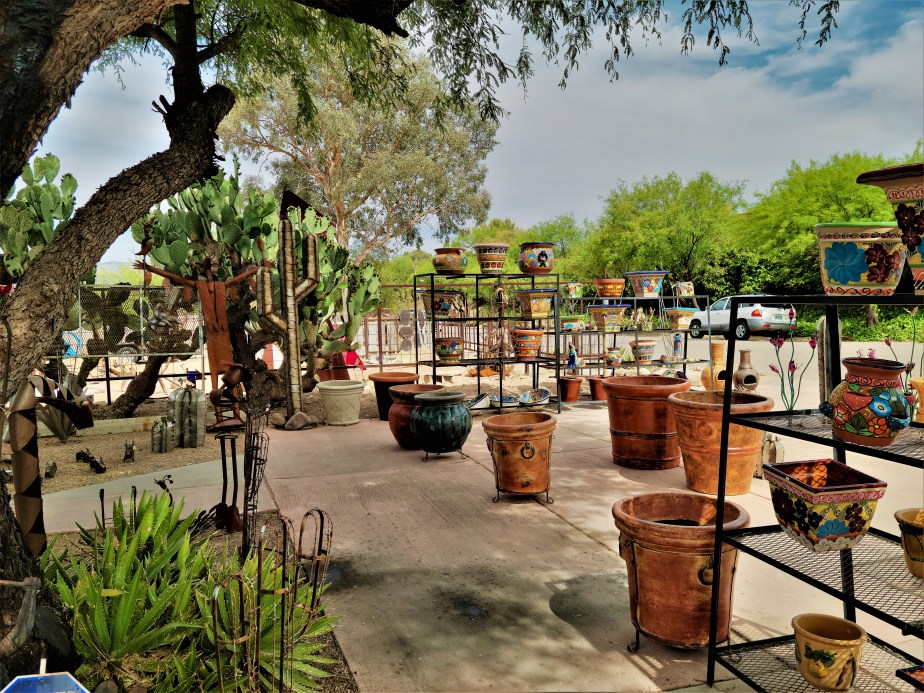
The 100 or so shops, art galleries, and museums, many of them made of dried earth, clay, and straw bricks called adobe, were painted in a variety of colors ranging from soft blues, greens, and pinks, to more bold pistachio and red. If it became too toasty perusing the displays of art ranging from  tin javalinas and coyotes to intricately wrought metals, mosaics,  tiles, pottery, and  jewelry on the front patios and side yards of the art galleries and stores—which comprise, along with restaurants, the major businesses in Tubac—the interiors were cool.  

          A little history is called for and Tubac almost 250 years old, certainly has that. It’s current laid back charm as an artist colony belies a bloody wild west history including Apache attacks, Civil War troops, and desperados eager for quick cash litter its history. All to be expected on an outpost along the Spanish Colonial Frontier. Besides being the first European settlement in Arizona with the first newspaper and the first white women, Tubac was also where in 1789 the first school in the state first opened. Of course, it wasn’t a state back then but part of Mexico as it would remain—along with Tucson—until 1853.

        Early times were tough for  Tubaca (or as the friendly O’odham Indians would have pronounced it “s-cuk ba’a” “cu wa”)  meaning place of the dark water or low place. Or at least that’s one story. Marshall Trimble,  Arizona’s official historian and vice president of the  Wild West History Association, writes its name came about based on a clash between bands of Indian. The resulting dead and the searing sun led the Pima to choose the name that translates to  “Where something smelled rotten.”

          Whatever. Since this is ultimately a food and travel story, we’re going to skip any more details like that except to say that it wasn’t quite as dreamy as it is now.

          While Arizona booms—Phoenix is the fastest growing city in the U.S.—there’s a laid back charm to Tubac as if time stopped half-a-century ago.

          The population in 2019 was just under 1400. Though the landscape is far from the verdant greens of the Midwest, the Santa Cruz River runs through here and feeds the stands of mesquite, willows, and the chartreuse-colored cottonwoods that make such a startling contrast against the desert palate of  beiges, browns, and subdued yellows.   

          Creativity at all levels defines Tubac and the restaurants and overnight accommodations showcases great food and luxurious places to summon your inner—and slightly pampered—cowgirl. With no chains, the village’s restaurants are independent and often family-owned.

          The 500-acre Tubac Golf Resort & Spa was once part of the Otero Ranch, settled in 1789 features several levels of dining options including The Stables Ranch Grille and La Cantina.  Shelby’s Bistro serves Southwestern and Mexican cuisine. Both are almost always rated among the village’s top ten but the one that really intrigued me was Elvira’s because of its history having first opened in Nogales, Mexico in 1927 as a take-out joint. Now the place to go for sophisticated Mexican cuisine, owner/chef Ruben Monroy, grandson of the original founder, takes traditional dishes such as moles (they have a large variety), quesadillas, chiles rellenos including one named after Frida Kahlo the Mexican artist known for her use of bold colors, and other Mexican fare and kicks them up several notches.  The drink list features tequila and mezcal, Mexican wines and beers as well as Margaritas made with a variety of fruits such mango, tamarind, and agave honey along with other cocktails such as mojitos and guanabanatinis—a martini made with guanabana, a fruit that grows in Mexico.

From the outside, Elvira’s is attractive with ochre-colored exterior walls, tile and wood accents, pots filled with flowers, and hanging lights made of large metal spheres with cut out stars.

Inside, it’s something else. Monroy earned degrees in graphic arts and interior design before going to culinary school and his training is evident. Blue walls are the backdrop for large-framed mirrors, colorful cascading lights suspended in various heights from the ceiling, a sleek wooden bar, vases and pots, red curtains, candle holders in an array of shapes and sizes, Mexican crafts and art, and so much more that everywhere you look there’s something fascinating to behold. In case you like what you see, there’s a home décor store adjacent to the restaurant’s entrance.

One of the streets in Tubac (and there aren’t many) is named Calle Frida Kahlo (calle is Spanish for street) but I couldn’t find any reference to her having visited the town during her short life. But I know that she was an enthusiastic cook and so I looked up her recipe for  Poblano Chiles Stuffed with Picadillo that was adapted from “Frida’s Fiestas: Recipes and Reminiscences of Life with Frida Kahlo” (Clarkson Potter). The book, written by Guadalupe Rivera and Marie-Pierre Colle, says this dish was served at her wedding to Diego Rivera.

Mexican cuisine can be complicated and if you’re feeling somewhat lazy, you can turn this dish into a casserole using the recipe I included below the one served at Frida and Diego’s wedding. I should note that the marriage didn’t last but their on and off again affair did until she passed away.

Poblano Chiles stuffed with Picadillo

Serves 8

  • 16 poblano chiles, roasted, seeded, and deveined
  • All-purpose flour
  • 5 eggs separated
  • Corn oil or lard
  • 3 lbs. ground pork
  • 1 large white onion, halved
  • 3 garlic cloves, chopped
  • 6 tablespoons lard or oil
  • 1 small onion, finely chopped
  • 2 zucchini, finely chopped
  • 1 lb. tomatoes, seeded, chopped
  • 1 cup cabbage, shredded
  • 3/4 cup blanched almonds, chopped
  • 1/2 cup raisins
  • Tomato broth ( see recipe below)

Prepare chiles:  Char chiles over an open flame or under the broiler, then place in a plastic bag, seal and let steam for about 10 to 15 minutes. Remove from bag and using the back of a spoon peel off skin. 

Make a lengthwise slit in the chile, remove the seed cluster, seeds, and membrane with a knife but leave the stem intact and place on a cookie sheet. Place the poblanos in the freezer as they will easier to fill and batter when cold.  

Prepare the Filling: Cook the pork with the onion halves, garlic and salt and pepper  for about twenty minutes. Drain the liquid and remove onion. Heat the oil or lard in a sauté pan, adding the onion, carrots, and zucchini, cooking until onion is translucent. Add the tomato, cabbage, almonds, raisins and pork and season with salt and pepper to taste. Simmer mixture for about twenty minutes until it has thickened, and the tomato is cooked through.

Stuff Chiles: Stuff the chiles with filling, then dust with flour. Beat the 5 egg whites until stiff. Beat the yolks lightly with a pinch of salt and gently fold into the whites to make a batter. Dip the chiles into the batter and fry in very hot oil until golden. Drain on paper. Serve with tomato broth.

Tomato Broth for Stuffed Chiles

  • 3 tablespoons olive oil
  • 1 onion, thinly sliced
  • 2 carrots, peeled and thinly sliced
  • 10 Roma tomatoes, charred, seeded, and chopped
  • 1/2 cup vinegar
  • 3 tablespoons sugar
  • Salt and pepper
  • 2 teaspoons dried oregano
  • 1/2 cup queso cotija or ranchero cheese, crumbled

Char the tomatoes using the same method as above for the peppers. Heat the olive oil and sauté the onion and carrots until softened. Add the tomatoes, vinegar, sugar, and salt and pepper to taste. Simmer for 10 minutes. Stir in the oregano and continue to cook until the broth is rich and flavorful, and the tomatoes cooked through. Ladle broth onto a plate and place the chile on top.  Garnish with queso cotija or ranchero cheese.

Chile Rellenos Casserole

  • 2 large fresh poblano chile peppers or fresh Anaheim chile peppers
  • 1 ½ cups shredded Mexican-style four-cheese blend  or make the Picadillo recipe above
  • ½ cup crumbled Cotija or Ranchero cheese
  • 3 eggs, lightly beaten
  • ¼ cup milk
  • ⅓ cup all-purpose flour
  • ½ teaspoon baking powder
  • ¼ teaspoon cayenne pepper
  • ⅛ teaspoon salt
  • 1 large can of enchilada sauce or use the Tomato Broth recipe above

Serves 4

1 large can of enchilada sauce or use the Tomato Broth recipe above.

The basic difference here is that instead of stuffing the peppers, then coating them in batter, and frying, roast the peppers according to the first recipe,  slice them lengthwise so the entire pepper can be laid flat.

Grease a casserole dish, add a layer of the sauce, lay the peppers on top and the cover with the desired filling—either the cheese or the picadillo sauce that Frida made.

Top with more sauce, another layer of roasted peppers, filling and sauce. Repeat until all the ingredients are used.  a medium bowl combine eggs and milk. Add flour, baking powder, cayenne pepper, and salt.

Beat egg mixture until smooth. Or if using a food processor or blender,  place in a food processor, cover and process or blend until smooth. Pour mixture over peppers  and filling.

Bake for 15 minutes in a 400°F. or until golden brown.

Mushroom Quesadillas

Makes 6

  • 12 flour tortillas
  • ½ pound mushrooms
  • Butter
  • 1 ½ to 2 cups shredded Mexican cheese mixture
  • 1 Poblano pepper, roasted, seeded and finely chopped
  • Your favorite salsa

Thinly slice mushrooms and place in a skillet with one tablespoon melted butter. Cook until done. Drain any juices left.

Preheat oven to 300°F.

Heat a heavy skillet (cast iron works well) on high. Butter one side of each tortilla. Place as many as the skillet will hold but no more than six. Top each tortilla evenly with mushrooms, diced roasted pepper, cheese, and salsa. Top with the other tortilla, butter side up. Cook until cheese starts to melt, adjusting the heat to make sure the tortillas don’t burn. Flip over and cook until the tortilla is golden brown.

Transfer the quesadillas to a cookie sheet and place in oven. Cook the remaining quesadillas.

Serve with sour cream or Mexican crema and salsa. Can be served whole or cut in half or quarters.

Mango Margarita

From “Love & Lemons Cookbook” by Jeanine Donofrio.

  • 3 cups cubed frozen mango, from about 4 small mangos
  • ¼ cup lime juice, plus lime slices for garnish
  • 3 ounces silver tequila
  • 2 ounces Cointreau
  • 3 handfuls ice cubes
  • Sea salt for the glass rims, optional

Place the mango, lime juice, tequila, and Cointreau in a blender and blend until smooth. Add the ice and blend to the desired consistency. If the mixture is too thick to blend, let it sit and melt for a few minutes.

If desired, use a lime wedge to moisten the rims of the glasses and then dip the rims in a small plate of salt.

Pour the mango mixture into the glasses and garnish with a lime slice.

The Cuisine of Basque: Regional Cooking at Its Best

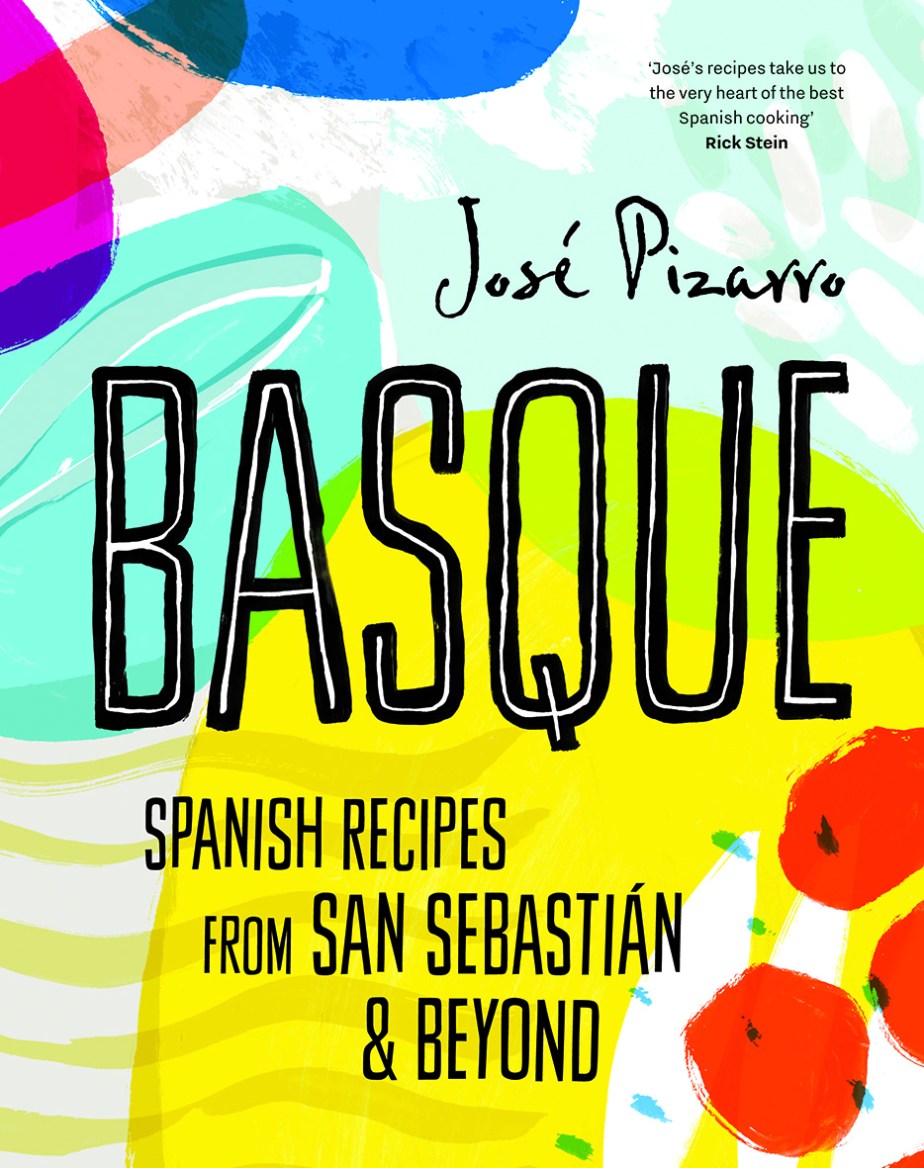
José Pizarro, chef and owner of Jose Pizarro Broadgate Circle, The Swan Inn Esher, and Pizarro, his eponymous tapas bar and restaurant respectively, both on Bermondsey Street, near London Bridge, was born in Extremadura and worked in restaurants in that region and Madrid.

Credited with popularizing Spanish cuisine in Great Britain. His cookbook, Basque (Hardie Grant 2021; $22.95), is a great way to explore the beautiful Basque region of Spain.

“The Basque Country is feted across Spain, and indeed the world, for its culinary creativity,” says Pizarro.  “It has more three Michelin-starred restaurants than anywhere else, and I can understand why – there are so many local products that you can be inspired by here.”

Chicken Stewed in Cider & Apples

          “My inspiration for this dish, as with many of my recipes, came from seeing the ingredients together,” says Pizarro. “When I see them, I just have to create a plate of food. When we were in Astarbe in a beautiful cider house, I saw the chickens hopping around the apple trees, and that was it.”

The Astarbe Experience includes a restaurant and an assortment of wonderful foods and tastings of their ciders.

Serves 6

olive oil

1 free-range chicken (1.8–2 kg/4 lb–4½ lb)

sea salt and freshly ground black pepper

1 apple, peeled, cored and halved

2 onions, finely sliced

2 bay leaves

6 sage leaves

1 cinnamon stick

500 ml (17 fl oz) cider

400 ml (13 fl oz) fresh chicken stock

25 g (1 oz) unsalted butter

3 apples, peeled, cored and sliced into 8 pieces

1 teaspoon caster (superfine) sugar

75 g (2½ oz) sultanas

Preheat the oven to 160ºC (320ºF/Gas 3).

Heat a layer of oil in a large casserole dish. Season the chicken inside and out and brown all over in the casserole dish. Set aside and put the halved apple inside the cavity.

Add the onions to the casserole and fry for 10 minutes to soften. Return the chicken to the pan and add the herbs and cinnamon.

Pour in the cider and bubble for a few minutes, then add the stock. Bring to the boil, then cover and transfer to the oven to cook for 1 hour.

Meanwhile, heat a little oil and the butter and fry the rest of the apples with the sugar until golden and caramelised. Add the sultanas and toss in the buttery juices. Add to the casserole about halfway through the cooking time.

Remove the lid of the casserole and turn up the oven to 220ºC (430ºF/Gas 7). Cook for 10 minutes more to brown the top of the chicken, then serve.

Photo by Laura Edwards.

Sautéed clams with garlic, lemon & parsley

“Clams are popular all over the world as they are so versatile,” says Pizarro about this wonderful dish. “When you are planning to cook for more than a couple of people, this is something that you must consider; ingredients and dishes your friends will love but are also quick prepare, so that you don’t spend the whole time at the stove.

“You can boil some pasta with this for a really easy lunch, and add some chilli for an extra kick.”

Serves 4

olive oil
3 fat garlic cloves, peeled and finely sliced
1 lemon, half finely sliced, half juiced

1 kg (2 lb 3 oz) fresh palourde clams, cleaned
few sprigs of thyme, leaves stripped

handful of finely chopped flat-leaf

parsley

Heat a little oil in a deep heavy-based stockpot. Fry the garlic and lemon slices for 30 seconds, then increase the heat to high, tip
in all the clams and cover with a lid. Cook for 2–3 minutes, shaking the pan occasionally, until the clams have all opened (discard any that refuse to open).

Add the lemon juice and herbs and serve with lots of crusty bread to mop up the juices.

Photo by Laura Edwards.

Pan-fried hake with sautéed wild chanterelles & sage

“Hake is one of the most sought-after fish in the Basque Country,” says Pizarro when sharing this recipe. “I really don’t know why it’s not as popular here in the UK, particularly as it’s plentiful – I think most of the catch from the sea here goes to Spain!

“In my family, our favourite way of cooking hake is a la romana, or Roman

style, which means that it’s battered.

“In this recipe, I bring two big flavors together, the sage and the mushrooms, but they complement the fish very well.”

Serves 4

olive oil
2 French shallots, finely chopped
2 garlic cloves, crushed
few small sage leaves
300 g (10 1⁄2 oz) chanterelles, cleaned

100 ml (31⁄2 fl oz) fresh fish stock
sea salt and freshly ground black pepper
4 hake fillets (175 g/6 oz each)

Heat a little olive oil in a pan and gently fry the shallots for 5–10 minutes until really soft. Add the garlic and sage and cook for 30 seconds, then increase the heat and add the mushrooms. Fry for 4–5 minutes, then add the stock and bubble for a couple of minutes. Season and set aside.

Heat a heavy-based frying pan with a little bit of oil. Add the hake skin side down and cook for 4–5 minutes until almost cooked through. Flip over and cook for 30 seconds more.

Put the cooked hake, skin side up, into the pan with the mushrooms. Cook for a minute or two more, then serve.

Recipes excerpted with permission from Basque by José Pizarro published by Hardie Grant Books, March 2021.