Travel back into the past by car or aboard the Treno Gottardo, a VIP train trip along an ancient trade route that crosses the fantastical Gotthard Pass, a north south journey connecting the German speaking region of Uri to the Ticino, the Italian speaking area of Switzerland.
Prehistoric Pile Dwellings in the Alps
In 2011, the UNESCO World Heritage Committee added the remains of prehistoric pile-dwelling also known as stilt house settlements in and around six Alpine countries that were built from around 5,000 to 500 B.C. on the edges of lakes, rivers or wetlands to their list.
The sites provide glimpses into what life was like in prehistoric times during the Neolithic and Bronze Age in Alpine Europe as well as the way communities interacted with their environment. In an exciting new find, archaeologists diving in Lake Lucerne discovered pile dwellings from the Bronze Age.
Exploring Roman History
Augusta Raurica near Augst/Kaiseraugst, a 2000-year-old settlement on the southern bank of the Rhine, is located near the beautiful city of Basel. Named after the Celtic Rauriker tribe and the Roman Emperor Augustus, the city at its peak had a population of around 20,000 with workshops, commercial enterprises, taverns, temples and public baths closely strung together. Because no new towns were established during the Middle Ages or our modern area, Augusta Raurica is amazingly well-preserved.
Visitors can view the myriad of wonders discovered here like the largest silver treasure dating from Late Antiquity, a Roman domestic animal park with ancient animal species, and the architectural remnants of the city, the museum offers great insights into the daily lives of the people who lived here around the time of Christ’s birth.
1821—Napoleon’s End
On May 5 was the 200th anniversary of the death of Napoleon I on the island of St. Helena, where he was placed in exile. His stepdaughter Hortense des Beauharnais also lived in exile at Arenenberg Castle and Napoleon Museum in Switzerland.
As the only German-speaking museum on Napoleonic history, a special exhibition during the “Année Napoléon 2021” will take place from October 10-24, 2021, showing the long lasting influence of Napoleon on Switzerland even today.
Inventing Milk Chocolate
Food and beverages reflect a country’s culinary traditions and customs. Many of today’s Swiss cheese brands go back to the 12th century, but Daniel Peter’s much newer creation in 1875 really took the world by storm—a passion that continues today. Peter was able to solve the problem of how to combine chocolate and milk. Most Swiss cities offer chocolate tours and several chocolate brands features visitor experiences.
Newly Restored LGBT Pioneer’s Spectacular Painting Returns to Monte Verità
After a lengthy restoration, the super large circular painting “Il Chiaro Mondo dei Beati” or “The Clear World of the Blessed” by Estonian artist and LGBT pioneer Elisàr von Kupffer (1872-1932) is on display at the Monte Verità museum complex located in southern Switzerland near Ascona.
Ballenberg
Instead of destroying more than one hundred historic buildings, many of them farmhouses, were instead carefully taken dismantled and rebuilt at the Ballenberg Swiss Open-Air Museum.
The museum is nestled in the beautiful pastoral landscape of the Bernese Oberland and can be reached by bus from Brienz. The many hands-on activities were created to provide insight in old traditional crafts like forging, weaving, and herbal medical treatments
Tucked in New Hampshire’s White Mountains, the Mountain View Grand Resort waits as a classic place to slow down.
When I was young, my family and I traveled along back roads that twisted through rolling hills and historic hamlets as we made our way to grand hotels dating back to the late 1800s. Once there, we’d swim, ride horses and play games such as horseshoes and croquet. But as I grew, these journeys to sprawling old resorts gave way to trips by airplane to big cities, sleek hotels, museums and shows.
And so those distant days seemed irretrievable, a way of vacationing that belonged to a different time. That is until I once again followed a winding country road through the small towns of the White Mountains and arrived at the Mountain View Grand in Whitefield, New Hampshire.
In the late 1800s, the U.S. had more than 1,000 summer resorts, many like this wood-framed escape with its towers, porches and neatly clipped green lawns. Now the 144-room Mountain View Grand, where luminaries such as Mark Twain, Teddy and Franklin Roosevelt, and Babe Ruth stayed, is just one of a handful remaining.
Its luxury is based on old-fashioned style: the attendant-operated elevator, the uniformed bellmen, the arched doorways, the long veranda. Always supercharged, I grow at ease sitting there while I sip Apple Blossoms, fresh cider mixed with local honey, and watch the night mists gather over the mountains. It’s easy to slow down among details that bespeak a time gone by.
The activities that attracted visitors long ago are still part of the resort’s offerings as well. The nine-hole golf course was designed in 1900. The clubhouse was built in 1939. The heated pool was dug in 1946, and the tennis courts were added about the same time.
I opt for taking walks through the extensively landscaped gardens and kayaking on Martin Meadow Pond, where loons provide the day’s soundtrack. And while on a trail ride through the hills, I look for wild turkey, deer, moose and black bears.
Before Mountain View Grand became a hotel, in 1865, it was the Mountain View Farm. And even after the transition, the original owners still relied on their farm to feed guests. Harkening back to those days, the menus in the resort’s four restaurants reflect what is raised here as well as from food producers nearby.
And in another throwback to the resort’s farm heritage, wool is spun from the hair of Mountain View Barn’s alpacas, goats and angora rabbits and sold at the front desk.
Although there’s reverence for the past, there’s respect for the present, too. A wind turbine supplies some of the resort’s electricity. There’s not one stoplight between here and the Canadian border an hour away, but my cell phone signal is strong.
Each day I order a latte, sit in the antique-filled lobby and tap away on my laptop while using the free Wi-Fi. And I get a deep-cleaning facial at the resort’s Tower Spa with its panoramic view of the mountains, one of the many amenities that has resulted in the resort being award the AAA Four Diamond status since 2002.
On my last day as I drive down Mountain View Road, I turn for a final look at the expansive resort with its green shuttered windows that offers a way to span the centuries and feel at home all in one.
Fall | When the 1,700 acres of rolling hills become a confetti of jewel colors, saddle up for a guided trail ride on horseback.
Winter | Become a musher as snow blankets the pine forests, or travel like days of yore in a horse-driven sleigh.
Spring | As the sap rises in the spring, learn about tapping trees and making maple syrup, one of the agricultural programs.
Summer | Head out on the property to search for moose with an experienced guide as dusk falls on a soft evening.
If It Was Good Enough for P.T.
Travel to the top of the mountain the old-fashioned way aboard The Mount Washington Cog Railway, the first mountain-climbing cog railway in the world. “The Second Greatest Show on Earth!” proclaimed P.T. Barnum who rode to the highest point in the Northeast in 1869 when it first opened.
Close By and Not to Be Missed
Voted one of the America’s Best Little Small Town, Littleton, located on the banks of the Ammonoosuc River, is a delight of history, trendy shops, great green spaces, and public art as well as lots of walking paths within town including its River District, along the Ammonoosuc of course, that encompasses the multi modal bridge on Bridge Street through the Apthorp District on Union Street and beyond into Bethlehem via the Rail Trail. Eleanor Porter, author of Pollyanna, lived here and a statue of her title character celebrates her books and the joy of always looking on the good side of life–making Littleton a happy city.
The Littleton Grist Mill, established at the end of 1700s, is now home to Schilling Beer Co. Located right on the flowing river, it’s a step back into history.
While walking through the historic downtown, make sure to take time to check out Thayer’s Inn, built in 1850 and located on Main Street. Candy lovers will love Chutters, a candy store dating back to the late 1800s with the original 112 feet of the original Guinness World Record candy counter.
Dinner is Served
Considered to be one of the most popular menu items at the Mountain View Grand. This recipe serves 6 people.
Ingredients for the Beef Ribs
12 lbs of bone-in beef short ribs, cut between the bones into 6 ribs
4 tbsp Kosher Salt
4 tbsp ground black pepper
2 cups blended olive oil
Cooking Instructions
Preheat oven to 375*F. Heat oil in a large sauté pan until shimmering. Season beef ribs heavily with salt and black pepper and sear ribs, one or two at a time, on all four sides until well browned. Arrange ribs evenly in a deep oven proof pan.
Ingredients for the Braising Liquid:
46 oz V-8 juice
20 oz tomato juice
32 oz beef broth
12 oz tomato paste
4 cups of cabernet sauvignon wine
½ cup cornstarch mixed with cold water
¼ cup chopped garlic
1 Spanish onion, cut into chunks
½ bunch of celery, cut into chunks
2 carrots, cut into chunks
4 bay leaves
½ oz fresh thyme
Cooking Instructions
Combine the liquids into a large stockpot with a wire whisk. Add the cornstarch slurry and the chopped garlic, along with the tomato paste and mix well. Pour over the beef ribs, until they are almost covered. Any extra liquid can be reserved for later. Top the rib mixture with the chopped vegetables, bay leaves and fresh thyme. Add a sheet of parchment paper to the top of the ribs and wrap with aluminum foil. Place in preheated oven for approximately 3 hours. Check ribs with a pair of tongs. The meat attached to the ribs should be almost falling off the bones and very tender to the touch. Remove beef ribs to a platter and keep warm.
To make the sauce; strain the liquid through a sieve or colander lined with cheese cloth, pressing down on the vegetables to extract as much flavor as possible (you can discard vegetables, or eat them, they too are delicious!). Heat the sauce with any reserved braising liquid in a saucepan on the stove and reduce until the sauce is thickened and coats the back of a spoon. Season to taste with additional salt and black pepper as needed.
Ingredients for the Red Onion Straws
1 large red onion, thinly julienned
1 ½ cups buttermilk
1 ½ cups of flour
2 tsp salt
1 tsp black pepper
½ tsp paprika
3 cups vegetable oil for frying
Cooking Instructions
Slice red onions thinly and soak in buttermilk for at least 1 hour (this step can be done a day before you need them).
To fry onions, heat oil to 350*F on the stove with a frying thermometer. Combine flour, salt, black pepper, and paprika in a bowl until well combined. Flour should have a pinkish hue to it (if not, add more paprika). Drain red onions and add to flour and mix well. Sift carefully and add to the hot oil in small batches. Remove golden brown onions with a wire skimmer and drain on a plate lined with paper towels. Repeat the process until you have fried all the onions.
To serve the beef ribs, set up warm plates with your choice of starch and vegetables. Top each plate with a hot beef rib, cover with the cabernet sauce and top with onion straws. For some color you can garnish with your choice of parsley, rosemary, thyme, or pea tendrils.
In Madrid, we take a cobblestone street down a narrow street between Plaza Mayor and Puerta del Sol to El Pasadizo San Gines and happen upon Chocolatería San Gines, the oldest churro shop in the city, having opened in 1894. There are two shops, just across the way from each other and both have long lines. But it’s our last night in Madrid and we are willing to wait. Ordering our churros and chocolate along with cups of coffee we find a outdoor table and sit down to wait–impatiently–for our treats. The churros when they are arrive are thick ropes of sugar coated dough fried to a golden brown and hot to the touch. We tear off chunks and dip them in deep bowls of thick rich chocolate and then taste. Sublime.
I think of churros as originating in Spain where they may have first been by shepherds, their name coming from the horns of the Churra sheep they tended. In turn the Spaniards, when they invaded Mexico, brought along their foods including churros and buñuelos–a similar dish. Churro and chocolate shops are now common throughout Mexico. But their history may be more complicated as Portuguese sailors returning from China may have carried the recipe for youtiaos, another fried bread snack.
It’s close to midnight when we finally finished but this being Madrid the streets were just a lively and people still stood in line for their churros and chocolate.
Back in the U.S., I was desperate for my churro fix. Fortunately, there’s Take & Bake Churro Kit from San Diablo Artisan which beats making these treats from scratch. The company says they’re the only churro kit maker in the country making it a one-of-a-kind gift. There’s no messing with dough, making your own filling or frying them up. Instead, the kit contains 13 pre-made and chilled mini churros already fried to a golden brown and dusted with sugar and cinnamon as well as a selection of fillings such as Nutella, dulce de leche or sweet cream already packaged in squeeze bottles. Just fill the churros and pop in the oven or air fryer to reheat.
For the real foodie who wants to do a deep dive into churro making, San Diablo Artisan, a Utah based company, also sells churro dough so you can roll your own. And if you want to go all out when it comes to making churros, you can buy their recently introduced kit with a churro maker and nine different shapes of interchangeable nozzles.
San Diablo Artisan Churros specializes in creating artisan-filled churros for special events and celebrations. The proprietary, award-winning churro dough recipe is made from scratch and fried on-demand. The fried golden brown, hollow-centered churros are filled with “happiness”—gourmet fillings of choice. In a relentless search for churro perfection, the menu has expanded to include seasonal flavors, savory churro offerings, and nationwide at-home delivery. San Diablo members enjoy outstanding quality artisanal food that is undeniably fresh, delicious, and delivered with a unique style of fun. Like their Artisan Churros, San Diablo is filled with social good: supporting local, national, and international non-profit causes.
When Prince-Elector Friedrich V married Elizabeth Stuart, the daughter of King James I in 1613, it was–like the majority of royal marriages—based on political alliances and gains. Love had nothing to do with it.
Photo by Jane Simon Ammeson
But sometimes it worked out differently and so it was between Friedrich and Elizabeth who fell in love. Heidelberg Castle, where they lived, was already old, dating back to 1200s and the Prince-Elector wanting Elizabeth to love her new home added an English Palace and an elaborate Baroque garden.
But theirs was to be a tragic love story. There were battles, a throne lost, regained, and then lost forever. During all that, Elizabeth bore 13 children before Fredrich died and she sought life in exile.
Heidelberger Schloss
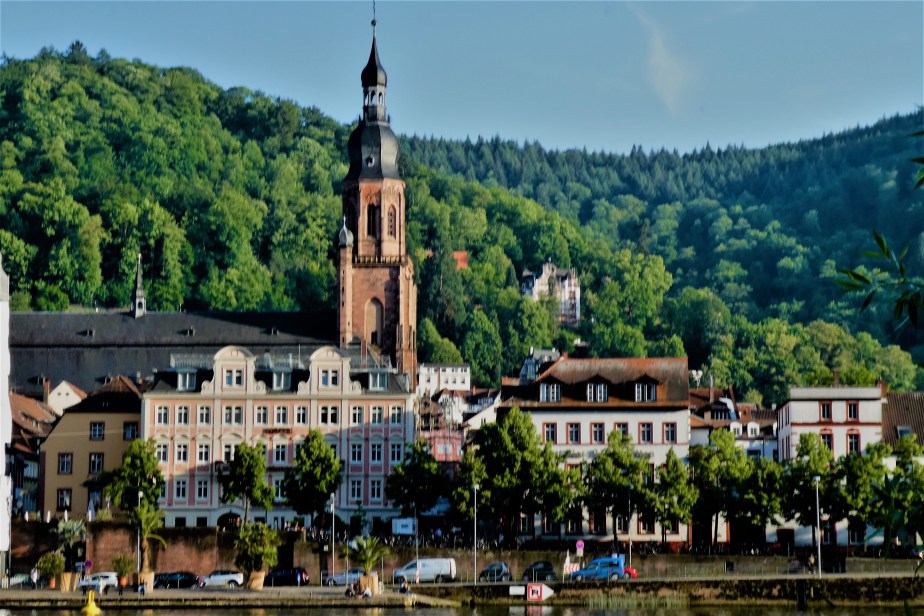
The castle, a romantic ruin of seemingly endless staircases and corridors taking you here, there, and sometimes nowhere, stands 330-feet above the Alstadt, Heidelberg’s wonderful old town. Towers and battlements protect stone facades, their decorative features still intact though the rooms behind them are gone. Views into the multitude of windows reveals not an interior but woods and the Neckar River below.
“Deserted, discrowned, beaten by the storms, but royal still, and beautiful,” is how Mark Twain described the Gothic-Renaissance castle. He was one of many poets and writers who spent time in what they considered the most romantic city in the world.
Photo Jane Simon Ammeson
The castle is also home to the Heidelberg Tun, a 58, 124 gallon wine barrel said to be the largest in the world. It was built in 1751 on orders from Prince Elector Karl Theodor to store the wine paid in taxes by the region’s wine growers. We should all be so lucky to have too much wine.
Brews and Pork Knuckles
Taking the funicular down to the old town, I meet friends at Vetter’s Alt Heidelberger Brauhaus on Steingasse, Europe’s longest carless street. It’s one of those baronial style Germanic places with high ceilings, large wood beams, long tables and a lot of dark highly polished wood.
Famed for their Vetter’s 33, which they say is the strongest beer in the world, its alcohol content is—you guessed it—33%. But it isn’t all beer her, they’re famed for their traditional German food and so I decide to go full German, ordering the pork knuckle, sauerkraut and dumpling with gravy. Skipping the 33, I opt for the Hubier—a mix of the lager and elderberry syrup.
History, Luxury and a Family Touch
Courtesy of Hotel Europaischer Hof Heidelberg.
My love affair with the city began several years before when I checked into the five-star Hotel Europäischer Hof Heidelberg. The hotel, one of the few five-star family run hotels in Europe, opened in 1865 and has been owned by von Kretschmann family since around the turn of the last century.
Courtesy of Hotel Europaischer Hof Heidelberg.
I’d heard that Sylvia von Kretschmann, who with her husband Ernst-Friedrich, ran the hotel for a half-century before their daughter Dr. Caroline von Kretschmann took over, regularly did the hotel’s large floral arrangements. So it was no surprise when I ran into this very elegant woman doing just that in Die Kurfürstenstube, the hotel’s opulent dining room that opened in 1866. Such a romantic place and romantic tradition—how could I not fall in love?
Courtesy of Hotel Europaischer Hof Heidelberg
Chocolate Kisses
My romance continued at Chocolaterie Knosel where owner Liselotte Knosel talked about studentenkussor or student kiss, a chocolate covered nougat created by her great grandfather Fridolin Knosel in 1863. His Café Knosel was frequented by male university students who admired women from a local finishing school who were, alas, chaperoned by their governesses. A gift of student kisses was a sly way to start a flirtation.
We don’t know how well it turned out for the students but these confections, still hand crafted, remain best sellers more than 150 years later. Café Knosel—the city’s oldest café—is my go to spot for coffee and a pastry at one of their outdoor tables overlooking the church on Marktplatz.
At dusk, on my last night, I boarded Patria, a 1930s ship for dining and a cruise along the Neckar River. Watching the city lights sparkle in the calm water, I knew that though my visit was ending, the romance was just beginning. I would be back.
Join food historian Francine Segan and accomplished race car driver and sportscar historian Frank Celenza for a thrilling ride through Italy’s “Motor Valley.”
Birthplace of Enzo Ferrari and home to the world’s highest concentration of sportscar brands including Dallara, Ferrari, Lamborghini, Maserati, Pagani and Ducati, Italy’s Emilia-Romagna is as well known for its fast cars as it is for its slow-cooked and savored food. Visitors can explore and discover the 11 car museums and four-day Motor Valley Fest.
Many of world’s most famed Italian foods come from Emilia-Romagna, a wondrous region in northern Italy known as the Food Valley, because its world-famous specialty edibles such as Parmigiano-Reggiano cheese, the thinly sliced Prosciutto di Parma–an Italian dry-cured ham served uncooked, Aceto Balsamico, made by cooking grape must from regionally grown wine into a syrup like vinegar that is robust in flavor and a great addition to so many dishes, and Lambrusco wine.
Moderna, one of the region’s gorgeous cities rich in art, music, fashion, and culture, is also home to Osteria Francescana, voted twice as the best restaurants in the world. But don’t expect to just walk it or even call in a day or two advance. Their first available table is seven months from now.
Owner and executive chef Massimo Bottura, born and raised in Modena, says he grew under the kitchen table at his grandmother Ancella’s knees.
“That is where appetite begins for me,” he says. “Inspiration comes from the world around me – from art, music, slow food and fast cars. Catch the flash in the dark because it only passes once. Expect the unexpected.”
Participants in this online interactive event will come away with a greater understanding of Italian culture and food traditions as well as the country’s important role in the world of car manufacturing and racing.
The event is Thursday, June 24 from 6:30 to 7:30 p.m. ET
If you do get to Emilia-Romagna, here’s a curated itinerary courtesy of Emilia-Romagna Tourism.
An ancient route running through the length of Emilia-Romagna, Via Emilia, linking the coastal city of Rimini on the Adriatic Sea with Piacenza in the north, was completed in 187 BC by Roman Consul Marcus Aemilius Lepidus.
The region is also home to 44 food and wine products with the DOP/IGP guarantee of quality, and the great automotive brands that have made Emilia-Romagna famous all over the world.
Penguins, Bourbon, Art, & Haute Southern Cuisine come together in Louisville.
Much more than a place to lay your head, 21c Museum Hotel with locations in Louisville, Cincinnati, Des Moines, Chicago, St. Louis, Lexington, Kansas City, Oklahoma City, Nashville, Durham, and Bentonville, Arkansas, is a total immersion into art or, maybe better put, it’s a night in the art museum.
Penguin Love. Photo of 21c Museum Hotel Louisville.
In Louisville, it started when I spied a 4-foot penguin at the end of the hall as I headed to my room but 30 minutes later when I opened my door, the rotund red bird was there in front of me. “Don’t worry,” said a man walking by. “They’re always on the move.”
Proof on Main. Photo courtesy of 21c Museum Hotel Louisville.
The migratory birds, sculptures first exhibited at the 2005 Venice Biennale and now part of the collection of 21c Museum Hotel in Louisville add a touch of whimsy. But with 9,000 square feet of gallery space and art in all corridors and rooms, three-fourths coming from the owners’ private collection valued at $10 million, 21c is a serious museum.
Proof on Main. Photo of 21c Museum Hotel Louisville.
Carved out of five former 19th-century bourbon and tobacco warehouses, 21c is both part of the revitalization of Louisville’s delightful downtown and a transformation of art from backdrop into upfront and thought-provoking.
The sleek, minimalist interior — uber-urbanism with linear white walls dividing the main lobby and downstairs gallery into cozy conversational and exhibit spaces — is softened with touches of the buildings’ past using exposed red brick walls and original timber and iron support beams as part of the decor. Named by Travel + Leisure as one of the 500 Best Hotels in the World, 21c is also the first North American museum of 21st-century contemporary art.
Photo courtesy of 21c Museum Hotel Louisville.
I find more whimsy on a plate at Proof on Main, the hotel’s restaurant, when the waiter plops down my bill and a fluff of pink cotton candy — no after-dinner mints here. For more about the cotton candy, see the sidebar below. But the food, a delicious melange of contemporary, American South, and locally grown, will please even the most serious foodinista. It’s all creative without being too over the top. Menu items include charred snap peas tossed with red chermoula on a bed of creamy jalapeno whipped feta,
Bison Burger. Photo and recipe courtesy of 21c Museum Hotel Louisville.
And, of course, the Proof on Main staple since first opening. 8 ounce patty, char grilled to your preferred temp (chef recommended medium rare), served with smoky bacon, extra sharp cheddar and sweet onion jam to compliment the game of the meat nicely. Local Bluegrass bakery makes our delicious brioche buns. The burger comes house hand cut fries. For the ending (but it’s okay if you want to skip everything else and get down to the Butterscotch Pot De Créme, so very luxuriously smooth and rich pot de creme with soft whipped cream and crunchy, salty pecan cookies.
Mangonada at Proof on Main. Photo and recipe courtesy of 21c Museum Hotel Louisville.
House-cured pancetta seasons the baby Brussels sprouts, grown on the restaurant’s 1,000-acre farm. Local is on the drink menu as well with more than 50 regional and seasonal Kentucky bourbons.
A meal like this demands a walk, so I step outside (more art here) on Main, a street of 19th-century cast-iron facades, the second largest collection in the U.S. Once known as Whiskey Row, it’s refined now as Museum Row on Main. To my left, a 120-foot bat leans on the Louisville Slugger Museum and Factory, across the street is the Louisville Science Center, and nearby are several more including the Muhammad Ali Center.
Heading east, I take a 15-minute stroll to NuLu, an emerging neighborhood of galleries, restaurants and shops. I’ve come for the Modjeskas, caramel-covered marshmallows created in 1888 in honor of a visiting Polish actress and still made from the original recipe at Muth’s Candies. On the way back to 21c, I detour through Waterfront Park, a vast expanse of greenway on the Ohio River, taking time to bite into a Modjeska and watch boats pass by.
21C MUSEUM HOTEL, 700 W. Main St., Louisville, Ky., 502-217-6300, 21chotel.com
Pink Cotton Candy for Dessert. Photo courtesy of 21c Museum Hotel Louisville.
As an aside, the idea for the cotton candy originated with co-founder Steve Wilson. Here’s the story, from the restaurant’s blog, Details Matter. “A memory that sticks with Steve from his younger years is the circus coming to town. Steve grew up in a small town in far Western Kentucky along the Mississippi River called Wickliffe He distinctly remembers the year the one striped tent was erected on the high school baseball field. Certainly not the large three ringed circus many others may remember, but the elephants, the handsome people in beautiful costumes…they were all there. When Steve sat through the show he got a glimpse into a fantasy world he didn’t know existed. A departure from reality. Oftentimes, after his trip to the circus, when he was sad or frustrated, he would daydream about running away to the circus. In fact, he’ll tell you he used to pull the sheets of his bed over his head, prop them up in the middle and pretend to be the ringmaster in his own crazy circus tent! In his eyes, the circus was where everything was beautiful, and no one would cry.
There’s that darn penguin again. Photo courtesy of 21c Museum Hotel Louisville.
“Fast forward many years later, Steve met Laura Lee Brown at a dinner party in Louisville. He was immediately smitten and wanted to impress her. SO naturally one of his first dates was a trip to the circus at the KY Expo Center. Whether she was impressed or not, it seems to have worked.
“Years later, as Steve and Laura Lee were working on the development of 21c Louisville, they took a trip to Mexico City. At the end of one particularly memorable dinner, the server ended the meal with pink cotton candy served on a green grass plate. It was sticky, messy, and immediately brought back memories from Steve’s childhood. It was a feel good memory he wanted to last.
“Steve often says 21c makes him actually FEEL like the ringmaster in his own circus, so as the restaurant plans were getting finalized, he wanted to incorporate cotton candy as an homage to that feeling. As we opened up each new restaurant, the cotton candy continued, each time with a color and flavor to match the color of the hotel’s resident penguins. Eight operating restaurants later, the hope is that each and every diner ends their meal a little sticky, a little messy, and feeling nostalgic about good childhood memories.”
And again! Photo courtesy of 21c Museum Hotel Louisville.
Recipes courtesy of Proof on Main
Buttermilk Biscuits
2 cups self-rising flour
½ tsp kosher salt
1 tbsp light brown sugar
1 cup buttermilk
¼ heavy cream
6 tbsp butter
2 tbsp Crisco
Pre-heat oven to 350F. Grate butter on the coarse side of the grater and put butter in the freezer along with the Crisco. Mix all dry ingredients together in a bowl. Mix cream and buttermilk in a separate bowl. Once butter is very cold combine with the dry ingredients with hands until a coarse meal is made. Add the cold dairy to the mixture and fold until just combined. Roll out dough on a floured clean surface and cut biscuits with a ring mold cutter. Layout on sheet trays 2 inches apart. Bake for 8 minutes and rotate set timer for 8 more minutes. Once out of the oven brush with melted butter.
SMOKED CATFISH DIP
Smoked Catfish Dip. Photo and recipe courtesy of 21c Museum Hotel Louisville.
This recipe makes a lot, but you can easily divide it—or put the extra in a mason jar and give to a friend as a holiday gift.
YIELD: 1 QUART
1 lb. Smoked catfish 1 teaspoon Dijon mustard 1 cup sour cream 3 Tablespoons small diced celery 3 Tablespoons small diced white onion Juice and Zest of One Lemon 1 Tablespoon chopped fresh parsley 2 Tablespoons mayonnaise Salt and black pepper to taste
TO SERVE
Lemon wedges Hot sauce Pretzel crackers Fresh dill for garnish
Flake the fish with your hands until it is fluffy. Combine the mustard, sour cream, celery, onion, parsley, lemon juice and zest and the mayonnaise together. Combine with the catfish and mix until it is well incorporated. Season to taste with salt and freshly ground black pepper. Serve cold with fresh dill and lemon wedges, your favorite hot sauce and pretzel crackers.
Mangonada
“This is a slightly complex variation of a margarita, adding smoky mezcal, bright cilantro and tangy mango-tamarind syrup. It was created as a play on the Mexican sweet treat, the Mangonada, with mango, a tamarind candy stick, and Tajin seasoning.” – Proof on Main Beverage Director, Jeff Swoboda.
3/4 oz Banhez 3/4 El Jimador Blanco 1/4 oz Cynar 70 1 oz mango-tamarind syrup 3/4 oz lime juice big pinch of cilantro
Shake together with ice, strain over fresh ice and garnish with a Tamarrico candy straw.
Proof on Main’s Mint Julep
1 cup mint leaves, plus a sprig or two for garnish
1 ounce sugar syrup
2 ounces bourbon
Crushed ice to fill glass
In a rocks glass, lightly press on mint with a muddler or back of a spoon. Add the sugar syrup. Pack the glass with crushed ice and pour the bourbon over the ice. Garnish with an extra mint sprig.
Photograph by Penny De Los Santos-Diabetic cookbook, Author Amgela Medearis
“People are eating African American food every day, but they don’t know it,” Angela Shelf Medearis says to me when we chat on the phone. In part, she’s talking about James Hemings who, in the complicated way of slavery, trained in the culinary arts in Paris and became a noted chef de cuisine and yet lived most of his life enslaved. Hemings either created or introduced a variety of the foods we eat now such as macaroni and cheese, ice cream, French fries, meringues, crème brulée, and French-style whipped cream. Another dish he created that we don’t eat regularly if at all is his handwritten recipe for snow eggs–soft, poached meringue, set in puddles of crème anglaise.
Hemings was the son of Sally Hemings, an enslaved woman and John Wayles, the man who “owned” her. The two had six children together. Wayles also had a more traditional family and his daughter Martha married a plantation owner named Thomas Jefferson. Thus, James was the half-brother of Martha Jefferson who “inherited” James (that’s so creepy I even hate writing it) when Wayles died. James was eight when they all came to live at Monticello. His youngest sister, Sally was just an infant. To make matters even more complex, after Martha died and Sally reached some type of maturity—she was probably in her mid-teens, she became Jefferson’s mistress and had six children by him, four of whom lived to adulthood.
So, Sally Hemmings was Martha Jefferson’s half-sister, and her children were half-siblings to Martha and Thomas’s children. I mention all this not only to show how helpless enslaved people were as to what happened to their bodies but also to show how intertwined Black and White families were and how the foodways of both merged.
But while Hemings introduced the Frenchified cookery to America,
Medearis, the founder of Diva Productions, Inc., the organization that produces her multicultural children’s books, cookbooks, videos, and audiocassettes, points out that people weren’t eating black-eyed peas before Africans arrive in this country.
“Back then they even thought tomatoes were poisonous,” she says. “But when they shipped slaves, they also shipped the foods they ate with them because that was a cheap way to feed them,” she says. “The recipes for those foods traveled from one place to the other. If they stopped in the Caribbean or South America before coming here, then the recipes changed with the foods and spices available and the types of cooking techniques.”
“I only cooked enough that social services wouldn’t come and take away my children,” she says with a laugh. But her mother, after she retired, decided she wanted to market her raisin pie for some extra income.
While her mother and sister did the cooking, Medearis who often wears feather boas during her TV appearances and on her PBS cooking show and isn’t shy about being in the limelight, did the marketing.
But when her mother and sister decided to quit, Medearis knew she had to learn to cook if she wanted to keep her food business going.
Now she’s so full force that celebrity chef and restauranteur Bobby Flay arrived for a Jerk Chicken Throwdown while she was marinating jerk chicken for a family get. It was for his Food Network show Throwdown with Bobby Flay.
Who won I ask?
Medearis’s Jerk Chicken
“My chicken had been marinating for hours,” Medearis replies. “He just arrived from Manhattan and threw some spices on his chicken. It burned. I beat Bobby.”
Though she originally didn’t cook Medearis had written several loved historic research. Did I know that George Washington Carver drove a food wagon around to introduce people to healthy foods?
No. I knew that Carver, who famously said, “There is probably no subject more important than the study of food,” was born a slave and became a botanist, author, educator and agriculturalist. He also collaborated with auto magnate Henry Ford on growing peanuts and soybeans.
And don’t even get her started on Carver and black-eyed peas.
“Black-eyed peas, okra, peanuts and sesame seeds, and the oil they produce, are documented contributions from Africa via the slave trade to our American cuisine,” she writes in her syndicated column. “I prepared black-eyed peas any number of ways while doing research for my first cookbook.”
That would be The African-American Kitchen: Cooking from Our Heritage, a best seller that even now 30 years later is considered a standard on the foodways African Americans bought to this country. The problem though was getting it published. Her award winning children’s books were published by Dutton and when she brought the idea for her cookbook, she found an editor there who loved the book. But the editor at the next level turned it down, saying he’d published an African American cookbook almost 30 years earlier and no one bought it. He didn’t think the country was ready for another.
What’s a Kitchen Diva to do? Make a peach pie, of course, as it’s representative of both Black and Southern food history.
“You could hardly get a peach pie anywhere back then in Manhattan,” says Medearis. Wrapping up both the peach pie and the manuscript, separately we presume, she sent both off to the publishing company.
She got the contract.
“That book sold so many copies it was crazy,”
Overall, she’s written 107 books seven of which seven are cookbooks. Published in seven languages, she’s sold a total of 14 million books. But despite that, she’s not ready to stop.
“People ask me when I’m going to retire,” says Medearis who lives in Austin, Texas. “Why should I? I’m having a lot of fun with it. I’m doing what I want to do.”
Creole Chicken Stew
Makes 8 Servings
“This is a quick and healthy version of New Orleans-style gumbo,” writes Medearis about this recipe, which was published in her book, the . “Using frozen vegetables is a real time-saver when making this tasty stew; it’s also the perfect way to use kohlrabi when in season. Select small, tender okra pods for this recipe, and don’t slice them until right before you add them to the stew.”
1½ tablespoons olive oil
1 cup chopped yellow onions
1 cup coarsely chopped carrots
¼ cup chopped celery
4 cloves garlic, minced
1 bay leaf
2 teaspoons diced seeded jalapeño chile
¼ teaspoon salt
1 teaspoon freshly ground black pepper
½ teaspoon dried thyme
2 tablespoons whole-wheat flour
3 cups reduced-sodium chicken broth
1½ pounds boneless, skinless chicken breasts, cut into 1-inch-wide strips
1 cup peeled cubed Yukon Gold potatoes or kohlrabi, or a combination
1 cup diced zucchini
1 cup halved okra or frozen cut okra
4 cups cooked brown rice
2 green onions, chopped, including green parts
In a large pot, heat 1 tablespoon of the oil over medium-high heat. Add the yellow onions, carrots, celery, garlic, bay leaf, jalapeño, salt, pepper, and thyme and sauté until the onion is translucent, about 3 minutes.
Using a slotted spoon, transfer the vegetables to a plate, leaving as much oil in the pot as possible. Add the remaining ½ tablespoon of oil. Stir in the flour. Cook, stirring constantly, until the flour begins to turn golden brown, about 3 minutes.
Gradually whisk in the broth and cook for another 5 minutes, whisking until smooth. Bring the mixture to a boil, then reduce the heat to a simmer. Add the chicken, potatoes or kohlrabi, and zucchini. Return the sautéed vegetables to the pan. Partially cover and simmer, stirring occasionally, for 20 to 30 minutes.
Add the okra and cook for 15 to 20 minutes. Remove the bay leaf. Serve over ½ cup of rice per person and sprinkle with the green onions.
Kitchen Diva: Tap Your Inner Chef With DIY Recipes
Angea Medearis, the Kitchen Diva, wrote one of her syndicated columns on creating Do-It-Yourself recipes.
“Basically, a DIY dinner recipe is about finding a way to retain the flavors of the recipes you love while using the ingredients that you have on hand,” Medearis writes. “If you have always wanted to free yourself from the restraints of a recipe, now is the time to do it! Think of the current lack of ingredients as permission to tap into your inner chef.”
To ease into creating your own DIY dinner recipes, Medearis suggests starting by making a pot of chowder.
“No one really knows the origin of the term chowder,” she writes, “but whether it came from French, Caribbean, Portuguese or Brazilian cooks, the basic meaning is connected to the large pot that the meal is cooked in.”
Medearis is a history buff paritcularly when it comes to food.
“Chowders were introduced to North America by immigrants from France and England more than 250 years ago. Native Americans called the dish ‘chawder’.” she says noting the word interpreted as “chowder” by early settlers and fishermen in New England.
“The original versions of the dish consisted of a pot filled with a mixture of fresh fish, salt pork, leftover hardened biscuits (which were used as a thickener), onions, water and whatever spices were available, writes Medearis. “A chowder is a delicious way to use the ingredients you have on hand to create a meal that does not require extensive prep or simmering for hours. My recipe for Seafood and Sweet Corn Chowder uses the basic techniques.”
My recipe for Seafood and Sweet Corn Chowder uses the basic techniques for making a chowder, but is designed to accommodate the need to vary ingredients based upon what you have on hand or what you can purchase at the store.
Whether you decide to make a seafood or vegetarian chowder, feel free to create your own version of this DIY dinner.
SEAFOOD AND SWEET CORN CHOWDER
If you don’t have all the vegetables, seafood or spices on hand, omit or substitute the ingredient with what you do have. This chowder will still be delicious without it!
3 tablespoons butter or vegetable oil
1/2 cup (about l large stalk) chopped celery
1/2 medium onion, chopped
1/2 green bell pepper, seeded and chopped
2 garlic cloves, minced or 1/2 tablespoon granulated garlic powder
1 1/2 teaspoons salt
1 1/2 teaspoon ground black pepper
3/4 teaspoon dried dill or tarragon, or 1 tablespoon dill pickle juice
1/8 teaspoon cayenne pepper or red pepper flakes
2 cups chicken broth, seafood stock, clam juice, bouillon fish base or water
1 to 2 large Russet potatoes, or 3 red skin or Yukon Gold potatoes cut into 2-inch cubes, about 2 to 3 cups
2 large carrots, chopped
2 cups frozen corn, thawed, or 1 (15-ounce) can whole kernel or cream-style corn, or 6 ears sweet corn, husk and silk removed, or frozen corn on the cob, thawed with kernels cut from the cobb
2 cups heavy cream, half and half
Whole milk or 2 (14-ounce) cans evaporated milk
1 3/4 to 2 cups fully cooked, skinless salmon chunks, or 1 can (14 3/4 ounces) salmon, drained, flaked, bones and skin removed, or 1 to 2 cups fresh or frozen peeled and deveined shrimp, cooked peeled and deveined shrimp, or cooked crab meat (checked for pieces of shell) or a combination of the seafood equaling 1 3/4 to 2 cups.
1. Place the butter or oil into a large saucepan or Dutch oven placed over medium heat. Add in the celery, onion, green bell pepper, garlic or garlic powder, and 1/2 teaspoon of the salt and pepper, dill, tarragon or dill pickle juice, and the cayenne pepper or red pepper flakes. Saute, stirring occasionally until the vegetables are tender, about 4 to 5 minutes.
2. Stir in the broth, stock, juice or water, potatoes, carrots and the remaining teaspoon of he salt and pepper. Cover and bring the chowder to a boil.
3. Reduce heat to low; stir the mixture, cover and simmer for 40 minutes or until the vegetables are nearly tender. Stir in the corn, cream or milk, and the salmon, shrimp or cooked crab meat (or a combination of seafood). Simmer on low heat for 10 to 15 minutes or until heated through.
4. Garnish with lemon wedges, chopped parsley or green onions. Serve with toasted French bread or crackers. Serves 6
Here’s the Jerk Chicken recipe that won the Throwdown with Bobby Flay.
Combine the oil and vinegar in a medium glass bowl. Stir in the orange and lime juice, molasses, soy sauce, cilantro, green onions, garlic, chili, bay leaves, peppercorns, cinnamon stick, sage,thyme, allspice, pepper, and nutmeg.
Place the chicken pieces in a large baking pan and pour the spice mixture over them, coating each piece well. Cover with plastic wrap and place the chicken in the refrigerator to marinate 12 hours or overnight, turning once.
Allow the chicken pieces to come to room temperature before grilling. Heat the grill until the coals are somewhat white with ash; the flame should be low. Place the chicken on the grill and cover with the lid. Grill for 30 to 35 minutes, turning pieces to cook evenly. Baste pieces with remaining marinade.
Saxony Engages Travelers with Compelling Microsite www.saxonytraveldreams.com is the new microsite from Saxony Germany where lovers of history, castles, classical music, art museums and charming towns can experience Saxony at its most beautiful. A perfect antidote to the stay at home corona virus regulations, this microsite takes you there, to Saxony, creating an immersive visual and audio experience.
” We are making sure that memories of Saxony are kept alive in the minds of our international guests,” says TMGS managing director Veronika Hiebl.Whether you love history, castles, wine, charming towns and palaces, classical music or art museums, Saxony has it all so you don’t have to choose.
The land of Luther and Bach brings its charm and talents to the fore in the new #saxonytraveldreams campaign. Stocked with beautiful videos and photographs, visitors get a taste of the beauty and creativity that is alive in Saxony today. Although you may not be able to hop on a plane and travel there, this eastern state in Germany is a bastion for the arts and music and you can get a sense of these treasurers from your own home. The videos from journalists, bloggers and influencers are outstanding and objectively showcase Saxony at its most beautiful.
Two times per week the music city of Leipzig, broadcasts live stream performances from the world-famous Leipzig Gewandhaus Orchestra. Broadcasts start every Thursday and Friday at 12 pm (Europe time) and are then available for 24 hours. In Dresden, the landmark Frauenkirche (Church of our Lady) that rose from the GDR ashes produces a short“musical greetings”on the church’s YouTube channel or visitors can choose to go on a 360-degree tour. Jan Vogler, the director of the Dresden Music Festival has organized an online music festival to replace the recently cancelled Dresden Music Festival.
The spa town of Bad Elster, a hidden gem in southern Saxony, goes digital with its philharmonic and presents a range of live recordings every Wednesday and Saturday at 7.30 pm (Europe time) plus special music performances by individual orchestra members. But it’s not just music, there is art and incredible towns to explore. From the movie town of Görlitz, where The Grand Budapest Hotel among many other movies was filmed, to Radebeul, Leipzig and Torgau: Saxony’s enchanting towns and cities delight with unique architecture, fascinating history, interesting museums and character.
Truly there are many undiscovered gems and places that are not crowded and worth every penny to visit. Also, many of Saxony’s castles are off the beaten track and in this site, you will visit some of them and receive two very special immersive experiences created by local students built around famous palaces and castles in Dresden. Two sites which have been awarded UNESCO World Heritage status impressively underline Saxony’s reputation as the number one cultural tourist destination in Germany: “Muskauer Park/Park Muzakowski”, a joint Polish-German site, and the “Ore Mountains/Krusnohori Mining Region” site of German/Czech cultural heritage. You can take 360 tours of these beautiful areas.
For example, known as Saxony’s “silver town”, 800-year-old Freiberg at the foot of the “Ore Mountains has beautiful patrician townhouses, reflecting the wealth derived from the once thriving mining industry, and features a fascinating cathedral – discover the town on a 360-degree tour. These are only a few of the highlights that Saxony has to offer and they will whet your appetite for when you are able to travel again.
I was really sick with the flu last month and didn’t have much energy at all. When I finally could make it to the couch, I decided to finally figure out how to download Amazon Prime videos to my Kindle so I would have something to do.
It took like two seconds because all you have to do is click on the “watch” button but how was I to know it was that easy?
Anyway, I had always wanted to see the PBS series Downton Abbey because I love those Masterpiece Theatre English costume dramas. I’m still on the first season and wondering if Lady Mary is ever going to get around to saying yes to Matthew, the entitled heir to Downtown Abbey but I also love the busy kitchen and elegant dining room scenes—did you know that women were not allowed to serve food to the aristocrats, it was definitely a man’s job but we were allowed to cook it.
Those Edwardians knew how to eat and the book contains recipes for Edwardian Leg of Lamb, Lobster Pudding, Oyster Roll, Leek Pie, Downton Pheasant Casserole, Lemon Creme Soufflé, Raspberries in Sherry Sabayon Sauce, Stilton Chowder, Queen Victoria Rice Pudding and Downton Abbey Honey Cake. There was one for asparagus in a cider sauce that sounded very Southwest Michigan to me so I thought I would include it as well as another that seems so very British and of that time.
Asparagus in Cider Sauce
1 pound asparagus, trimmed if necessary
1 tablespoon butter
2 teaspoons flour
1 teaspoon salt
1/4 teaspoon ground black pepper
1/8 teaspoon ground nutmeg
1/3 cup cider vinegar
2/3 cup heavy cream
1/4 teaspoon lemon juice
In a large saute pan, bring a few inches of water to a boil. Add the asparagus and cook 10 minutes or until tender, depending on the size. Drain the asparagus and set it aside. Discard the cooking liquid.
In a small saucepan, melt the butter over medium heat. Stir in the flour, salt, black pepper and nutmeg until well combined. This is what is referred to as a seasoned roux (thickener).
Whisk the cider vinegar and whipping cream into the saucepan and whisk until the sauce begins to simmer. Reduce the heat to low and cook 5 minutes.
Stir in the lemon juice. Place the asparagus on a serving platter. Drape the sauce over the asparagus and serve.
Downton Abbey Honey Cake
2 eggs, separated
½ cup sugar
½ cup vegetable oil
½ cup honey
1-1/2 tablespoons very strong black coffee (espresso is fine)
2 cups flour
1-1/4 teaspoon baking powder
½ teaspoon baking soda
1/2 teaspoon ground cinnamon
¼ teaspoon ground cardamom
¼ teaspoon ground cloves
1 tablespoon finely grated orange zest
¼ cup raisins
¼ cup minced dried apricots
¼ cup minced walnuts
Preheat oven to 350 F. Line bottom of 9 x 5 loaf pan with parchment paper.
In a mixer with a paddle attachment, beat egg yolks and sugar until light and pale and then beat in the oil, honey and strong black coffee.
In a medium bowl, whisk together the flour, baking powder, baking soda and all spices.
With the mixer on a low speed, gradually add the dry ingredients just until a batter forms.
In a medium bowl, whisk egg whites until peaks form. Fold one third of the egg whites into the batter and then fold the remaining whites into the batter along with the orange zest, raisins, dried apricots and walnuts.
Spoon the mixture into the prepared pan and even out.
Place the cake into the oven and bake 75 minutes or until the sides break away from the pan.
Remove cake from the oven and let cool in the pan 10 minutes.
Remove the cake from the pan and cool on a rack until ready to slice and serve.
High in the Sierra Madres, we follow the twisting road from Puerto Vallarta and the seaside on our way to San Sebastian del Oeste, once a booming mining town in the Sierra Madres northeast of the city and one of the wonderful Pueblos Magicos or magic towns on Mexico. Our journey took us through green jungles and blue plantations. The latter are agave farms, owned for generations by jimadores or farmers who specialize in growing, harvesting and distilling the pinon or heart of the agave into gold and silver tequila and reposado, a type of tequila aged in oak.
Crossing the long spanned bridge over Rio Ameca, the road curves around a ridge and into the tiny village of La Estancia near Hacienda San Sebastián, a family owned raicilla and tequila distillery (for raicilla think tequila only much stronger and likely of inducing hallucinations in anyone who drinks too much).
San Sebastian, now on the way to nowhere, was for years a major stop between the Bay of Banderas on the Pacific Ocean to Guadalajara when its mines produced riches of silver.
When San Sebastian was at its glory, the residents of Puerto Vallarta, then a tiny port and fishing hamlet called Las Penas, were harvesting salt–a necessary ingredients for smelting the ores taken from the mines– loading it onto mules and trekking 4500-feet up to San Sebastian. The bridge we cross into San Sebastian takes us from the paved highway main street made of dirt and pitted with rocks. It probably hasn’t change that much since the mules came through carrying salt centuries ago.
Founded in 1605, San Sebastian’s boom lasted until the early 1900s. Because it was so remote, modernization never came again to sweep away the historic buildings dating back centuries.
The families of many who live here now can trace their lineage back to the early Spanish colonial Viceroyalty of New Spain period and the town was wealthy, with some 25 mines producing lead, silver and gold.
Walking along the cobblestone streets, past walls covered with red, purple and orange bougainvillea, we take a turn past the town’s zocolo centered around an ornate gazebo. Nearby is the Colonial Spanish Baroque Iglesia de San Sebastian, notable for such architectural flourishes as Corinthian columns, ornate bell tower, and vaulted ceilings painted with frescos. Dedicated to San Sebastian, the church was built in the 1600s and then, after an earthquake, rebuilt in 1868. As we continue on, we pass the Hotel Los Arcos de Sol with its white washed exterior. It too is old, built more than 200 years with a restaurant that gets good reviews. Along the way there ae small stores, housed in historic buildings, offering a variety of goods but we don’t stop to shop.
Casa Museo de Dona Conchita Encarnacion
Instead we’re on a mission to visit Casa Museo de Doña Conchita Encarnación the small museum run by Lupita Bermudez Encarnacion, the great times four granddaughter of a Spaniard who came here to run Santa Gertrudis, one of the mines here, in the 1770s. There is a hiking path to the old mine.
The museum, once the home and office of Santa Gertrudis and built in 1774, is packed with an array of family momentos, furniture, silver studded trunks, books, photos, clothing such as lace and satin christening gowns more than 150 years old and odd artifacts including 3D pornography with its own special reader dating back to 1904 and a 19th century photo of the family holding a cadaver. It seems that, according to Lupita, it was a family tradition that when a family member died, before they were buried (and remember it’s very hot here), a photographer was summoned to take a photo of the deceased. It could take days, but that’s how it was done.
Over all the story of San Sebastian del Oeste is one of glory and loss. At one time the town had a population of 20,000; now there are about 1000. San Sebastian was founded by three families who immigrated from Spain and to keep their blood lines pure, they only intermarried with each other. So through the centuries uncles married nieces and aunts married nephews. Thus Lupita says that her mother, Dona Conchita, married a man who was her cousin and nephew and so Lupita’s father was also her nephew, cousin and uncle.
.
As our guide Victor Avila continues to translate Lupita’s many tales, we learn her great great uncle Jose Rogello Alvarez (and who knows how else they were related) and other men, carrying rifles and riding on horseback, guarded 40 mules loaded with silver and gold as they made the five day trip through the mountains to Guadalajara to deposit their money. Then it was five days back on the narrow mountain passage. Of the many runs they made–at least five a year– bandits only managed to rob them twice. Even then the weight of the metal made it impossible for the bandits to carry only much away.
Pancho Villa Ruins It All
In 1910, as the Mexican Revolution raged, Lupita’s family’s wealth disappeared. She blames Pancho Villa and his men who kept raiding the town demanding ransom and money until it was all gone.
Those that probably never got rich were the laborers in the mine who were paid by money printed in the office here by Lupita’s family which made spending it anywhere else except San Sebastian almost impossible. Talk about owing your soul to the company store. As an aside, I’ve visited other mines in Mexico and was told that on the average, because of the dangers of mining (no OSHA here), the life span of a miner was ten years.
Plantacion de Cafe
Organic Coffee Farm
Owners Rafael Sanchez, his wife Rosa and Lola, Rafael’s sister are the fifth generation family members to grow coffee hereLa Quinta Café de Altura, an organic coffee farm.
The family’s home and business is located in a building dating back more than 140 years. Out back they tend 11 acres of coffee trees, some as old as the house. The family handpicks 30 tons of beans each year. They’re then dried, roasted, and gound. Sometimes sold just like that, the family also makes blends such as a mixture of ground beans with cinnamon and sugar for the making traditional Mexican coffee–now hard to find, Hot coffee samples are provided and Rosa’s sells her homemade candies such as guava rolls and sweets made from goat’s milk. In an interesting aside, we learn that the Sanchez’s parents married early (the Don was 15), a union lasting 68 years and producing 21 children. Their grandfather did even better, having 28 children, though that took both a wife and several mistresses.
Comedor Lupita
Walking along the cobblestone road, past a massive 300 year plus ash tree and cascading white frizzes of el manto de la virgin, we enter Comedor Lupita. Here terra cotta platters loaded with chicken mole, fresh handmade tortillas (in America they’d be called artisan tortillas), refried beans and something I’ve never tasted before – machaca, a dish of dried beef mixed with spices and eggs, are placed in front of us. As we eat, we watch the family busy behind the tiled counter, making even more food. One woman’s sole job seems to be quickly patting masa into paper thin tortillas. Victor Avila, who lives in Puerto Vallarta, is entranced with that.
“It’s so hard to find handmade tortillas anymore,” he says.
Through the windows we see splashes of bright purple from the masses of bougainvillea that drape the stone exterior walls and here the sounds of caballeros, their horses’ hooves striking the centuries old street. We sip our sweet agua de Jamaica water, eat tortillas fresh from the griddle and help ourselves from heaping platters, we all feel time slipping backwards into the past.
Machaca Marinade:
1/4 cup Worcestershire sauce Juice of 4 limes 4 cloves garlic, chopped 1 tablespoon cumin 1 tablespoon chili powder 1/2 tablespoon salt 1/2 tablespoon black pepper 1/2 cup olive oil
Machaca:
2 lbs. skirt steak, cut into strips 1 large sweet onion, diced 1 green bell pepper, chopped 4 cloves garlic, chopped 1 jalapeno pepper, chopped 1 14 ounce can diced tomatoes with green chilies 1/2 cup beef broth 1 tablespoon oregano 1 tablespoon cumin 1 tablespoon hot pepper sauce (Tabasco or a Mexican brand, such a Valencia) Salt and pepper 2 tablespoons oil
Whisk all the marinade ingredients together, and then add the skirt steak. Marinate at least 6 hours or overnight tablespoon Remove meat from marinade, drain, and pat dry. Bring to room temperature. Discard marinade. In a large heavy pot, heat oil. Sear the meat well on both sides, in batches so as not to crowd them. Remove the meat as it is browned and set aside.
Drain fat. Add in the onion, peppers, and garlic, cook until tender, then add tomatoes, broth, pepper sauce and spices. Bring to a boil, stirring and scraping the bottom of the pot. Return beef and simmer, covered, for two hours, stirring from time to time until tender. Cool and shred.
Lay meat on a single layer on a baking sheet. Bake at 250º for 20 minutes or until meat is dry.
Machaca con Huevos
2 chopped scallions (white part only) 1 hot green chili 2 tomatoes 1 cup dried machaca 2 eggs Chopped cilantro
Sauté scallions and peppers in oil until tender, add tomatoes and beef until heated. Remove from pan, add eggs and cumin. Scramble, then stir machata mixture. Garnish with cilantro and serve with hot tortillas.