On the road and at home, it's always about food and fun!
Author: Jane Simon Ammeson
Jane Simon Ammeson is a freelance writer who specializes in travel, food and personalities. She writes frequently for The Times of Northwest Indiana, Mexico Connect, Long Weekends magazine, Edible Michiana, Lakeland Boating, Food Wine Travel magazine , Lee Publications, and the Herald Palladium where she writes a weekly food column. Her TouchScreenTravels include Indiana's Best. She also writes a weekly book review column for The Times of Northwest Indiana as well as food and travel, has authored 16 books including Lincoln Road Trip: The Back-road Guide to America's Favorite President, a winner of the Lowell Thomas Journalism Award in Travel Books, Third Place and also a Finalist for the 2019 Foreword INDIES Book of the Year Awards in the Travel category. Her latest books are America's Femme Fatale: The Story of Serial Killer Belle Gunness and Classic Restaurants of Northwest Indiana.
Her other books include How to Murder Your Wealthy Lovers and Get Away with It, A Jazz Age Murder in Northwest Indiana and Murders That Made Headlines: Crimes of Indiana, all historic true crime as well Hauntings of the Underground Railroad: Ghosts of the Midwest, Brown County, Indiana and East Chicago. Jane’s base camp is Stevensville, Michigan on the shores of Lake Michigan. Follow Jane at facebook.com/janesimonammeson; twitter.com/hpammeson; https://twitter.com/janeammeson1; twitter.com/travelfoodin, instagram.com/janeammeson/ and on her travel and food blog janeammeson.com and book blog: shelflife.blog/
The flavors and foods of Miami, with its imaginative and creative cooking, wide ranging cultural traditions, and unique culinary identity, are brought to the fore by its amazingly talented and award winning chefs and mixologists, Sara Liss, who has been writing about the city’s food scene for more than 15 years captures the culinary essence of the city’s fascinating food scene in Miami Cooks. Presenting 75 signature dishes and drinks from 35 of the hottest restaurants and chefs, either just rocketing to fame or James Beard winners, Liss shares their recipes–ranging from craft cocktails to satisfying brunch dishes to airy desserts. The flavors are global–Cuban food capital of America, but it also home to so many other cuisines―Peruvian, Venezuelan, Puerto Rican, Haitian, Jamaican, Cuban, Mexican, Asian, classic French with a Miami twist, and Floridian (of course). All evoke the passionate gastronomic spirit of The Magic City.
Avocado Pizza. Chef Helene Henderson of Malibu Farm Miami Beach. Henderson recommends Caputo (or “00”) flour for the pizza dough as it is an authentic Italian flour used by pizza makers to produce a very soft, flavorful thin crust.
But Liss takes it one step further. Stating that her mission was to make the entire creative process acceptable and achievable for the home chef, she makes it easy for us to take our cooking to the next level.
Miami Cooks, published by Figure 1m is currently available for purchase now.
With beautiful photographs and intriguing recipes, here are a few more to contemplate:
Cubano “Croque Monsieur” – This recipe was crafted by Executive Chef Frederic Delaire from Bar Collins. A Cuban play on a French classic, this towering sandwich teems with slow-roasted pork, an indulgent béchamel sauce, and many layers of ham and Swiss.
Hamachi Cilantro Rolls – “You’ll be sure to wow your mom with some homemade sushi rolls! It might seem intimidating at first, but once you get the hang of it, the technique is fairly easy,” writes Liss.
Shrimp Cakes – This recipe is an Executive Chef Klime Kovaceski specialty from Crust. Riffing on the classic crab cake, Chef Klime has created an easy go-to dish when you’re looking for a hearty brunch course.
Golden Geisha – This raspberry vodka cocktail recipe is from Owner David Grutman of Komodo. This refreshing cocktail is deceptively easy to prepare and heightened to a luxe level with edible gold leaf flakes.
Jim’s Yellow Fedora – From Executive Chef Daniel Roy from The Jim and Nessie, Jim’s Yellow Fedora cocktail is made with whiskey and chartreuse – a liquor distilled using 130 natural herbs, spices and flowers. In this recipe, it adds depth to whiskey for a play on the classic green hat cocktail.
Korean Braised Chicken with Glass Noodles
This popular Korean dish, also known as Andong jjimdak, originates in the city of Andong, Korea. All at once savory, sweet, and spicy, it sees spicy braised chicken cooked together with Korean glass noodles for a dish that explodes with flavor.
Serves 2 to 3
Marinade [ingredients]
5 cloves garlic, finely chopped
3 Tbsp brown sugar
1/2 tsp grated ginger
1/4 tsp black pepper
41/2Tbsp soy sauce
3 Tbsp concentrated pear juice (see Note)
2 Tbsp mirin
11/2tsp sesame oil
Marinade [method]
Combine all ingredients in a small bowl and mix well.
Note: Korean cooking often calls for pear juice for marinating and tenderizing meat. It can be found in most Asian markets.
Chicken [ingredients]
2 lbs, bone-in chicken thighs
Marinade (see here)
5 to 6 oz Korean glass noodles (sweet potato starch noodles)
Sesame oil, for searing
5 dried red chiles (divided)
2 potatoes, peeled and cut into 1-inch cubes
1 large Spanish onion, coarsely chopped
1 carrot, chopped
5 button mushrooms, thinly sliced
2 scallions, roughly chopped
Chicken [method]
In a large bowl, combine chicken and marinade, turning to coat, and refrigerate for 1 hour.
Soak glass noodles in water for 20 minutes, until softened.
Coat a large skillet with sesame oil and bring to high heat. Add 3 chiles and sauté for 5 to
7 minutes, until the chiles darken. Discard chiles.
Add chicken to the skillet, reserving marinade, and sear for 4 minutes on each side, until browned. Transfer chicken to a plate.
In a large saucepan over high heat, combine the reserved marinade and 4 cups of water.
Bring to a boil, then add chicken, reduce heat to medium, and simmer for 10 to 15 minutes, until chicken is almost fully cooked. Add the remaining 2 chiles and the potatoes, onion, and carrot and simmer for 5 to 8 minutes, until vegetables are softened.
Add noodles, mushrooms, and scallions and simmer for another 6 to 8 minutes, until noodles are cooked. Remove the 2 chiles and serve immediately.
I recently received an email from Janet Fletcher, who lives in Napa Valley, California where she develops and tests recipes for cookbooks and magazine features, evaluate cheeses for her classes and columns, does extensive gardening, and prepares dinner nightly with her winemaker husband, Doug Fletcher. I’ve talked to her frequently in the past and wrote about several of her cookbooks including Wine Country Table and Cheese and Beer. I also follow her blog Planet Cheese.
Maggie’s Chicken. Photo by Meg Smith from Gather by Janet Fletcher.
Fletcher, the author of 32 books on culinary arts, who has won three James Beard Awards and the International Association of Culinary Professionals Bert Greene Award, has a new cookbook out, called Gather: Casual Cooking from Wine Country Gardensand I asked her if she would share recipes.
Courtesy of Gather by Janet Fletcher. Photo by Meg Smith.
She agreed, including recipes easily made at home and the California wines she suggests using when serving them.
“Gather features 13 wineries with edible gardens along with recipes,” says Janet, noting most of the wineries are in Napa Valley.
It started off as a magazine assignment with a focus on just a handful of winery gardens but grew into a book which took over a year to create. Janet worked Jen Barry of Jennifer Barry Design and photographer Meg Smith who has photographed the weddings of Anne Hathaway, Jimmy Kimmel, Governor of California Gavin Newsom, LeAnn Rimes, and the late Robin Williams. Her work appears frequently in Martha Stewart Weddings, Town & Country, and InStyle magazine. Barry has over 30 years in the design and publishing worlds and has designed and art directed hundreds of illustrated books on a variety of subjects ranging from from food and photography to nature and winemaking.
Working together, the three captured the lushly beautiful gardens that Janet describes as reflecting the hospitality, sustainability and the wineries dedication of the farm-to-table lifestyle.
Courtesy of Alexander Valley Vineyards.
Though Janet is an avid gardener, she was delighted to learn more when visiting the wineries’ gardens.
“Prisoner Wine Company grows over a dozen different basil plants, ones I didn’t know existed,” she says.
That’s led her to plant with more diversity and also use more flowers mixed with her vegetables to draw beneficial insects.
The following are recipes she created along with anecdotes about their origins and Fletcher’s wine recommendations. If for some reason you can’t locate these wines substitute what is locally available. Such as when a Merlot is called for you can substitute a local Merlot or one from another area though keep in mind that Fletcher paired her food and wines very carefully based upon California wineries.
Courtesy of Alexander Valley Vineyards.
Maggie’s Ranch Chicken
Serves 4
Ranch chicken has nothing to do with ranch dressing, says Katie Wetzel Murphy of Alexander Valley Vineyards.
“It’s what we called this dish as kids,” she recalls. “It seems that my mother, Maggie, only made it when we came to ‘The Ranch,’ which is what we called the vineyards before we had a winery.”
Baked with honey, mustard, and tarragon, the quartered chicken emerges with a crisp brown skin, and the sweet aroma draws everyone to the kitchen.
“Kids like it and adults like it,” says Katie, “and most of the food we make has to be that way.”
1 whole chicken, 4 to 4 1/2 pounds, backbone removed, then quartered
Sea salt and freshly ground black pepper
1/3 cup honey
4 tablespoons salted butter
1 tablespoon Dijon mustard
4 fresh tarragon sprigs, each 6 inches long
Wine: Alexander Valley Vineyards Merlot
Preheat the oven to 350°F. Season the chicken quarters all over with salt and pepper. Put the quarters into a 9-by-13-inch baking dish.
In a small saucepan, combine the honey, butter, and mustard over low heat and stir until the butter melts. Pour the honey mixture evenly over the chicken. Place a tarragon sprig on each quarter.
Roast the chicken for 30 minutes, then remove the dish from the oven, spoon the dish juices over the chicken, and return the dish to the oven for 30 minutes more. The chicken will be fully cooked, with beautifully browned skin. Let rest for at least 15 minutes before serving to allow the juices to settle.
Antipasto Platter with Southern-Style Pickled Okra
The family pastime began as a way to preserve vegetables for winter and share homegrown gifts with neighbors.
Photo by Meg Smith from Gather by Janet Fletcher.
Today, Laura carries on the tradition, growing okra and other seasonable vegetables in the Regusci estate garden for pickling. Each Thanksgiving, pickled okra adds a southern spirit to the family’s antipasto board
3 pounds small okra
6 cups distilled white vinegar
4 cups water
1/2 cup kosher or sea salt
1/4 cup sugar
For Each Pint Jar:
1/4 teaspoon yellow mustard seeds
1/4 teaspoon dill seeds
6 black peppercorns
6 cumin seeds
2 cloves garlic, peeled
1 fresh oregano sprig
1 bay leaf
Pinch of ground coriander
Pinch of red chili flakes
When creating the antipasto platter use the pickled vegetables along with alongside figs, salami, other charcuterie meats, and marinated veggies like artichokes.
Suggested Wine: Regusci Winery Rosé
Have ready six sterilized pint canning jars and two-part lids. Trim the okra stems if needed to fit the whole pods upright in the jars. Otherwise, leave the stems intact.
In a saucepan, combine the vinegar, water, salt, and sugar and bring to a simmer over medium-high heat, stirring to dissolve the sugar. Keep hot.
Into each of the six jars, put the mustard seeds, dill seeds, peppercorns, cumin seeds, garlic, oregano, bay leaf, coriander, and chili flakes. Fill the jars with the okra, packing it in upright—alternating the stems up and down if needed—as tightly as possible. Fill the jars with the hot liquid, leaving 1/4-inch headspace, and top each jar with a flat lid and screw band. Process the jars in a boiling water bath for 15 minutes, then cool on racks without disturbing.
Refrigerate any jars that failed to seal and use within 2 weeks. Store sealed jars in a cool, dark place for up to 1 year. Wait for at least 1 week before opening a jar to allow the flavor to mellow.
The TruffleHunter is a United Kingdom based company that sources white and black truffles from both Europe and southern England and creates small-batch truffle products ranging from dairy and cheese to snacks. For the latter, think their vegan and gluten-free Black Truffle Popcorn, Black Truffle Crisps—thinly sliced English potatoes fried in small batches and dusted with Black Truffle Powder, and the more esoteric Black Truffle Seaweed Tempura.
Other products include truffle oils, popcorn, salts, mustard, honey and mayonnaise and have also introduced vegan friendly Black Truffle BBQ Sauce and Black Truffle Hot Sauce. Both ae good for drizzling over vegetables, burgers, meats, and fries, use as a dipping sauce or to flavor other foods with the taste of truffles.
TruffleHunter products are available through Amazon now as well and interestingly are stocked in a temperature controlled warehouse so there’s no huge overseas shipping charges.
For this decadent Toastie, preheat a skillet or heavy-duty griddle. In another small frying pan melt half your butter and add in your chopped mushrooms, rosemary and truffle sauce. Sauté for 5-10 minutes and then start building your Toastie layers.
Layer some kraut on the bottom, followed by a generous handful of rocket. Next your truffle mushrooms and top with a big slice of ripe brie.
Finally brush the remaining butter onto the outer sourdough and place into your hot skillet. Place another heavy pan or an iron grill press on top.
Cook for 4-5 mins and turn at least once during cooking.
Past Tucson on the road heading south towards Mexico, we took a detour to look for the home where my brother-in-law’s parents had lived up until 1989.
“Does this look familiar?” one of the passengers kept asking as we drove through Green Valley.
“Nothing in Arizona looks the same as it did even last week,” I said, checking Google which informed me that the population in Green Valley had doubled in the last 32 years.
We didn’t, as you might have guessed, find the home or even the street. But when we arrived in Tubac, located in a broad valley ridged by the Tumacacori Mountains with their reddish cast to the west and the larger more rugged Santa Rita range to the east, I discovered that I was wrong. Founded in 1752 as a presidio or fortified military settlement on the Spanish Colonial Frontier, Tubac provided protection for the Mission San José de Tumacácori, the remains of which can be seen in nearby Tubac Presidio State Historic Park—Arizona’s first state park. Also on site is the 1885 Old Schoolhouse, the oldest is the schoolhouse in Strawberry, Arizona.
Abandoned and resettled several times, Tubac’s days as an artist colony stretches back to the late 1940s and much of the adobe and dusty roads allure remains in this small village two dozen miles from the Mexico border. Tubac recently was the winner of the Best Small Art Town National Contest.
It was off-season on a day when temperatures climbed beyond one hundred. Even though the mantra in Arizona is “dry heat,” I can attest that 105 degrees with the hot sun beating down is—well—hot.
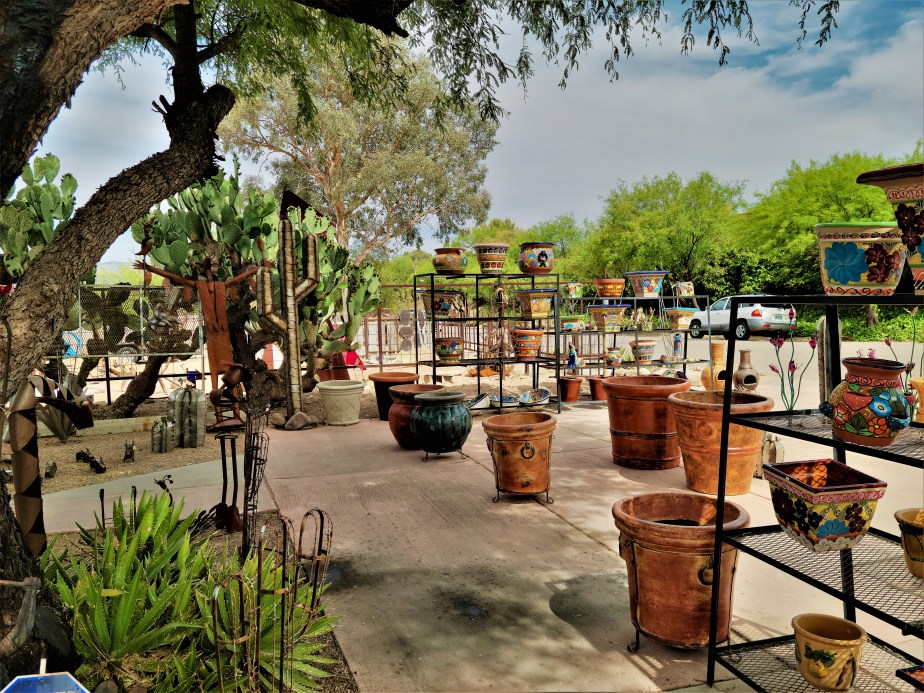
The 100 or so shops, art galleries, and museums, many of them made of dried earth, clay, and straw bricks called adobe, were painted in a variety of colors ranging from soft blues, greens, and pinks, to more bold pistachio and red. If it became too toasty perusing the displays of art ranging from tin javalinas and coyotes to intricately wrought metals, mosaics, tiles, pottery, and jewelry on the front patios and side yards of the art galleries and stores—which comprise, along with restaurants, the major businesses in Tubac—the interiors were cool.
A little history is called for and Tubac almost 250 years old, certainly has that. It’s current laid back charm as an artist colony belies a bloody wild west history including Apache attacks, Civil War troops, and desperados eager for quick cash litter its history. All to be expected on an outpost along the Spanish Colonial Frontier. Besides being the first European settlement in Arizona with the first newspaper and the first white women, Tubac was also where in 1789 the first school in the state first opened. Of course, it wasn’t a state back then but part of Mexico as it would remain—along with Tucson—until 1853.
Early times were tough for Tubaca (or as the friendly O’odham Indians would have pronounced it “s-cuk ba’a” “cu wa”) meaning place of the dark water or low place. Or at least that’s one story. Marshall Trimble, Arizona’s official historian and vice president of the Wild West History Association, writes its name came about based on a clash between bands of Indian. The resulting dead and the searing sun led the Pima to choose the name that translates to “Where something smelled rotten.”
Whatever. Since this is ultimately a food and travel story, we’re going to skip any more details like that except to say that it wasn’t quite as dreamy as it is now.
While Arizona booms—Phoenix is the fastest growing city in the U.S.—there’s a laid back charm to Tubac as if time stopped half-a-century ago.
The population in 2019 was just under 1400. Though the landscape is far from the verdant greens of the Midwest, the Santa Cruz River runs through here and feeds the stands of mesquite, willows, and the chartreuse-colored cottonwoods that make such a startling contrast against the desert palate of beiges, browns, and subdued yellows.
Creativity at all levels defines Tubac and the restaurants and overnight accommodations showcases great food and luxurious places to summon your inner—and slightly pampered—cowgirl. With no chains, the village’s restaurants are independent and often family-owned.
The 500-acre Tubac Golf Resort & Spa was once part of the Otero Ranch, settled in 1789 features several levels of dining options including The Stables Ranch Grille and La Cantina. Shelby’s Bistro serves Southwestern and Mexican cuisine. Both are almost always rated among the village’s top ten but the one that really intrigued me was Elvira’s because of its history having first opened in Nogales, Mexico in 1927 as a take-out joint. Now the place to go for sophisticated Mexican cuisine, owner/chef Ruben Monroy, grandson of the original founder, takes traditional dishes such as moles (they have a large variety), quesadillas, chiles rellenos including one named after Frida Kahlo the Mexican artist known for her use of bold colors, and other Mexican fare and kicks them up several notches. The drink list features tequila and mezcal, Mexican wines and beers as well as Margaritas made with a variety of fruits such mango, tamarind, and agave honey along with other cocktails such as mojitos and guanabanatinis—a martini made with guanabana, a fruit that grows in Mexico.
From the outside, Elvira’s is attractive with ochre-colored exterior walls, tile and wood accents, pots filled with flowers, and hanging lights made of large metal spheres with cut out stars.
Inside, it’s something else. Monroy earned degrees in graphic arts and interior design before going to culinary school and his training is evident. Blue walls are the backdrop for large-framed mirrors, colorful cascading lights suspended in various heights from the ceiling, a sleek wooden bar, vases and pots, red curtains, candle holders in an array of shapes and sizes, Mexican crafts and art, and so much more that everywhere you look there’s something fascinating to behold. In case you like what you see, there’s a home décor store adjacent to the restaurant’s entrance.
One of the streets in Tubac (and there aren’t many) is named Calle Frida Kahlo (calle is Spanish for street) but I couldn’t find any reference to her having visited the town during her short life. But I know that she was an enthusiastic cook and so I looked up her recipe for Poblano Chiles Stuffed with Picadillo that was adapted from “Frida’s Fiestas: Recipes and Reminiscences of Life with Frida Kahlo” (Clarkson Potter). The book, written by Guadalupe Rivera and Marie-Pierre Colle, says this dish was served at her wedding to Diego Rivera.
Mexican cuisine can be complicated and if you’re feeling somewhat lazy, you can turn this dish into a casserole using the recipe I included below the one served at Frida and Diego’s wedding. I should note that the marriage didn’t last but their on and off again affair did until she passed away.
Poblano Chiles stuffed with Picadillo
Serves 8
16 poblano chiles, roasted, seeded, and deveined
All-purpose flour
5 eggs separated
Corn oil or lard
3 lbs. ground pork
1 large white onion, halved
3 garlic cloves, chopped
6 tablespoons lard or oil
1 small onion, finely chopped
2 zucchini, finely chopped
1 lb. tomatoes, seeded, chopped
1 cup cabbage, shredded
3/4 cup blanched almonds, chopped
1/2 cup raisins
Tomato broth ( see recipe below)
Prepare chiles: Char chiles over an open flame or under the broiler, then place in a plastic bag, seal and let steam for about 10 to 15 minutes. Remove from bag and using the back of a spoon peel off skin.
Make a lengthwise slit in the chile, remove the seed cluster, seeds, and membrane with a knife but leave the stem intact and place on a cookie sheet. Place the poblanos in the freezer as they will easier to fill and batter when cold.
Prepare the Filling: Cook the pork with the onion halves, garlic and salt and pepper for about twenty minutes. Drain the liquid and remove onion. Heat the oil or lard in a sauté pan, adding the onion, carrots, and zucchini, cooking until onion is translucent. Add the tomato, cabbage, almonds, raisins and pork and season with salt and pepper to taste. Simmer mixture for about twenty minutes until it has thickened, and the tomato is cooked through.
Stuff Chiles: Stuff the chiles with filling, then dust with flour. Beat the 5 egg whites until stiff. Beat the yolks lightly with a pinch of salt and gently fold into the whites to make a batter. Dip the chiles into the batter and fry in very hot oil until golden. Drain on paper. Serve with tomato broth.
Tomato Broth for Stuffed Chiles
3 tablespoons olive oil
1 onion, thinly sliced
2 carrots, peeled and thinly sliced
10 Roma tomatoes, charred, seeded, and chopped
1/2 cup vinegar
3 tablespoons sugar
Salt and pepper
2 teaspoons dried oregano
1/2 cup queso cotija or ranchero cheese, crumbled
Char the tomatoes using the same method as above for the peppers. Heat the olive oil and sauté the onion and carrots until softened. Add the tomatoes, vinegar, sugar, and salt and pepper to taste. Simmer for 10 minutes. Stir in the oregano and continue to cook until the broth is rich and flavorful, and the tomatoes cooked through. Ladle broth onto a plate and place the chile on top. Garnish with queso cotija or ranchero cheese.
Chile Rellenos Casserole
2 large fresh poblano chile peppers or fresh Anaheim chile peppers
1 ½ cups shredded Mexican-style four-cheese blend or make the Picadillo recipe above
½ cup crumbled Cotija or Ranchero cheese
3 eggs, lightly beaten
¼ cup milk
⅓ cup all-purpose flour
½ teaspoon baking powder
¼ teaspoon cayenne pepper
⅛ teaspoon salt
1 large can of enchilada sauce or use the Tomato Broth recipe above
Serves 4
1 large can of enchilada sauce or use the Tomato Broth recipe above.
The basic difference here is that instead of stuffing the peppers, then coating them in batter, and frying, roast the peppers according to the first recipe, slice them lengthwise so the entire pepper can be laid flat.
Grease a casserole dish, add a layer of the sauce, lay the peppers on top and the cover with the desired filling—either the cheese or the picadillo sauce that Frida made.
Top with more sauce, another layer of roasted peppers, filling and sauce. Repeat until all the ingredients are used. a medium bowl combine eggs and milk. Add flour, baking powder, cayenne pepper, and salt.
Beat egg mixture until smooth. Or if using a food processor or blender, place in a food processor, cover and process or blend until smooth. Pour mixture over peppers and filling.
Bake for 15 minutes in a 400°F. or until golden brown.
Mushroom Quesadillas
Makes 6
12 flour tortillas
½ pound mushrooms
Butter
1 ½ to 2 cups shredded Mexican cheese mixture
1 Poblano pepper, roasted, seeded and finely chopped
Your favorite salsa
Thinly slice mushrooms and place in a skillet with one tablespoon melted butter. Cook until done. Drain any juices left.
Preheat oven to 300°F.
Heat a heavy skillet (cast iron works well) on high. Butter one side of each tortilla. Place as many as the skillet will hold but no more than six. Top each tortilla evenly with mushrooms, diced roasted pepper, cheese, and salsa. Top with the other tortilla, butter side up. Cook until cheese starts to melt, adjusting the heat to make sure the tortillas don’t burn. Flip over and cook until the tortilla is golden brown.
Transfer the quesadillas to a cookie sheet and place in oven. Cook the remaining quesadillas.
Serve with sour cream or Mexican crema and salsa. Can be served whole or cut in half or quarters.
Mango Margarita
From “Love & Lemons Cookbook” by Jeanine Donofrio.
3 cups cubed frozen mango, from about 4 small mangos
¼ cup lime juice, plus lime slices for garnish
3 ounces silver tequila
2 ounces Cointreau
3 handfuls ice cubes
Sea salt for the glass rims, optional
Place the mango, lime juice, tequila, and Cointreau in a blender and blend until smooth. Add the ice and blend to the desired consistency. If the mixture is too thick to blend, let it sit and melt for a few minutes.
If desired, use a lime wedge to moisten the rims of the glasses and then dip the rims in a small plate of salt.
Pour the mango mixture into the glasses and garnish with a lime slice.
If you’re wondering what Mariah Carey, Leonardo DiCaprio, Adam Sandler, Alec Baldwin, Liam Neeson, Jimmy Fallon, Kevin Costner, and P. Diddy are eating this Memorial Day, it might be something that Andrea Correale, the founder and president of Elegant Affairs, has whipped up. Correale counts such stars as well as corporations like Ralph Lauren, Amazon, American Express, American Heart Association, and Cirque du Soleil among her clients.
She started her own company at 16 after working in a variety of jobs at a local country club. Initially she hoped to earn enough money to buy a car. She not only got the car but also was set on a career path. Correale received her training at the Hotel and Restaurant Management program at New York Institute of Technology and then founded Elegant Affairs, a full service off-premise catering and event planning company in the Hamptons, Long Island and New York City.
Besides the following recipes, Correale also shares some of the latest in food trends which can easily be incorporated into Memorial Day entertaining.
This being the fruit best, it works that cobblers are trending. Correale says you can serve blueberry, apple, peach, cherry, or any type of fruit cobbler you’d like simply à la mode — oversized and baked or deconstructed in a glass or jar.
Andrea with Kevin Costner.
For condiments, peppers are totally in starting with sriracha and other unique hot sauces. Correale says the hotter the better and also, when they’re available at farmers’ markets—salted shishito peppers.
It’s not really corn on the cob time yet, but if you can find some, Correale suggests a corn on the cob bar where besides roasted or steamed corn, there’s every topping imaginable: flavored butters, spreads, herbs, cheese, bacon, and spices.
Gluten-free and vegan anything and everything.
People want fresh food, it doesn’t need to be fancy.
“It’s much more about the quality of the ingredients, and the freshness,” says Correale, than it is about overabundance.”
Watermelon Pizza
Servings: 8
Prep Time: 5 Minutes
1 large watermelon
5 cups vanilla frozen yogurt
3 cups fresh raspberries
3 cups fresh blueberries
Cut watermelon into 8 thin slices, to create your “crust”.
Spread a layer of vanilla frozen yogurt on top of each watermelon slice.
Add berries as your toppings and serve immediately.
Red Velvet, Berry and Cream Parfaits
Servings: 4
Prep Time: 15 Minutes
4 oz cream cheese
1/2 cup sugar
1/2 cup heavy cream
3 cups fresh blackberries or raspberries
8 inch red velvet cake
Bake a red velvet cake in an 8-inch pan, using your favorite recipe, and let it cool.
Combine cream cheese, and sugar in a bowl. Using a hand mixer, beat on a medium-high speed until creamy.
Add in the heavy cream and mix on low speed, until the mixture has a pudding-like consistency.
Line the bottom of your glasses or dessert cups with
cake and a layer of cream. Add another layer of cake, followed by another layer of cream, then add in a
layer of berries. Repeat these layers until you fill your glass or desert cup.
Refrigerate for at least one hour, and garnish each serving with a cookie or pastry of your choice.
Rick’s new two-hour special premieres June 7, 2021 on public TV stations nationwide
A new two-hour public television special features travel expert, author, and host Rick Steves as he shares his favorite European destinations to visit as soon as travel is once again possible. From offbeat and romantic to picturesque and restorative, these locations offer inspiration to travel lovers who have spent the past year dreaming of their next vacation when the global pandemic ends. Co-produced and presented by American Public Television (APT), the leading syndicator of content to public television stations nationwide, Rick Steves Europe Awaitspremieres June 7, 2021 (check local listings).
Peleș Castle in the Carpathian Mountains of Romania. Photo: Rick Steves’ Europe
“When the time is right, Americans will rekindle their travel dreams, and Europe will greet us with a warm and enthusiastic welcome,” says Rick. “Europe Awaits is my dream itinerary: places away from the hubbub, places made for embracing life, and places that are good for the soul. It’s good to dream ̶ and once we emerge from this pandemic, it will be even better to travel.”
Journey (virtually that is) with Rick Steves as he recounts his recommended travel itineraries, a sure delight for both European travel aficionados and novices alike. As usual, Rick’s ability to immerse himself in fascinating destinations pays off for viewers as his presentations create a real understanding of what makes a place so fascinating including its history, culture, food, sights, and people.
In this show, Rick showcases:
– The rich history and cuisine of Sicily; – Mykonos, the romantic Greek island in the Aegean Sea; – Rustic and historic Porto, in Portugal’s northern region;
– Majestic English country views in the Cotswolds; – An authentic taste of la dolce vita in Tuscany; – andRomania, overflowing with vibrant traditional folk life.
“We are proud to be Rick Steves’ public media partner for more than three decades, presenting his insightful and enriching programs as he explores our world,” notes Cynthia Fenneman, President and CEO of APT. “Rick Steves Europe Awaits is a timely and relevant special that sparks our travel imagination from the safety and comfort of home.”
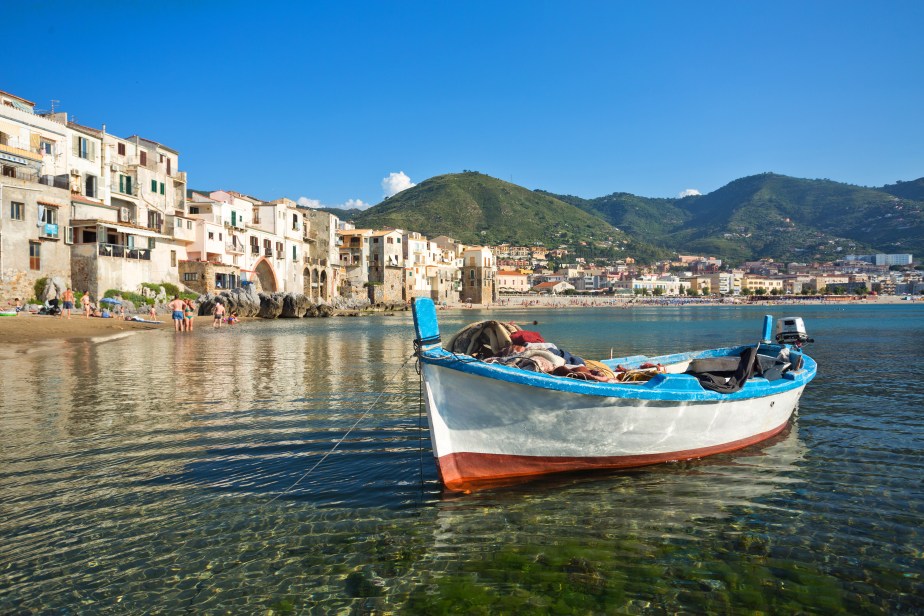
The seaside at Cefalù, on the north coast of Sicily. (Photo: Dominic Arizona Bonuccelli)
About Rick
A popular public television and radio host, a best-selling guidebook author, and an outspoken activist Rick encourages Americans to broaden their perspectives through travel. He is the founder and owner of Rick Steves’ Europe (RSE), a travel business with a tour program that brings more than 30,000 people to Europe annually.
RSE is designed to inspire, inform, and equip Americans in creating European trips that are
Rick lives and works in his hometown of Edmonds, Washington, where his office window overlooks his old junior high school.
About Rick Steves’ Europe, Inc.
TV-still-1001-rick-trinity-college.tif
Rick Steves’ Europe (RSE) inspires, informs, and equips Americans to have European trips that are fun, affordable, and culturally broadening. Guided by Rick’s value-driven vision, his company brings tens of thousands of people to Europe annually on organized tours, producing a wide range of travel content including a best-selling guidebook series, popular public television and radio shows, a syndicated travel column, and a large library of free travel information at ricksteves.com.
RSE’s mission is built around the idea of social responsibility, and it empowers several philanthropic and advocacy groups, including a portfolio of climate-smart nonprofits that it funds through a self-imposed carbon tax.
Rick Steves in his early years of exploration.
Rick Steves Europe Awaits is a production of Rick Steves’ Europe, Inc., American Public Television, and Detroit Public Television. Visit ricksteves.com for additional information.
Select pledge thank-you gifts for Rick Steves Europe Awaits include exclusive access to a live virtual event and Q&A session hosted by Rick from his home in Seattle, WA; DVDs of Rick’s speaking engagements; anthology sets of the Rick Steves’ Europe series; “For the Love of Europe,” a 400-page collection of Rick’s favorite people, places and experiences; and the “Europe’s Top 100 Masterpieces: Art for the Traveler” coffee table book.
Mykonos by Rick Steves.
About American Public Television American Public Television (APT) is the leading syndicator of high-quality, top-rated programming to the nation’s public television stations. Founded in 1961, APT distributes 250 new program titles per year and more than one-third of the top 100 highest-rated public television titles in the U.S. APT’s diverse catalog includes prominent documentaries, performance, dramas, how-to programs, classic movies, children’s series and news and current affairs programs. Doc Martin, Midsomer Murders, America’s Test Kitchen From Cook’s Illustrated, AfroPoP, Rick Steves’ Europe, Pacific Heartbeat, Christopher Kimball’s Milk Street Television, Legacy List with Matt Paxton, Front and Center, Lidia’s Kitchen, Kevin Belton’s New Orleans Kitchen, Simply Ming, The Best of the Joy of Painting with Bob Ross, James Patterson’s Kid Stew and NHK Newsline are a sampling of APT’s programs, considered some of the most popular on public television. APT also licenses programs internationally through its APT Worldwide service and distributes Create®TV — featuring the best of public television’s lifestyle programming — and WORLD™, public television’s premier news, science and documentary channel. To find out more about APT’s programs and services, visit APTonline.org.
About Detroit Public Television Serving Southeast Michigan, Detroit Public TV (DPTV) is Michigan’s largest and most watched television station, with the most diverse public television audience in the country. DPTV is the state’s only community-licensed station, meaning it operates independent of any educational, government or other institution. Its funding comes solely from the community. Each week, more than two million people watch DPTV’s four broadcast channels, and nearly 200,000 people listen to its radio station, WRCJ 90.9 FM for classical days and jazzy nights. In addition, DPTV is building the next generation of public media with a rapidly growing digital presence, which now reaches more than half a million unique visitors through its website, YouTube channels and social media platforms each month. Visit DPTV.org.
Where’s Rick?
Join Rick as he travels across the world and web with an exciting itinerary of virtual events.
MAY 24: Iran: Won’t You Be My Neighbor? 5:30 p.m. and 7:00 p.m. Pacific | Register for Free
MAY 26: Bellingham City Club: Rick Steves on the Future of Travel 12:00 p.m. Pacific | Register for Free
MAY 31: Monday Night Travel: Europe’s Eccentric Art 5:30 p.m. and 7:00 p.m. Pacific | Register for Free
JUNE 7: Monday Night Travel: Europe Awaits! 5:30 p.m. and 7:00 p.m. Pacific | Register for Free
JUNE 15: World Affairs Council of Tennessee: A Conversation with Rick Steves 7:00 p.m. Central | Buy Tickets
JUNE 17: WJCT: An Evening with Rick Steves 7:00 p.m. Eastern | Register for Free
Amy Zitelman takes tahini, a ground sesame paste used in making hummus, to the next level in her new cookbook, The Tahini Table: Go Beyond Hummus with 100 Recipes for Every Meal(Agate 2021; $29). Zitelman, CEO of Soom, a Philadelphia-based company that makes tahini products, is part of the ever expanding hummus craze. You don’t have to think that far back to remember when hummus, the Arabic word for chickpeas, was just a plain Middle Eastern chickpea dip usually served with warm pita bread. Now hummus, whose historic roots go back to 13th century Egypt where the climate and soil are just right for growing chickpeas, comes in more than 20 flavors such as beet, roasted red pepper, basil tomato, and chipotle.
The world hummus market, according to Market Research Future, is forecast to grow at a rate of nearly 13% per year until 2027. That’s a lot of chickpeas. But Zitelman, who founded Soom Foods with her sisters Shelby and Jackie, wants it to be more than an ingredient for just one single dish no matter how popular it is.
The three sisters formed Soom after a trip to Israel where they tasted a carrot cake made by Jackie’s mother-in-law. It was so delicious that they wanted to make it back home in the U.S. but couldn’t find the type of tahini needed. Since then, Zitelman has been named to Forbes magazine’s “30 under 30” class of 2018 and their products featured in the New York Times and food magazines such as Bon Appetit and Food & Wine. Soom specializes in tahini products such as their single source origin premium tahini and Soom Chocolate Sweet Tahini though they’ve also added another Middle Eastern ingredient– Silan Date Syrup–a natural sweetener made exclusively with dates from the Jordan Valley. They source their sesame seeds from the Humera region of Ethiopia that is considered the prime place to grow them.
The cookbook, co-authored with award winning writer Andrew Schloss, rifts on various ways you can used tahini which makes a great substitute for eggs, mayonnaise, cream, and cheese. Vegan and kosher, Soom’s tahini is also gluten, paleo, and dairy free. Divided into seven chapters– tahini basics, savory and sweet sauces, hummus and other dips, breakfast, main dishes, sweets, sandwiches, salads, and sides– Zitelman has created easy recipes for each category. Included are the carrot cake recipe that started it all that Zitelman describes as super moist and rich with the tahini giving it a nutty aftertaste. Another plus, because using tahini reduces the amount of oil in the recipe, cake never gets greasy the way many carrot cakes do. There’s also chicken schnitzel, sugar cookie that’s similar to, according to Zitelman, a classic peanut butter cookie crossed with shortbread.
Sesame seeds date as far back as 5000 BCE to India says Zitelman.
Her goal is to make tahini with its ancient roots a favorite of American home cooks. If that sounds farfetched, consider the increasing popularity for condiments such as Tabasco, Sriracha and pesto as well as a variety of flavored mayonnaise, barbecue sauces, and mustards.
Tahini Chicken Schnitzel
Serves 4
2 cups Creamy Tahini Vinaigrette (below)
1 teaspoon ground cumin
½ teaspoon harissa seasoning or other dried hot pepper seasoning, divided
4 (8-ounce) boneless, skinless chicken breast halves
¾ cup panko breadcrumbs or cornmeal
¾ cup all-purpose flour
1 tablespoon coarse sea salt
Mild vegetable oil, such as grapeseed, for frying
2 tablespoons chopped fresh herbs, such as flat-leaf parsley, dill, or thyme (optional)
Mix the tahini vinaigrette, cumin, and ¼ teaspoon of the harissa in a 2-cup liquid measuring cup (one with a handle and a spout). Pour half of vinaigrette mixture into a gallon-size zip-top plastic bag and set the rest aside.
Flatten the chicken breast halves by pushing down on the thicker parts with the flat of your palm, until each piece of chicken is no more than 1 inch thick at its thickest part. Try to make the thickness the same for each piece to keep the frying time consistent. Put the chicken in the bag with the vinaigrette mixture. Seal the bag, leaving an inch open at the corner, and squeeze the empty parts to force out any air. Zip it fully closed. Massage the bag to disperse the liquid all around the chicken and put in the refrigerator for at least 1 hour; longer (up to 24 hours) is better.
About 30 minutes before you’re ready to serve, mix the breadcrumbs and all-purpose flour, salt, and remaining ¼ teaspoon of harissa on a plate.
Set a wire rack on a rimmed sheet pan or on a sheet of aluminum foil beside your flour plate. Designating one hand for only the dry flouring and one hand for only the wet chicken, use the “wet” hand to lift one piece of chicken from the marinade, allow any excess to drip back into the bag, and put the chicken in the flour.
With your “dry” hand, flip the flour all around the edges of the chicken. Without touching the wet parts, use the same hand to flip the chicken over. Keep flipping until the chicken is well coated. With the same dry hand, lift the chicken and shake it gently to remove any loose flour, then transfer it to the prepared rack. Repeat this process with the rest of the chicken pieces, remembering to use your designated hands to prevent battering your fingers.
Put a large skillet over medium-high heat and fill with 1 inch of oil. Warm until an instant-read thermometer registers 355°F, about 5 minutes. (If you don’t have a thermometer, you can test the temperature by sticking the end of a wooden spoon into the middle of the oil. If bubbles form within a few seconds, it’s up to temp.) Turn the heat down to medium-low. Set a clean wire rack over another sheet pan or sheet of foil next to the stove.
Gently slip the breaded chicken into the hot oil, being careful not to splash. Fry until golden brown on the bottom side, about 3 minutes. (If it’s still not brown at 5 minutes, turn up the heat a little.) Flip the chicken pieces over and fry on the other side until browned, about 3 minutes more. Be patient when frying. Rushing will make the crust too dark and hard. We’re going for a lightly golden and delicately crisp crust.
Drain the chicken on the clean rack for a few seconds, then transfer to a serving platter. Drizzle some of the reserved vinaigrette mixture over the chicken and serve the rest on the side. Scatter the herbs (if using) over the top and serve right away.
Creamy Tahini Vinaigrette
Makes about 1¾ cups
⅓ cup premium tahini paste
2 tablespoons brown or Dijon mustard
1 garlic clove, minced with coarse sea salt
½ cup ice-cold water
⅓ cup freshly squeezed lemon juice
⅓ cup red wine vinegar
⅓ cup extra-virgin olive oil
1 ½ teaspoons fine sea salt
½ teaspoon freshly ground black pepper
Whisk the tahini, mustard, garlic, water, lemon juice, vinegar, olive oil, salt, and pepper in a medium bowl until smooth and creamy. It should be the consistency of a creamy salad dressing, like ranch.
Store in a closed container in the refrigerator for up to 1 week.
Tahini Sugar Cookies
Makes 30 cookies
6 tablespoons (3⁄4 stick) unsalted butter, at room temperature
½ cup premium tahini paste
½ cup granulated sugar
½ cup packed light brown sugar
¼ teaspoon fine sea salt
1 large egg
1 teaspoon vanilla extract
1 ¼ cups all-purpose flour
½ teaspoon baking soda
2 tablespoons raw sugar, such as demerara or turbinado, and/or sesame seeds (optional)
Set two oven racks near the center of the oven. Turn the oven to 350°F. Line two sheet pans with parchment paper or silicone baking mats.
Beat the butter, tahini, granulated sugar, brown sugar, and salt in a large bowl with a wooden spoon until just combined. Mix in the egg and vanilla.
Mix the flour and baking soda in a small bowl, then stir the flour mixture into the batter until it is no longer visible.
Scoop the batter with a 1-tablespoon measure and arrange as mounds on the prepared pans, about 1 ½ inches apart. You should be able to fit 10 cookies per sheet. Wet your hands and flatten the mounds so that each is about ⅜ inch thick. Sprinkle the tops with the raw sugar or sesame seeds (if using).
Bake until the bottoms are lightly browned, about 10 minutes, switching the pans between racks halfway through. Cool the cookies on the pans for 5 minutes, then transfer them to wire racks to cool completely. When the pans are at room temperature again, form the remaining batter into cookies and bake in the same way.
Store in a closed container at room temperature for up to 4 days or freeze for up to 1 month.
Reprinted with permission from The Tahini Table by Amy Zitelman, Agate Publishing, November 2020.
“My grandmother used a lot more sour cream and lots more butter and sugar,” says Guy who started cooking from scratch when she was 14 because that’s when she went vegan.
Guy in EJC Studio, the food photography studio she shares with Eric Harrison and their cat Christopher. Courtesy of Bostonia, Boston University.
“I had to figure out a way to veganize all the things everyone else in my family was eating,” she says. “My experimental approach to cooking is a consequence of thinking outside the box with recipe development from a very early age.”
Guy, author of the popular blog, Chocolate for Basil, looks at her book not only as stories of her life told in recipes but also as inspirational.
Christopher the Cat after one too many cookies. Courtesy of EJC Studio.
“I want to inspire black women to reclaim their kitchens, diets, bodies, and personal power,” says Guy, who contributes recipes to the New York Times.
The following recipe is reprinted with permission from Black Girl Baking by Jerrelle Guy, Page Street Publishing Co. 2018.
Apple Cider Monkey Bread
Egg-free, vegan option
Makes 1 loaf
Dough
3 tablespoons packed brown sugar
¼ cup warm water, at 115°F
2 tsp active dry yeast
3–3½ cups white whole wheat flour, divided
½ tsp salt
¾ cup warm milk
3 tablespoons apple cider vinegar
½ cup softened butter
Apple cider coating
¾ cup packed brown sugar
2 tsp ground cinnamon
¼ cup applesauce
2 tablespoons apple cider vinegar
1 tsp salt
4 tablespoons softened butter
Apple glaze
2 tablespoons butter
2 tablespoons applesauce
5 tablespoons packed brown sugar
Pinch of salt
To make the dough, add the brown sugar to the bowl of warm water. Sprinkle the yeast over the top, and let it bloom until a cap of foam forms on the top, 5 to 10 minutes.
In a stand mixer with a dough hook attachment, combine 2½ cups of the flour and the salt. Mix on low speed, pouring in the warm milk, apple cider vinegar and bloomed yeast mixture. Add about ½ cup more of flour and knead until all the flour is mixed in, then add the butter and mix until the butter is completely worked in. Add extra flour gradually just until the dough comes off the sides of the bowl. You may not need all the flour. Take the dough out of the bowl and place it in a clean, oiled bowl. Cover with plastic wrap or a damp clean kitchen towel and allow to rise in a warm, dark place for 1 to 1½ hours, or until doubled in size.
To make the coating, whisk together the brown sugar, cinnamon, applesauce, apple cider vinegar, salt and butter in a bowl. Oil a Bundt pan and drizzle 3 to 4 tablespoons (45 to 60 ml) of the coating on the bottom of the pan.
Once the dough has risen, punch it down in the center to release the air. Pinch off about 1½-inch balls from the dough, roll it into a ball and submerge it in the coating. Place the drenched ball into the Bundt pan. Continue until all the balls are coated and arranged in the pan. If there is any leftover coating, drizzle it
over the top of the dough. Cover the pan with plastic wrap and let the dough rise for another 30 to 40 minutes, or until doubled in size.
To make the glaze, melt the butter, applesauce, brown sugar and salt together in a saucepan on the stove top or in a bowl in the microwave. Set aside.
Preheat the oven to 350°F and position a rack in the center of the oven.
Remove the plastic from the risen monkey bread, and bake for 25 to 30 minutes, or until cooked through, and it passes the toothpick/skewer test. Remove the monkey bread from the oven and carefully flip it out onto a serving tray while hot. Drizzle it with the apple glaze, and serve warm
VEGAN OPTION: Replace the butter with virgin coconut oil, at room temperature, or dairy-free butter, and make sure the milk is plant-based.
For more recipes and information, visit Guy’s website.
The Broadmoor Manitou and Pikes Peak Cog Railway, America’s highest railway takes passengers to the 14,115-foot summit where the song “America The Beautiful” was written starting this May.
The round trip aboard one of only two cog railways in the U.S. begins and ends at the new Manitou Depot and features an expansive passenger platform and viewing deck for photographs and two retail stores with snacks and beverages. Perched at the top amidst stunning views is the new fully accessible, environmentally sustainable, $60 million-plus Pikes Peak Visitor Center. Here to help visitors learn about their surroundings are digitally interactive displays that bring the history, significance and geology of the mountain to life.
There’s more adventure as well including hiking, biking, and such trail experiences as hiking on the 13-mile Barr Trail up to Pikes Peak and then riding the train down or taking the Cog up and biking down the 19.5 mile from the summit on a guided excursion.
“The Cog is an important part of Colorado and the West’s heritage,” said Ted Johnston, assistant general manager of the Railway. “We’re excited to re-open the railway for the public to experience and enjoy this scenic American adventure that has such a rich history. We’ve been working on this project for three years, and we are very excited to take our first trains and passengers up the mountain.”
Originally built in 1891 and owned and operated by The Broadmoor since 1925, this historic railway is the highest railroad in America, the highest cog railway in the world, one of Colorado’s top attractions, and one of the nation’s most unique experiences. Since October 2017, it has been undergoing a $100 million renovation of its tracks, cogs, railcars, and depot to create a new and improved journey to the summit.
Aerial shot of Cloud Camp courtesy of Wikimedia Commons.
Travelers who would like to ride the Cog and make their visit even more memorable may stay at The Broadmoor and take advantage of the historic hotel’s one-night package offer, which includes classic accommodations (upgrades available), Cog Railway train tickets for each person on the package, a commemorative gift, plus suites available at 25% off published rates. The rates start at $640.00 per night, based on double occupancy.
In celebration of the 130th anniversary of the Railway this June 30, The Broadmoor and Pikes Peak Visitor Center will host a celebratory event and ribbon-cutting ceremony at the historic site.
It includes two championship golf courses, an award-winning spa and fitness center, nationally recognized tennis staff and program, 19 retail boutiques and 17 restaurants, cafes and lounges. Other activities include falconry, mountain biking, hiking, rock-climbing tours, fly-fishing, Wild West Experiences and more.
The BROADMOOR Wilderness Experience properties are three unique, all-inclusive boutique facilities that highlight an authentic Colorado experience while offering mountain rustic luxury along with The Broadmoor’s legendary service. In addition, The Broadmoor owns and manages three attractions that include the Pikes Peak Cog Railway, Seven Falls and the Soaring Adventure zip-line courses.
To Get There: Colorado Springs Airport, 15 minutes from the resort, offers over 4,900 seats a day for passengers via Southwest Airlines, American Airlines, Delta, Frontier and United. Denver International Airport, 70 minutes north of Colorado Springs, hosts more than 1,600 national and international flights daily with connections to worldwide destinations. Door-to-door shuttle or sedan service from both airports is available through Gray Line.
The Ranch at Emerald Valley courtesy of Wikimedia Commons.
Cost: To experience the scenic 9-mile journey to the 14,115 foot National Historic Landmark of Pikes Peak may now purchase tickets online for dates and times this spring and summer. The cost for standard admission is $58.00 for adults and $48.00 for children 12 and under for advance e-ticket purchases or $59.50 at the depot ticket window. Guests may select specific seats on the train by upgrading to the reserved seating option for $68.00 for adults and $58.00 for children.
The fall and winter schedules and seasonal holiday experiences will be announced soon. Visitors interested in updates can sign up to receive email alerts on the Cog’s website.
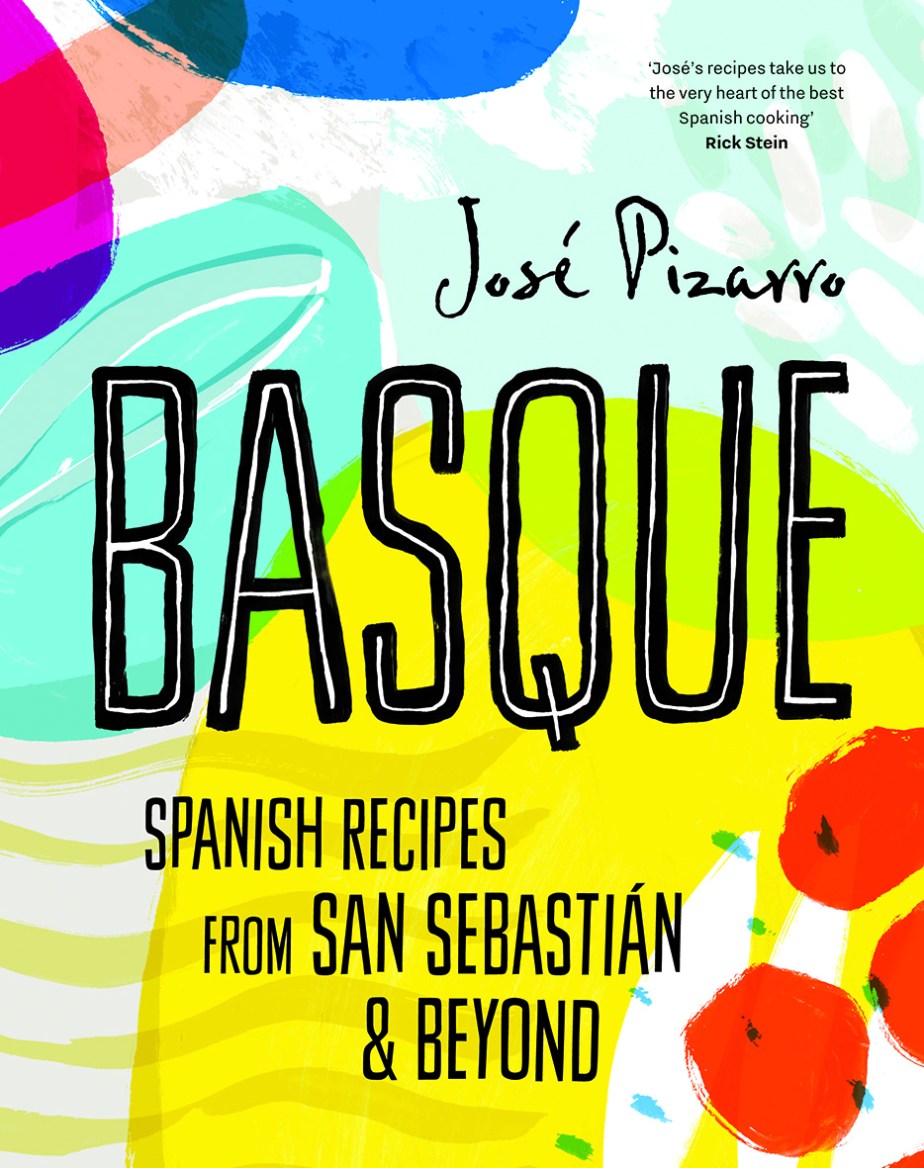
Credited with popularizing Spanish cuisine in Great Britain. His cookbook, Basque (Hardie Grant 2021; $22.95), is a great way to explore the beautiful Basque region of Spain.
“The Basque Country is feted across Spain, and indeed the world, for its culinary creativity,” says Pizarro. “It has more three Michelin-starred restaurants than anywhere else, and I can understand why – there are so many local products that you can be inspired by here.”
Chicken Stewed in Cider & Apples
“My inspiration for this dish, as with many of my recipes, came from seeing the ingredients together,” says Pizarro. “When I see them, I just have to create a plate of food. When we were in Astarbe in a beautiful cider house, I saw the chickens hopping around the apple trees, and that was it.”
The Astarbe Experience includes a restaurant and an assortment of wonderful foods and tastings of their ciders.
Serves 6
olive oil
1 free-range chicken (1.8–2 kg/4 lb–4½ lb)
sea salt and freshly ground black pepper
1 apple, peeled, cored and halved
2 onions, finely sliced
2 bay leaves
6 sage leaves
1 cinnamon stick
500 ml (17 fl oz) cider
400 ml (13 fl oz) fresh chicken stock
25 g (1 oz) unsalted butter
3 apples, peeled, cored and sliced into 8 pieces
1 teaspoon caster (superfine) sugar
75 g (2½ oz) sultanas
Preheat the oven to 160ºC (320ºF/Gas 3).
Heat a layer of oil in a large casserole dish. Season the chicken inside and out and brown all over in the casserole dish. Set aside and put the halved apple inside the cavity.
Add the onions to the casserole and fry for 10 minutes to soften. Return the chicken to the pan and add the herbs and cinnamon.
Pour in the cider and bubble for a few minutes, then add the stock. Bring to the boil, then cover and transfer to the oven to cook for 1 hour.
Meanwhile, heat a little oil and the butter and fry the rest of the apples with the sugar until golden and caramelised. Add the sultanas and toss in the buttery juices. Add to the casserole about halfway through the cooking time.
Remove the lid of the casserole and turn up the oven to 220ºC (430ºF/Gas 7). Cook for 10 minutes more to brown the top of the chicken, then serve.
Photo by Laura Edwards.
Sautéed clams with garlic, lemon & parsley
“Clams are popular all over the world as they are so versatile,” says Pizarro about this wonderful dish. “When you are planning to cook for more than a couple of people, this is something that you must consider; ingredients and dishes your friends will love but are also quick prepare, so that you don’t spend the whole time at the stove.
“You can boil some pasta with this for a really easy lunch, and add some chilli for an extra kick.”
1 kg (2 lb 3 oz) fresh palourde clams, cleaned few sprigs of thyme, leaves stripped
handful of finely chopped flat-leaf
parsley
Heat a little oil in a deep heavy-based stockpot. Fry the garlic and lemon slices for 30 seconds, then increase the heat to high, tip in all the clams and cover with a lid. Cook for 2–3 minutes, shaking the pan occasionally, until the clams have all opened (discard any that refuse to open).
Add the lemon juice and herbs and serve with lots of crusty bread to mop up the juices.
Photo by Laura Edwards.
Pan-fried hake with sautéed wild chanterelles & sage
“Hake is one of the most sought-after fish in the Basque Country,” says Pizarro when sharing this recipe. “I really don’t know why it’s not as popular here in the UK, particularly as it’s plentiful – I think most of the catch from the sea here goes to Spain!
“In my family, our favourite way of cooking hake is a la romana, or Roman
style, which means that it’s battered.
“In this recipe, I bring two big flavors together, the sage and the mushrooms, but they complement the fish very well.”
Serves 4
olive oil 2 French shallots, finely chopped 2 garlic cloves, crushed few small sage leaves 300 g (10 1⁄2 oz) chanterelles, cleaned
100 ml (31⁄2 fl oz) fresh fish stock sea salt and freshly ground black pepper 4 hake fillets (175 g/6 oz each)
Heat a little olive oil in a pan and gently fry the shallots for 5–10 minutes until really soft. Add the garlic and sage and cook for 30 seconds, then increase the heat and add the mushrooms. Fry for 4–5 minutes, then add the stock and bubble for a couple of minutes. Season and set aside.
Heat a heavy-based frying pan with a little bit of oil. Add the hake skin side down and cook for 4–5 minutes until almost cooked through. Flip over and cook for 30 seconds more.
Put the cooked hake, skin side up, into the pan with the mushrooms. Cook for a minute or two more, then serve.
Recipes excerpted with permission from Basque by José Pizarro published by Hardie Grant Books, March 2021.