Following the Rueda Wine Trail, a historic route through the provinces of Valladolid and Ávila where the viticulture dates back to the 11th century, leads me this evening to Calle St. Maria, one of the main streets in the Medieval city of Tordesillas.
Helena Muelas Fernandez, one of two sisters who fun their 4th generation winery in Tordesillas, Spain.
My destination is Bodega Muelas de Tordesillas, housed in a tall and narrow stone building dating back centuries where the two Muelas sisters—Helena Muelas Fernandez and Reyes Muelas Fernandez– continue running the winery started by their great, great grandfather.
“This is where we learned to make wine,” Helena tells us as she leads us down uneven steps cut out of rock to the first level of the vast cave like cellars that lie underneath the building. It is here, she tells me, where they’re aging their Alidobas Vino Blanca in casks of French Oak.
A wine barrel deep in the cellars of Bodega Muelas de Tordesillas.
“This is very cry and crisp,” she says of the wine while we take a taste. “It was a very desert year in 2017, we had no rain which is why it has such a flavor as this.”
I like the taste and allow her to fill my glass once more. There’s a delicate light green cast to its yellow color that match its slight grassy aromas. It is amazing to me that the wines of the Rueda and nearby Ribera del Duero, two grape growing regions with harsh climates, produce such wonderful harvests of grapes. But, Helena explains, the hot summers and long cold winters create perfect growing conditions for varietals of the Verdejo grape.
The wine shop.
As she talks, we navigate the stone steps further down into the cellars which ultimately some 60 feet underground. The walls are carved out of hard stone and I marvel at how difficult it must have been to hew the rock by hand which is how they did it back in the 1700s when the house was built. Each landing is stacked with barrels and wine bottles and each as a significance to Helena who talks about the vintage and the weather conditions the year they were bottled. The caves get darker, the light less bright the further down we go. On the next level, dust covers the exteriors of unlabeled bottles, vaulted tunnels disappear into darkness and iron grates protect rare vintages. We are descending into wine history and the history of a family who has dedicated themselves to making wine.
Now we’ve explored the depths of the cellars, we follow Helena through the shop and up to the second floor. Here, sunlight streams through the lace curtained windows. We’re in the tasting room where there’s a long table, large enough to hold us all. The cabinets and furniture look original, maybe even dating back to when the house was built which only adds to the charm. Helena passes tapas, those great small plates of Spanish food—who would know I would come to love potato salad sandwiches—and samples of their wines. There’s their Velay Vermouth made from 100% tempranillo, a 2008 Grand Reserve Muedra also from tempranillo grape (that and the Verdejo used for making white wine are the predominant grapes here), a semi-sweet Alidobas and a nice dry rose.
Their vineyards include the La Josa Estate where the Verdejo varietals are planted; their tempranillo are grown at La Almendrera estate, located in La Peña. At present their production is diversified.
“We make young white wines, white on lees and generous white; rosé wines; young and aged red,” says Helena.
The sisters are totally enthralled to be working in the old family business, in the old family home, using both their great, great grandfather’s wine recipes and developing their own. For those who want to learn some of the secrets of this venerable wine house, they offer several types of visits from tastings to an initiation into understanding the nuances of the wine.
That night, after we’ve said goodbye at the doorway and traveled back along the cobbled streets to the historic Parador Nacional de Turismo de Tordesillas, where we’re spending the night, the moon glows softly over the old stones and gardens, creating a dreamlike quality. Is it the past approaching? But then maybe it was the tempranillo.
The dazzling 1893 World’s Columbian Exposition brought 27 million people to Chicago which was no small feat given that the first gas powered automobile is credited to Karl Benz in Germany in 1886 and Henry Ford’s 1908 Model T was the first car easily accessible to people other than the wealthy.
The crowds came to see all the newest inventions like the Ferris Wheel, the zipper and Cracker Jacks, diet carbonated soda, Aunt Jemima syrup and pancake mix and Wrigley’s Juicy Fruit gum. Plus it was at the Exposition that Pabst Select won the Blue Ribbon in the beer competition and hence forth became known as Pabst Blue Ribbon beer.
But there were other attractions less awe inspiring or recognizable but as important if not more so.
1500 botanicals (a term used to describe seeds, berries, roots, fruits and herbs and spices) were brought from around the world to the exposition to the Field Columbian Museum (now the Field Museum). Among the 40 million objects belonging to the museum—only 1% of which are on display—the majority of these botanicals remain.
Megan Williams, Director of Business Enterprises for the Field Museum, started a beverage program around seven years ago in celebration of the museum’s 125th anniversary. Her idea was to use some of these botanicals as a way of connecting the museum’s past and present.
“I am not a researcher here,” says Williams discussing her background, “though I used to teach environmental science. I joined the Field museum as an account manager and then took over the restaurant. I wanted to create a sense of community, a place for people to sit and talk and what better place for that than a bar.”
Combining the communal ambience of a bar with the awesome history of the museum was one of the reasons Williams started the beverage program.
“I wanted to educate people through taste and smell, to be able to taste or smell something that has a historic significance,” she says.
Williams described it as an opportunity to bring people together who love spirits and love learning.
“It’s not just putting a museum label on something though there’s a legitimacy in that,” she continues, noting she’s worked with brewers and wine makers as well in developing Field branded drinks. “But we wanted to take it another step further, working with people who have a passion and understand the museum’s language and mission.”
Contacting the Journeyman Distillery in Three Oaks, she invited Matt McClain, Journeyman’s lead distiller and owners Bill and Johanna Welter to view the botanicals to look at the botanicals.
“The first spirit we talked about was rye, that ended up as the last one made,” says Williams. “We asked questions such as what would work well in making gin—what could–out of these 1500 botanicals—and where could we source them.”
McClain spent several months researching the botanicals that were at the museum, to determine their history as well as their availability.
“I found that a lot of them were not considered safe or even poisonous,” he says. “Standards were different back then.”
From there, he and Bill Welter chose those they thought would be a good fit for the spirits they wanted to create.
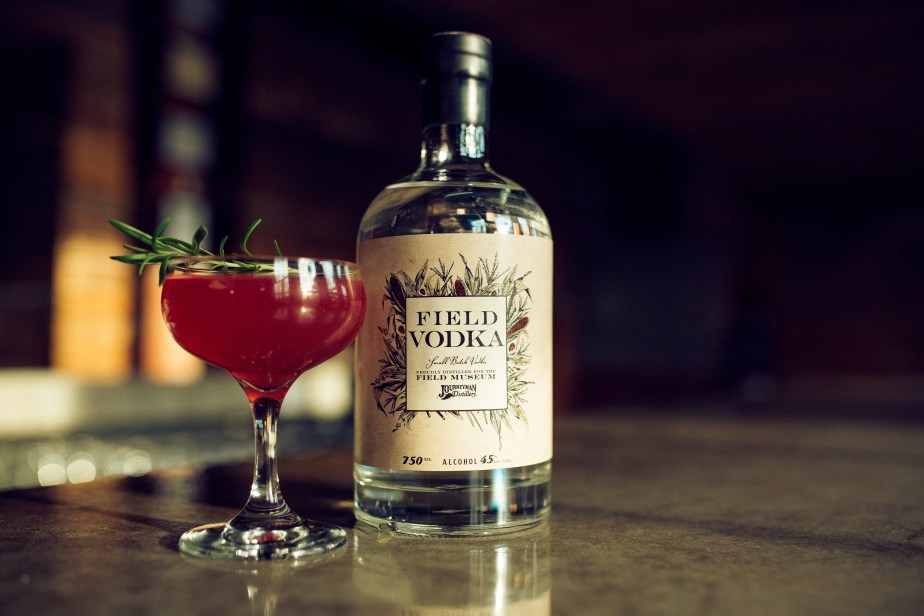
The first product they created was their Field vodka using Bloody Butcher Corn, an heirloom variety often used for making bourbon. The vodka then served as a base for the next distilled spirit, their Field Gin
“We wanted to make a global gin,” says McClain. “So we were pulling species from around the world. We narrowed it down to around 50.”
But once they had the botanicals and began developing recipes, they had to cross off a few more from the list.
“A lot of botanicals that look and taste good, don’t work where you put them in in alcohol, others that I wanted to use were hard to get or arrived too late, I still have agave in the cooler,” says McClain, noting they used other criteria as well in the selection process. “Bill and I wanted the gin to be lavender focused. Obviously gin also has to have a heavy juniper taste as well. We wanted the gin to have tropical undertones and had to figure out those as well.”
Then they were down to 27 including not only lavender and juniper berries but also prickly ash, anise, mango, ginger, coconut palm sugar, pineapple, papaya, Valerian Root, cinnamon, coriander, Horehound, star fruit and Charoli nuts which are sourced from India.
For their Field Rye Whiskey, they tried several types of figs which McClain describes as the world’s oldest sweeteners, finally deciding that Black Mission figs worked the best. The figs were macerated or soaked in alcohol for three months, a process that brought out subtle and all-natural flavors of bananas, sweet melons and strawberries.
“It’s an incredible whiskey,” says McClain. “It has heavy caramel notes and soft marshmallow like palate.”
Bottles of the Field distilled spirits are available for sale. For those who would like to learn more about their taste, they’re also used in some of the cocktails served at the Staymaker, Journey’s restaurant.
Sidebar: Brews
Beer, which is so Chicago given its rich German heritage, was the first partnership Megan Williams embarked upon when she started her beverage program. Two Chicago breweries, Off Color Brewing and Two Brothers Brewing were among the first to use the botanicals to create beers for the museum. researchers at the Field Museum have spent years excavating and studying the Wari site in Peru. Toppling Goliath introduced PseudoSue pale ale, a nod to the museum’s famous 40 feet long and 13 feet tall at the hip, Tyrannosaurus rex. Physically SUE is the largest specimen T. rex specimen that’s been discovered so far.
Off Color’s introduced Wari, their artisan beer based on the Peruvian chicha, a purple corn beer native to areas of Central and South America. One of its other tie-ins with the museum is that Field scientists have spent years leading excavations at Cerro Baúl, a remote mountaintop citadel which was the only contact point between the Tiwanaku and the Wari, considered two great kingdoms whose dynamic relationship ultimately contributed to the rise of the Incan Empire. According to Off Color’s website, an essential sacrament shared by both cultures revolved around chichi. It seems that both tribes liked to consume massive quantiles of chicha served in ornately inscribed drinking cups called keros that were discovered during the archaeological expeditions at Cerro Baúl. In this way, Wari and Tiwanaku cemented their relationships. In other words, next time you see a bunch of heavy alcohol consumers at bars, understand they’re just continuing a thousand year ritual similar to that of the Wari and Tiwanaku.
The following recipes are courtesy of the Journeyman Distillery.
Journeyman Fig Old Fashioned
1.5 oz Field Rye
0.5 oz Fresh Orange Juice
0.25 oz Journeyman Bourbon Maple Syrup
Dash of Journeyman Barrel-Aged Balsamic Vinegar
Dehydrated Orange Wheel
Stir ingredients and pour into a rocks glass, over ice. Garnish with dehydrated orange wheel.
Field Vodka Gimlet
1.5 oz Field Vodka
.75 oz Fresh Lime Juice
.5 oz Simple Syrup
Fresh Lime Wheel
Shake ingredients well and strain into a tall glass over ice. Garnish with a fresh lime wheel.
Field Gin Fizz
1.5 oz Field Gin
.75 oz Fresh Lemon Juice
.5 oz Pear Simple Syrup
1 oz Aquafaba or Egg White
Soda
Star Anise
Combine ingredients and dry shake before adding ice to the shaker. Wet shake until froth has built up. Strain into a Collins glass and top with soda. Garnish with Star Anise.
Open House Chicago (OHC), now in its eighth year, is for anyone who has ever walked past a building, questioning what it was like inside, wanted to investigate a neighborhood and understand its history and visit spaces and places in the city never before explored.
“OHC is a showcase to understand the basic fabric of Chicago’s neighborhoods and what makes the city unique,” says Eric Rogers, Manager, Open House Chicago and Community Outreach for the Chicago Architecture Center. “In choosing more than 250 sites we looked for those that are important to the city and wanted to have several in each of the neighborhoods. We wanted diversity with what each has to offer.”
Making it even more fun, OHC, which runs this Saturday and Sunday, October 13th and 14th, is completely free and requires no registration or tickets.
Three new neighborhoods were added this year including Beverly where visitors can explore Givins Castle, Chicago’s only castle, a crenulated home built in 1887 at a cost of $80,000 and now the Beverly Unitarian Church. Also in Beverly, take a taste at Wild Blossom, Chicago’s first meadery and winery and the sole producer of honey wine on the Northern Illinois Wine Trail and then tour Optimo, the city’s only custom men’s hat maker. Here you can see hat making in action. The company, known for their straw Panama hats, trilbys, homburgs, fedoras that come in a variety of styles (who knew?) such as the classic, teardrop and fastback, even designs a limited edition hat modeled after Frank Lloyd Wright’s signature headwear.
“It’s a very unique working museum of hats and hat making,” says Rogers, noting that the old firehouse on 95th Street where the company is headquartered was renovated by Skidmore, Owings & Merrill (SOM), consolidating Optimo’s operations into one 7,500-square-foot space.
In architectural speak, the building’s “design imparts an industrial aesthetic enhanced by a palette of refined, understated materials like blackened steel, walnut and cork.”
In nearby Morgan Park, another newly added neighborhood to this year’s OHC line-up, the doors of the Ingersoll-Blackwelder Queen Anne-style mansion, once home to both real estate magnate John Ingersoll and then Isaac Blackwelder, president of what was at the time the independent Village of Morgan Park. More notably, at least to me, Gertrude Blackwelder, his wife, was not only a founder of the Morgan Park Women’s Club but was the first woman to vote in Cook County.
The home is filled with antique treasures and built-ins, many salvaged by another owner, artist Jack Simmerling who retrieved them from now destroyed but once imperial mansions in Prairie Avenue, Englewood and other tony Chicago neighborhoods.
The extravagant insides of the neo-Gothic facade Morgan Park Academy’s Alumni Hall are also available for perusal. Now a K-12 independent, co-educational school, Morgan Park was founded shortly after the Civil War and has served as a military academy and preparatory school for the University of Chicago. Unlike the schools most of us attended, its interior boasts dramatic spaces such as an upper school library featuring a vaulted ceiling, double staircase, grand fireplace and wraparound mezzanine. Other accents are wrought-iron chandeliers and ornate woodwork.
Also participating in OHC is the Gold Coast neighborhood with its rich plethora of homes designed by well-known architects Louis Sullivan, Frank Lloyd Wright and Dankmar Adler. Here such sacred places as St. Chrysostom’s Episcopal Church, St. James Chapel and Holy Name Cathedral. There are also cultural centers as the International Museum of Surgical Science, The Newberry Library, The Palette & Chisel Academy of Fine Arts and The Richard H. Driehaus Museum and such cutting-edge hotels, style-wise, as the Millennium Knickerbocker and Fieldhouse Jones.
Neighborhood offerings include Garfield Park, Washington Park, West Ridge, West Town, Ukrainian Village, South Loop/Prairie Avenue/ South Shore, Downtown, Uptown and Hyde Park.
OHC offers such programs as Live Painting Restoration, a LEED Tour of Rotary International, Free Stand-up Comedy at Lincoln Lodge, Artist installation outside Edgewater Beach Apartments, Live Piano at Ingersoll-Blackwelder House and family-friendly activities at the Chicago Architecture Center. All are designed to give visitors a wide range of experiences range different OHC sites.
“We have a full list of those participating, programs and events,” says Rogers. “And to make it easy to decide what to do, our website is very sophisticated with tools that filter by sites and neighborhoods to make it simple to plan where you want to go.”
Ifyougo:
What: Open House Chicago, explore more than 250 cool places all over Chicago, from iconic downtown skyscrapers to hidden gems in the city’s diverse neighborhoods and suburbs.
When: Saturday and Sunday, October 13-14
Where: All over Chicago
Cost: Free
FYI: Visit their website to choose your itinerary. openhousechicago.org
My first morning in Queretaro, about a 90 minute drive north of Mexico City, I walked along the cobblestone streets in the city’s historic center to the fairy tale castle-like La Casa de la Marquesa, once a private home built in the 1756, now a restaurant and hotel. The menu reflects the vast citrus groves, ranches, cactus and cornfields that are part of the highland landscape here.
Plump figs, recently picked, sit on platters in the ornate dining room. Fresh oranges squeezed with cactus or beet juice are served on silver platters by waitresses dressed in garb that I at first thought was from another era of Mexico history but which I am told were designed to look like what Mary Poppins might have worn if there had been a Mary Poppins.
My host recommends Encarcelados – layers of fried eggs, beans, and ham topped with green sauce and crispy pork skins (a very popular food here and though not at all healthy, much more tasty than the pork rinds sold in the U.S.).
Accompanying breakfast and served in delicate cups are endless servings of hot coffee and crema caliente or hot cream. I decide not to worry about calories as I will be exploring the historic district, known for its fountains, city gardens and brightly painted buildings with wrought iron balconies, oversized carved wooden doors and, of course, this being Mexico, the most wonderfully ornate churches, many in a Spanish style characterized by elaborate engravings and known as Churrigueresque.
There’s an over the top creativity in this ultra clean city (there always seem to be uniformed groups hosing down the streets) and I peak into a restaurant and bar that was once an old apothecary shop whose interior walls are still stacked with the small drawers that once held pills and another one made of stone where water cascades down the length of a wall. The city is made of public squares, each with a fountain and often a statue or two as well. Food vendors sell candies, cook tacos on hot griddles and slice fruit that is then rolled in spices. A gaggle of school girls in uniforms ask if they can take my photo and want to pose with me. Most restaurants, if there is space, have outside seating since the weather is almost always fair.
Queretaro, though it has sophisticated cuisine, is also famed for its enchiladas, which are stuffed with beans, Oaxaca cheese, potatoes and topped with a red chile sauce or a cream sauce and often served with horachata, a sweet rice water drink common in Mexico. Guacamole with pork rinds for scooping are served with almost every meal, including the oyster and octopus tacos (much better than they sound) we taste later that night at Harry’s Bar, which features a blend of New Orleans and central Mexican cookery.
Evenings, after exploring the cathedrals with their 24 carat gold interiors, end with a stop at one of the many hot chocolate and churros (fried pastries) shops that dot the walkways. And each night I promise myself that I will walk an extra mile or so tomorrow not only to see more sights but to hopefully leave a few calories behind before I go home.
Enchiladas Suizas
(Creamy Enchiladas with Chicken, Tomatoes and Green Chile)
Ingredients:
2 28-ounce cans good-quality whole tomatoes in juice, drained
Fresh hot green chiles to taste (roughly 3 serranos or 2 jalapeños), stemmed
1 1/2 tablespoons vegetable oil or rich-tasting pork lard, plus a little oil for brushing or spraying the tortillas
1 medium white onion, chopped
2 cups chicken broth, plus a little extra if needed
Salt
1/2 cup homemade crema, crème fraiche or heavy (whipping) cream
About 2 cups coarsely shredded cooked chicken, preferably grilled, roasted or rotisserie chicken
2/3 cup shredded Mexican melting cheese (Chihuahua, quesadilla, asadero or the like) or Monterey Jack, brick or mild cheddar
12 corn tortillas
A few sliced rounds of white onion, separated into rings, for garnish
Fresh cilantro sprigs for garnish
In a small dry skillet, roast the chiles over medium heat, turning regularly, until they’re soft and splotchy-black, about 5 minutes. Place in a blender or food processor along with the drained canned tomatoes. Blend to a smooth puree.
In a medium-size (4- or 5-quart) pot (preferably a Dutch oven or Mexican cazuela), heat the oil or lard over medium heat. Add the onion and cook, stirring regularly, until golden, about 7 minutes. Raise the heat to medium-high, and, when noticeably hotter, stir in the tomato puree. Cook, stirring, until darker in color and thickened to the consistency of tomato paste, about 10 to 15 minutes.
Stir in the broth, partially cover and simmer 15 minutes. Taste and season with salt, usually about 1/2 teaspoon. The sauce should be a slightly soupy consistency—not as thick as spaghetti sauce. If it is too thick, stir in a little additional broth. Keep warm over low heat.
Other preliminaries. Stir the crema into the sauce. Put the chicken in a bowl and stir 1/2 cup of the sauce mixture into it. Taste and season with additional salt if you think it needs it. Have the cheese at the ready.
Heat the oven to 350°. Smear about 1/4 cup of the sauce over the bottom of 4 to 6 nine-inch individual ovenproof baking/serving dishes or smear about 1 cup of the sauce over the bottom of a 13×9-inch baking dish.
Lay the tortillas out on a baking sheet (2 sheets if you have them, for more even heating), and lightly brush or spray both sides of the tortillas with oil. Bake just to warm through and soften, about 3 minutes. Stack the tortillas and cover with a towel to keep warm.
Working quickly so the tortillas stay hot and pliable, roll a portion of the chicken into each tortilla, and then line them all up in the baking dishes.
Douse evenly with the remaining sauce, and then sprinkle with the cheese. Bake until the enchiladas are hot through (the cheese will have begun to brown), about 15 minutes. Garnish with onion rings and cilantro sprigs. These are best served piping hot from the oven.
My search for started back in 2012 when Frank Buesing of Stevensville, after returning from a trip to Bavaria, wrote asking if I knew where he could find pork knuckles (schweinshaxe in German) in Southwest Michigan. On his trip, his guide had recommended he try some and, liking the dish so much, he’d ordered it again at another restaurant in another city. Buesing sent me several photos of schweinshaxe showing what looked like a weapon size piece of meat on a bone. Buesing had already visited several grocery stores and a butcher shop in our area looking for pork knuckles but to no avail. One butcher even consulted a chart of pork cuts and couldn’t find it. I also made some phone calls and got the same response, no pork knuckles around here as I wrote in my July 25, 2012 column in the Herald Palladium titled “Searching for the Elusive Pork Knuckle.”.
Fast forward to a month or so ago when my friend Victoria Larson took me to Vetter’s Alt Heidelberger Brauhaus. Alt Heidelberg is the term for this southwestern German city’s historic district. Vetter’s is on Steingasse, Europe’s longest carless street, which leads down to the Karl-Theodor-Brücke (bridge) spanning the Neckar River. To give you an idea of the how old this city is, the bridge is considered relatively new, having been built in 1788. The building housing Vetter’s dates back even further and is one of those baronial style Germanic places with high ceilings, large wood beams, long tables and a lot of dark highly polished wood. Famed for their Vetter’s 33, at one time the strongest beer in the world with an alcohol content of—you guessed it—33%– it is also known for its traditional German food including a variety of pork knuckles dishes. Though it was hot outside and I wasn’t that hungry, I felt compelled to order the pork knuckle which came with sauerkraut and dumpling and gravy. After all, it was my job to research pork knuckles, wasn’t it? Afraid I wouldn’t like it (after all—pork knuckles?) Victoria wisely said give it a try and if you don’t like it, don’t eat it.
Unfortunately, as far as calories are concerned, I liked it and what I didn’t share with everyone else sitting with us, I ate. And like Buesing, in the next city I visited, I ordered it again. I wanted to tell Buesing, only I couldn’t remember how to spell his name and being far from home didn’t have access to my files. Luckily, Valerie Kowerduck of Stevensville saw my Facebook photo of the schweinshaxe at Vetter’s s and posted a link to my column. Six years after we first talked about pork knuckles, Buesing still hadn’t found any around here. So I called around again getting a more positive response. Bob’s Meat in South Haven told me they carried them while Roger’s Foodland and Zick’s Specialty Meats said they could be ordered if people called ahead. Voila! Pork knuckles.
FRANK & PORK KNUCKLE!
Buying schweinshaxe in Southwestern Michigan, which has a large percentage of Germans and German-Americans, wasn’t always so difficult.
Robin Christopher, a Journeyman Meat Cutter at United Food and Commercial Workers International Union, who worked as a butcher for decades at such area stores as Family Foods and Eagles, says back then he sold many pig knuckles—later called pork knuckles (“to soften the image to customers”).
“We sold pig knuckles to a variety of people,” he says, noting they’re often used in Mexican dishes such as tacos, Asian dishes served with rice and, of course German foods. “They came in two ways—fresh, meaning raw or uncooked and smoked which are generally called smoked pork ham hocks and are used for seasoning and meat in beans or greens and are great for flavor. The fresh ones are a little more versatile. They can be baked in the oven or they can be par boiled and then finished by braising, pan frying, grilling, deep frying or grilling. They can be eaten whole or they can be cut up or de-boned and the meat used in other recipes.”
FRANK AFTER EATING PORK KNUCKLE DINNER!
At Vetter’s they came with a variety of sides—sauerkraut, mashed potatoes, spätzle (tiny little dumplings cooked by dropping batter into boiling water), big dumplings, noodles, gravy, mustard and bread, depending on what your ordered.
I like to research and when Christopher told me that pig knuckles were big sellers in Southwestern Michigan years ago, I decided to look them up on newspapers.com, an online archive of old newspapers. Sure enough, going back to the late 1800s up to 1960, there were a lot of groceries, butchers and even restaurants advertising them. In the December 17, 1920 issue of the News Palladium, you could buy pig knuckles as well as something called nut-oleo at during Banyon’s Saturday Cash Specials. Kelm’s Market at 222 State Street sold two pounds of pig knuckles and two pounds of sauerkraut all for 19 centers according the January 12, 1934 Herald Press. Kelm’s also sold something called leaf lard (lard must have been big back then because there’s all sorts of types for sale). For15 cents, according to an ad in the February 2, 1937 edition of the News Palladium, you could get pork knuckles and sauerkraut and listen to the music of the 6-piece Old Heidelberg Band at the Higman Park Villa, a beach place in Benton Harbor.
Deutschamerikaner or people of German heritage (including me as my maternal grandfather was from Germany) constitute the largest ancestry group according to the US Census Bureau in its American Community Survey with an estimated number of 44 million German Americans living this country as of 2016 which is one third of the total ethnic German population in the world.
I talked to Sheila Schultz and Betty Timmreck, both members of Napier Parkview Baptist Church on Napier Avenue in Fairplain. More than a century ago it was the First German Baptist Church.
Timmreck and her husband, Dave, are both of German descent and their last name
“My mom was going to the church when it was all German preaching,” she says. “Preaching in German ended a little after 1947 when William Hoover became the pastor.”
But that wasn’t quite the end of the German language at Napier Parkview. Schultz says that up until a few years ago there was a German Sunday School class as well.
Timmreck shared recipes from “The Ladies Missionary Society Cookbook” which was published by her church. The missionary society is now called the more modern sounding W2W (Women to Women).
“I learned to make German food from growing up German,” says Schultz who is German-American and married Armin Schultz, who immigrated as a child from Germany.
“That makes me ever more ‘Germany’,” she says with a laugh.
Schultz likes to take the old recipes, many of them she originally learned to make from her aunts, Maria Schultz and Getrud (there’s no e at the end of her name) Schultz, such as the family’s pork and sauerkraut and tweak them, creating her own signature dishes. She typically makes roulade, a type of meat roll for the holidays and three-to-five days before Christmas begins marinating the ingredients for rotkohl—a seasoned red cabbage dish with apples, red wine and brown sugar. Also on the list of German dishes she occasionally makes our tortes and kuchens or cakes.
“A lot of these dishes my aunts would make when we came over,” she recalls.
Hanns Heil (now there is a serious German name) of Coloma says the beauty of a good recipe is you can add other things to it. And for her and his wife, Sara, an adaptation of brats and sauerkraut, a German dish if there ever was one, can be made in a crockpot with such additions as using jalapeno brats instead of regular ones or even substituting Polish sausage. They add a light beer to the meat and kraut mixture such as a lemon shandy.
“We also use a package of French onion soup like the kind you use to make dip,” he says. “It takes the punch out of the sauerkraut.”
Sheila Schultz’s Rotkohl
(Red Cabbage)
½ pound bacon, I prefer thick sliced
I large onion, peeled and thinly sliced
About 3 pounds red cabbage thinly sliced, not shredded
2 or 3 tart apples, peeled and thinly sliced
¼ cup packed brown sugar
1 or 1 ½ cups chicken broth or stock
¼ cup red wine
¼ cup white vinegar
1 to 1 ½ teaspoon kosher salt
pepper to taste
In a large pot/Dutch oven sauté bacon, add onion, cabbage, and apples. Simmer until cabbage starts to collapse, stir gently and add broth, wine, vinegar, brown sugar, salt, and pepper.
*To do ahead I like to let the cabbage mix cool and refrigerate overnight, then complete the final cooking step.
Cook over medium/low heat for about 1 hour, till cabbage is tender. Serve warm.
Hanns and Sara Heil’s Crockpot Sauerkraut and Sausage
1 bag sauerkraut
3 to 4 sausage links such as bratwurst, Polish or jalapeno brats
1 package French onion soup
1 bottle of light beer
Place all ingredients into a crockpot and cook on low for 4 to 6 hours.
The following recipes are from “The Ladies Missionary Society Cookbook.”
Potato Pancakes
6 large potatoes, shredded
1medium onion, grated
4 eggs
¼ cup flour
Salt and pepper
Blend all ingredients together and fry in a hot frying pan with vegetable oil until nice and brown and crispy.
Spätzle
4 cups flour
1 teaspoon salt
Four eggs
1 cup milk
Mix all together. Bring 2 quarts of water and one half teaspoon salt to a boil. Suck a large colander with large holes over pot. With a spoon, Press Tell a few tablespoons at a time to cut the colander directly into the boiling water. Stir gently to keep dumplings from sticking. Boil briskly for five days minutes or until tender.
Kraut and Ribs
2 pounds or two glass jars kraut
2 cups fresh shredded cabbage
One medium onion, cut
One or two fresh garlic cloves
1 tart apple
1 bay leaf
2 to 3 pounds country ribs, browned
One package bratwurst cut and browned
½ cup brown sugar
8 to 9 peppercorns
Rinse canned kraut and drain; add fresh cabbage, what in heavy pan or slow cooker. Fried onions, apples and garlic. Brown ribs and add to kraut. Add bay leaves, peppercorns and brown sugar to taste. Let’s cook for 2 ½ hours. Drain if there’s too much liquid. Put in large casserole; add brown bratwurst and bake for about one hour at 350° in covered casserole.
Schweinshaxe or Pork Knuckle
2 to 3 pounds schweinshaxe or pork knuckle
Salt
Pepper
garlic clove
1 bottle Beer, preferably a dark beer
1 garlic clove, finely minced
Preheat oven to 350° F.
Because crispy skin is one of the hallmarks of a good pork knuckle, place the schweinshaxe, unwrapped, in the refrigerator overnight so that the skin dries out.
The next day, place in a roasting pan with just a little of the beer. Sprinkle skin with salt and pepper and rub the minced garlic into the skin. If you’d rather not use beer, rub with a light oil. This keeps it from sticking to the pan and also produces good pan drippings if making gravy.
Roast in an oven for about 4 hours, adding a little more about an hour into the roasting to keep te bottom of the knuckle moist. After the skin has started to crisp, baste with beer about every 45 minutes or so. When the pork reaches an internal temperature of approximately 200 degrees, turn the oven up to 450 degrees, pour beer over the knuckle and cook for about 10 -15 minutes. Serve with potato pancakes, spätzle and/or rotkohl.
High in the Sierra Madres, we follow the twisting road from Puerto Vallarta and the seaside on our way to San Sebastian de Oeste. Crossing the long spanned bridge over Rio Ameca, the road curves around a ridge and into the tiny village of La Estancia and Hacienda San Sebastián, a family owned raicilla and tequila distillery (for raicilla think tequila only much stronger and likely of inducing hallucinations in anyone who drinks too much).
Founded in the 1930s and still family owned, their vast agave fields – called green plantations — can be seen on the surrounding hillsides. Besides making organic and flavored tequilas such as Licore de Café with its hints of coffee, chocolate and vanilla as well as almond tequila made from nuts grown in Durango and roasted here, the family also makes agave sugar and syrup, all without electricity. The peñas or agave hearts roast over an open fire as they were centuries ago and what power there is comes from solar panels.
Sampling and then stocking up on organic tequila we continue on, taking a turn on a dirt road where cows, unconfined by fencing, have to be shooed out of the way, to San Sebastian. Here we stop at La Quinta Café de Altura, an organic coffee farm owned by Rafael Sanchez, his wife Rosa and Lola, Rafael’s sister. Five generations of the family have grown coffee here.
The family, in a building dating back more than 120 years, tend 11 acres of coffee trees, some as old as the house, handpick 30 tons of beans each year, dry, roast and grind them, making blends such as a mixture of ground beans with cinnamon and sugar for the traditional, and now often hard to find, Mexican coffee. Tastings are available and so are Rosa’s homemade candies such as guava rolls and sweets made from sweet goat’s milk. In an interesting aside, we learn that the Sanchez’s parents married early (the Don was 15), a 68-year union that produced 21 children. Their grandfather did even better, having 28 children, though that took both a wife and several mistresses.
Settled in 1605, San Sebastian was nominated as a World Heritage site by UNESCO. Lovely in its vintage charm, the surrounding pine covered mountains were bonanzas of silver and gold. Aristocratic families from Spain made the perilous travel across the sea and then land to oversee the mining of these treasures. Once here, deigning not to marry locals, they married each other. It made for interesting relationships, uncles were also cousins, sisters also grandchildren or whatever.
We hear the tales when we stop at the museum, housed in the 200-year-old Hotel Jalisco. It’s a very crowded museum–more like a fascinating attic full of family heirloom items and the curator is a direct descendent of the founding families.In the museum, we see trunks inlaid with silver, 19th century lace gowns and jewelry boxes, china and silver that came from Spain.
It’s a story of glory and loss–at one time San Sebastian des Oeste had a population of 40,000; now there are about 600 and the occasional tourists. Silver was transported by horses and mules through treacherous mountain passes, robbers waited in wait. Pancho Villa and his men showed up regularly stripping away the wealth.
There were interesting family traditions. When a family member died, before they were buried (and remember it’s very hot here), a photographer had to be sent for from Puerto Vallarta to take a photo of the deceased. It could take days, but that’s how it was done.
Walking along the cobblestone road, past a massive 300 year plus ash tree and cascading white frizzes of el manto de la virgin, we enter Comedor Lupita. Here terra cotta platters loaded with chicken mole, fresh handmade tortillas (in America they’d be called artisan tortillas), refried beans and something I’ve never tasted before – machaca, a dish of dried beef mixed with spices and eggs, are heaped in front of us. As we eat, we watch the family busy behind the tiled counter, making even more food.
Through the windows we see splashes of bright purple from the masses of bougainvillea that drape the stone exterior walls and here the sounds of caballeros, their horses’ hooves striking the centuries old street. We sip our sweet agua de Jamaica water and feel time passing in reverse.
1/4 cup Worcestershire sauce
Juice of 4 limes
4 cloves garlic, chopped
1 tablespoon cumin
1 tablespoon chili powder
1/2 tablespoon salt
1/2 tablespoon black pepper
1/2 cup olive oil
Machaca:
2 lbs. skirt steak, cut into strips
1 large sweet onion, diced
1 green bell pepper, chopped
4 cloves garlic, chopped
1 jalapeno pepper, chopped
1 14 ounce can diced tomatoes with green chilies
1/2 cup beef broth
1 tablespoon oregano
1 tablespoon cumin
1 tablespoon hot pepper sauce (Tabasco or a Mexican brand, such a Valencia)
Salt and pepper
2 tablespoons oil
Whisk all the marinade ingredients together, and then add the skirt steak. Marinate at least 6 hours or overnight tablespoon Remove meat from marinade, drain, and pat dry. Bring to room temperature. Discard marinade.
In a large heavy pot, heat oil. Sear the meat well on both sides, in batches so as not to crowd them. Remove the meat as it is browned and set aside.
Drain fat. Add in the onion, peppers, and garlic, cook until tender, then add tomatoes, broth, pepper sauce and spices. Bring to a boil, stirring and scraping the bottom of the pot. Return beef and simmer, covered, for two hours, stirring from time to time until tender. Cool and shred.
Lay meat on a single layer on a baking sheet. Bake at 250º for 20 minutes or until meat is dry.
Machaca con Huevos
2 chopped scallions (white part only)
1 hot green chili
2 tomatoes
1 cup dried machaca
2 eggs
Chopped cilantro
Sauté scallions and peppers in oil until tender, add tomatoes and beef until heated. Remove from pan, add eggs and cumin. Scramble, then stir machata mixture. Garnish with cilantro and serve with hot tortillas.
Search: San Sebastian de Oeste, Hacienda San Sebastián, agave fields
Keywords: San Sebastian de Oeste, Hacienda San Sebastian, agave fields, organic and flavored tequilas
Description: In San Sebastian de Oeste, near Puerto Vallarta is Hacienda San Sebastian where you can taste the organic and flavored tequilas such as Licore de Café with its hints of coffee, chocolate and vanilla as well as almond tequila.
In a room where flickering flames highlight low beamed ceilings blackened with centuries of smoke and glass windows wavy from almost a millennium of time give views onto a cobblestone courtyard bordered by half-timbered buildings. I am at Maulbronn Monastery learning to make maultaschen, a centuries old dish that originated here. If I succeed, I’ll earn a coveted but very little known diploma in maultaschen making.
Built in 1147 and now a UNESCO World Heritage Site, the monastery was founded by Cistercians, a religious order of the Benedictines retreating from the world to establish a simpler life and find a balance between manual labor and prayers. Located in the village of Maulbronn in the Black Forest region of southwestern Germany, the monastery was a self-sufficient, fortified city within the boundaries of what was once the Duchy of Swabia. It’s all very charmingly Germanic, a storybook type place that has survived tumultuous times. Now Maulbronn Monastery, the best preserved medieval monastic complex north of the Alps, functions as a Protestant primary boarding school for both boys and girls. It’s most famous pupil is probably the author Hermann Hesse whose book Beneath the Wheel tells the story of a boy sent to a seminary in the village of Maulbronn.
The gates, once locking out the world, are open to visitors, the Romanesque cathedral offers services and tours and historic buildings house a restaurant, visitor center and shops. Frequent events include concerts, fairs, a farmer’s markets during warm weather and those famous Christmas markets they have in Germany. Besides that, this being Germany after all, there’s also Maulbronner Klosterbräu, a beer brewed according to an ancient recipe. Back then water wasn’t safe, so drinking beer, ale and wine started in the a.m. and continued on to night. Which may be one reason why the monks, who were given little food and often prayed for 16 hours straight in the Cathedral were able to do so.
Back in the day, all was lit by fire and in twilight I can almost sense the friendly ghosts of years past. This feel of what life was like a millennium or more ago includes making maultaschen, sometimes described as a German ravioli but so much more than that. Also, as an aside, if you think maultaschen is hard to pronounce, consider that in Swabian the term is Herrgotts-Bescheißerle, meaning “small God-cheaters.”
“It’s a dish created when two poor brothers were sent to the monastery because their father couldn’t afford to feed them,” our monastery guide, Barbara Gittinger, tells us as we roll out thin sheets of a shiny dough (note to those who don’t want to totally follow the ancient recipe—if you’re in Southwest Germany you can buy maultaschen dough at many of the markets; in the U.S., substitute egg roll wrappers instead) into perfect squares.
Seems one of the brothers took a delivery of meat during Lent. Not wanting it to go to waste, he chopped up the meat with vegetables and wrapped the mixture in dough. The idea was that God wouldn’t see the meat because of all the veggies and dough. Since that was centuries ago and they’ve been eating maultaschen ever since the subterfuge obviously worked.
But there are other stories about the dish’s origins as well including the one about the scandalous Countess of Tyrol who earned the nickname Maultasch, meaning vicious woman (they said worse too but we won’t go there) because of her political machinations and marriage to one man before divorcing her current husband. But you know, these things happen. Anyway, said to be amazingly beautiful, the Countess was also a culinary traveler and she supposedly brought the maultaschen recipe to Maulbronn from Tyrol in the Austrian Alps.
As I listen to the origins of maultaschen, I’m busy mincing Black Forest ham, one of several “forbidden” meats typically used to make the filling, mixing it with leeks, onions and dried bread soaked in water and then squeezed dry. Gittinger says that her family makes theirs with a type of beef mixture that sounds a lot like suet, blood sausage and vegetables such as spinach. Of course, maultaschen has gone modern and Gittinger says some substitute salmon for the meat.
I drop a tablespoonful of the mixture on the square of dough, fold it and pinch the seams tightly together (“so it doesn’t open up when cooking,” Gittinger tells me).
Originally, maultaschen would have simmered in a kettle of broth hanging over the open fire. Now, we use a gas stovetop hidden from sight.
Tasting maultaschen and schwäbischer kartoffelsalat (German potato salad), its traditional accompaniment, along with a glass of a dry red German wine) I reflect that the flavors must be different—the wheat milled for the flour to make the dough would be different from the wheat varieties we grow today. The same with the vegetables. But that’s not the case with the Black Forest ham, a variety of dry-cured smoked ham produced in this region since at least Renaissance times. Making and eating maultaschen at Maulbronn Monastery is a historic connection between past and present.
Oh, and I received my diploma. I’m officially a maultaschen maker now.
Swabian Maultaschen
2 2/3 cups flour (all-purpose)
1/2 teaspoons salt
2 large eggs
1 tablespoon oil
3 tablespoons water
½ pound Black Forest Ham, American ham or bacon (or a combination of all—you can also use hamburger meat), cooked and chopped
1/2 medium onion, chopped
1 clove garlic (chopped)
2 ounces day-old bread or rolls, soaked in water and then torn into small pieces
1 leek including the green stalk, chopped
2 ounces spinach, cooked and squeezed dry
1 large egg
1/4 teaspoon salt
1 pinch pepper (fresh, ground)
1 to 2 quarts broth (beef or other)
For the dough:
Mix flour with 1/2 teaspoon salt, 2 eggs, oil and just enough of the 3 tablespoons water to make a smooth dough.
Knead for 5 to 10 minutes, until satiny. Form dough into a ball, oil surface, wrap in plastic and let rest for at least 1 hour.
For the Filling:
Cook bacon and remove from pan. Sauté onions, garlic and leeks in bacon drippings, butter or a little vegetable oil until translucent.
Mix remaining filling ingredients together until well mixed.
For the Dumplings:
Roll out half of the dough to 1/8-inch thickness or thinner. You should have a sheet about 12 inches by 18 inches. (You also can use a noodle roller to make flat sheets with 1/5 of dough at a time.)
Score the dough with a knife, one time through lengthwise and five perpendicular cuts to make 1 dozen rectangles.
Place 1 tablespoon dough on each rectangle.
Fold rectangle over and pinch sides to close.
Repeat with the other half of dough.
Bring broth to a simmer and place 1/3 of the maultaschen in the broth. Cook for 15 to 20 minutes.
Remove and drain. Keep warm if not serving immediately. Repeat with the rest of the maultaschen.
Serve in a bowl with some broth. Serve with Schwäbischer Kartoffelsalat (recipe below).
Schwäbischer Kartoffelsalat
(Swabian Potato Salad)
3 pounds small Yukon gold potatoes of similar size, skins scrubbed and peels left on
1 medium yellow onion, chopped
1½ cups beef stock or bouillon
½ cup white vinegar
¾ tablespoon salt
¾ teaspoon freshly ground white pepper
1 teaspoon sugar
2 teaspoons mild German mustard (can use regular mustard)
⅓ cup vegetable oil
Fresh chopped chives for garnish
Boil the potatoes in their skins in lightly salted water until tender. Allow the potatoes to cool until you can handle them. Peel the potatoes and slice them into ¼ inch slices. Put the sliced potatoes in a large mixing bowl and set aside.
Add onions, beef broth, vinegar, salt, pepper, sugar, and mustard in a medium saucepan and bring to a boil. As soon as it boils, remove from heat and pour the mixture over the potatoes. Cover the bowl of potatoes and let sit for at least one hour.
After at least one hour, gently stir in the vegetable oil and season with salt and pepper to taste. If too much liquid remains, use a slotted spoon to serve. Serve garnished with fresh chopped chives. Serve warm.
On a languid afternoon after too much time in the sun in Gulf Shores, Alabama, I decided to follow the coastline along the Eastern Shore through Fairhope to Magnolia Springs, a small town along the headwaters of the Magnolia River. With jasmine and bougainvillea in bloom, it seems like a true Southern Gothic (in the good sense of the word) type of place with historic mansions, postal delivery by boat (one of the few places in America to do so) and a great place to eat—the award winning Jesse’s Restaurant, in what was once the Moore Brothers General Store, which first opened in 1922. The building is on the National List of Historic Places. They’re a award winner of Wine Spectator. As for the hamlet where it’s located, Southern Living named Magnolia Springs one of The Most Charming Small Towns in Alabama.
Their specialties include unique cuts of dry and wet-aged steaks, bone-in cuts and fresh fish brought in daily. I ordered the shrimp and grits and more oysters than I should have and then headed down Oak Street, where live oak trees create a living canopy above the roadway, past the 19th century Episcopal Church and to the Magnolia Springs Bed and Breakfast, which dates to 1897, for a peak inside.
Co-owner Dave Worthington quickly volunteered to take me on a tour of the place, which has been a hotel since it opened. Leafing through a guest book dating back to the early 1900s, I can see this place was a hit, even though for visitors from Grand Rapids and Lawton, Michigan as well as Chicago and other far away northern climes it took two days and three modes of transportation to get down there back then first by train, then by boat, and finally by horse and buggy. And there wasn’t even air conditioning when they arrived.
But the food was good, the landscape serene and the fishing, I’m told, was great. I don’t know about the fishing now, but the town is beautiful and the inn serves a wonderful breakfast.
To give you a taste, here are some recipes Dave shared.
David’s Apple Dumplings
·1 red Delicious apple
·1 can crescent rolls
Cinnamon Sauce:
·Warm the following three ingredients until dissolved:
·1 1/2 cup orange juice
·3/4 cup sugar
·1/2 stick butter
Peel, core and cut apple into quarters or thirds. (You also can use a pear, peach, blackberries or a ball of cranberries anything that makes a good cobbler will be great for the filling).
Wrap 1/4 of Apple with one piece of crescent roll and seal all edges.
Place seam side down in Pyrex pan (9×13-inches).
Pour sauce over them then sprinkle with cinnamon.
Cook at 350 degrees for 20-25 min. till done.
Baste dumplings with sauce in the pan before moving to plate.
I drizzle a small amount of sweetened vanilla yogurt on top as icing.
Makes 8 dumplings cut in half to make 16 servings.
Dave also drizzles a small amount of sweetened vanilla yogurt on top as icing.
David’s Eggs
8 eggs
1 can green chilies
16 ounce cottage cheese large curd
8 ounces sharp cheddar cheese
2 tablespoons flour
Shred cheese and coat with flour. Beat eggs with green chilies. Add cottage cheese, then cheddar cheese, and mix.
Pour into 9inch pie pan and bake at 350 degrees for 55-60 minutes.
Imagine strolling through Paris with a friend, one who knows the greatest little patisseries, cafes, outdoor markets and shops tucked along winding cobbled streets. Together the two of us try on amazingly chic designer dresses at La boutique Didier Ludot and amble through the courtyard gardens and gaze at the Swedish art work at Institut Suedois located in the Hôtel de Marle, a 16th century mansion in the heart of the central Marais district.
We order small plates of fantastic food amidst 19th century murals of clowns at the appropriately named Clown Bar, considered one of the city’s finest restaurants. After stopping to admire the Eiffel Tower, we trek even more before stopping to reward ourselves with ice cream at Berthillon Glacier. We are, definitely, Parisian insiders.
Wait—don’t have a friend in Paris? Don’t even have tickets or plans to go sometime soon? Well, Rick of Casablanca told Else they’d always have Paris and for the rest of us, before we get there, we’ll have the recently released Paris in Stride: An Insider’s Walking Guide(Rizzoli 2018; $27.50), co-authored by Jessie Kanelos Weiner, a Chicago gal who grew up on the Northside and Sarah Moroz both of whom have lived in Paris for the last decade. Charmingly illustrated with over 150 of Weiner’s delicate watercolors, the book curates walking itineraries the authors put together to go beyond the typical guidebooks.
“We wanted to put together walking tours of a timeless Paris, the type of Paris that will always be the same,” says Weiner. “We wanted something that wasn’t too text heavy, a book that was a jumping off point to see what you want to see, one that wasn’t prescriptive but takes you down the side streets.”
Paris is Weiner’s passion and wandering its streets is what she loves to do.
“It’s a city based on pleasure,” she says, “and one with many beguiling things along the way.”
When I arrive in the new bourbon tasting room at the historic Beaumont Inn, there are already set-ups of four bottles of bourbon with empty glasses in front of each. Master Blender Dixon Dedman, who with his parents own the inn which has been in their family since 1917, is famed for his bourbon tastings as well as his revival of the bourbon his great great grandfather, Charles Dedman, who in 1880 started up what would become one of the largest distilleries in the state, until before Prohibition shut it down.
In other words, Dedman is a bourbon expert and I am someone who in my college days mixed the spirit with diet cola. But not this evening. Dedman is going to teach me how to taste the “terroir” of bourbon meaning the type of land here—limestone rock and natural springs that give a special flavor to the wheat, corn and rye used to make bourbon. There is, I note, no diet cola anywhere in sight.
“When they char the barrel it releases the sugars and caramelizes it,” Dedman says as he pours Pappy Van Winkle, a 20-year old bourbon named in tribute to Julius Van Winkle by his grandson and great grandson who are carrying on the family tradition.
That’s important because Pappy Van Winkle is a wheated bourbon which means it contains no rye and thus gets its flavor from the interaction with the barrel.
“Focus on where you’re tasting it,” he says. “That’s how you build your palate.”
Because it’s wheated, which means, Dedman tells me, you can taste it in the front of your mouth.
Pappy Van Winkle has almost a cult like following says Dedman.
“When they’re going to release it, people sit in their cars in front of liquor stores for two days to get a bottle,” he says.
At this point, I know I can’t ask for a can of diet cola.
The next taste is a sip of Four Roses Al Young 50th Anniversary. Now I remember Four Roses as a cheap bourbon—the kind you do mix with soda pop particularly at college dorm parties but its roots go back 130 years. The brand was allowed to languish and almost disappeared until Al Young, Senior Brand manager with 50 years of experience in the bourbon biz, was allowed to bring it back to its glory. He has several blends which are based on patented yeast strains he’s developed. The taste of this bourbon comes from the yeast strains and rye and Dixon says to pay attention to its finish on the back on the mouth.
When Dixon was working on developing Kentucky Owl he wanted to emulate the complexity of Four Roses. Later this month, he’ll be releasing his Kentucky Owl Batch # 7, the seventh of his limited release bourbons.
“It’s an 11-year old Kentucky Straight Rye Whiskey and it’s exactly what a Rye Whiskey should be,” Dixon writes on Kentucky Owl’s Facebook page. “I put this blend together and bottled it at 110.6 proof. It’s a full-flavored rye perfect for the coming fall weather.”
Barrel aging can produce bourbons with a high proof count but then before they’re bottled, they’re watered down to around 80 proof. But Dixon wasn’t about to do that to Kentucky Owl.
“It’s full flavored,” he said about this batch of Kentucky Owl and it sure was. “You can’t hide anything in barrel proofed whiskeys.”
Later, when I’m in the dining room ordering dinner—the Classic Beaumont Inn fried yellow leg chicken, beaten biscuits, country ham—I glance at the bourbon list. I read that Dixon’s Batch #6 costs $40 a glass and am glad I didn’t ask for a diet cola. Not just because I would have looked stupid but also because I had begun to get a sense of how to appreciate a great bourbon.
But the Beaumont Inn is about more than Kentucky Owl. It was built in 1845 as a girl’s school and was bought by Dixon’s great great grandmother in 1917. Two years later she turned it into an inn. Many of the recipes on the menu and in their cookbook have been favorites since they first opened including, fried green tomatoes, house made pimento cheese, traditional Kentucky Hot Brown, corn meal batter cakes with brown sugar syrup and the General E. Lee Orange Lemon Cake.
The latter, my waiter told me, was such a favorite of the general that he carried the recipe in his breast pocket. I guess that was in case anyone asked if they could bake a cake for him. I, of course, had to order that despite being a northern girl, and it was delicious—very light with a distinct sugary citrus taste. The lightness I discovered later was because the cake flour used in the recipe is sifted eight times.
The food at the Beaumont Inn is so good that a few years ago they won the James Beard America’s Classic Award which is given to “restaurants with timeless appeal, each beloved in its region for quality food that reflects the character of its community. Establishments must have been in existence for at least ten years and be locally owned.”
The inn itself is beautiful, all polished wood and thick carpets, antique furniture and the timeless grace of a wonderfully kept three-story historic mansion with an exterior of red brick and tall white columns. Located in Harrodsburg, the oldest city in Kentucky, it sits on a rise on several rolling, beautifully landscaped acres. I mentioned Duncan Hines a few weeks ago when I was writing about Claudia Sanders Dinner House in Shelbyville, Kentucky well, Duncan was here quite a bit too and I can see why.
“Now write this down for the people in Kentucky,” he told a reporter back in 1949. “[Say] I’ll be happy to get home and eat two-year-old ham, cornbread, beaten biscuits, pound cake, yellow-leg fried chicken, and corn pudding. And you can say what I think is the best eating place in Kentucky: Beaumont Inn at Harrodsburg.”
Beaumont Inn
The food here is real Kentucky fare–Weisenberger meal from a seventh generation mill not far from here, Meacham hams which the Dedmans bring to maturation in their own aging house—a process that takes several years and, of course, Great Great Grandpappy’s Kentucky Owl.
The following recipes are courtesy of the Beaumont Inn Special Recipes, their cookbook now in its sixth edition.
Corn Pudding
2 cups white whole kernel corn, or fresh corn cut off the cob 4 eggs 8 level tablespoons flour 1 quart milk 4 rounded teaspoons sugar 4 tablespoons butter, melted 1 teaspoon salt
Stir into the corn, the flour, salt, sugar, and butter. Beat the eggs well; put them into the milk, then stir into the corn and put into a pan or Pyrex dish. Bake in oven at 450 degrees for about 40-45 minutes.
Stir vigorously with long prong fork three times, approximately 10 minutes apart while baking, disturbing the top as little as possible.
Country Ham Salad
6 cups chopped aged country ham
1 cup chopped celery
1/2 cup chopped red pepper
1/2 cup chopped purple onion
1.5 cups chopped sweet pickle
2 chopped hard boiled eggs
2 tablespoons of whole grain mustard
Hellman’s Mayonnaise to your liking.
Note: This is great on crackers, finger sandwiches with a thin slice of homegrown tomato, toasted open faced sandwiches with tomato and a melted slice of your favorite cheese or as an appetizer – toasted crostini, ham spread, thin slice of homegrown tomato topped with shredded parmesan cheese run under the broiler.
Corn Meal Batter Cakes
1 cup corn meal
1/2 teaspoon baking soda
1 1/4 cups buttermilk
1/2 teaspoon salt
2 eggs, beaten
2 tablespoons bacon drippings or shortening
Sift meal, soda and salt together. Add beaten eggs, then buttermilk. Beat until smooth. Dip a tablespoon of batter (or a bit more) onto a greased hot griddle. Let brown on bottom, then turn quickly and lightly to brown on other side. Serve with Brown Sugar syrup.
Makes about 10-12 good-sized cakes.
Brown Sugar Syrup
2 pounds light brown sugar
3 cups cold water
Mix sugar and water well. Bring to a hard boil for 10 minutes. Do not stir after placing over heating element as stirring or agitating will cause syrup to go to sugar
General Robert E. Lee Orange-Lemon Cake
9 Eggs, separated
a few grains salt
2 cups cake flour, sifted twice before measuring
2 cups white sugar, sift 6 times
1 1/2 teaspoons baking powder
1/2 teaspoon cream of tartar
1 lemon, juice
Grated rind (yellow part only)
1/2 cup vegetable oil
Beat egg yolks to creamy texture; beat egg whites until stiff. Add baking powder and tartar to flour and sift six times. Mix all ingredients together. Divide batter into four greased 9-inch cake pans. Bake at 325 degrees for 20 minutes. Turn cakes upside down on a rack until cool.
Spread Orange-Lemon Frosting between layers and on top and sides of cake. Store in refrigerator until serving time. Garnish with orange slices and fresh mint leaves if desired.
Orange-Lemon Frosting
¼ pound butter, softened
3 egg yolks
2 (16 ounce) packages powdered sugar, sifted
4 oranges, rind of, grated
2 lemons, rind of, grated
4 tablespoons lemon juice
6-8 tablespoons orange juice
Cream butter; add egg yolks and beat well. Add powdered sugar and grated rind alternately with juices, beating well.
Original “Robert E. Lee” Cake
Twelve eggs, their full weight in sugar, a half-weight in flour. Bake it in pans the thickness of jelly cakes. Take two pounds of nice “A” sugar, squeeze into it the juice of five oranges and three lemons together with the pulp; stir it in the sugar until perfectly smooth; then spread it on the cakes, as you would do jelly, putting one above another till the whole of the sugar is used up. spread a layer of it on top and on sides.
638 Beaumont Inn Drive, Harrodsburg, KY. (859) 734-3381; beaumontinn.com




 Open House Chicago (OHC), now in its eighth year, is for anyone who has ever walked past a building, questioning what it was like inside, wanted to investigate a neighborhood and understand its history and visit spaces and places in the city never before explored.


 My search for started back in 2012 when Frank Buesing of Stevensville, after returning from a trip to Bavaria, wrote asking if I knew where he could find pork knuckles (schweinshaxe in German) in Southwest Michigan. On his trip, his guide had recommended he try some and, liking the dish so much, he’d ordered it again at another restaurant in another city. Buesing sent me several photos of schweinshaxe showing what looked like a weapon size piece of meat on a bone. Buesing had already visited several grocery stores and a butcher shop in our area looking for pork knuckles but to no avail. One butcher even consulted a chart of pork cuts and couldn’t find it. I also made some phone calls and got the same response, no pork knuckles around here as I wrote in my July 25, 2012 column in the Herald Palladium titled “Searching for the Elusive Pork Knuckle.”.


 “We wanted to put together walking tours of a timeless Paris, the type of Paris that will always be the same,” says Weiner. “We wanted something that wasn’t too text heavy, a book that was a jumping off point to see what you want to see, one that wasn’t prescriptive but takes you down the side streets.”


 When I arrive in the new bourbon tasting room at the historic

 But the Beaumont Inn is about more than Kentucky Owl. It was built in 1845 as a girl’s school and was bought by Dixon’s great great grandmother in 1917. Two years later she turned it into an inn. Many of the recipes on the menu and in their cookbook have been favorites since they first opened including, fried green tomatoes,


