Rick Steves Art of Europe to Premiere Fall 2022 on Public Television Stations Nationwide

Production is underway for a six-part limited series presented and distributed by American Public Television in which travel expert, author and host Rick Steves will showcase Europe’s great art and architecture in a new six-part series currently in production. The culmination of three decades of Rick showcasing Europe’s great art and architecture on public television, the series will cover the span of European art history through their greatest masterpieces. Produced by Rick Steves’ Europe and presented by American Public Television (APT), the leading syndicator of content to public television stations nationwide, Rick Steves Art of Europe will release October 2022 to public television stations nationwide (check local listings).  

From climbing deep into prehistoric tombs on remote Scottish isles and summiting Michelangelo’s magnificent dome at the Vatican, to waltzing through glittering French palaces and pondering the genius of Picasso and Van Gogh, Rick Steves does for art what he does for travel—makes the television experience both fun and accessible.

“This year, APT is proud to deepen our public television relationship with Rick Steves in our new role as the presenter for the Rick Steves’ Europe programming catalog and specials, in addition to handling international licensing for the collection,” notes Cynthia Fenneman, President and CEO of APT. “We’re excited to share his experiences and learnings on art in this exciting series, honed through decades of travel in Europe.”

“All my life, art has brought me great joy in my travels. And I’ve learned that the more we understand art, the more we appreciate it,” said Rick Steves. “In this six-hour series, we’ll enrich your understanding—and therefore your enjoyment—of European art.”

From Cave Paintings to Modern Art in Six Episodes

The six-part Rick Steves Art of Europe will trace European art from cave paintings and mysterious stone circles through the rise and fall of great ancient civilizations, and the influential periods of the Middle Ages, the Renaissance and the Enlightenment. Through it all, new artistic styles emerged: stern Neoclassicism, unbridled Romanticism, sun-dappled Impressionism. The series concludes with an exploration of the art of the 20th century as artistic expression was pushed to new frontiers. Throughout each episode, the exuberance and joy of European art are celebrated, connecting audiences to the past while simultaneously pointing the way forward.

Europe’s Top 100 Masterpieces

Pick up the full-color coffee-table book Rick wrote with Gene Openshaw, “Europe’s Top 100 Masterpieces” — and satisfy those art cravings with a chronological tour through Europe’s greatest paintings, sculptures, and historic buildings.  

Rick asks that you please support local bookstores in your community, or you can find it in on his  online Travel Store: https://www.ricksteves.com/masterpieces 

Join Rick Steves as he explores the origins and history of European art:

Episode 1: “Stone Age to Ancient Greece” – The basis of Western art in symbolism, tombs and statuary.
Episode 2: “Ancient Rome” – Groundbreaking architecture, mosaics and frescoes.
Episode 3: “The Middle Ages” – Majestic castles, cathedrals and art for the secular and faithful alike.
Episode 4: “The Renaissance” – The rebirth of classical culture through the celebration of humanism.
Episode 5: “Baroque” – Displaying a Europe in transition with displays of both austerity and excess.
Episode 6: “The Modern Age” – New artistic styles that express the complexity of our present-day world.

Listen to Rick’s podcasts and radio show and follow his blog.. @ricksteves

Rick Steves is a popular public television and radio host, a best-selling guidebook author, and an outspoken activist who encourages Americans to broaden their perspectives through travel. He is the founder and owner of Rick Steves’ Europe, a travel business with a tour program that brings more than 30,000 people to Europe annually. Rick lives and works in his hometown of Edmonds, Washington, where his office window overlooks his old junior high school.

Rosio Square, Italy. @ricksteves.com

Rick Steves Art of Europe is a production of Rick Steves’ Europe, Inc., and presented and distributed by American Public Television. The host and writer is Rick Steves. The producer is Simon Griffith. The editor is Steve Cammarano. The co-writer is Gene Openshaw.

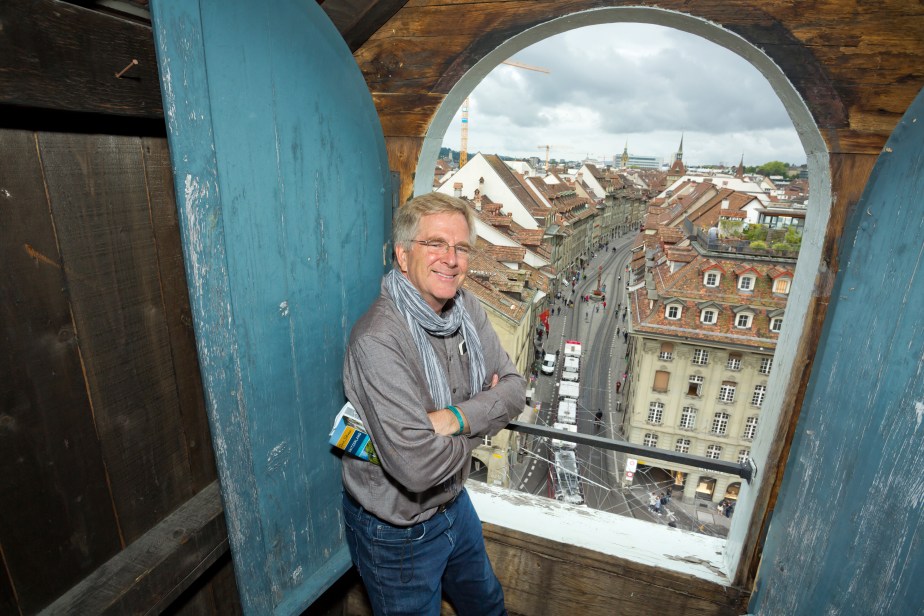
Early traveler Rick Steves. @ricksteves.com

You can watch Rick’s shows online. He also has a YouTube channel where you can catch up on his many shows. To start, click here.


About American Public Television

American Public Television (APT) is the leading syndicator of high-quality, top-rated programming to the nation’s public television stations. Founded in 1961, APT distributes 250 new program titles per year and more than one-third of the top 100 highest-rated public television titles in the U.S. APT’s diverse catalog includes prominent documentaries, performance, dramas, how-to programs, classic movies, children’s series and news and current affairs programs. Doc Martin, Midsomer Murders, America’s Test KitchenAfroPoPRick Steves’ EuropePacific Heartbeat, Christopher Kimball’s Milk Street Television, Legacy List with Matt PaxtonFront and CenterLidia’s KitchenKevin Belton’s New Orleans KitchenSimply MingThe Best of the Joy of Painting with Bob Ross, James Patterson’s Kid Stew and NHK Newsline are a sampling of APT’s programs, considered some of the most popular on public television. APT also licenses programs internationally through itsAPT Worldwide service and distributes Create®TV — featuring the best of public television’s lifestyle programming — and WORLD™, public television’s premier news, science and documentary channel. To find out more about APT’s programs and services, visit APTonline.org.

Hiking in Italy’s Cinque Terre. @ricksteves.com

About Rick Steves’

Rick Steves’ Europe (RSE) inspires, informs, and equips Americans to have European trips that are fun, affordable, and culturally broadening. Guided by the values-driven vision of Rick Steves, the company brings tens of thousands of people to Europe annually on organized tours and produces a wide range of travel content, including a best-selling guidebook series, popular public television and radio shows, a syndicated travel column, and a large library of free travel information at ricksteves.com. RSE’s mission is built around the idea of social responsibility, and it empowers several philanthropic and advocacy groups, including a portfolio of climate-smart nonprofits that it funds through a self-imposed carbon tax.

foodnetwork.com: What Is Coronation Chicken? | FN Dish – Behind-the-Scenes, Food Trends, and Best Recipes : Food Network

foodnetwork.com: What Is Coronation Chicken? | FN Dish – Behind-the-Scenes, Food Trends, and Best Recipes : Food Network.

Castillo de La Mota: In the Castle of the Queen

         Well, this doesn’t bode well I think upon seeing the entrance to Castillo de La Mota blocked by women archers dressed in long skirts under magenta jumpers each stitched with the insignia of a yellow bird with spiky feathers. But what is most daunting about the scene is that their bows are raised, arrows notched, and the strings pulled back. If they let go, we’ll be hit with a barrage of arrows.


         A man behind me grouses to his wife “another day, another castle” but then stops as he sees what is in front of us. It certainly may be another castle here in Spain but it’s not a typical day. I mean, when was the last time you were threatened by Medieval female warriors?

“Password,” shouts the tall woman who looks like she’s in charge.        

“Isabelle,” I call back without thinking.

  “Isabella,” she responds.

   Oops.

   But it’s good enough. The archers lower their bows and part, allowing us to cross the drawbridge into the fortified castle, one of many that belonged to Queen Isabella of Spain.

We are in Medina del Campo, a town known since the 15th century for its fabulous fairs and markets as well as being one of the places Queen Isabella of Spain called home.  And though it’s the 21st century, once inside the castle keep it well could be seven centuries ago.

         We are not only in Isabella’s castle, we’re also in her time. Men, women, and children are dressed in the everyday garb of 15th century Spain, soldiers wear bright red doublet cut with yellow inserts, red pantaloons that stop above the knee, white stockings and leather shoes ranging in colors like blue, red, and beige.

I don’t know much about 15th century weaponry beyond bow and arrows and swords–and even that is very limited. But here the soldiers not only carry broad swords and rapiers, but also pikes and spears. Silver helmets top their heads and somewhere metal collars, part of a suit of armor.

         La Mota isn’t a fairy tale castle, it was a large strong fortress that the townspeople as well as the King and Queen could go for refuge. She and her husband Ferdinand II lived in a royal palace in the town’s major plaza though Isabella wrote her will and took Last Rites at age 53 at La Mota. Dating back to the 11th century, it grew through the centuries becoming the largest castle in Castile.  

Called La Mota because it is on a small hill rising above the town, it has turrets (2), towers (4), thick walls and a courtyard.  Unguided tours are available as are guided tours which can be booked here    

         In her day,  Isabella, one of the few women rulers at the time, would have dined on rabbit, deer, bear, lamb, and bread. She would have enjoyed leeks but little else in the way of vegetables. Juan Alejandro Forrest de Sloper whose blog Book of Days combines his passions for world cuisine and as an anthropologist with a focus on rituals and celebrations. De Sloper was a professor of anthropology at Purchase College, S.U.N.Y for 32 years but he also spent time living throughout the world and learning to cook in all sorts of kitchens.

 In his post on Isabella he shares a dish from Libre Del Coch, a Catalan cookbook—the first written cookbook–written by Robert de Nola who went by the pseudonym Mestre Robert who was the chef to King Ferdinand I of Naples. The Catalan version was published in 1520 in Barcelona and translated to Castilian Spanish five years later. Parts of the cookbook are based on a famous medieval cookbook titled Llibre de Sent Soví.

The cookbook includes classic dishes that were popular with the wealthy (and Isabella was surely that) during the 1400s. Casola de Carn or Meat Casserole is like many recipes or receipts as they were called then, there’s no list of ingredients or amounts. It’s all a little murky for 21st century cooks, and phrases like “all the fine flavorings” are a little—no make that a lot baffling. There are also ingredients such as aggrestal (spelled in the recipe as agressta) means wild plant which can sure cover a lot of ground.

Casola de Carn

(Meat Casserole)

Cut the meat into pieces the size of a nut and fry it in pork fat. When it is well fried put in some good broth and set it to cook in a casserole. Add all the fine flavorings and saffron and a little orange juice or agresta and cook well until the meat begins to fall apart and only a small amount of broth remains. Add three or four eggs beaten with orange juice or agresta. When your master is ready at table, turn the meat four or five times to let the sauce thicken. When it is thick, take it from the fire and serve it in bowls, sprinkled with a little cinnamon on each.

There are some people who do not add eggs, or spices except cinnamon and cloves. The meat is cooked as stated above.

They add vinegar, for the flavor. It appears that many people do it in the following manner: the meat is left whole stuffed with cinnamon and cloves, and with the other spices in the broth. The meat must be turned from time to time so that it doesn’t cook more in one part than in any other. You can leave out the cloves and cinnamon if you follow the other directions correctly.

As wonderful as Isabella’s meal might have been, our luncheon at El Motero in Medina del Campo probably was equally good. Because Medina del Campo is a stop on the wonderful Rueda Wine Route, we indulged in the local wines and dined on fish, baby lamb, and a variety of whimsical dishes such as canelón de mango relleno de frutos de mar y gelatina de gazpacho (Mango cannellon stuffed with sea fruit and gazpacho jelly),  tartar de tomate, aguacate,salmón marinado ,wakame sobre pan de Cerdeña (Tomato Tartar, Avocado, Marinated Salmon, Wakame on Sardinian bread)and  Mini san Jacobo de lomo asado y salsa de piña (Mini San Jacobo roasted loin and pineapple sauce).

I did indeed dine like queen.

Romancing the Ruins: Heidelberg on the Neckar River

When Prince-Elector Friedrich V married Elizabeth Stuart, the daughter of King James I in 1613, it was–like the majority of royal marriages—based on political alliances and gains. Love had nothing to do with it.

Photo by Jane Simon Ammeson

But sometimes it worked out differently and so it was between Friedrich and Elizabeth who fell in love.  Heidelberg Castle, where they lived, was already old, dating back to 1200s and the Prince-Elector wanting Elizabeth to love her new home added an English Palace and an elaborate Baroque garden.

But theirs was to be a tragic love story. There were battles, a throne lost, regained, and then lost forever. During all that, Elizabeth bore 13 children before Fredrich died and she sought life in exile.

Heidelberger Schloss

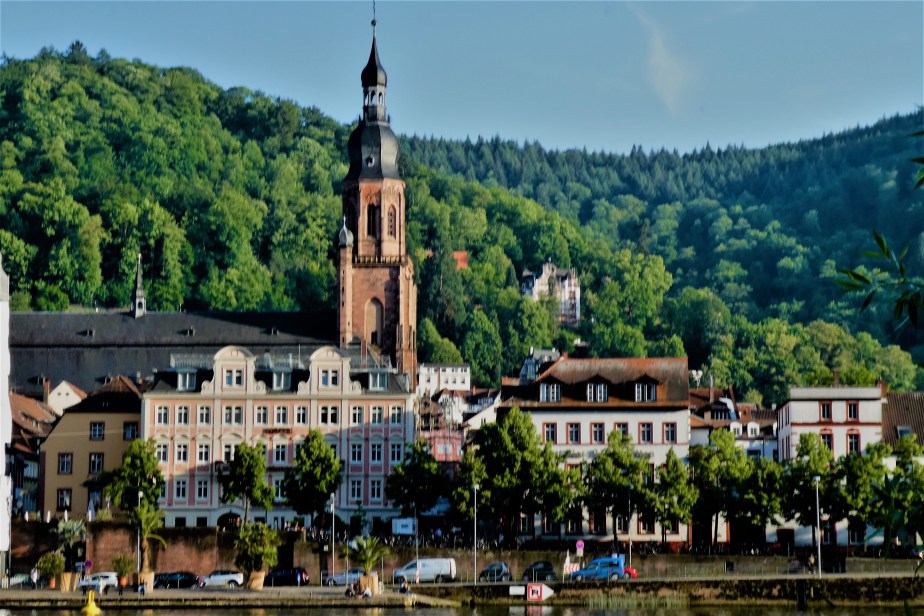
The castle, a romantic ruin of seemingly endless staircases and corridors taking you here, there, and sometimes nowhere, stands 330-feet above the Alstadt, Heidelberg’s wonderful old town. Towers and battlements protect stone facades, their decorative features still intact though the rooms behind them are gone. Views into the multitude of windows reveals not an interior but woods and the Neckar River below.

“Deserted, discrowned, beaten by the storms, but royal still, and beautiful,” is how Mark Twain described the Gothic-Renaissance castle. He was one of many poets and writers who spent time in what they considered the most romantic city in the world.

Photo Jane Simon Ammeson

The castle is also home to the Heidelberg Tun, a 58, 124 gallon wine barrel said to be the largest in the world.  It was built in 1751 on orders from Prince Elector Karl Theodor to store the wine paid in taxes by the region’s wine growers. We should all be so lucky to have too much wine.

Brews and Pork Knuckles

Taking the funicular down to the old town, I meet friends at Vetter’s Alt Heidelberger Brauhaus on Steingasse, Europe’s longest carless street. It’s one of those baronial style Germanic places with high ceilings, large wood beams, long tables and a lot of dark highly polished wood.

Famed for their Vetter’s 33, which they say is the strongest beer in the world, its alcohol content is—you guessed it—33%. But it isn’t all beer her, they’re famed for their  traditional German food and so I decide to go full German, ordering the pork knuckle, sauerkraut and dumpling with gravy. Skipping the 33, I opt for the Hubier—a mix of the lager and elderberry syrup.

History, Luxury and a Family Touch

Courtesy of Hotel Europaischer Hof Heidelberg.

My love affair with the city began several years before when I checked into the five-star Hotel Europäischer Hof Heidelberg. The hotel, one of the few five-star family run hotels in Europe, opened in 1865 and has been owned by von Kretschmann family since around the turn of the last century.

Courtesy of Hotel Europaischer Hof Heidelberg.

I’d heard that Sylvia von Kretschmann, who with her husband Ernst-Friedrich, ran the hotel for a half-century before their daughter Dr. Caroline von Kretschmann took over, regularly did the hotel’s large floral arrangements. So it was no surprise when I ran into this very elegant woman doing just that in Die Kurfürstenstube, the hotel’s opulent dining room that opened in 1866.  Such a romantic place and romantic tradition—how could I not fall in love?  

Courtesy of Hotel Europaischer Hof Heidelberg

Chocolate Kisses

My romance continued at Chocolaterie Knosel where owner Liselotte Knosel talked about studentenkussor or student kiss, a chocolate covered nougat created by her great grandfather Fridolin Knosel in 1863. His Café Knosel was frequented by male university students who admired women from a local finishing school who were, alas, chaperoned by their governesses. A gift of student kisses was a sly way to start a flirtation.

We don’t know how well it turned out for the students but these confections, still hand crafted, remain best sellers more than 150 years later. Café Knosel—the city’s oldest café—is my go to spot for coffee and a pastry at one of their outdoor tables overlooking the church on Marktplatz.

At dusk, on my last night, I boarded Patria, a 1930s ship for dining and a cruise along the Neckar River. Watching the city lights sparkle in the calm water, I knew that though my visit was ending, the romance was just beginning. I would be back.

For more information, visit www.heidelberg-marketing.de

Rick Steves Europe Awaits Explores Favorite Destinations to Visit Post-COVID

Rick’s new two-hour special premieres June 7, 2021 on public TV stations nationwide

 A new two-hour public television special features travel expert, author, and host Rick Steves as he shares his favorite European destinations to visit as soon as travel is once again possible. From offbeat and romantic to picturesque and restorative, these locations offer inspiration to travel lovers who have spent the past year dreaming of their next vacation when the global pandemic ends. Co-produced and presented by American Public Television (APT), the leading syndicator of content to public television stations nationwide, Rick Steves Europe Awaits premieres June 7, 2021 (check local listings).

Peleș Castle in the Carpathian Mountains of Romania. Photo: Rick Steves’ Europe

“When the time is right, Americans will rekindle their travel dreams, and Europe will greet us with a warm and enthusiastic welcome,” says Rick. “Europe Awaits is my dream itinerary: places away from the hubbub, places made for embracing life, and places that are good for the soul. It’s good to dream ̶ and once we emerge from this pandemic, it will be even better to travel.”

Journey (virtually that is) with Rick Steves as he recounts his recommended travel itineraries, a sure delight for both European travel aficionados and novices alike. As usual, Rick’s ability to immerse himself in fascinating destinations pays off for viewers as his presentations create a real understanding of what makes a place so fascinating including its history, culture, food, sights, and people.

In this show, Rick showcases:

– The rich history and cuisine of Sicily;
– Mykonos, the romantic Greek island in the Aegean Sea;
– Rustic and historic Porto, in Portugal’s northern region;

Porto: Portugal’s Salty ‘Second City. Photo by Rick Steves.


– Majestic English country views in the Cotswolds;
– An authentic taste of la dolce vita in Tuscany;
– and Romania, overflowing with vibrant traditional folk life.

“We are proud to be Rick Steves’ public media partner for more than three decades, presenting his insightful and enriching programs as he explores our world,” notes Cynthia Fenneman, President and CEO of APT. “Rick Steves Europe Awaits is a timely and relevant special that sparks our travel imagination from the safety and comfort of home.”

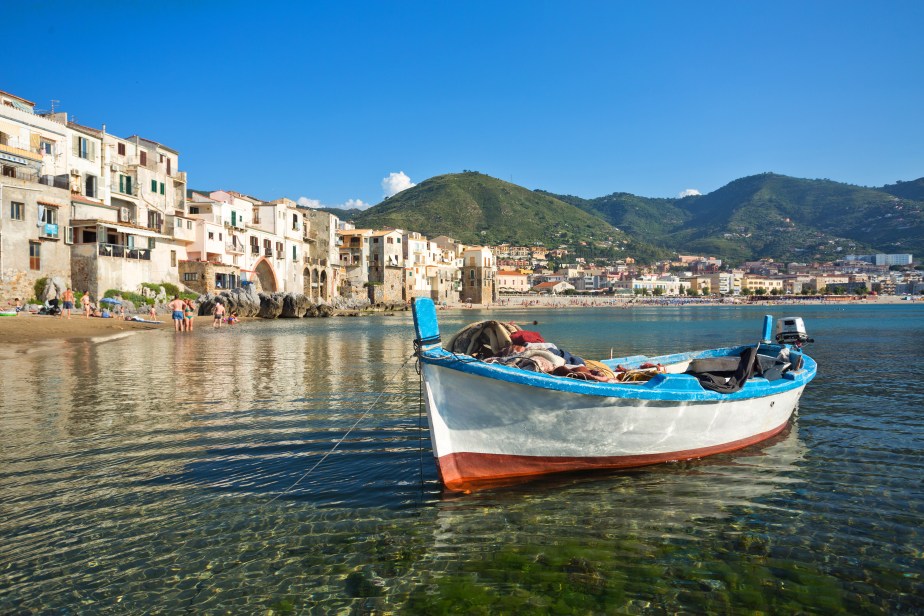
The seaside at Cefalù, on the north coast of Sicily. (Photo: Dominic Arizona Bonuccelli)


About Rick

A popular public television and radio host, a best-selling guidebook author, and an outspoken activist Rick encourages Americans to broaden their perspectives through travel. He is the founder and owner of Rick Steves’ Europe (RSE), a travel business with a tour program that brings more than 30,000 people to Europe annually.

RSE is designed to inspire, inform, and equip Americans in creating European trips that are

Rick lives and works in his hometown of Edmonds, Washington, where his office window overlooks his old junior high school.

About Rick Steves’ Europe, Inc.

TV-still-1001-rick-trinity-college.tif

Rick Steves’ Europe (RSE) inspires, informs, and equips Americans to have European trips that are fun, affordable, and culturally broadening. Guided by Rick’s value-driven vision, his company brings tens of thousands of people to Europe annually on organized tours, producing a wide range of travel content including a best-selling guidebook series, popular public television and radio shows, a syndicated travel column, and a large library of free travel information at ricksteves.com.

RSE’s mission is built around the idea of social responsibility, and it empowers several philanthropic and advocacy groups, including a portfolio of climate-smart nonprofits that it funds through a self-imposed carbon tax.

Rick Steves in his early years of exploration.


Rick Steves Europe Awaits is a production of Rick Steves’ Europe, Inc., American Public Television, and Detroit Public Television. Visit ricksteves.com for additional information.

Select pledge thank-you gifts for Rick Steves Europe Awaits include exclusive access to a live virtual event and Q&A session hosted by Rick from his home in Seattle, WA; DVDs of Rick’s speaking engagements; anthology sets of the Rick Steves’ Europe series; “For the Love of Europe,” a 400-page collection of Rick’s favorite people, places and experiences; and the “Europe’s Top 100 Masterpieces: Art for the Traveler” coffee table book.

Mykonos by Rick Steves.

About American Public Television
American Public Television (APT) is the leading syndicator of high-quality, top-rated programming to the nation’s public television stations. Founded in 1961, APT distributes 250 new program titles per year and more than one-third of the top 100 highest-rated public television titles in the U.S. APT’s diverse catalog includes prominent documentaries, performance, dramas, how-to programs, classic movies, children’s series and news and current affairs programs. Doc Martin, Midsomer Murders, America’s Test Kitchen From Cook’s IllustratedAfroPoPRick Steves’ EuropePacific Heartbeat, Christopher Kimball’s Milk Street Television, Legacy List with Matt PaxtonFront and CenterLidia’s KitchenKevin Belton’s New Orleans KitchenSimply MingThe Best of the Joy of Painting with Bob Ross, James Patterson’s Kid Stew and NHK Newsline are a sampling of APT’s programs, considered some of the most popular on public television. APT also licenses programs internationally through its APT Worldwide service and distributes Create®TV — featuring the best of public television’s lifestyle programming — and WORLD™, public television’s premier news, science and documentary channel. To find out more about APT’s programs and services, visit APTonline.org.

About Detroit Public Television
Serving Southeast Michigan, Detroit Public TV (DPTV) is Michigan’s largest and most watched television station, with the most diverse public television audience in the country. DPTV is the state’s only community-licensed station, meaning it operates independent of any educational, government or other institution. Its funding comes solely from the community. Each week, more than two million people watch DPTV’s four broadcast channels, and nearly 200,000 people listen to its radio station, WRCJ 90.9 FM for classical days and jazzy nights. In addition, DPTV is building the next generation of public media with a rapidly growing digital presence, which now reaches more than half a million unique visitors through its website, YouTube channels and social media platforms each month. Visit DPTV.org.

Where’s Rick?

Join Rick as he travels across the world and web with an exciting itinerary of virtual events.

MAY 24: Iran: Won’t You Be My Neighbor?
5:30 p.m. and 7:00 p.m. Pacific  |  Register for Free

MAY 26: Bellingham City Club: Rick Steves on the Future of Travel
12:00 p.m. Pacific  |  Register for Free

MAY 31: Monday Night Travel: Europe’s Eccentric Art
5:30 p.m. and 7:00 p.m. Pacific  |  Register for Free

JUNE 7: Monday Night Travel: Europe Awaits!
5:30 p.m. and 7:00 p.m. Pacific  |  Register for Free

JUNE 15: World Affairs Council of Tennessee: A Conversation with Rick Steves
7:00 p.m. Central  |  Buy Tickets

JUNE 17: WJCT: An Evening with Rick Steves
7:00 p.m. Eastern  |  Register for Free

Learn Bread Baking with Parisian Baker Apollonia Poilâne

Courtesy of MasterClass

The Poilâne Bakery, founded in 1932 and famed for their wonderful breads, continues to be located  at their flagship store at 8 rue du Cherche Midi in the 6th arrondissement of Paris.  But now you don’t have to travel to France (though who wouldn’t want to?) to buy a loaf or even find one of the bakeries in the U.S. that sell Poulaine breads.  Instead you can learn to make your own through MasterClass, the streaming platform where offering learning experiences from the world’s best across a wide range of subjects, is featuring Apollonia Poilâne who will be teaching a class in bread baking as well as sharing family anecdotes and expert techniques.

In staying true to its founding principles—making high quality bread for all—and in creatively joining the arts of living well and eating well, Poilâne has flourished, offering its savoir-faire across France and all over the world.

Courtesy of MasterClass

“In this flash-in-the-pan world, Apollonia represents the things that endure—a company passed down through three generations and a commitment to honoring the timeless tradition of bread baking,” said David Rogier, founder, and CEO of MasterClass. “In her MasterClass, she will intimately share her passion and help members understand how to best utilize their senses while baking.”

Courtesy of MasterClass

              In her MasterClass, Poilâne will teach an approach to bread baking that is sensory, fluid, and adaptable, sharing her passion for honoring the philosophies and techniques that her family has perfected over the last eight decades. Through rich stories of Poilâne’s personal history alongside expert tips, MasterClass members will learn her family’s method for making five kinds of bread, including brioche, rye, and her novel sourdough starter.

Courtesy of MasterClass

Incorporating her warm energy and profound determination into her lessons, Poilâne shows how a loaf of bread, and the practical ways to use it, change over time. She’ll share her rare insight on the evolution of bread, paired with a number of creative and practical recipes involving bread at all stages, which she calls breadcooking. From a true-to-form take on pesto to an innovative riff on granola, her view on using bread as an ingredient should inspire members to never leave a crumb behind. Regardless of prior baking experience, members will leave Poilâne’s class feeling inspired to try their hand at her recipes and feel a deeper appreciation for the timeless traditions of baking bread.

Photo courtesy of Amazon.

              “Baking at home, putting your hands in flour, getting a feel for the dough and seeing your bread rise is a one-of-a-kind experience, one that you must do in your lifetime,” said Poilâne, whose book Poilâne: The Secrets of the World-Famous Bread Bakery (Rux Martin/Houghton Mifflin Harcourt) was released last year. “In my MasterClass, the most important lesson I will teach you is how to attune your five senses to what it is that makes the perfect loaf.”

Courtesy of wikimedia commons.

            Beginning life cradled in a crib made from a breadbasket, Poilâne was poised to take over Poilâne, her famed family bakery in Paris, founded by her grandfather in 1932. Following the accidental death of her parents in 2002, she assumed the title of CEO at the tender age of 18 and ran the international bakery and business for four years from her Harvard University dorm room. 

Courtesy of MasterClass

Poilâne’s class is now available exclusively on MasterClass.

ABOUT MASTERCLASS:

Launched in 2015, MasterClass is the streaming platform where anyone can learn from the world’s best. With an annual membership, subscribers get unlimited access to 100+ instructors and classes across a wide range of subjects, including Arts & Entertainment, Business, Design & Style, Sports & Gaming, Writing and more. Step into Anna Wintour’s office, Ron Finley’s garden and Neil Gaiman’s writing retreat. Get inspired by RuPaul, perfect your pitch with Shonda Rhimes, and discover your inner negotiator with Chris Voss. Each class features about 20 video lessons, at an average of 10 minutes per lesson. You can learn on your own terms—in bite-size pieces or in a single binge. Cinematic visuals and close-up, hands-on demonstrations make you feel like you’re one-on-one with the instructors, while the downloadable instructor guides help reinforce your learning. Stream thousands of lessons anywhere, anytime, on mobile, tablet, desktop, Apple TV®, Android™ TV, Amazon Fire TV® and Roku® players and devices.

Follow MasterClass:

Twitter @masterclass

Instagram @masterclass

Facebook @masterclassofficial

Follow Poilâne Bakery:

Twitter Poilâne (officiel)

Instagram @poilane 

Facebook POILÂNE (page officielle)

Germany’s Oldest Palace, Original Home to Meissen, Innovates with the Histopad, an Augmented Reality Tour, in 2020

Albrechtsburg Castle above the River Elbe.


Just outside of Saxony’s cultural city of Dresden, Germany’s fourth most popular destination, the
palace of Albrechtsburg in the town of Meissen awes its visitors with its extraordinary murals and
original interiors as well as state of the art video installations about the making of porcelain, or
“white gold.” But now this famous palace has gone a step further by implementing an Augmented
Reality Tour with the Histopad that facilitates an unprecedented depth and breadth of discovery.

Already at the time when it was being built in the 15th century, the Albrechtsburg Castle that
towers over the River Elbe was considered cutting edge architecture. The sophisticated arched
curtain windows and the cellular vaulting throughout the castle as well as the large spiral
staircase were architectural novelties. Today, however, the innovation lies in technology and
beautifully crafted, highly interactive 3D videos that engage visitors on a very sophisticated and
comprehensive level that is fun at the same time as educational.

The so-called “Histopad,” the first in Germany, is an augmented reality tour created by
Schlösserland Sachsen and a French firm, Histovery. The tablet guide brings history alive in 3D,
uncovering delightful facts and tidbits about the palace’s hidden secrets, such as where the
treasure was stored; what they ate for dinner; what they would be talking about in the morning;
what they wore to work or on a weekend; what was served at their banquets; how did the
chemical laboratory for the porcelain really look? It takes history to a whole new level of detail of
day to day life that makes the characters and their palaces come alive as real people and
places. Every detail has been researched and verified by the well-respected experts at the
Stately Palaces and Gardens of Saxony.

Dresden

The late-Gothic castle complex – the Meissen Albrechtsburg Castle – was built between 1471
and 1524 on behalf of the two brothers, Ernest and Albert of Wettin, who jointly ruled Saxony in
the Middle Ages. The new residence was a representative administration center and residential
palace – the first of its kind in German architectural history. It was meant to showcase the power
of the Wettin Dynasty and how closely this was tied to the Saxon kingdom. The architect, Albert
von Westfalen, was considered a trendsetter in building design and the palace he created was
considered the best in all of Europe. Soon after the palace was built however, the Wettin
brothers split their kingdom and so the palace went unused except for an occasional ceremony.

The beautiful Saxon capital of Dresden.

It was not until a few hundred years later, in 1710, that Augustus the Strong floated 20 miles
down the Elbe to Meissen and mandated the creation of a porcelain manufactory right in the
middle of Albrechtsburg Palace. He imprisoned his top scientific minds of the day in the
fortifications of Dresden to work together to create the white porcelain and after many years,
they succeeded in 1708, and the European hard porcelain was born. All of the European
aristocracy, and Augustus the Strong in particular, were seized by the lust for porcelain, or white
gold. He called it the maladie de porcelaine or porcelain fever. Today, many of the best pieces of
Augustus the Strong’s extraordinary porcelain collection are located in the Dresden State
Art Collection’s Porcelain Collection in the Zwinger Museum. They are a testament to his
17th century pursuits and ultimate success not only in amassing an enormous collection of
porcelain from around the world but also for building and creating Europe’s finest porcelain
manufactory.

The special exhibition “Augustus the Strong – History. His Myths. His Legends.” at Moritzburg Castle (Schloss Moritzburg) deals with the glorious life of the former Elector of Saxony.

The Meissen Manufactory stayed in the Albrechtsburg Palace until 1853 when it was then
moved just a few blocks away to today’s state of the art facility where visitors can visit the
Meissen museum, shop in the showroom, dine on Meissen porcelain and watch the artists at
work and even participate in workshops. Meissen porcelain is a signature product of Saxony and
has been a mainstay of the state’s economy providing jobs, income and hard currency revenue
even during the reign of the GDR. Today it is still an important company in the state of Saxony
and Germany and it has become a cultural center hosting artists each year to participate in its
exhibitions and add to the famous Meissen designs.

Weesenstein Castle (Schloss Weesenstein)! The unique ensemble is located in the Mueglitz valley near Dresden 

In addition to the porcelain exhibition in the Albrechtsburg, the other tours include the palace
architecture, the dynasty of the Wettins and the monumental murals. Unlike other major projects
in their time, Albrechtsburg Castle did not grow over many building stages, but as a holistic
design of the master builder Arnold von Westfalen. From 1471 on, it was he who created a real
trendsetter for late-Gothic architecture. The Wettin Dynasty ruled in the heart of Europe and
were influential in spreading Luther’s ideas.

The dynasty ruled until 1918 at the heart of Europe.

At the end of the 19th century, after the porcelain manufactory had moved out, Wilhelm
Rossmann, Privy Court Councillor, developed his artistic design: “a painted picture book” which
are actually enormous murals that show visitors historical events of Saxony and have become a
central memorial site of Saxon identity that goes back to the original founding dynasty.
Today Meissen and Dresden are an extraordinary destination for people interested in history,
culture, architecture and, especially, decorative and applied arts. But this also applies to all of
Saxony where there is so much art, history, classical music and culture. Saxony is a place of
history but also of the future and technology is appreciated and used to make the arts and
culture come alive in the 21st century.

Dresden Christmas Garden

http://www.saxonytraveldreams.com is the new microsite from Saxony Germany where lovers of
history, castles, classical music, art museums and charming towns can experience Saxony at its
most beautiful. A perfect antidote to the stay at home corona virus regulations, this microsite
takes you there, to Saxony, creating an immersive visual and audio experience.

For further information, please contact Victoria Larson, USA Press Representative, State Tourist Board of Saxony at Victoria@vklarsoncommunications.com

www.https://www.sachsen-tourismus.de/en/www.saxonytraveldreams.com

http://www.facebook.com/SaxonyTourismwww.instagram.com/SaxonyTourism

All photos are courtesy of Saxony Tourism.

Buttermilchplinsen

A Taste of Saxony

Upper Lusatian Buttermilk Pancakes, in German Buttermilchplinsen, are easy to prepare and taste like heaven.

Ingredients for 6 people:
2 1/8 cups buttermilk
8.2 ounces flour
1 dash of salt
1 pinch of baking soda
2 eggs

Mix buttermilk with eggs, then add flour, baking soda and salt and mix until all ingredients are thoroughly combined.

Allow the dough to rest for ten minutes. Melt some butter in a pan, put some dough in it to and fry the pancakes from both sides until they are golden brown. Sprinkle sugar on top and serve with apple puree.

Saxony Travel Dreams: A New Microsite for Immersive Visual and Audio Experiences

Saxony Engages Travelers with Compelling Microsite
www.saxonytraveldreams.com is the new microsite from Saxony Germany where lovers of history, castles, classical music, art museums and charming towns can experience Saxony at its most beautiful. A perfect antidote to the stay at home corona virus regulations, this microsite takes you there, to Saxony, creating an immersive visual and audio experience.

” We are making sure that memories of Saxony are kept alive in the minds of our international guests,” says TMGS managing director Veronika Hiebl.Whether you love history, castles, wine, charming towns and palaces, classical music or art museums, Saxony has it all so you don’t have to choose.

The land of Luther and Bach brings its charm and talents to the fore in the new #saxonytraveldreams campaign. Stocked with beautiful videos and photographs, visitors get a taste of the beauty and creativity that is alive in Saxony today. Although you may not be able to hop on a plane and travel there, this eastern state in Germany is a bastion for the arts and music and you can get a sense of these treasurers from your own home. The videos from journalists, bloggers and influencers are outstanding and objectively showcase Saxony at its most beautiful. 

Two times per week the music city of Leipzig, broadcasts live stream performances from the world-famous Leipzig Gewandhaus Orchestra. Broadcasts start every Thursday and Friday at 12 pm (Europe time) and are then available for 24 hours. In Dresden, the landmark Frauenkirche (Church of our Lady) that rose from the GDR ashes produces a short“musical greetings”on the church’s YouTube channel or visitors can choose to go on a 360-degree tour. Jan Vogler, the director of the Dresden Music Festival has organized an online music festival to replace the recently cancelled Dresden Music Festival.

The spa town of Bad Elster, a hidden gem in southern Saxony, goes digital with its philharmonic and presents a range of live recordings every Wednesday and Saturday at 7.30 pm (Europe time) plus special music performances by individual orchestra members. But it’s not just music, there is art and incredible towns to explore. From the movie town of Görlitz, where The Grand Budapest Hotel among many other movies was filmed, to Radebeul, Leipzig and Torgau: Saxony’s enchanting towns and cities delight with unique architecture, fascinating history, interesting museums and character.  

Truly there are many undiscovered gems and places that are not crowded and worth every penny to visit. Also, many of Saxony’s castles are off the beaten track and in this site, you will visit some of them and receive two very special immersive experiences created by local students built around famous palaces and castles in Dresden. Two sites which have been awarded UNESCO World Heritage status impressively underline Saxony’s reputation as the number one cultural tourist destination in Germany: “Muskauer Park/Park Muzakowski”, a joint Polish-German site, and the “Ore Mountains/Krusnohori Mining Region” site of German/Czech cultural heritage. You can take 360 tours of these beautiful areas.

For example, known as Saxony’s “silver town”, 800-year-old Freiberg at the foot of the “Ore Mountains has beautiful patrician townhouses, reflecting the wealth derived from the once thriving mining industry, and features a fascinating cathedral – discover the town on a 360-degree tour. These are only a few of the highlights that Saxony has to offer and they will whet your appetite for when you are able to travel again. 

saxonytraveldreams.com

facebook.com/SaxonyTourism

instagram.com/SaxonyTourism

saxonytraveldreams

visitsaxony

Cooking in a different time: ‘Downton Abbey’ inspires a delicious look at Edwardian recipes

I was really sick with the flu last month and didn’t have much energy at all. When I finally could make it to the couch, I decided to finally figure out how to download Amazon Prime videos to my Kindle so I would have something to do.

It took like two seconds because all you have to do is click on the “watch” button but how was I to know it was that easy?

Anyway, I had always wanted to see the PBS series Downton Abbey because I love those Masterpiece Theatre English costume dramas. I’m still on the first season and wondering if Lady Mary is ever going to get around to saying yes to Matthew, the entitled heir to Downtown Abbey but I also love the busy kitchen and elegant dining room scenes—did you know that women were not allowed to serve food to the aristocrats, it was definitely a man’s job but we were allowed to cook it.

Now that I’m better, I’m interested in trying some of the recipes from “Edwardian Cooking: 80 Recipes Inspired by Downton Abbey’s Elegant Meals” by Larry Edwards (Arcade Publishing $19.95) with its anecdotes about the foods served at that time and recipes updated for our modern kitchens.

Those Edwardians knew how to eat and the book contains recipes for Edwardian Leg of Lamb, Lobster Pudding, Oyster Roll, Leek Pie, Downton Pheasant Casserole, Lemon Creme Soufflé, Raspberries in Sherry Sabayon Sauce, Stilton Chowder, Queen Victoria Rice Pudding and Downton Abbey Honey Cake. There was one for asparagus in a cider sauce that sounded very Southwest Michigan to me so I thought I would include it as well as another that seems so very British and of that time.

Asparagus in Cider Sauce

1 pound asparagus, trimmed if necessary

1 tablespoon butter

2 teaspoons flour

1 teaspoon salt

1/4 teaspoon ground black pepper

1/8 teaspoon ground nutmeg

1/3 cup cider vinegar

2/3 cup heavy cream

1/4 teaspoon lemon juice

In a large saute pan, bring a few inches of water to a boil. Add the asparagus and cook 10 minutes or until tender, depending on the size. Drain the asparagus and set it aside. Discard the cooking liquid.

In a small saucepan, melt the butter over medium heat. Stir in the flour, salt, black pepper and nutmeg until well combined. This is what is referred to as a seasoned roux (thickener).

Whisk the cider vinegar and whipping cream into the saucepan and whisk until the sauce begins to simmer. Reduce the heat to low and cook 5 minutes.

Stir in the lemon juice. Place the asparagus on a serving platter. Drape the sauce over the asparagus and serve.

Downton Abbey Honey Cake

2 eggs, separated

½ cup sugar

½ cup vegetable oil

½ cup honey

1-1/2 tablespoons very strong black coffee (espresso is fine)

2 cups flour

1-1/4 teaspoon baking powder

½ teaspoon baking soda

1/2 teaspoon ground cinnamon

¼ teaspoon ground cardamom

¼ teaspoon ground cloves

1 tablespoon finely grated orange zest

¼ cup raisins

¼ cup minced dried apricots

¼ cup minced walnuts

Preheat oven to 350 F. Line bottom of 9 x 5 loaf pan with parchment paper.

In a mixer with a paddle attachment, beat egg yolks and sugar until light and pale and then beat in the oil, honey and strong black coffee.

In a medium bowl, whisk together the flour, baking powder, baking soda and all spices.

With the mixer on a low speed, gradually add the dry ingredients just until a batter forms.

In a medium bowl, whisk egg whites until peaks form. Fold one third of the egg whites into the batter and then fold the remaining whites into the batter along with the orange zest, raisins, dried apricots and walnuts.

Spoon the mixture into the prepared pan and even out.

Place the cake into the oven and bake 75 minutes or until the sides break away from the pan.

Remove cake from the oven and let cool in the pan 10 minutes.

Remove the cake from the pan and cool on a rack until ready to slice and serve.

A Taste of the 11th Century: Bodega Muelas de Tordesillas

Following the Rueda Wine Trail, a historic route through the provinces of Valladolid and Ávila where the viticulture dates back to the 11th century, leads me this evening to Calle St. Maria, one of the main streets in the Medieval city of Tordesillas.

Helena Muelas Fernandez, one of two sisters who fun their 4th generation winery in Tordesillas, Spain.

My destination is Bodega Muelas de Tordesillas, housed in a tall and narrow stone building dating back centuries where the two Muelas sisters—Helena Muelas Fernandez and Reyes Muelas Fernandez– continue running the winery started by their great, great grandfather. 

“This is where we learned to make wine,” Helena tells us as she leads us down uneven steps cut out of rock to the first level of the vast cave like cellars that lie underneath the building. It is here, she tells me, where they’re aging their Alidobas Vino Blanca in casks of French Oak.

A wine barrel deep in the cellars of Bodega Muelas de Tordesillas.

“This is very cry and crisp,” she says of the wine while we take a taste. “It was a very desert year in 2017, we had no rain which is why it has such a flavor as this.”

I like the taste and allow her to fill my glass once more. There’s a delicate light green cast to its yellow color that match its slight grassy aromas. It is amazing to me that the wines of the Rueda and nearby Ribera del Duero, two grape growing regions with harsh climates, produce such wonderful harvests of grapes. But, Helena explains, the hot summers and long cold winters create perfect growing conditions for varietals of the Verdejo grape.

The wine shop.

As she talks, we navigate the stone steps further down into the cellars which ultimately some 60 feet underground. The walls are carved out of hard stone and I marvel at how difficult it must have been to hew the rock by hand which is how they did it back in the 1700s when the house was built. Each landing is stacked with barrels and wine bottles and each as a significance to Helena who talks about the vintage and the weather conditions the year they were bottled. The caves get darker, the light less bright the further down we go. On the next level, dust covers the exteriors of unlabeled bottles, vaulted tunnels disappear into darkness and iron grates protect rare vintages. We are descending into wine history and the history of a family who has dedicated themselves to making wine.

Now we’ve explored the depths of the cellars, we follow Helena through the shop and up to the second floor.  Here, sunlight streams through the lace curtained windows. We’re in the tasting room where there’s a long table, large enough to hold us all. The cabinets and furniture look original, maybe even dating back to when the house was built which only adds to the charm. Helena passes tapas, those great small plates of Spanish food—who would know I would come to love potato salad sandwiches—and samples of their wines. There’s their Velay Vermouth made from 100% tempranillo, a 2008 Grand Reserve Muedra also from tempranillo grape (that and the Verdejo used for making white wine are the predominant grapes here), a semi-sweet Alidobas and a nice dry rose.

Their vineyards include the La Josa Estate where the Verdejo varietals are planted; their tempranillo are grown at La Almendrera estate, located in La Peña.  At present their production is diversified.

“We make young white wines, white on lees and generous white; rosé wines; young and aged red,” says Helena.

The sisters are totally enthralled to be working in the old family business, in the old family home, using both their great, great grandfather’s wine recipes and developing their own. For those who want to learn some of the secrets of this venerable wine house, they offer several types of visits from tastings to an initiation into understanding the nuances of the wine.

That night, after we’ve said goodbye at the doorway and traveled back along the cobbled streets to the historic Parador Nacional de Turismo de Tordesillas, where we’re spending the night, the moon glows softly over the old stones and gardens, creating a dreamlike quality. Is it the past approaching? But then maybe it was the tempranillo.

For more information, visit rutadelvinoderueda.com