Dave McIntyre, survivalist and winner of “Alone,” Shares His Story

IMac with ax copy (1)t was day 66 in Dave McIntyre’s barebones existence on a remote beach hemmed in by cliffs at the northern tip of Vancouver Island when a boat arrived to notify him he had outlasted nine other competitors and was the winner of History Channel’s hit reality show “Alone.”

By then, McIntyre had woven a gill net to catch fish, found what he describes as the mother lode of Sitka Spruce resin which is an excellent accelerant for starting fires, made a 4×8-foot raised bed with a thick hemlock mattress and learned to fire dry Bull Kelp fronds to use for food.

“The first month was when all the hard stuff happened,” says McIntyre who realized he’d won when he saw his daughter come ashore. “I was actually gaining weight when they pulled me off the island.”

Screenshot (105) (1)
Dave when he first arrived on the island.

A little over two months earlier, McIntyre had been dropped off with a backpack filled with the essentials given to each contestant such as three pairs of wool socks, two pairs of underwear, pair of gaiters, one toothbrush, one pair of eye glasses (only if you can show you have a prescription), multi-seasonal synthetic sleeping bag rated at a minimum of -10 degrees Celsius, a fixed blade knife and a six-inch plastic-handled Ferro rod. He also was allowed to select ten items out of a list that included chocolate, hard tack, various cooking pots, toothpaste, soap and a towel. To help with hunting and protection from animals (Vancouver Island has the dubious distinction of having the highest concentration of black bears, cougars and wolves anywhere) such weaponry as a slingshot and primitive bow with six arrows made of wood were among the selections he could make. Imagine trying to use a slingshot to down an angry bear.

Screenshot (286) (1)
Dave after almost two months on the island.

McIntyre went hungry at first and after four days without food, he finally dug into the five pounds of pemmican he’d chosen as one of the food items to bring.

“I decided after that if I’d been fasting for 48 hours, I’d eat a 1/6th-portion,” he says. “When I came off the island, I had 2 and 1/6 pounds of it in reserve, enough for 13 meals, two straight weeks eating once a day or 26 days of rationing. I could have stayed there another month.”

Describing his competition as daunting, McIntyre says several had military backgrounds and had fought overseas and one was an Air Force SERE instructor. His own experiences were less formal. He’d spent his childhood hunting, fishing and trapping in the forests behind his home and starting around age 15, he and his brother spent weekends survival camping in the Appalachian Mountains. In 2000, he moved to the Central Highlands of Brazil that he founded Per Ardua Wilderness Ministry and then eight years later, started Mestre Do Mato (Bushmaster) Wilderness Survival School with a friend.

“It was really beneficial for being on the show that I’d spent time figuring out the jungle, desert and tropical alpine ecosystems,” says McIntyre.

The successful life he’d established in Brazil was upended several years ago when his wife asked for a divorce and he was forced to return to the U.S. without a job. He found work appraising homes but then the company he worked for went out of business. It was, as you can imagine, not the high point of his life.

“When I landed here in Michigan,” says McIntyre who lives in Kentwood near Grand Rapids, “I thought everything I’d ever done in my adult life was done.”

Then he was contacted by the show and was one of the ten selected for season two.

“God basically stripped me of everything and rebuilt me,” says McIntyre, the father of three and grandfather of two. “When you are in complete isolation, your mind goes into detox. All the bad things you didn’t deal with, you have to deal with all of a sudden.”

It’s hard to conceptualize what McIntyre went through without watching episodes of season two of “Alone” on the History Channel’s Website. Against a beautiful backdrop of towering pines and rocky bays and the eerie night sounds of cougars killing their prey and sightings of black bears and wolves, I watched men and women try to survive in an amazingly hostile environment. To paint an even grimmer picture, factoids posted on screen as each episode begins offers such reassurances like 70% of black bear attacks happen to people camping alone.

Though McIntyre says he wished he’d studied more about the intertidal zone before leaving home he had enough knowledge of the foreshore and seabed exposed to the air at low tide and submerged at high tide to be able to reap its edibles such as Keyhole Limpets and Kelp Crabs before the incoming high waters forced him back.

Has he been back to the island, I wondered.

“I went back,” he told me. “And when the boat dropped me off I had a Post-Traumatic Stress Disorder (PTSD) moment just like the first time. I remembered how much I’d felt totally alone and had those feelings again, even though I knew I wasn’t staying there. I was really shocked at the memories and pain I felt being back there.”

If you’re wondering about the leftover pemmican, McIntyre tells me it’s still in his freezer.

“I haven’t eaten it yet,” he says.  “The stuff keeps 50 years on a shelf easy.”

Of course, I asked him for a recipe and he gave me one he’d created on the island from ingredients he’d gathered. It’s not likely we’ll be able to make it in our own kitchens—or let’s face it, even want to–as not many of us have access to seawater, dried Bull Kelp and Northern Kelp crabs (though we could collect rainwater, another component of the meal) but I thought it’d be fun to share as it shows his creativity. But if you’re invited to his house for dinner, don’t expect any crab stew.

“I can’t bring myself to buy crabs,” McIntyre tells me.  “I almost bought a package of them the other day but they wanted $18.00.  They’re supposed to be free, you just pull them out of tide pools.”

Dave McIntyre’s Fish and Crab Stew

Add ½-inch sea water to a 2-quart pot.

Let 2 fish fillets soak in seawater while you chop sun dried Bull Kelp.

Add chopped kelp and rainwater to complete one full quart.

Set broken Northern Kelp crab (pincers, shoulders, and legs) on top. Cover. Place over cedar fire until pot reaches a rolling boil.

Let fire burn down to a simmer until crab parts are bright orange.

For best results season with at least 24 hours of total fasting.


Following the Danube to Matyas Pince

FullSizeRender (28)We followed the Danube south as it flows through the center of Budapest up to Marcius 15 – a street lined with centuries-old buildings – to Matyas Pince restaurant, which since it opened in 1904 is almost new in this city of historic culture and architecture.

It was a beautiful evening in Budapest, and we thought we’d sit outside, but the maître d’ insisted we follow him inside – through the first floor with its frescos and lead-glass windows highlighting scenes from King Matthias’ life and then downstairs to a delightful room with brick ceilings and mosaic floors.

This is where, every night, Vilmos Lakatos and his gypsy band play Hungarian songs and two young couples, wearing traditional costumes, did elaborate folk dances which called for a lot whirling and sliding along the dance floor. And for the women (in the way that Ginger Rogers had to do all the dance steps that Fred Astaire did but only backwards and in high heels). the women place flat-bottomed bottles on their heads and  including one where the young women dance with flat-bottomed bottles on their head and pirouetted at a dizzying pace.

Did I want to try, one of them asked me, offering the bottle. Of course, I said. She set it atop my head and it immediately started slipping to the floor. Another career that I’m not qualified for, I thought.

FullSizeRender (20)The menu was long and complicated, each choice promising classical Hungarian fare.  Choosing beef goulash, the first of what would turn out to be many varying iterations of the of the dish which I quickly learned can be served as a soup or stew of different meat and vegetables. My other choice was paprika chicken–chicken paprikash when my grandmother made it when I was young. But she was Romanian and perhaps that’s the difference. Both the goulash and chicken seasoned with a sweet Hungarian paprika – the kind many of us, myself included, use to sprinkle on deviled eggs.

And now we come to paprika. Both dishes were deliciously seasoned with sweet Hungarian paprika–the kind many of us, myself included, sprinkle on deviled eggs.DSC_0023

At home, in my kitchen, I have two types hot and sweet–one in a yellow can and the other in a red. Paprika imparts a deep layer of taste to food, and in Eastern and Central Europe comes in a variety of types, including half-sharp Hungarian paprika (a spicier, hotter version of Hungarian sweet paprika), Spanish smoked hot paprika (aka Pimenton de la Vera) and Spanish smoked sweet paprika (Pimenton de la Vera and Israeli Sweet–I could go on and on.


Later, when visiting a market in Vienna, I would discover bags and bags of paprika, some fullsizerender-15.jpg30 varieties or so, each individualized according to place of origin, sweetness, heat and smoke, and each prized for its specific use. I buy a couple of bags and whenever I use them in my kitchen at home, the aroma–sometimes sweet, sometime piquant, reminds me of the dancers and the markets and all that I saw. Now if only I could learn to balance that bottle on my head.

Paprika Chicken

4 chicken leg quarters, cut in half at joint (about 3 pounds total)

Coarse salt and ground pepper

2 teaspoons vegetable oil

1 large yellow onion, halved and thinly sliced lengthwise

3 garlic cloves, roughly chopped

2 tablespoons sweet paprika

3 tablespoons all-purpose flour

1 3/4 cups chicken broth

1 can (14 ounces) diced tomatoes

1/2 pound wide egg noodles or spaetzle

1/2 cup sour cream or thick plain yogurt

Season chicken with salt and pepper. In a large Dutch oven or heavy pot, heat oil over high. Cook chicken, skin side down, until golden and crisp, six minutes. Flip chicken and cook until browned, six minutes more. Transfer to a plate.

Discard all but 1 tablespoon fat from pot and reduce heat to medium. Add onion and cook, stirring frequently and scraping up any browned bits with a wooden spoon, until beginning to soften, two minutes. Add garlic and cook, stirring frequently, three minutes.

Add paprika and flour, season with salt and pepper, and stir constantly until paprika is fragrant and mixture begins to stick, one minute.

Add broth and whisk until smooth. Add tomatoes and bring to a boil over high.

Return chicken to pot in a single layer, skin side up, and reduce heat to medium. Cover and cook until chicken is cooked through, 20 minutes.

Meanwhile, in a large pot of boiling salted water, cook noodles according to package instructions. Drain noodles and divide among four bowls.

Top with chicken. Stir sour cream into sauce, then ladle over chicken and noodles.

Hungarian Goulash

1 strip bacon

2 onions, medium dice

1 tablespoon olive oil

2 1/2 pounds stewing beef, cut into 1/2-inch cubes

1 garlic clove

Pinch caraway seeds

2 tablespoons good quality sweet paprika

2 cups warm water

2 cubes beef bouillon

2 whole canned tomatoes, chopped

1 green bell pepper

4 or 5 potatoes

2 tablespoons sour cream, plus more for plating

1 pound prepared spaetzle, as an accompaniment

Cucumber salad, as an accompaniment:

Cucumber Salad:

2 cucumbers

Seasoned salt

1/2 onion

1/2 cup white vinegar

1/4 cup water

2 teaspoons sugar

1/8 teaspoon sweet paprika

Pinch dill, dried or fresh (optional)

Dollop sour cream (optional)

Cook’s Note: using good quality paprika is important. After about a year, paprika spice tends to lose its intensity. Use the best quality possible.

In a cold, heavy 6- to 8-quart stewing pot, fry bacon over low-medium heat until fat is rendered, and then discard bacon slice.

Sauté onions in the bacon fat for a few minutes, do not allow the onions to brown. If bacon does not provide enough fat, add a little olive oil to prevent the onions from sticking.

When onions become glossy, add the beef, sautéing with the onions for about 10 minutes, covered, until the meat is browned.

Meanwhile, chop and crush the garlic with the caraway seeds; add to meat and onions.

Remove pot from heat. Stir in paprika rapidly with a wooden spoon. Immediately after paprika is absorbed, add the warm water. The water should just cover the meat, leaving room for potatoes.

Add beef bouillon cubes. Cover pot and cook over low heat for about one hour.

While stew is braising, prepare the tomatoes by cutting into 1-inch pieces. Core green peppers and cut into strips.

After one hour of braising, add the tomatoes and green pepper. Add a little more water, if necessary and a little more salt. Simmer slowly for another 30 minutes.

Peel potatoes and cut into bite-sized cubes and set aside in a bowl of water. Add potatoes, and cook another 30 minutes until the potatoes are fork tender and the goulash is done.

Once goulash is finished, dissolve sour cream and a little of the goulash sauce in a cup. Add to goulash, it should give a creamy consistency. Serve goulash with spaetzle on the side, adding an extra dollop of sour cream to each plate.

Peel and slice cucumbers very thinly. The side of a metal grater with the wide slots works best here, or you can use a mandoline. Place cucumbers in a flat dish and sprinkle throughout with salt, making sure that all the slices are salted. Leave to rest for 30 minutes.

The salt will draw the moisture out of the cucumbers. Cut the onion into paper-thin slices and place in a container. Once the cucumbers have released water, use your hands to squeeze out the excess water and add to the onions. The cucumbers are supposed to be limp, but still crisp.

In a measuring cup, mix vinegar, water, sugar and paprika to create a vinaigrette. Pour over the cucumbers and onions and marinate in the refrigerator for at least 1 1/2 hours.

Cook’s secret: make the cucumbers before the goulash and it will be perfectly marinated by the time you are done making the stew.

Serve with a sprinkle of dill and a little dollop of sour cream, if desired.


2018 Brown County, Indiana Morel Foray April 25th, 2018


Kids under 10 are welcome and free! (nominal fee if you want us to pack lunches for them and to participate in the feast)

**Please Note: Each person who attends receives a free Foray Bumper Sticker, Lunch, Feast, and link to the on-line foray video. Mesh bags will be available to purchase if you need one.

What is Included
Levena prepares a special outdoor picnic lunch with sandwiches, dozens of snacks, fruit, veggies, and drinks. (if you have special dietary needs, we will try to accommodate).
Chris gives a seminar teaching you all about morels and other wild edible mushrooms and plants!Image may contain: 1 person, plant
There will be a huge Foraged Feast including numerous plant and mushroom appetizers, soup, fried morels, and the pasta entree with chicken, brats, and steak! (if you have special needs such as vegetarian, dairy, or gluten free, simply email me your request and Chris will be happy to accommodate you!)
There are Hotel Rooms available near our hunting spots, or camping is also available, (details will be emailed after you register).
Everyone who registers will receive a free foray bumper sticker!
A link will be emailed to an online video of our Mushroom Hunt, Feast and Festivities to Cherish for years to come!

The Feast cooked by Chris Matherly and Levena Holmes! A complete itinerary will be emailed after you register and will include all locations, what to bring, etc.

Image may contain: tree, plant and outdoor

Where
To be held near Nashville, IN
When
April 25th, 2018
Cost
Per Person – $75.00
Registration
Register and pay right here online or feel free to call me personally

For more information: 478-217-5200; chrismathe@aol.com

Today Show’s Natalie Morales shares family recipes

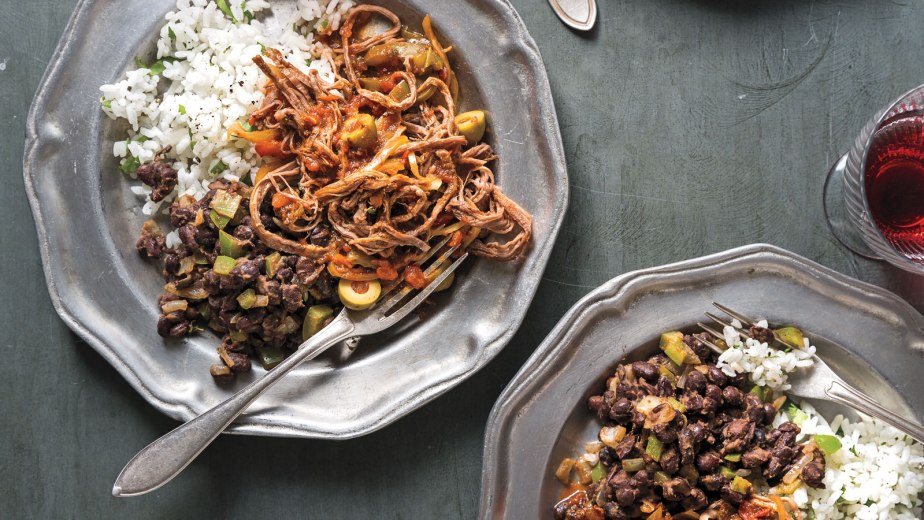
Slow Cooker Ropa Vieja with Classic Brazilian Black Beans & Rice (c) Alanna Hale

Glamorous and globetrotting, Natalie Morales, West Coast anchor for the Today show, could easily be forgiven for ordering take-out for family meals. But Morales, who with her sisters helped her mom cook almost every night when growing up, believes good food can bring a family together.

“I’m a busy mom always on the go and the way we connect is around the dinner table, where we have conversations and talk about what’s going on,” she says.

Morales also finds chopping and sautéing as therapeutic and relaxing after her busy work days which often start at 3 a.m. The meals she prepares are an amalgam of her life experiences, one that she captures in her just released cookbook, At Home with Natalie: Simple Recipes for Healthy Living from My Family’s Kitchen to Yours (Houghton Mifflin 2018; $30).

“I’m Brazilian and Puerto Rican and an Air Force brat–we lived in Central and South America and I spent ages 12 to 17 in Spain,” she says “Now, getting to try new foods is one of the great parts of my job.”

Indeed, Morales who recently was in PyeongChang covering the 2018 Winter Olympic Games, spent her spare time there sampling Korean barbecue.

“For me, food is the foundation of a culture and tradition–you get a real idea of the country when you’re eating their foods,” she says.  “I  remember going to Cypress–best night ever–I ended up dancing on the table and so did whole crew. I went to Chile to report on 33 miners trapped 2,300 feet underground for over two months and was there when they were rescued. There was all this food on the tables waiting for them and sitting and eating helped us break through the barriers.”

Morales says she was inspired to write her cookbook after watching chefs such as Giada De Laurentiis, Bobby flay and Ina Garten demonstrate how to cook on her show.

“Their recipes were easy enough for me to do and that inspired me to create a book with simple, but exciting  recipes,” says Morales. “The book is also  a way of honoring the  legacy of my own family by including dishes I ate when I was young.”Summer Berry Tarte Tatin (c) Alanna Hale

These include her  late grandmother’s recipe for ropa vieja—shredded meat, peppers and onions (she’s modernized it by using a slow cooker) and the chicken empanadas her mom makes.

“These are all part of my heritage,” she says. “I wanted to pass that on.”

Ifyougo:

Ifyougo: Natalie Morales book signing

When: Wednesday, April 18 at 8 p.m. EST

Where: Anderson’s Bookshop, 26 S. La Grange Rd. in downtown La Grange

Cost: Tickets required and can be ordered at nataliemoralesandersons.brownpapertickets.com; $34.00 ($36.18 w/service fee).

This ticket admits one and includes a copy of the new book and admission to the signing line.

FYI: (708) 582-6353; andersonsbookshop.co

Ropa Viejo

Serves 6 to 8

1½ pounds flank steak

Sazón seasoning, such as Goya Sazón (see note below)

1 medium yellow onion, thinly sliced1⁄2 cup thinly sliced red bell pepper

½ cup thinly sliced green bel

l pepper

1 (14 ounce) can crushed tomatoes

1 cup beef broth

2 tablespoons tomato paste

1 tablespoon red wine vinegar

2 garlic cloves, minced

1 tablespoon dried oregano

1 tablespoon ground cumin

½ bottle beer, such as a pale ale

Tabasco sauce (optional)

1 cup halved pimiento stuffed Manzanilla olives (optional)

Chopped fresh cilantro, for garnish

Season the flank steak with Sazón, then put the meat into a slow cooker. Layer the onion and bell peppers on top. Add the crushed tomatoes, broth, tomato paste, vinegar, garlic, oregano, and cumin, stirring to combine.

Pour in the beer and a splash of Tabasco, if desired. Spoon and stir the seasoned liquids over the beef and vegetables. Cover and cook on Low for 8 hours or High for 4 hours. Toward the last hour, add the olives (if using).

When done, shred the beef using two forks. Top with cilantro and serve.

Notes:

Sazón is a Spanish seasoning found in Latin aisle (Goya makes a popular version)or if you can’t find it, a combination of salt, pepper and garlic salt will do. If you prefer a crispier ropa vieja, you can sear the flank steak first in 2 tablespoons olive oil before placing it in the slow cooker.

Summer Berry Tarte Tatin

Serves 6 to 8

DOUGH:

5 tablespoons unsalted butter, cut into small cubes and chilled

¾ cup all-purpose flour, plus more for dusting

¼ cup whole wheat flour

1 tablespoon sugar

Pinch of salt

1 large egg yolk

2 tablespoons ice water

1 teaspoon apple cider vinegar (this makes the crust flakier)

FILLING:

¼ cup sugar

1 tablespoon fresh lemon juice

1 teaspoon pure vanilla extract

3 tablespoons unsalted butter

8 ounces fresh strawberries, halved

8 ounces fresh raspberries, half chopped and half left whole

4 ounces fresh blackberries

In a large bowl (or in a food processor, but it’s quick and I think a bit better by hand), combine the butter, flours, sugar, and salt, using your fingers, until the butter is distributed throughout, smaller than pea size. Add the egg yolk, ice water, and vinegar and stir using a spatula or wooden spoon, until the dough has just come together—do not overwork it.

Dump the dough onto a floured surface and form it into a disc; add more flour or water, if the dough seems too sticky or too dry. Wrap it in plastic wrap and refrigerate for at least 2 hours or up to 2 days.

Preheat the oven to 400°F.

Make the filling: In a small saucepan, stir together the sugar, 1 tablespoon water, the lemon juice, and vanilla over medium heat. Stir gently until the mixture simmers and cook until it is the color of a light caramel, being careful not to let the syrup get too dark, about 5 minutes. Carefully stir in the butter and continue stirring until the sauce is smooth. Pour the caramel syrup into an 8- to 10-inch oven-safe skillet, pie dish, or cake form, tilting it to coat the bottom.

Arrange the strawberries, whole raspberries, and blackberries in a concentric pattern over the bottom of the dish. Fill in the gaps with the chopped raspberries.

When the dough is sufficiently chilled, roll it out into a circle that is about 1 inch larger in diameter than the skillet or dish.

Lay the dough on top of the fruit filling, then tuck the sides inside the pan or baking dish. Using a paring knife, cut four 1-inch slits across the top to release steam as it bakes.

Bake the tarte until it is lightly browned and the berries are bubbling, 25 to 30 minutes. Remove from oven and cool for 15 to 20 minutes.

Take a large round plate and place it on top of the tarte tatin. Over the sink, hold the plate and tarte dish or pan together tightly and flip them over quickly. The idea is to keep the juices as much on the plate as possible and the berries in place. Serve with a dollop of crème fraîche, light whipped cream, or frozen yogurt.

The above recipes were excerpted from AT HOME WITH NATALIE © 2018 by Natalie Morales. Photography © 2018 by Alanna Hale.

Head North for Some Southern Cuisine: The Southerner in Saugatuck, Michigan

20180131_173701 (1)To find Matt Millar’s new restaurant The Southerner, veer off the beaten path from busy downtown Saugatuck, Michigan with its lovely 19th century buildings housing a collection of the coolest shops, restaurants, wineries and galleries. Instead follow the curving road paralleling the Kalamazoo River towards a one-story rambling building set far back from the road. Painted an almost too-bright yellow, there’s a large smoker in the side yard and window boxes brim with colorful flowers. It’s here that Millar, a two-time James Beard Award finalist recreates the Appalachian roots of the families like his who migrated north in mid-1900s to work in Michigan’s auto industry.

Millar is famous in this section of Southwest Michigan, known for The Journeyman, his first restaurant located in Fennville about 15 minutes southeast of Saugatuck where his menu was crafted around the foods from this area—whether it was organically raised pork or cheeses made from goats who feed on raspberry brambles. He then was the executive chef at Reserve, the uber trendy and vastly popular restaurant located in an old bank in downtown Grand Rapids.

The Southerner opened about two years ago and the restaurant’s buzz keeps getting stronger with write-ups in the Wall Street Journal and Bon Appetit magazine. The interior is a fun, casual place—think a friend’s summer cottage. Large windows over-look the river as it flows towards Lake Michigan. Tables and chairs don’t match, neither does the delicate china used as dinnerware. An old-fashioned phonograph is set on a table by the entrance to the bar and the kitchen is open so you can watch Matt and his crew works.

Go there in the winter and it’s easy to get a table, warm weather is different and unless you’re really early count on waiting. But that’s okay, they have a great wine, beer and cocktail list.20180131_180558 (1)

On a busy summer night, the restaurant sells hundreds of pounds of their wonderful fried chicken (Matt shared the recipe) which takes over 12 hours just to marinate. Two great appetizers to try while it’s cooking are the house-made pepper jelly with locally made goat cheese and a rather spicy pimento cheese spread both served with Saltines.

The following recipes are courtesy of Matt Millar.

Nana’s Fried Chicken

Marinate the chicken:

1 fryer chicken, about pounds, cut into 8 pieces

2 tablespoons salt

2 tablespoons fried chicken rub (recipe below)

Toss everything together in a container which will hold everything in close quarters.

Refrigerate for 12 hours.

Make the dredge:

3 cups White Lily flour (not self-rising)

3 tablespoons fried chicken rub

Stir together well. Place the rub in a large bowl. Remove the chicken from the buttermilk, shaking off excess, then coat in the dredge.

Move the pieces to a pan fitted with a cooling rack and let them rest for a half hour to give the flour a chance to adhere.

Heat about an inch of peanut oil in a cast iron skillet to 350 degrees. Add the chicken pieces and fry without fussing for about 12 to 15 minutes, until the chicken is cooked about two thirds of the way through. Flip the chicken and continue frying until it reaches 170° degrees. Remove to a pan fitted with a cooling rack and rest 10 minutes before eating.

Fried Chicken Rub:

This makes more than you will need for the recipe but keeps well in a sealed jar.

2 tablespoons Cayenne Pepper

1 tablespoon granulated onion

1 tablespoon granulated garlic

1 tablespoon black pepper

1 tablespoon mustard powder

2 teaspoons dried savory

Pepper Jelly

Makes 1 quart

3 medium bell peppers

2 red serrano peppers

4 1/2 cups white sugar

1 cup apple cider vinegar

Puree the peppers in a food processor and add them to a medium, non-reactive sauce pan.

Bring the mixture to a boil over high heat, then turn the heat down enough to avoid burning or boiling over, but enough to still maintain a gentle boil.

Cook until the mixture thickens to the consistency of a fruit jam, about 45 minutes.

You should be able to run a spoon across the bottom of the pan and leave a clear trail behind it for a moment. Strain the solids out and chill completely.

Serve with cream cheese or, use one of Matt’s favorites our favorite, chevre or fromage blanc from Evergreen Lane Creamery in Fennville, Michigan. This works great with Saltines.

The pepper jelly is perfect on laminated biscuits (that’s why I’m sharing the recipe below), the type where you can just pull apart the layers, meaning more area to spread butter and jam.

Laminated Biscuits

2½ teaspoons baking powder

2 teaspoons kosher salt

2 teaspoons sugar

¼ teaspoon baking soda

3½ cups all-purpose flour, plus more for surface

1 cup (2 sticks) chilled unsalted butter, cut into ½-inch pieces, plus more, melted, for brushing

1 cup chilled buttermilk

Preheat oven to 425°. In a food processor, pulse baking powder, salt, sugar, baking soda, and 3½ cups flour to combine. Add chilled butter and pulse until largest pieces of butter are the size of a pea. If you don’t use a food processor, use your hands to mix the flour mixture and then add the butter and mix quickly until the butter/flour mixture is the size of peas. Be careful not to handle the dough too much.

Transfer to a large bowl and gradually drizzle buttermilk over top, tossing with a fork as you go to incorporate. Knead mixture a few times in bowl until a shaggy dough forms (mixture will look a little dry), then turn out onto a clean surface and pat into a 1″-thick square.

Using a knife or bench scraper, cut dough into 4 pieces. Stack pieces on top of one another, sandwiching any loose dry bits of dough between layers, and press down to flatten. Lift up dough with bench scraper and dust surface with flour. Roll dough into a 1″-thick rectangle, trimming the border so the edges are clean. Divide into a 4×3 grid to make 12 biscuits (don’t reroll scraps). Transfer to a parchment-lined baking sheet, spacing 2″ apart; freeze for 10 minutes.

Brush the tops of biscuits with melted butter and the place in hot oven. Reduce temperature to 400° and bake biscuits until they’re deep golden brown on the bottom and golden on top about 20–25 minutes.

Note: Unbaked biscuit dough can be made one month ahead. Freeze, uncovered, on baking sheet until solid, then transfer to a resealable plastic bag. Do not thaw before baking but add a few minutes to baking time.


Choose Chicago Eat Week

Choose Chicago, in partnership with the Illinois Restaurant Association, announces the return of James Beard Eats Week, taking place April 27–May 7, 2018.

Line-Kings_1540 (1)
Kevin Boehm and Rob Katz of the Boka Restaurant Group which includes Girl and the Goat are  finalists in the Outstanding Restauranteur category. Photo courtesy of the Boka Restaurant Group.

“Chicago proudly sits at the head of the culinary table,” said David Whitaker, Choose Chicago President and CEO. “Eats Week represents both a unique opportunity for visitors and residents alike to explore and appreciate the city’s world renowned chefs and restaurants, as well as celebrate Chicago hosting the annual James Beard Awards by experiencing special dishes and menus.”

Inspired by James Beard, known as the “Dean of American Cookery,” James Beard Eats Week is an 11- day culinary celebration featuring more than 130 restaurants offering offer an inspired menu or dish in honor of the culinary legend. James Beard Eats Week precedes the 2018 James Beard Foundation Awards Gala to be held on Monday, May 7, 2018 at the Lyric Opera of Chicago.

“Eats Week has become an annual tradition in celebration of the James Beard Awards,” said Sam Toia, President & CEO of the Illinois Restaurant Association. “Not only does it allow local chefs to honor the legacy of the iconic James Beard through special dishes and menus, but it also provides food lovers with a festive opportunity to try something new at more than 130 restaurants citywide.”

Every restaurant taking part in James Beard Eats Week makes a $100 donation to the James Beard Foundation Scholarship Fund, which directly supports aspiring Chicago culinary students.

DS.cover
2018 James Beard Foundation Book Awards Finalist in the Health and Special Diet category. 

The James Beard Eats Week program raised $13,600 in 2017 through program donations. The James Beard Scholarship Fund was established in 1991 and has awarded more than $7 million in financial aid to more than 1,850 recipients nationally. Last year, the James Beard Foundation established a James Beard Foundation Greens chapter in Chicago.

JBF Greens events are for ‘foodies under 40’ —food lovers between the ages of 21 and 39. Greens get to discover the newest restaurants, chefs, and culinary trends, all while enjoying great food and drinks. Greens events include walk-around tastings, multi-course dinners, wine tastings, and hands-on cooking classes and demonstrations. The James Beard Foundation’s mission is to celebrate, nurture, and honor chefs

Featured image at the top of the post courtesy of James Beard Foundation. Copyright Kent Miller.


The Spice Diet: Use Powerhouse Flavor to Fight Cravings and Win the Weight-Loss Battle

Sharing his life story and his struggle with food was the inspiration behind Judson Todd Allen’s recently released “The Spice Diet: Use Powerhouse Flavor to Fight Cravings and Win the Weight-Loss Battle” (Grand Central Life & Style 2018; $27). Indeed, when Steve Harvey wanted to lose weight he tuJudson Allen Author Photo_credit Komifotorned to Allen, who helped him drop 30 pounds. Even more impressively, Judson himself shed more than 100 pounds and has managed to keep it off.

“Since I was little, I struggled with weight and telling people about my journey is very empowering for me,” says Allen, a finalist in Season 8 on the “Food Network Star” and executive chef of Taste 222 restaurant in Chicago’s West Loop. “It’s something that many people go through and this book allows me to help others.”

Allen graduated from the Chicago High School for Agricultural Sciences and then earned a bachelor’s in food science and nutrition at the University of Illinois at Urbana. This background gave him a unique perspective on food and later, studying at Le Cordon Bleu in Paris and then traveling throughout Europe sampling a myriad of cuisine, solidified his perspective that the use of spices can create foods so compelling and flavorful that they can overcome our need for sugar and salt.

Citrus such as lime and lemon or lemons zest produce a taste effect that’s similar to salt says Allen, the CEO and Executive Chef of Healthy Infused Cuisine, LLC., a premium cuisine company that provides customized personal, private and event chef services and catering to clients who desire healthier food choices that don’t compromise taste.

“It’s all about balancing,” he says, noting that using spices, herbs, fresh ingredients, cutting out things and using alternatives works when it comes to creating tasty food that doesn’t have unnecessary and unhealthy ingredients. “I balance vinegar’s acidity with sweetness using honey or agave. It all gives a level of flavor that keeps you from cravings for salt. One of the things about most diets is you have these cravings and we all know cravings are hard to overcome. If we want to have a healthy life-style change we need foods that we will always want to eat.”

One of the cravings Allen, who was born and raised in Chicago, remembered and wanted to re-imagine was the marvelous food his grandfather, a New Orleans native, cooked.

“One of his favorite dishes is fried fish and grits,” says Allen. “It is only fitting that I re-create the delectable taste of his favorite dish in a healthier version, because he is my inspiration for being a chef. Early on in my attempts to change my eating habits, I figured out the best way to achieve the fried fish effect without the deep-frying and calories. By incorporating healthy nuts with the perfect spice blend and other flavor enhancements, I cracked the code with this recipe.”

29063260_1619777034757758_1015048752010380453_n
Photo credit @wellnessmats

I learned so much from him writes Steve Harvey in the book’s introduction.

“Being able to make a lifetime commitment to healthy eating depended on getting to the root of my issues with food. He showed me how to ‘cheat on my favorite foods by substituting healthy ingredients and spice combinations without sacrificing any of the flavor or texture. He was a stickler for portion control,” he continues. “After a while, I didn’t notice that I was eating less, because my food was so delicious and satisfying.

“A few outstanding dishes left a lasting impression on me. His Special Fried Chicken, which was organic chicken marinated in a crazy blend of spices and crusted with pecans and fresh parsley, looked just like pieces of dark golden fried chicken, but it was baked in the oven in a healthy way. I also appreciated his creativity when he made a healthier version of cornbread, one of my favorites, by using cauliflower, jalapeño, and other ingredients for a comparable yet brand-new experience that was totally satisfying. Given my long days, I really appreciated the snacks, especially his health bars. The recipes are all in The Spice Diet.”

Judson Todd Allen will be cooking and talking about his cookbook at Read It and Eat on Thursday, April 5 from 6:30 to 8:30 CT. 2142 North Halsted Street, Chicago, IL. (773) 661-6158; readitandeatstore.com

The following recipes are courtesy of Chef Judson Todd Allen

New Orleans Pecan-Crusted Catfish

Serves: 6

Serving size: 1 fillet

Calories per serving: 292

This recipe works with just about any type of fish. If catfish is not your cup of tea, then swap it out for halibut, cod, red snapper, sword fish or salmon.

3/4 cup finely chopped pecans

1/3 cup grated Parmigiano Reggiano cheese

4 tablespoons Bayou Cajun Spice Blend, divided (recipe below; you can reduce this amount if you have sensitivity to heat)

2 tablespoons chopped fresh parsley

1 tablespoon lemon zest

1 tablespoon plus 1 teaspoon olive oil, divided

6 (5-ounce) catfish fillets or almost any other kind of fish, deboned

Lemon wedges, for garnish

Preheat the oven to 400° F. Line a baking sheet with parchment paper.

In a large bowl, combine the pecans, cheese, 3 tablespoons Bayou Cajun Spice Blend, parsley, lemon zest, and 1 tablespoon of the olive oil.

Place catfish fillets on the lined baking sheet. Brush the fillets with the remaining teaspoon of olive oil and rub in 1 tablespoon of the Bayou Cajun Spice Blend. Massage the oil and spice on both sides of the fish.

Spread the pecan crust liberally over the top of each piece of fish.

Bake for 15 minutes, or until the crust is dark golden and the fish is flaky and moist. Serve with lemon wedges.

Bayou Cajun Spice Blend

Yield: 1/4 cup

“Cajun cuisine is the food of my ancestors,” says Allen. “I love it. Let the good times roll! When I think about catfish now, I think about this blend. It works well with any white- fleshed fish, shrimp, or poultry, and brings vegetables to life.”

2 teaspoons freshly ground white pepper

2 teaspoons garlic powder

2 teaspoons onion powder

2 teaspoons cayenne pepper

2 teaspoons paprika

1 tablespoon dried thyme

2 teaspoons ground black pepper

1/2 teaspoon mustard powder

Mix together all the ingredients in an airtight container and store in a cool, dry place away from heat and light.

The Ultimate Tuna Salad

Serves 4-6

Serving Size: 1 Cup

Calories Per Serving: 257

3 (5-ounce) cans albacore tuna in water, drained

1/2 English cucumber, diced

1 teaspoon capers, drained

2 avocados, pitted, peeled, and cut into 1/2” cubes

1 small red onion, thinly sliced into half moons

2 tablespoons finely chopped fresh parsley

1/2 teaspoon finely chopped fresh dill

2 tablespoons finely chopped fresh cilantro

3/4 cup sliced cherry tomatoes

2 teaspoons Bayou Cajun Spice Blend (recipe follows)

2 tablespoons fresh lemon juice

2 tablespoons olive oil

In a large serving bowl, combine the tuna, cucumber, capers, avocado, onion, fresh herbs, tomatoes and Cajun Spice Blend. Add the lemon juice and olive oil and toss the salad.

Chef Judson’s Sweet and Sour Dill Pickle Cashews

1 tablespoon honey

1 teaspoon fresh lime juice

1 teaspoon olive oil

1 teaspoon Sour Dill Pickle Spice Blend (see recipe below)

2 cups raw unsalted cashews

Preheat the oven to 350° F. Line a rimmed baking sheet with parchment paper.

In a bowl, mix the honey, lime juice, olive oil, and Sour Dill Pickle Spice Blend together. Add the nuts and coat them fully.

Spread the nuts on the lined baking sheet and bake for 10 to 15 minutes.

Serve warm or at room temperature. Nuts can be stored in an air – tight container in the pantry for 6 to 9 months, in the refrigerator away from strong smelling food up to a year, and in the freezer for 2 years.

Sour Dill Pickle Spice Blend

Yield: about 1⁄3 cup

Dill and lemon is a familiar combination, and the garlic in this blend adds another layer of flavor. I use it on salmon and delicate fish like sole or flounder. This blend is not overpowering. It’s great in a broth – based soup. It also pairs well with shellfish.

2 tablespoons dried dill

3 tablespoons lemon pepper

1 teaspoon granulated garlic

Mix all the ingredients in an airtight container and store in a cool, dry place away from heat and light.

Recipes excerpted from “The Spice Diet” Copyright © 2018 by Judson Todd Allen. Reprinted with permission of Grand Central Life & Style. All rights reserved.

Paris in Stride: An Insider’s Walking Guide

17. Clown bar
All illustrations © Jessie Kanelos Weiner

Imagine strolling through Paris with a friend, one who knows the greatest little patisseries, cafes, outdoor markets and shops tucked along winding cobbled streets. Together the two of us try on amazingly chic designer dresses at La boutique Didier Ludot and amble through the courtyard gardens and gaze at the Swedish art work at Institut Suedois located in the Hôtel de Marle, a 16th century mansion in the heart of the central Marais district.

We order small plates of fantastic food amidst 19th century murals of clowns at the appropriately named Clown Bar, considered one of the city’s finest restaurants. After stopping to admire the Eiffel Tower, we trek even more before stopping to reward ourselves with ice cream at Berthillon Glacier. We are, definitely, Parisian insiders.            ParisInStride_p67

Wait—don’t have a friend in Paris? Don’t even have tickets or plans to go sometime soon? Well, Rick of Casablanca told Else they’d always have Paris and for the rest of us, before we get there, we’ll have the recently released Paris in Stride: An Insider’s Walking Guide (Rizzoli 2018; $27.50), co-authored by Jessie Kanelos Weiner, a Chicago gal who grew up on the Northside and Sarah Moroz both of whom have lived in Paris for the last decade. Charmingly illustrated with over 150 of Weiner’s delicate watercolors, the book curates walking itineraries the authors put together to go beyond the typical guidebooks.

ParisinStride_p134-135           “We wanted to put together walking tours of a timeless Paris, the type of Paris that will always be the same,” says Weiner. “We wanted something that wasn’t too text heavy, a book that was a jumping off point to see what you want to see, one that wasn’t prescriptive but takes you down the side streets.”

Paris is Weiner’s passion and wandering its streets is what she loves to do.

“It’s a city based on pleasure,” she says, “and one with many beguiling things along the way.”

Illustration credits ©Jessie Kanelos Weiner.
1. Beaux Arts_Saint Germain walk_Paris on Foot
.

Story, Indiana Picks New “Village Idiot”

April 1, 2018

Brad

Hoosier Craft Beer and Wine Salesman Brings it Home

Tiny Town Issues its Highest Honor to Brad Brookbank 

******************************

Story, Indiana.  Since its founding in 1851, Story has had no mayor, no board of commissioners, no town counsel, and certainly no election commission to oversee the peaceful transfer of power to such non-existent offices.  Yet, despite the dearth of government, democracy thrives in this tiny southern Indiana hamlet.

If one were compelled to identify the seat of real power in Story, it would be the Tavern located in the basement of the old General Store, where town residents and overnight guests huddle to share news, gossip, and solve the world’s problems.  And on April 1 of each year, “town elders” a/k/a tavern regulars, who by default comprise Brown County’s cognitive elite, confer to elect a “Village Idiot”.  “It’s a tribute to the fermentation process” says Rick Hofstetter, the Story Inn’s co-owner and town’s only employer.

The balloting consists of submissions to the tavern’s bartender, Ann Johnson.  “We have only one requirement for voting for, and being elected to, this esteemed position: at some point in your life, you must be a customer here” she explains.

This year’s “Idiot” accolades falls to Brad Brookbank, a salesman from 450 North Brewery/Simmons Winery in nearby Columbus. One may deduce that Brad is no stranger to his own wares.

For three consecutive years, Brad has been presenting Simmons’ wines at the Indiana Wine Fair, a large public event held at the Story Inn each spring. After loading a trailer with product, Brad hitched it to his truck, not paying attention to the fact that it had the wrong size ball hitch. Predictably, the trailer detached itself from the truck when Brad reached cruising speed on I-65, careening into a ditch. There were no injuries, but a total loss of product, and some hard questions from the Indiana State Police.  “We had several cases of our Merlot in that trailer” he says, ruefully.brad2

Brad has also been an occasional presenter at beer dinners hosted by the Story Inn. After one such gathering, Brad retired to one of the Story Inn’s cottages, where he decided to draw a hot bath. Upon discovering that the tub was not equipped with jets, he decided to improvise—by emptying a fire extinguisher into the tub. “I thought it was just air in those things” said he, upon being confronted with a prodigious mess.

The Story Inn’s cottages are all close together, linked by foot paths. While attempting to find parking near his cottage, Brad drove his car down one of those foot paths, and nearly into a creek. The next morning, he discovered the error of his ways, but could not locate his car keys. He eventually found them—under the vehicle. He was three hours late for work that day.

On another visit to Story, Brad concocted a practical joke for some friends staying in another cottage (one that was equipped with an outdoor hot tub). He hopped a privacy fence to steal the woman’s bathing suit, only to discover that the people staying there were strangers, and not a bit amused.

Brad celebrated New Year’s Eve at the Story Inn in Bacchanalian fashion, and at midnight, joined patrons in front of the Inn who were setting off conspicuously large rockets (known as “RGS Black Widow Artillery Fireworks”, and probably illegal). For reasons unknown, Brad reclined on the sidewalk, placed the stem of the rocket in his mouth, and lit it with a cigarette. The ensuing shower of sparks ignited his facial hair.

“This is the kind of stuff you see at fraternity parties” observed an incredulous Ann Johnson.

Brad’s victory, though well-deserved, was by no means assured, as competition for “Idiot” became fast and furious. Runners-up included a local resident and tavern regular (name withheld by request) who proved adept at, quite literally, recognizing a “diamond in the rough”. She received one nomination for allowing her pug dog to eat a diamond earring and, not to be “de-turd”, successfully retrieved it from her back yard. She received a second nomination for owning a pug dog in the first place.

Former Village Idiots made gallant efforts to reclaim the title. “The rules do not prevent someone from winning a second term, but that has never happened” observes co-owner Jacob Ebel. Jacob received his first nomination ever, for spending five fruitless days in a tree stand during hunting season, possibly because he refused to turn off his cell phone.

In 2010, Dani Ham was elected “Village Idiot” for igniting her own hair on fire while attempting to tame her coiffure with hair spray while smoking a cigarette and driving a car. “I multitask”, says she, by way of explanation. This year, Dani found two uncashed paychecks, dating back to her “Idiot” award, in the glove box of an old Buick.


Former Idiots Stan Smith and Lou Melillo combined forces in an apparent effort to re-make the movie “Dumb and Dumber”. The duo backed Stan’s truck to Stan’s house to move furniture, and quickly discovered that the truck had become stuck in the mud. Their efforts to extract the truck proved to be futile, but they trashed Stan’s yard in the process. Then Lou (re-named “Loo” at his 70th birthday) discovered that Stan had left the parking brake on.

Loo won “Idiot” accolades in 2012 for, among other things, dropping his wife Holly on her head while attempting to flip her over his back (the couple has remained married for 50 years—any coincidence?).

Holly Melillo’s head injury may well have done permanent damage.  She received a nomination from Loo for losing her cell phone. After fruitless minutes searching, Loo had the bright idea to call it, which he did, whereupon Holly discovered that the phone had been tucked in her bra where she always keeps it.

Ricky Sawyer (Village Idiot 1999—for flipping a truck on its inaugural drive home from the dealership) received a nomination for dropping a pair of tongs into the Story Inn’s deep fryer—and then reaching for it. (Remarkably, he suffered only minor injury.) Thomas Kennedy f/k/a Thomas Doane (Idiot, 2008—for falling asleep in the median of a public highway) received a nomination for legally taking his wife’s name (Kennedy), and then getting a divorce.

Rick Hofstetter (2006 Idiot—for selling desiccated horse turds) made an impressive run for a second term, allowing his Toyota Prius to idle in the driveway for three consecutive days without noticing, possibly because he had allowed his dog Snow to eat one of his hearing aids. By late summer, Rick’s Birkenstocks had become so befouled that bartender Ann Johnson used them to start a campfire. By one extraordinary account—impossible to independently verify—Rick found a tick attached to a most private part of his anatomy.  

Brad captured “Idiot” honors from local artist Brad Cox, who demonstrated his mechanical ineptitude when he drained both the engine oil and transmission fluid from his wife’s car, and refilled the crankcase twice, leaving the transmission bone dry. When his wife called to report problems, he dismissively accused her of driving the car into a creek. (The car sustained extensive engine and transmission damage, incidentally.)

Brad Brookbank will receive a $100 gift certificate, which he will most certainly spend in the Story Inn’s Tavern. He will hold the title of “Village Idiot” until March 31, 2019.

Memorable quote:

“Moments last a second; Story lasts a lifetime; the Story Inn’s Village Idiot lasts forever.”

—Brad Brookbank

Easter Train Rides on Vintage Trains

whitewater Valley (1)Dancing bunnies, singing rabbits, a cotton-tail waving from the engine room and a Bunny Patch with over 4000 Easter eggs—it’s going to be that kind of Easter celebration for those taking a ride on the many Easter trains near and around Northwest Indiana. So go ahead and hop aboard.

Coopersville & Marne Railway: Easter Bunny Express, Coopersville, MI; (616) 997-7000; coopersvilleandmarne.org

Saturday, March 31 at 11am and 1:30pm; Boarding 20 minutes before departure

Easter Bunny is joined by Quack the Duck, Story-Telling Princess and Bo-Bo the Lamb on a 90-minute ride aboard a vintage train decorated for the holiday. Stories are told, by the princess of course, while bunny and his friends offer each child a chance to choose a toy from their baskets.

Easter Bunny Express: French Lick Scenic Railway, French Lick, IN; (812) 936-2405; indianarailwaymuseum.org

March 25 at 4pm

Board vintage railroad cars for a trip to Easter Egg Field. Here passengers disembark to hunt for more than 4000 eggs and have their photo taken with the Easter bunny. Proceeds from the Easter Bunny Express go to benefit Goody B’s Teen Center.

Easter Train: Hoosier Valley Railroad Museum, North Judson, IN; (574) 896-3950; hoosiervalley.org

March 31 at 10am, 12:30pm, and 2:30pm

This hour-long excursion crosses the Kankakee River at English Lake and then returns to North Judson for a stop at a park to hunt eggs and meet the Easter bunny who will be handing out candy and a bag of toys to every child.  The Hoosier Valley Railroad Museum has one of the largest collections of working railroad signals so take time before or after the ride to stop by (admission is free). Visitors are invited to touch the museum’s C&O 2789 steam locomotive and take stroll through the museum’s grounds with its displays of rolling stock, engines and memorabilia of railroad history. Purchasing tickets online is recommended as trips have sold out in the past.

2004 Bunny Train 025 (1)Cotton Tail Express: The Old Road Dinner Train Experience, Blissfield, MI; 888-GO-RAIL-1 (888-467-2451); murdermysterydinnertrain.com

Saturday, March 31 at 10am & 12:30pm; boarding is 15 minutes before departure.

Visit with bunny, color pictures and enjoy doughnuts and juice on a 90-minute ride on an antique train. Reservations are required.

Easter Bunny Train: Waterman & Western Railroad, Waterman, IL: events@petestrain.com; petestrain.com

Saturday, March 31 from 12:00-5:00pm

Mr. Bunny will be on hand to say hi, pose for photos and hand out candy filled eggs on a one-mile ride through Waterman’s Lions Community park.

Whitewater Valley Railroad, Connersville, IN;  (765) 825-2054; whitewatervalleyrr.org

March 31 at 10am, 12pm, 2:30pm & 4:15pm.  

Grab your basket and board the Indiana’s longest scenic railroad, for their 18th annual Easter Bunny Express. Departing from Connersville Grand Central Station, enjoy the two-mile trip to the Easter Bunny Patch, meet the Easter bunny and search for his golden egg.  Reservations are recommended. Train operates rain or shine. The egg hunt is open to ages 8 and under.

Bunny Trolley Hop: Illinois Railway Museum, Union, IL: (815) 923-4000 or (800) BIG-RAIL; irm.org

Saturday, March 31; 10am to 5:00pm