Curated by Blue Diamond Resorts, sixteen renowned chefs, such as Aarón Sánchez and Ray “Dr. BBQ” Lampe, will lead the week-long culinary festival showcasing mouthwatering cuisine and mixology demonstrations.
All week long there will be interactive experiences and entertainment including cooking exhibitions from Chef Cesar Castañeda and Chef Jorge Valencia, a beach barbecue with Freddy Chi, a signature barbecue pairing hosted by Chefs Ted Reader and Ray Lampe, Chocolate and Mezcal pairings with Chef Benjamin Nava, the first ever Mexican Caribbean Tiki Mixology Competition, and much more.
Food + Drink Experience Schedule Highlights
Sunday, September 19
Inaugural party
First round of the Mixology Competition
Monday, September 20
Culinary Demonstration of Racado Negro with Chef Roalia
Signature Paring Dinner with Chefs Cesar Castaneda and Dean Max
Tuesday, September 21
Culinary Demonstration of Cauliflower with Chef Cesar Castaneda
Baja California Wood Fire BBQ with Chef Alfredo Romero
Foam Party
Tequila Tasting
Mixology Session with David Araya
Culinary Demonstration of duck tamales and roasted peach coulis with Chef Jorge Valencia
Signature Paring Dinner with Chefs Rick Moonen and Bernard Guillas
Wednesday, September 22
Culinary Demonstration of Octopus with Longaniza Powder with Chef Federico Lopez
Beach BBQ Taco Party with Chef Tim Grandinetti
Chocolate and Mezcal Paring with Mezcalero Benamin Nava
Mixology Session with Eliu Salazar
Culinary Demonstration of Fish Tea with Chef Dean Max
Signature Pairing Dinner with Chefs Reyna Garcia and Cindy Hutson
Thursday, September 23
Culinary Demonstration of plant-based meatballs with Chef Zaraida Fernandez
Riviera Mayan BBQ with Chef Freddy Chi
Wine tasting and seminar
Culinary Demonstration of lobster tacos with Chef Aaron Sanchez
Signature BBQ Paring Dinner with Chefs Ted Reader and Ray Lampe
Heineken and XX after party
Friday, September 24
Culinary Demonstration of Tikin Xic with Chef Reyna Garcia
Classic American BBQ with Celebrity Pit Master Dr. BBQ
Tequila tasting
Chillout Jazz Lounge
Mixology session with Federico Moreno
Culinary Demonstration of lobster gazpacho with Chef Rick Moonen
Signature pairing dinner with Chefs Federico Lopez and Tim Grandinetti
Saturday, September
South American BBQ with Chef Carlo Magno
Foam Party
Wine tasting and seminar
Mixology Session with Alejandro Perez
Culinary Demonstration with Chef Cindy Hutson
Signature paring dinner with Chefs Aaron Sanchez and Jorge Valencia
Sunday, September 26
Farewell Brunch
With Safety Always in Mind
As the second largest travel market in the Mexican Caribbean, Cancun is the most recognized Mexican tourist destination in the world and currently the most connected. Its picturesque surroundings, authentic Mexican culture, and approach to safe travel is the reason why Cancun was selected as the inaugural destination for a festival of this size. Since reopening to international guests June of 2020, proper health and safety protocols continue to be in place to ensure a safe travel experience. That includes COVID-19 and antigen testing for guests returning to North American locales, advanced procedures at the resort level, and more.
Nestled on a peninsular formed where the curve of the Galien River is intersected by a small unnamed creek, Goldberry Woods Bed & Breakfast is definitely off the beaten path even for those who know their way around the backroads of Southwest Michigan.
“Yet we’re close to Lake Michigan and Red Arrow Highway,” says Julie Haberichter who with her husband Eric own and operate the inn.
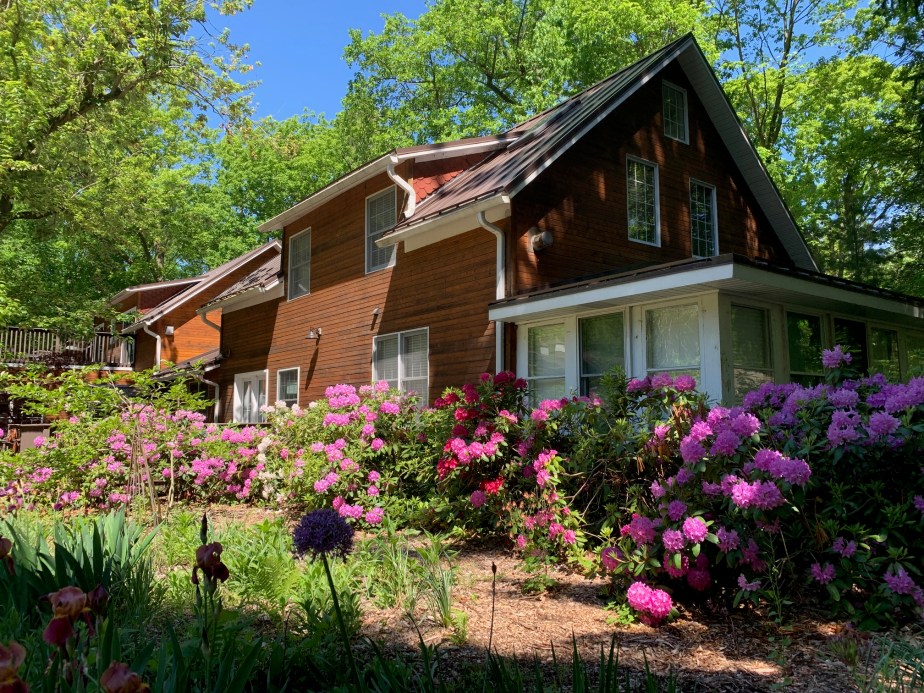
You wouldn’t guess that by looking around at the surrounding woods and lack of traffic sounds. And, of course, that’s part of the charm. Here on 30 acres of woods, old and new orchards, grapevines, and gardens, the Haberichters have re-imagined an old time resort albeit one with all the modern twists—swimming pool, farm-to-table cuisine, kayaks ready to go on the banks of the Galien, walking trails, and cottages and their Innkeeper’s Inn with suites for large groups or individual stays.
Goldberry Woods is the story of how a couple painstakingly restored a resort that had fallen into disrepair, creating a major destination for those who want to get away from it all.
But this is also a story about how two engineering majors from the Chicagoland area met in college, discovered they lived just towns apart, married, honeymooned at a B&B that was a working flower farm in Hawaii and decided that quirky inns were the type of places they wanted to stay.
That is, until, while vacationing in Harbor Country in 2011 they happened upon what had been the River’s Edge B&B in Union Pier and decided that unique places were instead where they wanted to live. By 2012, Julie and Eric had bought the property, restored it and had opened Goldberry Woods B&B.
A little more explaining is needed here. If you’re like me and are thinking goldberries are some rare, antique type fruit like say lingonberries, marionberries, or gooseberries, you’d be very wrong. It turns out that Goldberry, also known as the River Woman’s Daughter, was a minor character in Christopher Tolkien’s The Lord of the Rings, though she never made it into the movie series. An ethereal blonde with a penchant for green velvet gowns, she was from the Withywindle River in the Old Forest and certainly seems as though she’d be at home here surrounded by ripening fruit and veggies.
It’s obvious that the Haberichters are more familiar with The Lord of the Rings than I am but then Julie also knows someone who learned to speak Elvish, the language of the elves. If that sounds unique, consider this. According to some sources, there are more people now who speak Elvish as it is spoken in The Lord of the Rings movies than Irish.
Whether that’s true or not, I’m not sure but the name Goldberry does speak to the charm of this place where the Haberichters forage and grow old fashioned foods, plant organic, practice sustainability, and harvest the eggs from the heirloom chickens, ducks, and quail that at times run free range in Goldberry’s gardens.
Julie brims with excitement as she takes me on a tour, pointing out the novelty and heritage produce she grows. There are pumpkin eggplants also known as pumpkin-on-a-stick which indeed look like miniature pumpkins, ground cherries which she uses in her Jasmine and lemon tea, Malabar spinach with its rich glossy oversized leaves, and cucumelons (tiny little veggies that can be eaten straight from the vine) among many others.
Because what’s in season changes quickly as does the weather, there’s always something different or a variation of a favorite at Goldberry Woods.
“The oatmeal we serve at Goldberry Woods is constantly changing from season to season, served hot or chilled based on the outdoor weather and the availability of seasonal fruit,” says Julie, who shared the summer version of her Chilled Coconut Steel Cut Oatmeal (see below).
There’s also some serious forging going on.
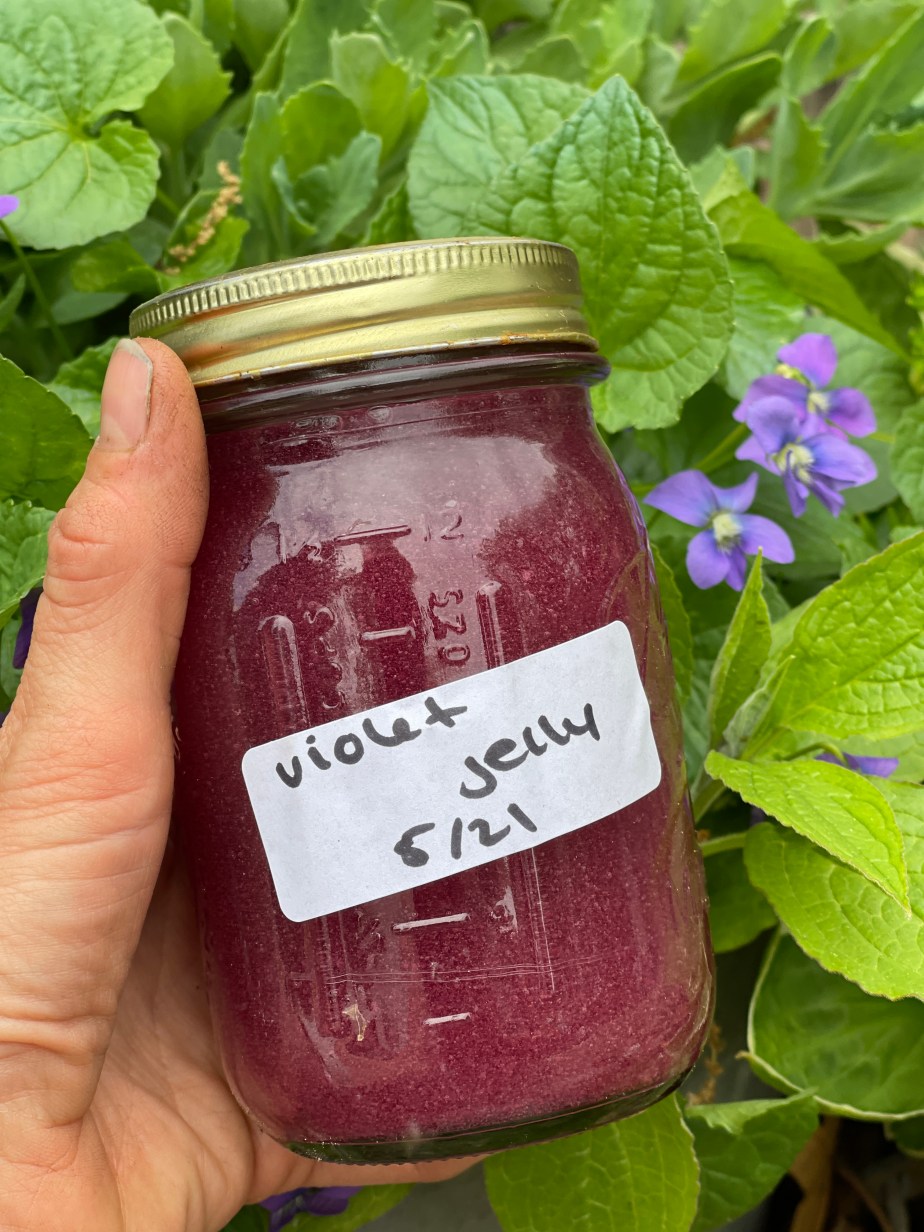
“We started looking for as many fun and unusual ways to use the wild plants growing throughout our flower beds and woods as possible,” says Julie. “ We have experimented with dandelions, violets, spruce tips, and sassafras to name a few.”
While she’s talking, Julie brings out glass jars of jam. I try the spruce tips—made from the new tips of the spruce tree at the beginning of spring. Scooping up a small teaspoon to try, I note a definite evergreen taste, refreshing and somewhat woodsy with just a touch of sweetness. It would work on buttered biscuits, toast or even as sauce for lamb and pork. The violet jam is a deep purple and there’s an assortment of pepper jams such as habanero gold pepper jelly with chopped sweet apricots. Unfortunately, Julie didn’t any have jars of the dandelion jam or the pear lime ginger jelly she makes—it goes fast. But she had a large bushel basket full of colorful peppers which would soon become a sweet and spicy jam.
August, she told me as we walked into the old growth orchard, was begging her to make a yellow floral jelly from goldenrod flowers. So that was the next chore of many on her list.
Having learned to determine the edibility of certain mushrooms she forages the safe ones from where they grow in the woods, frying up such fungi as puff balls which she describe as having a custard-like interior. In the spring, there are fiddlehead greens easily available, but Julie has to trade for ramps which though they seem to grow wild every place where there are woods, don’t appear anywhere within Goldberry’s 30 acres.
Now focused fully on running Goldberry Woods and raising their three daughters, Julie previously worked as a chemical engineer in a food processing plant that used a million gallons of corn syrup per day. Now she teaches classes in how to harvest honey–there are, naturally, bee hives on the property. If all this sounds like a real divergence from a career in corn syrup and a degree in chemical engineering, Julie started an environmental club in high school and gardened in college.
Unfortunately, you can’t eat at Goldberry Woods unless you’re an overnight guest. But you can stop and visit as the couple has set up their Goldberry Market in a 1970s trailer. It’s very cute plus they have an outdoors stand on the property. They also take their produce to the New Buffalo Farmer’s Market which is held on Thursday evenings. As for what to do with the unique produce they sell, there are recipes on their website and Julie will always take the time to give ideas. It’s her passion to share the best of what Southwest Michigan produces.
¼ cup of seeds such as quinoa, chia, flax or amaranth
¼-1/2 cup sugar
1 teaspoon cinnamon
½ teaspoon cardamom
Drizzle of honey
Fresh sliced peaches
Bring coconut milk, 2 cups of water, salt, and the steel cut oats to full boil in an 8-cup microwaveable bowl, approximately 6 minutes. Do not let the oats boil over as this makes a sticky mess.
Remove bowl to the counter and stir. Allow the concoction to cool down a bit, stirring occasionally, maybe 30 minutes (this is to keep from heating up your fridge!) Cover and refrigerate overnight.
In the morning, add the old fashioned oats, seeds, sugar and spices.
You may need to add more liquid at this time to reach your desired consistency. We find this recipe to be refreshing and like the oatmeal to be a bit thin. Adjust sweetness to your taste.
If it’s chilly out, reheat in the microwave.
Here’s the fun part. Stir in whatever looks good to your taste. Here are some ideas:
Use coconut milk and stir in vanilla, shredded coconut, bananas, honey, dried apricots, almonds….
Use apple cider and stir in applesauce, sautéed apples, raisins, nuts, maple syrup, walnuts
Goldberry Woods Egg Rollup
Makes about 8 servings
Egg Mixture
4 ounces cream cheese, softened
¾ cup milk
2 tablespoons corn starch
¼ teaspoon salt
12 eggs
Salt and pepper
Filling
12 ounces precooked meat and veggies of your choosing (Malabar Spinach, sausage, ham, bacon, asparagus, peppers, greens, mushrooms…..)
2 cups shredded cheese (we usually use a good sharp cheddar and a shredded Monterey Jack that melts well—feta is great, too)
Preheat oven to 375 degrees
Combine all the Egg Mixture Ingredients in a blender and blend until smooth.
Spread parchment over a 11×17 jelly roll, tucking into the corners. Pour the egg mixture onto the parchment paper.
Bake the eggs for 15-20 minutes. Wait until the top sets completely.
Remove the egg roll pan and spread the filling over the eggs evenly.
Use a towel and the parchment paper to tightly roll up the eggs. Leave the seam side down and cover the whole rollup with the parchment paper so that it doesn’t dry out.
Return to the oven for 10 more minutes to allow the cheese to melt and the filling to heat up.
Make a goldenrod tea. Put the flowers in a stainless steel pot and add just enough cool water to cover. Bring to a gentle simmer for 3 minutes. Turn off the heat and allow the flowers to steep for at least an hour or overnight in the refrigerator. Strain the flowers through a fine metal sieve. Gently squeeze excess liquid from the flowers. Measure 5 cups of liquid. Add water if necessary.
Place goldenrod tea back into pot and add lemon juice. Add the pectin, stir, and bring to a boil until pectin is fully dissolved.
Add sugar and bring to a full boil for one minute. Remove from heat and pour into sterile canning jars. Keep jelly in the fridge for up to one month.
What to do in Union Pier
While visiting Goldberry Woods, take time to stop at St. Julian Winery’s tasting location in Union Pier. St. Julian is the oldest winery in the state. There’s also the Round Barn Tasting Room next door.
Stop at Union Pier Market for a great selection of gourmet goods, beer, and wine. Next door, also on Townline Road, is the Black Currant Bakehouse for made from scratch pastries as well as sandwiches and such distinctive beverages as their Rose Quartz Latte, Chaga Chai, and Honey Lavender Latte. Milda’s Corner Market next to Union Pier Market features foods from over 40 countries and freshly made Lithuanian fare including “Sūreliai” Mini Cheesecake bars, Koluduna (dumplings), and Kugelis.
If you believe that every meal when you travel should be sublime then you’re in luck because BSpoke Travel has curated a marvelous list of Italian—and one Moroccan—hotels and restaurants that’s perfect for traveling gourmets.
At Borgo Santo Pietro a team of farmers, culinary gardeners, and talented chefs work together to create an ultimate Michelin-starred dining experience. Meo Modo offers a well-balanced gourmet tasting menu with a right proportion of vegetables, protein, and carbons. Borgo estate’s productions include over 300 types of vegetables, fruits, herbs, cheese, and meat.
If you are fancy for more traditional Italian food Trattoria sull’Albero offers a menu with a wide selection of pasta dishes, main courses, and antipasti made only from the fresh estate’s products or bought from local producers.
This new boutique hotel situated in the UNESCO world heritage site of Montferrat, deep in Italy’s Piedmont wine country, has two restaurants curated by a head chef and mentor Andrea Ribaldone and a resident chef Charles Pearce. Two restaurants L’Orto and The Bistrot combine the authenticity of Piedmontese cuisine with the experimental ambition of modern fine dining.
L’Orto Restaurant is a relaxed fine-dining concept. The menu is based solely on freshly caught seafood from the Ligurian coast and locally grown vegetables.
The Bistrot offers a more informal experience, focusing on Piedmontese ingredients, culture, and stories of the region. The main approach chosen by the chefs is respect for the traditions of the region while experimenting and pushing boundaries.
Run by the Wieser Family ever since its establishment in 1964, the hotel is well known for its outstanding wine cellar and food experience.
Cocun is a wine-cellar restaurant with over 1900 labels, 24,000 bottles from every corner of the world, and a voyage over 1,000 culinary latitudes by the cold cuts, the cheeses, and the 15 dishes prepared with carefully selected ingredients.
Nida is the cheese room and boasts a selection of 65 raw-milk cheeses, jams, chutneys, and jellies.
Nodla is the chocolate room, where you can dive into a world of no less than 120 different kinds of chocolate.
Other dining options include a new Sori Restaurant with the sun-kissed Infiní “Eat on Beat” Terrace and Bona Lüna Dine Bar – perfect for early-evening aperitifs or after-dinner drinks.
Capri Tiberio Palace, the iconic property located just a few steps from Piazzetta, is known also for its fizzy splendid style inspired by La Dolce Vita. At Terrazza Tiberio the Executive Chef Nello Siano offers a new menu inspired by the Mediterranean diet but with an unexpected international flavours.
Nestled in the heart of Taghazout Bay, the resort sprawls on 18 hectares of olive groves and argan gardens with the Atlantic Ocean as its backdrop, Fairmont Taghazout Bay features a wide variety of culinary experiences through different themed restaurants and bars:
• Morimoto restaurant – modern Japanese cuisine with fresh ingredients in an elegant and sophisticated atmosphere;
• Beef & Reef – Mediterranean cuisine where seafood and meat dishes are presented with unexpected pairing suggestions;
• NOLA bar – a wide selection of original and creative cocktails and a list of premium spirits to be paired with chocolate and cigars.
Vilòn Roma, located steps away from Palazzo Borghese and Via Dei Condotti, is now known for the restaurant Adelaide that just won the prize as one of the best places for all’amatriciana – a famous traditional Roman dish.
The menu changes according to the seasons and includes Roman classics with modern twists. Sunday’s lunches are dedicated to “Il Pranzo della Domenica” when, according to the local market’s offer, Executive Chef Gabriele Muro expresses his creativity at the best.
Located in the original residence of Gaetano Donizetti Maalot Roma is primarily a restaurant, and then a hotel. Designed to celebrate life and social gathering, Don Pasquale is set to be an all-day dining experience for locals and hotels guests. Named after one of the most renowned works of Gaetano Donizetti, the restaurant menu pays homage to the tradition and attention to what the new modern food lovers are looking for.
Expect Maritozzo con la Panna, Pizza with Mortadella, and a vast choice of cooked eggs reinvented with roman traditional ingredients. Lunch and dinner options include a wide range of vegetables from local producers to meet the needs of modern trends. And do stay for an aperitif – Maritozzo Salato is a must-try!
“This classic Roman pasta sauce always features Pecorino Romano, guanciale, and plenty of black pepper,” writes Katie. “But if I’m making a few dishes for a dinner party, like this Roman-style stuffed zucchini, I’ll often enrich the pasta with the insides of the zucchini that’s leftover from the recipe. After all, there’s no sense in wasting the cored inside of the zucchini, which is suited to cooking in rendered guanciale fat until creamy. Toss the zucchini and guanciale with the pasta (a large, round type of pasta called mezze maniche), plus a little bit of pasta water, and stir it vigorously until a thick sauce forms.”
PREP TIME: 10 minutes
COOK TIME: 25 minutes
SERVES: 4 to 6
1 teaspoon extra-virgin olive oil
7 ounces guanciale, cut into 1 1/2 x 1/2-inch strips
Cored insides of 6 zucchini, roughly chopped
Sea salt
1 pound rigatoni, mezze maniche, paccheri, or other tubular pasta
1 cup grated Pecorino Romano
Freshly ground black pepper
Heat the olive oil in a large skillet over low heat. When the oil begins to shimmer, add the guanciale and cook, stirring, until golden brown, about 8 minutes. Add the zucchini, season with salt, and cook until the zucchini is softened and cooked through, about 10 minutes.
Meanwhile, bring a large pot of water to a rolling boil over high heat. Salt the water. When the salt has dissolved, add the pasta and cook until al dente.
Add a ladle of the pasta cooking water to the skillet with the zucchini and bring to a simmer. When the pasta is very al dente, drain, reserving the cooking water. Add the pasta and another ladle of its cooking water to the pan. Cook over medium-high heat, stirring vigorously, until a thick sauce forms, adding more water if necessary to achieve the desired consistency.
Remove the skillet from the heat and, add 3/4 cup of the Pecorino Romano, and mix thoroughly. Season to taste.
Plate and sprinkle each portion with some of the remaining Pecorino Romano and pepper to taste. Serve immediately.
Still cursing at yourself for the extra helping of potato salad and sweet tea not to mention the second piece of blueberry pie at the family picnic last week? Well, imagine how you’d feel after attending this 1450 banquet, held in England for the enthronement of an archbishop where guests munched on 104 oxen, six ‘wylde bulles,’ 1,000 sheep, 400 swans and such game birds such as bustards (larger than a turkey), cranes, bitterns, curlews and herons.
“Our ancestors had gastronomic guts,” Anne Willan tells me as we chat on the phone, she in Santa Monica, California where there’s sunshine and me in the cold Great Lakes region. I find it fascinating to read old menus and descriptions of banquets and feasts and for that Willan, founder of famed French cooking school École de Cuisine la Varenne, recipient of the IACP Lifetime Achievement Award and author of more than 30 cookbooks, is the go to person.
“Seals were eaten on fast days along with whale, dolphin, porpoise and thousands of other fish,” says Willan. Hmmm…that’s different than the macaroni and cheese and fish sticks I used to eat at the homes of my Catholic friends on Fridays.
Here we peruse four centuries of gastronomy including the heavily spiced sauces of medieval times (sometimes employed because of the rankness of the meat), the massive roasts and ragoûts of Sun King Louis XIV’s court and the elegant eighteenth-century chilled desserts. One for the interesting detail, Willan also tells the story of cookbook writing and composition from the 1500s to the early 19th century. She highlights how each of the cookbooks reflects its time, ingredients and place, the recipes adapted among the cuisines of Germany, England, France, Italy and Spain as well as tracing the history of the recipe.
Historic cookbooks can be so much different than ours, ingredients unfamiliar and instructions rather vague. For example, Willan points out the phrase “cook until” was used due to the difficulty of judging the level of heat when cooking a dish over the burning embers in an open hearth. It wasn’t until the cast-iron closed stoves of the 19th century that recipes writers begin were finally able to give firm estimates for timing.
For food historians and even those just appreciative of a good meal, the book is fascinating. For me as a food writer, I wonder about covering a dinner where birds flew out of towering pastries, seals were served and eels baked into pies and it was often wise to have a taster nearby in case someone was trying to poison you.
Duxelles is a classic French preparation of butter-cooked chopped mushrooms flavored with shallots. It is said to have been created by François Pierre de la Varenne. La Varenne’s book, Le Cuisinier Francois (The French cook, 1651), was one of two books Willan says strongly influenced the evolution of French classical cuisine. You can use the duxelles to make mushroom tarts, as a stuffing for fish and even put it in spaghetti sauce.
1⁄2 pound mushrooms, rinsed, patted dry
11⁄2 teaspoon butter or vegetable oil
1 small shallot, minced salt and freshly ground pepper
Chop mushrooms in food processor with pulsing motion so they are chopped in fine pieces but are not pureed. In a medium-size skillet heat butter over low heat. Add shallot and sauté about 1⁄2 minute until soft but not brown. Add mushrooms and sprinkle with salt and pepper. Cook over high heat, stirring, for 3 to 5 minutes or until mixture is dry. Serve hot.
Rich Seed Cake with Caraway And Cinnamon
This recipe is based on a cake in The Compleat Housewife by Eliza Smith, published in London in the 1700s. Willan, ever the purist, suggests mixing the batter by hand as it was done 300 plus year ago.
“The direct contact with the batter as it develops from a soft cream to a smooth, fluffy batter is an experience not to be missed,” she says. “If you use an electric mixer, the batter is fluffier but the cake emerges from the oven less moist and with a darker crust.”
At times, Willan needs to substitute ingredients. The original recipe listed ambergris as an option for flavoring the cake. “Ambergris,” writes Willan, “a waxy secretion from a sperm whale, was once used to perfume foods. As it is now a rare ingredient, I’ve opted for Mrs. Smith’s second suggestion, of cinnamon, which marries unexpectedly well with caraway.”
1 pound or 3 1⁄2 cups) flour
1 2⁄3 cups sugar
6 tablespoons caraway seeds
5 eggs
4 egg yolks
1 pound or 2 cups butter, more for the pan
11⁄2 tablespoon rose water or orange-flower water
2 teaspoon ground cinnamon
Heat the oven to 325ºF. Butter a 9-inch springform pan. Sift together the flour and sugar into a medium bowl, and stir in the caraway seeds. Separate the whole eggs, putting all the yolks together and straining the whites into a small bowl to remove the threads.
Cream the butter either by hand or with an electric mixer fitted with the paddle attachment. Add the yolks two at a time, beating well after each addition. Beat in the rose water. Whisk the egg whites just until frothy, then beat them, a little at a time, into the egg yolk mixture. Beat in the cinnamon. Finally, beat in the flour mixture, sprinkling it a little at a time over the batter. This should take at least 15 minutes by hand, 5 minutes with a mixer. The batter will lighten and become fluffier. Transfer the batter to the prepared pan.
Bake until the cake starts to shrink from the sides of the pan and a skewer inserted in the center comes out clean when withdrawn, 1 1⁄4 to 1 1⁄2 hours. Let the cake cool in the pan on a rack until tepid, then unmold it and leave it to cool completely on the rack. When carefully wrapped, it keeps well at room temperature for several days and the flavor will mellow.
One Small Garden: Over 300 Delicious, Nutritious Recipes by Lillian and Dave Brummet is a timely collection of recipes now as more and more fresh produce is coming on to the market. Described as the ultimate guide to using fresh fruit and vegetables from backyard gardens to farmer’s markets, the book is guide to using what’s in season to create wholesome meals, the recipes here use the freshest and purest sources of food available.
“I hope to inspire others to buy fresh local food and to cook it in ways that are even better than going out to a restaurant,” says Dave Brummet of Brummet Media who with his wife has also authored the Trash Talk series about green living and saving money and time through better waste and resource management. “We want to inspire people to spend more time feeding themselves quality, nutritious food instead of the lure of expensive over-packaged convenience foods. In your car, which can be rebuilt with numerous replaceable parts, would you try to run it with dirty kerosene? No, so why do we put junk in our system when we have no hope of replacing those parts we might ruin by doing so. How we eat has an impact on our world – it affects equality, poverty, farming practices, the health of the soil, the purity of the water and air – and of course your own personal well-being.”
The book, loaded with lots of interesting tidbits of historical and nutritional information, is more than just a collection of recipes, it’s also a way of learning how to treat yourself to the healthy, delicious rewards of one small garden.
“The most important thing for me is to have a general feeling that I used the time I was given to create a positive legacy–be it through writing, supporting others, donating, sharing garden harvests, greening our property and making a more eco-friendly home, or daily actions such as dedicated recycling and so on,” says Lillian. “Part of being conscious includes self-sufficiency – not being reliant on aid programs, or living in heavy debt to others, looking after one’s health the best one can, etc. So I try to live proactively in my home life, but also in business – with the idea that what I choose to do now will have a ripple effect on the direction our world takes tomorrow. What I choose to buy now, whether I grow organically, what I choose to write about and blog about all has an impact on tomorrow.”
STRAWBERRY WHEAT GERM MUFFINs
Authors’ note: “Perfect strawberries when in season, frozen strawberries can also be used– just chop, thaw and drain before using. This will yield between 18-22 muffins depending on how large your muffin tins are. I prefer to use muffin cup liners that are compostable, which will help reduce the amount of waste heading to the landfill. Feel free to experiment, I have used reconstituted powder milk, rice milk and almond milk for this recipe with great results. White chocolate chips work well with this combination, however I personally prefer dark, flavonoid-rich chocolate.”
3 eggs
1 cup brown sugar
2 cups milk
1 tablespoon apple cider vinegar
1/2 cup oil
1 teaspoon pure vanilla
1 cup bran
1 cup wheat germ
2 teaspoon baking powder
1 teaspoon baking soda
1/4 teaspoon salt
2 cup white flour
1 1/2 cups chopped strawberries
1 cup chocolate chips (optional)
Beat eggs briefly then add sugar and beat for 3 minutes. Add remaining liquid ingredients and then use a wooden spoon to stir in the germ and bran. Allow to rest for 10 minutes while you tidy the kitchen and prep the next step. In a separate bowl, combine all the dry ingredients together, and when the timer goes off – combine all the ingredients together, including the strawberries and chips.
Preheat oven to 400˚.
Place 22 paper liners in 2 muffin tins and spoon out the batter evenly. Bake for 20-25 minutes or until an inserted knife comes out clean, and the top has a light golden color. Cool completely before serving.
If you’ve always dreamed of taking a big, cross-country bike trip, possibly with some camping along the way, then now is the time to start planning and training for that trip right now with this advice from guest blogger Lisa Walker.
You can see the world from a bicycle, and enjoy the scenery along that way. You can plan to ride all day and cover lots of miles, or take short travel stints and spend more time at each stop. The itinerary is up to you. There are so many options for bicycle travel that the opportunities are literally endless. Cycle along a coastline and stop to visit boardwalks in beach towns. Travel from hamlet to ski town through the Alps. Cross the steppes of Mongolia if you want to. Start imagining; then start planning.
First, decide where you’re going and what kind of mileage you plan to put on your bike. Figure out the terrain and what kind of equipment you need. Visit your favorite bike shop and ask a lot of questions. Chances are, the people on staff have all been on similar trips, so they will know what you need or who to ask. Ask if your bike is the right type for the terrain and mileage. If not, look into purchasing a better one or modifying the one you have. If you buy a bike, get the highest quality bike you can afford. It will pay off on the road.
Look into the type of camping equipment you’ll need. Lower elevations will require different weather gear than the mountains. You should be aware of the climate where you’re going and prepare for it. Even if you’re not camping, you will likely be carrying your stuff on your bike, so be mindful of weight. Don’t forget a hydration system and sunscreen. Even in colder climates, you need water and sun protection.
Next you need to start training. If you haven’t been going long distances on your bike, you should start venturing out on longer rides. Work during the week on shorter distances with higher intensity and building up muscles by cross-training. On the weekends, spend your time gaining higher mileage. Add some more distance with each long ride, eventually building up to the distance you need for your trip. Make sure to train in similar conditions to your trip. If you’re climbing mountains, you should definitely try to mimic those hills at home.
When you’ve trained and you’re ready to head out on your trip, tidy up loose ends at work so you won’t have any lingering work-related worries distracting you. If you run a business, simple actions like designating a registered agent can make things run smoothly while you’re gone. When you establish a registered agent in Michigan, you designate a person to receive important legal notifications and other information about your business. This way you’re covered if anything serious pops up, like a lawsuit or tax notification, while you’re gone. If you’re an employee, work with your boss or manager to make sure your key tasks will be covered while you’re gone and set an away email message indicating who folks should contact while you’re out.
Leaving your home for an extended period of time can cause some anxiety. Will your belongings be safe? What if there’s a fire or break-in and you don’t know about it? Ensuring home security before you leave will help. A good home security system with electronic home monitoring will give you peace of mind while on your amazing adventure. Set your lights on timers and stop your mail and newspapers. Let your trusted neighbors know you’ll be gone so they can keep an eye on your home for you.
To ensure safety on your trip, make sure your bike is tuned up well in advance of your trip. Just before you go, you can stop in for a quick safety check, making sure everything works as it should. Spend a lot of time on the bike you plan to take with you. You don’t want to use a brand new bike without getting to know it a bit before you go.
Once you’re all ready, just get going! Enjoy the outdoors with friends or alone. You’ll see the world while your body reaps the benefits.
Follow the Cajun Bayou Food Trail: A REAL Taste of Louisiana Cajun Country
Just 45 minutes from New Orleans, the Cajun Bayou Food Trail is a journey through the heart of Lafourche Parish and the ultimate road trip for those wanting to explore Louisiana’s food scene. Known as the Louisiana’s Cajun Bayou, this region of the state takes its culinary delights so seriously that the name Lafourche is French for the fork. While some will explain, patiently, the term is a geographical reference to a split in the Mississippi River, we’re thinking that any place with a name synonymous with an eating utensil surely knows its way around a menu.
So grab your car keys and your sunglasses—but you won’t need to bring your own Lafourche as any place on the parish’s Cajun Bayou Food Trail have their own—and hit the road. There are currently 18 restaurants on the trail including the recently added Cinclare Southern Bistro.
“We’re thrilled to be included on the Louisiana Cajun Bayou Food Trail,” says Michael Dalmau, the owner of Cinclare Southern Bistro. “The restaurants that span this historic waterway might be different in what they do and how they do it but know this …. they all do it well. In South Louisiana – and especially up and down the Bayou – feeding and serving friends and family is not only what we do to pass a good time, but it’s how we show our love and support. It’s part of our DNA and that’s why we’re so good at it.”
All the stops on the trail feature authentic food accompanied by the unparalleled Southern hospitality.
According to my friend Mindy Bianca, chefs down this way tell how their favorite recipes feature the finest local ingredients along with a true love of their surroundings and heritage. The latter means treating guests the same as family–well, almost, you don’t have to clean up after dinner like you would at your mom’s. All this makes navigating the Cajun Bayou Food Trail an unparalleled culinary and travel experience.
The lives of the people of Lafourche Parish are fully intertwined with the bodies of water that are accessible throughout the region, most notably Bayou Lafourche, a 100-mile waterway that bisects the parish, and the Gulf of Mexico. Residents of the area view the Bayou and Gulf as their personal pantries, finding seafood and other delicacies within and along their waters. If you live here, you’re most likely not going to get kicked you out of the parish for not knowing how to whip up a tasty gumbo (though we can’t promise that’s true) but fortunately most if not all figure it out from an early age using recipes passed down through the generations. That’s why those following the trail get to taste dishes authentic traditional foods that are part of the Parish’s gastronomic heritage–prepared and served as they have been for as long as some can remember. But that doesn’t mean some chefs don’t do their own riff with added ingredients or other ways to make them uniquely their own.
Celebrating not only the restaurants and local food purveyors that honor the culinary customs of the region, the parish also hosts six festivals and events dedicated to honoring and preserving its distinctive traditions. Think La Fete Des Vieux Temps in Raceland, Louisiana
Calling it a cultural gumbo, Mindy says that “restaurants lean toward plenty of fresh seafood and run the gamut from mom-and-pop operations to sophisticated dining rooms.
“The unifying element is that whether it’s fried shrimp at Spahr’s, a restaurant that now has three locations and that has been a staple here for more than 50 years, or an elegant and savory alligator-and-andouille sausage cheesecake appetizer at Kincare, which offers craft beverages and a more upscale dining experience in the heart of downtown Thibodaux, your meal is going to be both delicious and memorable.”
Visitors and locals alike are encouraged to pick up a Food Trail passport and map from any of the participating restaurants or download it from this website, then eat their way through the parish. Collect enough passport stamps and you’ll earn your way into a comfy Food Trail T-shirt. Trust us and order one size larger before hitting the trail. In these ever-changing and unpredictable times, requirements for completing a passport have been modified and the Food Trail can now be experienced more “virtually,” meaning that participating Trail restaurants offer curbside service.
For more information about the dining scene in Louisiana’s Cajun Bayou, to download your passport and map, or to check out some pictures and start dreaming of crawfish and crabs, gumbo and gator, please visit http://www.lacajunbayou.com. The local businesses up and down the Bayou are ready to fill up your plate and offer you a lafourche to use.
You can’t eat all the time, right? In between meals check out some or all of the following stops:
Swamp Tours
Described as an otherworldly experience, like time travel into the state’s prehistoric past by touring Lafourche Parish’s swamplands. Tour options includes the 2 Da Swamp Bayou Tours & Museum trips to Bayou Des Allemands with traditional Cajun music, and museum displays of artifacts Des Allemands’ early years. Airboat Tours by Arthur Matherne, open seasonally, is a high-octane thrill rides on its fleet of airboats. Torres Cajun Swamp Tours’ guides takes visitor the history and ecology of wetlands’ Bayou Boeuf.
The White family was once among the Louisiana’s political elite. Patriarch Edward Douglas White was the state’s governor in the 1830s; his son and namesake became a U.S. Supreme Court Justice in the 1890s. The elder White’s home is now a Louisiana State Museum site and is a step back into the past showcasing the state’s history. Built from cypress in the Creole Plantation style in 1825, White purchased the home, re-imaging it as a Greek Revival mansion. Learn about the White family, the history of both the home’s history along with that of Chitimacha Indians and Cajun settlers, sugar plantation owners and the slaves that worked the fields in service of them by taking a tour of the E.D. White Historic Site in Thibodaux.
Restaurants in Thibodaux
Thibodaux’s restaurants and fresh markets reflect the local culture and cuisine. Top-rated restaurant spots include Fremin’s Restaurant, where you can take in the architecture of Thibodaux’s downtown area. The food is prepared with a view into the kitchen and the duck-and-andouille gumbo is like heaven in a bowl. Head to Off the Hook, a down-home spot with awesome po-boys, fried seafood and more gumbo! And try something different at the Cajun Potato Kitchen, a quirky and casual restaurant serving huge baked potatoes loaded with Cajun toppings. It’s fun and different and popular with the university crowd. Get a full list of locals’ favorite restaurants.
You’d be hard pressed to find another museum in the U.S.—or really anywhere—that’s a Cajun-themed children’s museum. At Bayou Country Children’s Museum in Thibodaux brings together Cajun history, education and fun, making it a great stop for family fun. Here children can play on a full-size sugar harvester, toss beads from a Mardi Gras float, climb aboard a shrimp boat and more.
The wetlands flowing through Southern Louisianna are a distinct part of Lafourche Parish where more than 100 miles of bayou meander throughout the parish. The Center for Traditional Louisiana Boat Building, located in Lockport is the place to learn how traditional Cajun boats were constructed, including their iconic pirogue boats and flat-bottomed vessels known locally as putt-putts that once common in the region’s bayous.
Part of Jean Lafitte National Historical Park & Preserve in Thibodaux, the center’s mission is to preserve Cajun tradition and offers such programs as their free Cajun music jam sessions every Monday afternoon, a Cajun-French meetup on Tuesdays, historical Thibodaux walking tours and boat tours of Bayou Lafourche. While there, stop at the Center’s museum store, which has Cajun music recordings, crafts and books for sale.
The trail, made up of 22 parishes includes Lafourche which is part of the Grand Isle Loop. The loop includes sections of Louisiana’s best-known barrier island as well as inland birding destinations teeming with shorebirds and seabirds. Download more information about the Grand Isle Loop on the Wetland Birding Trail.
They really know how to celebrate the two weeks leading up to Mardi Gras Day or as it is also known—Fat Tuesday. Typically there are more than a dozen parades roll through the towns of Golden Meadow, Galliano, Larose, as well as the parish seat of Thibodaux. Learn more about the parade schedules.
Shrimp and Tasso Pasta
Recipe courtesy of Bourgeois Meat Market, a stop on the Cajun Bayou Culinary Trail
1 lb. Bourgeois Tasso
2 lb. shrimp
1 large onion
1 large bell pepper
1 talk of celery
1 can Rotel
1 qt. heavy whipping cream
1 cup grated Monterey Jack cheese
1 bag bow tie pasta
Boil Bourgeois Tasso in a pot with just a little water until tender.
Add onion, celery, bell pepper, Rotel, and shrimp and smother down.
Add heavy whipping cream and let mixture come to a rolling boil.
In 1924, Peter Levant’s opened what was one of Whiting’s famous “perch palaces,” a place that served freshly caught perch right from Lake Michigan. They also advertised such menu items as steak, chicken, and, of course, this being The Region, frog legs—mostly likely from nearby Lake George.
Indeed, frog legs were so in demand that Vogel’s—which was just down the street and totally classy—raised their own frogs for legs in the lake. But that’s a different story.
Located at 1247 Calumet Avenue, Levent’s became the home of Juster’s Charcoal Broiled Steaks and then later George Diamond’s. Though my mom liked to cook, my parents were totally into eating out as well and though its been years and years, I remember going with them to George Diamond’s. It was the kind of place where everything was overlarge—the steaks, the salads, the charcoal flames, and even the menus.
That Diamond (yes, there was a George Diamond) even opened a place in Whiting shows the town’s status as a food destination. Indeed, around that time, there were a lot of great restaurants–and I’m sure I’m leaving a lot of places out–Vogel’s, Phil Smidt’s, Margaret’s Geneva House, Al Knapp’s Restaurant and Lounge, and the Roby Café. But Diamond was international. Besides his flagship restaurant at 630 S. Wabash Avenue in Chicago that was said to have cost over $1 million to renovate in a style I call 1950s swank, all red velvet and red upholstery, he had places in Las Vegas, Palm Springs, Antioch, Illinois on a golf course, and Acapulco, Mexico.
What I remember most was the house salad dressing which they bottled and sold on the premises. It was so unique that even now it has a cult-like online following with people searching for the recipe. It wasn’t Russian and it certainly wasn’t French or at least not the orangish French dressing we buy in bottles now. Diamond’s dressing was an almost translucent reddish pink. And if the recipe I found online is close to the original, it’s main ingredient was tomato soup.
There’s nothing left of Diamond’s empire today. Diamond died in 1982 at age 80 and the building housing the Wabash Avenue restaurant went up in flames in 2006. But people still remember that dressing.
George Diamond’s salad dressing
1 (10-ounce) can condensed tomato soup
2/3 cup oil
1/2 cup each: white vinegar, sugar
1 small onion, peeled and grated
1 clove garlic, peeled and halved
1 tablespoon dry mustard
1/4 teaspoon each: salt, ground black pepper
Place undiluted soup, oil, vinegar, sugar, mustard, salt, pepper, onion and garlic in a blender or food processor fitted with a metal blade. Cover and blend or process on high speed until pureed, about 2 minutes. Serve chilled. Store covered leftovers in refrigerator.
I’ll be signing copies of my book Classic Restaurants of The Region at Miles Books. 2819 Jewett Avenue in Highland on Saturday, August 21st from 11:30-3pm. For more information, 219-838-8700.
“It’s hard work but it’s good work,” says Molly Muchow about co-managing the 230-acre Verdant Hollow Farmhttps://www.verdanthollowfarms.com/ on Garr Road in Buchanan with her husband Brett.
It’s also a big change in lifestyle for the couple who until a few years ago were living in Chicago with their three children and Molly was working as a personal chef and Brett as a certified teacher on the city’s South Side. But they like the vision that owner Susan Flynn had when she purchased the land in 2016.
Her goal was to create an Animal Approved Welfare by AGW farm for producing certified grass fed lamb, goat milk, pasture raised pork, vegetables, and eggs.
The AGW designation is the only label guaranteeing that animals are raised outdoors on pastures or ranges for their entire lives on an independent farm using truly sustainable, high-welfare farming practices. It’s an independent, nonprofit farm certification program. one of the top five fastest growing certifications and label claims in the country. Welfare Approved farm using regenerative practices to produce seasonal vegetables,
Obtaining these certifications was a goal not just for raising animals to bring to market but also to create a place to host visitors for retreats, education, and to carry forth the concept of regenerative practices in raising the best produce possible. It’s a type of farming designed to reverse climate change by rebuilding soil organic matter and restoring degraded soil biodiversity with the end result of reducing carbon output.
It is a beautiful piece of land, with hollows, woods, pastures, and an 1860s-era barn repurposed by Stanley Tigerman, an award winning architect whose work incorporates an urban whimsicalness to rural structures.
“We plan to build six cabins—it will be a place for people for relaxation and detach from technology, returning to the pace of what farm life was,” says Flynn who though she’s from Chicago knows the area well because she has had a home in nearby in the area for the last two decades.
I tell him that as an urban dweller, the concept of no-tilling evades me. Brett explains that tilling upsets the ecosystem of the soil. No-tilling also provides protection from soil erosion. To further protect the soil, in the winter they cover crop, using plants to protect and nourish the soil.
“We also don’t use any treated wood here,” says Brett.
“Our animals are pasteurized year round,” says Molly, noting that the goats have seven acres to roam.
As part of their educational outreach, they also invite school groups out to visit, showing them the rhythms of what farm life was list long ago.
“The kids really liked the chickens,” says Flynn.
They also liked the goats and sheep and the two Colorado Mountain dogs—June and Case—who protect them.
“Two of them can take out a mountain lion or cougar and are always on the alert to protect the other animals,” says Brett.
I must have passed some unspoken Colorado Mountain Dogs’ test because today they’re just friendly as can be, letting the goats come up to the fencing so I can pet them.
But while I’m doing so, I come under the watchful eye of a llama who is also a guardian animal and seems less disposed to accept me than the dogs. Indeed, he stares from within what looks like a guard box that allows a wide open view of the animals in the large pen. The latter encloses a large, wooded area where the animals can munch away to their hearts delight. That also includes the Katahdin Hair Sheep, prized for the taste of their meat and heritage hogs who are allowed to run free through the woods as well. What’s raised here is sold to local restaurants and can be purchased by anyone at the farm.
It’s all still a work in progress. Besides building guest cabins, they also laying out new roads, erecting a welcome pavilion and expanding green and hoop houses, ensuring a longer growing season for microgreens and starting vegetables earlier in the spring as well as the medicinal herbs they grow. There is are solar panels, a system for collecting rainwater, big areas for composting, yurts, and meditation platforms. The farm is also part of pilot project for Cannabidiol (CBD) which is an active ingredient in cannabis derived from the hemp plant that’s can be used to help reduce pain, insomnia, and anxiety and features CBG (cannabigerol) which is more potent for healing as well as beneficial in treating such conditions as inflammatory bowel disease, Crohn’s disease, and cancer.
In all, they’ve come a long way and there’s still so much they want to do. But living on the farm yields a sense of satisfaction, of accomplishment, and of producing from the land, food that is good, healthful, and helpful.
Verdant Hollow Farms Recipes
Slow Cooker Bone Broth
1 whole pasture raised chicken (stew or soup bird)
2 whole carrots, skin on, scrubbed, and quartered
1 whole onion, skin on, clean and cut in half
3 stalks celery, clean, and quartered
1 whole head of garlic, clean, and cut in half horizontally
Place all ingredients in a slow cooker and cover with cold water.
Set to low and let simmer for 12-24 hours (the longer the better). Strain through a cheese cloth and add salt to taste.
Drink on its own, as a base for soups, or stir in some cooked rice and winter greens for a quick lunch.
Molly’s Notes:
I always freeze a couple containers to have on hand when someone gets the sniffles or just needs a warm cup of goodness!
*I keep a baggie in the freezer to collect any carrot peels, veggie scraps, or chicken bones while cooking other meals. Add these scraps to your slow cooker for extra flavor and a way to reduce kitchen waste.
Carnitas
1 3-4 pounds bone in or boneless pork shoulder or butt roast
1 tablespoon chili powder
1 tablespoon ground cumin
1 tablespoon salt
1tablespoon ground pepper
2 tablespoons bacon fat, olive oil, or avocado oil
¼ cup fresh lime juice
¼ cup fresh orange juice
Fresh lime juice and salt to taste
Chopped cilantro
Taco toppings: shredded lettuce or cabbage, queso fresco, salsa, pickled or raw red onions
Warm tortillas (Molly Muchow prefers the corn, but flour works also)
Season your pork shoulder roast with the chili powder, cumin, salt, and pepper. Heat your oil in a large sauté pan. Once it is hot enough to sizzle with a drop of water, add your shoulder roast. Brown on both sides and transfer to your slow cooker. Add your lime, orange juice, and a ½ cup of water. Cook on low for 8-10 or until it starts to fall apart from the bone.
Preheat your oven to 425. While the roast is still hot, shred with two forks, discarding the bone. Spread the shredded meat and a cup of the juices on a large sheet pan. Sprinkle an additional 2-3 tsp of salt over the pork and place in the oven. Stirring every five minutes until slightly crispy, but still tender.
Squeeze additional lime juice (to taste) over the shredded pork and serve with warm tortillas, chopped fresh cilantro, and any of your favorite taco toppings.
*The pork roast can also be slow cooked in the oven. Once seared on all sides, place in a deep roasting pan with the juices/water, cover with foil and cook at 325 for 3.5-4.5 hours.
Lamb Curry
½ medium onion, diced
3 medium carrots, peeled and diced
½ head cauliflower, diced
1 tablespoon fresh garlic, chopped
1 tablespoon fresh ginger, chopped
1 tablespoon ground lamb
3 tablespoons ground curry powder
2 tablespoons coconut oil (can substitute with other oil you have on hand)
1-2 handfuls of chopped greens (kale, chard, or spinach)
Chili flakes (optional)
2 teaspoons salt
Cooked rice (I prefer jasmine or basmati)
Sauté the onion, carrot, cauliflower, garlic, and ginger over medium heat until soft. Season with salt and add the ground lamb. Sauté the lamb and vegetables until the lamb is browned (5-10 minutes). Add the curry powder (and chili flakes to taste) and continue cooking until it is well incorporated into the lamb and vegetables. Remove from heat and fold in your chopped greens, letting them wilt in the pan. Serve over rice with a side of warm naan on a cold winter day!
*This recipe is a great way to use up any veggies you have in your fridge. Feel free to add any other chopped vegetables you have on hand (zucchini, fennel, peppers, etc.)
For more information: 773-882-4431; verdanthollowfarms.com
Tickets for the event are now available for its “Hemingway Centennial Wedding Reception” on Friday, September 3 at the Talcott Center. The event, benefitting the Michigan Hemingway Society, is being held on the 100th anniversary of Ernest Hemingway’s wedding to Hadley Richardson. A special appearance by the newlyweds Ernest & Hadley is one of the highlights of this commemorative evening.
The evening begins at 6 p.m. with a Hemingway themed Happy Hour that features a cash bar and such spirits as wine from Walloon Lake Winery, Two Hearted Ale from Bell’s Brewery and spirits from Michigan’s Wise Men Distillery and Papa’s Pilar, a brand endorsed by the Hemingway Foundation.
Dinner, featuring foods from the Pinehurst Inn in Horton Bay (the same place the real Ernest and Hadley said “I do) will be served by Wine Guys Catering in Petoskey at 7 o’clock. Menu items the inn’s famous fried chicken, poached local fish, cabbage salad, tomato pudding, sweet potatoes with apples, Parker House rolls and Velvet cake for dessert.
Throughout the evening, attendees are invited to bid on a variety of unique Hemingway and Walloon Lake themed items and experiences, with live auctioneer Scott MacKenzie of Boyne City.
For those interested in an after-hours party, a cash bar with signature cocktails as well as cigars – available for purchase on-site from Ernesto’s in Petoskey – will be offered on the Talcott patio until 11 o’clock.
Tickets for the “Hemingway Centennial Wedding Reception” are $125 per person, $200 per couple or $1000 for a VIP sponsored table for eight guests (with space limited to 200). Tickets can be purchased online here: https://hemingwayweddingreception.eventbrite.com.
On Saturday, September 4, village officials will dedicate a series of historical signs in Circle Park downtown, which tell the story of early visitors and residents to Walloon Lake (first called Bear Lake, then Tolcott/Talcott) – from the trains, passenger steamboats and resorts – as well as several pieces specific to Hemingway, in partnership with the Michigan Hemingway Society.
Ernest Hemingway was just three months old when he made his first trip from his hometown of Oak Park, IL to Walloon Lake where his parents – Clarence and Grace (Hall) – had purchased property along the North Shore. He spent time each and every summer until 1922 at the family’s beloved Windemere cottage (including his 1921 honeymoon). The cottage is still owned by descendants of the Hemingway family.
We don’t know if Ernest drank these at his first wedding, but they are said to be one of his favorites so in case you want to toast this great American author, celebrate with one of his cocktails.
Hemingway Daiquiri
Ice
2 ounces white rum
¾ ounce fresh lime juice
½ ounce fresh grapefruit juice
½ ounce maraschino liqueur
1 lime wheel, for garnish (optional)
Fill a cocktail shaker with ice. Add all of the remaining ingredients except the lime wheel and shake well. Strain into a chilled coupe and garnish with the lime wheel