50 Ways to Love Wine More: Adventures in Wine Appreciation!

Jim LaughrenJim Laughren wants to keep it real when talking about wine. No pretensions, no superciliousness.

It’s about what you like, not what the big time wine critics say you should like says Laughren, author of 50 Ways to Love Wine More: Adventures in Wine Appreciation! (Crosstown Publishing 2018; $26.95), an NYC Big Book Award winner and finalist in the American Book Fest Best Book Awards.

“I wrote the book with the intention of starting a conversation about wine,” says Laughren, a Certified Wine Educator and former president of a wine import and distribution company. ““I wanted my book to be for people who really like wine but are put off by wine snobs. All of my writing and teaching is about letting people know that what other people think doesn’t matter, that there are no secrets to wine though many wine critics would have you believe otherwise and that only they hold the secrets. Historically, there’s never been a wine or gate keeper.”

Indeed, says Laughren, wine was, for centuries both seasonal and also for everyone.

“In Rome, they even gave their slaves wine though it was the dregs, of course,” he says. “Wine’s greatest gift is to give pleasure and we’re all entitled to that.”

Determining your own palate means trusting your own preferences. And though wine can be complex, it becomes easier to appreciate when a person understands how memory and emotion are inextricably tied to taste and are determining factors in all of our personal wine journeys.

“At the top of the nasal passage is the olfactory epithelium that connects directly to the area of the brain where memories are stored,” explains Laughren. “You know how some wines have tastes of tobacco. If as a child you had a kindly grandfather who smoked a pipe, contrasted with a child whose parents chain smokers and a house that reeked of cigarettes, those memories would impact how the two would feel about the taste or aromas of tobacco in wine.”

Laughren, founder of WineHead Consulting, encourages people to explore new wines while still enjoying your favorites.

“There are 10,000 different grape varietals,” he says. “Look at Italy, there are probably 800 varieties in that country alone.”

Like most of us, Laughren drank some funky wines in college.

“Most wines made in the 1970s were very sweet,” he says. “Group think changes. Now those in the know pooh-pooh sweet table wines as the drinks of the unwashed masses. But if that’s what you like, don’t spend too much time thinking about it, just enjoy them. Instead think about exposing yourself to other wines and widening your experience.”

Site Settings ‹ TRAVEL/FOOD — WordPress.com

via Site Settings ‹ TRAVEL/FOOD — WordPress.com

Rose Water & Orange Blossoms: Fresh & Classic Recipes from My Lebanese Kitchen

Balancing the tangy flavors of yogurt, pomegranate and lemon, zesty spices and herbs such as cinnamon, mint and garlic, the sweetness of molasses and rose water along with grains and nuts is one of the defining factors of what makes Mediterranean cuisine so appealing says Maureen Abood, author of Rose Water & Orange Blossoms: Fresh & Classic Recipes from My Lebanese Kitchen (Running Press 2015; $30).Raspberry-crumb-cake-top-Maureen-Abood-1024x678

“And, of course, it’s healthy as well,” she adds.

Abood, who learned to cook from her Lebanese family, was the chief development officer for the St. Jude League in Chicago when a series of less-than-positive life events propelled her to leave her job and move to San Francisco to attend culinary school.

Raised in Lansing, where there is a large Lebanese population, she had spent summers at the family vacation house in Harbor Springs. That’s where she retreated after

MaureenAboodforRPcatalog2

graduating. Her goal was to write a blog about the foods of her childhood.

“There aren’t many people around during the off-season,” says Abood, “and that was good for my creativity.”

The cookbook, her first, is the outcome of her award winning blog, maureenabood.com and her desire to educate people about Mediterranean/Middle Eastern food.

“I want people to learn how to make this adventuresome but easily accessible food,” she says.

For those just starting on this culinary journey, Abood suggests starting with Chicken Hushweh (pronounced HUSH-wee), a dish she describes as always a favorite with family and friends.Hushwi-plate-POST-1024x678

“You can make a nice Romaine salad with a lemon vinaigrette, maybe topped with some freshly chopped mint to serve with it,” says Abood noting that her recipe for hummus and pita chips would also be a good accompaniment.

Her Pomegranate Rose sorbet offers a light, sweet-tart and refreshing dessert.

“I like to top it with chopped pistachios, the green and pink look pretty,” she says. “With the Chicken Hushweh, you have a great but easy meal.”

Follow Maureen on Facebook

To purchase ingredients, visit Maureen Abood Market

Hushweh (Chicken Rice Pilaf with Butter Toasted Almonds)

Makes 12 servings

For the chicken:

1 (3- to 4-pound free-range chicken (or if time is of the essence buy a roasted chicken from the grocery store)

1 large yellow onion, quartered

2 tablespoons extra-virgin olive oil

1/2 teaspoon paprika

1/2 teaspoon granulated garlic powder

1/2 teaspoon kosher salt

Few grinds of black pepper

For the rice:

2 tablespoons salted butter

1 pound ground beef chuck or lamb

1/2 teaspoon ground cinnamon

1 teaspoon kosher salt

Few grinds of black pepper

1 cup parboiled long-grain white rice (such as Uncle Ben’s)

2 cups chicken broth

1 cinnamon stick

3/4 cup Butter Toasted Almonds (see recipe below), divided

Heat the oven to 425°F

Pat the chicken dry. Place it in a large roasting pan. Stuff the cavity with the onion. Rub a couple of tablespoons of oil evenly over the skin and season the chicken all over lightly with paprika, garlic powder, salt, and pepper.

Roast the chicken until the juices run clear when the chicken is pierced and the meat reaches an internal temperature of 160°F in the thigh on an instant-read thermometer, about 1 hour. Baste the chicken every 15 minutes with its juices while it roasts.

Melt 1 tablespoon of the butter in a 4-quart Dutch oven or saucepan over medium heat. Add the ground beef and season it with the ground cinnamon, salt, and pepper. Cook the meat, stirring constantly and using a metal spoon to crumble it into small pieces until no trace of pink remains, about 5 minutes.

Stir the rice into the meat until it is completely coated with juices. Pour in the broth and bring it to a boil. Reduce the heat to low, tuck in the cinnamon stick, cover, and simmer for 20 minutes, or until all of the broth is absorbed.

Transfer the roasted chicken to a cutting board and when it is cool enough to handle, remove and discard the skin. Shred the chicken into 1-inch pieces.

Remove the cinnamon stick and add the chicken, 1/2 cup of the toasted nuts, and the remaining 3 tablespoons butter to the hot rice mixture, stirring to combine. Taste and add more salt, if needed. Sprinkle with the remaining nuts and serve immediately.

Butter Toasted Pine Nuts and Almonds

½ teaspoon salted butter

1 cup slivered olives or whole pine nuts

Fine sea salt, to taste

Melt the butter in a large skillet over medium heat. Add the nuts and reduce the heat to medium-low. Stir the nuts to coat them with the butter and continue stirring constantly until the nuts are golden brown. Keep a close watch over the nuts; they can burn quickly once they begin to brown.

Transfer the nuts to a bowl while they are still warm and salt them lightly. When they have cooled to room temperature, store the nuts in an airtight container in the refrigerator for a month or in the freezer for up to one year.

Labneh-with-vegetables-Maureen-Abood-1024x678

Pomegranate Rose Sorbet

Makes 8 servings

3⁄4 cup granulated sugar

3⁄4 cup warm water

1⁄4 cup light corn syrup

11⁄2 cups   100 percent pure pomegranate juice

Juice of 1 lemon

3 drops rose water

In a 2-quart saucepan over medium heat, heat the sugar with the warm water until the water boils and the sugar melts. Add the corn syrup, pomegranate juice, lemon juice, and rose water and simmer for 3 minutes.

Pour the mixture into a heatproof bowl, cool for 10 minutes, and then cover and chill it until it is completely cold. Or, pour the slightly cooled mixture into a heavy-duty plastic freezer bag and immerse it in a bowl of ice water until it is completely cold.

Churn the pomegranate mixture in an ice cream maker according to the manufacturer’s instructions. Chill the sorbet in the freezer in an airtight container for at least 12 hours and up to several weeks.

Heat the oven to 375°F. Butter and lightly flour a 9-inch round cake pan, and line the bottom with parchment paper.

In a small mixing bowl, prepare the topping by whisking the flour, sugar, cinnamon and salt, then cutting the butter in with a pastry blender, fork or your fingertips, working the mixture until it is coarse crumbs.

In a medium bowl, whisk the flour, baking powder, and salt. In a large bowl or in the stand mixer, beat the butter and sugar until they light and fluffy. Add the egg, vanilla, and rose water and mix until they are incorporated and the batter is smooth. Beat in 1/3 of the dry ingredient mixture just until they are combined. Mix in half of the milk, then alternate mixing in another 1/3 of the dry ingredients, the remaining milk, and the final 1/3 of the dry ingredients to make a stiff batter.

Spread the batter in the prepared pan. Scatter the raspberries over the top of the batter and gently press them in, just by about 1/2-inch. Sprinkle the topping evenly over the raspberries.

Bake the cake for 40 minutes, or until a toothpick inserted in the middle of the cake comes out clean. Cool the cake in the pan for at least 20 minutes, then turn the cake out onto a plate. Turn the cake over onto another plate to have the top facing up.

Reprinted with permission from Rose Water & Orange Blossoms © 2015 by Maureen Abood, Running Press, a member of the Perseus Books Group.

RASBPERRY ROSE CRUMB CAKE

RECIPE BY: MAUREEN ABOODSlice-of-Raspberry-crumb-cake-Maureen-Abood2-1024x631

This recipe is adapted from SmittenKitchen.com, where it is a blueberry coffee cake.

FOR THE CRUMB TOPPING

5 tablespoons unbleached, all-purpose flour

1/2 cup granulated sugar

1 teaspoon cinnamon

4 tablespoons unsalted butter, cold

1 1/2 teaspoons kosher salt

FOR THE CAKE

2 cups minus 1 tablespoon unbleached, all-purpose flour

2 teaspoons baking powder

1/2 teaspoon kosher salt

4 tablespoons unsalted butter, softened

3/4 cup granulated sugar

1 large egg

1 teaspoon vanilla extract

1 teaspoon rose water

3 cups fresh raspberries

1/2 cup milk, whole or 2 percent

Heat the oven to 375°F. Butter and lightly flour a 9-inch round cake pan, and line the bottom with parchment paper.

In a small mixing bowl, prepare the topping by whisking the flour, sugar, cinnamon and salt, then cutting the butter in with a pastry blender, fork or your fingertips, working the mixture until it is coarse crumbs.

In a medium bowl, whisk the flour, baking powder, and salt. In a large bowl or in the stand mixer, beat the butter and sugar until they light and fluffy. Add the egg, vanilla, and rose water and mix until they are incorporated and the batter is smooth. Beat in 1/3 of the dry ingredient mixture just until they are combined. Mix in half of the milk, then alternate mixing in another 1/3 of the dry ingredients, the remaining milk, and the final 1/3 of the dry ingredients to make a stiff batter.

Spread the batter in the prepared pan. Scatter the raspberries over the top of the batter and gently press them in, just by about 1/2-inch. Sprinkle the topping evenly over the raspberries.

Bake the cake for 40 minutes, or until a toothpick inserted in the middle of the cake comes out clean. Cool the cake in the pan for at least 20 minutes, then turn the cake out onto a plate. Turn the cake over onto another plate to have the top facing up.


Get Outside for Winter Fun: Hot Chocolate Comes Later

The author winter rafting on the Indian River courtesy of Big Bear Adventures.

Like to be outside but don’t want to peddle a fat bike up a snow-covered hill? Treetops offers horse-driven sleigh rides, and for serious foodies, there’s their Wilderness Sleigh Ride Dinners.

Treetops Sleigh Ride

Garland Lodge and Golf Resort in Lewiston, Michigan, features 30-minute sleigh rides.

Thunder Bay Resort Elk Preserve

The sleigh rides at Thunder Bay Resort in Hillman, Michigan, includes elk-viewing at its Northern Elk preserve. The sleigh ride and five-course gourmet dinner option was named by both USA Today and Fox News Online as a “Top 10” event.

Thunder Bay Horse and Sleigh Ride

You’ll have to get up early, but it’s worth setting the alarm for the Sunrise Groomer Rides offered by several resorts including Treetops, Boyne Mountain and Boyne Highlands.

“The slopes don’t just magically appear each morning with fresh corduroy,” says Kevin McKinley, of Treetops Resort in Grayling, Michigan, noting there’s a lot of work that goes into well-groomed ski trails, and watching the experienced groomers go about their job is a great behind-the-scenes activity.

Really, all you have to do is bundle up and climb into a raft at Big Bear Adventures in Indian River, Michigan, for a trip down the fast-moving Sturgis River (a must for winter rafting as the rapidly flowing water keeps it from freezing and, thus, navigable).

“Chris Prysok, our guide, is very experienced; he’s a rafting guide in West Virginia and in the Apostle Islands,” says Patti Anderson, co-owner of Big Bear with her husband, Scott.

Boyne Highlands

“It’s a beautiful trip, and there’s lots of wildlife to see — deer, eagles, turkeys, muskrats and lots of birds.”

The winter rafting trip lasts 90 minutes. If you decide to add the 90-minute snow shoe or cross country package (with a break for hot chocolate) it’s no longer an armchair adventure but still lots of fun.

Pizza City: Steve Dolinsky’s Homage to the Best Pizza Town in the U.S.

              Call it pizza love. In 2017, according to PMQ Pizza Magazine, Americans consumed 45.1 billion dollars’ worth of pies. But what’s the best place for pizza? Steve Dolinsky, a James Beard award winning food writer known as the “Hungry Hound,” podcaster and food tour operator, decided to prove there’s no better place for pizza than Chicago, its suburbs and five collar counties.

He shares his results in Pizza City, USA: 101 Reasons Why Chicago Is America’s Greatest Pizza Town (Northwestern University Press 2018; $24.95), a user-friendly guide to  all things dough, sauce and toppings divided into chapters on pizza categories:: Tavern-Style (Chicago-Style Thin), Thin, Artisan, Neapolitan, By-the-Slice (New York-Style), Deep-Dish and Pan, Stuffed, Sicilian, Roman and Detroit-Style and last, but not least, Overrated. Dolinsky than includes photos and information about each of the 101 places in the book as well as the five best in each category. Maps included show where the top pizza places are located in case you want to hit the road.

              It was a tough assignment and Dolinsky often ate pizza at three different places in a day. In all he visited 185 locations (not all made the cut), consumed massive doses of anti-acids, and, to keep his weight gain at a minimum, practiced portion control and doing yoga sculpting daily.

              Dolinsky’s inquisitiveness about Chicago food isn’t limited to pizza.  He’d already written “The 31 Essential Italian Beef Joints in Chicago(land): for his Website stevedolinsky.com and also visited every place in the city that served Vietnamese pho so he was used to massive samplings of the city’s favorite foods, but he had other reasons as well.

              “People say Chicago has the best pizza, but I didn’t really think that anyone had done any research on this scale, that there hadn’t been a deep dive into pizzas,” he says, noting that he considered it an unparalleled lifetime quest in the city’s illustration pizza history. “I didn’t realize how massive of an undertaking it would be.”

              Like any scientific study, there were rules. Dolinsky created what he called the Optimal Bite Ratio (QBR) with points given for crust, sauce and the quality of the sausage and pepperoni as well as the application and mouthfeel of the cheeses.

              Here’s just a smattering of what Dolinsky learned. While most of the U.S. prefers pepperoni as a topping, Chicago likes bulk sausage, which probably harkens back to the days of the stockyards. Media outside of Chicago often confuses deep crust pizza and stuffed pizza (the latter which Dolinsky mostly disdains). Deep crust pizza, while one of Chicago’s wonderful inventions, is rarer than one might think though outsiders think it’s the real Chicago thing. Notice how when you travel, a Chicago-style pizza place means deep dish. but Dolinsky says it’s the Tavern-Style or Chicago-Style Thin, square-cut pie that Chicagoans love—the kind with middle pieces in the center with no crust handles that my brother and I used to fight over when we were kids.

              For those who want the full-Dolinsky treatment, he also runs pizza walking tours starting in May. The tours meet at Lou Malnati’s (1235 W. Randolph St.), a 7-minute drive from The Loop and showcases four different styles of pizza. Highlights include a traditional Chicago deep-dish, an only-in-Chicago Roman al taglio, a classic Neapolitan and a Sicilian slice. Included in the tour price is a custom souvenir lanyard and badge good for discounts and deals. For more information, visit pizzacityusa.com

              If you can’t wait for a tour or to learn more, on Thursday, January 31 from 7:30-9:30 pm EST, Steve Dolinsky will be teaming up with the chefs from Pizzeria Bebu for a pizza–making demonstrated, followed by a tasting. Steve then will give a lively presentation on how he went about making the choices for the book.

Where: Read It & Eat, 2142 North Halsted St., Chicago, IL. For ticket prices and more information, (773) 661-6158; readitandeatstore.com

In the meantime, here’s a deep dish pizza recipe from Lou Malnati’s Pizzeria, rated among the top by Dolinsky and a favorite in Chicago for over 40 years.

The Malnati Classic

20 ounces pizza dough

Olive oil, for the pan

12 to 16 ounces mozzarella cheese, sliced

12 to 14 ounces 90-percent lean Italian sausage, casings removed

10 to 12 ounces seasoned Roma tomato sauce, maintaining chunks

2 to 3 ounces grated Parmesan

2 to 3 ounces grated Romano cheese

Special equipment: a round steel baking pan

Preheat the oven to 450 degrees F.

Allow about 20 ounces of your favorite yeast dough to rise. You may do this if you have a proofer, or simply leave it at room temp for about 2 hours.

Oil a round steel baking pan with a few ounces of olive oil. Press the dough on the bottom and to the sides of the pan, being careful not to tear it. Holes in the dough will create a soggy crust. Pull the dough up the sides of pan to 1 to 1 1/2 inches high.

Place the mozzarella evenly across the dough. Top with the sausage, making sure to get the sausage all the way to the sides.

Cover with the seasoned tomato sauce, spreading evenly and maintaining the chunks of tomatoes. Sprinkle with the Parmesan and then the Romano.

Bake until the crust and the grated cheese turn golden brown, and the crust is firm yet flaky, 30 to 40 minutes.

Recipe courtesy of Lou Malnati’s, Chicago, IL.

A Golden Lamb Thanksgiving: A Treat Since 1870

            I’ve spent a lot of time lately traversing Indiana, Illinois, Kentucky and Ohio following, so to speak, in Abraham Lincoln’s footsteps . And while it’s not recorded that Lincoln stayed at the Golden Lamb in Lebanon, Ohio, it’s certainly possible ashe traveled throughout the area. The connection seems apt because the GoldenLamb has been in continuous operation since it first opened in 1803 when Jonas Seaman spent four dollars on a license to open a log-cabin tavern under the sign of a golden lamb (because literacy wasn’t common, signs with images were used instead).

Sister Lizzie’s Shaker Sugar Pie
Photo courtesy of the Golden Lamb

            A host of other famous people have stayed there including, according to General Manager Bill Kilimnik, 12 presidents, Mark Twain and Charles Dickins. Harriet Beecher Stowe, author of Uncle Tom’s Cabin and an avid abolitionist was also a guest and I slept in the room she occupied and no (to the people who have asked) it’s not haunted though another room is said to be and there’s also a ghost cat that some have seen. But that’s a different holiday and the tie-in with Lincoln is that in 1870, he proclaimed the fourth Thursday of November a national holiday and the inn’s restaurant has served Thanksgiving dinner since then–which has got to be some type of record. 

            The restaurant is famed for many of their menu items including fried chicken, sauerkraut balls,Sister Lizzie’s Sugar Shaker Pie (White Water Shaker Village was once a large settlement of Shakers about three miles from Lebanon)–named by USA Today as the Best Pie in Ohio–and their yeast rolls made from a recipe first used by Robert and Virginia Jones in the early 1930s whose family still owns the inn. Their turkey dinners at Thanksgiving are very popular but if you can’t make it this coming Thursday,roast turkey is on the menu year round.

            According to several newspaper articles, back in the 1800s, the inn’s Thanksgiving menu included several oyster dishes including just plain oysters, consommé oysters as well as turkey stuffed with oysters. Other dishes were  whitefish, roast beef, chicken croquettes, wild duck, broiled quail, celery and lettuce—you could order it plain or with mayonnaise), plum pudding, mince pie, pineapple with “De Brie cheese”  and Charlotte Russe. I couldn’t find a description of the cheese, but plenty of advertisements for it in the late 1800s and early 1900s so my guess is it’s a type of creamy brie. Charlotte Russe a dessert of sweet cream and sponge cake popular during both the Victorian and Edwardian eras. 

Golden Lamb’s Mushroom Cobbler
Photo courtesy of the Golden Lamb

            The Golden Lamb may be one of the few long-time restaurants that doesn’t have a cookbook and their recipes are hard to come by, but Paige Drees who works at the inn shared their Mushroom Cobbler which she said (and I agree) would make a great Thanksgiving side dish. I also found an original handwritten recipe for Sister Lizzie’s Sugar Shaker Pie on the website of the Vintage Recipe Project, an online site founded in order to document and preserve historic recipes from the past. I’m not sure if it’s the same as what the inn serves but I tried the recipe and it seems very similar to what I had at the restaurant.  

Yeast Rolls
Photo courtesy of the Golden Lamb

Golden Lamb’s Mushroom Cobbler

1 cup Shitake mushrooms sliced

1 cup button mushrooms quartered

1 cups oyster mushrooms sliced

1 cups cremini mushrooms sliced

2 each shallot sliced

1 packet fresh poultry blend herbs

1 cup heavy cream

8 ounces goat cheese

2 ounces dry sherry

4 cooked crumbled biscuits

1 packet fresh poultry blend herbs, cleaned and chopped reserve ½ for Biscuit topping

1 cup heavy cream

 8 ounces goat cheese reserve ½ for Biscuit topping

2 ounces dry sherry

Heat a medium sized skillet add one tablespoon of vegetable oil and sauté your shallots until tender, add all mushrooms and a pinch of salt and pepper. once the mushrooms are fork tender add sherry to deglaze pan. add your cream and reduce by half, fold in your goat cheese and fresh herbs, turn off and set aside.

One of the private dining rooms at the Golden Lamb

Biscuit topping

4 cooked crumbled biscuits

2 tablespoons melted butter

Remaining goat cheese

Remaining fresh herbs

Place all ingredients into medium sized bowl mix until it resembles a crumb topping.

1 bunch chopped asparagus

2 ounces sliced sun-dried tomatoes

2 ounces pearl onions

½ cup baby spinach

Prepared mushroom mix

In a medium skillet sauté your pearl onion until caramelized, add your asparagus and sundried tomatoes and sauté for two minutes add the mushroom mix from earlier. add spinach, check seasoning and put mix into casserole dish sprinkle on biscuit topping and bake at 350 for eight minutes until bubbly and golden brown

Golden Lamb Yeast Dinner Rolls

1 ½ cup milk

4 teaspoons dry yeast

4 cups bread flour

2 teaspoons salt

½ cup sugar

5 tablespoons vegetable shortening

1 egg

Heat milk until warm, 100 degrees. Put yeast in a small bowl, add about ½ teaspoon sugar, then stir in milk. Let sit until foamy. Combine flour, salt, sugar and shortening in a mixer bowl, and mix to combine. Add the milk mixture and egg. Mix on mixer until combined, then beat for about 13 minutes.  Or, by hand, mix until combined, then turn out onto floured surface and knead until smooth and elastic.

Oil the dough ball lightly, cover the bowl with a towel and let rise for an hour, when it should be doubled in size. Punch down. Divide the dough into about 24 balls of dough. One way to do this is to divide the dough into two, then all each half of the dough into a long rope on a flour-covered counter. Cut each rope into 12 equal portions, and roll each into a ball.

Place on a flat baking sheet and cover with a towel, Preheat oven to 350. After the rolls have risen about half an hour,  bake them  until golden brown and fragrant, about 10-15 minutes. Check frequently. Serve as soon as possible after they come out of the oven. 

Yields 8-10 servings.

Sister Lizzie’s Sugar Shaker Pie

     1/4  pound butter

    1 cup brown sugar

    1 3/4  cups light cream

    1/3  cup flour

    1/2 teaspoon vanilla

    Grated nutmeg

    1  9-inch pie shell, unbaked

Thoroughly mix the flour and brown sugar and spread evenly in the bottom of the unbaked pie shell.  Pour the cream and vanilla over this.  Slice the butter into 12-16 pieces and add.  Sprinkle with nutmeg.  Bake in a 350°F oven for 40-45 minutes or until firm.

For more information, 513-932-5065; goldenlamb.com

Mackinac Island Cottage Cookbook: Savor Summer All Year Long

SharonGriffesTarr-GrandHote (1)Now with summer officially over, we can hold on to the season by savoring can hold on to the season by savoring the Mackinac Island Cottage Cookbook (Touch Down Books 2017; $29.95) written by two former Southwest Michigan residents, Barbara Toms and her daughter Marcia Dunnigan.  For years, their families and friends have been gathering together at  Donnybrook Cottage, their place overlooking the waters of Mackinac Island.

Dunnigan, who is good friends with Patricia Trautman Moon of St. Joseph, Michigan—the two graduated from Benton Harbor High School, describes summer days enjoying the island view from their porch and crowding around their large dining room table to enjoy foods prepared with local produce.

“People come to visit and bring their favorite dishes and we also cook a lot of family recipes too,” says Toms. “We always ask for recipes and we’ve also saved the ones we make which are long time favorites. When people stop by, we have them toss their recipes into a wire basket.”

The basket, located in the kitchen sits on “Granny’s cupboard,” a family heirloom, first were organized by Toms in a notebook titled “Donnybrook Cookbook.”

Over the years, Toms added more recipes to the notebook until, wanting to share that sense of family and comradery she and Dunnigan decided to compile their easy-to-make recipes (it is summer after all) into a cookbook.

“We wanted to show the good times and the good food, but also the beauty of the island,” says Toms, adding they chose to organize their cookbook around the theme of “Good food and fine Art – one nurtures the body, the other the soul.”

“That describes not only our cookbook but we think is important in life,” says Dunnigan. “That’s why we asked our good friend, Sharon Griffes Tarr to do the illustrations for the book.”Marcia-Mom-cookbook-theme (1)

Tarr, who lives in Williamston, Michigan, holds Master status in the Great Lakes Plein Air Painters Association and paintings can be found in collections in both the USA and overseas. Her work is one display in Michigan galleries such as Coyote Woman Gallery, Harbor Springs and Framer’s Edge, Okemos. For the cottage cookbook, she created dreamy and majestic landscapes  and more precise but equally pretty scenes of the cottage, its gardens and life on the island.

Though Toms and Dunnigan no longer live in the area, having moved years ago, they still come back to visit.

“St. Joe is such a beautiful place,” says Dunnigan. “It’s always fun to be back home.”

The following recipes are from the Mackinac Island Cottage Cookbook  which is available online from Amazon and Barnes & Noble.

Apricot Lime Chicken Thighs

¼ cup apricot preserves

2 large garlic cloves, minced

One tablespoon lime juice

2 teaspoons lime peel, grated

½ teaspoon coarse salt

1/3 teaspoon cayenne pepper

8 bone-in chicken thighs skin removed

One cup whole wheat panko bread crumbs

1 teaspoon curry powder

4 lime wedges

Preheat oven to 400°.  Line large rimmed baking sheet with foil and lightly coat with cooking spray.

Stir all ingredients except chicken, panko, curry powder and lime wedges in shallow bowl until combined. Stir Panko and curry powder in small shallow bowl. Coat chicken with apricot mixture; roll in Panko mixture, pressing to coat completely.

Place on baking sheet; lightly coat chicken with cooking spray.

Bake 30 to 35 minutes until done. Serve with lime wedges. Serves 4.

Coca-Cola ribs

1 slab ribs

2 onions, halved

1 cup Coca-Cola

1 cup barbecue sauce

Parboil ribs with onions. Mixed together Coca-Cola and barbecue sauce and pour over ribs.

Bake uncovered, basting and turning until tender about one hour at 350°. Remove from oven and grill just until crispy. Serve with coleslaw and a pile of napkins.

Jill’s Chili Rellenos

12 Cubanelle peppers (see note below)

1½ pounds ground beef

1 large onion, chopped

4 cups Monterey Jack cheese, shredded

8 eggs, separated

1 stick butter, melted

2½ tablespoons flour

½ teaspoon paprika

¼ teaspoon cayenne pepper

Steam or roast peppers, cut in half and remove seeds. Fry ground beef and onions together. Drain grease.

In baking dish, layer half of the peppers and cheese. Add the ground beef mixture and then the remaining peppers and cheese.

Separate 8 eggs.

Beat egg yolks, melted butter, flour and seasonings until well blended.

Beat egg whites until stiff. Fold whites into egg yolk mixture and pour over top of casserole.

Bake at 350° for 45 minutes.

Note: Cubanelle peppers are sweet and mild in flavor and if not available, good substitutes are bell peppers, Anaheim or sweet banana peppers.

Pralines Cookies

1 cup condensed milk

2/3 cup brown sugar

6 tablespoons melted butter

2 cups nut meats

2 eggs

½ cups sifted flour

¼ teaspoon maple flavoring

Cook milk and sugar in a double boiler until very thick. Remove from heat and stir in melted butter and nuts. Cool slightly. Beat eggs and add to mixture. Blend in flour. Stir in maple flavoring. Bake about 12 minutes at 350° until lightly browned.

Searching for Schweinshaxe: From Heidelberg to Michigan


P1010817 (1)         My search for started back in 2012 when Frank Buesing of Stevensville, after returning from a trip to Bavaria, wrote asking if I knew where he could find pork knuckles (schweinshaxe in German) in Southwest Michigan. On his trip, his guide had recommended he try some and, liking the dish  so much, he’d ordered it again at another restaurant in another city. Buesing sent me several photos of schweinshaxe showing what looked like a weapon size piece of meat on a bone. Buesing had already visited several grocery stores and a butcher shop in our area looking for pork knuckles but to no avail. One butcher even consulted a chart of pork cuts and couldn’t find it. I also made some phone calls and got the same response, no pork knuckles around here as I wrote in my July 25, 2012 column in the Herald Palladium titled “Searching for the Elusive Pork Knuckle.”.

Fast forward to a month or so ago when my friend Victoria Larson took me to Vetter’s Alt Heidelberger Brauhaus. Alt Heidelberg is the term for this southwestern German city’s historic district. Vetter’s is on Steingasse, Europe’s longest carless street, which leads down to the Karl-Theodor-Brücke (bridge) spanning the Neckar River. To give you an idea of the how old this city is, the bridge is considered relatively new, having been built in 1788. The building housing Vetter’s dates back even further and is one of those baronial style Germanic places with high ceilings, large wood beams, long tables and a lot of dark highly polished wood. Famed for their Vetter’s 33, at one time the strongest beer in the world with an alcohol content of—you guessed it—33%– it is also known for its traditional German food including a variety of pork knuckles dishes. Though it was hot outside and I wasn’t that hungry, I felt compelled to order the pork knuckle which came with sauerkraut and dumpling and gravy. After all, it was my job to research pork knuckles, wasn’t it? Afraid I wouldn’t like it (after all—pork knuckles?) Victoria wisely said give it a try and if you don’t like it, don’t eat it.P1010826

Unfortunately, as far as calories are concerned, I liked it and what I didn’t share with everyone else sitting with us, I ate. And like Buesing, in the next city I visited, I ordered it again. I wanted to tell Buesing, only I couldn’t remember how to spell his name and being far from home didn’t have access to my files. Luckily, Valerie Kowerduck of Stevensville saw my Facebook photo of the schweinshaxe at Vetter’s s and posted a link to my column. Six years after we first talked about pork knuckles, Buesing still hadn’t found any around here. So I called around again getting a more positive response. Bob’s Meat in South Haven told me they carried them while Roger’s Foodland and Zick’s Specialty Meats said they could be ordered if people called ahead. Voila! Pork knuckles.

FRANK & PORK KNUCKLE!

Buying schweinshaxe in Southwestern Michigan, which has a large percentage of Germans and German-Americans, wasn’t always so difficult.

Robin Christopher, a Journeyman Meat Cutter at United Food and Commercial Workers International Union, who worked as a butcher for decades at such area stores as Family Foods and Eagles, says back then he sold many pig knuckles—later called pork knuckles (“to soften the image to customers”).

“We sold pig knuckles to a variety of people,” he says, noting they’re often used in Mexican dishes such as tacos, Asian dishes served with rice and, of course German foods. “They came in two ways—fresh, meaning raw or uncooked and smoked which are generally called smoked pork ham hocks and are used for seasoning and meat in beans or greens and are great for flavor. The fresh ones are a little more versatile. They can be baked in the oven or they can be par boiled and then finished by braising, pan frying, grilling, deep frying or grilling. They can be eaten whole or they can be cut up or de-boned and the meat used in other recipes.”

FRANK AFTER EATING PORK KNUCKLE DINNER!


At Vetter’s they came with a variety of sides—sauerkraut, mashed potatoes, spätzle (tiny little dumplings cooked by dropping batter into boiling water), big dumplings, noodles, gravy, mustard and bread, depending on what your ordered.

I like to research and when Christopher told me that pig knuckles were big sellers in Southwestern Michigan years ago, I decided to look them up on newspapers.com, an online archive of old newspapers. Sure enough, going back to the late 1800s up to 1960, there were a lot of groceries, butchers and even restaurants advertising them. In the December 17, 1920 issue of the News Palladium, you could buy pig knuckles as well as something called nut-oleo at during Banyon’s Saturday Cash Specials. Kelm’s Market at 222 State Street sold two pounds of pig knuckles and two pounds of sauerkraut all for 19 centers according the January 12, 1934 Herald Press. Kelm’s also sold something called leaf lard (lard must have been big back then because there’s all sorts of types for sale). For15 cents, according to an ad in the February 2, 1937 edition of the News Palladium, you could get pork knuckles and sauerkraut and listen to the music of the 6-piece Old Heidelberg Band at the Higman Park Villa, a beach place in Benton Harbor.P1010842

Deutschamerikaner or people of German heritage (including me as my maternal grandfather was from Germany) constitute the largest ancestry group according to the US Census Bureau in its American Community Survey with an estimated number of 44 million German Americans living this country as of 2016 which is one third of the total ethnic German population in the world.

I talked to Sheila Schultz and Betty Timmreck, both members of  Napier Parkview Baptist Church on Napier Avenue in Fairplain. More than a century ago it was the First German Baptist Church.

Timmreck and her husband, Dave, are both of German descent and their last name

“My mom was going to the church when it was all German preaching,” she says. “Preaching in German ended a little after 1947 when William Hoover became the pastor.”

But that wasn’t quite the end of the German language at Napier Parkview. Schultz says that up until a few years ago there was a German Sunday School class as well.

Timmreck shared recipes from “The Ladies Missionary Society Cookbook” which was published by her church. The missionary society is now called the more modern sounding W2W (Women to Women).

“I learned to make German food from growing up German,” says Schultz who is German-American and married Armin Schultz, who immigrated as a child from Germany.

“That makes me ever more ‘Germany’,” she says with a laugh.

Schultz likes to take the old recipes, many of them she originally learned to make from her aunts, Maria Schultz and Getrud (there’s no e at the end of her name) Schultz, such as the family’s pork and sauerkraut and tweak them, creating her own signature dishes. She typically makes roulade, a type of meat roll for the holidays and three-to-five days before Christmas  begins marinating the ingredients for rotkohl—a seasoned red cabbage dish with apples, red wine and brown sugar. Also on the list of German dishes she occasionally makes our tortes and kuchens or cakes.

“A lot of these dishes my aunts would make when we came over,” she recalls.

Hanns Heil (now there is a serious German name) of Coloma says the beauty of a good recipe is you can add other things to it. And for her and his wife, Sara, an adaptation of brats and sauerkraut, a German dish if there ever was one, can be made in a crockpot with such additions as using jalapeno brats instead of regular ones or even substituting Polish sausage. They add a light beer to the meat and kraut mixture such as a lemon shandy.

“We also use a package of French onion soup like the kind you use to make dip,” he says. “It takes the punch out of the sauerkraut.”

Sheila Schultz’s Rotkohl

(Red Cabbage)

½ pound bacon, I prefer thick sliced

I large onion, peeled and thinly sliced

About 3 pounds red cabbage thinly sliced, not shredded

2 or 3 tart apples, peeled and thinly sliced

¼ cup packed brown sugar

1 or 1 ½ cups chicken broth or stock

¼ cup red wine

¼ cup white vinegar

1 to 1 ½ teaspoon kosher salt

pepper to taste


In a large pot/Dutch oven sauté bacon, add onion, cabbage, and apples.  Simmer until cabbage starts to collapse, stir gently and add broth, wine, vinegar, brown sugar, salt, and pepper.

*To do ahead I like to let the cabbage mix cool and refrigerate overnight, then complete the final cooking step.

Cook over medium/low heat for about 1 hour, till cabbage is tender. Serve warm.

Hanns and Sara Heil’s Crockpot Sauerkraut and Sausage

1 bag sauerkraut

3 to 4 sausage links such as bratwurst, Polish or jalapeno brats

1 package French onion soup

1 bottle of light beer

Place all ingredients into a crockpot and cook on low for 4 to 6 hours.

The following recipes are from “The Ladies Missionary Society Cookbook.”

Potato Pancakes

6 large potatoes, shredded

1medium onion, grated

4 eggs

¼ cup flour

Salt and pepper

Blend all ingredients together and fry in a hot frying pan with vegetable oil until nice and brown and crispy.

Spätzle

4 cups flour

1 teaspoon salt

Four eggs

1 cup milk

Mix all together. Bring 2 quarts of water and one half teaspoon salt to a boil. Suck a large colander with large holes over pot. With a spoon, Press Tell a few tablespoons at a time to cut the colander directly into the boiling water. Stir gently to keep dumplings from sticking. Boil briskly for five days minutes or until tender.

Kraut and Ribs

2 pounds or two glass jars kraut

2 cups fresh shredded cabbage

One medium onion, cut

One or two fresh garlic cloves

1 tart apple

1 bay leaf

2 to 3 pounds country ribs, browned

One package bratwurst cut and browned

½ cup brown sugar

8 to 9 peppercorns

Rinse canned kraut and drain; add fresh cabbage, what in heavy pan or slow cooker. Fried onions, apples and garlic. Brown ribs and add to kraut. Add bay leaves, peppercorns and brown sugar to taste. Let’s cook for 2 ½ hours. Drain if there’s too much liquid. Put in large casserole; add brown bratwurst and bake for about one hour at 350° in covered casserole.

Schweinshaxe or Pork Knuckle

2 to 3 pounds  schweinshaxe or pork knuckle

Salt

Pepper

garlic clove

1 bottle Beer, preferably a dark beer

1 garlic clove, finely minced

Preheat oven to 350° F.

Because crispy skin is one of the hallmarks of a good pork knuckle, place the schweinshaxe, unwrapped, in the refrigerator overnight so that the skin dries out.

The next day, place in a roasting pan with just a little of the beer. Sprinkle skin with salt and pepper and rub the minced garlic into the skin. If you’d rather not use beer, rub with a light oil. This keeps it from sticking to the pan and also produces good pan drippings if making gravy.

Roast in an oven for about 4 hours, adding a little more about an hour into the roasting to keep te bottom of the knuckle moist. After the skin has started to crisp, baste with beer about every 45 minutes or so. When the pork reaches an internal temperature of approximately 200 degrees, turn the oven up to 450 degrees, pour beer over the knuckle and cook for about 10 -15 minutes. Serve with potato pancakes, spätzle and/or rotkohl.


Hot Chicken Takeover: Good Food & Second Chances

Hot Chicken Takeover hadn’t opened yet and already the line on the second floor in North Market, Columbus Ohio’s super food emporium was about a half hour long.

“It’s always like this,” said my friend Kari Van Treuren who was showing me around the city. As an aside, I’d never thought much about Columbus and was surprised when I arrived to find out it was a bustling, booming place with lots of fun neighborhoods, major artisan distilleries and breweries, shopping and museums. There was even talk of a high speed railway coming in four or so years, connecting Chicago to Columbus in a trip that would take about an hour. Most surprisingly, to me, was to learn it’s the 15th largest city in the country. Who would have thought?

20180309_110541

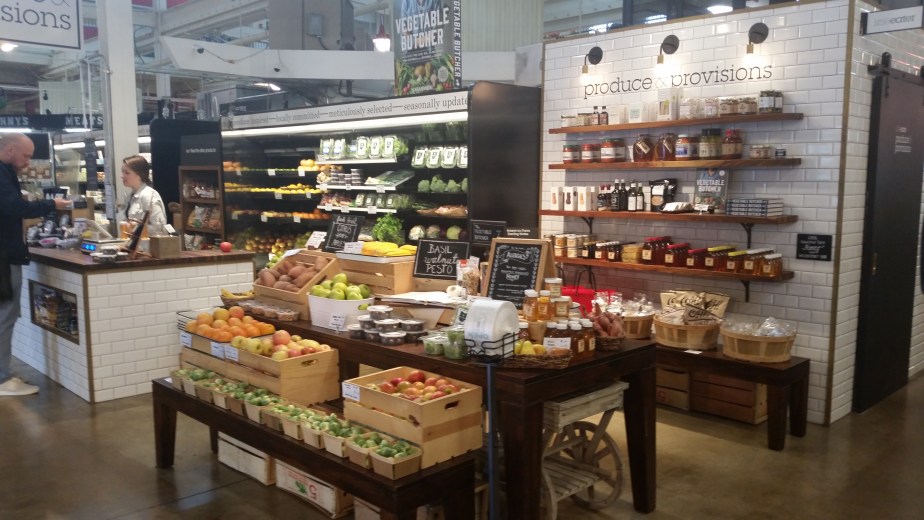
The city’s great food scene was on display at North Market with its cornucopia of offerings including Little Eater Produce and Provisions founded by Cara Mangini (her last name translates, loosely I’m told, into little eater) who is the author of The Vegetable Butcher: How to Select, Prep, Slice, Dice, and Masterfully Cook Vegetables from Artichokes to Zucchini (Workman 2016; $29.95), winner, of the IACP Cookbook Awards for Single Subject and People’s Choice. It’s the kind of place where I saw two people working on slicing a wheel of cheese that looked like it was six-feet in diameter, could buy the most luscious French pastries and also stuffed cabbage and pierogi.

20180309_105228 (1)

Hot Chicken Takeover (HCT), besides specializing in the type of spicy fried chicken made by marinating chicken overnight in a mixture of buttermilk and hot sauce, is an innovative program started by founder Joe DeLoss, who after a trip to Nashville, Tennessee and numerous dinners of hot chicken there, came up with the idea of starting a pop-up restaurant that not only featured his version of hot chicken but also hired people often considered unemployable or poor employment risks. These included those trying to get jobs after being released for jail or prison, who had spotty employment history or for some reason just couldn’t find or keep a job.  But DeLoss wasn’t looking to give a hand-out, his employees are expected to show up for work on time, set goals and do their job. The pop-up was so successful—it was open ten hours a week during which they sold between 1000 to 1200 meals—that DeLoss opened his restaurant in North Market in the city’s downtown. They now have two other locations in Columbus, employ over 200 people, 70% of whom have been in the corrections system or homeless and have between a 70 to 80% employee retention rate. For anyone knowledgeable about the restaurant business, that’s a huge number in a business with a large turnover rate.

“It’s about accountability and support,” DeLoss told us when he stopped by our table as we were eating chicken sandwiches, banana pudding and his family’s recipe for coleslaw.

I really didn’t want to put my sandwich down to talk but his business model is fascinating and offers a micro-solution for those who are struggling to jumpstart their life. Our waiter had already told us that he had dealt with alcoholism and homelessness but now had been working at HCT for about a year-and-a-half and really liked the sense of community and support he received from both DeLoss and the rest of the staff.

The buzz is so big about HCT that TV food maven Rachel Ray showed up, tasted the chicken (her interpretation of the hot chicken recipe is below) and spent time talking to DeLoss on camera.

Looking around the restaurant, you don’t see the sadness of street life. The employees are well-groomed and friendly, the patrons include a mixture of casually dressed college students and those who look like they work in offices. Even though the lines are long to order, there’s a lot of laughter and conviviality. DeLoss says that most of his customers don’t even know about the philanthropic aspect of his business but come for the food.

HCT is a great example of doing good and providing great grub. It not only makes my stomach happy but also my heart.

Hot Chicken

6 to 8 boneless, skinless chicken thighs, pounded
6 to 8 pieces boneless, skinless chicken breasts, cut in half on a bias
Salt and pepper
2 cups buttermilk
2 tablespoons Frank’s Red Hot or Crystal Hot Sauce

For the slaw:
1/2 cup pickle brine (homemade or store-bought sliced pickles, B&B or dill)
1 tablespoon superfine/quick-dissolve sugar or Acacia honey
3 tablespoons vegetable oil
1 pound (about 6 cups) shredded white cabbage
1 teaspoon celery seed
1/4 cup dill, coarsely chopped
Salt and pepper

For dredging chicken:
3 cups all-purpose flour
Salt and pepper
1 tablespoon granulated garlic
1 tablespoon granulated onion
1 tablespoon paprika

Vegetable oil, for frying
4 eggs

For the sauce: 
1 stick of butter
4 tablespoons cayenne pepper
2 tablespoons dark brown sugar
1 tablespoon paprika
2 teaspoons granulated garlic
2 teaspoons granulated onion

Sliced good quality white bread

Season chicken with salt and pepper, cover with buttermilk and hot sauce, and refrigerate overnight.

Whisk up slaw dressing, toss with cabbage, celery seed and dill.  Season with salt and pepper and refrigerate until ready to serve.

Heat a few inches of frying oil in Dutch oven or tabletop fryer to 350°F.

Whisk up flour dredge in a shallow dish then whisk eggs together in a separate dish and season with salt and pepper. Coat chicken first in flour and shake off excess. Dip into egg and coat in flour one more time. Add to hot oil and fry 8-10 minutes until cooked through.

For the sauce, melt butter in a saucepot and whisk in dried spices. Paint hot chicken with sauce and serve on bread with slaw and pickles.

For more information:

Hot Chicken Takeover

Follow them on:

Instagram

Facebook

Twitter 

For what to do: Columbus, Ohio 

Where to stay: AC Marriott


Crazy Sista Cooking: Cuisine & Conversation with Lucy Anne Buffet

Lucy-8690-smWhen my daughter was in high school, I drove her and a friend down to Gulf Shores, Alabama for spring break. While we were there, a friend insisted we go to Lucy Buffet’s Lulu’s Gulf Shores, a bayside beach restaurant. I was pretty sure, no make that positive, that this would be some kind of not-so-good-but-my-brother-Jimmy-is-a-major-celebrity type of place. The good thing, I thought when we sat down in the very crowded main dining room was that we could see dolphins frolicking out in the water from our screened in, over-sized window. That would make the bad food worth it.

37121568_10156143633092713_5753391619667656704_n

Okay, so I totally misjudged what Lulu’s was all about. The food was delicious, whatever was fried was done just right—not greasy or heavy—and there were plenty of other options on the menu that were delicious like the crab melt, Crazy Sista’s Juicy Pot Roast Sandwich (yes, indeed, pot roast), gumbo, Lulu’s Jerk Chicken Quesadillas and, of course, this being the south, fried okra and fried hushpuppies (both of which were wonderful). I was given a copy of her cookbook, Crazy Sista Cooking: Cuisine & Conversation with Lucy Anne Buffet (Grand Central Life & Style) that included a foreword by brother Jimmy. Crazy Sista is Lucy Anne’s nickname. Now Buffet also has restaurants in Destin, Florida and Myrtle Beach, South Carolina and several other cookbooks including LuLu’s Kitchen: A Taste of the Gulf Coast Good Life and Gumbo Love: Recipes for Gulf Coast Cooking, Entertaining, and Savoring the Good Life. Many of the zippy recipes are the same with new ones added. For the fried oyster recipe Dave requested, I included Mama’s Favorite Oyster Loaf. Instead of oysters, you can use fried shrimp or even fried veggies instead.

39953590_10156241899637713_2358163720992980992_n

The recipe calls for making a lot of the ingredients such as her Sweet and Sassy Icebox Pickles and Lulu’s Crazy Frying Cornmeal. I’ve included those recipes, thinking you can plop the pickles in the refrigerator and eat them at other times and save the left over cornmeal mix as well. But if you’re in a hurry, feeling lazy or just want to make it simple, you can just find comparable ingredients at the grocery store.   And since it’s good to have an accompaniment, I’ve included Lulu’s recipe for Sweet Tomato Pie.

The following recipes are from LuLu’s Kitchen: A Taste of the Gulf Coast Good Life by Lucy Anne Buffet (Grand Central Life & Style, $20).

Listen to Lucy talk about Gumbo Love.

Mama’s Favorite Oyster Loaf

Makes 4 sandwiches

1 quart oysters

4 (8-inch) New Orleans-style French bread or 1 baguette, cut into four pieces

2 to 3 tablespoons butter, softened

Mayonnaise to taste

Lettuce leaves

2 medium tomatoes, sliced

Sweet and Sassy Icebox Pickle slices (recipe below)

Hot Pepper Sauce

Preheat oven to 200 degrees.

Fried oysters (see recipe below)

Preheat oven to 200 degrees.

Fry oysters in batches and place cooked oysters in oven to keep warm.

Slice bread horizontally, about three-fourths of the way through, leaving one edge intact.

Spear a little butter on inside surface of French bread and toast. I like to place mine face-down on a warm skillet or grill.

Spread mayonnaise on toasted read.

Layer lettuce, tomato slices and pickles on bottom side of the bread. Top with fried oysters, using about eight oysters per sandwich.

Add a few dashes of hot sauce to taste.

Cut into halves or quarters depending upon the bread you’re using and serve.

Sweet and Sassy Icebox Pickles

1 (1-gal.) jar whole kosher dill pickles, drained, cut into 1/4-inch-thick slices

4 cups granulated sugar

4 cups packed light brown sugar

1 cup apple cider vinegar

2/3 cup peeled, halved, and sliced fresh ginger

1/4 cup prepared horseradish

1 tablespoon crushed red pepper

1 tablespoon mustard seeds

1/2 teaspoon ground turmeric

4 medium-size yellow onions, thinly sliced

20 garlic cloves, sliced in half lengthwise

8 cinnamon sticks

Place all the ingredients in a big ol’ stainless steel bowl or large plastic food-safe container with an airtight lid. Using your hands, toss well. Cover and chill overnight. The pickles will reduce in volume, so the next day you can place in a very large jar or several small airtight containers for easier storage.

Refrigerate at least 1 week before using, turning topsy-turvy every day. Pickles are ready when sugar has dissolved and all dill flavor has vanished. Store in refrigerator up to 3 weeks.

Perfect Fried Oysters

Make Lulu’s Crazy Crying Cornmeal (recipe below) or use regular cornmeal.

6 cups peanut oil or enough to fill a skillet, about 2 inches deep

1 quart oysters, drained

Heat oil in cast iron skillet to 355 degrees or heat until a little flour flicked into the oil sizzles

Taking a few oysters at a time, dredge through cornmeal mixture coating thoroughly.

Gently drop into hot oil. Fry until golden brown turning once or until they float to the top. Drain on paper towels and serve immediately.

Lulu’s Crazy Frying Cornmeal

2 cups all-purpose white cornmeal

2 tablespoons Creole seasoning

1 tablespoon black pepper

½ teaspoon salt

Combine all ingredients and mix well.

Sweet Tomato Pie

Serves 6-8

2 tablespoons all-purpose flour

Pastry for 1 pie crust

2 tablespoons unsalted butter

1 tablespoon extra-virgin olive oil

1 large onion, thinly sliced

1 tablespoon sugar

4 cloves garlic, thinly sliced

4 ounces cream cheese, softened

1/2 cup mayonnaise

2 tablespoons heavy cream

1 tablespoon sour cream

1 tablespoon honey mustard

1 cup shredded Parmesan

4 green onions, including the green part, cut into 2-inch pieces

4 large red tomatoes, in 1/4-inch slices

1/2 teaspoon each kosher salt and coarsely ground black pepper

1/2 cup fresh basil, cut in ribbons

2 cups shredded Gruyere or Swiss cheese

Heat oven to 450 degrees. Sprinkle flour over work surface and roll pastry dough to fit a 7-by-11-inch baking dish, making sure dough comes up the sides of the dish. Poke bottom of crust with a fork in several places. Bake for 9 to 10 minutes or until lightly browned. Let cool. Reduce oven temperature to 400 degrees.

In a cast iron or heavy skillet, heat butter and olive oil over medium heat. Add onions and sugar; sauté until onions are very brown and caramelized. Add garlic and stir constantly for 1 to 2 minutes or until garlic is cooked through and tender. Remove onions and garlic from skillet and let cool.

Using a food processor, process cream cheese, mayonnaise, cream, sour cream, mustard, Parmesan and green onions until well mixed.

In the cooled pie crust, layer half the onions, cream cheese mixture, sliced tomatoes, salt, pepper, basil and Gruyere. Repeat. Bake for 35 minutes or until pie is bubbling and top is browned. Cool for 15 to 20 minutes before slicing.

Screen-Shot-2018-06-19-at-3.40.28-PMWHITE SANGRIA

Serves 4 to 6

1 (750-milliliter) bottle Pinot Gris or any other crisp light white wine

1/2 cup peach-flavored vodka

2/3 cup sugar

1/4 fresh pineapple, chopped into cubes

1/2 lemon, cut into wedges

2 fresh strawberries, chopped

1/2 mango, chopped into cubes

1 (8-ounce) can ginger ale

Ice cubes

In a very large pitcher, combine the wine, vodka, sugar, and fruit. Stir well. Let the ingredients steep in the fridge for 2 to 24 hours (the longer, the better).

Add the ginger ale and ice cubes about 30 minutes before serving.

Place a strainer over the mouth of the pitcher and pour to order. Garnish with any leftover fruit, such as more of the pineapple, lemon, strawberries, and mango.