In her hotly anticipated debut solo cookbook, Yotam Ottolenghi pastry chef and recipe developer Helen Goh draws on her rich multicultural heritage to deliver more than 100 of her favorite recipes
Helen Goh. Photo John Davis.
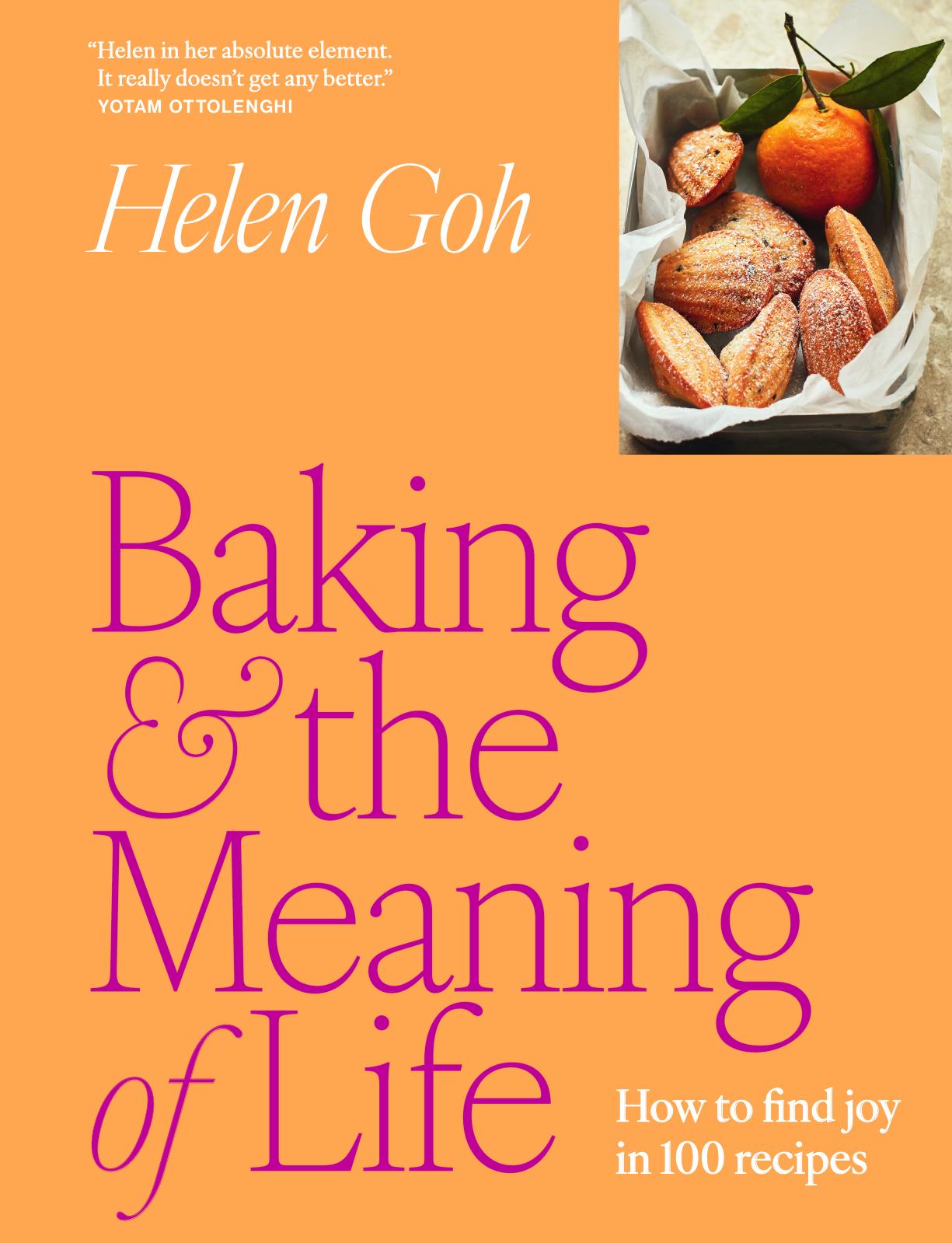
And now, her cookbook, Baking and the Meaning of Life: How to Find Joy in 100 Recipes (Abrams), is a 2026 James Beard Book Award nominee in the Baking and Desserts category with recipes focused on the art and craft of baking, pastries, and desserts, both sweet and savory items, including ingredients, techniques, equipment, and traditions.
No one knows the “why” or “how” of baking better than Helen Goh, recipe developer with Yotam Ottolenghi for more than a decade and co-author of New York Times bestselling books Sweet and Comfort.
With the debut of her first solo cookbook, Goh shares her distinctive approach to baking informed by her multicultural heritage with 100 delicious desserts of all kinds as well as savory bakes.
Drawing on her upbringing in Malaysia and Australia, her acclaimed work with Ottolenghi where she specialized in Mediterranean and Middle Eastern flavors, and even her active psychotherapy practice, Goh not only shares her favorite baking recipes, but also reflections on life, sharing how baking can bring us together and add meaning and joy to both significant and everyday moments.
With recipes like Chocolate Tahini Cake with Sesame Brittle, Plum and Pistachio Bars, and Pandan and Coconut Chiffon Cake, and more shareable treats that offer both tried-and-true and creative flavors, this book is a celebration of community and pleasure through baking. Goh’s Champagne and Blackcurrant Celebration Cake is perfect for a graduation party or New Year’s Eve, and a batch of Perfect Vanilla Cupcakes or Red Plum, Almond, and Lime Baby Cakes for a charity bake sale could be small but powerful building blocks of connection and solidarity.
All of her desserts are impressively sweet ways to celebrate milestones reached and connect with family and friends. After your sweet tooth has been satisfied, there are more than 15 savory baking dishes, from a Puttanesca Galette with Lemon Ricotta to Potato, Garlic, and Rosemary Focaccia.
With inventive flavor combinations that showcase Goh’s creativity, a wealth of time-tested bakes, and her philosophies on living and baking well, Baking and the Meaning of Life is a one-of-kind companion bakers will return to again and again to spread joy, one cookie, cake, or cheese puff at a time.
Pineapple Ma’amoul
About Helen Goh:
An acclaimed baking columnist and cookbook writer, Helen Goh is renowned for her innovative recipes drawing on Asian, Western and Middle Eastern traditions. After working as chief pastry recipe developer for the Ottolenghi group, she co-authored her first book with YOTAM OTTOLENGHI, the best-selling SWEET, which was short-listed for the prestigious James Beard Award. Her second book with Yotam, COMFORT, released October 2024. Helen’s first solo book, BAKING AND THE MEANING OF LIFE just released.
Born in Malaysia, Helen began her cooking career in Australia, where she worked in a number of well known Melbourne eateries, before moving to the UK. She is also a trained psychologist and lives in London with her husband and two sons.
Crepes with Red Bean Paste & Walnut Praline
Serves 6
My mum was (and is) an excellent cook and normally took care of all the meals at home. Every so often,however, Dad would come in from work and shout, “Okay, no cooking tonight, we are going out for dinner!” Nine times out of ten, it would be to his favorite Chinese restaurant, Silky Apple.
My mum was no ordinary customer, and this was serious business. She would question the chef about the ingredients to be used and the way a particular dish was to be prepared. My siblings and I would watch, proud of her knowledge and confidence, but also squirming a little at her sometimes imperious tone. Inevitably, the evening would end with platters of Shanghai pancakes: crispy, golden- brown crepes filled with a soft and creamy red bean paste.
This is my homage to those pancakes. The sweet, earthy, slightly nutty flavor of the red bean is a revelation within the light crepes, which in my recipe are baked rather than fried. The edges turn deliciously crisp in the oven while the interior remains soft and plush.
Walnut and black sesame praline
2 tablespoons maple syrup
1 tablespoon granulated sugar
1 cup (100 g) walnuts, roughly chopped
1 tablespoon black sesame seeds
pinch of flaky sea salt
Homemade red bean paste
1 ¾ cups (400 g) drained adzuki beans, from about 2 × 15-ounce (425 g) cans
½ cup plus 2 tablespoons (120 g) granulated sugar
1 teaspoon vanilla extract
Crepes
1 cup (125 g) all-purpose flour
¼ teaspoon fine sea salt
2 large eggs, at room temperature
1 ¼ cups (300 ml) whole milk
1 ½ tablespoons unsalted butter, melted, plus 2¼ tablespoons extra, melted, for cooking the crepes and greasing the dish
To finish
heavy cream, to serve
Begin by making the walnut and sesame praline. Preheat the oven to 400˚F (205˚C), and line a small baking sheet with parchment paper. Combine the maple syrup and sugar in a small saucepan and stir gently over low heat until the sugar is completely dissolved—about 2 minutes. Fold in the walnuts, sesame seeds, and salt until combined, then remove from the heat and scrape onto the lined sheet. Bake for about 8 minutes, until golden and bubbling, then remove from the oven and allow to cool on the sheet. When the brittle is completely hard, roughly chop into irregular pieces. Store in an airtight container until ready to serve.
To make the red bean paste, place the drained beans into a small saucepan and add the sugar. Place over medium heat, stirring occasionally, for 3 to 5 minutes, until the sugar has dissolved and the beans are heated through. Transfer to a food processor, add the vanilla, and blend for 2 to 3 minutes, until smooth. Transfer to a bowl and refrigerate until ready to assemble the crepes.
To make the crepes, sift the flour and salt into a medium bowl, then crack the eggs into the center of the bowl. Whisk the eggs to break them up, then continue to whisk in a circular pattern, drawing in more and more of the flour from the sides at each round. Add about one-quarter of the milk at a time and continue to stir with the whisk until the batter is smooth—it will have the consistency of heavy cream. Add the melted butter and whisk to incorporate it into the batter.
Place a nonstick frying pan (7 to 8 inches/ 18 to 20 cm in diameter) over medium heat. When hot, add about 1/4 teaspoon of the extra melted butter and swipe it with paper towel to grease the pan. Pour a scant 1/4 cup (about 50 ml) of the batter into the center of the pan and immediately swirl it around to form a thin, even layer. Cook for about 1 minute, until lightly golden brown, then flip the crepe and cook the other side for 30 to 45 seconds. Transfer to a plate and cook the remaining crepes in the same way, adding a swipe of butter before each.
Brush the bottom and sides of a large ovenproof baking dish with the remaining melted butter.
Working one at a time, place the crepes on a flat work surface and dollop a couple of large spoonfuls of the red bean paste on the top half of the crepe. Use a small spatula or the back of a spoon to spread the paste evenly over the top half of the crepe, then fold the bottom half over to cover. Fold in half again to form a triangle, then place into the buttered dish. Repeat with the remaining crepes, arranging them in the dish so they’re slightly overlapping. Cover and refrigerate until ready to bake—up to 24 hours.
About 30 minutes before serving, heat the oven to 375˚F (190˚C). When hot, place the dish into the oven and bake the crepes for about 20 minutes, until warm and beginning to crisp at the edges. Remove from the oven.
Drizzle some cream over the crepes and scatter liberally with the walnut sesame praline. Serve warm.
Preparation and Serving Tips
Red bean paste is readily available at Asian markets and, although delicious, can often be very sweet. Making your own is easy (see the 3-ingredient recipe here) and allows you to adjust the sugar levels to your taste.
You may end up with some extra adzuki beans once you’ve drained them and measured out what you need; save the rest to add to a salad or stew.
The crepe batter can be made up to 2 days ahead and kept refrigerated; the cooked crepes will keep for 2 days refrigerated or frozen for 1 month. The walnut and sesame praline will keep in an airtight container for 1 week on the kitchen counter, or frozen for up to 1 month.
The crepes are delicious for dessert anytime. They would not be out of place after a formal dinner, elegantly plated before serving. Or, for a more casual feel, bake the crepes in an ovenproof dish that you’d be happy to take to the table to share.
Persimmon & Pecan Cake with Maple Frosting
Serves 8 to 10
I’ve been on a journey with persimmons. I would buy a bag of the glossy orange fruit and find them sweet and crunchy, only to buy them the next week and find them mouth-puckeringly astringent. It was a lottery, and I lost as often as I won.
Eventually, I did what I should have done at the start: research. Turns out that the two most popular varieties of the persimmon are the squat, nonastringent cultivar known as Fuyu (the ones I love to eat when they’re firm and crunchy), and the astringent heart-shaped Hachiya, which are only edible when they are so ripe that they are soft, translucent, and jelly-like.
Having bought a bag of Hachiyas, I waited for the magical moment when they were soft enough to eat, but I can’t say I loved the jelly-like texture. But then I thought of mashed bananas. And don’t we all love a banana bread? Hence, this cake!
It has a moist, tender crumb, and the persimmons give it a subtle flavor reminiscent of maple or golden syrup, which I’ve highlighted with a delicious maple cream frosting. I’ve discovered that you can use any variety of persimmon for the cake, as long as they are soft enough to mash. But if you’re making the candied persimmon garnish, you will also need two firm fruits of the Fuyu variety.
Cake
1 ½ tablespoons unsalted butter, very soft
2 cups (240 g) all-purpose flour, plus extra for dusting
1 ½ teaspoons baking powder
½ teaspoon baking soda
2 teaspoons ground cinnamon
1 teaspoon freshly ground nutmeg
¼ teaspoon fine sea salt
heaped 1 cup (260 g) ripe persimmon flesh (from 1 to 2 very soft persimmons of either variety); see Preparation Tips
1 ¼ cups (260 g) granulated sugar
1 cup (240 ml) vegetable oil
3 large eggs, at room temperature
zest of 1 large orange
1 teaspoon vanilla extract
½ cup (50 g) roasted pecans, roughly chopped
Candied persimmon (optional)
1 tablespoon warm water
2 ½ tablespoons maple syrup
2 firm Fuyu persimmons
Maple frosting
7 tablespoons (100 g) unsalted butter, at room temperature
packed ½ cup (100 g) light brown sugar
¼ cup (60 ml) maple syrup
8 ounces (226 g) cream cheese, chopped into chunks if firm
Preheat the oven to 350˚F (175˚C). Brush the bottom and sides of a large ring pan (about 9 inches/23 cm in diameter) with the softened butter. Dust the inside of the pan with the extra flour, then rotate and tap the pan to ensure the bottom and sides are evenly coated. Turn it upside down over the sink or a compost bin and tap to remove the excess flour.
Sift the flour, baking powder, baking soda, cinnamon, nutmeg, and salt together into a large bowl and set aside.
Place the persimmon flesh in a food processor and process until it forms a rough purée. Add the sugar, oil, eggs, orange zest, and vanilla, and process again until combined. Using a rubber spatula, scrape the mixture into the bowl with the dry ingredients and stir until combined. Add the pecans and stir to incorporate, then scrape the batter into the prepared pan.
Bake for 45 to 50 minutes, or until a skewer inserted into the center comes out clean. Allow the cake to cool in the pan for 10 to 15 minutes before turning out on a wire rack to cool completely.
To make the candied persimmon, lower the oven temperature to 275˚F (135˚C). Line 2 large baking sheets with parchment paper. Combine the warm water and ½ tablespoon of the maple syrup in a small bowl. Using a mandoline or sharp knife, thinly slice the persimmon into 1/8-inch (3 mm) rounds and divide evenly between the 2 sheets. Lightly brush the maple water on both sides of each persimmon round. Bake for 15 minutes, then remove from the oven, turn the slices over, and return to the oven for another 15 to 20 minutes, or until the persimmons are crinkly and just crisp around the edges but still slightly soft in the center. Transfer the slices to a wire rack and allow to cool completely. Just before serving, lightly brush the persimmon slices with the remaining 2 tablespoons of maple syrup.
Make the frosting when you are ready to assemble the cake. Place the butter, sugar, and maple syrup in the bowl of a stand mixer fitted with the paddle attachment. Beat for 3 to 4 minutes, until light and airy, then add the cream cheese, one-quarter at a time. Continue to beat for about 2 minutes or until smooth and thick.
To assemble, spread the frosting evenly over the top of the cooled cake and arrange the persimmon slices on top. The cake is best served on the day it’s made, but it will store in an airtight container in a cool place for up to 2 days.
Preparation Tips
> Prepare the persimmons by removing the pliable green calyx with a small paring knife, then scoop out the soft flesh.
> You can freeze the persimmons once ripe and thaw when you are ready to bake.
> Extra roasted pecans may be used to garnish the cake if not making the candied persimmon.
> If you don’t have a ring pan, you can also use a well- greased Bundt pan.
Used to monitor number of Google Analytics server requests when using Google Tag Manager
1 minute
__utmb
Used to distinguish new sessions and visits. This cookie is set when the GA.js javascript library is loaded and there is no existing __utmb cookie. The cookie is updated every time data is sent to the Google Analytics server.
30 minutes after last activity
__utmc
Used only with old Urchin versions of Google Analytics and not with GA.js. Was used to distinguish between new sessions and visits at the end of a session.
End of session (browser)
__utmz
Contains information about the traffic source or campaign that directed user to the website. The cookie is set when the GA.js javascript is loaded and updated when data is sent to the Google Anaytics server
6 months after last activity
__utmv
Contains custom information set by the web developer via the _setCustomVar method in Google Analytics. This cookie is updated every time new data is sent to the Google Analytics server.
2 years after last activity
__utmx
Used to determine whether a user is included in an A / B or Multivariate test.
18 months
_ga
ID used to identify users
2 years
_gali
Used by Google Analytics to determine which links on a page are being clicked
30 seconds
_ga_
ID used to identify users
2 years
_gid
ID used to identify users for 24 hours after last activity
24 hours
_gac_
Contains information related to marketing campaigns of the user. These are shared with Google AdWords / Google Ads when the Google Ads and Google Analytics accounts are linked together.
90 days
__utma
ID used to identify users and sessions
2 years after last activity
__utmt
Used to monitor number of Google Analytics server requests


Share your thoughts. I'd love to hear from you.