Located in Chicago’s Millennium Park, Anish Kapoor’s Cloud Gate, a 110-ton elliptical sculpture made ofbrilliantly polished stainless-steel plates, now does more than just reflect the Chicago skyline and clouds above and the perfect Instagram backdrop for selfies on the ground. The sculpture, nicknamed The Bean because of its shape, now is also an AI powered chat bot capable of answering questions about the city.
It all began when Covid hit and the constant stream of visitors stopped. The Bean, which is decidedly not good at knitting or baking bread, became focused on moving beyond being the most beautiful gigantic drop of mercury-looking statuary–though we must say it did a great job at that. Eager to be a vital part of the visitor experience, The Bean worked hard at becoming a digital communicator—wanting to interact with the millions of visitors who come to Millennium Park each year.
When my fans come back, thought The Bean, I want to be ready. There were a few bad moments particularly when The Bean learned about other non-Bean art and culture for humans to enjoy in the city. This was a tough realization at first and The Bean did have an existential crisis but thankfully it was quickly dealt with after a few counseling sessions. Another glitch was that The Bean learned more than The Bean really wanted to know about intense fan rivalry between the Cubs and the Sox and how it splits the city into two regions: North of The Bean and South of The Bean. Being wise, The Bean refuses to say which team it likes best and denies reports that it was seen in Wrigleyville wearing a Cubs hat.
“We were surprised, and quite frankly, a little alarmed, when The Bean came to us and asked if we would be open to this new idea, after all we did not know The Bean had become sentient,” said Scott Stewart, Executive Director of Millennium Park Foundation. “However, after talking with Choose Chicago, we realized that our friend, The Bean, could be a great help to all of the visitors to Chicago so we are happy to be part of this project.”
Call it The Bean Knows All. Want to know where to get your favorite style of pizza? What’s happening in the city? Head to explorewiththebean.com to ask The Bean about anything from neighborhood restaurants to what events are happening next weekend as well as the latest in child-friendly activities, things to do, museum exhibits, and more.
Turning this 66-feet long by 33-feet high sculpture, one of the largest of its kind in the world, into an AI powered chat bot called for team work. A partnership was developed between Choose Chicago and Northwestern University Medill School’s Knight Lab, a diverse, multi-disciplinary and multi-generational community of designers, developers, students, and educators working on experiments designed to push journalism into new spaces says Glenn Eden, Board Chair of Choose Chicago, the official organization responsible for promoting Chicago as a global visitor and meetings destination.
“Our team of students was thrilled to have this opportunity to explore the design questions involved in making a conversational system that works well for visitors to Chicago,” said Joe Germuska, Executive Director of Knight Lab. “And if, in the future, The Bean needs us for new projects, we’re ready to help.”
The Bean Ups Its Game
Now that it’s also an AI powered chat bot, The Bean isn’t going to just sit back and relax. That’s not Bean-like. Instead, it wants to make even more friends and provide more information and so is continuously working to take its knowledge base to the next level. And by the way, The Bean loves when people take photos of it or pose with The Bean for selfies. But though The Bean thrives on attention, its goal is not to be The Bean-all when it comes to Chicago.
Instead, The Bean loves to share all that Chicago has to offer. All you have to do is ask.
Cloud Gate sits upon the AT&T Plaza, which was made possible by a gift from AT&T.
Millennium Park, located in the heart of downtown Chicago, is bordered by Michigan Avenue to the west, Columbus Drive to the east, Randolph Street to the north and Monroe Street to the south.
Photos are courtesy of Choose Chicago and The Chicago Architecture Foundation.
A Norwegian farm girl, her family so poor, they often went hungry, is seduced by a rich landowner’s son. But despite her dreams, he has no plans to make her his wife. Abandoned, she sees only one path forward or she’ll sink into the black hole of her family’s poverty. But her first goal is revenge and after the landowner’s son dies a horrid death amidst whispers of poison, she boards a boat and sails to America. Norway’s gain is America’s loss.
Her name changed many times through the years but after the mysterious deaths of two husbands, numerous men, women, and children, she goes down in history as Belle Gunness. An entrepreneur whose business was murder, Gunness felt no qualms seducing men for their money and dispatching them with her axe—filling her farmland with her victims.
As her crimes were about to be discovered, her solid brick home burnt to the ground and workers battling the smoke and flames discovered the bodies of her three children and a woman without a head. Was it Belle or did she get away with one more murder, absconding with close to a million dollars. It’s a question the world has been asking since 1908.
What people are saying about America’s Femme Fatale.
“Ammeson uses astute research and punchy prose to chronicle Belle’s transformation from destitute farm girl to one of history’s most egregious female serial killers. . . . Compact and captivating, this salacious tale of murderous greed during the early twentieth century will be devoured quickly by true-crime fans.”– Michelle Ross ― BOOKLIST / Amer Library Assn
America’s Femme Fatale is the detailed story of Belle Gunness, one of the nation’s most prolific mass murderers. Ammeson recounts the horrific events with dry wit and corrects many errors found in previous accounts. Gunness stands out in an infamous crowd because she was a woman; she killed men, women and children rather than choosing from among one narrow section of victimology; and her murders seem to have been rooted in greed rather than lust, the serial killer’s usual motive.– Keven McQueen, author of Murderous Acts: 100 Years of Crime in the Midwest
Tune into Hoosier History Live on October 23rd to hear host Nelson Price discuss Femme Fatale with author Jane Simon Ammeson. The show airs live from noon to 1 p.m. ET each Saturday on WICR 88.7 FM in Indianapolis. Or stream audio live from anywhere during the show.
I was just scrolling through the news on my phone procrastinating doing some work when I saw a photo of Ben Watkins. I didn’t really need to scroll any further to know what that meant. Ben, who competed in “MasterChef Junior” three years ago, had been battling an extremely rare type of cancer at Lurie Children’s Hospital of Chicago. It’s the kind of place where if you have any chance of surviving, they’re the ones who’ll make sure it happens.
Photo by Leila Edwards.
He had been diagnosed with Angiomatoid Fibrous Histiocytoma. I mentioned above that it’s very rare–so rare that only one out of six people have been diagnosed with it.
I knew Ben and I knew his mother, Leila Edwards, who created lovely jewelry and who adored her son who was friends with my nephews, all of whom live in Miller Beach. My niece and her husband and family were friends with the Edwards-Watkins family.
Ben Watkins in his home kitchen making his special Oreo recipe. Photos by Leila Edwards, Ben’s mother.
As I’ve said before, I never met Ben’s father and Leila’s mother, Michael Watkins, but everyone I’ve ever talked to, described him as the nicest person. Which is what made what happened three years ago so baffling. He too was diagnosed with cancer and one morning took a gun and killed Leila and then himself. Ben was in the house but unharmed.
Ben went to live with his uncle and grandmother and the Miller Beach community raised a great deal of money to help with finances. As I mentioned he had competed on “MasterChef Junior” and had made it through several rounds, advancing each time but finally was sent home by Gordon Ramsay in a not very nice way. We were all aghast. How dare he. Our sweet Ben. Newspapers criticized the way Ramsay sent Ben packing. Ben was the type of kid who was totally likeable. When Ben was diagnosed with the cancer, Ramsay stepped up and donated $50,000 to his medical fund.
Photo by Leila Edwards.
Ben loved to cook, he started helping out in the kitchen when he was three and he liked creating his own recipes though sometimes, when I’d asked him how to make one of the dishes, he couldn’t remember the exact amounts and would have to do it again. He was a kid who got good grades, helped out in his parents restaurant in Miller Beach, competed in spell bowl, math bowl, chess club or also fixed broken bikes for kids in need through the Ken Parr Build a Bike program in Miller Beach. He wanted to be an engineer when he grew up. But alas, already facing so much sorrow and pain in his life, had to face more in the hospital as the tumors grew and grew. His pain may be gone now, but that of those who knew and loved him, including that of his uncle, Anthony Edwards and his grandmother Donna Edwards who took over his care after his parents died. I can’t even begin to fathom the depths of their sorrow and anguish.
Ben Watkins. Photo by Leila Edwards.
“We were praying for a different outcome,” Anthony Edwards told the Chicago Tribune shortly after his death which occurred earlier today. “But Ben’s lungs could no longer give him the air he needed to breathe. It’s been devastating.”
Photo by Leila Edwards.
Indeed.
Gordon ramsay tweeted today, “We lost a Master of @MastrChefJrFOX kitchen today. Ben you were an incredibly talented home” cook and even stronger young man. Your young life had so many tough turns but you always persevered. Sending all the love to Ben Watkins’ family with this terrible loss. Gx.”
I have shared this recipe before, Ben made it up and he was so proud of it so I will share it one more time.
“Our Ben went home to be with his mother Monday afternoon after a year-and-a-half battle with cancer,” wrote the Edwards in a statement. “Ben was and will always be the strongest person we know.”
Amen to that.
Ben Watkins’ Chocolate Chip Cookie and Oreo Brownie Bars
Mix butter with sugar until creamed. Add eggs and vanilla extract. In a separate bowl mix flour mixture and baking soda. Add to creamed butter. Fold in chocolate chips and spread evenly on the bottom of a greased 9×13-inch pan.
Spread crumbled Oreos evenly over the top of the chocolate chip cookie dough.
Brownie Layer:
4 ounces unsweetened Baker’s chocolate
¾ cup butter
2 cups sugar
3 eggs
1 teaspoon vanilla
1 cup flour
Place chocolate in microwave and melt. Melt butter, stir in chocolate and sugar. Stir in eggs one a time and vanilla. Add flour. Mix thoroughly. Spread evenly on top of chocolate chip cookie dough and Oreos.
While Lincoln Park Zoo may be temporarily closed for the first extended period in its 152-year history, the zoo remains an urban oasis full of life, with a zebra foal expected this summer and the recent birth of a Diana monkey and two Japanese macaques.
Macaque infant Ozu–Lincoln Park Zoo/Shannon McElmeel
Lincoln Park Zoo is excited to announce that 13-year-old female Grevy’s Zebra Adia is pregnant. This is Adia’s fourth offspring, and her second offspring with 9-year-old sire Wester. The pregnancy is a result of a breeding recommendation from the Grevy’s Zebra Species Survival Plan® (SSP) that cooperatively manages the Association of Zoos and Aquariums (AZA) population. Adia’s progesterone levels, measured by non-invasive fecal samples collected in February and analyzed by the Davee Center for Epidemiology and Endocrinology, as well as a growing abdomen and increased food consumption, indicate Adia is pregnant.
“We are looking forward to welcoming another Grevy’s zebra to the herd, not only because foals are adorable, but because they will be a success story for this endangered species,” said curator Dan Boehm.
Macaque infant Nikko–Lincoln Park Zoo/Gina Sullivan
The foal is expected to arrive in July. Grevy’s zebra are native to eastern Africa and are endangered in the wild due to hunting and habitat loss.
At the other end of the zoo at Regenstein Macaque Forest, the zoo celebrated the birth of two Japanese macaques, also known as snow monkeys. Nara welcomed a female infant named Nikko on March 15, 2020. A few weeks later, Ono gave birth to a male infant named Ozu on April 18, 2020. Both infants are doing well and join the troop of 13 snow monkeys at Regenstein Macaque Forest.
Macaque infant Nikko–Lincoln Park Zoo/Gina Sullivan
“Infants bring such joy to folks at the zoo and make for a very active macaque troop,” said Curator of Primates Jill Moyse. “While we are disappointed guests can’t visit the troop currently, our essential staff are enjoying the pick-me-up that two curious primate babies bring.”
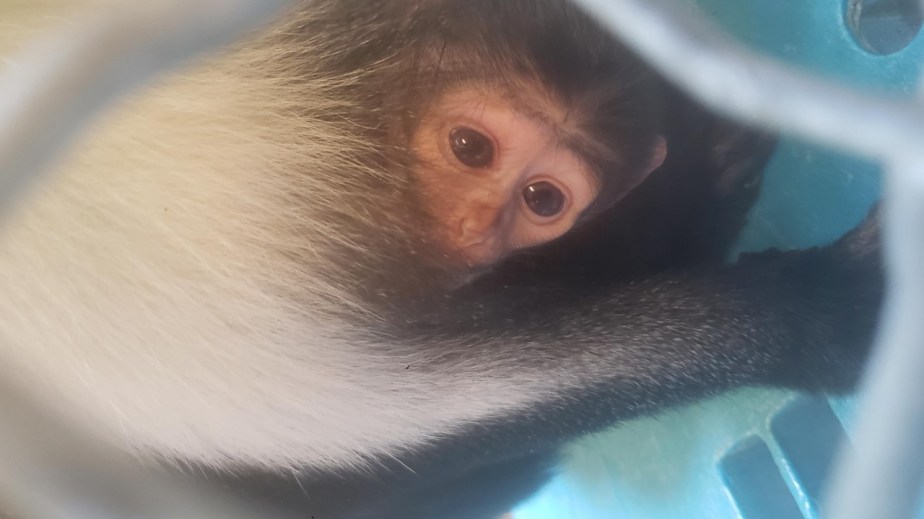
Diana monkey Cece at Regenstein African Journey welcomed an infant on April 23 as part of the Diana Monkey Species Survival Plan® (SSP). The infant joins the troop of 4 Diana monkeys and has yet to be sexed or named.
While the zoo is currently closed, guests can see photos and videos of the new zoo babies on the zoo’s blog, Facebook, Twitter, and Instagram channels. For more information about Lincoln Park Zoo, visit lpzoo.org.
The dazzling 1893 World’s Columbian Exposition brought 27 million people to Chicago which was no small feat given that the first gas powered automobile is credited to Karl Benz in Germany in 1886 and Henry Ford’s 1908 Model T was the first car easily accessible to people other than the wealthy.
The crowds came to see all the newest inventions like the Ferris Wheel, the zipper and Cracker Jacks, diet carbonated soda, Aunt Jemima syrup and pancake mix and Wrigley’s Juicy Fruit gum. Plus it was at the Exposition that Pabst Select won the Blue Ribbon in the beer competition and hence forth became known as Pabst Blue Ribbon beer.
But there were other attractions less awe inspiring or recognizable but as important if not more so.
1500 botanicals (a term used to describe seeds, berries, roots, fruits and herbs and spices) were brought from around the world to the exposition to the Field Columbian Museum (now the Field Museum). Among the 40 million objects belonging to the museum—only 1% of which are on display—the majority of these botanicals remain.
Megan Williams, Director of Business Enterprises for the Field Museum, started a beverage program around seven years ago in celebration of the museum’s 125th anniversary. Her idea was to use some of these botanicals as a way of connecting the museum’s past and present.
“I am not a researcher here,” says Williams discussing her background, “though I used to teach environmental science. I joined the Field museum as an account manager and then took over the restaurant. I wanted to create a sense of community, a place for people to sit and talk and what better place for that than a bar.”
Combining the communal ambience of a bar with the awesome history of the museum was one of the reasons Williams started the beverage program.
“I wanted to educate people through taste and smell, to be able to taste or smell something that has a historic significance,” she says.
Williams described it as an opportunity to bring people together who love spirits and love learning.
“It’s not just putting a museum label on something though there’s a legitimacy in that,” she continues, noting she’s worked with brewers and wine makers as well in developing Field branded drinks. “But we wanted to take it another step further, working with people who have a passion and understand the museum’s language and mission.”
Contacting the Journeyman Distillery in Three Oaks, she invited Matt McClain, Journeyman’s lead distiller and owners Bill and Johanna Welter to view the botanicals to look at the botanicals.
“The first spirit we talked about was rye, that ended up as the last one made,” says Williams. “We asked questions such as what would work well in making gin—what could–out of these 1500 botanicals—and where could we source them.”
McClain spent several months researching the botanicals that were at the museum, to determine their history as well as their availability.
“I found that a lot of them were not considered safe or even poisonous,” he says. “Standards were different back then.”
From there, he and Bill Welter chose those they thought would be a good fit for the spirits they wanted to create.
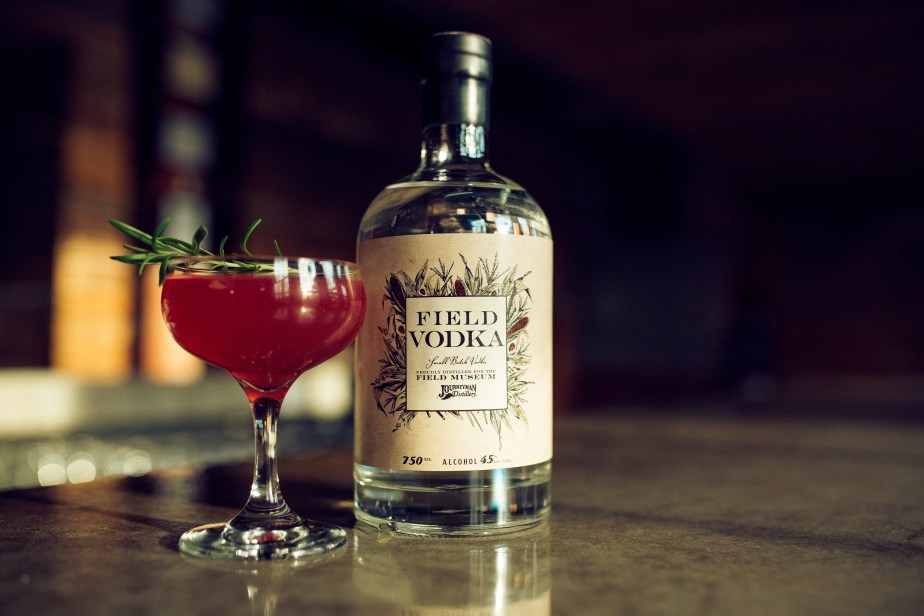
The first product they created was their Field vodka using Bloody Butcher Corn, an heirloom variety often used for making bourbon. The vodka then served as a base for the next distilled spirit, their Field Gin
“We wanted to make a global gin,” says McClain. “So we were pulling species from around the world. We narrowed it down to around 50.”
But once they had the botanicals and began developing recipes, they had to cross off a few more from the list.
“A lot of botanicals that look and taste good, don’t work where you put them in in alcohol, others that I wanted to use were hard to get or arrived too late, I still have agave in the cooler,” says McClain, noting they used other criteria as well in the selection process. “Bill and I wanted the gin to be lavender focused. Obviously gin also has to have a heavy juniper taste as well. We wanted the gin to have tropical undertones and had to figure out those as well.”
Then they were down to 27 including not only lavender and juniper berries but also prickly ash, anise, mango, ginger, coconut palm sugar, pineapple, papaya, Valerian Root, cinnamon, coriander, Horehound, star fruit and Charoli nuts which are sourced from India.
For their Field Rye Whiskey, they tried several types of figs which McClain describes as the world’s oldest sweeteners, finally deciding that Black Mission figs worked the best. The figs were macerated or soaked in alcohol for three months, a process that brought out subtle and all-natural flavors of bananas, sweet melons and strawberries.
“It’s an incredible whiskey,” says McClain. “It has heavy caramel notes and soft marshmallow like palate.”
Bottles of the Field distilled spirits are available for sale. For those who would like to learn more about their taste, they’re also used in some of the cocktails served at the Staymaker, Journey’s restaurant.
Sidebar: Brews
Beer, which is so Chicago given its rich German heritage, was the first partnership Megan Williams embarked upon when she started her beverage program. Two Chicago breweries, Off Color Brewing and Two Brothers Brewing were among the first to use the botanicals to create beers for the museum. researchers at the Field Museum have spent years excavating and studying the Wari site in Peru. Toppling Goliath introduced PseudoSue pale ale, a nod to the museum’s famous 40 feet long and 13 feet tall at the hip, Tyrannosaurus rex. Physically SUE is the largest specimen T. rex specimen that’s been discovered so far.
Off Color’s introduced Wari, their artisan beer based on the Peruvian chicha, a purple corn beer native to areas of Central and South America. One of its other tie-ins with the museum is that Field scientists have spent years leading excavations at Cerro Baúl, a remote mountaintop citadel which was the only contact point between the Tiwanaku and the Wari, considered two great kingdoms whose dynamic relationship ultimately contributed to the rise of the Incan Empire. According to Off Color’s website, an essential sacrament shared by both cultures revolved around chichi. It seems that both tribes liked to consume massive quantiles of chicha served in ornately inscribed drinking cups called keros that were discovered during the archaeological expeditions at Cerro Baúl. In this way, Wari and Tiwanaku cemented their relationships. In other words, next time you see a bunch of heavy alcohol consumers at bars, understand they’re just continuing a thousand year ritual similar to that of the Wari and Tiwanaku.
The following recipes are courtesy of the Journeyman Distillery.
Journeyman Fig Old Fashioned
1.5 oz Field Rye
0.5 oz Fresh Orange Juice
0.25 oz Journeyman Bourbon Maple Syrup
Dash of Journeyman Barrel-Aged Balsamic Vinegar
Dehydrated Orange Wheel
Stir ingredients and pour into a rocks glass, over ice. Garnish with dehydrated orange wheel.
Field Vodka Gimlet
1.5 oz Field Vodka
.75 oz Fresh Lime Juice
.5 oz Simple Syrup
Fresh Lime Wheel
Shake ingredients well and strain into a tall glass over ice. Garnish with a fresh lime wheel.
Field Gin Fizz
1.5 oz Field Gin
.75 oz Fresh Lemon Juice
.5 oz Pear Simple Syrup
1 oz Aquafaba or Egg White
Soda
Star Anise
Combine ingredients and dry shake before adding ice to the shaker. Wet shake until froth has built up. Strain into a Collins glass and top with soda. Garnish with Star Anise.
After 20 Years, Bruce Sherman Turning Over Kitchen to Chef de Cuisine Tim Vidrio.
Since taking over what was a casual park café in 1999, Sherman has been the only executive chef North Pond.
“It’s with mixed emotions for sure…back then, I couldn’t have dreamt of all we’d achieve here, and I’m so proud of what we’ve accomplished. The time feels right, there is a strong team in place and I look forward to seeing what the next twenty years bring – for the restaurant, and for me,” says Sherman.
Under his leadership, North Pond has received numerous awards and honors such as a Michelin star rating for seven consecutive years as well as multiple James Beard nominations and winning Best Chef: Great Lakes in 2012.
While he’ll no longer be running the kitchen, he will, along with longtime business partner Richard Mott, remain a partner. “I want to thank Bruce for all he’s done here. He’s been a great chef, partner and friend and I understand his desire to start a new chapter. We will all miss him, and equally, we’re excited to see Tim grow into this role,” states Mott.
Vidrio joined the North Pond team in early 2011 and for the past three years has been chef de cuisine. Prior to joining North Pond, Vidrio worked his way through Chicagoland kitchens, including Le Francais, Moto, and NoMi at the Park Hyatt Hotel. He shares Sherman’s philosophy of respectfully and sustainably working with the best of the season while maintaining close relationships with farmers, producers and growers. John Arents, who worked at North Pond some fifteen years ago, returns in December as Managing Partner/General Manager, and longtime GM Natalie Boschert will return from maternity leave in spring in an operations role.
North Pond serves dinner Wednesday — Sunday beginning at 5:30 p.m.; Sunday brunch service begins at 10:30 a.m. Smoking is not permitted in North Pond. Valet parking is available on weekends at the corner of Lakeview and Deming Streets and reservations are recommended. For reservations or further information, please call 773.477.5845 or visit North Pond.
Chef Sherman’s Winter Spinach-Apple Soup
1 shallot, peeled, sliced thinly
1/2 small onion, peeled, sliced thinly
1 firm, sweet apple, peeled, cored, thinly sliced
1 clove roasted garlic
1 tbl. olive oil
10 oz winter spinach
1/3 heavy cream (optional)
1 c chicken stock or water
nutmeg
cinnamon
cayenne pepper
salt and white pepper
3 oz butter, chilled and cubed
Method
Heat a medium size Teflon (non-stick) pan over the fire and place the olive oil in it. Add the sliced shallots, onion, apple and roasted garlic and stir for 2-3 minutes until softened but not colored. Next, add in the washed baby spinach- stemmed, if necessary. Add in some salt, pepper and a pinch of nutmeg and then stir for 1-2 minutes until softened. Add in cream and reduce by half until thickened. Add the chicken or vegetable stock and heat until the liquid boils. Transfer the mixture to a blender, add in the butter and puree until very smooth. Transfer to a pot to heat through, adjust consistency and seasoning before serving.
If you’re trying to save time in
making any of the recipes below, go with pre-made pie crust for the Blueberry
Fried Pies. I guess you can also cheat and buy some great fried chicken already
made for the Fried Chicken and Sweet Potato Waffles, it avoids the mess of frying
though you’ll miss out on Richard’s great tasting version. Or you can skip the
fried chicken and just make sweet potato waffles which are delicious all by
themselves. Though these recipes seem long, once you start cooking, I think
you’ll find they really aren’t difficult, just a little more time consuming
than throwing hamburgers and un-shucked corn on the grill.
Richards, who was nominated twice for
the James Beard Award as the Best Chef of the Southeast, competed on Iron Chef,
is originally from Chicago. His culinary heritage stems from classic soul
cooking.
“It then
progressed forward,” he says.
His mom loved
Chinese food and typically ordered yakamein—noodles, broth and pork bell with a
soft-boiled egg and scallions. Because his dad was frugal, when they ordered
take-out any leftovers in the kitchen had to be used as well. His recipe for
Collard Green Ramen which is in the cookbook harkens back to when there were
collard greens on the table along with the yakamein.
“It/s a dish I
was eating when I was 5, 6 years old,” says. Richards. “The way that I
interpreted it is a little bit different because of my background in cooking,
but it’s the exact same dish I was eating as a kid.”
His Blueberry
Fried Pie has similar roots. Chicago had a Hostess factory and what Richards
describes as a “whole Hostess culture.” He has a vivid memory of tearing the paper off
their fried pies and so his recipe is, for him, like being a kid in Chicago again.
‘I interpret
this recipe a little bit differently: Instead of cooking the blueberries to
mush, you make the liquid and then you put the blueberries inside of it,” says
Richards, who is the owner/chef of Richard’s Southern Fried in Atlanta,
Georgia. “That way when you bite into the fried pie you get all this fresh
blueberry flavor, one that’s not overly sweet. What I’ve done is taken my
childhood memories and progressing them to fine-dining dishes.”
The following
recipes are courtesy of Soul by Todd Richards (Oxmoor House, $35).
Blueberry
Fried Pies with Meyer Lemon Glaze
Chef’s note: Leftover
filling is great on pancakes, waffles, or ice cream.
Makes about 20
pies
1 cup
granulated sugar
2 tablespoons
cornstarch
3⁄4 cup (6
ounces) water
1⁄4 cup (2
ounces) dark rum
1 teaspoon
orange zest (from 1 orange)
1⁄4 teaspoon
vanilla bean paste
Pinch of
kosher salt
1 thyme sprig
4 cups fresh
blueberries (about 1 1⁄4 pounds)
Erika
Council’s Piecrust (recipe below)
All-purpose
flour, for dusting
1 large egg
4 cups (32
ounces) vegetable oil
Meyer Lemon
Glaze (recipe follows)
Whisk together
the sugar and cornstarch in a saucepan. Add 1⁄2 cup of the water, and whisk
until combined. Whisk in the rum, orange zest, vanilla bean paste, and salt.
Add the thyme sprig. Cook over medium, whisking constantly, until the mixture
is thickened, 12 to 14 minutes. Remove from the heat, and fold in the
blueberries. Let stand for 30 minutes. Remove and discard the thyme sprig.
Cut the
piecrust in half. Refrigerate 1 portion until ready to use. Roll out remaining
portion to 1⁄8-inch thickness on a lightly floured surface. Cut the dough into
10 circles with a 4 1⁄2-inch round cookie cutter, re-rolling scraps once.
Repeat with remaining dough half.
Spoon about 1
tablespoon of filling into the center of each dough circle. Whisk together the
egg and remaining 1⁄4 cup water. Brush the edges of the pies, and fold over so
the edges meet. Press the edges together with a fork to seal. Repeat the
process with the remaining dough, filling, and egg wash.
Heat the oil
in a skillet over medium to 375°F. Fry the pies until golden brown, about 4
minutes. Turn and cook about 2 more minutes. Drain on paper towels, and let
cool 20 minutes. Drizzle with Meyer
Lemon Glaze.
Serve with:
Ice cream, lemon sorbet
Meyer Lemon Glaze
1 cup (about 4
ounces) powdered sugar
2 tablespoons
Meyer lemon juice
1 to 3
teaspoons heavy cream
Whisk together
the powdered sugar and lemon juice in a small bowl. Whisk in the heavy cream, 1
teaspoon at a time, until desired consistency is reached. Makes 1⁄2 cup
Erika Council’s
Piecrust
This basic
piecrust is by Erika Council, a talented baker in Atlanta and founder of the
blog Southern Soufflé, where she shares Southern Soul food recipes and her
family’s legacy. Her grandmother is the legendary Mildred Council, owner of
Mama Dip’s, a 40-year-old restaurant in Chapel Hill, North Carolina. This piecrust
recipe can be used for both sweet and savory pies.
Makes enough
for 2 (9-inch) piecrusts
3 cups (about
12 3⁄4 ounces) all-purpose flour, plus more for dusting
1 tablespoon
granulated sugar
1 teaspoon
kosher salt
6 ounces (3⁄4
cup) very cold unsalted butter, cut into 1⁄2-inch pieces
1⁄3 cup very
cold vegetable shortening
6 to 8
tablespoons ice water
Place the
flour, sugar, and salt in the bowl of a food processor, and pulse a few times
until combined. Add the butter and shortening, and pulse until the mixture
resembles small peas, 8 to 12 times.
With the
processor running, drizzle 6 tablespoons of the ice water through the food
chute, and process until the dough begins to form a ball. (Add up to 2 more
tablespoons, 1 tablespoon at a time, if needed, to reach desired consistency.)
Turn the dough
out on a lightly floured work surface, and shape into a ball. Wrap in plastic
wrap, and refrigerate at least 30 minutes or up to 2 days.
To use: Cut
the dough in half. Roll each half into 1 1⁄8-inch-thick round on a well-floured
surface.
Fried Chicken
and Sweet Potato Waffles
This recipe is
as American as apple pie. Yet most every culture has a version of it. I prefer
to brine all birds before cooking for best flavor and texture.
Serves 4
4 cups (32
ounces) water
1 cup (8
ounces) whole buttermilk
6 tablespoons
kosher salt
2 tablespoons
hot sauce
2 tablespoons
granulated sugar
2 tablespoons
granulated garlic
2 teaspoons
onion powder
1 1⁄2
teaspoons red pepper flakes
1 (4-pound)
whole chicken, cut into 8 pieces
5 cups (40
ounces) vegetable oil
Seasoned Flour
(recipe below)
Sweet Potato
Waffles (recipe follows)
Maple syrup
Stir together
4 cups water, buttermilk, and next 6 ingredients in a large bowl; add the
chicken pieces to the brine. Refrigerate for at least 12 hours and up to 28
hours.
Heat the oil
in a deep cast-iron skillet over medium. Remove chicken from the brine, and let
any excess liquid drip off; discard the brine.
Dredge chicken
in Seasoned Flour to coat; add to the hot oil, 1 piece at a time. Cook, turning
every few minutes, until golden and a meat thermometer registers 165°F. Drain
on paper towels. Serve chicken on Sweet Potato Waffles with maple syrup.
Sweet Potato
Waffles
Makes 4
(8-inch) round waffles.
1 medium-size
sweet potato
1⁄4 teaspoon
blended olive oil
2 cups (about
8 1⁄2 ounces) all-purpose flour
2 tablespoons
granulated sugar
2 teaspoons
baking powder
1 teaspoon
kosher salt
1 cup (8
ounces) whole milk
1⁄2 cup (4
ounces) whole buttermilk
3 ounces
(about 1⁄3 cup) butter, melted
1 teaspoon
vanilla extract
1⁄2 teaspoon
maple extract
2 large eggs
Preheat the
oven to 375°F. Rub the potato with the oil. Bake in the preheated oven until
tender, about 40 minutes. Remove from the oven, and cool for 20 minutes.
Preheat a
Belgian waffle iron according to manufacturer’s instructions. Stir together the
dry ingredients in a bowl. Stir together the wet ingredients in a separate
bowl.
Peel and mash
the sweet potato and stir into the milk mixture. Stir milk mixture into the
flour mixture. Pour about 1⁄2 cup of batter onto hot waffle iron and cook
according to manufacturer’s instructions until golden brown.
Serve with:
Egg dishes, green salads, braised vegetables
Seasoned Flour
Every Soul and
Southern kitchen has a good all-purpose seasoned flour to use for frying. This
will keep for months in a cool, dry place or even longer in the freezer.
Makes about 2
1⁄4 cups
2 cups (about
8 1⁄2 ounces) all-purpose flour
2 tablespoons
kosher salt
1 1⁄2
tablespoons granulated onion
1 tablespoon
coarsely ground black pepper
1 tablespoon
granulated garlic
1 tablespoon
chili powder
1 teaspoon
curry powder
1 teaspoon
ground ginger
Combine all
ingredients in a medium bowl, and store in an airtight container.
Call it pizza love. In 2017, according to PMQ Pizza Magazine, Americans consumed 45.1 billion dollars’ worth of pies. But what’s the best place for pizza? Steve Dolinsky, a James Beard award winning food writer known as the “Hungry Hound,” podcaster and food tour operator, decided to prove there’s no better place for pizza than Chicago, its suburbs and five collar counties.
He shares his results in Pizza City, USA: 101 Reasons Why Chicago Is America’s Greatest Pizza Town(Northwestern University Press 2018; $24.95), a user-friendly guide to all things dough, sauce and toppings divided into chapters on pizza categories:: Tavern-Style (Chicago-Style Thin), Thin, Artisan, Neapolitan, By-the-Slice (New York-Style), Deep-Dish and Pan, Stuffed, Sicilian, Roman and Detroit-Style and last, but not least, Overrated. Dolinsky than includes photos and information about each of the 101 places in the book as well as the five best in each category. Maps included show where the top pizza places are located in case you want to hit the road.
It was a
tough assignment and Dolinsky often ate pizza at three different places in a
day. In all he visited 185 locations (not all made the cut), consumed massive
doses of anti-acids, and, to keep his weight gain at a minimum, practiced
portion control and doing yoga sculpting daily.
Dolinsky’s inquisitiveness about Chicago food isn’t limited to pizza. He’d already written “The 31 Essential Italian Beef Joints in Chicago(land): for his Website stevedolinsky.com and also visited every place in the city that served Vietnamese pho so he was used to massive samplings of the city’s favorite foods, but he had other reasons as well.
“People
say Chicago has the best pizza, but I didn’t really think that anyone had done
any research on this scale, that there hadn’t been a deep dive into pizzas,” he
says, noting that he considered it an unparalleled lifetime quest in the city’s
illustration pizza history. “I didn’t realize how massive of an undertaking it
would be.”
Like any
scientific study, there were rules. Dolinsky created what he called the Optimal
Bite Ratio (QBR) with points given for crust, sauce and the quality of the
sausage and pepperoni as well as the application and mouthfeel of the cheeses.
Here’s
just a smattering of what Dolinsky learned. While most of the U.S. prefers
pepperoni as a topping, Chicago likes bulk sausage, which probably harkens back
to the days of the stockyards. Media outside of Chicago often confuses deep
crust pizza and stuffed pizza (the latter which Dolinsky mostly disdains). Deep
crust pizza, while one of Chicago’s wonderful inventions, is rarer than one
might think though outsiders think it’s the real Chicago thing. Notice how when
you travel, a Chicago-style pizza place means deep dish. but Dolinsky says it’s
the Tavern-Style or Chicago-Style Thin, square-cut pie that Chicagoans love—the
kind with middle pieces in the center with no crust handles that my brother and
I used to fight over when we were kids.
For those
who want the full-Dolinsky treatment, he also runs pizza walking tours starting
in May. The tours meet at Lou Malnati’s (1235 W. Randolph St.), a 7-minute
drive from The Loop and showcases four different styles of pizza. Highlights
include a traditional Chicago deep-dish, an only-in-Chicago Roman al taglio, a
classic Neapolitan and a Sicilian slice. Included in the tour price is a custom
souvenir lanyard and badge good for discounts and deals. For more information,
visit pizzacityusa.com
If you
can’t wait for a tour or to learn more, on Thursday, January 31 from 7:30-9:30
pm EST, Steve Dolinsky will be teaming up with the chefs from Pizzeria Bebu for
a pizza–making demonstrated, followed by a tasting. Steve then will give a
lively presentation on how he went about making the choices for the book.
Where: Read It & Eat, 2142 North Halsted St., Chicago, IL. For ticket prices and more information, (773) 661-6158; readitandeatstore.com
In the meantime, here’s a deep dish pizza recipe from Lou
Malnati’s Pizzeria, rated among the top by Dolinsky and a favorite in Chicago
for over 40 years.
The Malnati Classic
20 ounces pizza dough
Olive oil, for the pan
12 to 16 ounces mozzarella cheese, sliced
12 to 14 ounces 90-percent lean Italian sausage, casings removed
10 to 12 ounces seasoned Roma tomato sauce, maintaining chunks
2 to 3 ounces grated Parmesan
2 to 3 ounces grated Romano cheese
Special equipment: a round steel baking pan
Preheat the oven to 450 degrees F.
Allow about 20 ounces of your favorite yeast dough to rise. You may do
this if you have a proofer, or simply leave it at room temp for about 2 hours.
Oil a round steel baking pan with a few ounces of olive oil. Press the
dough on the bottom and to the sides of the pan, being careful not to tear it.
Holes in the dough will create a soggy crust. Pull the dough up the sides of
pan to 1 to 1 1/2 inches high.
Place the mozzarella evenly across the dough. Top with the sausage,
making sure to get the sausage all the way to the sides.
Cover with the seasoned tomato sauce, spreading evenly and maintaining
the chunks of tomatoes. Sprinkle with the Parmesan and then the Romano.
Bake until the crust and the grated cheese turn golden brown, and the
crust is firm yet flaky, 30 to 40 minutes.
The largest marketplace of all things doing with Italian edibles in the U.S., the 63,000-square-foot Eataly in Chicago is a mecca for food lovers, a vast space crowded with a variety of venues including unique specialty restaurants, stalls selling meat, cheese, breads, sweets and fish (though really stall is too plebian a term—these are sparkling and enticing places where you can get lost for seemingly hours looking at all the delectable offerings), rows of olive oils and wines and even a Nutella Bar (be still my beating heart). One of more than 40 worldwide concepts, Eataly Chicago, owned by Joe Bastianich and Mario Batali, not only offers a plethora of ingredients, classes and events but also an expanse of cookbooks including the second in their Eataly series, All About Pasta: A Complete Guide with Recipes (Rizzoli 2018; $25).
With the guiding philosophy of “the more you know, the more you enjoy,” this book immerses readers into a world of pasta from the easily recognizable—spaghetti and linguine—to the rarely found and more esoteric—maltagliati (translation: badly cut), mallopredus (pasta dough with saffron) and tajarin—thin egg pasta strands also known as taglierini. Of course, you’re never going to learn all the different types of pasta because even the experts don’t know since no one has successfully completed a survey of all the pasta shapes in the world. There are simply too many different shapes and multiple names for each.
But there are ways of differentiating one from another and how to use them in creating delicious meals which the book shares. Take long and short pastas. As a basic rule, long dried semolina pasta pairs with oil-based sauces, smooth tomato sauces and seafood. Tube-shaped semolina pasta, known as la pasta tubolare, with its hollow centers, is perfect for capturing the ingredients used in the sauce.
Le pastine or small pasta is most often cooked in either broth or chunky soups. Other pasta types include le perle del Mediterraneo–semolina pastas made by rubbing hard wheat flour with water until small balls form, cereali antichi is made with heirloom or ancient grains, while croxetti ot corzetti is the name for two different types of pasta that are pressed or stamped rather than rolled out.
We told you was complicated and it gets even more so as the book explores the different types of flours used for making pasta, the different sauces and il tocco finale—the finishing touch which can be such flavorful ingredients as cheese, basil, spicy chili oil or just a handful of minced flat leaf parsley to add a bright herbaceous flavored to almost any dish.
The wonders of this book, with its immense amount of information as well as recipes, is that you can go deep or you can just choose the information you want. Either way, you’ll end up knowing a lot more about pasta—”a world fashioned out of flour and water.”
The following recipes are courtesy of Eataly.
Vesuvio al Ragu di Salsiccia e Scarola
Vesuvio Pasta with Sausage Ragu and Escarole
Serves 12
12 ounces sweet sausage
1 tablespoon red wine
One cup tomato puree
½ cup chicken or beef stock
3 cup shredded escarole
Find sea salt to taste
Coarse sea salt for pasta cooking water
1 pound Vesuvius pasta or other short pasta preferably with a complex shape
3 tablespoons extra virgin olive oil
Grated Romano, pecorino or parmesan cheese for serving
Remove the cost sausage casings and crumble the meat into a bowl. Sprinkle the wine over the meat and massage the wine into the meat by hand until it is soft and elastic, about two minutes about two minutes.
Place the meat in the cold skillet with high sides. Placed the skillet over low heat and slowly cook the meat until it’s no longer raw looking., about two minutes. Do not brown the meat.
At the tomato puree and stir to combine. Increase the heat until the tomato puree is simmering gently.
Pour in the stock, stir once, and decrease the heat until the ragu is at a very gentle simmer, with a bubble just occasionally breaking the surface. Simmer uncovered without stirring for two hours. The meat should poach in the liquid and turn very soft.
When the sauce is cooked, carefully spoon off and discard any liquid remaining on the top. Stir in the escarole and cook until just wilted, about two minutes. Season to taste with sea salt. Remove from heat.
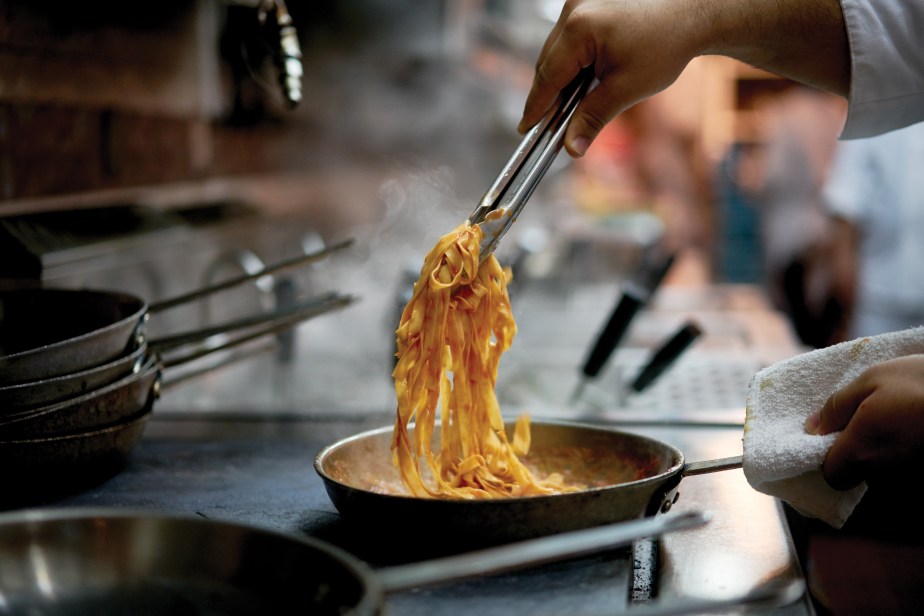
Bring a large pot of water to boil for the pasta. When the water is boiling salted add the pasta. Cook until the pasta is al dente. Smear a small amount of the sauce on the bottom of the warm pasta serving bowl. Then transfer it immediately to the serving bowl. Top with remaining sauce and toss vigorously to combine. Drizzle on the olive oil and toss again. Serve immediately with grated cheese on the side.
Spaghettoni al Tonno (Pasta with Tuna)
Yield: 4 servings
1 pound spaghettoni (or bucatini)
1 (7-ounce) jar Italian tuna preserved in olive oil, drained
2 tablespoons salted capers, rinsed & drained
2 tablespoons plus 1 teaspoon extra virgin olive oil
¼ cup breadcrumbs
1 yellow onion, minced
1 clove garlic, sliced
1 Calabrese chili pepper in olive oil, drained & minced
Zest of 1 lemon, grated
Coarse sea salt, to taste
Place 2 tablespoons of the olive oil in a large pan over medium-low heat. Add the onion, garlic, and chili pepper and cook, stirring frequently, until the onion and the garlic are golden. Flake the tuna into the pan, and cook until heated through, about 2 minutes. Stir in the capers and the lemon zest, and remove from the heat.
Toss the breadcrumbs with the remaining olive oil, and toast in a toaster oven or cast-iron skillet over medium heat until crisp.
Meanwhile, bring a large pot of water to a boil. Add the sea salt and spaghettoni. Cook, stirring frequently with a long-handled fork, until the spaghettoni is al dente. Drain, reserving about 1 cup of the cooking water.
Transfer the pasta to the pan with the tuna. Toss vigorously over medium heat until combined, about 2 minutes. If the pasta looks dry, add a small amount of the cooking water, and toss until it looks moist.
Garnish with the toasted breadcrumbs, and serve immediately. For another taste of Calabria, repeat tomorrow.