Tomorrow, December 29th, join Francisco Glaria Baines and his daughter Fidji for a Facebook Live cooking class where they’ll be demonstrating how to make polvorones, shortbread-like cookies enjoyed during the holidays in Spain. The class, which is free, is interactive and conducted in English.
Fran on tour.
The name polvorone comes from are from the Spanish word polvo meaning powder, or dust. Similar to Mexican wedding cakes and Russian tea cakes, they are made with flour, sugar, ground nuts, butter, and vanilla and then sprinkled with powdered sugar.
Polvorones, a classic Spanish holiday dessert.
Fran, as he is known to his friends, is a native Basque, a region of waterways, mountains, beaches, and historic villages and towns in Northern Spain. It’s also a gourmet’s delight with wonderful seafood, cheeses and meats. And the excellence of the Region’s terroir yields the best vegetables, fruits, and grapes, making it a must for those who love wine and hard ciders. The Basque Region, one of the best fine dining destinations in the world, has nearly 40 Michelin starred restaurants. Fran, a professional tour guide, takes visitors on insider tours, exploring the foodways, vineyards, and wineries, the best of big city restaurants and village bistros, the tastes of haddock or shrimp just pulled from the Bay of Biscay and the foods grown on the small family farms nestled in the rolling hillsides.
Polvones
Fran´s guiding life started 20 years ago as a local guide in the city of Pamplona. In 1999 he created a company that provided tours throughout both Basque country and the Rioja wine region. In 2012 he joined the Rick Steves team in what was a life changing moment for him. He learned from Rick´s philosophy encompassing the way to approach a culture as well as the truth and values of Rick and his company. Living with his family in Pamplona, Spain, Fran now is sharing his knowledge, his love of Spain, and the tours he has curated online so we can experience Spain even during the times when we can’t travel there.
If you miss the live event you can watch later–just click on this link.
If you decide to cook along, you’ll need to have the following ingredients on hand:
17 ounces flour
6 ounces lard
6 ounces powdered or ground almond
6 ounces powdered sugar
1/2 tablespoon vanilla extract
Date & Time: Tuesday, December 29 at 9:00 am PT; 12:00 pm ET and 6:00 pm Spain
(LANSING, Mich) — Five (5) Michigan breweries brought home a collective six (6) medals from this year’s the Great American Beer Festival (GABF) Competition in Denver, Colorado—the largest commercial beer competition in the world and a symbol of brewing excellence, presented by the Brewers Association. These breweries include:
Silver:
Founders Brewing Company, Grand Rapids: Oktoberfest – American Amber Lager & Porter – Robust Porter
The Great American Beer Festival is the granddaddy of all U.S. beer festivals, offering the largest collection of U.S. beer ever assembled. The judging panel awards gold, silver or bronze medals that are recognized around the world as symbols of brewing excellence. These awards are among the most coveted in the industry and heralded by the winning brewers in their national advertising. Medal distinctions are as follows:
GOLD: A world-class beer that accurately exemplifies the specified style, displaying the proper balance of taste, aroma and appearance.
SILVER: An excellent beer that may vary slightly from style parameters while maintaining close adherence to the style and displaying excellent taste, aroma and appearance.
BRONZE: A fine example of the style that may vary slightly from style parameters and/or have minor deviations in taste, aroma or appearance.
Judges for the 34th edition of the competition evaluated 8,806 entries from 1,7i20 breweries from all 50 states plus Washington, D.C. Socially distanced judging took place in 35 sessions over 18 days, with strict safety measures in place.
GABF Competition Statistics
34th edition of the GABF competition
8,806 beers judged
1,720 breweries in the competition from all 50 states plus Washington, D.C.
115 judges from 21 states
Average number of competition beers entered in each category: 97
Category with the highest number of entries: Juicy or Hazy India Pale Ale (377)
272 total medals awarded
240 medal-winning breweries
337 first-time GABF entrants
19 first-time GABF winners
Formed in 1997, the Michigan Brewers Guild represents nearly 300 member breweries (a number that increases on a monthly basis). The Guild is a passionate beer community that believes in quality artisanship, bold character, fun, responsibility and pushing the boundaries. The mission of the Guild is to promote and protect the Michigan beer industry with an overarching goal to help locally brewed beer attain 20% of all beer sales in the state by 2025.
Michigan’s brewing industry contributes more than 21,000 full-time jobs and $872 million in labor income, with a total economic impact of over $2.5 billion. In terms of overall number of breweries, microbreweries and brewpubs, Michigan ranks #6 in the nation—supporting its title as “The Great Beer State.”
Moncho Riquelme de Casa Riquelme con su paella alicantina.
September 20 is World Paella Day, a way of honoring that wonderful Spanish rice dish made with rice and a host of ingredients, is one of the traditional dishes of the Valencia region of Spain
Paella from Don Quijote in Valparaiso, Indiana
Writing in Saveur magazine, David Rosengarten, an American chef, author and television personality who also has hosted or co-hosted more than 2500 television shows on the Food Network from 1994 to 2001, explains that “the earliest kinds of paella were products of purely local ingredients and eating habits.
“The dish exists because of rice, and rice has existed in Valencia and its environs ever since the Moors planted it there more than 1,300 years ago, in a lagoon called Albufera, where the grain is still grown today. Saffron, that precious and earthy spice, brought to Spain by Arab traders in the tenth century, was the Moors’ preferred seasoning for rice, and it remains a traditional paella ingredient. Local game like rabbit, and foraged foods like snails, as well as various legumes and vegetables, found their way into rice dishes during the Moorish occupation of Spain, but pork (which was prohibited under Muslim dietary laws) and shellfish did not.”
The earliest paella was made with all local ingredients and eating traditions. It’s main ingredient is rice and Valencia is known for their rice, planted by the Moors over 1,300 years ago in a lagoon called the Albufera, now national park where the grain still grows today.
“Saffron, that precious and earthy spice, brought to Spain by Arab traders in the tenth century, was the Moors’ preferred seasoning for rice, and it remains a traditional paella ingredient,” writes Rosengarten. “Local game like rabbit, and foraged foods like snails, as well as various legumes and vegetables, found their way into rice dishes during the Moorish occupation of Spain, but pork (which was prohibited under Muslim dietary laws) and shellfish did not. “
That certainly has changed today when many think of paella as being a seafood dish with sausages as an added ingredient.
While the Moors vacated Spain in 1492, the passion for rice dishes remained. What the Valencians ate during the reign of the Moors and afterwards for almost four centuries isn’t exactly known, but one of the first printed recipes we have dates back to 1840 and calls for such ingredients as rabbit, snails, beans and saffron cooked in a shallow pan called a paella. It was typically prepared over open fire composed of dried vines and branches from orange trees,
Miquel Barrera del Restaurante Cal Paradis desde Vall D’Alba con su “Arrocito de Castellón” — at Plaza del Ayuntamiento.
According to Rosengarten, paella remained a regional food for a good long while. Back when that original paella recipe was first published, Spain wasn’t a popular destination on the tourist track, and its cuisine was little known beyond its borders. But the 20th century—the century of Picasso, Dali, Buñuel—saw a burgeoning interest around the world in all things español. Epicures were eager to discover the country’s rich, rustic flavors; in 1950, Elizabeth David, the cookbook writer who delivered England from its wartime gastro-dreariness, published A Book of Mediterranean Food (John Lehmann), which included a recipe for paella containing the hitherto non-traditional combination of chicken and shrimp. (Before long, gourmands in England, America, and beyond were serving all kinds of variants of the dish out of brightly colored Dansk paella pans along with goblets of sangria.
The Seafood Paella at The Grove in New Buffalo, Michigan
For those who want to make the dish to celebrate World Paella Day, buy a bottle or two of wine from the Ribera del Duero and Rueda Wine Regions of Spain and try the recipe below courtesy of James Beard Award-winning chef Jamie Bissonnette of Toro restaurants in NYC and Boston.
But first a little about wines from Ribera del Duero or Rueda (follow the links to find out more).
Full-bodied without going Godzilla-overboard, Ribera del Duero tempranillos are about as food-friendly as red wines get.
Teresa Roig con sus Paellas con Arte dando el toque creativo del evento — at Plaza del Ayuntamiento.
Toro Paella Mixta, serves 4-5
2 tablespoons garlic, minced 1 cup Spanish onions, diced and sautéed in a generous amount of olive oil 1/2 cup scallions, white parts only, diced 1 cup sliced Spanish chorizo 1 cup red bell pepper, diced Salt and freshly ground black pepper to taste 1 cup chicken breast or thigh meat 1/2 cup tomato paste 2 cups Calasparra or Bomba rice 10 threads of saffron Canned Spanish seafood conserva (optional) 1 1/2 cups lobster stock (any combination of chicken, vegetable, lobster or shrimp stock will work) 1 1/2 cups chicken stock 1 1/2 cups vegetable stock 6 to 10 top neck or count neck clams 18 mussels 4 to 5 shrimp 1/2 cup English peas Olive oil, 1/4 cup sliced scallion tops, and lemon wedges for garnish
Combine garlic, sautéed onions, white scallions, chorizo, red pepper, salt and black pepper to taste in a 17-18″ paella pan and sauté over high heat for 4 to 5 minutes. If you don’t have a paella pan, use a shallow copper or enamel coated steel pan (important to create the socarrat — or crust of crispy rice that develops on the bottom of the pan).
Add the chicken, tomato paste, rice and saffron, and stir, making sure to evenly coat the rice. Toast for 4 to 5 minutes. Add a can of conserva, if using. Evenly distribute and flatten out rice in pan.
Add all stocks. This should be the last time you stir the paella. Once boiling, add the clams and cook 5 to 10 minutes, until they open and rice grains are clearly visible.
Add mussels, and reduce heat to medium. Once the mussels open, add shrimp and peas. Cook over medium heat until shrimp and rice are cooked and have created a crispy bottom called “socarrat,” watching and smelling closely for burning.
Add small amounts of stock as necessary during cooking if all the liquid has evaporated and paella looks dry. Start to finish cooking time is approximately 30 minutes, 20 minutes to cook after adding stocks to chicken/rice mixture. Texture of rice when done should be soft on the outside but retain some bite/texture in the center. The rice on the bottom will be crispier (socarrat) from sitting on the bottom of the pan. Let the dish rest about 5 minutes before serving.
Garnish with olive oil, scallion tops, and lemon slices.
Pair with an unoaked Rueda Verdejo or a fruit-forward Ribera del Duero Joven.
Help celebrate the James Beard Media Awards winners by tuning in on a series of conversations that’s free and open to the public. The next one, scheduled for August 26th from 1:30 to 2:30 p.m. ET, gives food entusiasts the opprotunity to ask James Beard Award–winning Wok Therapist and Stir Fry Guru Grace Young all of your burning wok questions.
Young helps us ease our anxieties about using a wok. This conversation will also delve into how COVID-19 has affected Chinese restaurants and communities across the nation.
Grace Young. Courtesy of graceyoung.com
A little background. Dubbed “The Stir-Fry Guru” by the New York Times, Young has devoted her career to celebrating wok cookery through her cookbooks and videos. On March 15, 2020, she began Coronavirus: Chinatown Stories, an oral history project with videographer Dan Ahn, in collaboration with Poster House, documenting the stories of how Manhattan’s Chinatown has been impacted by COVID-19. The Smithsonian National Museum of American History featured Coronavirus: Chinatown Stories in their 2020 Youth Summit for middle and high school students as an exemplar of how one person is addressing the challenging question of how we choose to strengthen a community in the middle of a pandemic.
12 ounces boneless pork belly, cut in half 1 1/2 teaspoons sugar 3/4 teaspoon salt 1 tablespoon XO sauce 1/4 teaspoon sesame oil 1 1/2 teaspoons chili bean sauce 1/4 teaspoon chili oil 3 slices ginger 3 scallions, cut into 2-inch pieces 3 tablespoons Shao Hsing rice wine or dry sherry 2 tablespoons olive oil 1 tablespoon minced garlic 1/2 medium red bell pepper, cut into 1-inch cubes 1/2 medium yellow bell pepper, cut into 1-inch cubes 1/2 medium green bell pepper, cut into 1-inch cubes
One 8-ounce can sliced bamboo shoots, rinsed and drained
Put the pork in a dish and sprinkle with 1/2 teaspoon of the sugar and 1/2 teaspoon of the salt. Set aside 30 minutes. In a small bowl combine the XO sauce, sesame oil, chili bean sauce, and chili oil.
In a 14-inch flat-bottomed wok bring 2 cups water to a boil over high heat. Add the ginger slices and scallions and boil 1 minute. Add 1 tablespoon of the rice wine and boil 1 minute. Add the pork, cover, and reduce the heat to low. Simmer 8 minutes. Pour out the water and seasonings. Rinse the pork in cold water, put it on a cutting board, and cut into 1/4-inch-thick bit-sized slices. The pork should still be slightly pink. Rinse the wok and dry it thoroughly.
Heat the wok over high heat until a bead of water vaporizes within 1 to 2 second of contact. Swirl in the olive oil and garlic and stir-fry 15 seconds. Cover, reduce the heat to medium, and a cook 1 minute. Increase the heat to high, add the peppers and bamboo shoots, and stir-fry 1 minute. Add the remaining 1 teaspoon sugar and 1/4 teaspoon salt and stir-fry 1 minute. Add the remaining 2 tablespoons rice wine and continue to stir-fry 1 minute. Serves 4 as part of a multicourse meal.
When I was young, my parents liked to dine at supper clubs. To me, they were swank places of dark wood, bold colored banquettes, and oversized menus where your dad would order a martini and your mom a Manhattan while you, because you were only seven or so, had to do with a Shirley Temple. But at least it came with a pretty paper umbrella and a maraschino cherry
These were the supper clubs of yore. Often tucked away on back roads that seemed to take hours—no make that days—to reach when you were riding in the back of that big boat-like Buick your parents owned and no iPad or cell phone existed yet to keep you entertained. Just a coloring book and a box of Crayolas your mother handed you as you climbed into the car. If your brother came along you could kill time by arguing over whether the Cubs or Sox were better—a fight that endures to this day. If not, you colored and asked every three minutes (I know because my dad timed it once) “are we there yet?”
In Michigan there are few supper clubs that I know of. Maybe D’Agostino’s Navajo Bar & Grille in Bridgeman, family owned for almost 70 years would qualify. It has that feel. There’s Talon’s Supper Club in Norway way up in the U.P. where old fashioned ice cream drinks (typically one of the deciding factors in determining if a place is a supper club) like Grasshoppers and Brandy Alexanders are on the menu. But let’s face it, is anyone going to drive 400 miles one way to go to a supper club? In Norway Michigan—population 2,845? No, I didn’t think so.
Photo courtesy of Ron Faiola.Courtesy of Timmerman Supper Club.
Much more local, there’s the Heston Supper Club, in Heston, Indiana just north of LaPorte on the Michigan-Indiana border. And yes, it is in the middle of nowhere. In Syracuse, Indiana less than 90 minutes, The Sleepy Owl has been around for more than a half century. I haven’t been there yet, but definitely will when we can finally leave the house.
Courtesy of The Sleepy Owl.
Geraldine’s Supper Club in Indy is a hat tip to the classic places of the 1930s and 1940s. There are a few more in Illinois, like the 60-year plus old Timmerman’s Supper Club on the Mississippi River in East Dubuque as well as several in towns I’ve never heard of like Scapecchi’s Supper Club in Farmington.
Photo courtesy of Ron Faiola.
Because they’re becoming big again, Millie’s Supper Club in Chicago has the look—polished wood, red leather, low lighting—which is cool unless you want old.
Courtesy of Heston Supper Club.
But for the largest selection of real back-in-the-day supper clubs, the place to go is Wisconsin and Ron Faiola has got them covered in his two large, heavy-on-photos books, Wisconsin Supper Clubs: An Old Fashioned Experienceand the follow-up Wisconsin Supper Clubs: Another Round both published by Agate, a Chicago publishing company. The books came about after Faiola’s film (its name is the same as the first book) was shown nationwide on PBS nine years ago. He also has a website, wisconsinsupperclubs.net, with lists of supper clubs organized by region including many not mentioned in his books. And amazingly, there are lots of them.
Relish Tray courtesy of Ron Faiola.
So what exactly is a supper club? You’d know if you walked into one of them but Faiola describes them as usually only open for dinner and family owned with great service and food as well as a club-like atmosphere. The reason for all that, he says, is because there’s usually at least one family member on the premises to ensure quality is maintained and guests are happy.
“When you come back to a place a few times, you get to be family too,” he says.
Expect steaks and classic dishes like shrimp deJonghe. The latter is totally Chicago-centric, dating back to Chicago and the three deJonghe brothers who immigrated from Belgium in 1891. Two years later they opened a restaurant at the 1893 World’s Fair: Columbian Exposition, a global celebration of Christopher Columbus’ discovery of the Americas. The brothers went on to operate several restaurants including, from 1899 to 1923, DeJonghe’s Hotel and Restaurant at 12 E. Monroe Street. Their most famous dish, the one Henri deJonghe or their chef, Emil Zehr, is said to have created, is Shrimp deJonghe. Heston Supper Club has it on their menu as Sautéed deJonghe. They also serve frog legs, an old fashioned supper club dish if there ever was one and one even harder to find than Shrimp deJonghe. Ditto for The Sleepy Owl, though they call theirs Shrimp Scampi which really is pretty much the same. And yes, they have frog legs as well.
Shrimp deJonghe by Jane Simon Ammeson.
Lobster, ribs, prime rib, perch and Friday night fish fries are also popular supper club items. Oh and don’t forget, the relish tray and/or salad bar.
Drinking is part of the experience. That’s one reason there are so many Wisconsin supper clubs further north like in Door County says Faiola. During Prohibition as liquor was offloaded from boats coming from Canada and delivered via back roads to the big cities, supper clubs out in the boonies got their orders filled as gangsters, avoiding the highways and the cops, stopped by.
Courtesy of Ron Faiola.
The cocktails people drank back then are popular again. But the thing with supper clubs is they never went out of style. In Wisconsin, the big one is the brandy old-fashioned sweet. I’d never heard of it but according to Faiola—and he should know—people in Wisconsin drink more brandy than anyone else in the U.S. and that’s usually by consuming a lot of brandy old-fashioned sweets.
Courtesy of Greenwood Supper Club which opened in 1929 in Fish Harbor in Door County.
But supper clubs aren’t cookie cutters, says Faiola. Each is unique because of the family factor. Just like going to one friend’s home versus another.
Courtesy of Florian Supper Club in Bailey Harbor, Wisconsin.
His books make great guides and people use them to explore the state, choosing which supper club to try next. Even in these days when we really can’t go anywhere yet, they’re still fun to look at—both a step back in time and a look forward when we can hit the road again. Also, I’m also going to be on the hunt for more Michigan supper clubs so if anyone knows of any, let me know.
RECIPES
Here is the original recipe served at the deJonghe Brothers’ various restaurants. It’s interesting because it calls for ingredients not usually associated with fish dishes—nutmeg and mace. But while both are more pie ingredients today, in Europe a century and more ago, they were often used in savory cooking as well.
As for why last place the deJonghe Brothers owned closed, supposedly it was because of liquor violations during Prohibition. But that doesn’t really sound like Chicago, does it?
Also, shrimp can be expensive. A reasonable substitute (after all, this dish is really about the butter, garlic and breadcrumbs) is a tender, mild white fish or even cauliflower that’s cooked in boiling water until barely tender just like the shrimp. For fresh mild white fish, it’ll bake in the oven and doesn’t need to be parboiled beforehand.
The Original Shrimp deJonghe
2 pounds large shrimp (40), or 48 slightly smaller
1 large garlic clove, mashed with the side of a knife or finely minced
1 1/2 teaspoon salt
1 tablespoon finely chopped fresh tarragon
1 tablespoon finely chopped fresh parsley
1 tablespoon finely chopped fresh chervil
Pinch of dried thyme crumbled between your fingers and thumb
1 shallot, minced (very finely chopped)
1 tablespoon minced onion
1 cup (2 sticks) unsalted butter, softened
1 1/2 cups fine dry breadcrumbs
Pinch of freshly grated nutmeg
Pinch of mace (optional)
1/2 teaspoon black pepper
Cook shrimp in a 4-quart pot of boiling salted water (see note below) until just cooked through, about 1 1/2 minutes. Drain shrimp in a colander, then immediately transfer to a large bowl of ice water to stop cooking.
Preheat oven to 350°F.
Mash garlic to a paste with 1/4 teaspoon salt using a mortar and pestle (or mince and mash garlic with salt using a large knife), then stir together with fresh and dried herbs, shallot, onion, 1 1/2 sticks (3/4 cup) butter, 1 cup bread crumbs, nutmeg, mace, 3/4 teaspoon salt, and 1/4 teaspoon pepper.
Melt remaining 1/2 stick butter and stir together with remaining 1/2 cup breadcrumbs, 1/2 teaspoon salt, and 1/4 teaspoon pepper to make topping.
Arrange shrimp in 1 layer (slightly overlapping if necessary) in a buttered 3-quart flameproof gratin dish or other wide shallow ceramic baking dish. Cover with herbed breadcrumb mixture, then sprinkle with topping. Bake in upper third of oven until golden, about 15 minutes. Turn on broiler and broil until crumbs are golden brown, about 2 minutes.
Note: When salting water for cooking, use 1 tablespoon for every 4 quarts water.
Note: This can also be made in 8 small baking ramekins for appetizers, or 4 larger individual baking dishes for main dish-sized.
Relish Tray
These are all suggestions. Add or subtract as you like.
Spreadable cheese and crackers
Black olives
Green olives
Olives stuffed with blue cheese
Gherkins
Bread and butter pickles
Sweet pickles
Pickled beets
Pickled onions
Pickled watermelon rind
Pickled baby corn
Pickled Brussel sprouts
Pepper slices (pickled or fresh)
Pickled cauliflower
Carrots, cut into sticks
Celery, cut into sticks
Hand-Muddled Brandy Old-Fashioned Sweet
1 maraschino cherry
½ slice of orange
1 sugar cube or 1 teaspoon sugar
2-3 dashes of bitters
1 ½ to 2 ounces brandy
7UP
Ice
In a 10-12 ounce tumbler, combine the cherry, orange, sugar and bitters. Muddle (mash) together.
Add ice, then the brandy and top off with 7UP. Garnish with an orange slice and a maraschino cherry.
High in the Sierra Madres, we follow the twisting road from Puerto Vallarta and the seaside on our way to San Sebastian del Oeste, once a booming mining town in the Sierra Madres northeast of the city and one of the wonderful Pueblos Magicos or magic towns on Mexico. Our journey took us through green jungles and blue plantations. The latter are agave farms, owned for generations by jimadores or farmers who specialize in growing, harvesting and distilling the pinon or heart of the agave into gold and silver tequila and reposado, a type of tequila aged in oak.
Crossing the long spanned bridge over Rio Ameca, the road curves around a ridge and into the tiny village of La Estancia near Hacienda San Sebastián, a family owned raicilla and tequila distillery (for raicilla think tequila only much stronger and likely of inducing hallucinations in anyone who drinks too much).
San Sebastian, now on the way to nowhere, was for years a major stop between the Bay of Banderas on the Pacific Ocean to Guadalajara when its mines produced riches of silver.
When San Sebastian was at its glory, the residents of Puerto Vallarta, then a tiny port and fishing hamlet called Las Penas, were harvesting salt–a necessary ingredients for smelting the ores taken from the mines– loading it onto mules and trekking 4500-feet up to San Sebastian. The bridge we cross into San Sebastian takes us from the paved highway main street made of dirt and pitted with rocks. It probably hasn’t change that much since the mules came through carrying salt centuries ago.
Founded in 1605, San Sebastian’s boom lasted until the early 1900s. Because it was so remote, modernization never came again to sweep away the historic buildings dating back centuries.
The families of many who live here now can trace their lineage back to the early Spanish colonial Viceroyalty of New Spain period and the town was wealthy, with some 25 mines producing lead, silver and gold.
Walking along the cobblestone streets, past walls covered with red, purple and orange bougainvillea, we take a turn past the town’s zocolo centered around an ornate gazebo. Nearby is the Colonial Spanish Baroque Iglesia de San Sebastian, notable for such architectural flourishes as Corinthian columns, ornate bell tower, and vaulted ceilings painted with frescos. Dedicated to San Sebastian, the church was built in the 1600s and then, after an earthquake, rebuilt in 1868. As we continue on, we pass the Hotel Los Arcos de Sol with its white washed exterior. It too is old, built more than 200 years with a restaurant that gets good reviews. Along the way there ae small stores, housed in historic buildings, offering a variety of goods but we don’t stop to shop.
Casa Museo de Dona Conchita Encarnacion
Instead we’re on a mission to visit Casa Museo de Doña Conchita Encarnación the small museum run by Lupita Bermudez Encarnacion, the great times four granddaughter of a Spaniard who came here to run Santa Gertrudis, one of the mines here, in the 1770s. There is a hiking path to the old mine.
The museum, once the home and office of Santa Gertrudis and built in 1774, is packed with an array of family momentos, furniture, silver studded trunks, books, photos, clothing such as lace and satin christening gowns more than 150 years old and odd artifacts including 3D pornography with its own special reader dating back to 1904 and a 19th century photo of the family holding a cadaver. It seems that, according to Lupita, it was a family tradition that when a family member died, before they were buried (and remember it’s very hot here), a photographer was summoned to take a photo of the deceased. It could take days, but that’s how it was done.
Over all the story of San Sebastian del Oeste is one of glory and loss. At one time the town had a population of 20,000; now there are about 1000. San Sebastian was founded by three families who immigrated from Spain and to keep their blood lines pure, they only intermarried with each other. So through the centuries uncles married nieces and aunts married nephews. Thus Lupita says that her mother, Dona Conchita, married a man who was her cousin and nephew and so Lupita’s father was also her nephew, cousin and uncle.
.
As our guide Victor Avila continues to translate Lupita’s many tales, we learn her great great uncle Jose Rogello Alvarez (and who knows how else they were related) and other men, carrying rifles and riding on horseback, guarded 40 mules loaded with silver and gold as they made the five day trip through the mountains to Guadalajara to deposit their money. Then it was five days back on the narrow mountain passage. Of the many runs they made–at least five a year– bandits only managed to rob them twice. Even then the weight of the metal made it impossible for the bandits to carry only much away.
Pancho Villa Ruins It All
In 1910, as the Mexican Revolution raged, Lupita’s family’s wealth disappeared. She blames Pancho Villa and his men who kept raiding the town demanding ransom and money until it was all gone.
Those that probably never got rich were the laborers in the mine who were paid by money printed in the office here by Lupita’s family which made spending it anywhere else except San Sebastian almost impossible. Talk about owing your soul to the company store. As an aside, I’ve visited other mines in Mexico and was told that on the average, because of the dangers of mining (no OSHA here), the life span of a miner was ten years.
Plantacion de Cafe
Organic Coffee Farm
Owners Rafael Sanchez, his wife Rosa and Lola, Rafael’s sister are the fifth generation family members to grow coffee hereLa Quinta Café de Altura, an organic coffee farm.
The family’s home and business is located in a building dating back more than 140 years. Out back they tend 11 acres of coffee trees, some as old as the house. The family handpicks 30 tons of beans each year. They’re then dried, roasted, and gound. Sometimes sold just like that, the family also makes blends such as a mixture of ground beans with cinnamon and sugar for the making traditional Mexican coffee–now hard to find, Hot coffee samples are provided and Rosa’s sells her homemade candies such as guava rolls and sweets made from goat’s milk. In an interesting aside, we learn that the Sanchez’s parents married early (the Don was 15), a union lasting 68 years and producing 21 children. Their grandfather did even better, having 28 children, though that took both a wife and several mistresses.
Comedor Lupita
Walking along the cobblestone road, past a massive 300 year plus ash tree and cascading white frizzes of el manto de la virgin, we enter Comedor Lupita. Here terra cotta platters loaded with chicken mole, fresh handmade tortillas (in America they’d be called artisan tortillas), refried beans and something I’ve never tasted before – machaca, a dish of dried beef mixed with spices and eggs, are placed in front of us. As we eat, we watch the family busy behind the tiled counter, making even more food. One woman’s sole job seems to be quickly patting masa into paper thin tortillas. Victor Avila, who lives in Puerto Vallarta, is entranced with that.
“It’s so hard to find handmade tortillas anymore,” he says.
Through the windows we see splashes of bright purple from the masses of bougainvillea that drape the stone exterior walls and here the sounds of caballeros, their horses’ hooves striking the centuries old street. We sip our sweet agua de Jamaica water, eat tortillas fresh from the griddle and help ourselves from heaping platters, we all feel time slipping backwards into the past.
Machaca Marinade:
1/4 cup Worcestershire sauce Juice of 4 limes 4 cloves garlic, chopped 1 tablespoon cumin 1 tablespoon chili powder 1/2 tablespoon salt 1/2 tablespoon black pepper 1/2 cup olive oil
Machaca:
2 lbs. skirt steak, cut into strips 1 large sweet onion, diced 1 green bell pepper, chopped 4 cloves garlic, chopped 1 jalapeno pepper, chopped 1 14 ounce can diced tomatoes with green chilies 1/2 cup beef broth 1 tablespoon oregano 1 tablespoon cumin 1 tablespoon hot pepper sauce (Tabasco or a Mexican brand, such a Valencia) Salt and pepper 2 tablespoons oil
Whisk all the marinade ingredients together, and then add the skirt steak. Marinate at least 6 hours or overnight tablespoon Remove meat from marinade, drain, and pat dry. Bring to room temperature. Discard marinade. In a large heavy pot, heat oil. Sear the meat well on both sides, in batches so as not to crowd them. Remove the meat as it is browned and set aside.
Drain fat. Add in the onion, peppers, and garlic, cook until tender, then add tomatoes, broth, pepper sauce and spices. Bring to a boil, stirring and scraping the bottom of the pot. Return beef and simmer, covered, for two hours, stirring from time to time until tender. Cool and shred.
Lay meat on a single layer on a baking sheet. Bake at 250º for 20 minutes or until meat is dry.
Machaca con Huevos
2 chopped scallions (white part only) 1 hot green chili 2 tomatoes 1 cup dried machaca 2 eggs Chopped cilantro
Sauté scallions and peppers in oil until tender, add tomatoes and beef until heated. Remove from pan, add eggs and cumin. Scramble, then stir machata mixture. Garnish with cilantro and serve with hot tortillas.
From making tortillas from scratch in their home kitchen using imported non-GMO heritage corn varieties from a milpa or small cultivated farm in Oaxaca, Mexico to the recent opening of their just recently opened 2,500 square-foot retail and production space in Sawyer, Molino Tortilleria has seen a whirlwind year or so. I met owners Aaron and Christie Harris and Christie’s teenaged son, Ethan Estes, when they were selling their tortillas at the St. Joseph Farmer’s Market where if you didn’t get there early, you might miss out. They hand make each tortilla, a lengthy process. The first step is that the corn arrives dried, sorted by variety–Blue Bolita Corn producing a blue hued tortilla, the red corn knowns as Bolita Belatove and yellow corn tortillas using Ollotillo Armarillo corn.
Then harking back millennials, the family processes the corn by cooking the kernels, soaking them overnight in cal or powdered lime minerals. After that, the kernels are ground (by hand) using volcanic rocks and then mixed with water to create the tortillas. Christie Harris also makes Mexican style sweets (pan dulce) that were favorites at the farmer’s market.
“We’re excited,” says Aaron, who offered thanks to those who had visited them at the St. Joseph Farmers Market and also on Friday nights in Benton Harbor when food trucks would gather during warm weather to sell street food.
Molino Tortilleria is located at 5846 Sawyer Road in Sawyer MI. You can peruse their offerings online at MolinoTortillas.com.
For those buying tortillas, they’re great just simply heated up (I do mine in a very hot cast iron skillet, flipping them after a minute or so on one side) here are a few fun recipes to try.
1 3/4 pounds chicken wings, separated into wingettes and drumettes
1 3/4 pounds sweet potatoes, peeled and cut into 1-inch [2½cm] wedges
2 teaspoons chile powder
1 teaspoon smoked paprika
1 tablespoon dark brown sugar
3 tablespoons olive oil
Sea salt
Zest and juice of 1 lime, plus lime wedges, to serve
4 to 5 tablespoons Greek yogurt
A handful of fresh cilantro leaves, chopped, plus more to serve
Preheat the oven to 350°F. Place the chicken wings and sweet potato wedges in a large roasting pan or rimmed baking sheet.
Mix together the chile powder, smoked paprika, brown sugar, olive oil, 2 teaspoons sea salt, and half of the lime zest and juice. Pour the mixture over the chicken and sweet potatoes and mix well with your hands to coat evenly. Transfer to the oven and roast for 40 minutes.
Turn the heat up to 400°F and roast for a further 20 minutes, to crisp the chicken skin.
Meanwhile, mix together the yogurt, chopped cilantro, remaining lime zest and juice, and a pinch of sea salt. Set aside.
Sprinkle the chicken wings and sweet potatoes with cilantro leaves and serve with lime wedges and the yogurt dip alongside.
Solid coconut cream from 13.5 ounce can of full-fat coconut milk
1/4 cup fresh lime juice, about 2 limes
1/3 cup packed fresh cilantro, leaves and stems
3 cloves garlic
1/2 teaspoon fine sea salt
Place all the ingredients in a food processor, blender, or smaller bullet-sized smoothie blender. Blend until smooth.
Note: if the sauce is too thick, add 1 teaspoon of water or lime juice at a time until you have a consistency you like. Enjoy immediately or store in the refrigerator for later.
Store in a sealed container for up to 7 days.
In a small bowl, toss the kale with the chipotle-lime dressing (recipe below) until it is fully coated. Set aside.
Make the chicken filling:
2 tablespoons salted butter
3 cups cubed baked chicken breast
2 cups cooked fresh corn kernels or frozen corn kernels
2 tablespoons fresh lime juice (about 1 lime)
1/2 teaspoon chili powder
1/2 teaspoon garlic powder
1/2 teaspoon paprika
1 teaspoon coarse sea salt
Heat the butter in a large skillet over medium-high heat. Once melted, add the chicken and corn and cook for 2 minutes to warm through.
Add the lime juice, chili powder, garlic powder, paprika, and salt and toss to coat the chicken and corn. Sauté for 3 to 4 minutes, until the chicken is slightly browned.
To assemble the tacos:
8 regular-size corn tortillas
1 cup crumbled Cotija cheese (omit for dairy-free)
4 lime wedges, for serving
Place a small skillet over medium-high heat. Once hot, put one tortilla in the pan at a time and warm for about 30 seconds per side, until the tortilla is pliable and begins to brown slightly. Repeat with the remaining tortillas. To keep the tortillas warm while you are heating the remaining ones, you can wrap them in a kitchen towel. 5. To assemble the tacos, add the chicken and kale slaw to a warmed tortilla and garnish with Cotija cheese. Serve with lime wedges.
Following the Rueda Wine Trail, a historic route through the provinces of Valladolid and Ávila where the viticulture dates back to the 11th century, leads me this evening to Calle St. Maria, one of the main streets in the Medieval city of Tordesillas.
Helena Muelas Fernandez, one of two sisters who fun their 4th generation winery in Tordesillas, Spain.
My destination is Bodega Muelas de Tordesillas, housed in a tall and narrow stone building dating back centuries where the two Muelas sisters—Helena Muelas Fernandez and Reyes Muelas Fernandez– continue running the winery started by their great, great grandfather.
“This is where we learned to make wine,” Helena tells us as she leads us down uneven steps cut out of rock to the first level of the vast cave like cellars that lie underneath the building. It is here, she tells me, where they’re aging their Alidobas Vino Blanca in casks of French Oak.
A wine barrel deep in the cellars of Bodega Muelas de Tordesillas.
“This is very cry and crisp,” she says of the wine while we take a taste. “It was a very desert year in 2017, we had no rain which is why it has such a flavor as this.”
I like the taste and allow her to fill my glass once more. There’s a delicate light green cast to its yellow color that match its slight grassy aromas. It is amazing to me that the wines of the Rueda and nearby Ribera del Duero, two grape growing regions with harsh climates, produce such wonderful harvests of grapes. But, Helena explains, the hot summers and long cold winters create perfect growing conditions for varietals of the Verdejo grape.
The wine shop.
As she talks, we navigate the stone steps further down into the cellars which ultimately some 60 feet underground. The walls are carved out of hard stone and I marvel at how difficult it must have been to hew the rock by hand which is how they did it back in the 1700s when the house was built. Each landing is stacked with barrels and wine bottles and each as a significance to Helena who talks about the vintage and the weather conditions the year they were bottled. The caves get darker, the light less bright the further down we go. On the next level, dust covers the exteriors of unlabeled bottles, vaulted tunnels disappear into darkness and iron grates protect rare vintages. We are descending into wine history and the history of a family who has dedicated themselves to making wine.
Now we’ve explored the depths of the cellars, we follow Helena through the shop and up to the second floor. Here, sunlight streams through the lace curtained windows. We’re in the tasting room where there’s a long table, large enough to hold us all. The cabinets and furniture look original, maybe even dating back to when the house was built which only adds to the charm. Helena passes tapas, those great small plates of Spanish food—who would know I would come to love potato salad sandwiches—and samples of their wines. There’s their Velay Vermouth made from 100% tempranillo, a 2008 Grand Reserve Muedra also from tempranillo grape (that and the Verdejo used for making white wine are the predominant grapes here), a semi-sweet Alidobas and a nice dry rose.
Their vineyards include the La Josa Estate where the Verdejo varietals are planted; their tempranillo are grown at La Almendrera estate, located in La Peña. At present their production is diversified.
“We make young white wines, white on lees and generous white; rosé wines; young and aged red,” says Helena.
The sisters are totally enthralled to be working in the old family business, in the old family home, using both their great, great grandfather’s wine recipes and developing their own. For those who want to learn some of the secrets of this venerable wine house, they offer several types of visits from tastings to an initiation into understanding the nuances of the wine.
That night, after we’ve said goodbye at the doorway and traveled back along the cobbled streets to the historic Parador Nacional de Turismo de Tordesillas, where we’re spending the night, the moon glows softly over the old stones and gardens, creating a dreamlike quality. Is it the past approaching? But then maybe it was the tempranillo.
The dazzling 1893 World’s Columbian Exposition brought 27 million people to Chicago which was no small feat given that the first gas powered automobile is credited to Karl Benz in Germany in 1886 and Henry Ford’s 1908 Model T was the first car easily accessible to people other than the wealthy.
The crowds came to see all the newest inventions like the Ferris Wheel, the zipper and Cracker Jacks, diet carbonated soda, Aunt Jemima syrup and pancake mix and Wrigley’s Juicy Fruit gum. Plus it was at the Exposition that Pabst Select won the Blue Ribbon in the beer competition and hence forth became known as Pabst Blue Ribbon beer.
But there were other attractions less awe inspiring or recognizable but as important if not more so.
1500 botanicals (a term used to describe seeds, berries, roots, fruits and herbs and spices) were brought from around the world to the exposition to the Field Columbian Museum (now the Field Museum). Among the 40 million objects belonging to the museum—only 1% of which are on display—the majority of these botanicals remain.
Megan Williams, Director of Business Enterprises for the Field Museum, started a beverage program around seven years ago in celebration of the museum’s 125th anniversary. Her idea was to use some of these botanicals as a way of connecting the museum’s past and present.
“I am not a researcher here,” says Williams discussing her background, “though I used to teach environmental science. I joined the Field museum as an account manager and then took over the restaurant. I wanted to create a sense of community, a place for people to sit and talk and what better place for that than a bar.”
Combining the communal ambience of a bar with the awesome history of the museum was one of the reasons Williams started the beverage program.
“I wanted to educate people through taste and smell, to be able to taste or smell something that has a historic significance,” she says.
Williams described it as an opportunity to bring people together who love spirits and love learning.
“It’s not just putting a museum label on something though there’s a legitimacy in that,” she continues, noting she’s worked with brewers and wine makers as well in developing Field branded drinks. “But we wanted to take it another step further, working with people who have a passion and understand the museum’s language and mission.”
Contacting the Journeyman Distillery in Three Oaks, she invited Matt McClain, Journeyman’s lead distiller and owners Bill and Johanna Welter to view the botanicals to look at the botanicals.
“The first spirit we talked about was rye, that ended up as the last one made,” says Williams. “We asked questions such as what would work well in making gin—what could–out of these 1500 botanicals—and where could we source them.”
McClain spent several months researching the botanicals that were at the museum, to determine their history as well as their availability.
“I found that a lot of them were not considered safe or even poisonous,” he says. “Standards were different back then.”
From there, he and Bill Welter chose those they thought would be a good fit for the spirits they wanted to create.
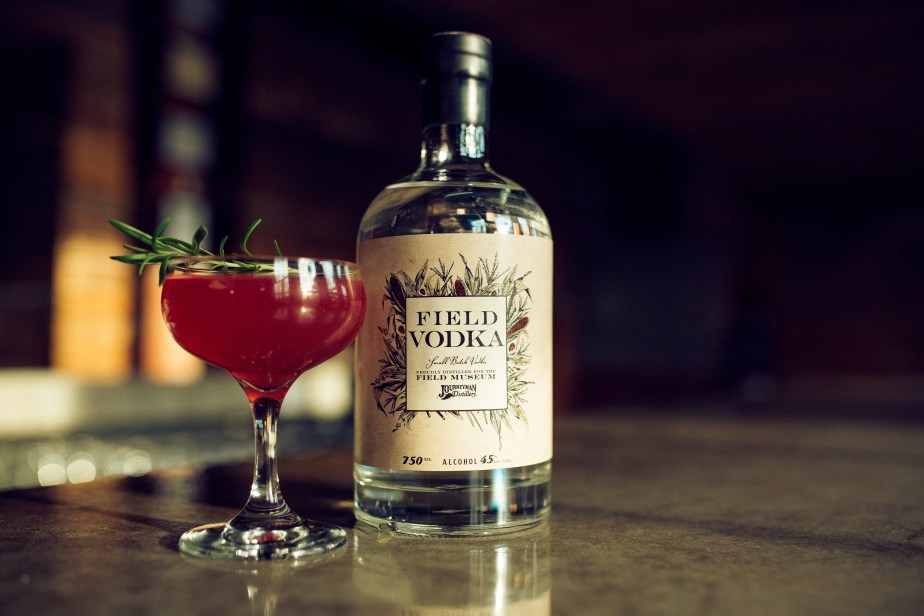
The first product they created was their Field vodka using Bloody Butcher Corn, an heirloom variety often used for making bourbon. The vodka then served as a base for the next distilled spirit, their Field Gin
“We wanted to make a global gin,” says McClain. “So we were pulling species from around the world. We narrowed it down to around 50.”
But once they had the botanicals and began developing recipes, they had to cross off a few more from the list.
“A lot of botanicals that look and taste good, don’t work where you put them in in alcohol, others that I wanted to use were hard to get or arrived too late, I still have agave in the cooler,” says McClain, noting they used other criteria as well in the selection process. “Bill and I wanted the gin to be lavender focused. Obviously gin also has to have a heavy juniper taste as well. We wanted the gin to have tropical undertones and had to figure out those as well.”
Then they were down to 27 including not only lavender and juniper berries but also prickly ash, anise, mango, ginger, coconut palm sugar, pineapple, papaya, Valerian Root, cinnamon, coriander, Horehound, star fruit and Charoli nuts which are sourced from India.
For their Field Rye Whiskey, they tried several types of figs which McClain describes as the world’s oldest sweeteners, finally deciding that Black Mission figs worked the best. The figs were macerated or soaked in alcohol for three months, a process that brought out subtle and all-natural flavors of bananas, sweet melons and strawberries.
“It’s an incredible whiskey,” says McClain. “It has heavy caramel notes and soft marshmallow like palate.”
Bottles of the Field distilled spirits are available for sale. For those who would like to learn more about their taste, they’re also used in some of the cocktails served at the Staymaker, Journey’s restaurant.
Sidebar: Brews
Beer, which is so Chicago given its rich German heritage, was the first partnership Megan Williams embarked upon when she started her beverage program. Two Chicago breweries, Off Color Brewing and Two Brothers Brewing were among the first to use the botanicals to create beers for the museum. researchers at the Field Museum have spent years excavating and studying the Wari site in Peru. Toppling Goliath introduced PseudoSue pale ale, a nod to the museum’s famous 40 feet long and 13 feet tall at the hip, Tyrannosaurus rex. Physically SUE is the largest specimen T. rex specimen that’s been discovered so far.
Off Color’s introduced Wari, their artisan beer based on the Peruvian chicha, a purple corn beer native to areas of Central and South America. One of its other tie-ins with the museum is that Field scientists have spent years leading excavations at Cerro Baúl, a remote mountaintop citadel which was the only contact point between the Tiwanaku and the Wari, considered two great kingdoms whose dynamic relationship ultimately contributed to the rise of the Incan Empire. According to Off Color’s website, an essential sacrament shared by both cultures revolved around chichi. It seems that both tribes liked to consume massive quantiles of chicha served in ornately inscribed drinking cups called keros that were discovered during the archaeological expeditions at Cerro Baúl. In this way, Wari and Tiwanaku cemented their relationships. In other words, next time you see a bunch of heavy alcohol consumers at bars, understand they’re just continuing a thousand year ritual similar to that of the Wari and Tiwanaku.
The following recipes are courtesy of the Journeyman Distillery.
Journeyman Fig Old Fashioned
1.5 oz Field Rye
0.5 oz Fresh Orange Juice
0.25 oz Journeyman Bourbon Maple Syrup
Dash of Journeyman Barrel-Aged Balsamic Vinegar
Dehydrated Orange Wheel
Stir ingredients and pour into a rocks glass, over ice. Garnish with dehydrated orange wheel.
Field Vodka Gimlet
1.5 oz Field Vodka
.75 oz Fresh Lime Juice
.5 oz Simple Syrup
Fresh Lime Wheel
Shake ingredients well and strain into a tall glass over ice. Garnish with a fresh lime wheel.
Field Gin Fizz
1.5 oz Field Gin
.75 oz Fresh Lemon Juice
.5 oz Pear Simple Syrup
1 oz Aquafaba or Egg White
Soda
Star Anise
Combine ingredients and dry shake before adding ice to the shaker. Wet shake until froth has built up. Strain into a Collins glass and top with soda. Garnish with Star Anise.
Wine expert Cassandra Rosen offers a way to take game day beyond chips and beer with special pairings of super cocktails and edibles for a crowd. Rosen, who represents award winning Tussock Jumper Wines, has created a fascinating array of cocktail options along with food pairing ideas that are sure to score on Super Bowl day.
Calling it a twist on the classic ‘Bishop cocktail,’ Rosen says her recipe for The Smoking Quarterback will not only take the chill off, it’s a great pairing for all of those savory, cheesy dishes on the menu. “Try it with creamy cheese fondue, and a selection of breads, pretzels, and crackers. The rich, saltiness of the fondue will contrast well with the wine and apple flavors, and the spice notes in both the drink and the dish will complement each other.“
The Smoking Quarterback
8-10 servings
750 ml bottle Tussock Jumper Tempranillo or Merlot
1 cup fresh apple cider
1 cup spiced rum
1 cup fresh apple cider
3/4 cup dark brown sugar
4 cinnamon sticks
5 cloves
½ tsp freshly ground nutmeg
3 whole star anise pods
Peels from 2 large oranges
1 teaspoon bourbon vanilla extract or one vanilla bean, split
Simmer all of the ingredients in a large sauce pot over medium low heat for approximately 1 hour. Strain and serve warm in mugs garnished with cranberries or cinnamon sticks.
“Spinach artichoke dip or chorizo stuffed mushrooms pair well with a white sangria cocktail,” says Tussock about her Touchdown Citrus Sangria. “Artichokes may make the drink seem sweeter than it is, so a crisp, citrusy cocktail or wine will complement the dip, and are also a good contrast for as the spice and fats in the sausage.
Touchdown Citrus Sangria
6-8 servings
1 Bottle Tussock Jumper Pinot Grigio
4 oz dry orange liqueur
4 oz orange kombucha
1 cup green grapes
2 peaches, pitted and sliced
1 orange, thinly sliced
1 lime, thinly sliced
Garnish: rosemary or mint sprig
Add all the ingredients to a pitcher and refrigerate for 2 to 4 hours before serving. Serve in wine glasses, over ice.
“Feed that hungry crowd with loaded nachos and this modern version of Spanish Sangria for a pairing that’s sure to please,” says Rosen about her concoction—The Red Zone. “The rich cheese flavors will pair well with an easy going red wine, and the citrus in the drink will complement both the corn chips, as well as the fresh salsa or pico de gallo.”
The Red Zone
6-8 servings
1 bottle Tussock Jumper Tempranillo, chilled
½ cup brandy
2 tbs simple syrup
1 large orange, sliced into wedges
1 cup sliced or chopped seasonal fruit (apples, kiwi, strawberries, peaches, grapes)
1 lime or lemon, sliced into wheels
Slice the citrus and fruits, squeezing a few slices of limes over the apples to prevent browning. Squeeze half of the orange into a pitcher, chop the remaining wedges, and add them to the pitcher. Add the rest of the fruit. Add the brandy, simple syrup, and wine, stir to combine.
Serve the sangria immediately, or let it chill for a few hours or overnight for more flavor. Serve in glasses with ice.
“Give your party a little tropical flair with a hibiscus tea infused red wine spritzer,” says Rosen, about Welcome to Miami. “Serve with Cuban sandwiches or pork tacos. Pinot Noir is a lighter, fruit-forward wine, and the flavors will dissolve the oiliness of the pork. It’s also a great match for the buttery, nutty Swiss cheese on the Cuban sand.”
Welcome to Miami
6-8 servings
Ingredients
1 bottle Tussock Jumper Pinot Noir
6 oz sweet hibiscus tea, brewed and cooled
Fresh fruit, like orange slices and strawberries
4 oz vodka
2 oz dry orange liqueur
Sparkling water
Additional fruit for garnish
To make the cocktail: Add the fruit, tea, wine, and liqueur to a large pitcher. Stir, chill, and serve with
Pair teriyaki chicken wings or Asian style meatballs with this party-friendly cocktail, inspired by the Chambord Bellini says Rosen, adding that Riesling wines can be fruity and slightly sweet, which makes them an ideal match for the sweeter flavors in Asian dishes.
In a large pitcher, combine Tussock Jumper Riesling, apple cider, apples, and blackberries.
Chill the pitcher in the refrigerator for at least 1 hour, or overnight. When ready to serve, fill glasses with ice, top with Tussock Jumper Prosecco, and garnish.
About Tussock Jumper Wines
As a gold medal award winning wine portfolio, Tussock Jumper Wines sources only the best limited production vintages each growing season from producers around the globe.
The label speaks to the adventure-seeker, looking to explore new and unique wine experiences. Each bottle features a hand drawn animal representative of its country of origin, wearing a colorful sweater-traditionally red, or green for organic-as a mark of distinction for the Tussock Jumper’s focus on high quality, sustainably made wines.
Currently, the Tussock Jumper portfolio encompasses over 24 wines from eleven different winemaking regions. Each of their wines are bottled right at the source, capturing the best flavors and aromas from grape to glass. All natural and organic farming practices are also implemented whenever possible.
Get the App!
Adding to the fun, Tussock Jumper has also developed an augmented reality app, with each regional ambassador ‘jumping’ off the bottle to help with wine pairings and recommendations for the varietal. Download it free on the Play Store or iTunes now.







 750 ml bottle Tussock Jumper Tempranillo or Merlot


