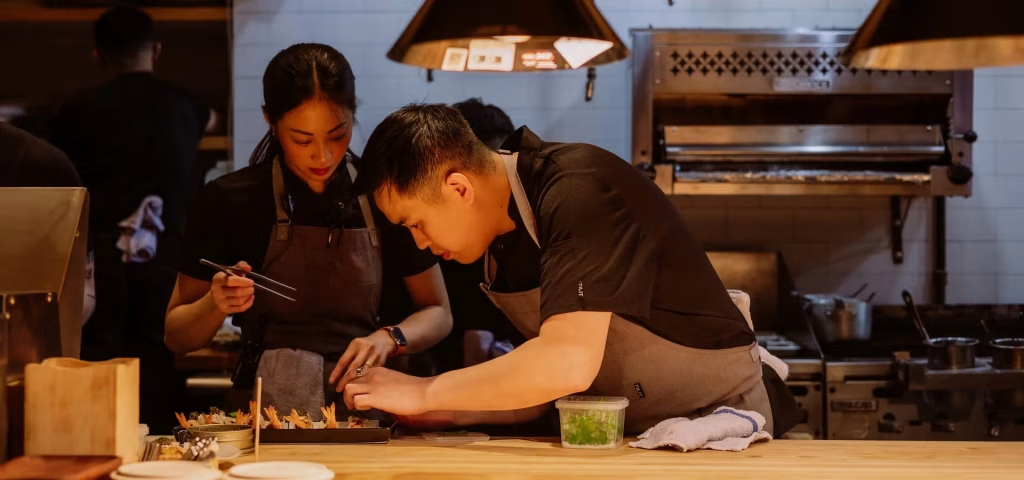
Known for his intense and vibrant cooking style, described as Baja’s coastal brightness meets the depth of the Sonoran Desert, Wes Avila has created a stellar menu at Hecho Libre, an artful and stylish restaurant at the newly renovated Kimpton Miralina Resort & Villas in Scottsdale.
Avila, author of “Guerilla Tacos: Recipes from the Streets of L.A.,” transformed his successful street cart into a brick-and-mortar restaurant in L.A.’s Arts District, winning accolades and awards and propelling his assertive, flavorful culinary take into an international restaurant career.
Photo Joe Thomas.
‘‘Hecho Libre means made free,” says Avila, who twice was a James Beard Award finalist. “It’s about freedom in cooking, honoring tradition but also creating your own path. We wanted to marry that idea with the spirit of the Sonoran Desert.’’
When Cassie Hepler and I met Avila at Hecho Libre, he was getting ready to leave for PIOPIKO, his restaurant in Kyoto, Japan. But Avila always has time to chat, spending time with us talking about the menu items at Hecho Libre and what to try. So, of course we did.
Wes Avila in the kitchen. Photo Jakob Layman.
Among those stellar dishes were Frijoles Charros, Chiles Veneno—bacon wrapped chile Guero peppers stuffed with carnitas, cheese and frijoles charros and then brushed with guajillo honey, Halibut Veracruzana—pan-seared Pacific halibut, roasted tomato, sliced onion, garlic, peppers, olives, and capers, Yellowtail Aguachile with red onion, Asian pear, cucumber, and avocado, Jumbo Garlic Prawns which Cassie rightly compared to succulent lobster meat, and The Cowboy, a 26 ounce K-4 ranch bone-in ribeye with grilled scallions and salsa macha.
If you can’t get to one of his restaurants any time soon, here’s Avila’s recipe for Roasted Tomatillo Salsa.
“Tomatillos can be used raw or prepared in one of many ways – roasting, boiling, simmering. That way I like to do them is roasting them over fire – especially if you have an open fire-pit outdoors. You can make makeshift an open fire-pit indoors with a grate placed over gas stove burner, then give some color to your tomatillos. This recipe specifically uses oven-roasted tomatillos for ease of preparation. Use fresh or store refrigerated for one week.”
Ingredients
1 pound tomatillos, husked, rinsed, and halved if larger than a silver dollar
1/2 cup sliced yellow or white onion
2 garlic cloves, peeled
1 serrano chile, stemmed
1 poblano chile, stemmed, seeded, and sliced
Vegetable oil for drizzling
Kosher salt
Juice from 2 limes
Place a rack at the highest possible position in your oven and preheat the broiler.
Put the tomatillos, onion, garlic, and both chiles on a large baking sheet. Drizzle lightly with vegetable oil, season with salt, and gently toss with your hands to lightly coat the vegetables. Broil for 10 minutes, remove from the oven and toss the vegetables once with a spatula, then broil for another 5 minutes. You’re looking for the vegetables to be nicely roasted and slightly blackened in spots.
Slide the contents of the baking sheet into a food processor and pulse until chunky but not liquified or fully blended. There should be chunks of the chiles and flecks of roasted skin. Add the lime juice and pulse once more to incorporate. Season with salt. Use fresh or refrigerate for up to one week.
Independent Restaurants Show Remarkable Resilience and Strategic Problem Solving as Industry Navigates Continued Rising Costs, Shifting Consumer Behavior, and Rapid Technological Change
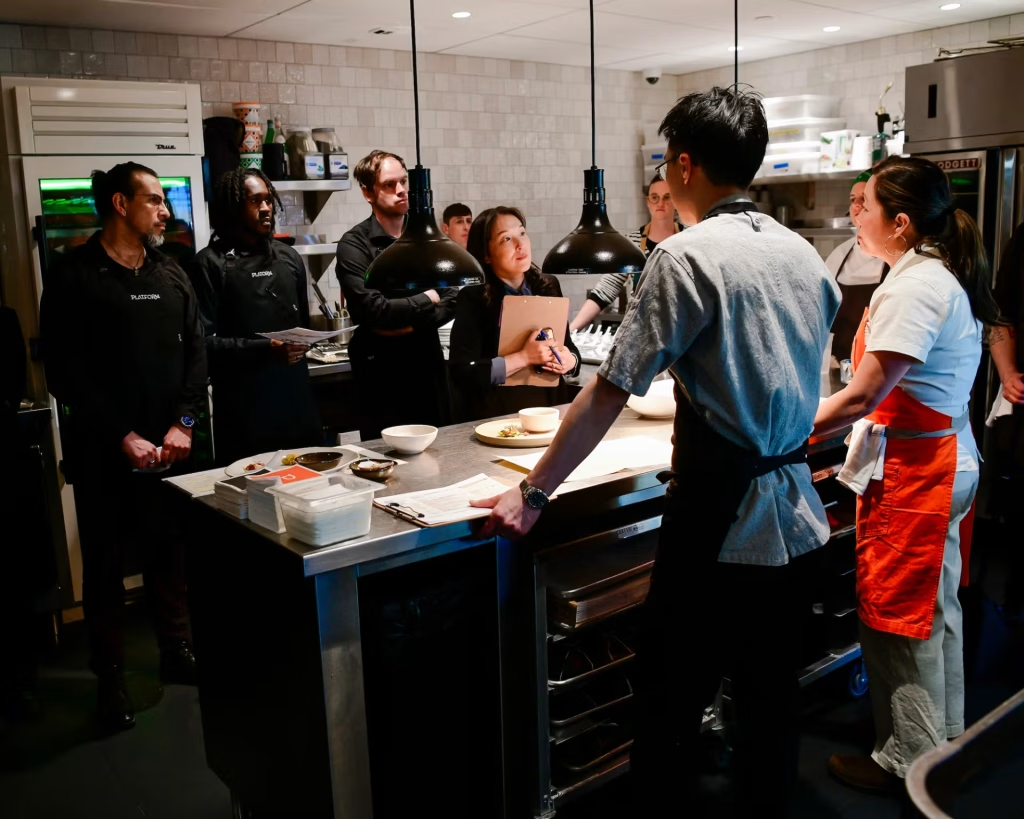
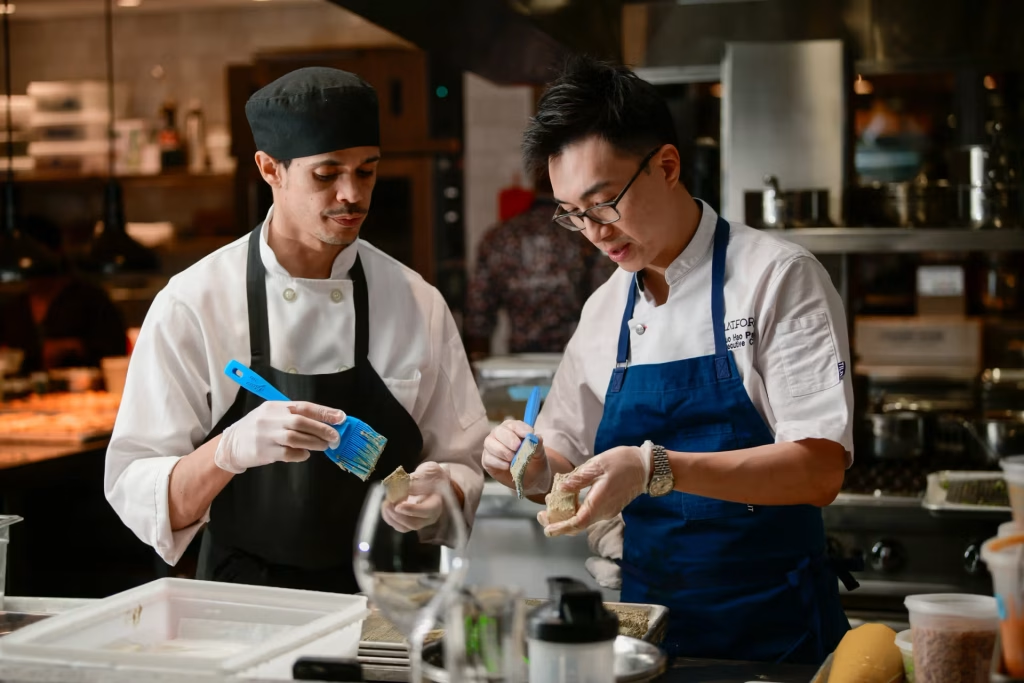
The James Beard Foundation® (JBF), in collaboration with Deloitte, announced today the findings of its 2026 Independent Restaurant Industry Report, a comprehensive analysis of the independent restaurant industry, synthesizing insights from independent owners and chefs, to reveal the industry’s top challenges and opportunities. Drawing from interviews with leading chefs and a nationwide survey of hundreds of owners and operators across the nation, the report provides a wide-ranging view of the current state of the industry, emerging trends, and critical factors that restaurants can leverage to thrive in 2026.
“Independent restaurants areessential to our society,culture,and communities.Theyemploy millions of people, generate billionsineconomic activity,and serve asvital gathering placesformeaningful human connection,” saidClare Reichenbach, CEO, James Beard Foundation. “The landscape has never been more complex, butchefs andoperators are rising to meet it with incredible fortitude and creativity. The James Beard Foundation is deeply committed to supporting their successthrough this report, the JBF Institute, and our entire suite of impact programs and advocacy work.”
The findings paint a picture of an industry moving into 2026 with cautious optimism. Not because pressures have eased, but because independent operators have demonstrated remarkable endurance and adaptability in the face of cost pressures, shifting consumer behavior and expectations, workforce complexity, and rapid technological change. Despite these hurdles, most restaurateurs are implementing innovative strategies to meet current market demands, deepen guest connection, and ensure long-term sustainability.
The study identified four major trends that are helping reshape the industry landscape:
Protecting Margins Amidst Volatility: Fluctuations in ingredient prices, combined with persistent cost pressures, is making margin management increasingly inflexible and reactive.
Supporting the Workforce Beyond Wages: Labor pressures have largely shifted from mitigating shortages to navigating retention, cost management, and regulatory complexity.
Navigating An Expanding Technology Ecosystem: A rapidly growing and increasingly costly technology ecosystem is resulting in more disciplined adoption and intentional investment.
Managing the Consumer Expectation Gap: Converging and increasing consumer experience expectations seems to be widening the disconnect between guest assumptions and operational realities.
The research synthesizes insights from a survey of over 380 independent restaurant owners, chefs, and operators conducted September to November 2025, as well as interviews with 40 chefs. Participants represented a broad cross-section of the industry across 47 states and all four census regions, ranging from fine dining establishments to fast-casual venues, breweries, and caterers.
To read the full report click here. Highlights of key findings are below.
2026 STATE OF THE INDEPENDENT RESTAURANT INDUSTRY
Across survey and roundtable discussions, owners, chefs, and operators described a year marked by continued pressure—on costs, demand, and predictability—but also by profound adaptation. Familiar challenges took on new dimensions in 2025, feeling meaningfully different for many respondents. Inflationary pressures, supply chain disruptions, and rapid shifts in technology converged to reportedly make planning and decision-making more complex. Consumer affordability concerns are reshaping the landscape, while food cost volatility made forecasting, menu planning, and pricing decisions increasingly difficult. Meanwhile, AI and an expanding restaurant technology sector added new complexity and competitive pressure.
Yet despite operating in this recalibrated reality, the 2026 findings reveal an independent restaurant industry marked by steadfast, cautious optimism and hard-earned determination. Fueled by creativity, persistence, and a deep commitment to their communities, they are shaping a future rooted in adaptability, one tactical decision at a time.
HIGHLIGHTS OF FINDINGS
2026 State of Business
Rising general costs, rising labor costs, and finding staff to hirewere the top business concerns among those surveyed and interviewed in 2025.
Wage increases cooled in 2025, with 67% of respondents increasing wages less than 10%. In addition, 18% did not increase wages at all—more than twice the number from last year—reflecting a move towards tighter cost control.
Despite significant pressures, nearly three quarters of respondents (73%) have a positive outlook for 2026, speaking to the determination and experience of independent restaurants to navigate the challenges ahead.
In 2025, 62% of respondents reported excellent or good business performance—increasing YoY from both 2024 and 2023.
Customer volume improved slightly from 2024, with two-thirds of respondents reporting the same or more customers in 2025.
THEME 1: Protecting Margins Amidst Volatility
Rising costs remained the top issue for surveyed chefs in 2025. Sudden price fluctuations in key ingredients forced operators into near-constant adjustment, managing margins reactively while working to preserve quality, guest experience, and cultural identity.
As such, price increases are no longer the reliable margin lever they once were, as many operators noted that they have reached a ceiling in what customers are willing or able to pay.
Restaurants raising menu prices by more than 10% were most likely to report lower profits and expect fewer customers than those that raised prices modestly.
The rise of non-alcoholic beverages was cited as the top consumer trend affecting restaurant operations, putting additional pressure on high-margin categories.
THEME 2: Supporting the Workforce Beyond Wages
Labor concerns remained a top three issue among surveyed chefs. Nearly half of operators (49%) reported some level of staffing insufficiency, with finding qualified staff to hire as the leading factor influencing workforce operations.
The share of surveyed operators raising wages by more than 10% fell sharply, from 71% in 2024 to just 15% in 2025—as providing bigger paychecks became financially unfeasible.
Among operators facing staffing difficulties, high turnover and retention challenges emerged as the most significant factors reported.
As margins tighten, operators increasingly view building internal culture as essential—through such things as cross-training and growth opportunities.
THEME 3: Navigating an Expanded Technology Ecosystem
The technology landscape has expanded dramatically, with more tools, platforms, and decisions confronting operators already managing tight margins and limited capacity. Many report struggling to identify where to invest as providers add features, raise fees, and make switching costly—all while platforms increasingly control customer relationships.
Restaurants with moderate, intentional adoption reported stronger business performance. Both low- and high-tech extremes were associated with weaker outcomes among respondents, reinforcing that more technology does not inherently drive better results.
Reports of better business performance by respondents correlated more with operations-focused technologies like inventory management software than marketing-oriented tools like CRM systems.
In addition, 40% of operators who reported implementing online ordering and delivery integration reported lower profits.
Over 80% of those surveyed say they plan to increase their AI investments in the next year. Inventory and supply chain management, staffing and scheduling, and reservations and customer service were the top three potential AI implementations among respondents.
However, 38% reported that AI tools currently feel irrelevant to their business, reflecting uncertainty about how to leverage these tools effectively.
THEME 4: Managing the Consumer Expectation Gap
Independent restaurants report navigating a widening gap between rising guest expectations and what operators can realistically deliver—as social media and online platforms reshape how guests discover, engage with, and evaluate restaurants.
After increasing food costs, social media marketing and in-person engagement were the top trends surveyed chefs predicted to affect restaurant operations in 2026.
Some owners reported viral exposure negatively affecting performance when they were unable to scale quickly enough to meet demand and deliver consistent quality.
Despite more transactional expectations, restaurants focused on community-driven dining reported stronger outcomes, with 45% indicating increased customer volume compared to 36% for those not citing community influence.
“As independent restaurants face ongoing cost fluctuations, tighter labor dynamics, and rapidly shifting guest expectations, the operators across the industry are responding with disciplined, practical problem solving,” said Evert Gruyaert, US Restaurants & Food Service leader and principal, Deloitte Consulting LLP. “The report suggests that many restaurants are protecting margins through their decisions—supporting teams beyond wages, making intentional technology and AI investments where they improve operations, and deepening guest connection through community-driven dining. Deloitte is proud to collaborate with the James Beard Foundation to help share these insights with independent restaurants as they navigate 2026.”
The annual industry report is part of the James Beard Foundation Institute (JBF Institute), a central hub for training, programs, and resources to support the success of independent chefs and operators. From business resiliency, leadership, and management skills to advocacy training towards policy change, the JBF Institute is the definitive educational resource for the independent restaurant industry and leaders in the broader food system.
ABOUT THE JAMES BEARD FOUNDATON
The James Beard Foundation® (JBF) is a 501(c)3 nonprofit dedicated to leading chefs and the broader culinary industry toward a new standard of excellence. Our guiding principle, Good Food for Good®, informs our vision of a vibrant, equitable, and sustainable independent restaurant industry that stands as a cornerstone of American culture, community, and economy, and drives toward a better food system. For 40 years, JBF has been instrumental in recognizing, amplifying, educating, and training the individuals who shape American food culture. Today, our mission comes to life through the prestigious James Beard Awards, industry and community-focused programming, advocacy and policy initiatives, and culinary events and partnerships nationwide—including at Platform by JBF® and the James Beard House in New York City. Learn more at jamesbeard.org, sign up for our emails, and follow @beardfoundation on social media.
As used in this document, “Deloitte” means Deloitte Consulting LLP, a subsidiary of Deloitte LLP. Please see www.deloitte.com/us/about for a detailed description of our legal structure. Certain services may not be available to attest clients under the rules and regulations of public accounting.
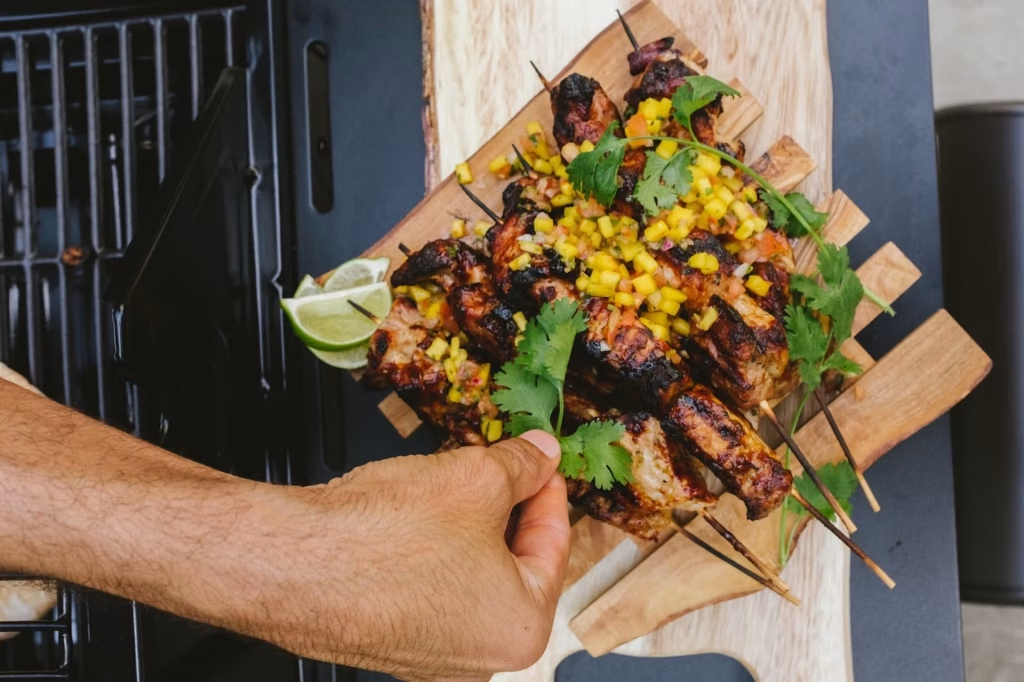
And for fun, here’s a recipe courtesy of the James Beard Foundation.
Ingredients
For the Chicken Pinchos
2 pounds boneless, skinless chicken thighs, cut into 1.5-inch pieces
1 ½ tsp kosher salt
1 tsp black pepper
1 tsp ground cumin
1 tsp onion powder
½ tsp ground turmeric (curcuma)
1 tsp smoked paprika
Juice of 2 limes
3 Tbsp canola oil
Ingredients
For the Mango Salsa
2 ripe mangos, diced
¼ cup finely diced red onion
¼ cup chopped fresh cilantro
Juice of 1 lime
1 garlic clove, finely grated
1 tsp finely chopped jalapeño
Pinch of sea salt
1 tsp olive oil
Method
Pinchos
In a large bowl, mix the chicken with salt, pepper, cumin, onion powder, turmeric, smoked paprika, lime juice, and oil.
Cover and marinate in the fridge for at least 2 hours (overnight is best).
Thread marinated chicken onto skewers.
Grill over medium-high heat, turning occasionally, until cooked through and slightly charred, about 10–12 minutes.
Let rest for 5 minutes before serving.
Mango Salsa
In a bowl, gently toss all ingredients together.
Let sit for 10–15 minutes to allow flavors to meld.
Serve chilled or at room temperature over the grilled pinchos.
“Fritos are a San Antonio delicacy, invented by Gustavo Olguin, who sold the recipe to the owner of a local confectionery shop for one hundred dollars during the Great Depression,” writes Josef Centeno and Betty Hallock in Ama: A Modern Tex-Mex Kitchen. “That guy then created the chip empire known as Frito-Lay. Frito pie, also a San Antonio delicacy, is the stuff of rodeos—usually a bag of the cornmeal chips split open along one side and stuffed with chili and cheese. The version served at Bar Amá is layered with carne guisada, baked in a small cast-iron casserole so the cheddar topping gets warm and bubbly, and garnished with crema, onions, and cilantro. Rather than a portable snack, it’s more like a sit-down meal to share.”
Bar Ama Cookbook by Josef Centeno & Betty Hallock for Chronicle Books
Centeno is the owner of Bar Amá, a Tex-Mex restaurant in Los Angeles as well as others including the Michelin-starred Orsa & Winston, both part of The Josef Centeno Group. His menu offerings at Bar Ama are inspired by his childhood food memories and the cooking of his great grandmother, Amá.
Carne Guisada Frito Pie
Serves 4
4 cups [240 g] Fritos corn chips
1 cup [260 g] carne guisada (page 63)
1 1/3 cups [135 g] grated cheddar cheese
1/4 cup [60 g] crema Mexicana or sour cream
2 Tbsp finely diced red onion
2 Tbsp finely chopped fresh cilantro leaves
Heat the oven to 350°F [180°C].
In each of 2 small baking dishes or ovenproof casseroles, layer 1 cup [60 g] of the corn chips, 1/4 cup [65 g] carne guisada, and 1/3 cup [35 g] cheddar cheese. Add another layer of chips, carne guisada, and cheese. Bake in the oven until the cheese is melted, 8 to 10 minutes. Remove from the oven and top each dish with 2 Tbsp crema, 1 Tbsp onions, and 1 Tbsp cilantro. Serve immediately.
Carne Guisada
Centeno describes carne guisada as his “bowl of red.” Except that he never eats it in a bowl but instead, always in a flour tortilla.
“Like chili con carne, this stewed beef is made with chunks of beef and dried chiles and spices, and it also contains tomatoes,” he explains. “But unlike chili con carne, it isn’t served with a bunch of other ingredients and garnishes. Tucked into a flour tortilla, it needs nothing else—just straight up carne guisada.”
Serves 6 to 8
2 ancho chiles
4 Tbsp [60 ml] olive or avocado oil
2 1/2 to 3 lb [1.2 to 1.4 kg] boneless short rib, trimmed and cut into 1 1/2 in [4 cm] cubes
1 large onion, finely diced
1/2 tsp fine sea salt
5 garlic cloves, chopped
1 serrano chile, stemmed, seeded, and finely chopped
Using tongs, toast the ancho chiles over the open flame of a gas burner until slightly softened and fragrant, 1 to 2 minutes. Stem and seed the chiles and tear them into pieces. Set aside.
Heat 2 Tbsp of the oil in a Dutch oven or another large heavy-bottom pot over medium-high heat. When the oil shimmers, add the beef and brown it on all sides, 10 to 12 minutes.
Add the remaining 2 Tbsp of oil to the pot. When the oil is hot, add the onion and salt and cook over medium heat, scraping up the browned bits of meat at the bottom of the pot, until the onions are soft, about 5 minutes.
Add the garlic, serrano, oregano, cumin seeds, chile powder, bay leaf, and several grinds of black pepper and cook until fragrant, 30 seconds.
Add the toasted chiles to the pot along with the flour and stir until incorporated. Add the beef broth and tomatoes and bring the mixture to a boil.
Reduce the heat to low and simmer, partly covered, stirring occasionally, until the meat is tender and the sauce is thickened, 2 1/2 to 3 hours. Taste and adjust the salt. Store, covered, in the refrigerator for up to 3 days.
Bar Ama Cookbook by Josef Centeno & Betty Hallock for Chronicle Books
Vanilla Bean Semifreddo with Dulce de Leche
“This is an easy version of vanilla ice cream,” says Centano, “which we make at Bar Amá with cream and crème fraîche—no ice-cream maker necessary! We use it for raspados of shaved ice and hibiscus syrup, for fried ice cream, or to serve drizzled with dulce de leche or chocolate sauce.”
Serves 6 to 8
Vanilla bean semifreddo
6 egg yolks
1 1/2 tsp dark brown sugar
1/2 cup [100 g] granulated sugar
1 1/2 cups [360 ml] heavy cream
1/2 cup [120 g] crème fraîche
Seeds of 1 vanilla bean
Dulce de leche
One 14 oz [420 ml] can sweetened condensed milk
make the semifreddo: Put the egg yolks, brown sugar, and granulated sugar in the bowl of a stand mixer fitted with the whisk attachment. Mix on medium-high to high speed until the mixture is pale yellow and fluffy, about 8 minutes. Set aside.
Combine the heavy cream, crème fraîche, and vanilla seeds scraped from the bean in a clean bowl, and with a clean whisk attachment, or a hand mixer with regular beaters, whip until soft peaks form.
Carefully fold the whipped cream mixture into the egg mixture. Pour into a container, cover, and freeze for 6 hours or overnight. Any leftover ice cream will keep in the freezer for up to 1 week.
make the dulce de leche: Peel the label off the can of condensed milk and put the can in a large pot. Add enough water to the pot so it comes within 2 fingers of the top. Bring to a boil over medium-high heat. Lower the heat to medium-low and cook for 6 hours, checking the water level, and adding more as needed to keep the pot filled. Remove the can with tongs and set aside to cool overnight at room temperature.
Serve the semifreddo with a drizzle of the dulce de leche. Store any remaining dulce de leche in a covered container in the refrigerator for up to 1 month.
Reprinted from Ama by Josef Centeno and Betty Hallock with permission by Chronicle Books, 2019
Louisville’s iconic Highlands neighborhood starts a new culinary chapter inspired by award-winning Chef Lawrence Weeks. Weeks, a James Beard semifinalist and rising Southern culinary talent proudly announces the grand opening of Murray’s Creole Pub, a restaurant rooted in family legacy, bursting with passion, and built to honor the culinary dreams of those who came before him.
Named in tribute to his great-grandfather Lawrence Ignatius “Buzz” Murray and grandfather Lawrence Xavier Murray, Murray’s carries the dreams of two men who always aspired to run their own kitchen.
“This is more than food,” says Weeks. “It’s a tribute to the men who inspired my fire for cooking. They never got their shot to be head chefs – so I’m giving them the stage they always deserved.”
At Murray’s Creole Pub, the convivial spirit of British pub culture finds unexpected harmony with the bold, soulful cadence of Creole cuisine. Here, the comforting ritual of gathering over a pint meets the vibrant storytelling of the Southern table. With its warm and welcoming ambiance, the downstairs pub is the place to try such classic menu items as their burgers, fish & chips and tikka masala curry.
Chef Lawrence Weeks, James Beard semifinalist and rising Southern culinary talent, has just opened Murray’s Creole Pub in Louisville. Named in tribute to Chef Weeks’ great-grandfather, the warm and welcoming atmosphere offers a menu ranging from casual pub classics to soulful southern and Creole flavors. Murray’s Creole Pub is now open at 📍1576 Bardstown Road. 🕰️ Lunch service begins at 12 p.m 🕰️ Dinner service from 5:00 p.m to 10:00 p.m. 🕰️ Happy hour from 3:30 p.m – 5 p.m. Dishes pictured in the video: ▫️Acadian Oysters ▫️Scotch Eggs & Olives ▫️Fish & Chips ▫️Chicken Tikka Masala ▫️Coconut Curry-lentil ▫️Parmesan Fries ▫️Sticky Toffee Pudding-butterscotch (don’t skip! 😍) #newinlouisville#creole#louisvilleeats#louisvillerestaurants#louisvilleky
Upstairs, the mood shifts. The dining room evokes a more refined rhythm – intimate lighting, thoughtful plating, and a menu that leans into fine dining without losing its soulful roots. Oysters and caviar service lead the way for an experiential pub style menu – reimagined to take you on a culinary journey like never before. It’s a dual experience under one roof and an ode to the art of Southern hospitality, plated with intention and poured with grace.
Murray’s Creole Pub is open to the public on Dec. 12th at 1576 Bardstown Rd., Louisville, KY. Lunch service begins at 12 p.m with dinner service from 5:00 p.m to 10:00 p.m. Happy hour from 3:30 p.m – 5 p.m. Reservations are available now on Resy and walk-ins are welcome.