Watch candy and history being made at Schimpff’s Confectionery in historic Jeffersonville, Indiana, just across the Ohio River from downtown Louisville. Known for their red hots and red-fished shaped candies are among the originals made by this multi-generational family owned confectionery. Another favorite, dating back to when European opera star Helena Modjeska toured the U.S. several times, performing in front of vast and enthusiastic crowds in Louisville, Kentucky in the 1880s. Sure, she thrilled the elite in New York and San Francisco but did they create and name a candy after her?
No but Kentucky did and Modjeskas are very much a treat around here–marshmallows dipped in caramel and then chocolate.
Schimpff’s Confectionery, one of the oldest, continuously operated, family-owned candy businesses in the United States, began in its present location on April 11, 1891. Started by Gus Schimpff Sr. and Jr., the business survived wars, floods, depressions, and recessions through four generations and continues to flourish.
But really, those Schimpffs have been making candy a whole lot longer, starting in Jeffersonville around 1871 and in Louisville since the 1850’s. That’s a lot of candy.
The 1860 census shows various Schimpffs making candy on Preston Street in Louisville. Magdalene Schimpff, a widow, brought five of her eight children from Bavaria to settle in Louisville, where the eldest son had already settled. The two youngest children joined them after finishing elementary school in Germany. Magdalene and daughter, Augusta, went into the embroidery business while the sons went into the confectionery business.
Warren Schimpff prepares their cinnamon Red Hots .
Fast forward through the decades, no make that more than century total, according to their website
Warren Schimpff with the molten liquid candy
In the 1940s, Catherine, Wig, and his son, Sonny, became the working partners. Wig was the candy maker and Catherine the manager and lunchroom cook.In the 1950s, Sonny developed an area of the store as a hobby business, specializing in model trains and planes. His mother, Vivian, became the bookkeeper.
After Wig’s death in 1952, Sonny took over as the candy maker and for forty years he and Aunt Catherine built a reputation known widely throughout Southern Indiana. Sonny’s death in 1988 and Catherine’s in 1989 forced another change in the ownership of Schimpff’s Confectionery.
The molten candy used to make the Swedish Fish will now be rolled out.
Still a family business, it’s now owned and operated by Warren Schimpff, one of Weber’s sons, and his wife, Jill Wagner Schimpff who bought the candy business from his Aunt Catherine’s estate. They wanted to be able to celebrate the centennial anniversary and to maintain the Schimpff family’s candy legacy.
Swedish Fish
It’s a romp through candy history as well–there’s an old fashioned soda fountain an a large confectionary museum that’s free of charge.
The Golden Lamb had been open for three decades or so when Lincoln visited Lebanon, Ohio. Though no records exist that he dined or stayed at what was then a busy stagecoach stop, it seems more than likely he’d at least sup in the dining room with its wide fireplaces used for cooking as well as to heat the rooms.
Let’s hope if he did,
the scene was somewhat quieter than past meals such as the one described on the
Golden Lamb’s website, recounting how “superb dinners were prepared by Jonas
Seaman, Henry Share and others and served on the public square.
“These affairs
frequently ended in brawls, and on July 4th, 1804, one of the guests attacked
Jonas Seaman with his sword. Seaman brought charges against the man, Francis
Lucas, who was a guest at his hotel. The charges read that “the guest
Francis Lucas, with sword, staves and knives, force and arms, assaulted the
said Jonas Seaman and did great damage against the peace of the State of Ohio.
We’re not quite sure
when the Golden Lamb first began serving Thanksgiving dinners (Lincoln declared
the fourth Thursday of November a national holiday in 1863) but it was a
standard most likely from the very beginning.
John Zimkus, historian
for the Golden Lamb, a glorious four-story building located in Lebanon’s
historic downtown, discovered an article that ran in the Dec 6, 1888, edition
of The Western Star. The reporter boasts about how great the Thanksgiving meal
was, comparing it more than favorably to anything served in Cincinnati. Menu
items included oysters, consommé oysters and turkey stuffed with oysters, along
with whitefish, roast beef, chicken croquettes, wild duck, broiled quail,
celery and lettuce (plain or with mayonnaise), plum pudding, mince pie,
pineapple with “De Brie cheese” and Charlotte Russe.
I couldn’t find a
description of the “De Brie cheese” or even why it was in quotations, but it
must have been very popular as there were plenty of advertisements for it in
the late 1800s and early 1900s. As for Charlotte Russe, it’s a dessert of sweet
cream and sponge cake, popular during the Victorian and Edwardian eras.
Oysters, which were
cheap back then, no longer grace most Thanksgiving tables except maybe in the
stuffing and nobody I know serves chicken croquettes, wild duck, whitefish or broiled
quail for the holiday. So if you have a hankering for boil quail, look elsewhere.
But several traditional items remain from that 1888 meal–cranberry sauce,
mashed potatoes, turkey, sweet potatoes and the restaurant’s famous rolls. All can
be enjoyed in the central dining room original to the inn which opened in 1804.
The following recipes
are courtesy of the Golden Lamb.
Apple Sage Stuffing
1 teaspoon butter
2 Granny Smith
apples, in half-inch dice
1 tablespoon brown
sugar
Pinch of cinnamon
1 stick butter
½ cup diced onion
1 stalk of celery
1 leek, quartered,
rinsed thoroughly, diced
2-3 cups turkey or
chicken stock
1 teaspoon rubbed
(dry) sage
1 teaspoon poultry
seasoning
¾ teaspoon Kosher
salt
½ teaspoon ground
black pepper
3 quarts cubed bread,
stale or dried in oven (about 1 ½ pounds)
¼ cup fresh sage,
chopped
Melt the teaspoon of
butter in a large skillet. Add apples and sugar and sauté lightly until sugar
is melted and apples are softened but still have a bite. Remove to a bowl.
Melt the stick of
butter in a large deep skillet, add onion, celery and leeks and cook slowly
until onions become transparent. Add 2 cups of turkey stock, the rubbed sage,
poultry seasoning, salt and pepper. Add the bread cubes and stir. The cubes
should be evenly moist, but not soggy. Add more stock if necessary.
Stir in apple
mixture.
Spread in a shallow
pan in a layer no thicker than 2 inches. Bake for about half an hour, until top
layer is brown and crusty.
Brussels Sprout Salad with Dried Cranberries and Sliced Almonds
1 pound fresh
Brussels sprouts, very thinly sliced
½ cup dried
cranberries
¼ cup slivered
almonds, toasted
½ cup lemon poppyseed
dressing
1 teaspoon poppyseeds
Salt and pepper
In a salad or serving
bowl, toss all the ingredients. Add salt and pepper to taste, and more dressing
if necessary. Let marinate for at least 30 minutes.
Lemon Poppyseed
dressing
¼ cup lemon juice
1 teaspoon Dijon
mustard
1 clove garlic,
chopped
2 tablespoons chopped
shallot (about half a shallot)
Salt and pepper to
taste
1 cup salad oil
1 teaspoon poppy
seeds
1 teaspoon white
vinegar
1 tablespoon sugar
Blend lemon juice,
mustard, vinegar, garlic, shallot and sugar together in a blender. Slowly
drizzle salad oil in while running blender, until emulsified. (Or whisk with a
fork while adding oil or put in a jar and shake). Add salt and pepper and poppyseeds, taste and
adjust seasonings.
Cranberry sauce
There’s an easy way and
a difficult way to make a spice sachet. If you’re totally in on authenticity, cut
a square out of cheesecloth and place all the spices listed below in it. Then gather
the edges the square and tie tightly with twine or string.
Rather not?
Substitute a coffee
filter for the cheesecloth, just make sure to tie the ends tightly together.
1 teaspoon whole
cardamom
1 cinnamon stick
1 teaspoon whole
coriander seeds
½ teaspoon ground
nutmeg
2 oranges
1 12-ounce bag fresh
cranberries (or frozen)
1 cup sugar
⅓
cup orange juice
1 ½ cups cranberry
juice
Put the cardamom,
cinnamon, coriander and nutmeg in a spice sachet. Peel the oranges, being sure
to remove white pith. Cut in half, then slice. Place cranberries, oranges,
sugar, orange juice and cranberry juice in a pot. Add the sachet. Bring to a
boil, then reduce to a simmer until the cranberries have popped, the liquid has
thickened and has reduced somewhat. Let cool, then chill.
I was going to write a column about New Year’s Eve celebration foods but got distracted by Ten Restaurants That Changed America by Paul Freedman (Liveright 2018; $23.95), a look at how food evolved in this country. I’m going to be interviewing the author after I finish the book but instead of reading it from front to cover as soon as I read the introduction I turned to the chapter on Howard Johnson’s because those orange roofed restaurants and lodges are part of my youth. I worked at HoJo’s when I was a teen and as a young girl, when we traveled to New York, Connecticut and along the eastern seaboard, we typically stayed at their lodges.
I remember the sparkling pool, so inviting after a long day in the car, trying to read a book or do crossword puzzles while whizzing along—we only had an AM radio in the car and my mother didn’t like the noise of it when she was driving. Dinner was typically fried clams, hamburgers or clam chowder and always one of their many flavors of ice cream. Probably most famous for their clam dishes, the chapter about Ho Jo’s in Freedman’s book is titled Howard Johnson’s: As American As Fried Clams.
If you’re wondering about all the clam dishes, Johnson was from Massachusetts and the chain started off in New England. And maybe people ate more clams back then.
At one time, according to the book, during the 1970s, Howard Johnson’s had 929 restaurants and 526 motor lodges stretching across the U.S. In the 1960s, the restaurants served more meals outside the home than any company or organization except for the U.S. Army. There actually was a Howard Johnson (his middle name was Deering) and he was born in 1897 and though he liked to present himself, even at the height of his company’s success, as a simple man, he married four times, owned a yacht, three houses and a substantial art collection. Oh, and he didn’t really eat at Howard Johnson’s much. Instead he liked high-end French dining like Le Pavillon and the Stork Club, both fancy and ultra-expensive New York restaurants.
I’m not quite sure if there are any HoJo’s left. There were a handful less than a decade ago including on in Times Square and another in Bangor, Maine but those are gone. A Google search indicates that the last one, in Lake George, New York, was, as of earlier this year, was up for sale as a possible site for redevelopment. It had just re-opened the year before after being closed for four years. Unfortunately the person who had re-opened it had some legal issues. For more information, check out hojoland.com, a Website for all things Howard Johnson.
Occasionally I see a building that
looks like it was once a HoJo but has been converted to another use and the
orange roof has usually been replaced. Because there are websites for almost
anything, there are a few identifying converted HoJo’s as well.
Though the restaurants are gone, many of the recipes remain and I looked up a few that I remember enjoying way back when and was fascinated to find out that the legendary French chef Jacques Pepin once worked at HoJo’s, a time he talks about in his memoir, The Apprentice: My Life in the Kitchen. Pepin, who would make their clam chowder in 3,000-gallon amounts, recreated the recipe for home cooks, saying he makes it “when a bit of Howard Johnson’s nostalgia creeps in.” His contains pancetta which I’m guessing is a substitute for the bacon in the original recipe. He also uses Yukon Gold potatoes and I don’t think that variety was common back in 1929 when Johnson opened his first restaurant.
Jacques Pepin Howard Johnson’s Clam Chowder
5 quahog clams or 10 to 12 large cherrystone clams
4 cups water
4 ounces pancetta or lean, cured pork, cut into 1-inch pieces
(about ¾ cup)
1 tablespoon good olive oil
1 large onion (about 8 ounces), peeled and cut into 1-inch
pieces (1-1/2 cups)
2 teaspoons chopped garlic
1 tablespoon all-purpose flour
2 sprigs fresh thyme
1 pound Yukon Gold potatoes, peeled and cut into ½-inch dice
(2-1/4 cups)
1 cup light cream
1 cup milk
¼ teaspoon freshly ground black pepper
Wash the clams well under cold water, and put them in a saucepan
with 2 cups of the water. Bring to a boil (this will take about 5 minutes), and
boil gently for 10 minutes. Drain off and reserve the cooking liquid, remove
the clams from their shells, and cut the clams into 1/2 –inch pieces (1-1/2
cups). Put the clam pieces in a bowl, then carefully pour the cooking liquid
into another bowl, leaving behind any sediment or dirt. (You should have about
2-1/2 cups of stock.) Set aside the stock and the clams.
Put the pancetta or pork pieces in a large saucepan, and cover
with the remaining 2 cups water. Bring to a boil, and boil for 30 seconds.
Drain the pancetta, and wash it in a sieve under cold water. Rinse the
saucepan, and return the pancetta to the pan with the oil. Place over medium
heat, and cook gently, stirring occasionally, for 7 to 8 minutes. Add the onion
and garlic, and continue cooking, stirring, for 1 minute. Add the flour,
mix it in well, and cook for 10 seconds. Add the reserved stock and the thyme,
and bring to a boil. Then add the potatoes and clams, bring to a boil, cover,
reduce the heat to very low, and cook gently for 2 hours.
At serving time, add the cream, milk, and pepper, bring to a
boil, and serve. (Note: No salt should be needed because of the clam juice and
pancetta, but taste and season to your liking.)
Howard
Johnson’s Fried Clams
1 cup
evaporated milk
1 cup milk
1 egg
1/4 teaspoon
vanilla
Dash salt
and pepper
4 dozen
freshly shucked clams
1 cup cake
flour
1 cup yellow
cornmeal
Oil for
frying
Combine
evaporated milk and whole milk, egg, vanilla, salt, and pepper. Soak clams in
liquid and then dredge in combination of cake flour and cornmeal, fluffing them
in the flour mixture for light but thorough coverage. Shake off excess flour
and fry in oil. Serve with French-fried potatoes, tartar sauce, homemade rolls,
and butter.
Howard
Johnson’s Chicken Croquettes
6 tablespoons
chicken fat (can use butter instead)
1 ¼ cups
flour
2 1/4 quarts
chicken stock. hot
6
tablespoons chopped onions
2 tablespoons
chopped parsley
3 cups bread
crumbs
3 eggs
1 tablespoon
salt
1 teaspoon
black pepper
2 pounds
boneless chicken, finely minced
Sauté onions
in chicken fat but do not brown.
Make a roux
(recipe below). Add hot chicken stock, and add seasonings. Stir constantly
until mixture thickens and is well blended.
Add minced
chicken and chopped parsley. Cook 5 minutes more, then remove from fire and
chill. Scoop and shape into croquettes. Dip in flour, egg wash and bread crumbs
and fry in deep fat until lightly browned on all sides.
These were
served a cream sauce (see recipe below).
Roux
1/4 pound
butter
1 stalk
celery, minced
1 cup
all-purpose flour
Cream Sauce
2
tablespoons butter
3
tablespoons flour
1/4 teaspoon
salt
Dash of
cayenne pepper
1 cup
chicken broth
1/2 cup milk
Melt butter
in pan; stir in flour and seasonings. Cook on low until smooth; stirring
constantly, add broth and milk slowly; to maintain thickness, stir on medium
heat until all milk and broth is added and sauce is thick.
In a heavy
pot, melt butter and then add the minced celery. Stir in the flour and cook for
3 minutes., stirring constantly. Fold in the chicken meat and allow to cool.
Howard
Johnson’s Boston Brown Bread
1 cup unsifted
whole wheat flour
1 cup
unsifted rye flour
1 cup yellow
corn meal
11/2
teaspoon baking soda
11/2
teaspoon salt
3/4 cup
molasses
2 cups
buttermilk
Grease and
flour a 2 quart mold. Combine flours, corn meal, soda ,salt. Stir in molasses,
buttermilk.
Turn into
mold, cover tightly. Place on trivet in deep kettle. Add enough boiling water
to kettle
to come half
way up sides of mold; cover. Steam 3 1/2 hr., or until done. Remove from mold
to cake
Not to be missed next time you’re in Lafayette is a stop at Triple XXX Family Restaurant. Opening in 1929, Triple XXX was the state’s first as well as its oldest drive-in.
Their root beer dates back even further to 1895 when the Galveston Brewing Company first started making beer and then later added soft drinks to the list of products.
The popularity of their root beer led to an expansion of Triple XXX root beer stands in the U.S. but with the acquisition and merging of brands in the U.S. to the point that only three major brands – Coca Cola, Pepsi and Dr. Pepper/Seven-Up control the market, Triple XXX is difficult to find. But well worth the search.
Besides the great root beer, the family owned restaurant grinds their own sirloin daily for all their burgers including The Duane Purvis All-American, a 1/4 pounder topped with melted cheese, lettuce, tomato, pickle, Spanish onion and peanut butter (yes, peanut butter).
2 N. Salisbury St. West Lafayette. 765-743-5373; triplexxxfamilyrestaurant.com
Judging for
the 17th Annual Indiana Wine Fair took place on May 4 and 5, 2019,
in the Old Barn at Story Indiana. Eight judges participated: Matt Gordon, Lou
Melillo, Joe Persinger, Yael Ksander, Adrian Lee, Nicole Lee, Justine Fearnow
and Rick Hofstetter. The wines were grouped into seven categories. All
submitted wines were “produced” in Indiana. Most, but not all, of the fruit was
also grown in Indiana, and the majority of that within the Hoosier Uplands
American Viticultural Area (“AVA”).
NOTE: ALL OF THESE WINES WILL BE
FEATURED AT THE INDIANA WINE FAIR ON MAY 11. Tickets may be purchased at www.indianawinefair.com.
JUDGING RESULTS BY CATEGORY:
Dry Red
GOLD:
Heritage, Huber Winery 2015, a blend of Cabernet Sauvignon (40%), Cabernet
Franc (35%) and Petit Verdot (25%). BEST
OF SHOW
SILVER:
Patoka Lake Select 2016 (Cabernet Sauvignon)
BRONZE:
TIE
Huber Generations 2015, a blend of
Chambourcin, Cabernet Franc and Blaufrankish.
Cedar Creek “Dark Secret” Pinot Noir
N. V.
TASTING
NOTES: This category showed considerable strength, and Huber’s “Heritage” once
again took “Best of Show”. It is a well-kept secret that Huber produces some of
the best Bordeaux-style wines in the world, and every last grape is grown on
its family estate in the Hoosier Uplands AVA. The Heritage was an unusual
unanimous choice by the judges this year. A pleasant surprise in this category
was Patoka Lake’s “Select” 2016 Cabernet Sauvignon, a beautifully complex wine
despite its youth. A wine of this quality would have won a gold in every
category, but for Huber’s Heritage. Huber’s “Generations” took the Bronze, in a
tie with Cedar Creek’s “Dark Secret” Pinot Noir. The “Generations” was estate
grown; the “Dark Secret” pinot noir was not.
Pinot noir is a notoriously fickle grape to grow, and we encourage
Hoosier vintners to take on that challenge.
Dry White
GOLD:
Knobstone Vineyard Pinot Gris 2017
SILVER:
Winzerwald Gruener Weltner, N.V.
BRONZE:
Huber Vignoles 2017
TASTING
NOTES: This category was dominated by
hybrids, as one may expect in this AVA soil and climate. The gold was crisp,
completely dry and estate-grown in AVA. Winzerwald did a commendable job of
producing an Austrian-style Gruener Weltner, crisp and dry and typically
colored. We visualized the Tyrolian Alps when we sipped it. It might have won
the gold, but it was not estate grown. The bronze was another Huber
estate-grown AVA, with a hint of sweetness.
Blush
GOLD:
Ertel Cellars Catawba, N.V.
SILVER:
Ertel Cellars Stuben, N.V.
BRONZE:
Huber “Stella di Luce” Sweet Rosado, N.V.
TASTING
NOTES: This category is defined by color and not sweetness, and so we
experienced wines ranging from semi-dry to sweet. Our effort was to select the
best wine regardless of sweetness. Ertel Cellars dominated with two excellent
sweet wines made from Catawba and Stuben. It was nearly a toss-up, but the
Catawba won the gold for being slightly more complex. We gave Huber’s “Stella di Luce” the bronze
because it showed interesting complexity and semi-dryness. All three medal
winners in this category were estate grown AVA.
Sweet White
GOLD:
Simmons Winery Late Harvest, N.V.
SILVER:
Ertel Cellars Vignoles N. V.
BRONZE:
Huber Winery Moscato (sparkling)
TASTING
NOTES: All wines in this category ranged from sweet to semi-sweet. We judged
them by their complexity, and Simmons’ Late Harvest was winner by consensus.
Ertel continued to dominate in white grapes, taking a silver. Huber was a
pleasant departure from the rest, a sparkling Moscato made in the traditional
Champagne method. All metal winners were estate-grown AVA.
Sweet Red
GOLD:
Ertel Cellars “Luscious Red” , N.V.
SILVER:
Huber “Sweet Marcella”, N.V.
Huber
“Starlight Red”, N. V.
TASTING
NOTES: The gold and silver in this category were predominantly Concords, a
grape native to the US. “Sweet Marcella” is Huber’s best-selling wine and
pleases the Hoosier palate. The “Starlight Red” was an interesting blend of
Chambourcin, Chancellor, Cabernet Sauvignon and Cabernet Franc, all estate
grown. The judges could not get used to the associating these grapes with
sweetness but thought that Huber ought to be commended for making that effort.
Non-Traditional
GOLD:
Salt Creek Winery Cherry Rose (white grapes and cherry)
TASTING
NOTES: This category consists of any wine made at least partially from
non-grape fruit. Salt Creek won the gold with a provocative blend of grapes and
cherries, sweet yet tart and full-bodied. Carousel’s “Winter Jewel” is a mulled
wine that was intended to be sipped at 110 degrees F. It was lovely and very tart,
and one could imagine sipping it from a
cut crystal glass at the Thanksgiving dinner table. Some of the judges thought
it should have been entered in the “Dessert” category instead. Ertel produced a
nice and surprisingly complex wine from strawberries to win the bronze.
Dessert
GOLD:
Knobstone Reserve
SILVER:
Salt Creek “Sweet Revenge”
BRONZE:
Harmony Winery “Rhapsody”
TASTING
NOTES: This category involved sweet after-dinner wines, many of which were
fortified and high in alcohol. The Knobstone from Huber was a delicious
traditional port-style wine (18.6%), best served with stilton and shortbread.
Salt Creek won a silver for a delicious and complex fortified red wine
(19%). Harmony Winery took the bronze
with a nice chocolate flavored wine (15%).
In the years I’ve been writing about food for the Herald Palladium, the largest newspaper in Southwest Michigan, I’ve received many requests from readers for recipes but undoubtedly the most popular request has been for the fried chicken and Cole slaw recipes from Mead’s Chicken Nook, a very popular eatery in Benton Harbor and St. Joseph from 1945 until the late 1980’s which was started by Pearl and Buster Mead.
I was always told that the family
never shared the recipes from the restaurant so I was surprised when I heard
from Gina Lewis Schmaltz of Baroda suggesting I contact her brother Guy Lewis.
A quick message to him on Facebook and within a week we met at Watermark
Distillery in downtown Stevensville (Guy lives nearby) and I suddenly had a
copy of the recipes and more family history in my hands. It was like striking
gold.
“It wasn’t that we wanted to keep
these secret,” Lewis told me. “It’s just that I was afraid people wouldn’t believe
me because the chicken recipe is so simple. I thought people would think we
were keeping out a secret ingredient.”
It is indeed a very simple recipe.
An egg and milk batter, a little salt and flour. The steps are important, Guy
told me. The chicken is salted right before it’s dipped.
I told him that I was often
surprised at how simple some recipes are. There’s a famous perch, chicken and
frog leg place in Northwest Indiana where I grew up. It’s called Teibel’s Family
Restaurant and has been in business in Schererville for 90 years. When I was
given the recipe for their chicken, perch and frog legs, I was astounded it was
so simple. Basically flour and some seasonings the same recipe the original
Mrs. Tiebel had brought with her from Austria, her native country. But like piano playing and other skills, the
magic is in the cooking. We can all be given the same recipe or the same sheet
of music, but how it comes out is often extremely different.
Obviously the Mead family knew how
to fry chicken. During Prohibition Buster Mead learned how to do so at the
Allendale Resort in Branson, Missouri where he and his future wife, Pearl
McClure, were from.
“My grandparents moved from Branson to Benton Harbor at the start of World War II
because Buster assumed he would be drafted into military service and while he
was gone Pearl could live with her parents, Daisy and Jim McClure,” Lewis says.
“They lived in Stevensville and Jim worked at Emlong’s Nursery. They had also
recently moved from Missouri. Buster took a job at Upton Machine company–now
Whirlpool)–operating a machine which made parts for the war effort. In
September 1945 they opened the first Chicken Nook at 297 East Main St. in
Benton Harbor. In 1956 they moved to the newly built Chicken Nook at 1111 Main
St. in St. Joseph. My first job was bussing tables there on weekends when I was
about 15.”
At its peak, a lot of chickens got
fried at Mead’s. A 20 to 30-foot wall was line with fryers, all custom made as
were the griddles with sides of about an inch to two inches high.
“He’d pour oil in them to panfry
some of the chicken,” he says. “The legs and wings went into the deep fryers.”
Their poultry was delivered almost
daily from Troyer’s in Goshen, Indiana—talk about fresh. As an aside, Troyer’s
County Market, which opened in 1912, is still in business.
“It came in big crates that were
slid down the stairs to the basement. From afternoon to evening, the staff
would be downstairs cutting up the chickens which came in whole,” says Guy.
“They then went into a big tub of ice.”
Guy and Gina’s dad in the spotless kitchen at Mead’s Chicken Nook.
Gina Lewis Schultz remembers working
at Mead’s when they were located on Red Arrow Highway in Stevensville in what
is now Lee’s Hunan.
“I was in my teens,” she says. “I
remember my dad taught me how to make Pearl’s Dressing two gallons at a time.”
Her grandfather created most of the
recipes on the menu including the dressing which he named after his wife.
Schultz says she’s seen other recipes for it but the dressing served at the
restaurant contained apple cider and what she calls “heavy mayonnaise” such as
Hellman’s.
“But no Miracle Whip,” she says
emphatically.
Schultz still makes the fried
chicken about once a month or so for her husband using the originally recipe.
When I mentioned that I had made it earlier in the evening and my kitchen
looked like a disaster with egg dip, flour and oil scattered around, she said,
“well, it is kind of messy,” though I felt, from the kindly tone of her voice,
that it wasn’t a messy process when she did it.
I asked Schultz what she remembers
most about her time working there and she recalls how busy it was.
“And there was constantly and
constantly chicken being served or going out the door,” she says.
In the early 60’s the Meads opened a
second location at 325 W. Main St. Benton Harbor but it was only open for a few
years.
“That location has been the home of
many other restaurants since then,” says Lewis. “In the late 70’s the Meads
retired and sold the restaurant. Buster worked part time in the deli for Harry
Zick at his Vineland Foodland on Vineland Road in St. Joseph Township.
Eventually my grandfather decided he
wasn’t done in the restaurant business and opened his new Chicken Nook on Red Arrow Highway. They were in business there for just a couple
of years then age finally caught up with them and they had to shut down the
fryers for the last time. I worked there a few hours per week to help out and
so learned some of Grandpa Meads recipes but also, even better, I got a lot of
adult time with my grandfather.”
Sidebar:
Recreating Mead’s Fried Chicken
I have the hardest time following
recipes, I always want to take short cuts, add my own tweaks or substitute
ingredients. But I vowed to myself that I would follow the fried chicken recipe
given to me by Lewis and Schmaltz. So I
bought whole milk instead of substituting the almond milk which I had in my
refrigerator (though I thought about doing so a couple of times) and though
four to six eggs seemed like way too many, I added six to a pint of milk just
like the recipe called for.
Now I really like fried food that’s
done well but I’m not sure I’m the person who can do that—it’s a skill I don’t
possess. Despite that, I filled a very
large skillet (and large is important as the you don’t want oil sputtering all
over the stove and countertop) with vegetable oil and set the burner to high. I
also turned on the vent over the stove—also necessary because the heat from the
bubbling oil can set off the smoke detector. I also left my front door open
just in case.
The Mead recipe said you could
double dip the chicken into the egg-milk mix and flour if you wanted extra
crispy and so I did. But then I made a mistake. I dipped all the pieces while
waiting for the oil to heat up. I would have done better to dip (or double dip)
just before I put the meat in the hot oil. Because I didn’t, some of the batter
started dropping off and by then I was out of the mix so I had to try to patch
it back on resulting in some serious clumps of breading. But hey, I like crispy
coating even if it didn’t make the chicken look somewhat misshapen.
The chicken pieces sizzled when I
placed them in the oil. I followed Guy’s instructions to do the legs and wings
separately because they cook more quickly which meant that the batter on those
pieces had even more time to drop off. Patch, patch again.
Because I don’t fry often, the only
thermometer I could find was one for meat which doesn’t go high enough to tell
me when the oil is at 350°F. (I think my daughter borrowed my candy
thermometer but that’s a different story). But I remembered a trick from my one
food class in high school and that was if you stick a wooden spoon in oil and
bubbles form around it and then start to float to the surface, that it’s about
the right temperature for frying—somewhere between 325°F to 350°F.
Salad with the distinctive light pink colored Pearl’s Dressing.
The chicken made a satisfying
sizzling sound when I plopped it in the oil. But here’s another issue I
encountered. How to tell when the chicken was done–I like sushi, pink pork
chops and bloody steaks but really like my chicken thoroughly cooked. I didn’t
know whether I could stick my meat thermometer into the frying meat or if
breaking the crust would somehow ruin the taste or make it too greasy. That’s
when I turned to Google which informed me that it was indeed okay and that I
could either cut the meat to see if it was done or use the thermometer to
determine if the interior had reached a temperature of165°F. You can also, the directions
said, finish off the chicken in a 350°F preheated oven.
The Meads in front of their restaurant.
When it was all over, I had a large
platter of fried chicken, a large amount of Pearl’s Dressing for my salad (and
many more) and a very messy kitchen.
Overall—it might not be the chicken we would have eaten at one of the
Chicken Nook’s restaurants but it was pretty good.
Sidebar:
Memories
“The Meads have since passed on but
the legacy of the Chicken Nook lives on,” says Guy Lewis.
That is so true. So many people have
Chicken Nook memories.
John Madill, a long time
photographer for the Herald Palladium and now retired, emailed me to say he
remembered getting a photo assignment in the early or mid 80’s for a new
restaurant.
“Turned out to be Mr. Mead coming
out of retirement to start making his chicken again,” he says. “I remember him
well in a white apron, stopping his prep work in the kitchen to come out and
talk to me.”
Kathy Thornton, owner of Thornton’s Café in downtown St.
Joseph, remembers when she married her husband, Bob, that her in-laws. Norman
and Annabelle Thornton hosted their rehearsal dinner at the Chicken Nook in
1973.
“As I recall it was a wonderful—a
lovely experience,” says Thornton who went attended St. Joseph High School with
Guy Lewis.
As for Lewis, he remembers a
sandwich at the Chicken Nook that he really liked. Called the Dutchburger, he
says it was basically shaved ham grilled on the griddle, flipped over with
cheese being added and them flip it over again.
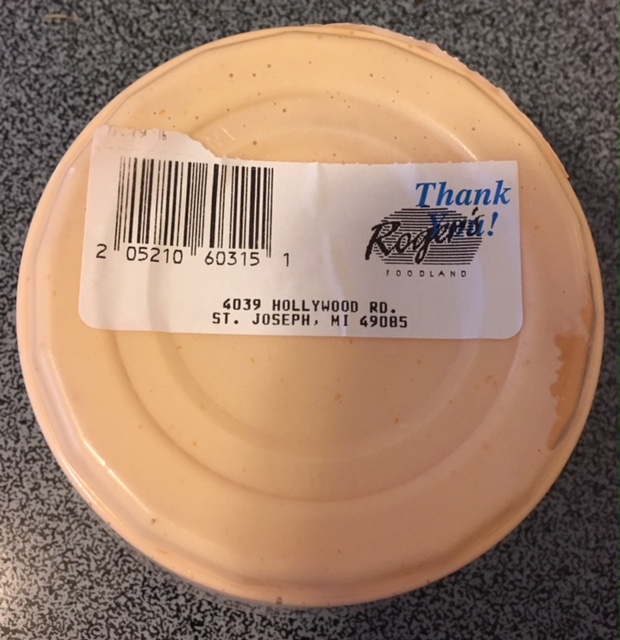
You can still buy Pearl’s Dressing at Roger’s Foodland on Hollywood Road in St. Joseph, MI.
“It was served on a Kreamo bun,”
says Lewis, “we also used Kreamo.”
Lewis seldom makes the fried
chicken, he’s turned his interest to artisan beers—teaching himself and also
learning from the brew master at The Livery.
“I make about gallons at a time
include German-style Hefeweizen I call Hagar Hefeweizen and Pitcairn Vanilla
Porter because I use an authentic Tahitian vanilla bean.
When doing research on his family’s
history, Lewis found an old advertisement for Pearl’s Dressing. It seems that
an enterprise called Pasquale’s was bottling the dress and selling it. There
was also a Pasquale’s Pizza in Benton Harbor, but neither Lewis or I have been
able to find out any more information about the bottled dressing. But we’ll
keep looking.
The
following recipes are courtesy of Gina Lewis Schmaltz and Guy Lewis,
grandchildren of Pearl and Buster Mead.
Chicken Nook
Pan-Fried Chicken
2 ½ to 3
pound chicken
4-6 eggs
1 pint of
whole milk (approximately)
All-purpose
flour for dredging
Not your typical friend chicken place. Carl Steele played music for diner guests at Mead’s.
Salt to
taste
Cut up the
chicken into make 8 pieces. Make an egg dip of approximately 4 to 6 eggs whisked
together with about a pint of milk. The egg mixture should be thick enough so
it sticks well to the chicken pieces.
Dip the
chicken into the egg dip then dredge in all-purpose flour. Salt the chicken
well as the pieces are going into the flour.
If you want
extra crispy crust, return to the egg dip mixture and then back into the flour.
Pan fry at
about 350 to 365 degrees in enough vegetable oil to more than halfway cover the
pieces. Breast and thighs should be fried separately for the legs and wings
since the larger pieces take longer.
Turn the
pieces when golden brown and finish frying the other side.
Cole Slaw
1 head
cabbage
Shredded
carrots (optional)
Apple cider
vinegar, one splash
Sugar, to
taste
Mayonnaise,
to taste
Shred cabbage
with a box shredder. Do not use pre-shredded cabbage, it is already too dry.
Add salt as
you shred, it helps to release the moisture from the cabbage.
Mix sugar
and heavy mayonnaise such as Hellman’s (not Miracle Whip) to taste. Mix well
and set aside for a short time to let it all blend together.
The Meads used to hand out the recipes for their famous Pearl’s Dressing at their restaurants.
Pearl’s
Dressing
Note: This
is a slightly different recipe than the one I published in my column several
weeks ago.
1 quart
mayonnaise
3 ounces
sugar
½ pint salad
oil
2 ounces
apple cider vinegar
1 10-3/4
ounce can of Campbell’s condensed tomato soup
Put all in
mixer and blend at slow speed. Don not whip as this will cause your oil for
separate from mixture.
I’ve spent a lot of time lately traversing Indiana, Illinois, Kentucky and Ohio following, so to speak, in Abraham Lincoln’s footsteps . And while it’s not recorded that Lincoln stayed at the Golden Lamb in Lebanon, Ohio, it’s certainly possible ashe traveled throughout the area. The connection seems apt because the GoldenLamb has been in continuous operation since it first opened in 1803 when Jonas Seaman spent four dollars on a license to open a log-cabin tavern under the sign of a golden lamb (because literacy wasn’t common, signs with images were used instead).
Sister Lizzie’s Shaker Sugar Pie Photo courtesy of the Golden Lamb
A host of other
famous people have stayed there including, according to General Manager Bill
Kilimnik, 12 presidents, Mark Twain and Charles Dickins. Harriet Beecher Stowe,
author of Uncle Tom’s Cabin and an avid abolitionist was also a guest and I slept
in the room she occupied and no (to the people who have asked) it’s not haunted
though another room is said to be and there’s also a ghost cat that some have
seen. But that’s a different holiday and the tie-in with Lincoln is that in
1870, he proclaimed the fourth Thursday of November a national holiday and the
inn’s restaurant has served Thanksgiving dinner since then–which has got to be
some type of record.
The restaurant is famed for many of their menu items including fried chicken, sauerkraut balls,Sister Lizzie’s Sugar Shaker Pie (White Water Shaker Village was once a large settlement of Shakers about three miles from Lebanon)–named by USA Today as the Best Pie in Ohio–and their yeast rolls made from a recipe first used by Robert and Virginia Jones in the early 1930s whose family still owns the inn. Their turkey dinners at Thanksgiving are very popular but if you can’t make it this coming Thursday,roast turkey is on the menu year round.
According to several
newspaper articles, back in the 1800s, the inn’s Thanksgiving menu included several
oyster dishes including just plain oysters, consommé oysters as well as turkey
stuffed with oysters. Other dishes were whitefish, roast beef, chicken croquettes,
wild duck, broiled quail, celery and lettuce—you could order it plain or with
mayonnaise), plum pudding, mince pie, pineapple with “De Brie cheese” and Charlotte Russe. I couldn’t find a
description of the cheese, but plenty of advertisements for it in the late
1800s and early 1900s so my guess is it’s a type of creamy brie. Charlotte
Russe a dessert of sweet cream and sponge cake popular during both the
Victorian and Edwardian eras.
Golden Lamb’s Mushroom Cobbler Photo courtesy of the Golden Lamb
The Golden Lamb
may be one of the few long-time restaurants that doesn’t have a cookbook and
their recipes are hard to come by, but Paige Drees who works at the inn shared
their Mushroom Cobbler which she said (and I agree) would make a great
Thanksgiving side dish. I also found an original handwritten recipe for Sister
Lizzie’s Sugar Shaker Pie on the website of the Vintage Recipe Project, an
online site founded in order to document and preserve historic recipes from
the past. I’m not sure if it’s the same as what the inn serves but I tried the
recipe and it seems very similar to what I had at the restaurant.
Yeast Rolls Photo courtesy of the Golden Lamb
Golden Lamb’s Mushroom Cobbler
1 cup
Shitake mushrooms sliced
1 cup button mushrooms quartered
1 cups
oyster mushrooms sliced
1 cups
cremini mushrooms sliced
2 each
shallot sliced
1 packet
fresh poultry blend herbs
1 cup heavy
cream
8 ounces
goat cheese
2 ounces dry
sherry
4 cooked
crumbled biscuits
1 packet
fresh poultry blend herbs, cleaned and chopped reserve ½ for Biscuit topping
1 cup heavy
cream
8 ounces goat cheese reserve ½ for Biscuit
topping
2 ounces dry
sherry
Heat a medium sized skillet add one tablespoon of vegetable oil
and sauté your shallots until tender, add all mushrooms and a pinch of salt and
pepper. once the mushrooms are fork tender add sherry to deglaze pan. add your
cream and reduce by half, fold in your goat cheese and fresh herbs, turn off
and set aside.
One of the private dining rooms at the Golden Lamb
Biscuit topping
4 cooked
crumbled biscuits
2
tablespoons melted butter
Remaining
goat cheese
Remaining
fresh herbs
Place all ingredients into medium sized bowl mix until it
resembles a crumb topping.
1 bunch
chopped asparagus
2 ounces
sliced sun-dried tomatoes
2 ounces
pearl onions
½ cup baby
spinach
Prepared
mushroom mix
In a medium skillet sauté your pearl onion until caramelized, add
your asparagus and sundried tomatoes and sauté for two minutes add the mushroom
mix from earlier. add spinach, check seasoning and put mix into casserole dish
sprinkle on biscuit topping and bake at 350 for eight minutes until bubbly and
golden brown
Golden Lamb Yeast Dinner Rolls
1 ½ cup milk
4 teaspoons
dry yeast
4 cups bread
flour
2 teaspoons
salt
½ cup sugar
5
tablespoons vegetable shortening
1 egg
Heat milk until warm, 100 degrees. Put yeast in a small bowl, add
about ½ teaspoon sugar, then stir in milk. Let sit until foamy. Combine flour,
salt, sugar and shortening in a mixer bowl, and mix to combine. Add the milk
mixture and egg. Mix on mixer until combined, then beat for about 13
minutes. Or, by hand, mix until
combined, then turn out onto floured surface and knead until smooth and
elastic.
Oil the dough ball lightly, cover the bowl with a towel and let
rise for an hour, when it should be doubled in size. Punch down. Divide the
dough into about 24 balls of dough. One way to do this is to divide the dough
into two, then all each half of the dough into a long rope on a flour-covered
counter. Cut each rope into 12 equal portions, and roll each into a ball.
Place on a flat baking sheet and cover with a towel, Preheat oven
to 350. After the rolls have risen about half an hour, bake them
until golden brown and fragrant, about 10-15 minutes. Check frequently.
Serve as soon as possible after they come out of the oven.
Yields 8-10 servings.
Sister
Lizzie’s Sugar Shaker Pie
1/4
pound butter
1 cup brown sugar
1 3/4
cups light cream
1/3
cup flour
1/2 teaspoon vanilla
Grated nutmeg
1 9-inch
pie shell, unbaked
Thoroughly mix the flour and brown sugar and spread evenly in the
bottom of the unbaked pie shell. Pour
the cream and vanilla over this. Slice
the butter into 12-16 pieces and add.
Sprinkle with nutmeg. Bake in a
350°F oven for 40-45 minutes or until firm.
For more information, 513-932-5065; goldenlamb.com
My first morning in Queretaro, about a 90 minute drive north of Mexico City, I walked along the cobblestone streets in the city’s historic center to the fairy tale castle-like La Casa de la Marquesa, once a private home built in the 1756, now a restaurant and hotel. The menu reflects the vast citrus groves, ranches, cactus and cornfields that are part of the highland landscape here.
Plump figs, recently picked, sit on platters in the ornate dining room. Fresh oranges squeezed with cactus or beet juice are served on silver platters by waitresses dressed in garb that I at first thought was from another era of Mexico history but which I am told were designed to look like what Mary Poppins might have worn if there had been a Mary Poppins.
My host recommends Encarcelados – layers of fried eggs, beans, and ham topped with green sauce and crispy pork skins (a very popular food here and though not at all healthy, much more tasty than the pork rinds sold in the U.S.).
Accompanying breakfast and served in delicate cups are endless servings of hot coffee and crema caliente or hot cream. I decide not to worry about calories as I will be exploring the historic district, known for its fountains, city gardens and brightly painted buildings with wrought iron balconies, oversized carved wooden doors and, of course, this being Mexico, the most wonderfully ornate churches, many in a Spanish style characterized by elaborate engravings and known as Churrigueresque.
There’s an over the top creativity in this ultra clean city (there always seem to be uniformed groups hosing down the streets) and I peak into a restaurant and bar that was once an old apothecary shop whose interior walls are still stacked with the small drawers that once held pills and another one made of stone where water cascades down the length of a wall. The city is made of public squares, each with a fountain and often a statue or two as well. Food vendors sell candies, cook tacos on hot griddles and slice fruit that is then rolled in spices. A gaggle of school girls in uniforms ask if they can take my photo and want to pose with me. Most restaurants, if there is space, have outside seating since the weather is almost always fair.
Queretaro, though it has sophisticated cuisine, is also famed for its enchiladas, which are stuffed with beans, Oaxaca cheese, potatoes and topped with a red chile sauce or a cream sauce and often served with horachata, a sweet rice water drink common in Mexico. Guacamole with pork rinds for scooping are served with almost every meal, including the oyster and octopus tacos (much better than they sound) we taste later that night at Harry’s Bar, which features a blend of New Orleans and central Mexican cookery.
Evenings, after exploring the cathedrals with their 24 carat gold interiors, end with a stop at one of the many hot chocolate and churros (fried pastries) shops that dot the walkways. And each night I promise myself that I will walk an extra mile or so tomorrow not only to see more sights but to hopefully leave a few calories behind before I go home.
Enchiladas Suizas
(Creamy Enchiladas with Chicken, Tomatoes and Green Chile)
Ingredients:
2 28-ounce cans good-quality whole tomatoes in juice, drained
Fresh hot green chiles to taste (roughly 3 serranos or 2 jalapeños), stemmed
1 1/2 tablespoons vegetable oil or rich-tasting pork lard, plus a little oil for brushing or spraying the tortillas
1 medium white onion, chopped
2 cups chicken broth, plus a little extra if needed
Salt
1/2 cup homemade crema, crème fraiche or heavy (whipping) cream
About 2 cups coarsely shredded cooked chicken, preferably grilled, roasted or rotisserie chicken
2/3 cup shredded Mexican melting cheese (Chihuahua, quesadilla, asadero or the like) or Monterey Jack, brick or mild cheddar
12 corn tortillas
A few sliced rounds of white onion, separated into rings, for garnish
Fresh cilantro sprigs for garnish
In a small dry skillet, roast the chiles over medium heat, turning regularly, until they’re soft and splotchy-black, about 5 minutes. Place in a blender or food processor along with the drained canned tomatoes. Blend to a smooth puree.
In a medium-size (4- or 5-quart) pot (preferably a Dutch oven or Mexican cazuela), heat the oil or lard over medium heat. Add the onion and cook, stirring regularly, until golden, about 7 minutes. Raise the heat to medium-high, and, when noticeably hotter, stir in the tomato puree. Cook, stirring, until darker in color and thickened to the consistency of tomato paste, about 10 to 15 minutes.
Stir in the broth, partially cover and simmer 15 minutes. Taste and season with salt, usually about 1/2 teaspoon. The sauce should be a slightly soupy consistency—not as thick as spaghetti sauce. If it is too thick, stir in a little additional broth. Keep warm over low heat.
Other preliminaries. Stir the crema into the sauce. Put the chicken in a bowl and stir 1/2 cup of the sauce mixture into it. Taste and season with additional salt if you think it needs it. Have the cheese at the ready.
Heat the oven to 350°. Smear about 1/4 cup of the sauce over the bottom of 4 to 6 nine-inch individual ovenproof baking/serving dishes or smear about 1 cup of the sauce over the bottom of a 13×9-inch baking dish.
Lay the tortillas out on a baking sheet (2 sheets if you have them, for more even heating), and lightly brush or spray both sides of the tortillas with oil. Bake just to warm through and soften, about 3 minutes. Stack the tortillas and cover with a towel to keep warm.
Working quickly so the tortillas stay hot and pliable, roll a portion of the chicken into each tortilla, and then line them all up in the baking dishes.
Douse evenly with the remaining sauce, and then sprinkle with the cheese. Bake until the enchiladas are hot through (the cheese will have begun to brown), about 15 minutes. Garnish with onion rings and cilantro sprigs. These are best served piping hot from the oven.
Following the Muhlbach Stream as it gently flows through downtown Oberkirch, a marvelous collection of timber-framed, multi-stories houses, cobblestone streets, brightly painted shutters and window boxes overflowing with cascading blooms, we bounce along in Martin Renner’s topless Range Rover into the vast orchards and vineyards, climbing the ever narrowing road up the verdant hills of the Black Forest.
The journey is Renner’s Weinburg Safari, which in better weather includes both the Range Rover ride and a hike. But today it’s raining and though Renner, who is giving the tour, has handed us layers of warm clothing, I’m guessing that the reason why none of us are complaining about getting pelted by rain are the samples of wine we had earlier at Julius Renner Weinhaus & Weinkellerei, his family’s third generation business founded by his grandfather, Julius, in 1937.
The wines we tasted are made from the classic varieties such as Klingelberger, Muller-Thurgen, Ruländer and Blauer Spätburgunder that thrive in the special climate and topography that makes this part of the Black Forest perfect for growing a cornucopia of luscious fruit. As usual, I’m impressed not only by the quality of German wines but also their low cost. Indeed, their Pinot Rose Brut at the time was 9.99 euros and the dry Oberkircher Blanc de Noir, made from Blue Pinot Noir grapes, went fo for 5.99.
To add to the picturesque scene, lovely even in rain, the Renner vineyards are nestled beneath the ruins of Schauenburg Castle, a long abandoned citadel built in the 10th century, part of the dowry that Uta, Duchess of Eberstein, the richest heiress in Germany at the time, brought to her marriage to Duke Welf VI in 1131.
But if we’re looking for real history, Martin Renner tells me after we’ve returned to the weinhaus, housed in what was once a butcher shop built in 1708 (you can tell by the sketch of a butcher’s clever along with the date on the building’s corner edge), you won’t find it here. After all, he says, as if the event just happened a few months ago, French troops sacked Oberkirch, burning the Medieval village to the ground in the late 1600s during one of those interminable European wars—this one lasted 30 years which is much better than the 100 year war waged by the French and British from 1337 to 1453. As an aside, if you’re wondering about the disparity between the dates and the name of that war, they took a few years off to rest before fighting again.
There’s disdain in his voice about the newness of it all and I try to explain how in America, old is anything built before 1950 and that we probably have fewer than fifty or so buildings in the entire country dating back to 1700. But then this is Germany where you can walk into the Kessler Champagne cellar in Esslingen and when you ask the guide how old the place is, there’s a nonchalant shrug accompanied with the year 1200 as if it’s no big deal. So maybe 1708 is a little too nouveau after all. Martin Renner and writer Jane Simon Ammeson
Next door to the wine store, the Renner Wine Tavern is all cozy Germanic charm. The menu is intriguing and very reasonably priced and more so when I make the conversion from Euros to dollars for such items as lamb chops with rosemary potatoes and homemade garlic sauce, Walachian trout with creamy horseradish, Strasbourg sausage salad with Gruyere cheese and spaetzli–those wonderful German dumplings often baked with ham and cheese. There’s also bread served with either butter or Bohnert’s apple lard. Lard is frequently on menus here in southwest Germany and it is amazingly delicious. A quick fact check: Pure lard, rendered from pork, is much healthier—yes, really—than the oleos and processed shortenings we consume here.
Noticing that the restaurant doesn’t open until 6 p.m., I ask why so late?
“We’re farmers and wine makers,” Martin, a graduate engineer in viticulture and oenology, tells me. “We don’t eat until then.”
Karotten or karotten in bier gedunstet (carrots in beer) and spaetzli are both on the menu at Renner Wine Tavern. Here are Americanized versions of those dishes.
Karotten (Carrots in Beer)
4 large carrots
1 tablespoon butter
1 cup dark beer, any brand
1⁄4 teaspoon salt
1 teaspoon sugar
Peel and slice carrots into long, thin slices.
Melt butter in medium-size frypan; add beer and carrots. Cook slowly until tender, stirring frequently. Stir in salt and sugar.
Cook for another 2 minutes and serve hot.
Spaetzli
1 cup all-purpose flour
1 teaspoon salt
1/2 teaspoon ground pepper
2 large eggs
1/4 cup milk
3 tablespoons unsalted butter
2 tablespoons minced fresh chives
In a large bowl, combine the flour, salt and pepper. In a separate bowl, whisk the eggs and milk together. Making a well in the center of the dry ingredients, pour in the egg-milk mixture. Gradually mix well until the dough should be smooth and thick. Let it rest for 10 to 15 minutes.
Bring 3 quarts of salted water to a boil in a large pot, then reduce to a simmer. To form the spaetzli, hold a large holed colander or slotted spoon over the simmering water and push the dough through the holes with a spatula or spoon. Do this in batches so you don’t overcrowd the pot. Cook for 3 to 4 minutes or until the spaetzli floats to the surface, stirring gently to prevent sticking. Dump the spaetzli into a colander and rinse quickly in cool water.
Melt the butter in a large skillet over medium heat and add the spaetzli and toss to coat. Cook for 1 to 2 minutes and then sprinkle with the chopped chives. Season with salt and pepper before serving.
Built in 1889, Tippecanoe Place, a fine dining restaurant in South Bend is an elaborately gabled and turreted 24,000-square-foot Richardsonian Romanesque-style house which belonged to Clem Studebaker, one of the Studebaker auto magnates. Perfectly preserved, it’s about what having it all meant back in the late 1800s. With 40 rooms, 20 fireplaces and ball room, it took three years to build at a cost of $250,000 (around $6.4 million in today’s money). Add in another $100,000 the family spent on furnishings for all four floors and you can see it was quite a home.
Clem and his brother Henry had made their fortune by growing their blacksmith shop into the world’s largest buggy business, making horse driven wagons for the Civil War effort and then segueing successfully into manufacturing Studebaker cars. At one time, after buying Pierce Arrow, the sleek automobile luxury brand, they even had a Rockne line named after the famed Notre Dame coach who talked up the cars at auto conventions. But alas, deep in debt and with the Depression in full force, Studebaker went into bankruptcy in 1933 and Clem’s son, George, who lived there with his family, abandoned the house which then stood empty for seven years until it was purchased for $20,000 and used first by the Red Cross and then as a school for the handicapped.
Placed on the National Register of Historic Places in 1973, four years later Tippecanoe Place earned the even more coveted and prestigious designation as a National Historic Landmark. In 1980, it was restored at a cost of about $2 million and turned into a restaurant and since then, it’s been the go-to-place for weddings, family events, parties and gracious dining.
The interior of this splendid manse, all highly polished woods, stunning chandeliers, elaborately carved woodwork including the grand staircase, serves classic American fare such as prime rib with creamy horseradish sauce, Indiana roast duckling, shrimp cocktail and chicken Oscar amidst all this elegance (but don’t worry neither tiara or tux are required to dine—it’s casual despite the splendor). The sumptuous—and diet busting—Sunday Brunch is a feast that makes you swear, falsely of course, that you won’t need to eat for a month. There’s also an extensive wine and spirit list.
As for the name Tippecanoe, Clem was good friends with Benjamin Harrison, an Indianapolis lawyer who would become the 23rd President of the United States. Harrison’s grandfather, William Henry Harrison, was the hero (depending on whose side you were on) of the Battle of Tippecanoe which took place near Lafayette in 1811. He too was a U.S. President. But it also could originate from the fact that Tippecanoe, the leader of the Miami Indians, liked to camp on the land where Clem built his mansion. Guided tours are available but you can also take a peak on your own. And be sure to check out the historic memorabilia about the Studebaker family and business on display.
Here’s an adaptation of one of Tippecanoe’s signature desserts.
Frangelico Cream Mouse
3 large egg yolks
1-1/2 cups superfine sugar
1-1/2 pounds cream cheese, softened
1 teaspoon pure vanilla extract
2 tablespoons Frangelico liqueuor
2 cups heavy cream (36% milk fat) Note: Avoid using ultra pasteurized as it won’t whip properly.
In a mixer with a wire whip, beat egg yolks with the sugar and the vanilla until light and pale.
Beat in softened cream cheese, then add the Frangelico, mixing until very smooth. Set aside in a cool place.
Whip the heavy cream until stiff in another bowl and then fold into the cream cheese mixture. Chill.
Garnish with fresh berries and mint leaves
Serve in individual glasses or in a large, pretty dish.