“In this book, Simone and Inés Ortega offer us a wealth of gastronomic experience and wisdom and it will quickly transport you to the heart of Spain,” writes Ferran Adrià, former head chef of the legendary El Bulli restauranthttp://www.elbulli.info/ who is considered one of the best chefs in the world, in the introduction to Spain: The Cookbook (Phaidon Press). “This is a timeless book. When you read it, you suddenly realize the glories of the food in front of you, those that, until now, you’ve not fully appreciated. Ours is a splendid cuisine, born out of the pleasure of eating, and it is also one that is perfect for those who have little time to cook., but who don’t want to give up the enjoyment of eating well and, thus, of feeding their souls as well as their stomachs.”

A huge and wonderful door-stopper of a book with almost 1000 pages, much of which are recipes, drawings, and photos, this is the definitive book on Spanish cookery. It’s hard to imagine a recipe or one similar that can’t be found within the pages. Because the information contained here is so voluminous, finding what you want is made easy in the way the recipes are divided into such chapters as “Cold Plate Suggestions,” “Fried Dishes, Savory Tartlets, Little Turnovers and Mousses,” and “Eggs, Flans and Souffles.”

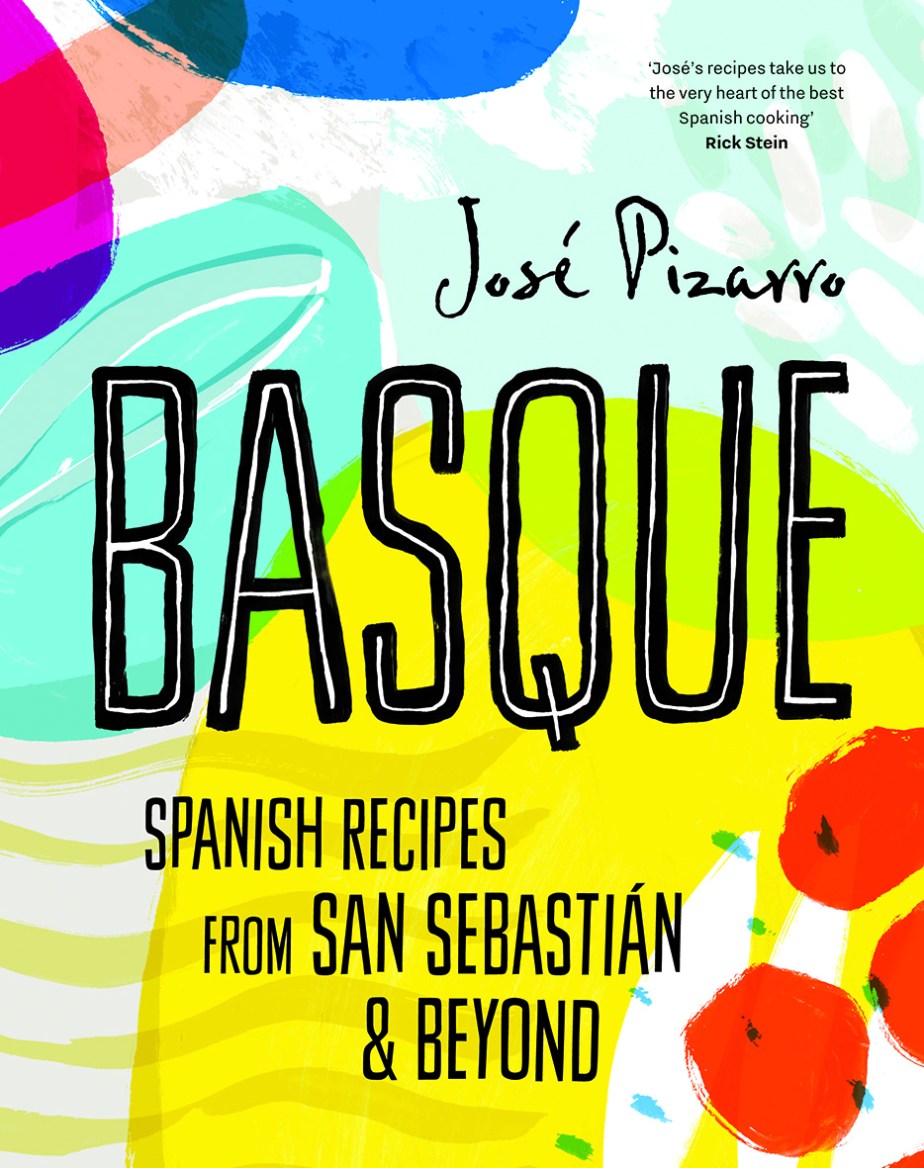
In the chapter, “Menus from Celebrated Spanish Chefs,” there are recipes from chef/restauranteur José Andrés who has restaurants in Chicago, Washington, D.C., New York, and Las Vegas, José Manuel Pizarro, restauranteur and author of such cookbooks as Spanish Home Kitchen, and Carme Ruscalleda, the chef-owner of Carme Ruscalleda near Barcelona. Among the recipes she shares are those for her Apricot Sponge and Quick Prawn Soup.

Lively sketches by Javier Mariscal, some 500 in all, accompany full-color food photos and illustrate not only such dishes as Caviar canapes and roasted mixed vegetables but also how to cut up an octopus or de-fin a fish.

The 1080 recipes vary in complexity though many are exceedingly accessible. Sausages in Cloaks (Salchichas Encapotadas) and Eggs en Cocotte with Mushrooms both have only five ingredients and Soft Cheese and Paprika Canapes just three. Some of the dishes won’t be familiar to most American home chefs such as Hare with Chestnuts, Woodcock with Cognac, and Lambs’ Feet with Tomato. But even if we’re not going to cook such fare, it takes us further into our exploration and understanding of Spanish cuisine.
Originally published over 40 years ago under the title 1080 Recetas de Cocina, millions of copies have been sold and it’s easy to understand why. The cookbook is both compelling—a page-turner as the authors take us into the home kitchens of their country—and informative with menu plans, cooking tips, and a glossary.

Author Simone Ortega was considered to be one of the foremost authorities on traditional Spanish cooking and had a career in food writing that spanned more than half a century. Her daughter, Inés Ortega, is also a food writer and collaborated with her mother on subsequent editions of the cookbook.

It’s easy to see why the popularity of this cookbook, which is said to be found in almost every home in Spain, endures. Its recipes and illustrations beckon us to expand our skills in Spanish cuisine.
The following recipes are from Spain: The Cookbook published by Phaidon Press.
Brussels Sprouts Au Gratin (Coles de Bruselas Gratinadas)
- 2 1/2 to ¾ pounds Brussels sprouts
- 1 classic Bechamel sauce (see recipe below)
- 3/4 cup grated Gruyere cheese
Preheat the oven to 350°F
Bring a pan of salted water to a boil and drop the Brussel sprouts into the water, cooking until tender but not falling apart. Remove from heat, rinse in cold water.
Make Bechamel sauce.
Place Brussels sprouts in an oven-proof dish. Sprinkle with the cheese.
Bake for 10 to 15 minutes and the cheese has melted. Serve immediately straight from the dish.
Classic Bechamel Sauce (Salsa Bechamel Corriente)
- 2 ounces butter
- 2 tablespoons sunflower oil
- 2 tablespoons plain all-purpose flour
- 3 cups milk
- Salt
Melt the butter with the oil in a pan and stir in the flour. Gradually stirring the milk, a little at a time and bring to a boil stirring constantly. Add salt to taste and simmer over medium heat, stirring constantly for eight to 10 minutes.
If a thinner sauce is needed, add more milk. If the bechamel needs to be thicker, simmer the sauce longer until it reaches the required consistency.
Bechamel’s Tricks
To prevent lumps forming when making bechamel, remove the pan from the heat when stirring in the flour. Stir briefly with a wooden spoon, return the pan to the heat and proceed as normal.
Cover the surface with a disc of wax paper lightly greased with butter to avoid skin forming on top of the bechamel sauce prepared in advance. Bechamel sauce can be stored in the refrigerator for a few days or frozen.
To reheat, put into a heatproof bowl set over a pan of barely simmering water oops come on
Raw Mushroom Salad
- 1 pound 10 ounces mushrooms
- 6 tablespoons sunflower oil
- Juice of two lemons
- 1 tablespoon chopped parsley
- Salt and pepper
Separate the mushroom caps and stalks. Slice the stalks and caps and put into a bowl. Pour in the oil and lemon juice, season with salt and pepper and mix well. Sprinkle with the parsley and shell in the refrigerator for two hours 24 servings.