More than two decades ago, Penny Murphy, owner of Ma’s
Organic in Benton Township in southwest Michigan made a commitment to a
90-year-old woman, the aunt of an acquaintance who had immigrated to America
from the Ukraine 75 years earlier.
“She
wanted me to continue growing the Ukraine rose garlic she’d brought with her,”
Penny told me when I visited her farm six years ago for an article about
garlic.
Last
week I received an email from Penny saying that though her crop was about two
weeks late, she had harvested and was curing this year’s garlic. It all comes
from the six bulbs of Ukrainian rose garlic she’d been given all those years
ago and that it would be ready to buy around August 10th. This is always a big
deal for her customers who are garlic aficionados. Once Penny puts out the word
that her garlic is available—she typically raises over 1000 heads—it sells out
quickly. I know the when I stopped by a few years ago to pick some up, there
were lots of cars in front of her old farmhouse there to buy it.
Garlic has been around for a long time—the Chinese
domesticated it about seven thousand years ago and now grow 80% of the world’s
garlic. That’s often the garlic we find in grocery stores. Penny told me that
once people tried the Ukrainian Rose variety they never wanted to go back
because of its rich flavor.
Penny also gave me a recipe for the garlic paste she makes.
Since it’s been six years since I last ran it, I thought I’d share it again.
Ma’s Garlic Paste
1 Ukrainian rose garlic bulb
1 tablespoon olive oil
Dash lemon juice
Salt
Preheat oven to 350° F degrees.
Nip off the top of the garlic bulb (the part attached to the
stem). Wrap in foil, cook in oven for one hour. Let cool down, bringing it to a
warm – not cool – temperature. Twist the garlic head at the root end, squeezing
out the warm garlic into a blender or a food processor. Add olive oil, lemon
juice and salt. Mix until smooth. Store in refrigerator until needed.
Ma’s Organics is at 476 North Benton Center Road, Benton
Harbor. Call 944-0240; masorganicgarden@gmail.com
The results—and the recipes are in—from this year’s 32nd Cherry Baking Contest at the Eau Claire Cherry Festival held in Eau Claire, Michigan. Contestants could enter one or more of the six categories: Cake, Bread, Pie, Dessert, Miscellaneous and Quick and Easy Mixes, a category where entrants can use cake mixes, pie fillings and other store-bought ingredients, none of which can be used in the other five categories. After three place winners are chosen by the judges for each category, a Grand Prize and Most Eye Appealing winner are then selected from the first place winners in each categories.
This
year, Debra Lollar’s Cherry Pastry Puffs took both First Place in the
Miscellaneous Category and won the Grand Prize. Celena Cantrell’s won First
Place and Most Eye-Appealing for her Dark Sweet Cherry Cheesecake Pie.
Here
are the results and first place winning recipes:
In the Cake category, Barb Adams took First
Place for her 4th of July Cherry Cake; Debra Lollar took Second
Place for her Luscious Cherry Cake and Stephenie Kuhl for her Fresh Cherry
Cake.
First Place in the Pie category went to Celena
Cantrell for her Dark Sweet Cherry Cheesecake Pie; Second went to Sara
Disterhelf for her Sweet Cherry Pie and Third Place to Barb Adams for her
Cherry Pie.
In the Bread Category, Celena Cantrell, First
Place for her Sweet Cherry Pizza; Stephenie Kuhl, Second Place for her Cherry
Bread and Jessica Ratter, Third Place for her Cherry Sweet Rolls.
Winners in the Desserts Category are Kelly
Blankenship in First Place for her Chocolate Cherry Tart; Joyel Timmreck in
Second Place for her Cherry White Chocolate Mousse Tart and Carol Skibbe in
Third Place for her Cherry Brownie Delight.
Debra Lollar’s Cherry Pastry Puffs took First
Place in the Miscellaneous Category; Aiye Akhiab’s Cherub Jam took Second Place
and Stephenie Kuhl took Third for her Cherry Almond Cinnamon Rolls.
Joyel Timmreck’s Cherry Chewables took First
Place in the Quick and Easy Mixes; Debra Lollar’s Easy Pineapple Cherry Crisp
took Second Place and Stephenie Kuhl’s Chocolate Cherry Cake took Third Place.
A
big thanks to Betty Timmreck, one of the organizers of the baking contest, who sent
in the First Place winning recipes and the accompanying photos.
Debra Lollar’s Cherry Pastry Puffs
1 package pastry puffs
2 cups milk
1 box instant vanilla pudding
1 tub Cool Whip
Maraschino cherry juice
1 ½ cups cherries
1 ¼ cup sugar
1 tablespoon cornstarch
1 tablespoon lemon juice
½ cup water
Whisk together milk and pudding. Fold in
Cool Whip. Unfold pastry puffs on lined baking sheet. Cut on lines into
squares. Brush on cherry juice. Bake at 400° F for 10 to 15 minutes.
In a saucepan on low heat, cook pitted
cherries, sugar, lemon juice and ¼ cup water. In small bowl, mix cornstarch and
remaining ¼ cup water. Then add to cherry mixture. Cook until thick. Cut open
pastry puffs, spread pudding mixture on bottom. Spoon on cherry mixture. Put
top layer on.
Celina Cantrell’s Sweet Cherry Pizza
Dough
3 ½ to 4 cups flour
1 tablespoon sugar
1 envelope instant dry yeast
2 teaspoons salt
1 1/2 cups hot water
2 tablespoons olive oil plus oil for rising
bowl
Combine flour sugar, yeast and salt in
stand mixer bowl. While mixer is running add water and the 2 tablespoons oil.
Add more flour if dough is too sticky. Add spoon one at a time. Grease a large
bowl with olive oil. Cover with plastic wrap and let sit in a warm place until
doubled in size. about one hour
Sweet Cherry Pizza Filling
1 pound pitted sweet cherries
1/2 cup sugar
¼ cup water
1/4 cup cornstarch
1 teaspoon almond extract
In a saucepan over medium heat stir
cherries, sugar and extract until heated and sugars melted. In a separate bowl
combine water and corn starch until smooth. Add to cherry mixture. Remove from
heat.
Make crumble topping
1/4 cup flour
1 1/2 tablespoon sugar
1/2 tablespoons brown sugar
2 tablespoons soft butter
Pinch of salt
Mix together with a fork to make
crumbles. Spread cherry mixture over pizza like the sauce. Top with the
crumbles.
Baked 400° for 25 minutes.
Let cool completely.
Icing drizzle
1 cup powdered sugar
1/2 teaspoon almond extract
1 to 2 tablespoons milk
Mix together with a fork and drizzle
over cold pizza.
4th of July Cherry Cake
1 cherry chip cake mix
1/2 box white cake mix
20 ounces cherry pie filling
4 eggs
1 1/2 cups water
1 cup fresh almond, chopped
24 ounces can cream cheese frosting
Toppings: Sweet cherries, blueberries and
coconut
Grease 3 8-inch cake pans. Set aside.
Mix first five ingredients.
Bake at 350° for 25 to 30 minutes.
Let cool and frost. Then top with
sweet cherries, blueberries and coconut.
Celena Cantrell’s Dark Sweet Cherry
Cheesecake Pie
2 cans dark sweet cherries
2 teaspoons vanilla extract
Heat in saucepan and let cool.
Crumble 30 Golden Oreo Cookies in a
food processor. Melt 1/3 cup butter. Stir into cookie crumbs and press into a
pie pan. Place in freezer.
8-ounce package cream cheese
1 cup powdered sugar
1 teaspoon vanilla extract
Whip together until smooth.
In separate bowl whip 2 cups heavy
cream. Fold into the cream cheese. Fill cookie crumb pie crust. Top with the
cooled cherries. Top with remaining cream cheese filling.
Kelly Blankenship’s Chocolate Cherry
Tort
For the Shell:
3 large egg yolks
½ cup unsalted butter room temperature
1 ½ cups all-purpose flour
½ cup sugar
¼ teaspoon salt
For the Filling:
¾ cup milk
¾ cup heavy cream
4 egg yolks
½ cup sugar
½ teaspoon vanilla
2 ½ tablespoons flour
2 ounces dark chocolate, good quality
Cherries:
3 cups cherries cut in half and pitted
For the Pastry:
Whisk flour and salt in a small bowl.
Beat butter in a stand mixer fitted with
paddle attachment until light and fluffy.
Add sugar then egg yolks one at a time while
the mixer is running.
Dump the flour in and run mixer just until
dough forms a ball.
Shape into a disk and chill for about 30
minutes in the fridge.
Roll to a thickness of about ¼ inch and press
into tort pan. Pierce bottom with fork to prevent puffing during the bake.
Bake at 400°F for about 5 minutes then reduce
to 350° f and bake an additional 15. Allow to cool.
For the filling:
Melt chocolate and allow to cool. Scald the
milk and cream in a small pot and set aside to cool to warm.
Whisk together the yolks, sugar, flour and vanilla
then set on low heat and begin whisking.
Slowly pour in the warm milk mixture and
continue whisking.
Whisk on low heat until mixture thickens.
Transfer to glass bowl and whisk in the melted
chocolate.
Cover with plastic wrap pressing down onto the
surface and allow to chill for a few hours in the fridge.
Fill tart shell with chocolate pastry cream
and arrange cherries.
If not serving immediately, brush with a strained
and diluted jam to preserve the surface.
Joyel Timmreck’s Cherry Chewables
Crust:
1 ¼ cups flour
½ cup packed brown sugar
¼ cup shortening
¼ cup butter
1 cup chopped pecans
½ cup flaked coconut
Filling:
2 packages (8 ounces each) cream cheese
2/3 cup sugar
2 eggs
1 teaspoon almond extract
21 ounces cherry pie filling
In a bowl, combine flour and brown sugar; cut
in shortening and butter until fine crumbs form. Stir ½ cup nuts and coconut.
Reserve ½ cup crumb mixture for topping and press the remaining mixture into
the bottom of a greased 13x9x2-inch baking pan. Bake at 350° for 12-15 minutes
or until lightly browned.
Meanwhile, for filling, beat the cream cheese,
sugar, eggs and almond in mixing bowl until smooth. Spread over the hot crust.
Bake 15 minutes. Spread cherries on top.
Combine remaining nuts and reserved crumbs and
sprinkle over the cherries. Bake 15 minutes more. Cool.
Refrigerate until ready to serve. You may want
to make more crumbs to put on top.
Jane Ammeson can be contacted via email at janeammeson@gmail.com
Looking to fill your Saturday with shopping, wine, and music? Toast to local artisans from Northwest Indiana to Southwest Michigan!
Round Barn Estate is hosting The Round Barn Artisan Market on July 20, 2019 from 11:00AM to 7:00PM. Enjoy al fresco shopping, sipping, and live music by Steely James and Red Deluxe Brand at one of Michigan’s most beautiful vineyards.
ROUND BARN ARTISAN MARKET
Saturday, July 20, 2019 at 11:00AM to 7:00PM
ROUND BARN ESTATE 10983 Hills Rd. Baroda, MI 49101
The Round Barn Artisan Market isn’t just a market, it’s an experience. Toast to the best local artisans from Northwest Indiana to Southwest Michigan! Enjoy a relaxing afternoon of al fresco shopping, sipping, and music beside one of the area’s most beautiful vineyards!
$5 admission per person. All times are Eastern Standard Time. No outside food or beverages permitted. For last minute updates, please follow us on Facebook.
Admission is $5 per person. Please let me know if you’re interested in covering the event.
Early
spring is sweet in Southwest Michigan when the sap rises ready to be harvested
and turned into sticky sugary and wonderful maple syrup.
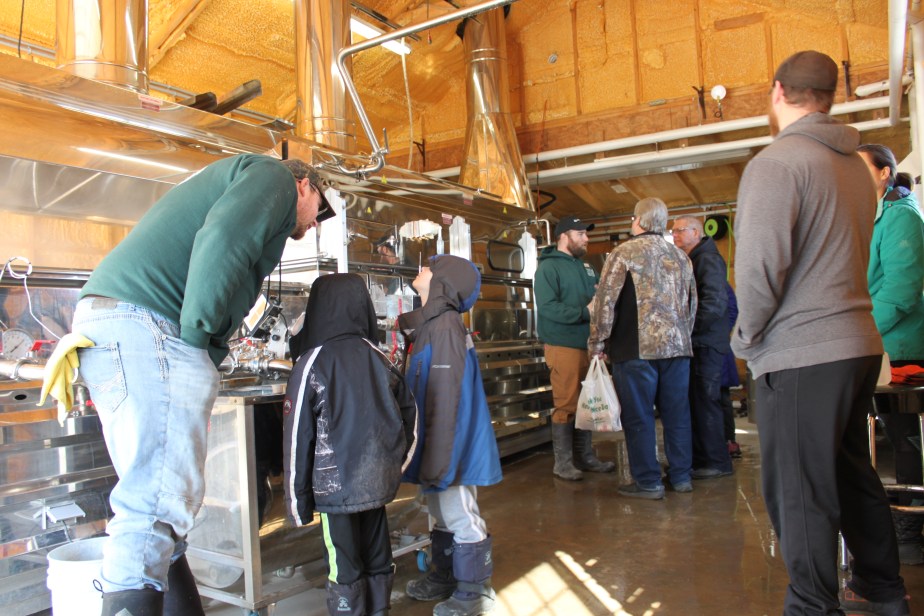
Surprisingly, there are many maple syrup producers in Southwest Michigan, some who market their syrup throughout the state and beyond and others who are known locally and sell just as long as their supplies last.
Denise Klopfenstein of Galien, Michigan comes from a long line of family members who make maple syrup and she’s long listened to stories about how her grandparents’ sugar shack was destroyed in a tornado back in the 1940s. But she never had plans on producing syrup herself. That is, until, worried that her son Tyler, who was 12 at the time, didn’t take enough interest in outdoor activities, she decided to turn to her family traditions into a way of motivating him.
“I
knew he liked business and he liked money,” says Klopfenstein who invested in
some rudimentary syrup processing equipment and designed a sugar shack–the
term for the building where the sap is cooked down into syrup, naming the
business Ty-Kat Sugar Shack.
Relying
upon mentors like Don Dodd of Niles who has been making syrup for years, the
Klopfensteins have increased their yield and upgraded their equipment several
times over the last few years.
“Tyler’s
always working at it–he spent his own money this year, money he’d made from
making maple syrup to buy an even larger evaporator,” says his mom.
“I’m hoping for a nine-week season this year,” says Rachel Ridley, who with her husband Brian, owns Ridley Family Sugar Farm in South Haven. “The sap is in the trees all the time but it’s only accessible to us at certain times. You need freezing nights and warm days for the sap to rise. Last year we only had six weeks of production because of the weather but this year seems more like 2014 we hope.”
Not
only do the Ridleys produce pure maple syrup, they also work with other local
farmers to create about 14 or so specialty syrups using fruits such as
dewberry, apple, pear, peach, blackberry, plum, cherry, black walnut and
blackberry.
“Everyone
likes maple syrup on their pancakes,” says Ridley, “but products like our apple
and pear syrup is good as a meat marinade.
Also going beyond just maple syrup, Christy and Bryan Olson, owners of Maple Row Sugarhouse in Jones, Michigan, create a variety of maple syrups infused with blueberry, raspberry, cinnamon and coffer among their other specialty syrups.
“We
also make other products such as our Maple Cajun Seasoning which has our maple
sugar in it as well as such spices as cayenne, paprika, garlic and onion which
you can use as a rub or in soup,” says Olson. “I make maple candies, maple hot
sauce, maple garlic seasoning, maple barbecue sauce and maple cream which has
the consistency of peanut butter and is good as an apple dip. And this year I’m
partnering with a chocolate maker and making both dark and milk maple cream
chocolates.”
Olson
says they have over 10,000 taps (the spikes that are used to drain sap from the
trees) and produce 3000 to 4000 gallons of syrup each year from about 100,000
gallons of sap.
“40
gallons of sap make about one gallon of syrup,” says Olson, noting that
Michigan State University is doing research on the trees they tap. “Towards the
end of the season it can take about 100 gallons of sap for one gallon of syrup.
The content of sugar in sap is about 1% to 3% and if it’s below the 1% mark,
that about when you’re done for the year.”
The
Olsons also host an annual maple syrup festival at their farm.
John Newell, owner of Primal Woods in Hartford, says he and his wife Geri, started tapping trees as a hobby in the spring of 2014 for their own use.
“We
got our first evaporator two years later and ran that one for two years and
then scaled up to 750 taps,” he says. “Now we’re making about 150 gallons, 16
half-pint bottles of every gallon and about 2400 bottles.”
Describing
what they’re doing as small to mid-size, Newell says that in Vermont, guys go
out and tap 70,000 trees.
“To
do that, they’re using industrial equipment, which gets the people out of the
whole process,” he says. “We’re not about that. We’re still using buckets,
we’re never going to tubes, it makes the woods look like an extensive care
unit.”
Newell
isn’t a fan of reverse osmosis either. That’s the process many maple syrup
gatherers use to filter out the water in the sap to limit the time it takes to
cook the sap down into syrup.
“Maple
sap is usually 2% sugar,” he says. “With reverse osmosis, it’s eight ounces. But
using it changes the color of the syrup and the flavor typically goes with the
color. There are four colors—golden, amber, dark and very dark and the darkest
has the most flavor. I guess overall, we’re still doing it the old fashioned
way. My analogy is we live in a deep maple sugar forest and the taste of the
syrup reflects the biodiversity of the forest.”
About
five years ago, John Muellen, who lives on 40 acres in Baroda, ten of which are
tillable and the other 30 woodland, was feeling kind of bored so he started off
tapping maple trees and cooking the sap down in roasting pans suspended over
cement blocks on a log burning fire. Getting into the process even more, he
made a boiler out of a fuel oil tank, lit a fire inside and set buffet pans the
flames.
“I was constantly improving,” says Muellen, owner of Mulln-Heim Vineyards. “Last year, I came across a reverse osmosis machine from a brewery and modified it to use for making syrup. It’s all part of wanting to make money from the forest in a way that’s not harmful to the environment. Because that’s the way it’s supposed to be.”
Maple sugaring time comes just about when the root cellar is
nearly empty. Oven roasting concentrates vegetable flavors and the syrup pulls
it all together. Roast a chicken and there’s dinner. The house-apartment-condo
will smell wonderful.
3 medium carrots, peeled and cut into 1 1/4-inch chunks
3 medium parsnips, peeled and cut into 1 1/4-inch chunks
1 small (1/2-pound) yellow turnip, peeled and cut into 1 1/4-inch
chunks
4 tablespoons butter
1/2 cup maple syrup
1/4 cup bourbon or rum
1 1/2 teaspoons kosher salt
Freshly ground black pepper
Preheat oven to 350 degrees. Arrange the carrots, parsnips and
turnips in a single layer in a shallow roasting pan.
Heat the butter and maple syrup in a small saucepan just until the
butter is melted, about 2 minutes. Remove from heat. Stir in the rum.
Pour the maple mixture over the vegetables and toss to coat.
Sprinkle the vegetables with salt and pepper to taste.
Cover the pan with aluminum foil and bake for 25 minutes. Remove
the pan from the oven, stir the vegetables and bake, uncovered, until tender,
20 to 25 minutes longer.
Maple Sour Cream Bran Muffins
This ab-fab recipe took first prize in the 1999 recipe contest
sponsored by the Wisconsin Maple Syrup Producers Association.
1 cup flour
1 teaspoon baking soda
Pinch salt
1 cup bran flakes
1/3 cup raisins
1/2 cup chopped walnuts
1 cup pure maple syrup
1 cup sour cream
2 large eggs
For the topping
3 tablespoons flour
2 tablespoons brown sugar
1 tablespoon butter
Preheat the oven to 400 degrees. Grease a 12-cup muffin tin and
set aside.
Sift the flour, baking soda and salt into a medium-size bowl. Add
the bran flakes, raisins and walnuts.
Combine the maple syrup, sour cream and eggs in a small bowl. Add
them all at once to the dry ingredients and stir until just blended. Using a
1/3- or 1/2-cup measure, fill the muffin cups three-quarters full with the
mixture.
For the topping
Combine the flour and sugar in a small bowl. Cut in the butter
until the mixture is crumbly. Sprinkle the topping on the batter in the cups.
Bake for 15 to 20 minutes, or until the muffins are golden brown.
Makes 12.
Here,
you brown the wings first over direct heat without any sauce. That’s when the
skin gets
crispy.
Then you move the wings over indirect heat, where it is safe to layer on the
sweet sauce
without
the threat of it scorching.
12
large chicken wings, about 3 pounds total
Extra
virgin olive oil
RUB
1
teaspoon kosher salt
1
teaspoon dried oregano
1/2
teaspoon ground cumin
1/2
teaspoon chipotle chile powder
1/4
teaspoon ground black pepper
SAUCE
3/4
cup ketchup
1/4
cup maple syrup
1/4
cup bourbon
2
tablespoons
cider vinegar
1/4
teaspoon chipotle chile powder
The
chicken wing is made up of three sections: the drumette (attached to the
chicken body), the wingette (or flat; the middle section), and the tip. Each
section has a bone ball socket, or joint. Flex each section to find the joint. Using the tip of a boning knife, and keeping
the joint extended to expose the socket, cut through the ball socket connecting
the drumette and wingette and then through the socket connecting the wingette
and tip. Discard the wing tips or save for stock (they tend to burn on the
grill).
Brush
the chicken wings very lightly with oil. In a small bowl mix together all the
rub ingredients, then season the wings evenly with the rub. Set aside at room
temperature while you prepare the grill. Prepare the grill for direct cooking
and indirect cooking
over medium heat (350° to 450°F).
In
a small saucepan, combine all the sauce ingredients. Bring to a boil over high
heat on the stove, then reduce the heat to a simmer and cook for 12 to 15
minutes, stirring occasionally. Remove from the heat and set aside.
Brush
the cooking grates clean. Grill the chicken wings and drumettes over direct
medium heat, with the lid closed as much as possible, for 10 minutes, turning
once or twice and watching closely for flare-ups that could scorch the skin.
Brush
the chicken pieces with sauce on all sides and move them over indirect medium
heat. Continue to cook, with the lid closed as much as possible, until the meat
is no longer pink at the bone, 10 to 15 minutes. During this time, stay
vigilant, as the sugars in the sauce could burn. Remove from the grill and
serve warm.
Saffron, Maple, and Vanilla Kefir Milk Fizz From Ferment by Holly Davis with permission by Chronicle Books
Fizzy milk is an acquired taste,
but once acquired you will likely want more. And this flavor combination
transforms milk into something quite special. I tend to drink kefir plain and
at room temperature throughout winter, but when summer comes, I serve it
chilled and fizzing.
Small pinch saffron threads
1 3⁄4 ounces boiling water
21 ounces ripe kefir
1 tablespoon maple syrup
1 vanilla bean, split lengthwise
Combine the saffron and boiling
water in a 4-cup jug and let it steep until cooled.
Once cooled, pour in the ripe
kefir. Add the maple syrup and stir well. Put the vanilla bean in a clean 3 cup
swing-top bottle, then pour in the kefir mixture (use a funnel to do this if
you have one).
Close the lid and leave the bottle
out at room temperature for 1 day, then open the bottle to release excess
pressure and place it in the fridge. Ready in approximately 1–3 days
It will keep in the fridge for up
to 5 days, but make sure to open (burp) the bottle once a day to prevent over‑carbonation.
Reprinted from Ferment by Holly Davis with permission by Chronicle Books
We take the concept of heirloom or heritage fruits and vegetables as common place nowadays. But I was reminded how unfamiliar the concept was just several decades ago and how Herb Teichman, the owner of Tree-Mendus Fruit Farm in Eau Claire, Michigan who passed away earlier this month at the age of 88, was in the vanguard of re-introducing the fruits long ago to the American palate creating a connection to food heritage.
I
met Herb about 20 year ago and over the years wrote about his family and farm many
times. After reading about his passing, I thought I would re-read them. Here’s
the first few paragraphs of one of the first articles about Herb I wrote.
“For most of
us, Louis XIII is a hazy figure, a bewigged monarch who lived some 350 years
ago and had a furniture style named after him.
But for Herb
Teichman, owner of, Louis is but an apple away.
Apples are historical embodiments for Teichman who can tell you the history of each
heritage apple variety he grows. Take
the Calville Blanc D’hiver, a favorite of Louis XIII.
“This
was the classic dessert apple of France,” says Teichman. “Le
Lectier, who was the procurer for Louis XIII, grew it in the King’s gardens at Orleans. When I taste a
Calville Blanc, I began to feel like I know Louis the 13th a little
better. Eating these apples becomes a
bridge connecting the centuries.”
“Or take the Newtown Pippin, a favorite of both Ben Franklin and George Washington.
“When I bite into a Newtown Pippin, it’s like
I’m sharing something with Washington or Franklin,” says the (then) 72 year old
Teichman.
“Teichman,
a successful second generation fruit farmer (his parents first started farming
here in the 1920s), designates three of his 500 acres of fruit trees to raising
heritage apples. Heritage (or antique or
heirloom) is a term applying to varieties that have existed for 75 years or
more.
“According to Teichman, an apple tree
lives about 20 years so for these heritage varieties to still exist after all
these years means that generations of men and women believed that the fruit was
so good it was worth reproducing by grafting over and over again through the
centuries.
Teichman is
one of the few heritage fruit growers in the United States. And, as if that isn’t enough to discourage
people, Teichman says that there are few antique apple growers in the United
States because antique apples aren’t as commercially viable as the modern
apples. Heritage apples, which are more expensive than modern varieties–
aren’t always pretty—they tend to be much smaller than the varieties found in
stores, are often knobby and discolored.
But what they lack in looks, they make up for in flavor.
“Years
ago, if an apple like Margil or Pitmaston Pineapple, which tastes like a
pineapple, was growing in your yard, you possessed the best darn thing there is
in the world,” says Teichman who speaks in superlatives when talking of
apples. “They didn’t have candy bars; a
good apple was dessert.”
Talking
to Teichman is like getting a lesson in food history. “Each apple variety has a history of where
it originated, who liked to eat it and why,” he says. “And each apple really tastes different.
“Teichman says
he moves a little closer in time to his hero Thomas Jefferson when he bites
into an Esopus Spitzenberg apple.
Jefferson so loved this variety of apple that after returning from serving
an ambassadorship in France, he planted 12 Esopus Spitzenberg trees at
Monticello.”
Soon Martha Stewart discovered Teichman and featured a story about the heritage fruit at Tree-mendus. Makers of brandies and cordials wanted his heirlooms fruits to create old world flavors. Now the farm has more than 200 varieties of heritage apples.
And, of
course, heirloom fruits and vegetables are much more common. According to the
National Restaurant Association’s heirloom vegetables and fruit will continue
to be one of the top food trends in the area of produce as it has been in the
last few years. For that, we owe a big thank you to Herb.
In small saucepan,
combine the ¼ cup sugar and cornstarch. Stir in applesauce and brandy. Cook and
stir over medium heat until mixture is thickened and bubbly. Remove from heat.
Make crepes (recipe
below).
On each
mini-crepe, spoon one scant tablespoon of the filling along one edge of the
unbrowned side. Roll up tightly. Place seam side down in greased shallow baking
pan.
Mini-Crepes
3 egg yolks
½ cup milk
3 tablespoons
margarine, melted
¼ teaspoon vanilla
½ cup flour
¼ cup sugar
3 3gg whites
In bowl, beat
together egg yolks, milk, margarine, flour and sugar. Beat egg whites at high
speed until stiff peaks form, gently fold batter mixture into beaten eggs
white.
Heat lightly
greased 6-inch skillet. Remove from heat, spoon in one scant tablespoon of
batter, spread batter with back of spoon into 4-inch circle. Cook over medium
heat for 30 to 60 seconds. Place on paper towel. Repeat with rest of the
batter.
To freeze:
Make stack, place wax paper between each crepe, place in plastic bag. Freezes
well for up to 4 months. Thaw for one hour before using.
In the years I’ve been writing about food for the Herald Palladium, the largest newspaper in Southwest Michigan, I’ve received many requests from readers for recipes but undoubtedly the most popular request has been for the fried chicken and Cole slaw recipes from Mead’s Chicken Nook, a very popular eatery in Benton Harbor and St. Joseph from 1945 until the late 1980’s which was started by Pearl and Buster Mead.
I was always told that the family
never shared the recipes from the restaurant so I was surprised when I heard
from Gina Lewis Schmaltz of Baroda suggesting I contact her brother Guy Lewis.
A quick message to him on Facebook and within a week we met at Watermark
Distillery in downtown Stevensville (Guy lives nearby) and I suddenly had a
copy of the recipes and more family history in my hands. It was like striking
gold.
“It wasn’t that we wanted to keep
these secret,” Lewis told me. “It’s just that I was afraid people wouldn’t believe
me because the chicken recipe is so simple. I thought people would think we
were keeping out a secret ingredient.”
It is indeed a very simple recipe.
An egg and milk batter, a little salt and flour. The steps are important, Guy
told me. The chicken is salted right before it’s dipped.
I told him that I was often
surprised at how simple some recipes are. There’s a famous perch, chicken and
frog leg place in Northwest Indiana where I grew up. It’s called Teibel’s Family
Restaurant and has been in business in Schererville for 90 years. When I was
given the recipe for their chicken, perch and frog legs, I was astounded it was
so simple. Basically flour and some seasonings the same recipe the original
Mrs. Tiebel had brought with her from Austria, her native country. But like piano playing and other skills, the
magic is in the cooking. We can all be given the same recipe or the same sheet
of music, but how it comes out is often extremely different.
Obviously the Mead family knew how
to fry chicken. During Prohibition Buster Mead learned how to do so at the
Allendale Resort in Branson, Missouri where he and his future wife, Pearl
McClure, were from.
“My grandparents moved from Branson to Benton Harbor at the start of World War II
because Buster assumed he would be drafted into military service and while he
was gone Pearl could live with her parents, Daisy and Jim McClure,” Lewis says.
“They lived in Stevensville and Jim worked at Emlong’s Nursery. They had also
recently moved from Missouri. Buster took a job at Upton Machine company–now
Whirlpool)–operating a machine which made parts for the war effort. In
September 1945 they opened the first Chicken Nook at 297 East Main St. in
Benton Harbor. In 1956 they moved to the newly built Chicken Nook at 1111 Main
St. in St. Joseph. My first job was bussing tables there on weekends when I was
about 15.”
At its peak, a lot of chickens got
fried at Mead’s. A 20 to 30-foot wall was line with fryers, all custom made as
were the griddles with sides of about an inch to two inches high.
“He’d pour oil in them to panfry
some of the chicken,” he says. “The legs and wings went into the deep fryers.”
Their poultry was delivered almost
daily from Troyer’s in Goshen, Indiana—talk about fresh. As an aside, Troyer’s
County Market, which opened in 1912, is still in business.
“It came in big crates that were
slid down the stairs to the basement. From afternoon to evening, the staff
would be downstairs cutting up the chickens which came in whole,” says Guy.
“They then went into a big tub of ice.”
Guy and Gina’s dad in the spotless kitchen at Mead’s Chicken Nook.
Gina Lewis Schultz remembers working
at Mead’s when they were located on Red Arrow Highway in Stevensville in what
is now Lee’s Hunan.
“I was in my teens,” she says. “I
remember my dad taught me how to make Pearl’s Dressing two gallons at a time.”
Her grandfather created most of the
recipes on the menu including the dressing which he named after his wife.
Schultz says she’s seen other recipes for it but the dressing served at the
restaurant contained apple cider and what she calls “heavy mayonnaise” such as
Hellman’s.
“But no Miracle Whip,” she says
emphatically.
Schultz still makes the fried
chicken about once a month or so for her husband using the originally recipe.
When I mentioned that I had made it earlier in the evening and my kitchen
looked like a disaster with egg dip, flour and oil scattered around, she said,
“well, it is kind of messy,” though I felt, from the kindly tone of her voice,
that it wasn’t a messy process when she did it.
I asked Schultz what she remembers
most about her time working there and she recalls how busy it was.
“And there was constantly and
constantly chicken being served or going out the door,” she says.
In the early 60’s the Meads opened a
second location at 325 W. Main St. Benton Harbor but it was only open for a few
years.
“That location has been the home of
many other restaurants since then,” says Lewis. “In the late 70’s the Meads
retired and sold the restaurant. Buster worked part time in the deli for Harry
Zick at his Vineland Foodland on Vineland Road in St. Joseph Township.
Eventually my grandfather decided he
wasn’t done in the restaurant business and opened his new Chicken Nook on Red Arrow Highway. They were in business there for just a couple
of years then age finally caught up with them and they had to shut down the
fryers for the last time. I worked there a few hours per week to help out and
so learned some of Grandpa Meads recipes but also, even better, I got a lot of
adult time with my grandfather.”
Sidebar:
Recreating Mead’s Fried Chicken
I have the hardest time following
recipes, I always want to take short cuts, add my own tweaks or substitute
ingredients. But I vowed to myself that I would follow the fried chicken recipe
given to me by Lewis and Schmaltz. So I
bought whole milk instead of substituting the almond milk which I had in my
refrigerator (though I thought about doing so a couple of times) and though
four to six eggs seemed like way too many, I added six to a pint of milk just
like the recipe called for.
Now I really like fried food that’s
done well but I’m not sure I’m the person who can do that—it’s a skill I don’t
possess. Despite that, I filled a very
large skillet (and large is important as the you don’t want oil sputtering all
over the stove and countertop) with vegetable oil and set the burner to high. I
also turned on the vent over the stove—also necessary because the heat from the
bubbling oil can set off the smoke detector. I also left my front door open
just in case.
The Mead recipe said you could
double dip the chicken into the egg-milk mix and flour if you wanted extra
crispy and so I did. But then I made a mistake. I dipped all the pieces while
waiting for the oil to heat up. I would have done better to dip (or double dip)
just before I put the meat in the hot oil. Because I didn’t, some of the batter
started dropping off and by then I was out of the mix so I had to try to patch
it back on resulting in some serious clumps of breading. But hey, I like crispy
coating even if it didn’t make the chicken look somewhat misshapen.
The chicken pieces sizzled when I
placed them in the oil. I followed Guy’s instructions to do the legs and wings
separately because they cook more quickly which meant that the batter on those
pieces had even more time to drop off. Patch, patch again.
Because I don’t fry often, the only
thermometer I could find was one for meat which doesn’t go high enough to tell
me when the oil is at 350°F. (I think my daughter borrowed my candy
thermometer but that’s a different story). But I remembered a trick from my one
food class in high school and that was if you stick a wooden spoon in oil and
bubbles form around it and then start to float to the surface, that it’s about
the right temperature for frying—somewhere between 325°F to 350°F.
Salad with the distinctive light pink colored Pearl’s Dressing.
The chicken made a satisfying
sizzling sound when I plopped it in the oil. But here’s another issue I
encountered. How to tell when the chicken was done–I like sushi, pink pork
chops and bloody steaks but really like my chicken thoroughly cooked. I didn’t
know whether I could stick my meat thermometer into the frying meat or if
breaking the crust would somehow ruin the taste or make it too greasy. That’s
when I turned to Google which informed me that it was indeed okay and that I
could either cut the meat to see if it was done or use the thermometer to
determine if the interior had reached a temperature of165°F. You can also, the directions
said, finish off the chicken in a 350°F preheated oven.
The Meads in front of their restaurant.
When it was all over, I had a large
platter of fried chicken, a large amount of Pearl’s Dressing for my salad (and
many more) and a very messy kitchen.
Overall—it might not be the chicken we would have eaten at one of the
Chicken Nook’s restaurants but it was pretty good.
Sidebar:
Memories
“The Meads have since passed on but
the legacy of the Chicken Nook lives on,” says Guy Lewis.
That is so true. So many people have
Chicken Nook memories.
John Madill, a long time
photographer for the Herald Palladium and now retired, emailed me to say he
remembered getting a photo assignment in the early or mid 80’s for a new
restaurant.
“Turned out to be Mr. Mead coming
out of retirement to start making his chicken again,” he says. “I remember him
well in a white apron, stopping his prep work in the kitchen to come out and
talk to me.”
Kathy Thornton, owner of Thornton’s Café in downtown St.
Joseph, remembers when she married her husband, Bob, that her in-laws. Norman
and Annabelle Thornton hosted their rehearsal dinner at the Chicken Nook in
1973.
“As I recall it was a wonderful—a
lovely experience,” says Thornton who went attended St. Joseph High School with
Guy Lewis.
As for Lewis, he remembers a
sandwich at the Chicken Nook that he really liked. Called the Dutchburger, he
says it was basically shaved ham grilled on the griddle, flipped over with
cheese being added and them flip it over again.
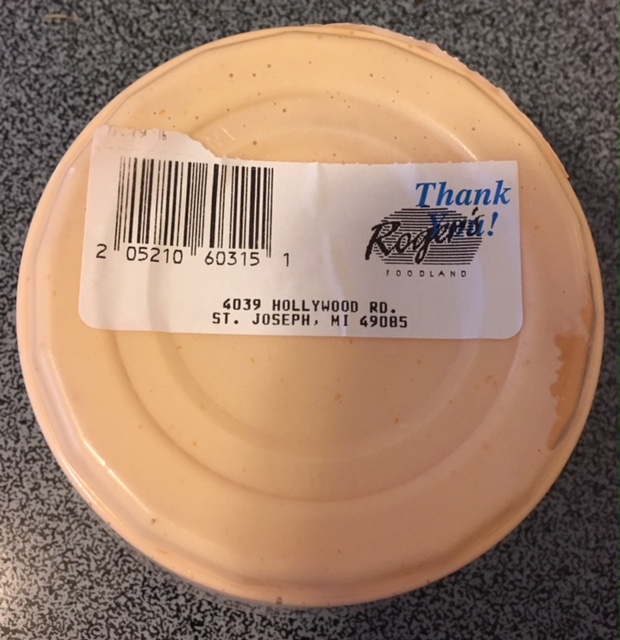
You can still buy Pearl’s Dressing at Roger’s Foodland on Hollywood Road in St. Joseph, MI.
“It was served on a Kreamo bun,”
says Lewis, “we also used Kreamo.”
Lewis seldom makes the fried
chicken, he’s turned his interest to artisan beers—teaching himself and also
learning from the brew master at The Livery.
“I make about gallons at a time
include German-style Hefeweizen I call Hagar Hefeweizen and Pitcairn Vanilla
Porter because I use an authentic Tahitian vanilla bean.
When doing research on his family’s
history, Lewis found an old advertisement for Pearl’s Dressing. It seems that
an enterprise called Pasquale’s was bottling the dress and selling it. There
was also a Pasquale’s Pizza in Benton Harbor, but neither Lewis or I have been
able to find out any more information about the bottled dressing. But we’ll
keep looking.
The
following recipes are courtesy of Gina Lewis Schmaltz and Guy Lewis,
grandchildren of Pearl and Buster Mead.
Chicken Nook
Pan-Fried Chicken
2 ½ to 3
pound chicken
4-6 eggs
1 pint of
whole milk (approximately)
All-purpose
flour for dredging
Not your typical friend chicken place. Carl Steele played music for diner guests at Mead’s.
Salt to
taste
Cut up the
chicken into make 8 pieces. Make an egg dip of approximately 4 to 6 eggs whisked
together with about a pint of milk. The egg mixture should be thick enough so
it sticks well to the chicken pieces.
Dip the
chicken into the egg dip then dredge in all-purpose flour. Salt the chicken
well as the pieces are going into the flour.
If you want
extra crispy crust, return to the egg dip mixture and then back into the flour.
Pan fry at
about 350 to 365 degrees in enough vegetable oil to more than halfway cover the
pieces. Breast and thighs should be fried separately for the legs and wings
since the larger pieces take longer.
Turn the
pieces when golden brown and finish frying the other side.
Cole Slaw
1 head
cabbage
Shredded
carrots (optional)
Apple cider
vinegar, one splash
Sugar, to
taste
Mayonnaise,
to taste
Shred cabbage
with a box shredder. Do not use pre-shredded cabbage, it is already too dry.
Add salt as
you shred, it helps to release the moisture from the cabbage.
Mix sugar
and heavy mayonnaise such as Hellman’s (not Miracle Whip) to taste. Mix well
and set aside for a short time to let it all blend together.
The Meads used to hand out the recipes for their famous Pearl’s Dressing at their restaurants.
Pearl’s
Dressing
Note: This
is a slightly different recipe than the one I published in my column several
weeks ago.
1 quart
mayonnaise
3 ounces
sugar
½ pint salad
oil
2 ounces
apple cider vinegar
1 10-3/4
ounce can of Campbell’s condensed tomato soup
Put all in
mixer and blend at slow speed. Don not whip as this will cause your oil for
separate from mixture.