Celebrate Halloween and beyond with Q Mixers, Waterloo Sparkling Water and Dos Equis. For those looking for creative and fun cocktails, they have you covered with seasonal cocktails you and your guests will die for ! Grab your candy corn, tune into Hocus Pocus and get your cocktail shaker out!
Q Mixers is sharing (3) must-try libations perfect for party batches that instantly takes your Halloween bash from boring to boo-licious.
Waterloo Sparkling Water has (2) ALL-NEW cocktail recipes featuring their limited time only flavor, Cranberry. Perfect for a fall night by the fire.
Dos Equis has a recipe that brings a spicy twist to the classic fall apple cider.
Jekyll & Hydeball
Ingredients:
1 1/2 oz Tequila
1 oz Pineapple Juice
1 small dash Tabasco
5 oz Q Sparkling Grapefruit
Method:
Build in highball glass filled with ice and top with Q Sparkling Grapefruit. Garnish with the tops of two chili peppers to create devil horns.
Frankenlime Collins
Ingredients:
1 oz Gin
0.25 oz Midori
0.5 oz Lime Juice
5 oz Q Spectacular Tonic
1 Lime Peel
Method:
Shake all ingredients except the Q Spectacular Tonic and strain into a large glass mug. Top with chilled Q Spectacular Tonic Water and garnish with a lime peel.
Build drink in highball glass and garnish with lychee eyeball. To make the lychee eyeball garnish, drain a can of lychees (reserve lychee juice for the recipe) and insert a blueberry into the hollowed out lychee.
In a mixing tin, add apple cider, lemon juice, and cinnamon syrup. Then add ice and shake well. Strain over fresh ice and top with Waterloo Cranberry. Garnish with fresh cranberries, grated cinnamon, and cinnamon stick.
In a mixing tin add chai tea and almond milk. Add ice and give it a quick shake to produce a light foam. Strain over fresh ice and top with Waterloo Cranberry. Garnish with shaved milk chocolate.
Make habanero infused apple cider by soaking 100g of habanero peppers in 1 gallon of apple cider for two hours room temperature (or longer to taste). Pour cider, lime juice and tequila over ice and stir. Top with Dos Equis® Ambar. Garnish with apple slices.
Loving bourbon doesn’t relegate you to neat pours for the rest of your life. In fact, one of the most fun ways to enjoy bourbon is in a delicious, balanced cocktail. But cocktails get a bad rap among bourbon enthusiasts. When picturing a typical bourbon drinker, you may think of older men in leather chairs with a glass of whiskey in hand with a cigar, but there’s more to bourbon than that. As a spirit, bourbon’s varied flavor profiles intrigue whiskey enthusiasts and cocktail drinkers alike.
Whiskey drinkers are uniquely poised to develop an appreciation for bourbon cocktails and to use them to grow the bourbon community. Let’s look at 5 myths about bourbon cocktails, and one truth you need to know to turn your understanding of the bourbon culture (and cocktails) on its head.
Myth #1: You have to drink bourbon neat to call yourself a bourbon drinker
I’ve heard it all before – a true bourbon drinker would never put a bourbon they loved in a cocktail. This is usually followed by a statement that if you can’t drink your bourbon neat you shouldn’t call yourself a bourbon drinker.
If someone identifies as a gin drinker or a vodka drinker, do you assume they only drink that spirit neat? No! You probably think they love martinis, gin and tonics, or cocktails with those spirits. Why is bourbon any different? One thing I know about bourbon culture from the mouths of people who make it, age it and bottle it is that bourbon culture is meant to be welcoming and inclusive. Every master distiller I’ve talked to has said something similar to “as long as you’re enjoying the bourbon, drink it any way you like.”
You do not have to sit in leather chairs in a dimly lit interior of a dusty bar filled with old men and hipster dudes with a glass of neat bourbon to call yourself a bourbon drinker.
As chair of Bourbon Women (https://www.bourbonwomen.org), an organization dedicated to bringing bourbon culture, education, and experiences to women throughout the US, I see us gathering women together over bourbon cocktails, food pairings, and fun events. This broadens the definition of a “bourbon drinker” to include anyone who loves bourbon, however they love it.
Bourbon culture has hospitality at its heart, and redefining the notion of a bourbon drinker to include bourbon cocktail lovers is critical.
Myth #2: Use your bad bourbon to make cocktails
I see this statement frequently in whiskey reviews: “I’ll save this for cocktails.” A professional whiskey reviewer is likely to be sensitive enough to taste those same off notes in a cocktail as in a neat pour. I know I can. Don’t save the “bad bourbon” for cocktails. Give it to someone who loves it.
Your daily drinker, your good bourbon, the bourbon that’s a go-to for sharing with friends and family is the perfect whiskey for cocktails. You’re intimately familiar with the aromas, the flavors, the finish, and the mouthfeel of that bourbon – you know what flavors taste good in combination with it.
Bourbon that you love is the only kind of bourbon you should be using for your cocktails. Your familiarity with its smell and taste will allow you to match it with great cocktail ingredients and remain aware of it even when added to a cocktail. You’ll also be able to pull out secondary notes from the bourbon as it melds with the other ingredients.
Don’t use your $50 or $60 bourbon to make your cocktails (unless you want to). Use value bourbons. Ones that you love, but don’t break the bank. And for a special occasion cocktail – to really dress up your Old Fashioned or Manhattan – break out the good stuff. Mix a cocktail withthe expensive whiskey every once in a while, and you’ll be amazed at the difference it makes.
Myth #3: Cocktails hide the flavor of bourbon
A great bourbon cocktail doesn’t hide the flavor of bourbon – it makes the bourbon shine. It pulls out specific flavors and notes and adds them to the experience of the drink. If you don’t believe me, make the same cocktail with vodka. Bourbon adds depth, complexity, and layers of flavor and aroma to a cocktail.
A bourbon enthusiast might argue that they can’t taste the bourbon in a cocktail. But they’re accustomed to sipping bourbon neat, with no distractions to pull awareness away from the bourbon. In a cocktail, sweet, sour, and bitter elements play with the bourbon, making bourbon harder to detect overall, but pulling out and highlighting specific flavors that may be more muted in a neatpour. When put together thoughtfully, all those elements create a cocktail that’s a coherent, balanced flavor experience.
All bourbon cocktails change dramatically when a different bourbon is selected. Swapping out the specific bourbon in a cocktail to create a cocktail flight is an enormously fun exercise for bourbon lovers used to whiskey flights.
Myth# 4: Bourbon drinkers shouldn’t waste their time with cocktails.
Have you watched whiskey drinkers at an event? Before they take a sip of anything they note its aroma. There are times it’s so involuntary I’ll see them take a sniff of a glass of soda or water before they taste it. Bourbon enthusiasts love to parse out aromas in a pour – caramel, vanilla, oak, tobacco, citrus, dried fruit, etc. They love to talk mouthfeel and finish. Each of these sensations is critical in the evaluation of a cocktail.
Bourbon drinkers are the perfect people to create and evaluate cocktails. They are primed to evaluate the very things that make a cocktail stellar – flavor, balance, mouthfeel, and finish. They are often able to pull out very specific flavors from a drink – specific nuts, fruits, spices, and sugars. They are able to taste a cocktail that’s too thin, or overly textured. Or one that’s not balanced.
In short, whiskey drinkers can be as nuanced in evaluating cocktails as they are at bourbon. Cocktails are a flavor puzzle that challenges whiskey drinkers perfectly. They need to consider flavors and aromas of potential ingredients to create a cocktail that’s balanced, delicious, and intriguing to the drinker.
Myth #5: Cocktails take too much time for bourbon drinkers
We choose every day what we’ll spend time on. I have seen bourbon lovers spend 20 minutes perusing a bourbon list to create a flight, or even try a single pour. I have watched friends debate bottles for an event via messaging for an entire day. Part of the fun is taking the time to select the right one.
It’s Easy to Do
A cocktail can be made in a few minutes. Add bourbon, bitters, sugar, and ice to a glass and you can build an old fashioned in a minute. Add vermouth and bitters to bourbon and you have a Manhattan.
Part of the fun of creating a bourbon drink is choosing the whiskey to use. Bourbon fanatics and newbies alike love to find flavors, and adding cocktail ingredients to bourbon does the same thing.
While putting a great cocktail may seem intimidating, classic bourbon cocktails are easy and fast to make at home – even to batch for parties. Bourbon drinkers can use these fast cocktails to do something they love – get others to drink more bourbon. Nothing’s better than sharing a bourbon with a friend.
The Truth: Bourbon cocktails are the gateway to bourbon
Bourbon is better with friends. Bourbon cocktails are the way most people start their bourbon journey. Typically, a delicious and approachable cocktail draws a bourbon newbie in. Suddenly, they start to see what all the fuss is about. And over time they learn to love bourbon in a cocktail, on the rocks, and neat. Bottles accumulate on the home bar, bourbon books collect on the shelf, and swag piles up from bourbon events.
Learning to make great bourbon cocktails expands a bourbon lover’s palate and lets them grow their bourbon circle to include friends and family who have never had a positive, fun experience with bourbon. Knowing the basics of bourbon cocktails can start a lifelong passion with bourbon.
Bourbon hospitality should be generous and welcoming. And nothing’s more welcoming than a bourbon cocktail from a friend and future bourbon buddy.
About the Author
Heather Wibbels, an award-winning mixologist, chair of the Bourbon Women Board of Directors, photographer, and digital content creator, works with brands and companies to develop cocktails and deliver cocktail education for both the home mixologist and cocktail enthusiast, turning cocktail lovers into whiskey drinkers one drink at a time. She develops, writes, and photographs content for her own website as well: www.CocktailContessa.com.
The following recipes are courtesy of Heather Wibbels.
Cider Toddy
This cider-based toddy with a splash of maple syrup combines all the flavors of fall. Fresh pressed appe cider from a local orchard makes this toddy exceptional.
4-6 ounces apple cider
½ ounce maple syrup
½ ounce lemon juice
16 drops Old Forester’s smoked cinnamon bitters (or 2 dashes of your favorite fall-flavored aromatic bitters)
1 dash ginger bitters
1½ ounces bourbon or whiskey
Garnish: apple slice, cinnamon stick
Fill a mug with hot water and set it aside. Combine apple cider, maple syrup, lemon juice, and bitters in a small saucepan and heat until steaming but not simmering (or heat in a microwave-safe container in the microwave). Add bourbon and stir to combine. Discard the water in the mug and pour the toddy into it. Garnish.
Dark Quarter
If a Sazerac and a Manhattan had a love child, this would be their firstborn. Rich and complex, this cocktail dials up the spice with a licorice liqueur, a peppery rye whiskey, and amaro’s earthy coffee and chocolate notes. A touch of maple syrup sweetens and balances the cocktail and results in a thicker mouthfeel.
2 ounces rye whiskey (or high-rye bourbon)
¼ ounce barrel-aged maple syrup
¾ ounce Foro amaro
¼ ounce Herbsaint or absinthe
Garnish: star anise and candied ginger
Combine ingredients in a mixing glass and add ice. Stir for 30 seconds or until well chilled. Strain into a chilled coupe glass and garnish.
The Kentucky Smolder
Creating a great Old-Fashioned for serious whiskey drinkers requires finesse. You need to highlight the whiskey above everything else, balance it with great bitters, and make sure it contains a hint of intrigue to keep them interested. The smoked chili bitters add both smoke and heat from the capsaicin found in chili peppers. And through it all, the bourbon still shines. I created this high-proof Old-Fashioned for a Bourbon Women “He Sips, She Sips” event featuring a blind tasting of Heaven Hill bourbons and ryes.
2 ounces Old Forester Whiskey Row 1920, high-proof (110 or higher) bourbon, or Pikesville rye
½ ounce demerara sugar simple syrup
3 dashes Hella Bitters smoked chili bitters
Garnish: charred cinnamon stick
Combine ingredients in a mixing glass and fill with ice. Stir for about 20 seconds, then strain into a rocks glass with fresh ice. Garnish with a charred cinnamon stick (be careful not to set your fingers on fire).
The King’s Julep
The King’s Julep
Here, the King refers to the King of Rock and Roll: Elvis Presley. This julep is an homage to those peanut butter and banana sandwiches Elvis used to make. It’s a great julep for someone who is new to bourbon and wants to try a wildly creative take on a classic.
1½ ounces bourbon
¾ ounce peanut butter whiskey
¾ ounce Giffard’s Banane du Brésil banana liqueur (substitute chocolate liqueur for Reese’s julep)
2 dashes Bittercube cherry bark vanilla bitters
Garnish: peanut butter and banana skewer and fresh mint sprig
In a mixing glass, add bourbon, peanut butter whiskey, banana liqueur, and bitters. Add ice. Stir until chilled, 10–15 seconds. Strain into a julep cup filled with crushed ice. Add a straw, mint sprig, and skewer of banana and peanut butter.
The dazzling 1893 World’s Columbian Exposition brought 27 million people to Chicago which was no small feat given that the first gas powered automobile is credited to Karl Benz in Germany in 1886 and Henry Ford’s 1908 Model T was the first car easily accessible to people other than the wealthy.
The crowds came to see all the newest inventions like the Ferris Wheel, the zipper and Cracker Jacks, diet carbonated soda, Aunt Jemima syrup and pancake mix and Wrigley’s Juicy Fruit gum. Plus it was at the Exposition that Pabst Select won the Blue Ribbon in the beer competition and hence forth became known as Pabst Blue Ribbon beer.
But there were other attractions less awe inspiring or recognizable but as important if not more so.
1500 botanicals (a term used to describe seeds, berries, roots, fruits and herbs and spices) were brought from around the world to the exposition to the Field Columbian Museum (now the Field Museum). Among the 40 million objects belonging to the museum—only 1% of which are on display—the majority of these botanicals remain.
Megan Williams, Director of Business Enterprises for the Field Museum, started a beverage program around seven years ago in celebration of the museum’s 125th anniversary. Her idea was to use some of these botanicals as a way of connecting the museum’s past and present.
“I am not a researcher here,” says Williams discussing her background, “though I used to teach environmental science. I joined the Field museum as an account manager and then took over the restaurant. I wanted to create a sense of community, a place for people to sit and talk and what better place for that than a bar.”
Combining the communal ambience of a bar with the awesome history of the museum was one of the reasons Williams started the beverage program.
“I wanted to educate people through taste and smell, to be able to taste or smell something that has a historic significance,” she says.
Williams described it as an opportunity to bring people together who love spirits and love learning.
“It’s not just putting a museum label on something though there’s a legitimacy in that,” she continues, noting she’s worked with brewers and wine makers as well in developing Field branded drinks. “But we wanted to take it another step further, working with people who have a passion and understand the museum’s language and mission.”
Contacting the Journeyman Distillery in Three Oaks, she invited Matt McClain, Journeyman’s lead distiller and owners Bill and Johanna Welter to view the botanicals to look at the botanicals.
“The first spirit we talked about was rye, that ended up as the last one made,” says Williams. “We asked questions such as what would work well in making gin—what could–out of these 1500 botanicals—and where could we source them.”
McClain spent several months researching the botanicals that were at the museum, to determine their history as well as their availability.
“I found that a lot of them were not considered safe or even poisonous,” he says. “Standards were different back then.”
From there, he and Bill Welter chose those they thought would be a good fit for the spirits they wanted to create.
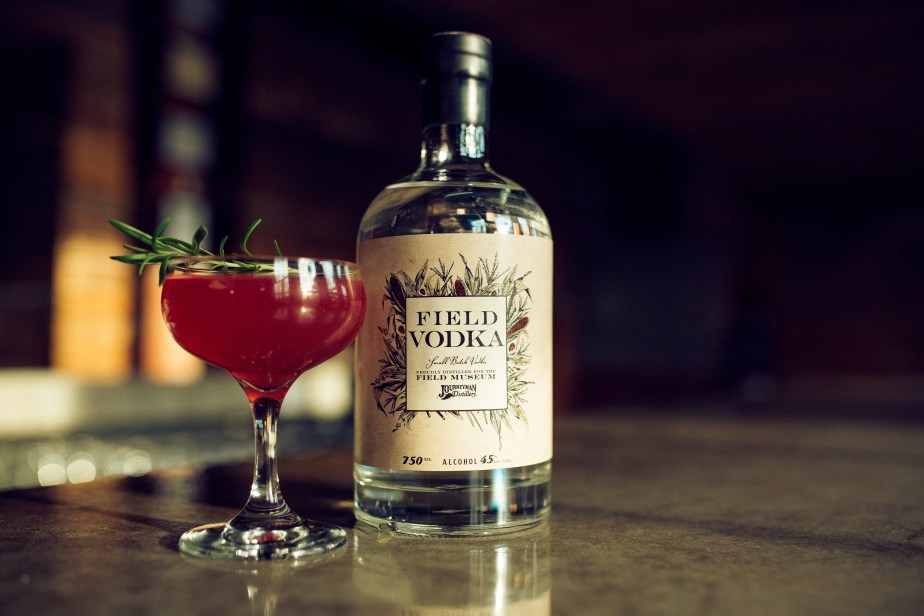
The first product they created was their Field vodka using Bloody Butcher Corn, an heirloom variety often used for making bourbon. The vodka then served as a base for the next distilled spirit, their Field Gin
“We wanted to make a global gin,” says McClain. “So we were pulling species from around the world. We narrowed it down to around 50.”
But once they had the botanicals and began developing recipes, they had to cross off a few more from the list.
“A lot of botanicals that look and taste good, don’t work where you put them in in alcohol, others that I wanted to use were hard to get or arrived too late, I still have agave in the cooler,” says McClain, noting they used other criteria as well in the selection process. “Bill and I wanted the gin to be lavender focused. Obviously gin also has to have a heavy juniper taste as well. We wanted the gin to have tropical undertones and had to figure out those as well.”
Then they were down to 27 including not only lavender and juniper berries but also prickly ash, anise, mango, ginger, coconut palm sugar, pineapple, papaya, Valerian Root, cinnamon, coriander, Horehound, star fruit and Charoli nuts which are sourced from India.
For their Field Rye Whiskey, they tried several types of figs which McClain describes as the world’s oldest sweeteners, finally deciding that Black Mission figs worked the best. The figs were macerated or soaked in alcohol for three months, a process that brought out subtle and all-natural flavors of bananas, sweet melons and strawberries.
“It’s an incredible whiskey,” says McClain. “It has heavy caramel notes and soft marshmallow like palate.”
Bottles of the Field distilled spirits are available for sale. For those who would like to learn more about their taste, they’re also used in some of the cocktails served at the Staymaker, Journey’s restaurant.
Sidebar: Brews
Beer, which is so Chicago given its rich German heritage, was the first partnership Megan Williams embarked upon when she started her beverage program. Two Chicago breweries, Off Color Brewing and Two Brothers Brewing were among the first to use the botanicals to create beers for the museum. researchers at the Field Museum have spent years excavating and studying the Wari site in Peru. Toppling Goliath introduced PseudoSue pale ale, a nod to the museum’s famous 40 feet long and 13 feet tall at the hip, Tyrannosaurus rex. Physically SUE is the largest specimen T. rex specimen that’s been discovered so far.
Off Color’s introduced Wari, their artisan beer based on the Peruvian chicha, a purple corn beer native to areas of Central and South America. One of its other tie-ins with the museum is that Field scientists have spent years leading excavations at Cerro Baúl, a remote mountaintop citadel which was the only contact point between the Tiwanaku and the Wari, considered two great kingdoms whose dynamic relationship ultimately contributed to the rise of the Incan Empire. According to Off Color’s website, an essential sacrament shared by both cultures revolved around chichi. It seems that both tribes liked to consume massive quantiles of chicha served in ornately inscribed drinking cups called keros that were discovered during the archaeological expeditions at Cerro Baúl. In this way, Wari and Tiwanaku cemented their relationships. In other words, next time you see a bunch of heavy alcohol consumers at bars, understand they’re just continuing a thousand year ritual similar to that of the Wari and Tiwanaku.
The following recipes are courtesy of the Journeyman Distillery.
Journeyman Fig Old Fashioned
1.5 oz Field Rye
0.5 oz Fresh Orange Juice
0.25 oz Journeyman Bourbon Maple Syrup
Dash of Journeyman Barrel-Aged Balsamic Vinegar
Dehydrated Orange Wheel
Stir ingredients and pour into a rocks glass, over ice. Garnish with dehydrated orange wheel.
Field Vodka Gimlet
1.5 oz Field Vodka
.75 oz Fresh Lime Juice
.5 oz Simple Syrup
Fresh Lime Wheel
Shake ingredients well and strain into a tall glass over ice. Garnish with a fresh lime wheel.
Field Gin Fizz
1.5 oz Field Gin
.75 oz Fresh Lemon Juice
.5 oz Pear Simple Syrup
1 oz Aquafaba or Egg White
Soda
Star Anise
Combine ingredients and dry shake before adding ice to the shaker. Wet shake until froth has built up. Strain into a Collins glass and top with soda. Garnish with Star Anise.

 ! Grab your candy corn, tune into Hocus Pocus and get your cocktail shaker out!