
Who Actually Makes Kirkland Wine? https://flip.it/UR5.cW
Tag: #basquecountry

Crusoe Treasure: A Spanish Underwater Winery

Within the castle gates of Torre Loizaga, a reconstructed 14th century fortress on a mountain top in Concejuelo de Galdames, Biscay in the Basque Country, Spain, the light of the setting sun has washed the stones with hues of pink and lavender.
There’s talk about treasure as Patricio Careaga leads us into the baronial sized dining hall which seems perfect in this castle setting of crystal chandeliers, thick stone walls, walls torches, and an immense fireplace. Will it be a chest of precious jewels or gold chalices fit for royalty? But Careaga, whose great uncle Miguel de la Vie, reimagined Concejuelo Castle as a family home and museum decades ago, is talking about a different type of treasure–the barnacle encrusted bottles of wine sitting on the tables. And no, the barnacles aren’t just for decoration. It seems we’ve come to a mountain top to sip wine from beneath the sea.

“Crusoe’s Treasure is the world’s first underwater winery,” Anna Riera, a marine biologist and Communication and Tourism Manager at Bodega Crusoe Treasure, tells me as we sip their Sea Soul Nº4, a Syrah that was aged first on land in French barrels and then undersea.

In business since 2013 and located on the Bay of Plentzia, a gorgeous stretch of coastline and water about 15 miles north of Bilbao, Crusoe Treasure ages their wines on land for months before lowering the bottles into a specially designed artificial reef—an aquarium like wine cellar—where they’ll continue to age. It sounds like a lot of work, but Riera tells me the cellar is a rich eco-system of marine life, describing it as “a house for flora and fauna in which the wines flourish.”

If you want to get to know the lay of the sea so to speak, there’s a three-hour boat tour aboard the Crusoe Treasure ship that includes tastings, a trip to the underwater winery (no need to bring your diving gear—you’re not going into the winery just cruising above it) and along the coast.

Using grapes grown in Spain such as Grenache, Viognier, Tempranillo, Tinto Fino and Matuiana, underwater wine making is an expensive process, costing 25 to 70% more than “terrestrial” according to Riera. But overall, the time, hassle and cost are outweighed by the positives–the underwater pressure movement of the tides, lack of light and consistent temperatures—all of which create a perfect aging aquaoir, speeding the fermentation process and adding complexity to the taste.

After all, Riera points out, wine recovered from 19th century shipwrecks have proven to be very drinkable.

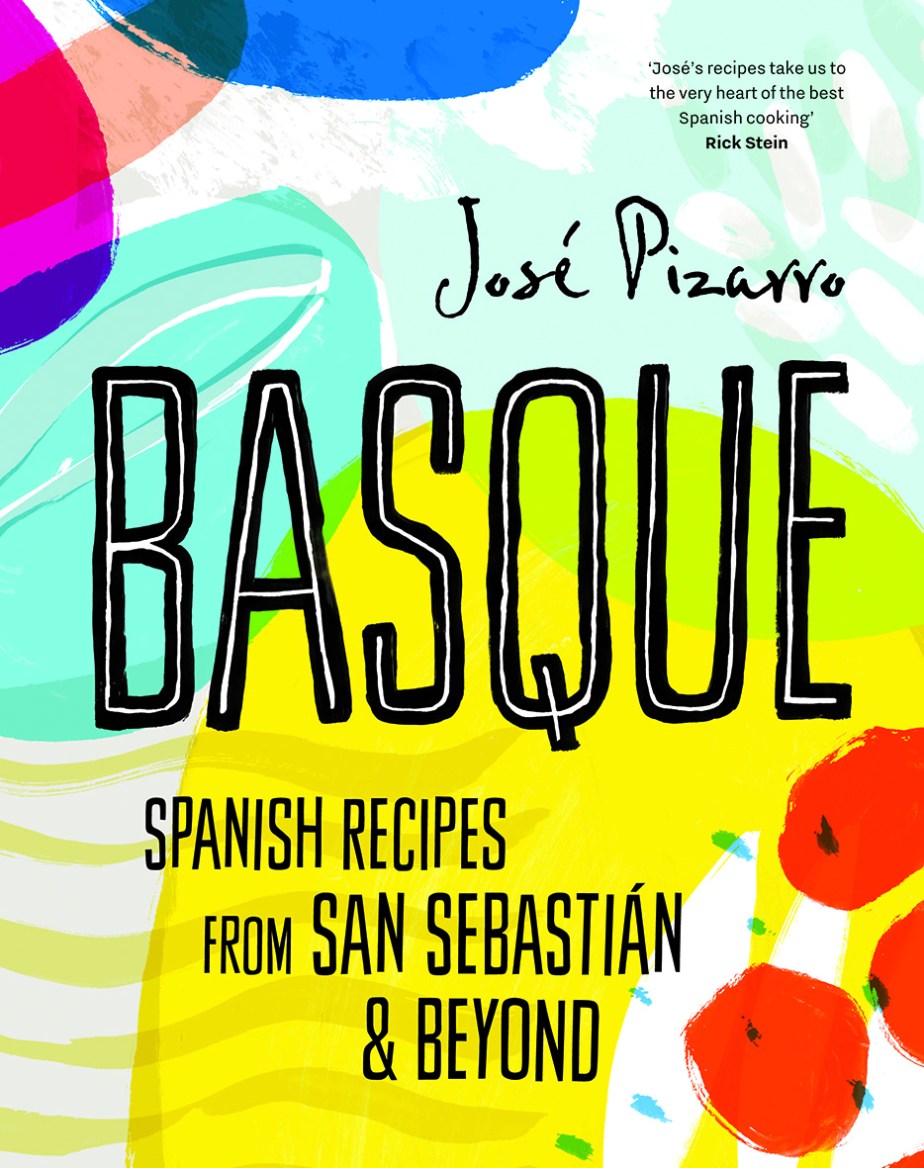
Since Torre Loizaga is located in the Basque Region of Spain, we turned to Spanish chef José Pizarro, often described as “the Godfather of Spanish cooking, who has authored several cookbooks including Basque: Spanish Recipes from San Sebastian & Beyond (Hardie Grant 2021), to complete the Basque Country experience.
Swiss Chard Stew with Pimentón

- 1 large onion finely chopped
- 2-3 garlic cloves finely chopped
- 1 red capsicum pepper, deseeded and sliced into thin ribbons
- 1 teaspoon paprika
- 3 cups potatoes, peeled and sliced into discs
- 1 bunch of Swiss chard washed with the stalks chopped and leaves shredded
- 3 cups vegetable stock
- 1.5 cooked lentils rinsed and drained
- sea salt and pepper
- 1 tablespoon olive oil
In a large pot, heat olive oil and gently fry the onion until soft, around 8 minutes.
Add the garlic and cook for another 2 minutes.
Add the capsicum (pepper) and the paprika and fry for a few minutes.
Add the potatoes, Swiss chard stalks and stock and season with salt and pepper.
Bring the stock to a simmer and cook for around 20 minutes.
Add the lentils and Swiss chard leaves and cook for another five minutes or until the stew is lovely and thick.
Serve with crusty bread.
If You Go
Torre Loizaga was one of the stops we took when traveling through Northern Spain aboard the Costa Verde Express, formerly known as the Transcantábrico Classico. The oldest luxury tourist train in Spain, the Costa Verde Express travels from Bilbao along the coast through Basque Country, Cantabria, Asturias to the magical city of Santiago de Compostela.

The Cuisine of Basque: Regional Cooking at Its Best

José Pizarro, chef and owner of Jose Pizarro Broadgate Circle, The Swan Inn Esher, and Pizarro, his eponymous tapas bar and restaurant respectively, both on Bermondsey Street, near London Bridge, was born in Extremadura and worked in restaurants in that region and Madrid.

Credited with popularizing Spanish cuisine in Great Britain. His cookbook, Basque (Hardie Grant 2021; $22.95), is a great way to explore the beautiful Basque region of Spain.

“The Basque Country is feted across Spain, and indeed the world, for its culinary creativity,” says Pizarro. “It has more three Michelin-starred restaurants than anywhere else, and I can understand why – there are so many local products that you can be inspired by here.”

Chicken Stewed in Cider & Apples
“My inspiration for this dish, as with many of my recipes, came from seeing the ingredients together,” says Pizarro. “When I see them, I just have to create a plate of food. When we were in Astarbe in a beautiful cider house, I saw the chickens hopping around the apple trees, and that was it.”

The Astarbe Experience includes a restaurant and an assortment of wonderful foods and tastings of their ciders.
Serves 6
olive oil
1 free-range chicken (1.8–2 kg/4 lb–4½ lb)
sea salt and freshly ground black pepper
1 apple, peeled, cored and halved
2 onions, finely sliced
2 bay leaves
6 sage leaves
1 cinnamon stick
500 ml (17 fl oz) cider
400 ml (13 fl oz) fresh chicken stock
25 g (1 oz) unsalted butter
3 apples, peeled, cored and sliced into 8 pieces
1 teaspoon caster (superfine) sugar
75 g (2½ oz) sultanas
Preheat the oven to 160ºC (320ºF/Gas 3).
Heat a layer of oil in a large casserole dish. Season the chicken inside and out and brown all over in the casserole dish. Set aside and put the halved apple inside the cavity.
Add the onions to the casserole and fry for 10 minutes to soften. Return the chicken to the pan and add the herbs and cinnamon.
Pour in the cider and bubble for a few minutes, then add the stock. Bring to the boil, then cover and transfer to the oven to cook for 1 hour.
Meanwhile, heat a little oil and the butter and fry the rest of the apples with the sugar until golden and caramelised. Add the sultanas and toss in the buttery juices. Add to the casserole about halfway through the cooking time.
Remove the lid of the casserole and turn up the oven to 220ºC (430ºF/Gas 7). Cook for 10 minutes more to brown the top of the chicken, then serve.

Sautéed clams with garlic, lemon & parsley
“Clams are popular all over the world as they are so versatile,” says Pizarro about this wonderful dish. “When you are planning to cook for more than a couple of people, this is something that you must consider; ingredients and dishes your friends will love but are also quick prepare, so that you don’t spend the whole time at the stove.
“You can boil some pasta with this for a really easy lunch, and add some chilli for an extra kick.”
Serves 4
olive oil
3 fat garlic cloves, peeled and finely sliced
1 lemon, half finely sliced, half juiced
1 kg (2 lb 3 oz) fresh palourde clams, cleaned
few sprigs of thyme, leaves stripped
handful of finely chopped flat-leaf
parsley
Heat a little oil in a deep heavy-based stockpot. Fry the garlic and lemon slices for 30 seconds, then increase the heat to high, tip
in all the clams and cover with a lid. Cook for 2–3 minutes, shaking the pan occasionally, until the clams have all opened (discard any that refuse to open).
Add the lemon juice and herbs and serve with lots of crusty bread to mop up the juices.

Pan-fried hake with sautéed wild chanterelles & sage
“Hake is one of the most sought-after fish in the Basque Country,” says Pizarro when sharing this recipe. “I really don’t know why it’s not as popular here in the UK, particularly as it’s plentiful – I think most of the catch from the sea here goes to Spain!
“In my family, our favourite way of cooking hake is a la romana, or Roman
style, which means that it’s battered.
“In this recipe, I bring two big flavors together, the sage and the mushrooms, but they complement the fish very well.”
Serves 4
olive oil
2 French shallots, finely chopped
2 garlic cloves, crushed
few small sage leaves
300 g (10 1⁄2 oz) chanterelles, cleaned
100 ml (31⁄2 fl oz) fresh fish stock
sea salt and freshly ground black pepper
4 hake fillets (175 g/6 oz each)
Heat a little olive oil in a pan and gently fry the shallots for 5–10 minutes until really soft. Add the garlic and sage and cook for 30 seconds, then increase the heat and add the mushrooms. Fry for 4–5 minutes, then add the stock and bubble for a couple of minutes. Season and set aside.
Heat a heavy-based frying pan with a little bit of oil. Add the hake skin side down and cook for 4–5 minutes until almost cooked through. Flip over and cook for 30 seconds more.
Put the cooked hake, skin side up, into the pan with the mushrooms. Cook for a minute or two more, then serve.
Recipes excerpted with permission from Basque by José Pizarro published by Hardie Grant Books, March 2021.


