
The 7 Iconic Paris Cafés You Cannot Miss https://flip.it/wK_tvH
Category: Uncategorized

Great Value and Premium Winter Sports in the Black Forest Highlands

Skiing, snowshoeing, tobogganing, relaxing spas in the Black Forest Highlands holiday region create serious fun for great value with the brand new digital Red Inclusive Card.
In the winter months, situated at an altitude of approximately 2,700 to almost 5,000 feet, the Black Forest Highlands holiday region offers visitors many winter attractions. The skiing area in the vicinity of the Feldberg mountain promises winter sports enthusiasts guaranteed snow. On the region’s sunny peaks, it is possible to enjoy unique views of the Alps and the Rhine valley as the region is so close to France and Switzerland.

With 74 ski lifts, skiers and snowboarders can take to more than 50 miles of slopes. The “highest peak” in Baden-Wuerttemberg, the Feldberg, offers superbly prepared runs at every difficulty level from the challenging FIS World Cup piste and the more straightforward family slope on the Seebuck.
For cross-country skiers, the Black Forest Highlands are home to 150 cross-country trails totaling 560 miles. At an altitude of over 3,000 feet, the Thurnerspur trail at St. Märgen offers optimal conditions for ambitious sports enthusiasts and beginners alike: Suitable for both the classic and skating technique, two cross-country trails, almost 10 miles long, wend their way over snowy expanses and woodland, while the 1.5 mile night trail offers floodlit skiing several times a week.

The Thurnerspur trail is also part of the Schonach-Belchen long-distance skiing trail which is just over 60 miles long, and approximately half of it makes its way through the Black Forest Highlands, passing Waldau at Titisee-Neustadt and on to Notschrei. The Nordic Center Notschrei, with cross-country trails of 2 miles to 12 miles in length, are suitable for both the classic and freestyle techniques. Cross-country skiing courses are on offer and equipment is available to hire at the Ski Nordisch sports base, which features biathlon facilities and evening floodlit opening.

The 466 miles of winter hiking trails on the sunny uplands of the Black Forest Highlands provide unique views of the Alps and the Rhine valley. Several premium winter hiking trails are specially signposted and are checked and maintained on a daily basis. They have been designed so that they offer especially attractive views and are easy to walk along. The entire network of trails, which has been created in collaboration with the Southern Black Forest Nature Park, provides for both a safe and eco-friendly winter hiking experience.

Along the 13 signposted snowshoe trails, those who love the great outdoors can enjoy the free and authentic landscape. The trails are signposted especially and reserved for snowshoe walkers. A variety of different difficulty levels and offers promise varied experiences – whether it is a short tour of the peaks, around Hinterzarten, or a guided walk on the Feldberg as the sun sets.
The Black Forest Highlands are also famous for their excellent toboggan runs. The longest downhill tobaggan runs are the Hasenhorn (2 miles), the Todtnauer Hüttenweg (2 miles), and the toboggan run from Saig to Titisee (just under one mile). Several of the runs are floodlit and open in the evening.

After an action-packed day in the snow, the spas and swimming pools in the Black Forest Highlands, not to mention several hotels with day spa facilities, are a great place to relax and stock up on energy. Seven hotels in the holiday region have the Wellness Stars Germany seal of approval, which guarantees the independently verified quality in the area of wellness.

With the brand new digital Red Inclusive Card, guests can take advantage of more than 70 basic leisure offerings in the region every day, free of charge, including for example, free entrance to in-and outdoor swimming pools, museums, and free rental of cross-country equipment. In addition, the Red Inclusive Card offers many attractions a discount of at least 20%. The Red Inclusive Card is available as a free added benefit at approximately 500 hotels for guests staying for at least two nights. For further information, please visit www.hochschwarzwald.de/Card.
The Story of the Pioneering School for the Deaf in Rural Mexico
In 1982, Gwen Chan Burton, who had previous taught in a government secondary school students in both Australia and Canada for 12 years was faced with a big career decision.

Burton (whose name at the time was still Chan but that would become part of her adventure as well) had recently been certified as a teacher for the severely hearing impaired. She could either again teach in Canada albeit in her new specialty or move to Jocotepec, a small village in the Mexican state of Jalisco where several years earlier two retired Canadian women, Jackie Hartley and Roma Jones, stated a small school for children who couldn’t hear. The impetus for the school came about after meeting a young deaf boy in the plaza of the town where they were living.
It was quite an undertaking particularly considering that Hartley and Jones weren’t teachers and spoke little Spanish. Add to that, they had no building to house their school nor did they have the money to fund it.
For Hartley and Jones these were just mere details and within 15 years their Lakeside School for the Deaf, which started off with classes in an upgraded chicken coop, would become an international success. The term Lakeside is an English term used by local expats and tourists to refer to the general area along the north shore of Lake Chapala where thousands of expats live – stretching from city of Chapala, through Ajijic to Jocotepec at the western end of the lake.
But when the Hartley and Jones tried to recruit Burton and another teacher of the severely hearing impaired named Susan van Gurp, it was still very early days indeed—one that promised hard work in an unknown environment and barely subsistence pay.
“As a student at Melbourne University in the late 1960s, I had dreamed of volunteering as an English teacher in the wilds of Papua New Guinea, then administered by Australia,” says Burton. “However, after I learned that the government required three years teaching experience before applying–I ended up in Toronto instead of PNG. I guess Jackie Hartley’s offer re-awoke my dream of volunteer teaching and since I was single and debt free, my main concern was how to learn basic Spanish in the three months before we flew south.”
Within a few years, Burton would become the school’s director, a position she held from 1985-1994. The school’s enrollment grew as did the number of teachers, resulting in scores of disadvantaged deaf children and youths who found life-changing communication, free education.
Burton, who now lives on an island off the coast of Vancouver, recounts the story of what is now The School for Special Children (CAM Gallaudet, Special Education Centre) in her awe-inspiring book, New Worlds for the Deaf: The Story of the Pioneering School for the Deaf in Rural Mexico (Sombrero Books 2019; $14.99 Amazon price).
“The book describes the school’s much loved teachers, first Canadian then Mexican, who opened new worlds for those atypical students, with specialized teaching methods and amazing special events,” says Burton. “Also described is the school’s unique home-based boarding program that allowed many children from distant villages to attend classes.”
In between all her work, Burton met geologist Tony Burton on Canada Day at an Octoberfest celebration in Guadalajara. After the couple married and had children, life became even more hectic especially when Tony was away leading field studies courses and eco-tours around the country.

“Thankfully a wonderful Mexican grandmother was willing to care for our children whenever needed and from her they learned the local customs, the Spanish language and a love of Mexican food,” says Burton. “She was also a generous boarding mother for two adolescent deaf brothers for several years.”
Often issues were time related –needing time to make new ear molds for students using the classroom FM systems, but also needing to attend a morning meeting of the school board 20 kilometers away or taking time to show visiting former teachers around the classrooms and answer all their questions. Many challenges were unexpected such as the arrival of new students unannounced and needing accommodation.”
But the rewards were many such as seeing the changes in new students as they learned to communicate using Mexican sign language and were able to ask questions and understand the answers for the first time in their lives; then seeing their enthusiasm and their parents’ pride as they learned to write their own name, and later begin to read.

Asked to share a story about one of the school’s students, Burton takes time to think—there were so many—before deciding to talk about Juan Luis, who after being abandoned by his mother was sent out to beg in Guadalajara by his next caregiver.
“He was rescued by an aunt who sent him with a truck driver to the home of Rita, one of our staff,” recalls Burton. “The young boy, profoundly deaf, was called Carlos by the truck driver and spent his first week at school as Carlos. When his aunt visited Rita the next weekend we found out his real name and the following Monday at school we need to erase Carlos from his workbooks, and create a different sign name, because he is actually Juan Luis, nearly nine years old, bright, personable but unschooled and unable to recognize or express his own name….or count to nine.”
For those deciding on such an adventure, Burton offers the follow advice.
“Go, with an open mind and positive attitude about the people and customs you will encounter,” she says. “Preferably have a good friend with you at least for a long settling-in period, unless you are joining a well-established group of like-minded people. Be able to carry on a basic conversation in the local language and learn whatever you can about your host nation before you arrive. But definitely go if you feel you have skills, knowledge or a harmonizing philosophy to contribute and accept that it will undoubtedly be a pivotal experience in your life.”
All proceeds from the sale of New Worlds for the Deaf benefit the hearing aid program for children in the Lake Chapala region, a program the author runs in partnership with the local committee that supports the CAM Gallaudet Special Education Centre in Jocotepec, Jalisco.

Trendy Bloomington Indiana is the ultimate fall destination

Bloomington, Indiana is bursting with autumn adventures, fall flavors, and some of the best ways to enjoy fall foliage. Here’s how to enjoy autumn adventure by water, land, and even air.
Though it might be hard to convince some people of this, Bloomington in the fall when the leaves turn jewel shades of garnet, tangerine quartz, and tourmaline (or red, orange, and yellow) is more than college football. Here in this college town where Indiana University’s campus melds into the historic downtown, there are seasonal festivals and flavors, cool, crisp weather, wineries, distilleries, and breweries as well as an amazing selection of ethnic restaurants including not one but two Tibetan eateries. In all, Bloomington, Indiana is a one stop shop for all the fall feels.
Here’s how:

On the water: Monroe County boasts three lakes, and each takes on a magical, majestic air and outdoor adventures during autumn. The rolling hills filled with orange, red, and yellow-leaved trees reflecting in the water is a breathtaking experience every visitor should check out during the fall season. Seasonal activities include boat rentals allowing visitors to cruise for the best fall foliage view. There’s also seasonal biking, fishing, hiking, campgrounds and more.

In the air: Nothing beats a fall foliage view from the top. While Bloomington is one of the Midwest’s top birding locations, nothing beats a bird eye’s view of the beautiful earth below. Bloomington is home to three popular hot air balloon companies including SkyVista Ballooning which offers a unique and customizable hot air balloon ride experience for everyone embarking on the adventure of a lifetime. For those who prefer to use their feet for a view from the top can climb the 133-step Hickory Ridge Fire Tower and snap a photo of the fall-toned tree tops. An autumnal view of Monroe County like no other. Nature lovers and avid hikers will be amazed by the Hoosier National Forest during fall.

Speaking of balloons, Bloomington is home to several seasonal festivals including the 10th annual Kiwanis Indiana Balloon Fest; Lotus World Music & Arts Festival; Hilly Hundred Bicycle Tour, and more.

On land: Indiana University, one of the most stunning college campuses in the country, shows off its colors in the fall (on the football field and campus). Be sure to attend a fall football game and/or take a trip to the campus.

Fall foodies enjoy all the season’s best flavors throughout town such as Apple Pie Wine at Oliver Winery, Oktoberfest at Upland Brewing Co, pumpkin pancakes at Village Deli, a Jack-O-Lantern Latte (made with local Dillman Farms pumpkin butter) over at Hopscotch Coffee, and so much more (there are over 350+ restaurants in Bloomington!).
And because fall season is also spooky season, for those interested in the other kind of “spirits” Bloomington is a great destination for Halloween vibes. Graduate Bloomington Hotel, a pet friendly place to stay, has a room dedicated to the hit Netflix show Stranger Things and if that’s not creepy enough, Bloomington offers cemetery hikes and tours with more Halloween activities to be announced soon. Mystery lovers will enjoy Indiana University’s Lilly Library Sherlock Holmes in 221 Objects exhibit on display now through December 16.

Grand Geneva Resort: Fall fun, frights, and culinary delights

More than a year-round destination for adventure, fun, and relaxation, Grand Geneva Resort & Spa in Lake Geneva, Wisconsin should also be on every serious foodies list as well. That’s because, under the direction of Food & Beverage Director, Nelly Buleje and new Executive Chef Dustin Urbanik, this popular resort is dishing up exceptional seasonal flavors on their new fall menus.

From the resort’s popular elevated Saturday brunch which are focusing on such autumn delights as pumpkin pancakes and fall flavored mimosas to in-house made desserts like apple crumble to seasonal soups and sides such as lobster bisque with Maine lobster sherry, tarragon, lobster brodo, sourdough crisp and caviar; truffle creamed spinach with black truffle, mornay, and farmstead cheese; and rainbow carrots and parsnips with bourbon and maple glaze, the resort and its collection of restaurants are bursting with fall flavors.
There’s also an impressive new fall cocktail menu with selections like Wisconsin Apple Old Fashioned; Smoked Maple Mile; a White Pumpkin cocktail; Espresso S’MORES-tini; and more (check out the fun visuals here). By popular demand, the resort’s seafood boil and Midwestern prime rib roasts will run every Friday and Saturday through November 12.
In addition to the new fall flavors, here are some new autumn offerings and programming guests and families can expect:

- Seasonal outdoor adventures including hiking, biking, an indoor pool and waterpark, horseback riding, championship golf, skiing and snowboarding in the winter, and more.
- One of the best ways to get around and explore the 1,300 acre-campus and beautiful Lake Geneva as well as Wisconsin’s scenic backroads is by the resort’s scooters and new this year, e-bikes. Rent one for a few hours or take a guided tour around the area with. The perfect way to spend an autumn afternoon with family or a group of friends (must be 18+, check out rules here).
- Hayrides and waterslides! The resort campus is also home to Timber Ridge Lodge & Waterpark. Both Grand Geneva and Timber Ridge offer guests on-site haunted hayrides, haunted barns, apple picking opportunities and seasonal packages. Check out Grand Geneva’s packages here; Timber Ridge packages can be found here.
- Families will also enjoy new programming such as pumpkin painting; DIY caramel apples; excursions to Pearce’s Farm (local farm with fresh produce, kid’s activities and corn maze); and a Grand Escape – the resort’s very own pop up escape room.

Keep an eye on the Wisconsin Fall Color Report for optimal leaf-looking opportunities.
Photos courtesy of Grand Geneva Resort.

The Perfect Fall Getaway: Gulf Shores and Orange Beach, Alabama
Summer is officially in our rearview mirror, but that’s not stopping the twin-city destinations of Gulf Shores and Orange Beach, Alabama, from looking at the open stretch of beach ahead! While these Gulf Coast destinations are synonymous with summer vacation for many travelers, today we’re sharing why a visit during the “off” season – specifically autumn – should be put on the map!
Autumnal Highlights

Mild temperatures, special rates and fewer crowds are just a handful of reasons why a trip to Gulf Shores and Orange Beach is special in the fall.
The Beach Within Reach: After peak summer season, the temperature isn’t the only thing coming down. Average daily rates for lodging also drop in the fall. A list of seasonal vacation packages, deals and special offers can be found at GulfShores.com.
Uncrowded Beaches & Restaurants: With its colorful sunsets, fall is an amazing time to enjoy 32 miles of sugar-white sandy beaches and the clear – still warm – waters of the Gulf of Mexico without the heavy summer crowds. Food is this destination’s love language and there’s no shortage of dining options. Many restaurants here have outdoor dining well into the fall season and the wait times are much shorter at this time of year.
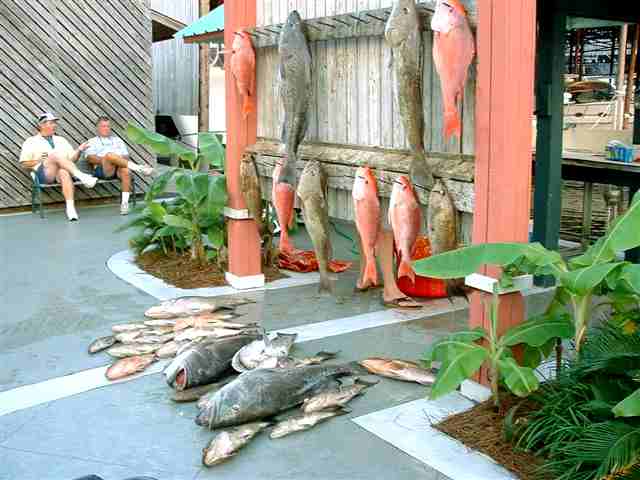
Fishing: Though fishing is a year-round sport along the shores of Gulf Shores and Orange Beach, there are unique opportunities to reel in seasonal catches. The 2022 amberjack season remains open until November 1, and recreational harvest of gray triggerfish will be open until December 31. Check out the Fishing Seasons page for a full list of the best time to catch different species.
Mild Temperatures: After the country recorded its second hottest season on record, a break in the heat may be a welcome change. Gulf Shores and Orange Beach are located in the southern subtropical area of the country, where mild temperatures – like an average monthly temperature of 71.2 degrees in October – greet visitors.

Fall Migration: At this time of year, birds and butterflies – including the endangered monarch – count Gulf Shores and Orange Beach as part of their migratory route. The destination offers such spectacular birding locations as Bon Secour National Wildlife Refuge, Gulf State Park, and the Audubon Bird Sanctuary on nearby Dauphin Island.

Festivals & Events: There’s always something to do, see, and experience on Alabama’s Gulf Coast. The annual Frank Brown International Songwriters’ Festival takes place November 3-10 this year, and it will draw more than 200 songwriters from around the country and the world. The festival is named for Frank Brown, the former night watchman at the famed Flora-Bama roadhouse, and it serves as a fundraiser to provide healthcare for musicians, who are typically self-employed.
Accommodations Spotlight
From tiny homes to RV resorts to beachfront condos and resorts, there’s a place for everyone in Gulf Shores and Orange Beach.

Brett Robinson Vacation Rentals: Offering the largest selection of beachfront and bayfront condos and hotels on the Alabama Gulf Coast, Brett Robinson Vacation Rentals’ “Outstanding October” promotion features 15% off bookings now through October 31, with additional savings available the longer you stay.

Perdido Beach Resort: This family-friendly resort, which underwent a complete renovation in 2021, is located right on the Gulf of Mexico in Orange Beach. The “Fall into Savings” offer includes a savings of 30% off when booking three or more nights. The offer is valid through December 31.

Sugar Sands RV Resort: For those who take their “home away from home,” this RV resort features 82 spacious sites with full hook-ups and five “tiny homes.” Sugar Sands is offering end-of-season specials through October.
Dining Spotlight
Here’s a look at some new and beloved dining opportunities and experiences in the destination.

NEW! The Oyster Experience: Murder Point Oyster Company is debuting “The Oyster Experience” on Saturday, November 19. This one-day oyster festival will feature local and East Coast oyster farmers and restaurants. Tickets can be purchased on Murder Point’s website.

Fisher’s: Chef Bill Briand, a five-time James Beard Semifinalist, leads the culinary charge at one of the best restaurants in town. Fisher’s Dockside is the downstairs, more casual restaurant, while its sister restaurant, Fisher’s Upstairs, offers a fine-dining experience. Open-air seating at both restaurants overlooks more than 150 yachts docked at Orange Beach Marina.
Fresh of the Boat: Enjoy waterfront casual dining at SanRoc Cay Marina in Orange Beach with an upscale bar and live music daily.

Picnic Beach: The menu at this indoor/outdoor, picnic-themed restaurant focuses on fresh, clean ingredients, from premium smoked BBQ to healthy green drinks. You can even take your picnic to go and head to the beach!
Opening Soon! The owners of the beloved Jesse’s Restaurant in Magnolia Springs are opening a second location on Fort Morgan. Offering casual fine dining, Jesse’s is known for its steaks, fresh local seafood and signature entrees. This new restaurant is expected to open in late October.

10 Great Autumn Destinations in California’s Gold Country

There’s fool’s gold, gold dust and nuggets, and high wattage gold when fall amps up the colors in the aptly named Golden State come October and November. So forget leaf peeping along the Eastern Seaboard or in the Midwest and head along the California Gold Rush Trail in the state’s Gold Country. It’s an experience of small towns that boomed during the Gold Rush era when those hoping to strike it rich descended upon the stunning Sierra Nevada Mountains.

In California’s Gold Country, Historic Hwy 49 offers an array of colorful foliage – dogwood, aspen and maple light up the Mother Lode with orange, red and yellow. In Coloma, the Marshall Gold Discovery State Historic Park affords spectacular view along the American River as well as many stands of colorful trees.

Stop at one of the Apple Hill Grower farms and pick your own pumpkins, sample mouth-watering baked goods and Sierra Foothill wines. Continuing south, colorful stands of dogwood trees complement the Giant Sequoias at Big Trees State Park.
Traveling north on Highway 49, the charming town of Mariposa is the southernmost destination in the Gold Rush chain of towns. Historic and lively, Mariposa was founded in 1850 and boasts a plethora of shops, restaurants and venues such as Mariposa Museum and History Center named one of the best small museums in America by the Smithsonian Institute and the California State Mining and Mineral Museum.

Locals call Coulterville “the town that was too tough to die.” Once a major mining and supply town, Coulterville was named after George and Margaret Coulter who arrived in 1849 and began selling supplies after learning that miners had to travel some 30 hard miles to buy what they needed. Two years later gold was discovered. Boom is the operative word as to what happened next. The town prospered. For an interesting tidbit of local history, travel through the downtown off of Highway 49 and turn left on Kow Street to the intersection of Chinatown Main Street–yes, that’s really the name of the street. Located on the corner is what was the Sun Sun Wo Co. It’s an old adobe building, one of a handful left in California (for more, click here).

Built in 1851, it was first owned and operated by Mow Da Sun and his son, Sun Kow and run by Chinese until 1926. Said to have an opium den in the back, it was so successful as a general store that a second store ten miles away in Red Cloud. And if you’re wondering how the Chinese were treated, we can report that according to Sierra Nevada Tourism, a site developed in conjunction with National Geographic, the town’s hanging tree is where an outlaw named Leon Ruiz met his fate in 1856 after robbing and murdering two Chinese miners of $600 in gold, showing not only the money to be made in a Gold Rush town but also that the killing of Chinese did not go unpunished.
Now designated the California State Historical Landmark No. 332. Coulterville also serves as the base point of the newly designated John Muir Highway.
The intriguingly named Chinese Camp, once a busy mining camp with thousands of inhabitants, the town is now for all intents and purposes a ghost town. Tucked away in the foothills of the Sierra Nevada Mountains, its buildings are a feature in movies and television shows about the Old West.

Travel on to Sonora, another Gold Rush town. Settled by miners from Sonora, Mexico in 1848, Sonora, known as the “Queen of the Southern Mines” offers a vast historical perspective with thriving businesses and a bustling downtown housed in historic buildings dating back to the mid-1800s. Check out such beauties as St. James Episcopal Church, built in 1860 and the oldest Episcopal church in the state.

Finish your drive to Yosemite National Park up Highway 120 when the valley floor is its most colorful.
Boysenberry Pie at The Ahwahnee in Yosemite
On the menu at the venerable Ahwahnee Inn for more than a quarter of a century, their Boysenberry Pie is a must try dessert. Served in the Ahwahnee Dining Room, with its 34-foot-high beamed ceiling, floor-to-ceiling mullioned windows, granite columns, Gothic-style chandeliers, an dexposed stonework, is a resplendent place to enjoy such a treat. The dining room, designed by famed architect Gilbert Stanley Underwood in a mélange of Art Deco and Arts and Crafts architectural styles and flourishes of Native American and Middle Eastern elements to attract high-end visitors, opened in 1927. Located on the first floor of The Ahwahnee Hotel, in itself a masterpiece of an opulent and gracious past, in eastern Yosemite Valley, the entire building was made using 5,000 tons of stone, 1,000 tons of steel, and 30,000 feet of lumber.

The Ahwahnee Inn Boysenberry Pie
Makes: One 10” pie
Pie Filling
- 1 ½ pounds fresh or frozen boysenberries
- ¾ cup sugar
- 1 ¼ oz clear instant gelatin
- Pinch of salt
In a saucepan on a low heat add frozen boysenberries and slowly cook for 5 minutes. In a bowl combine sugar, gelatin and salt and mix. Add sugar mixture to sauce pan. Cook for another 5 minutes. Stir often to avoid burning. Set aside and let cool.
Pie Dough
- 9 ounces all-purpose flour
- Pinch of salt
- 1 ½ teaspoon sugar
- 4 ½ ounces soft butter
- 1 ½ ounces very cold water
In a food processor add flour, salt, sugar and softened butter. Turn on and mix ingredients until they are evenly distributed. Then add water all at once. Turn off food processor as soon as the dough binds and comes away from the sides of the bowl.
Divide dough into halves and roll each into a ball. Refrigerate for one hour. Roll out on doughball into a circle large enough to fit a 10-inch pie pan. Preheat oven to 350’F and bake pie shell for 5 minutes.
Roll second dough ball into a large circle and cover with a towel. Place filling in shell and cover with remaining pie dough. Use an egg wash to seal the pie rim. Cut four slits in the top of the pie and brush remaining egg wash across the top.
Place in the 350° F and bake until golden brown, about 15 to 20 min. Let cool before serving.
Firefall Cocktail
The Ahwahnee Bar
- 1/2 shot tequila (we prefer Sauza Gold)
- 1/2 shot Creme de Cocoa Brown (we prefer DeKuyper)
- 2 tablespoons Firefall Hot Chocolate Mix, see recipe below
Fireball Mix:
- 2 cups Nestle Hot Chocolate Powder
- 1 tablespoon pasilla chili powder
- 1 tablespoon cinnamon
Pour tequila and Creme de Cocoa Brown into an Irish coffee mug.
Add the Firefall Hot Chocolate Mix. Add boiling water and stir well. Top with whipped crème.
Sprinkle whipped cream with pasilla chili and cinnamon.
Double Chocolate Bread Pudding from The Ahwahnee Dining Room
- 1 quart heavy whipping cream
- 2 pieces vanilla beans pod (split and scraped)
- 8 ounces granulated sugar
- 1/2 teaspoon ground cinnamon
- 7 pieces egg yolk
- 2 pieces large croissants (baked and sliced crosswise)
- 2 ounces milk chocolate chips
- 2 ounces dark chocolate chips
.In a stainless mixing bowl, incorporate the egg yolk, ground cinnamon, sugar and a cup of heavy whipping cream.
Split and scrape the seed of the vanilla pods. Place pods and beans in a sauce pot and the remaining heavy whipping cream and bring to a boil. Pour the hot cream into the egg mixture and stir.
Arrange half of the croissant slices in a baking dish. Sprinkle half of the milk and dark chocolate chips over the croissants. Pour half of the hot custard mixture over the croissants to soak. Repeat the layers.
Bake at 320° F degrees for 25 – 30 minutes.

Road Trip Through Golden Foliage in the Golden State

Head to Sonoma this fall as leaves turn jewel colors and the vineyards abound with ripe fruit. Autumn isn’t just for serious leafers, it’s for foodies, outdoor enthusiasts and history lovers as well So grab your keys, turn on the GPS and head out into the glory colors of fall.

In the Sonoma Valley, Highway 12 is an incredible route for fall foliage, California-style. The road between the town of Sonoma and Kenwood winds through vineyards and picturesque hamlets. In fall, the rows of vineyards come alive in stunning shades of crimson, orange and gold.

Visitors can take in the scenery from the car before stopping at the area’s tasting rooms and restaurants such as Glen Ellen Star where the culinary team is led by Chef Ari Weiswasser and his wife Erinn Benziger-Weiswasser.

In Glen Ellen, Jack London State Historic Park offers 29 miles of backcountry trails that go through mixed forest, oak woodlands and grassy meadows. You’ll also pass the London’s charming cottage and burned-out castle ruins.

Nearby at Benzinger Winery, guests can enjoy a tasting outside among the oak trees and take the Biodynamic Tram Tour of the property to learn about their winemaking process. Tuscan-style Viansa Winery affords a stunning valley view that takes in the autumnal palette across the valley. Or at Kunde Family Winery, you – and your pup – can take in a vineyard hike pre or post tasting.
No matter what you choose, it’ll be a colorful confetti road trip.

For Chef’s Who Love History: Vegetarian Recipes
Though vegetarianism is much more mainstream today than it was even ten years ago, the movement is not new. Back in the early part of the last century, though vegetarianism was rare, it was practiced in Southwest Michigan. Indeed, though it’s surprising to learn, starting in 1908 there were several vegetarian restaurants that thrived until the mid-1970s.

The premise is similar to the current philosophy of sustainable local agriculture – eating what is grown near home–contributed to the popularity of three restaurants that thrived for a considerable amount of time. They were Eden Springs Park Restaurant (opened in 1908 and closed in 1932), Mary’s Vegetarian Restaurant which opened in 1932 and closed 34 years later and Mary’s Café, in business from 1931 to 1975 in downtown Benton Harbor.
Produce served in these establishments was grown on the grounds of the Israelite House of David in Benton Harbor, founded in 1903 and reorganized by Mary Purnell in 1930 as Mary’s City of David.
1912 Vegetarian Cookbook
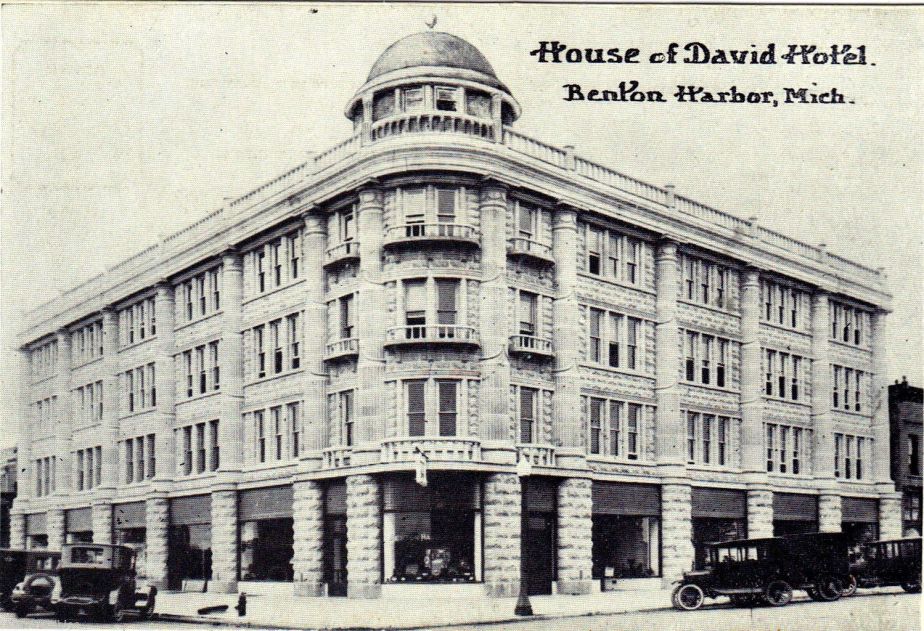
According to Ron Taylor, of Mary’s City of David, one of the nation’s oldest continuing communes, the freshness of the ingredients used was one of the reasons for the long time popularity of the restaurants. Taylor, who worked at Mary’s Café for the last four years of its existence, has long been an archivist of the colony’s history. Several years ago he reprinted a limited edition of the 1912 cookbook titled “Vegetarian Cookbook” with recipes from the Eden Springs Restaurant.

Now, Taylor has put together the “Vegetarian Cookbook” that includes not only the recipes from the 1934 cookbook but also photos and historic anecdotes from the years when Mary’s City of David had their own bakery, dairy, cannery, chickens (for eggs) and orchards.
“We had a greenhouse for growing vegetables in the winter,” said Taylor at the time we chatted. Taylor, an avid historian dedicated to preserving the unique history of the community.
Mary’s City of David also attracted a large clientele of visitors who spent the summer in the numerous cottages on the property.
“The cottages didn’t have cooking facilities,” said Taylor, “and so people ate at the restaurant.”
Interestingly, one of the largest groups of returning summer residents were Romanian Jews from Chicago.
“They were attracted to coming here because vegetarian is Kosher,” said Taylor.
The colony’s commitment to vegetarianism came from the Gospels, as Taylor points out in the book by quoting Biblical passages including ‘Meats of the belly and the belly for meats and both shall be destroyed (1 Cor. 6-13).
The book also includes old menus from Mary’s Restaurant which was located on Britain Avenue. Like most old menus, it’s always amazing to see how cheap prices used to be. The 1947-48 menu lists such items as a pimento cheese sandwich costing 20 cents and homemade pie or cake ten cents and spaghetti in tomato and cheese sauce going for 35 cents. For those who often splurge on lattes or cappuccinos, take note, a cup of coffee with extra cream cost 15 cents while something called Boston coffee sold for 15 cents as well.

“This is a book of recipes,” Taylor writes in his introduction. “It continues authentic and unique tastes of a history, from a community of that generation. It was designed to serve a healthy and nutritious meal for a working class. Convenience to a fresh market of local produce precluded the use of exotic ingredients and thus retained the colony’s desire of making an affordable and family friendly menu. It remains a book of ingredients that saw its popularity within the era of one of America’s greatest generations.”
Mary’s City of David
The cookbook is for sale at Mary’s City of David at 1158 Britain Avenue in Benton Harbor. The cost is $24.95. For more information or to order, call 269-925-1601, order online at www.maryscityofdavid.org or stop by in the afternoons when the office is open. For those who’d like to visit and have a meal from the cookbook, the annual, “Welcome Back To 1934” Vegetarian Lunch will be served at noon on September 29th at Mary’s City of David, 1158 E Britain Avenue, Benton Harbor.
Recipes
Note: These are old fashioned recipes where the directions are often vaguer than what we’re used to in modern recipes. Often, there are no temperature settings for oven and instead terms like slow oven and hot oven are used. Also, the cookbook uses the term tablespoonfuls, cupfuls, etc. rather than the current terminology of cups, teaspoons and the like.
Butter-Scotch Pie
- 2 cups brown sugar
- 4 tablespoons flour
- 2 cups milk
- 3 eggs
- 2 heaping tablespoons butter
- 1 teaspoon vanilla
Beat the yolks of eggs until light; add flour, sugar, milk and butter; cook in double boiled until thickened. Remove from fire and add vanilla. Have ready two under crusts baked and fill with the butter-scotch. Whip the whites of eggs to a stiff froth and add two tablespoons sugar. Spread lightly over the top of the pies and set in a slow oven to color a golden brown.
Sidebar: Mary’s City of David Bakery
Within their first year of business, the bakers at Mary’s City of David Bakery were working seven days a week providing food for the more than 300 members of the colony as well as for the baked goods shop in the downtown Benton harbor hotel and the resort restaurant. Baked good as well as milk, butter, cream and eggs, all grown on the colony’s grounds, were also sold at the bakery. Here are several baked goods recipes from the cookbook that were made at the bakery.
Bran Muffins
- 1 cup flour
- 1 teaspoon salt
- ¼ cup sugar
- 2 teaspoons baking powder
- 1 cup bran
- 1 egg, beaten light
- 1 ¼ cups milk
- 3 tablespoons melted shortening
Sift the first four ingredients together twice; add the bran, the egg, milk and shortening. Mix together thoroughly. Bake in hot, well-greased muffin pans about 25 minutes.
Cheese Dreams
- 2 teaspoons baking powder
- ½ teaspoon salt
- ½ cup milk
- 1 cup flour
- ½ cup cheese
- 1 tablespoon oil
Mix and sift dry ingredients. Work in oil lightly with tips of fingers. Add liquid gradually and then sprinkle in the cheese which has been grated. Toss on floured board and roll out one quarter inch in thickness ad cut with small cutter. Bake in hot oven ten minutes and serve hot with salad course.
For those who are interested in finding out more about Mary, City of David, Taylor has written a book on the subject, Mary’s City of David: A Pictorial History of the Israelite House of David as Reorganized by Mary Purnell.
The photos above were provided by the Benton Harbor Public Library.

The Best Five Cocktails for Autumn
Celebrate fall with these great drinks!
Make the most of the cold with The Mixer’s round-up of the best fall cocktails this season. Things are about to get toasty. Happy fall y’all!

Apple Butter Old Fashioned
An Apple Butter Old Fashioned cocktail is packed with the inviting flavors of warm apple pie. Made with real apple butter (just like mama used to make), this fall Old Fashioned drink is perfect as an indulgent drink with your bourbon-loving friends.
For this recipe, you’ll be making your own apple butter. Don’t worry—it’s super simple to make because YOLO! And it’s downright delicious. If you have leftovers, you can add it to cheese platters, use it as a glaze for that roast beef dinner or dollop it onto pancakes. Yum!
“Apple Butter is easy to make and store in your fridge. Use it in cocktails, to spread on toast, as a glaze on meat or add it to your morning oats.” (Helena Lombard, The Mixer)
Bourbon Apple Cider

Fall is a season that begs to be draped in comfort and warmth. This spiced cocktail is exactly what you need to warm up on a cold night. To get those cheeks glowing, you’ll need bourbon, apple cider, vermouth and bitters. Serve your Bourbon Apple Cider over ice with a squeeze of fresh lemon juice and a sprig of thyme. This is a full-flavor cocktail, and the sourness of the lemon balances beautifully with the sweet notes of caramel, vanilla and apple.
How do you like them apples? Because, quite frankly, we’re a little obsessed.
Manhattan

Meet the Manhattan: Sweet, smooth, and sophisticated. This iconic cocktail was created in the late 1800s, and the original recipe has been enjoyed ever since! It’s a whiskey-based cocktail that’s surprisingly mellow and sweet. Made with whiskey, sweet vermouth, and bitters and garnished with a maraschino cherry, it’s a simple recipe. This delicious drink is best served before dinner to welcome your guests. Although there are a few versions of the classic, the traditional Manhattan cocktail will never go out of fashion.
Hanky Panky

Gin-lovers, don’t worry. We haven’t forgotten about you. Make a Hanky Panky if you want a fall (or winter) cocktail that’s packed with zesty flavors and herbal undertones.
This sweet gin martini is anything but discreet: the gin makes it a little naughty, while the sweet vermouth makes it a little nice. But it’s the addition of the Italian amaro (bitters) that gives the Hanky Panky cocktail its unique and complex flavor. Best enjoyed fireside, with good friends.
Hot Pumpkin Pie Cocktail

Drinkable pumpkin pie in a glass, anyone? Yeah, we thought so!
If you love the taste of a pumpkin spice latte, then choose this fall cocktail to be the star of your Thanksgiving feast this year. Made with vodka, Irish cream, pumpkin pie puree and cool whip, it’s as delicious as a dessert. Serve your Hot Pumpkin Pie cocktails in warmed mugs, topped with whipped cream and a sprinkling of cinnamon. As an extra treat, you can serve baked pumpkin pie crusts on the side for some decadent dipping.
“Make pumpkin-infused vodka by mixing together pumpkin puree and spice, with ½ cup of vodka in a large jar. Seal and keep in the fridge for three days before using, shaking it a few times a day.” (Helena Lombard, The Mixer)
Visit www.themixer.com for more cocktail inspiration.


