“Bill W. and Dr. Bob” continues to June 8 at the theater. The show stars Ronnie Marmo as Bill W. and Rick Yaconis as Dr. Bob, the founders of AA. Marmo also directs the show, which is produced by Theatre 68, with locations in Los Angeles and New York. Actor Marmo is also the artistic director of Theatre 68.
The theatrical production offers a candid look at the lives of New York stockbroker Wilson and Ohio surgeon Dr. Bob and how they teamed together to form the organization. The show also focuses on their wives, who founded Al-Anon, a support group for family and friends of alcoholics.
In a past interview, Marmo said working on this play was important to him. He’s been sober for three decades and said AA saved his life.
The theatrical production, which also has a good dose of humor in it, was written by Samuel Shem and Janet Surrey.
In addition to touring with this show, Marmo also stars in “I’m Not A Comedian…I’m Lenny Bruce,” which he frequently takes on tour.
FYI: “Bill W. and Dr. Bob” runs to June 8 at North Shore Center for the Performing Arts, 9501 Skokie Blvd., Skokie. Tickets start at $69. Visit billwanddrbobonstage.com.
About Eloise Marie Valadez
Guest blogger Eloise Marie Valadez, a frequent contributor to Travel/Food, is a professional journalist/writer and editor with four decades of experience covering the arts, entertainment, and culinary industries. A native of Chicago, she has a passion for the written word.
With summer fast approaching, peak festival season in Chicago will soon be upon us. See below for a list of some of the most exciting programs returning in 2022 (many of them free) along with a few new surprises!
June 2022
Grant Park Orchestra and Chrous. Photo credit Norman Timonera.
Chicago Gospel Music Experience (June 4, 2022): This outdoor festival at the Jay Pritzker Pavilion in Millennium Park, celebrating the Chicago-born genre, brings together traditional choirs, contemporary urban gospel artists, and more. FREE
Chicago Blues Festival (June 9-12, 2022): With a diverse lineup in Millennium Park celebrating the blues’ past, present and future, the Chicago Blues Festival, the largest free blues festival in the world, shares the great Chicago-born music tradition while shining a spotlight on the genre’s contributions to soul, R&B, gospel, rock, hip hop and more. FREE
Andersonville Midsommarfest(June 10-12, 2022): For more than 50 years, this summer festival has celebrated Andersonville’s Swedish heritage, LGBTQ+ pride, and vibrant local business community. For three nights and two days, this vibrant and diverse community will bring together over 75,000 people to celebrate a proud Swedish summer tradition with eclectic music, great vendors, food and free kids’ activities. Suggested donation of $10, as well as proceeds from beer sales, benefit the Andersonville Chamber of Commerce, along with several local non-profit organizations.
Grant Park Music Festival(June 15 – August 20, 2022): For more than 80 years, the Grant Park Music Festival has been Chicago’s summer musical sensation, demonstrating that classical music, performed by a world-class orchestra and chorus, can have a transformative impact on the city. This year will offer a thrilling lineup of music at the Jay Pritzker Pavilion with a mix of contemporary compositions and classical favorites such as Beethoven’s Eroica Symphony, Tchaikovsky’s Sleeping Beauty and Rachmaninov’s Piano Concerto No. 2. Plus there’s plenty of family fun with the Independence Day Salute, Lights on Broadway, and Cirque Goes to Hollywood featuring live aerialists soaring above the stage. FREE
The Summer Smash Festival(June 17-19, 2022): SPKRBX presents The Lyrical Lemonade Summer Smash Festival, the premier Hip-Hop music festival in the Midwest. For three days, on three stages, some of the biggest names in Hip-Hop will perform, including Post Malone and Wiz Khalifa. Tickets range from a 3-Day $275 General Admission Pass, to a $449 VIP Pass.
Chicago Pride Fest(June 17-19, 2022): Celebrate Pride in Northalsted, the country’s oldest official gay neighborhood at this lively fest, featuring live music, dance queens, local food, and more. The following weekend the Chicago Pride Parade (June 26, 2022), one of the largest Pride celebrations in the world, marches through the neighborhood. Suggested donation of $15 for Chicago Pride Fest.
Millennium Park Summer Music Series(June 20 – August 18, 2022, Mondays & Thursdays): With the backing of the Department of Cultural Affairs and Special Events (DCASE), this outdoor program features a wide variety of music from established and emerging artists at the iconic Jay Pritzker Pavilion. FREE
Pride in the Park (June 25-26,2022): An annual outdoor music festival held downtown in Chicago’s Grant Park at the end of June features LGBTQ+ performers, artists, vendors and more. 2-Day General Admission Passes to Pride in the Park start at $100.
Sail Grand Prix
Chicago has been chosen to host the United States Sail Grand Prix (SailGP) at Navy Pier (June 18-19, 2022). If you are not familiar, SailGP is one of the fastest emerging properties in world sports featuring exciting, up-close action as teams race identical F50 catamarans – a highly-technical, hydro foiling race boat that boasts highway speeds – in an annual global championship held in some of the most iconic cities around the world. Ten national teams will compete, comprising the best athletes in the sport representing the United States, Great Britain, France, Denmark, Spain, Japan, Australia, and New Zealand, plus two new franchises from Canada and Switzerland. In June, the F50s will race on Lake Michigan directly in front of the Chicago skyline, marking the first time the championship has ever competed on fresh water! Tickets for single-day waterfront viewing access begin at around $40.
Ravenswood On Tap(June 18-19, 2022): Sip your way through Ravenswood, one of Chicago’s top craft beer neighborhoods and home to many small craft producers. Malt Row is one of the most prolific craft brewing communities in the country – and it’s right in Ravenswood! Enjoy brews from Malt Row, KOVAL Distillery cocktails, plus ax throwing, live music and some of Chicago’s favorite restaurants and food trucks. Suggested donations and proceeds from this event benefit the Greater Ravenswood Chamber of Commerce, Ravenswood Community Council, and several other community organizations.
July 2022
Chicago SummerDance(July 6–September 17, 2022, select dates): The beloved series returns this summer at parks throughout the city this summer. Dancers of all ages and skill levels are invited to take part in introductory dance lessons by professional instructors followed by live music and dancing. FREE
Taste of Chicago (July 8-10, 2022): A bite-sized version of the classic lakefront extravaganza will take place over three days in July — showcasing an estimated 30–40 eateries and food trucks each day, and three mainstage evening concerts. Prior to the main event, a series of Taste of Chicago pop-ups will return this year with food and music events in three Chicago neighborhoods in June. FREE admission; tickets for food and beverages are sold in strips of 14 for $10.
Southport Art & Music Fest (July 9-10, 2022): Chicago’s iconic Southport Corridor blooms to life when Southport Art Fest takes over Waveland and Southport in July. Festival fans will visit the beautiful tree-lined streets of the picturesque neighborhood. Just steps away from the friendly margins of Wrigley Field, the two-day festival will showcase some of the city’s best and most diverse artists. FREE admission; all donations and proceeds benefit the Southport Neighbors Association.
Millennium Park Summer Film Series(July 12–August 30, 2022, Tuesdays): Guests may take a seat at the Jay Pritzker Pavilion or lounge on the Great Lawn as crowd-pleasing movies are presented on the state-of- the-art, 40-foot LED screen. FREE
Pitchfork Music Festival(July 15-17, 2022): Since 2006, the Pitchfork Music Festival has consistently proven to be one of the most welcoming, comfortable, reasonably priced, and rewarding weekends of music around. Hosting 60,000 attendees of all ages from all 50 states and dozens of countries, Pitchfork Music Festival showcases the best up-and-coming music from around the world, as well as special performances from touring stalwarts and legends alike. Featuring diverse vendors, as well as specialty record, poster, and craft fairs, the festival works to support local businesses while promoting the Chicago arts and food communities as a whole. Single day General Admission tickets start at $99 while the 3-Day, General Admission pass is $200.
Wicker Park Fest (July 22-24, 2022): As one of Chicago’s most anticipated summer festivals, and dubbed “Chicago’s Best Street Festival of the Summer ” by the Chicago Tribune, Wicker Park Fest is one of Chicago’s top-drawing festivals, attracting visitors from across Chicagoland and the country with its fantastic music line-up. Building on the area’s unique character, the weekend celebrates the neighborhood with eclectic music, great local food, arts and crafts, and retail vendors. Suggested donation of $10 and all proceeds benefit the local Wicker Park Bucktown Chamber of Commerce.
Pizza City Fest(July 23-24, 2022): Steve Dolinsky – a 13-time James Beard Award-winning food reporter, currently “The Food Guy” at NBC 5 – is creating a pizza festival unlike anything that’s ever been done, over two days in the West Loop. Pizza City Fest: Chicago brings together 39 of the region’s best pizza makers (and one out-of-town guest) for two days of pizza making and appreciation, all in one location – Plumbers Union Hall in the West Loop. Thanks to 10 PizzaMaster ovens on-site, guests will be able to see each pizza maker create, bake and serve up their remarkable pies in the massive parking lot at the Hall. There will also be live music, pizza-themed art, merchandise and a few special treats. Attendees will also be able to take in a series of highly curated seminars and panel discussions with some of the country’s greatest pizza makers in attendance. General Admission 1-Day tickets start at $59 and 2-Day tickets at $89.
Sundays on State (July 24–September 4, 2022, select Sundays): After its enormously successful debut in 2021, Sundays on State, presented by the Chicago Loop Alliance, will return for Summer 2022, with portions of Chicago’s most iconic street, State Street, closing to vehicular traffic again for select Sundays this summer. Join neighbors from every Chicago community and beyond for this free, interactive block party, while safely enjoying art, culture, active recreation, food, drinks, shopping, and local attractions in the heart of everyone’s neighborhood. FREE
August 2022
Windy City Smokeout(August 4-7, 2022): It’s like a weekend-long tailgate at this popular country music festival, known for drawing in the industry’s top names. The 2022 festival lineup includes some of the biggest names in the industry, including Tim McGraw, Miranda Lambert, Sam Hunt, Willie Nelson, and more. Along with today’s hottest country acts, the lineup also includes some of the world’s best pitmasters. Barbecue pros from all over the country will be serving up ribs, brisket, smoked meats and more, highlighting styles from Kentucky, Nashville, Missouri, and Chicago. Local barbecue vendors include Bub City, Lillie’s Q, and Pearl’s Southern Comfort. Ticket prices range from $45 for a 1-Day Sunday General Admission ticket to $185 for a 4-Day pass.
Northalsted Market Days(August 6-7, 2022): The 40th Northalsted Market Days is a weekend long live music street festival celebrating community in Chicago’s landmark Northalsted/Lakeview district. The 1/2 mile long festival features all-day lineups of live music on 6 stages, 250+ unique vendors, arts, crafts, food and drink, DJ’s and dancing, sponsor booths, and more! Estimated attendance of 120,000 people from near and far, representing all colors of the rainbow! Suggested donation of $15, as well as proceeds from festival support local nonprofits, and fund community projects like the Chicago Pride Crosswalks.
Chicago Air and Water Show (August 20-21, 2022): The largest free show of its kind in the country, this waterfront show features stunning aerial displays above Lake Michigan. The show can be viewed along the lakefront from Fullerton to Oak Street, with North Avenue Beach as the focal point. FREE
Choose Chicago is the official sales and marketing organization responsible for promoting Chicago as a global visitor and meetings destination, leveraging the city’s unmatched assets to ensure the economic vitality of the city and its member business community. For more information, visit ChooseChicago.com. Follow @ChooseChicago on Facebook, Instagram, and Twitter. #CaptureChicagoExcitement
When I was young, my parents liked to dine at supper clubs. To me, they were swank places of dark wood, bold colored banquettes, and oversized menus where your dad would order a martini and your mom a Manhattan while you, because you were only seven or so, had to do with a Shirley Temple. But at least it came with a pretty paper umbrella and a maraschino cherry
These were the supper clubs of yore. Often tucked away on back roads that seemed to take hours—no make that days—to reach when you were riding in the back of that big boat-like Buick your parents owned and no iPad or cell phone existed yet to keep you entertained. Just a coloring book and a box of Crayolas your mother handed you as you climbed into the car. If your brother came along you could kill time by arguing over whether the Cubs or Sox were better—a fight that endures to this day. If not, you colored and asked every three minutes (I know because my dad timed it once) “are we there yet?”
In Michigan there are few supper clubs that I know of. Maybe D’Agostino’s Navajo Bar & Grille in Bridgeman, family owned for almost 70 years would qualify. It has that feel. There’s Talon’s Supper Club in Norway way up in the U.P. where old fashioned ice cream drinks (typically one of the deciding factors in determining if a place is a supper club) like Grasshoppers and Brandy Alexanders are on the menu. But let’s face it, is anyone going to drive 400 miles one way to go to a supper club? In Norway Michigan—population 2,845? No, I didn’t think so.
Photo courtesy of Ron Faiola.Courtesy of Timmerman Supper Club.
Much more local, there’s the Heston Supper Club, in Heston, Indiana just north of LaPorte on the Michigan-Indiana border. And yes, it is in the middle of nowhere. In Syracuse, Indiana less than 90 minutes, The Sleepy Owl has been around for more than a half century. I haven’t been there yet, but definitely will when we can finally leave the house.
Courtesy of The Sleepy Owl.
Geraldine’s Supper Club in Indy is a hat tip to the classic places of the 1930s and 1940s. There are a few more in Illinois, like the 60-year plus old Timmerman’s Supper Club on the Mississippi River in East Dubuque as well as several in towns I’ve never heard of like Scapecchi’s Supper Club in Farmington.
Photo courtesy of Ron Faiola.
Because they’re becoming big again, Millie’s Supper Club in Chicago has the look—polished wood, red leather, low lighting—which is cool unless you want old.
Courtesy of Heston Supper Club.
But for the largest selection of real back-in-the-day supper clubs, the place to go is Wisconsin and Ron Faiola has got them covered in his two large, heavy-on-photos books, Wisconsin Supper Clubs: An Old Fashioned Experienceand the follow-up Wisconsin Supper Clubs: Another Round both published by Agate, a Chicago publishing company. The books came about after Faiola’s film (its name is the same as the first book) was shown nationwide on PBS nine years ago. He also has a website, wisconsinsupperclubs.net, with lists of supper clubs organized by region including many not mentioned in his books. And amazingly, there are lots of them.
Relish Tray courtesy of Ron Faiola.
So what exactly is a supper club? You’d know if you walked into one of them but Faiola describes them as usually only open for dinner and family owned with great service and food as well as a club-like atmosphere. The reason for all that, he says, is because there’s usually at least one family member on the premises to ensure quality is maintained and guests are happy.
“When you come back to a place a few times, you get to be family too,” he says.
Expect steaks and classic dishes like shrimp deJonghe. The latter is totally Chicago-centric, dating back to Chicago and the three deJonghe brothers who immigrated from Belgium in 1891. Two years later they opened a restaurant at the 1893 World’s Fair: Columbian Exposition, a global celebration of Christopher Columbus’ discovery of the Americas. The brothers went on to operate several restaurants including, from 1899 to 1923, DeJonghe’s Hotel and Restaurant at 12 E. Monroe Street. Their most famous dish, the one Henri deJonghe or their chef, Emil Zehr, is said to have created, is Shrimp deJonghe. Heston Supper Club has it on their menu as Sautéed deJonghe. They also serve frog legs, an old fashioned supper club dish if there ever was one and one even harder to find than Shrimp deJonghe. Ditto for The Sleepy Owl, though they call theirs Shrimp Scampi which really is pretty much the same. And yes, they have frog legs as well.
Shrimp deJonghe by Jane Simon Ammeson.
Lobster, ribs, prime rib, perch and Friday night fish fries are also popular supper club items. Oh and don’t forget, the relish tray and/or salad bar.
Drinking is part of the experience. That’s one reason there are so many Wisconsin supper clubs further north like in Door County says Faiola. During Prohibition as liquor was offloaded from boats coming from Canada and delivered via back roads to the big cities, supper clubs out in the boonies got their orders filled as gangsters, avoiding the highways and the cops, stopped by.
Courtesy of Ron Faiola.
The cocktails people drank back then are popular again. But the thing with supper clubs is they never went out of style. In Wisconsin, the big one is the brandy old-fashioned sweet. I’d never heard of it but according to Faiola—and he should know—people in Wisconsin drink more brandy than anyone else in the U.S. and that’s usually by consuming a lot of brandy old-fashioned sweets.
Courtesy of Greenwood Supper Club which opened in 1929 in Fish Harbor in Door County.
But supper clubs aren’t cookie cutters, says Faiola. Each is unique because of the family factor. Just like going to one friend’s home versus another.
Courtesy of Florian Supper Club in Bailey Harbor, Wisconsin.
His books make great guides and people use them to explore the state, choosing which supper club to try next. Even in these days when we really can’t go anywhere yet, they’re still fun to look at—both a step back in time and a look forward when we can hit the road again. Also, I’m also going to be on the hunt for more Michigan supper clubs so if anyone knows of any, let me know.
RECIPES
Here is the original recipe served at the deJonghe Brothers’ various restaurants. It’s interesting because it calls for ingredients not usually associated with fish dishes—nutmeg and mace. But while both are more pie ingredients today, in Europe a century and more ago, they were often used in savory cooking as well.
As for why last place the deJonghe Brothers owned closed, supposedly it was because of liquor violations during Prohibition. But that doesn’t really sound like Chicago, does it?
Also, shrimp can be expensive. A reasonable substitute (after all, this dish is really about the butter, garlic and breadcrumbs) is a tender, mild white fish or even cauliflower that’s cooked in boiling water until barely tender just like the shrimp. For fresh mild white fish, it’ll bake in the oven and doesn’t need to be parboiled beforehand.
The Original Shrimp deJonghe
2 pounds large shrimp (40), or 48 slightly smaller
1 large garlic clove, mashed with the side of a knife or finely minced
1 1/2 teaspoon salt
1 tablespoon finely chopped fresh tarragon
1 tablespoon finely chopped fresh parsley
1 tablespoon finely chopped fresh chervil
Pinch of dried thyme crumbled between your fingers and thumb
1 shallot, minced (very finely chopped)
1 tablespoon minced onion
1 cup (2 sticks) unsalted butter, softened
1 1/2 cups fine dry breadcrumbs
Pinch of freshly grated nutmeg
Pinch of mace (optional)
1/2 teaspoon black pepper
Cook shrimp in a 4-quart pot of boiling salted water (see note below) until just cooked through, about 1 1/2 minutes. Drain shrimp in a colander, then immediately transfer to a large bowl of ice water to stop cooking.
Preheat oven to 350°F.
Mash garlic to a paste with 1/4 teaspoon salt using a mortar and pestle (or mince and mash garlic with salt using a large knife), then stir together with fresh and dried herbs, shallot, onion, 1 1/2 sticks (3/4 cup) butter, 1 cup bread crumbs, nutmeg, mace, 3/4 teaspoon salt, and 1/4 teaspoon pepper.
Melt remaining 1/2 stick butter and stir together with remaining 1/2 cup breadcrumbs, 1/2 teaspoon salt, and 1/4 teaspoon pepper to make topping.
Arrange shrimp in 1 layer (slightly overlapping if necessary) in a buttered 3-quart flameproof gratin dish or other wide shallow ceramic baking dish. Cover with herbed breadcrumb mixture, then sprinkle with topping. Bake in upper third of oven until golden, about 15 minutes. Turn on broiler and broil until crumbs are golden brown, about 2 minutes.
Note: When salting water for cooking, use 1 tablespoon for every 4 quarts water.
Note: This can also be made in 8 small baking ramekins for appetizers, or 4 larger individual baking dishes for main dish-sized.
Relish Tray
These are all suggestions. Add or subtract as you like.
Spreadable cheese and crackers
Black olives
Green olives
Olives stuffed with blue cheese
Gherkins
Bread and butter pickles
Sweet pickles
Pickled beets
Pickled onions
Pickled watermelon rind
Pickled baby corn
Pickled Brussel sprouts
Pepper slices (pickled or fresh)
Pickled cauliflower
Carrots, cut into sticks
Celery, cut into sticks
Hand-Muddled Brandy Old-Fashioned Sweet
1 maraschino cherry
½ slice of orange
1 sugar cube or 1 teaspoon sugar
2-3 dashes of bitters
1 ½ to 2 ounces brandy
7UP
Ice
In a 10-12 ounce tumbler, combine the cherry, orange, sugar and bitters. Muddle (mash) together.
Add ice, then the brandy and top off with 7UP. Garnish with an orange slice and a maraschino cherry.
The dazzling 1893 World’s Columbian Exposition brought 27 million people to Chicago which was no small feat given that the first gas powered automobile is credited to Karl Benz in Germany in 1886 and Henry Ford’s 1908 Model T was the first car easily accessible to people other than the wealthy.
The crowds came to see all the newest inventions like the Ferris Wheel, the zipper and Cracker Jacks, diet carbonated soda, Aunt Jemima syrup and pancake mix and Wrigley’s Juicy Fruit gum. Plus it was at the Exposition that Pabst Select won the Blue Ribbon in the beer competition and hence forth became known as Pabst Blue Ribbon beer.
But there were other attractions less awe inspiring or recognizable but as important if not more so.
1500 botanicals (a term used to describe seeds, berries, roots, fruits and herbs and spices) were brought from around the world to the exposition to the Field Columbian Museum (now the Field Museum). Among the 40 million objects belonging to the museum—only 1% of which are on display—the majority of these botanicals remain.
Megan Williams, Director of Business Enterprises for the Field Museum, started a beverage program around seven years ago in celebration of the museum’s 125th anniversary. Her idea was to use some of these botanicals as a way of connecting the museum’s past and present.
“I am not a researcher here,” says Williams discussing her background, “though I used to teach environmental science. I joined the Field museum as an account manager and then took over the restaurant. I wanted to create a sense of community, a place for people to sit and talk and what better place for that than a bar.”
Combining the communal ambience of a bar with the awesome history of the museum was one of the reasons Williams started the beverage program.
“I wanted to educate people through taste and smell, to be able to taste or smell something that has a historic significance,” she says.
Williams described it as an opportunity to bring people together who love spirits and love learning.
“It’s not just putting a museum label on something though there’s a legitimacy in that,” she continues, noting she’s worked with brewers and wine makers as well in developing Field branded drinks. “But we wanted to take it another step further, working with people who have a passion and understand the museum’s language and mission.”
Contacting the Journeyman Distillery in Three Oaks, she invited Matt McClain, Journeyman’s lead distiller and owners Bill and Johanna Welter to view the botanicals to look at the botanicals.
“The first spirit we talked about was rye, that ended up as the last one made,” says Williams. “We asked questions such as what would work well in making gin—what could–out of these 1500 botanicals—and where could we source them.”
McClain spent several months researching the botanicals that were at the museum, to determine their history as well as their availability.
“I found that a lot of them were not considered safe or even poisonous,” he says. “Standards were different back then.”
From there, he and Bill Welter chose those they thought would be a good fit for the spirits they wanted to create.
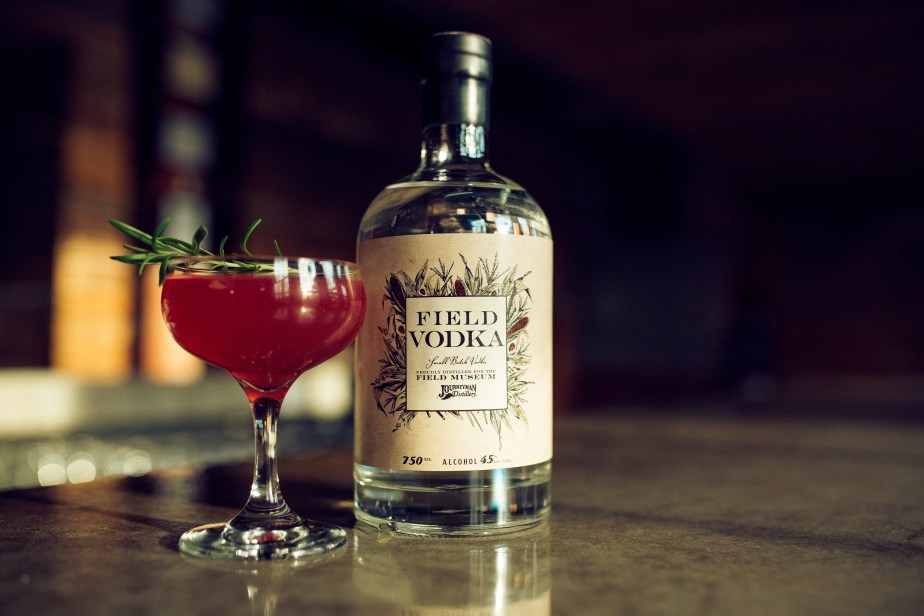
The first product they created was their Field vodka using Bloody Butcher Corn, an heirloom variety often used for making bourbon. The vodka then served as a base for the next distilled spirit, their Field Gin
“We wanted to make a global gin,” says McClain. “So we were pulling species from around the world. We narrowed it down to around 50.”
But once they had the botanicals and began developing recipes, they had to cross off a few more from the list.
“A lot of botanicals that look and taste good, don’t work where you put them in in alcohol, others that I wanted to use were hard to get or arrived too late, I still have agave in the cooler,” says McClain, noting they used other criteria as well in the selection process. “Bill and I wanted the gin to be lavender focused. Obviously gin also has to have a heavy juniper taste as well. We wanted the gin to have tropical undertones and had to figure out those as well.”
Then they were down to 27 including not only lavender and juniper berries but also prickly ash, anise, mango, ginger, coconut palm sugar, pineapple, papaya, Valerian Root, cinnamon, coriander, Horehound, star fruit and Charoli nuts which are sourced from India.
For their Field Rye Whiskey, they tried several types of figs which McClain describes as the world’s oldest sweeteners, finally deciding that Black Mission figs worked the best. The figs were macerated or soaked in alcohol for three months, a process that brought out subtle and all-natural flavors of bananas, sweet melons and strawberries.
“It’s an incredible whiskey,” says McClain. “It has heavy caramel notes and soft marshmallow like palate.”
Bottles of the Field distilled spirits are available for sale. For those who would like to learn more about their taste, they’re also used in some of the cocktails served at the Staymaker, Journey’s restaurant.
Sidebar: Brews
Beer, which is so Chicago given its rich German heritage, was the first partnership Megan Williams embarked upon when she started her beverage program. Two Chicago breweries, Off Color Brewing and Two Brothers Brewing were among the first to use the botanicals to create beers for the museum. researchers at the Field Museum have spent years excavating and studying the Wari site in Peru. Toppling Goliath introduced PseudoSue pale ale, a nod to the museum’s famous 40 feet long and 13 feet tall at the hip, Tyrannosaurus rex. Physically SUE is the largest specimen T. rex specimen that’s been discovered so far.
Off Color’s introduced Wari, their artisan beer based on the Peruvian chicha, a purple corn beer native to areas of Central and South America. One of its other tie-ins with the museum is that Field scientists have spent years leading excavations at Cerro Baúl, a remote mountaintop citadel which was the only contact point between the Tiwanaku and the Wari, considered two great kingdoms whose dynamic relationship ultimately contributed to the rise of the Incan Empire. According to Off Color’s website, an essential sacrament shared by both cultures revolved around chichi. It seems that both tribes liked to consume massive quantiles of chicha served in ornately inscribed drinking cups called keros that were discovered during the archaeological expeditions at Cerro Baúl. In this way, Wari and Tiwanaku cemented their relationships. In other words, next time you see a bunch of heavy alcohol consumers at bars, understand they’re just continuing a thousand year ritual similar to that of the Wari and Tiwanaku.
The following recipes are courtesy of the Journeyman Distillery.
Journeyman Fig Old Fashioned
1.5 oz Field Rye
0.5 oz Fresh Orange Juice
0.25 oz Journeyman Bourbon Maple Syrup
Dash of Journeyman Barrel-Aged Balsamic Vinegar
Dehydrated Orange Wheel
Stir ingredients and pour into a rocks glass, over ice. Garnish with dehydrated orange wheel.
Field Vodka Gimlet
1.5 oz Field Vodka
.75 oz Fresh Lime Juice
.5 oz Simple Syrup
Fresh Lime Wheel
Shake ingredients well and strain into a tall glass over ice. Garnish with a fresh lime wheel.
Field Gin Fizz
1.5 oz Field Gin
.75 oz Fresh Lemon Juice
.5 oz Pear Simple Syrup
1 oz Aquafaba or Egg White
Soda
Star Anise
Combine ingredients and dry shake before adding ice to the shaker. Wet shake until froth has built up. Strain into a Collins glass and top with soda. Garnish with Star Anise.
Used to monitor number of Google Analytics server requests when using Google Tag Manager
1 minute
_gac_
Contains information related to marketing campaigns of the user. These are shared with Google AdWords / Google Ads when the Google Ads and Google Analytics accounts are linked together.
90 days
__utma
ID used to identify users and sessions
2 years after last activity
__utmt
Used to monitor number of Google Analytics server requests
10 minutes
__utmb
Used to distinguish new sessions and visits. This cookie is set when the GA.js javascript library is loaded and there is no existing __utmb cookie. The cookie is updated every time data is sent to the Google Analytics server.
30 minutes after last activity
__utmc
Used only with old Urchin versions of Google Analytics and not with GA.js. Was used to distinguish between new sessions and visits at the end of a session.
End of session (browser)
__utmz
Contains information about the traffic source or campaign that directed user to the website. The cookie is set when the GA.js javascript is loaded and updated when data is sent to the Google Anaytics server
6 months after last activity
__utmv
Contains custom information set by the web developer via the _setCustomVar method in Google Analytics. This cookie is updated every time new data is sent to the Google Analytics server.
2 years after last activity
__utmx
Used to determine whether a user is included in an A / B or Multivariate test.
18 months
_ga
ID used to identify users
2 years
_gali
Used by Google Analytics to determine which links on a page are being clicked
30 seconds
_ga_
ID used to identify users
2 years
_gid
ID used to identify users for 24 hours after last activity