The whiskey that warmed the American Revolution
Packed tightly together, 8 to 10 men per hastily built wooden shacks, in order to survive the brutal cold of winter in Valley Forge, about 18 miles outside of Philadelphia, General George Washington sought an solution at John Shenk’s Distillery. Shenk, a Swiss Mennonite farmer had founded his distillery in 1753 in Schaefferstown, Pennsylvania, producing whiskey from the locally grown rye which flourished in Pennsylvania’s Blue Mountain Valley.

It’s a great story and I for one choose to believe that it’s true. Afterall, people consumed a ton of spirits back then when water wasn’t safe to drink. It’s estimated that around the time of the American Revolution, alcohol consumption of all Americans—including children—was three times the average consumption today. Historians like W.J. Rorabaugh opine after careful research that the average person consumed roughly 3.5 to 3.7 gallons of pure absolute alcohol per year or about 8.75 gallons of standard 80-proof hard liquor. Think of the hangovers. Ouch.
Shenk would sell his distillery a few years after Washington’s visit to a Pennsylvania Dutchman named Abraham Bomberger who renamed the distillery Bomberger’s. Closing in 1919 because of Prohibition, a law that wiped out a major American industry, putting tens of thousands of people out of work. After the law was repealed, the company reopened under various names until becoming Michter’s in 1975 to glowing reviews but went bankrupt 14 years later.

Its history could have ended there. But that’s not the way Joseph J. Magliocco does things. Reluctant to let Michter’s brand be lost, Magliocco, at the time, a Yale and Harvard Law School graduate, bought the brand, moving to Kentucky in order to make bourbon.

It was a necessary move as Kentucky bourbon means just that—it must be distilled within the confines of the state and made with a mash that’s at least 51% corn. Part of what makes Kentucky bourbon such a standout is the limestone in the soil which filters out the iron, producing a sweet-tasting mineral water as well as the famed Kentucky Blue Grass prize winning horses like to nibble on.

Since then, Michier’s has won numerous accolades including from such greats as bourbon authority Fred Minnick who described it as “…quite simply the best bourbon I’ve had all year.”

And, of course, there’s been other numerous nods such as “Best American Whiskey” (Pete Wells in Food & Wine), “Whiskey of the Year” (Whiskey Exchange), “Distillery of the Year” (Wine Enthusiast) and “It’s stunning…when I tasted the whiskey recently, I was blown away…” (Andrew Knowlton in Bon Appétit)
As well as topping the 2026 Drinks International list again for the fourth year in a row.

I met Magliocco, a 2023 inductee into The Kentucky Bourbon Hall of Fame, and Master Distiller Dan McKee while attending the Bourbon Classic, Louisville’s signature bourbon festival, which brings together the very best in bourbon, culinary arts, and cocktails, at Michter’s 88,674 square foot distillery in the Shively section of Louisville where we did tastings and learned about their unique distilling process. Magliocco invited us to visit their Fort Nelson Distillery on Louisville’s Museum Row. They also have a 205-acre farm) in Springfield.

The Fort Nelson building is again representative of Magliocco’s dedication to history. The four-story Richardsonian-style brick edifice, built in 1890, features numerous architectural flourishes such as Romanesque Revival-style windows, a distinctive corner turret, and cast-iron columns. It’s a standout in a block of historic buildings. As an aside, Louisville is second only to New York for the number of its cast iron facades, a popular 19th century feature.

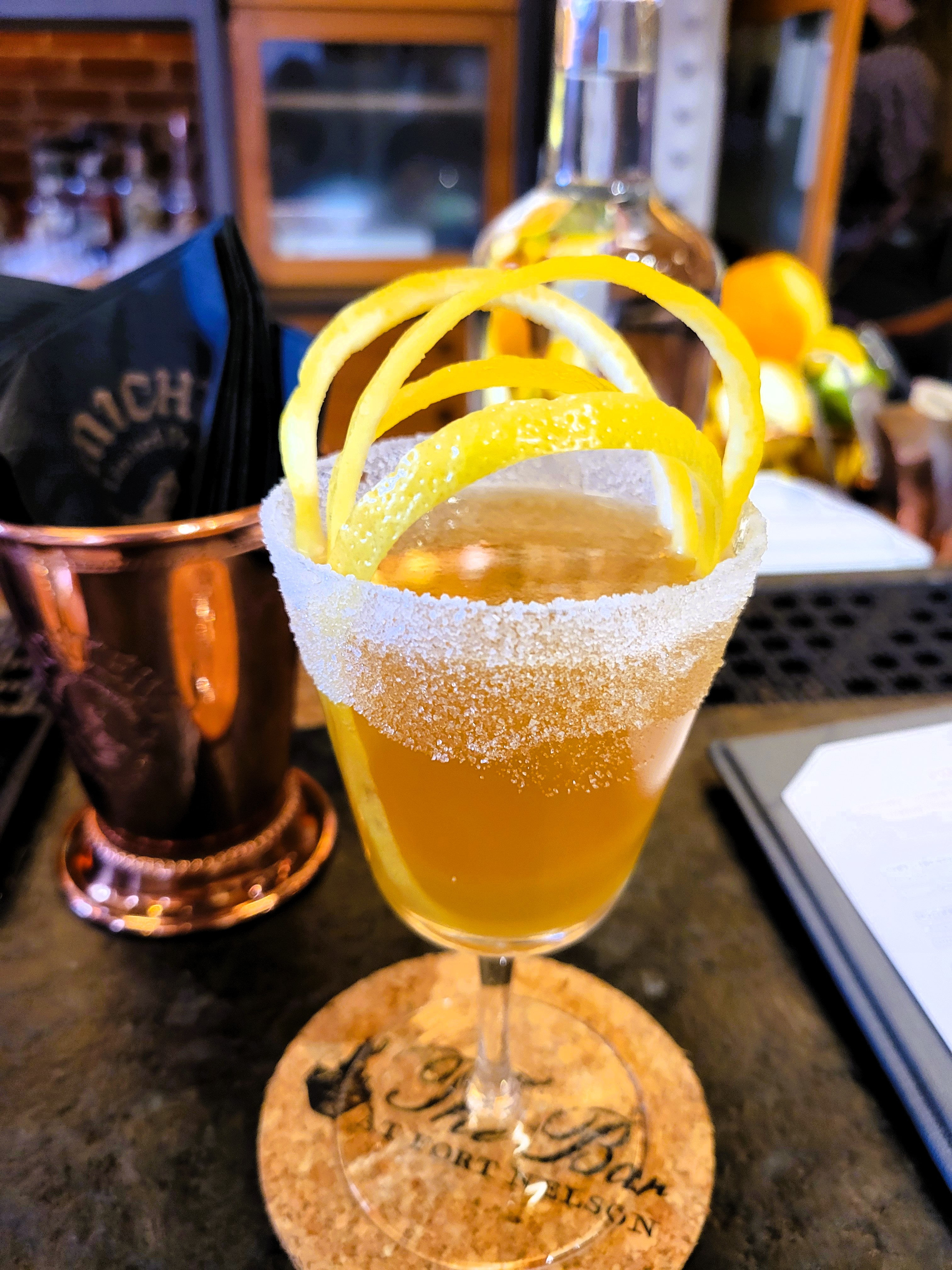
Fort Nelson is also a gathering place for tastings, a sleek stylish bar that serves curated cocktails, a display of vintage ceramic bottles and figural decanters, and tours which ended with me getting to fill my own bourbon bottle from one of the barrels and having my name inscribed upon it.
It was also a bear to restore.

“I could have just had the building demolished,” Magliocco told me. “It would have been a lot cheaper.”
But as I mentioned before that’s not the way Magliocco does things. It’s a “cost be damned” sort of way resulting in an 8-year, multi-million-dollar restoration project where something always seemed to go wrong including almost losing the entire building when one of the exterior/interior walls bowed 23 inches out of place, hovering dangerously over the street below. I could go into the complicated process of how they fixed it but instead I will sum it up thusly: it was beyond complex, required lots of engineering skills and, of course, much money.

Turning the building into a micro-distillery, Magliocco’s teams installed a 550-gallon Vendome copper pot still, copper cooker, and relocated historic cypress wood fermenters from Pennsylvania.

The building, located across from Louisville Slugger Museum & Bat Factory and down the block from the Frazier History Museum, is designated as a stop on the Kentucky Bourbon Trail® Welcome Center and serves as the official starting point of the Kentucky Bourbon Trail.
For more information about what to do, where to stay, eat, and see in Louisville.


Share your thoughts. I’d love to hear from you.